Will Pump Prices Follow Wholesale Costs Up in November?

Will Pump Prices Follow Wholesale Costs Up in November?

Pump prices edged slightly lower through October, with the average price of unleaded at 134.8ppl and diesel at 142.4ppl. But that trend may soon reverse.

On 23rd October, the US imposed sanctions on Russian oil giants Rosneft and Lukoil, a move designed to limit Moscow’s oil revenues and weaken its ability to fund the war in Ukraine. The announcement pushed Brent crude up by around 5%, from $62.13 to $65.18 per barrel — and crucially for UK motorists, wholesale prices for both diesel and unleaded followed suit.

Since the sanctions, diesel wholesale prices have risen by more than 5ppl, while unleaded is around 1.5ppl higher than before the announcement.

Adding further pressure, the US dollar has strengthened, with the pound now at its lowest level in seven months. This currency shift accounts for roughly 1.1ppl of the diesel increase and 0.6ppl of the unleaded rise.

While wholesale costs have risen, pump prices have so far remained steady; however, this may not last. Early November data already shows ten times more price increases than decreases for diesel, and twice as many increases as decreases for unleaded.

Current diesel margins are around 3ppl below their six-month average, while unleaded margins are 0.5–1.0ppl lower. If wholesale costs remain elevated, retailers may have little choice but to pass these increases on to drivers in the weeks ahead.
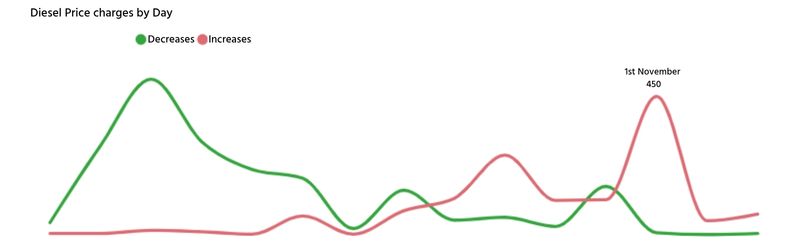
diesel price changes

All eyes now turn to the 26th November Budget, where attention will be on whether the government maintains the temporary 5ppl fuel duty (excise duty) cut introduced in March 2022 (reducing the rate from 57.95ppl to 52.95ppl). Initially planned for 12 months, the cut has been extended and is currently scheduled to run until March 2026.

How markets react to the Chancellor’s fiscal policies could also influence the pound’s strength and, by extension, future fuel prices.

Will fuel duty (Excise duty) change in the budget?
  • It will be increased immediately 40%, 43 votes
    43 votes 40%
    43 votes - 40% of all votes
  • Increased immediately knowing Revves* 19%, 21 vote
    21 vote 19%
    21 vote - 19% of all votes
  • It will increase from March 2026 18%, 19 votes
    19 votes 18%
    19 votes - 18% of all votes
  • It will stay the same 7%, 8 votes
    8 votes 7%
    8 votes - 7% of all votes
  • It was always going to be increased in this budget. According to Reeves the Black Hole increases by £6 billion everytime she mentions it,* 4%, 4 votes
    4 votes 4%
    4 votes - 4% of all votes
  • Increase immediately, It's the kind of person Reeves is she doesn't give a toss* 4%, 4 votes
    4 votes 4%
    4 votes - 4% of all votes
  • Increased immediately* 3%, 3 votes
    3 votes 3%
    3 votes - 3% of all votes
  • It will increase from 6pm on budget day.* 2%, 2 votes
    2 votes 2%
    2 votes - 2% of all votes
  • It will be reduced 1%, 1 vote
    1 vote 1%
    1 vote - 1% of all votes
  • Increaeed immediately* 1%, 1 vote
    1 vote 1%
    1 vote - 1% of all votes

  • Increase immediately* 1%, 1 vote
    1 vote 1%
    1 vote - 1% of all votes
  • Increased immediately* 1%, 1 vote
    1 vote 1%
    1 vote - 1% of all votes
Total Votes: 108
05/11/2025 - 26/11/2025
* - added by visitor
Voting is closed
© Kama

Did you use the app to save money this month? Let us know your successes in the comments below

1 in 4 drivers now avoid night drives

1 in 4 drivers now avoid night drives

With the clocks going back an hour this Sunday (26th Oct), darker evenings are upon us until 29th March when the days officially become longer than the nights. The cold and dark nights are still ahead of us for some time in the UK, and even with the dark nights ‘officially’ ending after the winter solstice, which falls on December 21st, that doesn’t mean that it’s over immediately. And these conditions can prove a challenge to many of us, especially drivers.

Driving at night can be dangerous, as low-visibility can bring difficulty. In fact, according to the Royal Society for the Prevention of Accidents (RoSPA), approximately 40% of all road accidents in the UK occur during the night.

And although we have features that aid us when driving in the dark, such as our headlights, they can actually cause issues for other drivers on the road.

As such, the automotive experts at Dick Lovett have shared their top tips for driving in the dark, to ensure that yourself, other road users, and pedestrians are safe.

Earlier this year, research from the RAC found that a quarter of drivers (25%) who find other drivers’ headlights too bright are actually choosing to drive less at night. A further three-quarters (75%) of those say they’re choosing to drive less because of the intense headlights from other vehicles make driving uncomfortable or more difficult.

The tips from Dick Lovett hope to help road users drive confidently during dark conditions, and prevent any potential problems such as headlight glare, dazzling, and low visibility.

The tips from Dick Lovett hope to help road users drive confidently during dark conditions, and prevent any potential problems such as headlight glare, dazzling, and low visibility.

1.	Clean your windows and mirrors—and switch your rear-view mirror into ‘night mode’

1. Clean your windows and mirrors and switch your rear-view mirror into ‘night mode’

Even though this is still hugely important during the day, having dirty windows at night can obstruct your view, making it more difficult to see on the already dark roads. 

Dick Lovett also recommends switching your rear-view mirrors into night mode, a feature that has been in cars since as early as the 1980s. This feature makes your mirror darker and minimises the intensity of any reflections during the night to avoid glare from vehicles behind you.

However, one Reddit user claimed that their passenger was totally unaware of this feature, meaning other road users may also not realise how beneficial this is.

On modern cars, your rear-view mirror will turn into night mode automatically, so there’s no need to turn this on and off yourself. But, for cars that don’t have this automatic feature, to turn your mirror into night mode, simply locate the small lever or tab at the bottom of the rear view mirror and flip it towards you. Then, to switch back to normal, flip it back.

Adjust and use your headlights correctly

2. Adjust and use your headlights correctly

When driving at night, you must ensure your front and rear lights are properly functioning, as it’s actually illegal if they aren’t. To check your lights are working properly, simply turn them on before your journey to make sure they are functioning correctly.

As well as this, ensure that you use dipped headlights and full beams where appropriate. Dipped headlights should be used when visibility is poor, such as at night, and in bad weather, with full beams used when roads are dark and empty.

The research from the RAC found that 79% of people say they find it hard to tell when some vehicles are indicating, with 77% saying it’s difficult to judge the position of oncoming cars on the road when their headlights are so bright.

So, be sure to use your headlights correctly by turning on your dipped headlights when other road users are around, especially if they are in oncoming traffic, as this can dazzle them, and bring other risks.

It’s also important to adjust your headlights correctly, so the angle of the headlight beam is in the right place, as misaligned headlights can reduce your ability to see clearly at night and may dazzle oncoming drivers.

Most modern cars will do this for you automatically, but there are some ways you can do this manually as well. Typically, the headlight adjustment button can be located on the steering wheel, represented by the headlight symbol (a dome-shaped symbol with downward-pointing lines) and a dial with numbers. This will alter the angle of the headlights as you turn the dial.

If you’re unsure on how to adjust the headlights correctly for your vehicle, the user manual should contain the specifications.

But when performing manual adjustments without this feature, there are a few steps you must follow:

  • Park on flat, level ground – First, position your car on a flat surface, around 5-7 metres away from a wall or garage door.
  • Mark the beam pattern – Then, turn on your headlights and use masking tape to mark the centre of each beam on the wall.
  • Adjust the screws – Next, locate both the vertical and horizontal adjustment screws, and alter the beam so it aligns just below the marked level, as this will help to avoid dazzling other drivers.
  • Test the lights – Finally, take the car for a short drive to ensure your visibility is improved, without any excessive glare.
According to Specsavers, mild astigmatism can be corrected with ordinary gas-permeable lenses.

3. Wear anti-glare driving glasses

Anti-reflective coated glasses are most effective for night driving, as the coating on the lenses minimises any glare and reflections, which can enhance contrast and overall visibility in dark conditions. You can purchase these glasses from many retailers.

As well as this, many drivers may struggle with astigmatism when driving at night, as this can cause blurred vision, halos around lights, and reduced contrast sensitivity.

According to Specsavers, mild astigmatism can be corrected with ordinary gas-permeable lenses, while others with higher amounts of astigmatism might benefit from special ‘toric’ soft lenses to fit your eye shape. Be sure to keep these lenses clean to avoid any further glare.

With visibility already low during the night, ensuring that you wear your glasses is more important than ever.

4. Wear prescription glasses

With visibility already low during the night, ensuring that you wear your glasses is more important than ever.

In fact, driving without prescription glasses when you legally need to wear them can result in a fine of up to £1,000 and could also lead to three penalty points on your driving license.

Make sure to wear your glasses when driving, or, keep a spare pair of glasses in the car in case you forget to take them with you.

As mentioned, approximately 40% of all road accidents in the UK occur during the night, and whilst you should never speed under any circumstance, this is even more so at night.

5. Reduce speed and stay alert

As mentioned, approximately 40% of all road accidents in the UK occur during the night, and whilst you should never speed under any circumstance, this is even more so at night.

Drive at a moderate speed and leave extra space between you and the vehicle ahead to allow for more reaction time, and this is also important when keeping an eye out for any pedestrians or hazards in the road that could be harder to see in the dark.

The Services King heads to Scotland: The Places to Refuel on a Scottish Road Trip

The Services King heads to Scotland: The Places to Refuel on a Scottish Road Trip

The Services King Feature

Late September saw me head ‘north of the border’ for my annual Scottish pilgrimage to visit many forecourts and service areas on the Scottish road network.

My trip began at the border town of Gretna Green for a visit to the Welcome Break service area on the A74(M). Over the following days, I made my way up the A74(M) and M74 to the ‘central belt’. Site visits then continued in the Glasgow area before heading into Loch Lomond and The Trossachs National Park for some sightseeing over my first of two weekends in Scotland.

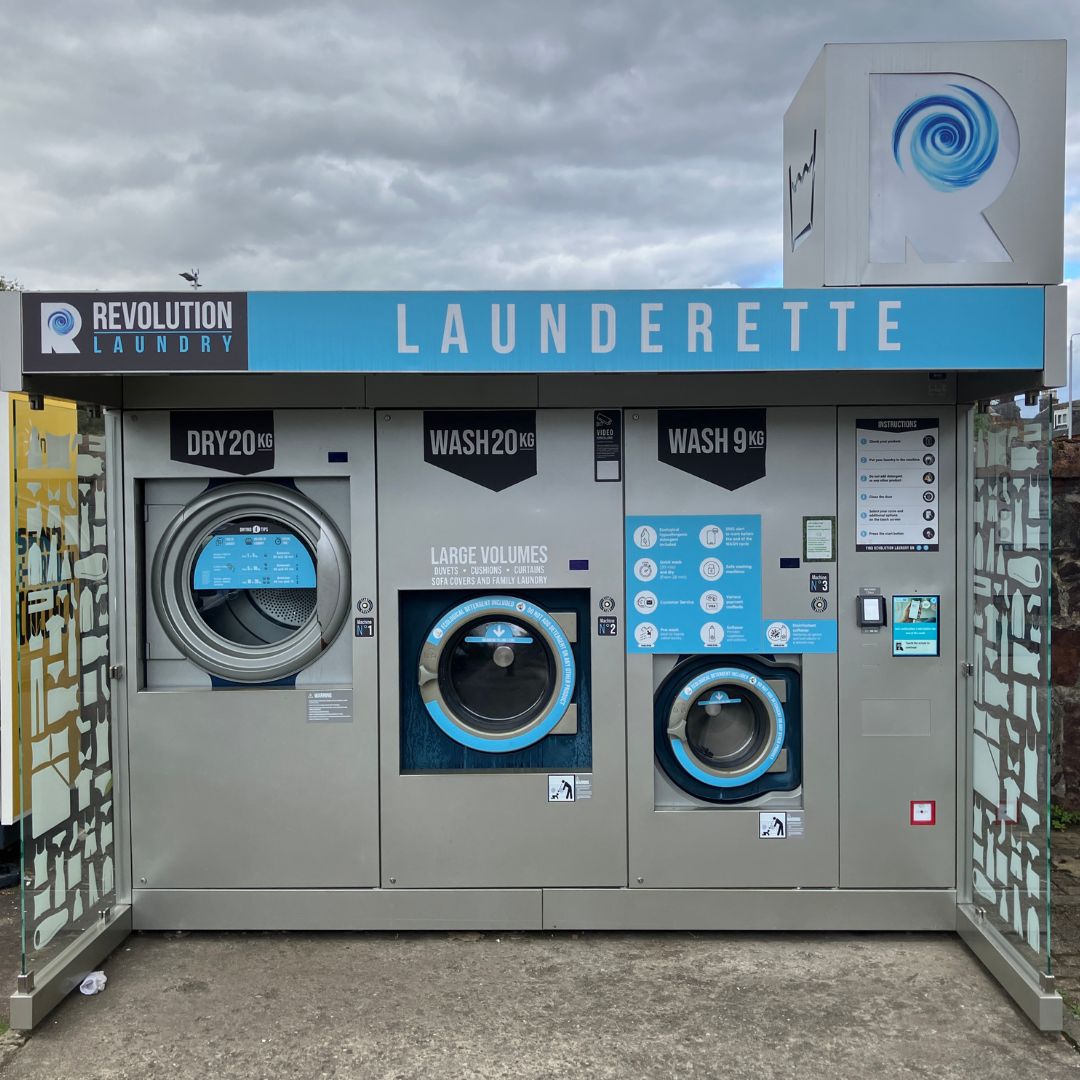
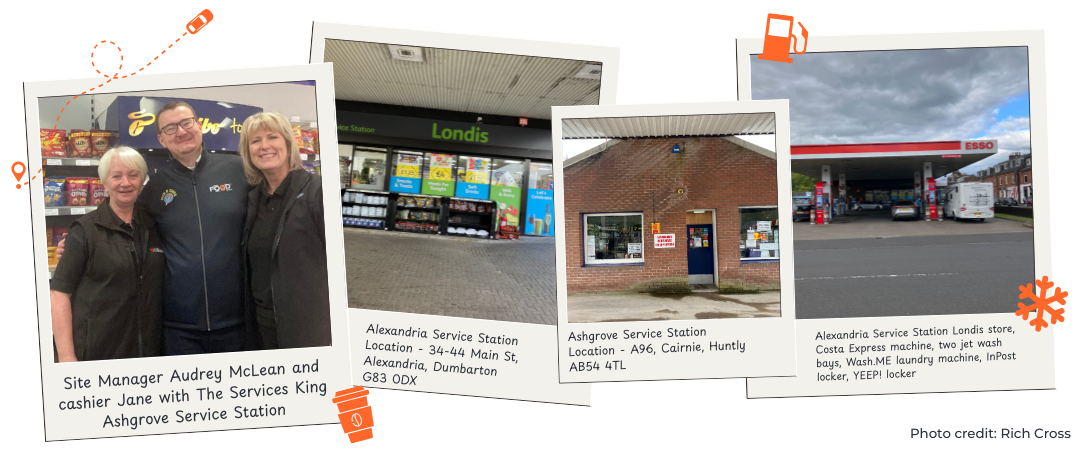
Before heading towards Loch Lomond though, I visited Karan Retail’s Alexandria Service Station in Dumbarton to make use of one of over 1000 Wash.ME laundry machines located across the UK. The Esso filling station was acquired by Visnu Kumaranisanathan from the Glen family who operate a funeral directors directly opposite the site. As well as Esso fuels and the Wash.ME laundry machine, Alexandria Service Station offers a Londis store and parcel lockers from InPost and YEEP! Lockers.

I visited Karan Retail’s Alexandria Service Station in Dumbarton to make use of one of over 1000 Wash.ME laundry machines located across the UK.
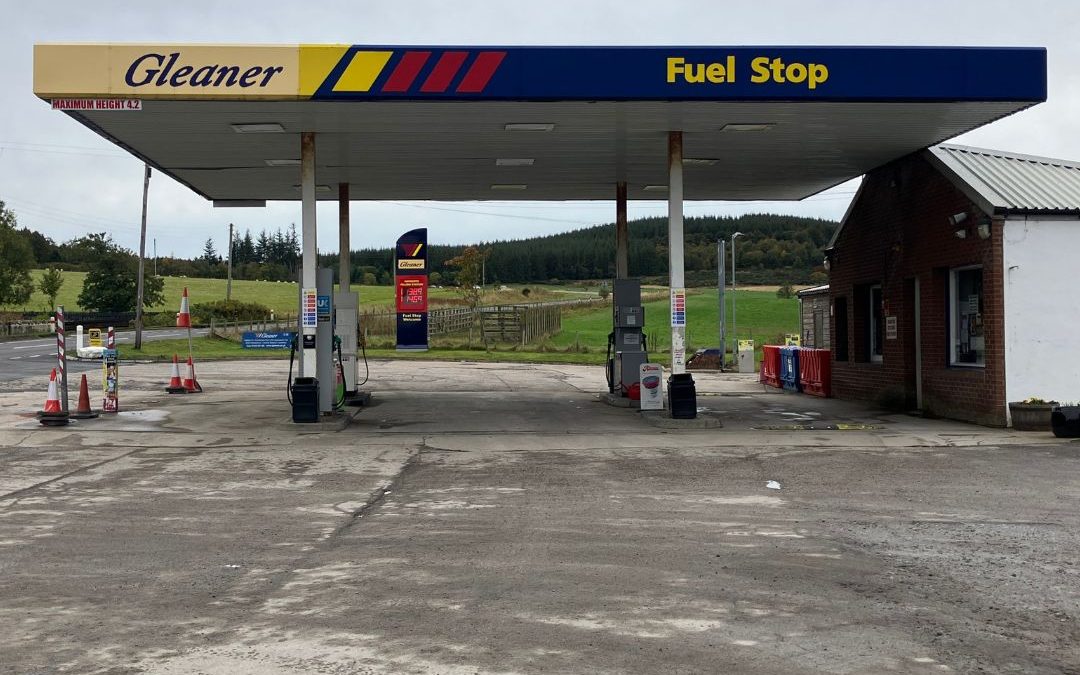
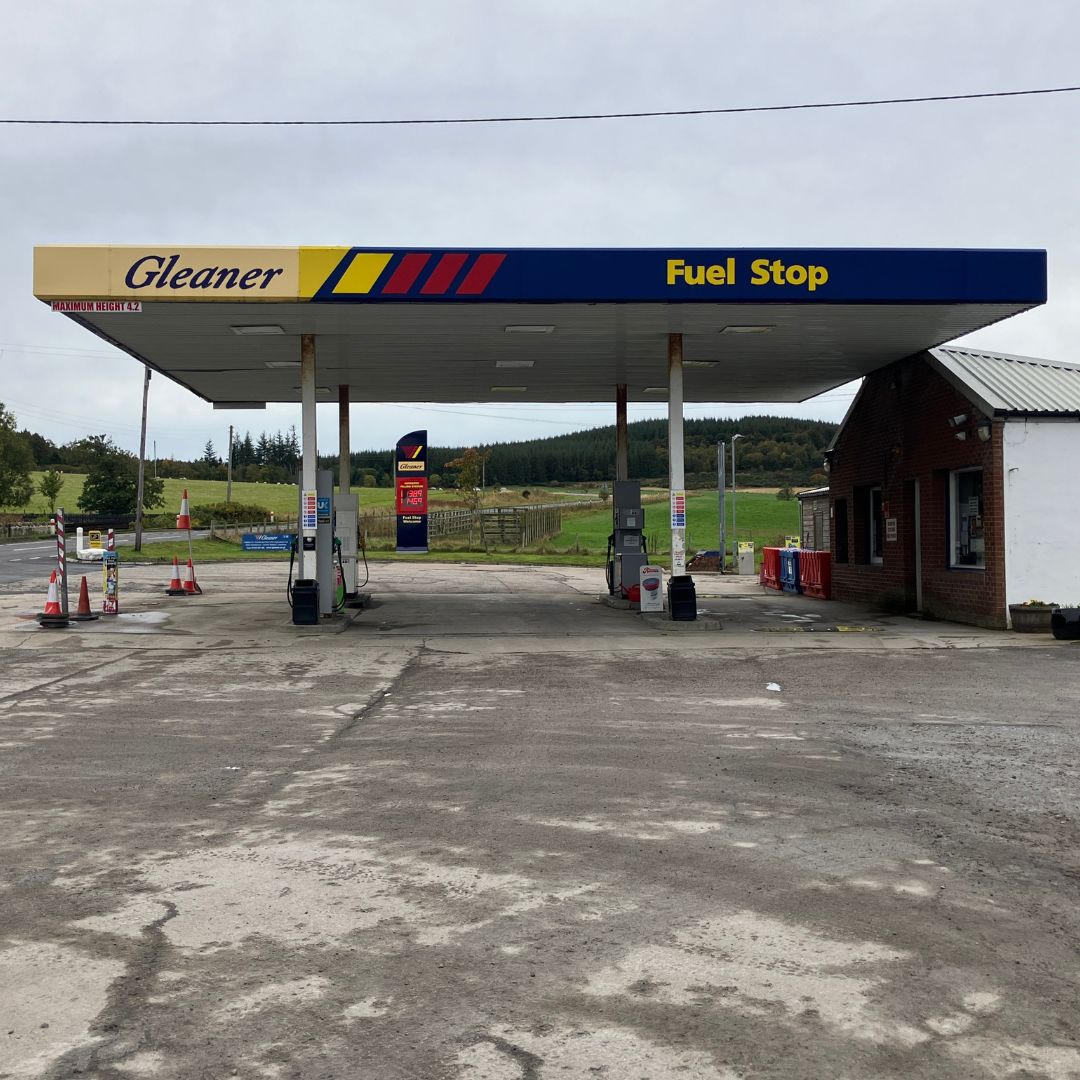
Located on the main A96 trunk road between Aberdeen and Inverness, Ashgrove Service Station is one of Gleaner’s smallest forecourts but caters well for the passing traffic despite its size.

My second week in Scotland saw me venture further towards the north and east of the country, with site visits in Perth & Kinross and Aberdeenshire the main focus. The end of the second week saw a visit to a Gleaner forecourt.

Located on the main A96 trunk road between Aberdeen and Inverness, Ashgrove Service Station is one of Gleaner’s smallest forecourts but caters well for the passing traffic despite its size. The own-brand forecourt offers regular unleaded and diesel fuels and a small unbranded shop, with the forecourt also being one of the last remaining sites in Aberdeenshire to offer LPG.

Whilst visiting Ashgrove, I caught up with Site Manager Audrey McLean and cashier Jane who always appreciate a visit to the site from The King whilst he is in Aberdeenshire. Ashgrove is such a different offer compared to the much grander sites in England but this is made up for by the outstanding customer service from the team at Ashgrove.

I always enjoy my annual trip to Scotland as the way forecourt businesses that operate in the country are such a vast contrast to their English counterparts and it’s always great to receive some friendly Scottish hospitality.

To read marticles from Rich Cross The Services King follow him on LinkedIn here.

Scotland’s countryside is full of breathtaking places waiting to be explored. What’s your favourite rural Scottish spot? Tell us about the places that made your road trips unforgettable in the comments!

The Services King heads to Scotland

Late September saw me head ‘north of the border’ for my annual Scottish pilgrimage to visit many forecourts and service areas on the Scottish road network.

Alexandria Service Station

Location – 34-44 Main St, Alexandria, Dumbarton G83 0DX

Opening Hours – 24/7

Shop Brand & Facilities – Londis store, Costa Express machine, two jet wash bays, Wash.ME laundry machine, InPost locker, YEEP! locker

Number of pumps & fuel grades – 10 pump islands with unleaded, diesel, premium unleaded and premium diesel available

Ashgrove Service Station

Location – A96, Cairnie, Huntly AB54 4TL

Opening Hours – 6am to 7pm, Monday to Friday

7am to 4pm, Saturday and Sunday
Shop Brand & Facilities –
Small unbranded shop, Tchibo machine, jet wash bay

Number of pumps & fuel grades – 6 pump islands with unleaded and diesel, LPG pump also available

Our Top 10 Gifts for Car Lovers in 2025

Our Top 10 Gifts for Car Lovers in 2025

Buying gifts for a car lover can feel like a challenge. Car enthusiasts are passionate about their vehicles, often very particular about their tools and accessories, and already seem to have everything they need. That’s why we’ve rounded up the top 10 gifts for car lovers in 2025 a mix of practical products, unique experiences, and fun presents.

Whether you’re looking for the best gifts for petrolheads, ideas for classic car fans, or the perfect present for someone who loves to keep their pride and joy looking immaculate, we hope this list will give you inspiration.

Some content on this page may be sponsored.

As an Amazon Associate we earn from qualifying purchases.. You can read more on our Editorial Code here

Premium Car Care & Detailing Kit

For many car enthusiasts, washing and polishing their car is more than a chore it’s a ritual. A high-quality car detailing kit is a fantastic gift. Look for trusted brands like Autoglym*, Meguiar’s*, or Chemical Guys*. Kits often include car shampoo, wax, tyre shine, microfiber towels, and interior sprays.

Why it’s a great gift: It’s practical, thoughtful, and ensures their car always looks showroom ready

Supercar or Track Day Driving Experience

Nothing excites a petrolhead more than getting behind the wheel of a car they’ve only ever dreamed of. Gift vouchers for supercar track days, rally driving adventures, or even a classic car road trip provide unforgettable memories.

Why it’s a great gift: A gift you wouldn’t typically buy yourself, it will create great memories for the car enthuiast in your life.

Personalised Car Accessories

A personalised gift for car enthusiasts always adds a special touch. Custom keyrings featuring their car’s registration, a retro garage sign for their workshop, or even a novelty plate for the man cave are simple yet meaningful.

Why it works: Affordable, thoughtful, and easy to tailor to their personality.

Portable Car Vacuum Cleaner

For families with kids, dogs, or anyone who spends lots of time commuting, a cordless car vacuum cleaner* makes a brilliant stocking filler. Compact and easy to keep in the boot, it ensures their pride and joy stays spotless.

Best for: Practical car owners who love gadgets.

Dash Cam for Safer Driving

Dash cams are becoming one of the most popular car gifts in the UK. They provide peace of mind in case of accidents, capture scenic drives, and can even lower insurance premiums.

Why enthusiasts love it: Tech + safety combined.

Look for models with HD recording, night vision, and parking sensors. This one is our favourite*

Motorsport & Car-Themed Merchandise

From Formula 1 caps and jackets to vintage racing posters and books, motorsport gifts for car lovers are timeless. You can also find merchandise tied to their favourite car manufacturer from Porsche mugs to Ferrari jackets.

Suitable for: Fans who spend as much time watching cars as they do driving them.

A great seller are these guys F1 Authentics*

Stylish Leather Driving Gloves

For the classic car enthusiast, nothing completes the look like a pair of high-quality leather driving gloves. They add style, improve grip, and make winter driving more comfortable.

Why it’s a win: Combines fashion with functionality.

Shop womens here* Shop mens here*

OBD-II Car Diagnostic Tool

For the DIY mechanic, an OBD-II scanner* is a game-changer. Features include: built-in OBD2 DTC lookup library, which help you to determine the cause of the engine light, read code, erase code. 

Great for: Tinkerers who like to know exactly what’s happening under the bonnet.

LEGO Creator Expert Car Sets

LEGO isn’t just for kids their Creator Expert car kits are hugely popular with adults too. From the Porsche 911* to the Ford Mustang* and even the Lamborghini Sián*, these sets are detailed, challenging, and look fantastic on display.

Why it’s popular: A hands-on hobby that doubles as décor.

Fuel or Detailing Gift Vouchers

When in doubt, practical car vouchers never fail.

Why it’s useful: It lets them choose exactly how to spend it.

Some popular sites are: Euro Car Parts*, Autodoc*, My Motor World*


Did we miss something? Share your thoughts – what’s the best car-related gift you’ve ever received? Let us know in the comments!

Pressure Builds on Fuel Margins Through September

Pressure Builds on Fuel Margins Through September

UK motorists are starting to see pump prices rise after months of stability, as retailers finally respond to sustained increases in wholesale costs. The last three months have put pressure on retail margins, and September has marked a turning point in the market.

Wholesale Costs Climbing Since July

Since the start of July, wholesale unleaded (E10) has increased by around 5 pence per litre (ppl), while pump prices over the same period have risen by just 0.5ppl. Diesel has followed a similar trend, with wholesale costs climbing 3.5ppl against a 2ppl rise at the pumps. This growing gap has weighed on retailers, who have absorbed some of these price increases but are now beginning to take action.

September: A Shift at the Pump

September has seen the most pronounced change. Since the 9th of the month, there have been more than eight times as many daily increases in pump prices as decreases across the UK. On average, supermarket unleaded rose by 0.8ppl, while diesel climbed 0.7ppl. National averages remain relatively steady, but regional variations show that some drivers are already feeling the pinch more than others. For motorists in Scotland and the East of England, the impact has been sharper, with unleaded rising by 0.93ppl and 0.66ppl respectively.

The Global Oil Market: Stability and Risk

Brent crude has traded in a relatively narrow band of $65–70 per barrel since late June. This stability masks significant underlying pressures. On the one hand, the coalition of oil-exporting countries, OPEC+, continues to increase production quotas, which should weigh on prices. On the other hand, geopolitical risks remain high.

Ukraine’s continued drone strikes on Russian refineries have taken an estimated 640,000 barrels per day of refining capacity offline. The September attack on Russia’s Primorsk port, a key export terminal on the Baltic coast, further disrupted product flows and helped support global prices. With diesel already in short supply in Europe, these supply disruptions add further uncertainty for the months ahead.

Additional Price Pressures: Ethanol Costs

For petrol drivers, there is another factor to consider. The price of Ethanol, a key component blended into unleaded petrol (E10), increased by almost 15% in September. This alone has added around 0.6ppl to wholesale unleaded costs, compounding the squeeze retailers are facing.

Looking Ahead

In the short term, motorists should prepare for further gradual price increases at the pump, particularly for diesel. Margins remain under pressure, and if wholesale prices stay elevated, retailers will have little choice but to adjust. The diesel–petrol price gap may widen again if supply disruptions in Europe persist.

In the longer term, however, the picture looks different. Analysts are broadly forecasting weaker oil prices into 2026 as global supply continues to outpace demand. Goldman Sachs, for instance, expects Brent crude to average $64 per barrel by the end of 2025, before easing further to $56 per barrel in 2026. For UK motorists, this suggests that while short-term pain is likely, relief could be on the horizon in the medium term.

UK motorists face £12 million in monthly clean air and low emission zone penalties

UK motorists face £12 million in monthly clean air and low emission zone penalties

Clean Air Zones (CAZ) and Low Emission Zones (LEZ) are designed to improve air quality, by charging drivers of high-polluting vehicles that enter into a specific area. London was the first city to introduce one of these zones, with a number of other cities following suit in recent years.

With this in mind, taxi insurance specialists ChoiceQuote aimed to determine the number of vehicles fined since the introduction of clean air and low emission zones, how much each council has fined drivers in this period and whether these zones are effectively deterring high-pollution vehicles from the area or motivating people to invest in low emission vehicles.

In total, over 11 million Penalty Charge Notices (PCN) have been issued by councils since their introduction of clean air and low emission zones. However on average, the number of PCN issued has decreased by 39% since their introduction which is encouraging to see.

The study analysed Freedom of Information data from Transport for London and local councils across the UK to identify which areas have issued the most fines and which have experienced the largest decreases in PCN since the introduction of the zones.

Responsive PCN Data

Penalty Charge Notices by City

City Total PCN Total £ Avg Monthly PCNs Avg Monthly £
Aberdeen 33,850 £5,015,160 2,821 £417,930
Birmingham 2,196,729 £100,766,280 47,755 £2,190,571
Bristol 1,045,013 £125,401,560 37,322 £4,478,627
Dundee 16,696 £2,282,340 1,284 £175,565
Edinburgh 51,015 £5,261,520 3,924 £404,732
Glasgow 22,209 £2,403,840 925 £100,160
London 7,814,614 £386,293,224 108,536 £5,365,184

Over £627 million has been generated by clean air and low emission zones throughout the UK, with almost 200,000 PCNs given out per month on average, amounting to over 11 million since the zones first began.

London launched its Ultra Low Emission Zone in 2019, initially covering inner London, before, expanding to cover all 32 boroughs by 2023[1]. In its five years of operation the capital has received over £386 million in fines during this period, with over 108,000 penalty charge notices being issued each month to drivers.

Birmingham introduced its clean air zone in June 2021 and over a 48 month period, drivers in the city have received over 2 million fines, averaging out at nearly 48,000 per month. This equates to fines of over £100 million, or nearly £2.2 million per month.

Bristol Introduced its clean air zone in 2022 and has issued fines totalling over £125 million, or an average of £3.2 million per month. Despite receiving fewer fines overall, Bristol drivers pay £1.2 million more on average per month than drivers in Birmingham. This suggests a significant presence of repeat offenders in Bristol, which raises the average fine amount from £60 to up to £960.

On average, there has been a 39% drop in the number of PCNs handed out to motorists, as more drivers either avoid clean air and low emission zones entirely, or upgrade to compliant vehicles.

Since Dundee implemented its low emission zone in June 2024, the city has experienced a 52% reduction in PCNs. In June 2024, 2,117 charges were issued, with this number dropping to 1,014 by June 2025. While the number of PCNs issued has decreased by over half, the amount fined has increased by £31,320 to £167,160 in June 2025. This is due to an increasing number of drivers being charged a higher fine for driving through the zone multiple times.

Edinburgh has experienced the second most significant decrease in PCNs. The Scottish capital issued 6,039 fines issued in June 2024, compared to just 3,157 in June 2025.

Aberdeen has seen a 35% reduction in PCNs issued since June 2024. Initially, 3,751 fines were issued in June 2024, but by May 2025, this number had decreased to 2,437. Notably, in May 2025, only 1,727 vehicles were caught driving through low emission zones for the first time, compared to 3,387 vehicles in June 2024. However, 262 vehicles received their fifth fine within a 12-month period, resulting in a fine of £960, significantly higher than the £60 penalty for a first-time offense.

PCN Decrease by City — Responsive

Which cities have seen the biggest decrease in penalty charge notices?

City % decrease in PCNs
Dundee* 52%
Edinburgh* 48%
Aberdeen* 35%
Glasgow** 35%
Birmingham** 33%
Bristol** 28%
City
Dundee*
% decrease in PCNs
52%
City
Edinburgh*
% decrease in PCNs
48%
City
Aberdeen*
% decrease in PCNs
35%
City
Glasgow**
% decrease in PCNs
35%
City
Birmingham**
% decrease in PCNs
33%
City
Bristol**
% decrease in PCNs
28%

(London data excluded due to expansion of ULEZ in 2021 and 2023 inflating figures)
*% decrease since the introduction of CAZ and LEZs
**Yearly average decreases in number of PCNs

UK motorists face £12 million in monthly clean air and low emission zone penalties

Phil Leese, Taxi and Specialist Motor Trading Manager at insurance broker ChoiceQuote, comments:

“It’s positive to see that the introduction of low emission and clean air zones within UK cities is working in minimising the amount of high polluting vehicles travelling through congested areas. In some areas the number of fines issued has reduced by half! These zones have influenced driving habits, not only by prompting drivers to avoid certain areas but also by encouraging investment in more environmentally friendly vehicles.

Data indicates that while a high number of people were charged in the first month of low emission and clean air zone introductions people are now aware of which roads to avoid if their vehicle is not compliant. However, if you are visiting a city for the first time is can be tricky to navigate which roads you can and can’t travel on.

Motorists are advised to look out for signs indicating the boundaries of clean air and low emission zones within a city and do their research on whether their vehicle is compliant before making any journeys through these zones. If you are a Google or Apple Maps user, these apps will provide you with alternative routes to avoid restrictions so it’s important to always pay attention and plan your route before setting off on your journey.”

What Drivers Can Expect from the New Asda Express Moor Farm Service Station

What Drivers Can Expect from the New Asda Express Moor Farm Service Station

The Services King Feature

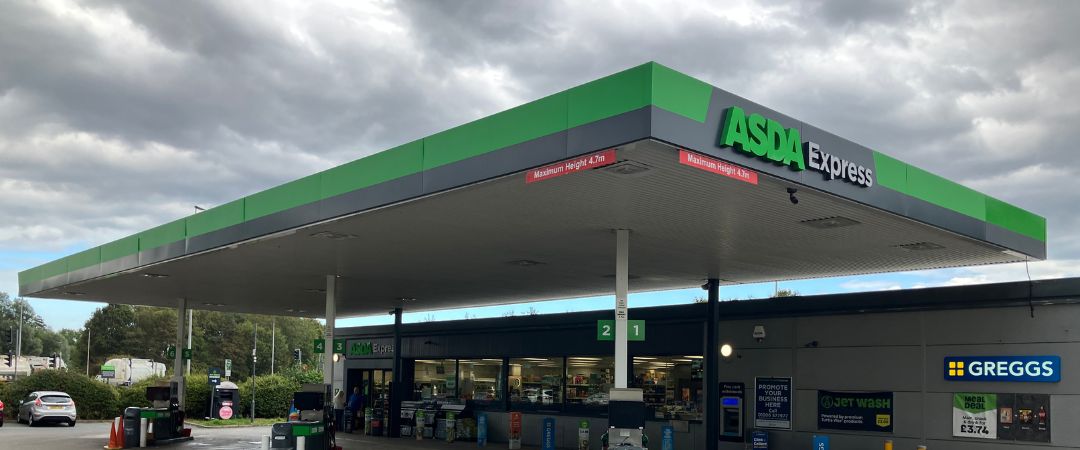
The first week in September saw me venture to England’s Border County, Northumberland, and this gave me the chance to check out one of the latest Asda Express site refreshes.

Situated on the busy A19/A189 Moor Farm Roundabout, this forecourt was developed as part of a larger service area on the new Annitsford bypass. The forecourt opened in 1992 and was initially operated by Heron Service Stations, with the shop fascia Snax 24 and them referring to the site as Exhibition Service Station. By the early 2000s, the site had rebranded to JET fuels.

The forecourt was redeveloped in 2007 by Somerfield who added a large convenience store to the site. Co-op acquired Somerfield in March 2009, which saw the shop fascia flip to a Co-op Food store whilst the fuel brand transferred to Total. The site became one of the last Total branded sites in the country, lasting until in 2015, despite a nationwide shutdown of the brand in 2012. Following on from this, the canopy also rebranded to Co-op in 2016.

Asda Express Moor Farm (Annitsford)

Asda Express acquired the site as part of their purchase of the Co-op filling stations in October 2023. Following this, Moor Farm (known to Asda as Annitsford) became one of the first to switch to the Asda Express brand and relaunched on 8 November 2023.

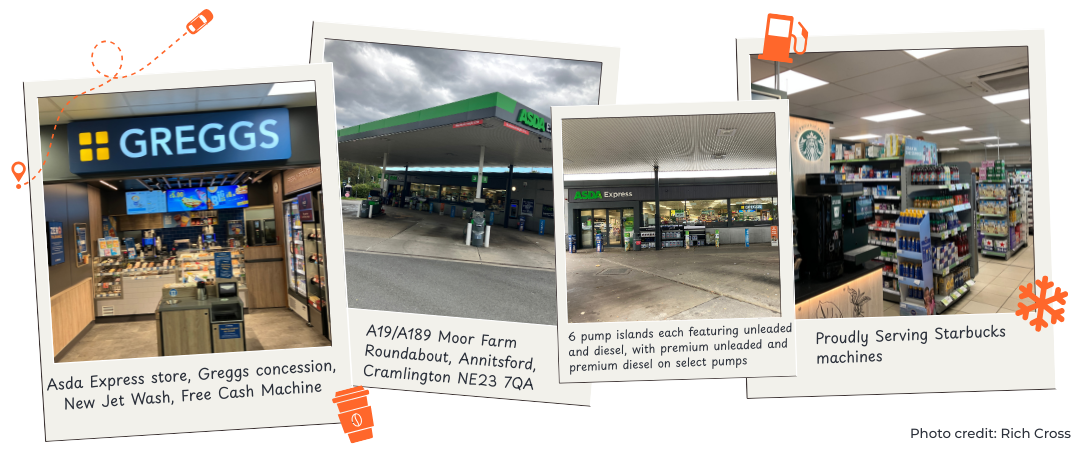
The reason for my return to the site on 10 September was to take a look at the most recent changes to the site. In August 2025, Asda Express added a new Greggs concession to the store as well as replacing the former Costa Express offer with We Proudly Serve Starbucks and adding a new jet wash at the back of the shop building. Annitsford was one of the first three fomer Co-op locations in the UK to gain a Greggs concession, with Asda Express expected to introduce more of these towards the end of 2025.

Whilst visiting the site, I caught up with store manager Adam Mulvey who informed me that the Greggs addition has been super popular since its launch and continues to draw more local trade to the site as well as continuing to serve the travelling public.

The investment and improvements made at Asda Express Annitsford are great to see and I wish the teams there every success in their new store.

To read more articles from Rich Cross The Services King follow him on LinkedIn here.

Asda Express revamp Moor Farm Service Station

Asda Express Moor Farm (Annitsford)

Location – A19/A189 Moor Farm Roundabout, Annitsford, Cramlington NE23 7QA

Opening Hours – 24 hours, 7 days a week

Shop Brand & Facilities – Asda Express store, Greggs concession, We Proudly Serve Starbucks machines, New Jet Wash, Free Cash Machine

Number of pumps & fuel grades –6 pump islands each featuring unleaded and diesel, with premium unleaded and premium diesel on select pumps

What Is Collective Energy Switching?

What Is Collective Energy Switching?

Sponsored

How Can You Save Money Through the PetrolPrices Big Energy Switch?

Energy prices in the UK have fluctuated significantly in recent years, and many households are still paying more than they need to. If you’ve never switched suppliers, or haven’t in a while, you could be missing out on savings. That’s where collective switching comes in.

Next Auction

Day(s)

:

Hour(s)

:

Minute(s)

:

Second(s)

Collective switching is a simple but powerful concept. By joining forces with thousands of other households, you can unlock exclusive, lower-cost energy deals that aren’t available to the general public. PetrolPrices, in partnership with iChoosr, runs one of the UK’s most trusted schemes to do just that.

Benefits of Collective Switching with PetrolPrices

Better Prices: You benefit from bulk buying power, something individuals can’t access alone.

No Obligation: You get a personal offer, but it’s completely optional.

Free to Use: There’s no cost to register, and you won’t be charged to switch.

Trusted Partners: iChoosr has helped over 1.5 million households switch energy and save money.

Simple Process: No phone calls, no hard selling. Everything is handled online and transparently.

How Does Collective Switching Work?

Here’s a breakdown of how it works with us and our partner.

You Register Your Interest

It’s free and takes just a few minutes. You provide your energy usage, your postcode, and basic details about your current supplier. There’s no obligation to switch.

An Energy Auction Is Held

iChoosr holds a reverse auction where energy suppliers bid to offer the best tariff to the entire group. Because they’re competing for thousands of customers at once, they typically offer significantly better rates than individual tariffs.

You Receive a Personal Offer

After the auction, you’ll get a personalised energy offer showing how much you could save. The offer is based on your actual energy usage and household details. You’re not obligated to accept it, but you might find it beats your current tariff by a lot.

You Decide Whether to Switch

If you like the offer, you can switch easily online. The process is handled for you, and you continue to receive uninterrupted energy from your new supplier. If you don’t like the offer, you simply do nothing, no fees, no hassle.

When’s the Best Time to Register?

Now, the sooner you register, the sooner you can be included in the next auction. The next auction date is the 30th September 2025. Once you’re registered, you’ll be notified by email when your offer is ready.

Collective switching isn’t just about saving money; it’s about taking back control of your household bills without stress. Whether you’re energy-savvy or completely new to the idea of switching, the PetrolPrices Collective Switch powered by iChoosr makes it easier than ever to compare and switch with confidence.

Even if you don’t end up switching, at least you’ll know you checked. And if you do? You could join thousands of others who’ve made the switch and saved.

Fuel Prices Stayed Steady in August – But Did You Notice?

Fuel Prices Stayed Steady in August – But Did You Notice?

Unleaded prices remained steady through August, with the average pump price dropping 1.5 pence per litre across the month. Many drivers may not have noticed a drop at all as the four main supermarkets held prices almost unchanged through the month.

Morrisons customers were the most likely to see a change, as unleaded retreated by an average of 0.50ppl across the month, securing their position as the second lowest priced unleaded retailer behind Asda.

Diesel followed a similar trend, with average prices falling by 1.9ppl, but this was significantly less pronounced at supermarkets, where the average drop was only 0.20ppl.

Wholesale data from Portland Pricing shows that both grades traded within a tight band through the month, with the lowest and highest prices less than 2.5ppl apart. A stable underlying wholesale market helped translate to a more stable retail price for UK motorists during the peak driving season.

Tap on our interactive graphs below to compare supermarkets throughout the weeks in August

The spread between retail and wholesale prices is currently at, or close to, the 6-month average. However, wholesale prices did push higher during the final ten days of August and have continued to move higher into September.

This is largely due to risk premiums being priced into the markets. There remains uncertainty around the Russia-Ukraine conflict and increasing pressure from the US on secondary tariffs for countries such as India that are purchasing Russian oil.

Countering these pressures is the threat of a supply glut as OPEC+ completes the unwinding of 2.2 million barrels per day in September.

Did you notice any change in fuel prices last month?
  • Add your answer
© Kama

For now, prices seem to be holding, and there is no clear direction for retail prices to take. Price decreases are outweighing increases, and 2nd September saw more daily price decreases than any day in August as bp and Asda dropped prices at some of their stores.

However, with rising wholesale costs, it is unclear whether this represents a market trend or an effort by bp and Asda to increase competitiveness. It remains to be seen if other stations will cut margins to increase market share as we head out of the summer driving season.

5.7% more UK drivers used the PetrolPrices app to navigate to a Petrol Station in August than they did in July. The number of drivers travelling to stations in France increased by 20.6% month on month.

Did you use the app to save money this summer? Let us know your successes in the comments below

2025 UK Car Buyers: Spending Soars to £20K, but EV Adoption Remains Low at 18%

2025 UK Car Buyers: Spending Soars to £20K, but EV Adoption Remains Low at 18%

As electric vehicles edge closer to the mainstream, new buying platforms emerge, and living costs continue to shape big financial decisions, new research reveals how Britain’s drivers are navigating one of life’s most significant purchases.

With the 2025/26 number plates arriving on 1 September, day insurance experts Tempcover carried out a survey of 2,000 UK drivers to uncover the state of car purchasing across the country, from how much drivers are willing to spend and where they are buying, to their top priorities and plans for the future. The research also looks at the second-hand cars most readily available on the market today.

As UK car buyers spend an average of £20K on their latest vehicle, only 18% plan to switch to electric. What’s holding you back from buying an electric car?
© Kama

Brits Spent an Average of Nearly £20,000 on Their Most Recent Car

When asked about their most recent car purchase, UK drivers reported spending an average of £19,703. Younger buyers led the way, with 25–34-year-olds spending an average of £24,492, followed closely by 18–24-year-olds at £23,704. In contrast, 55–64-year-olds spent nearly £10,000 less than these younger drivers, averaging £15,449.

44% of respondents bought their most recent car brand new, while over half (55%) went for a second-hand vehicle. Even with online marketplaces becoming more visible, nearly half of respondents (49%) bought their car from a main dealership, 29% from independent dealers, 7% online, and 5% from a private seller.

When it comes to payment, despite rising living costs, 59% of drivers paid in full using cash or a debit card, while 11% used a personal contract purchase (PCP) and 8% relied on a personal loan.

Brits Spent an Average of Nearly £20,000 on Their Most Recent Car

UK Car Buyers Prioritise Price Over Safety and Environment

When asked about their top priorities when buying their most recent vehicle, price came out on top, with 52% citing it as their main concern. Reliability followed at 41%, highlighting that many Brits want to avoid costly repairs down the line. Completing the top five were practicality (33%), fuel efficiency (31%) and mileage (23%). For those who bought a second-hand car, the average mileage was just over 31,000, reinforcing that drivers are looking for vehicles built to last.

Claire Wills-Mckissick, day insurance expert at Tempcover, says:
“Despite cost-of-living pressures, cars remain a priority for many drivers. While price matters, most are looking for reliability and long-term value, even if it means paying a little more.”

At the other end of the scale, far fewer drivers considered environmental impact or EV technology a priority (7%), with tech features (10%) and safety features (15%) also ranking low, despite many new cars being designed around these aspects.

Drivers Still Reluctant to Make the EV Switch

While the Government grant of up to £3,750 has encouraged nearly half of motorists (48%) to consider an EV for a test drive[1], 18% of drivers say they plan to go fully electric when buying their next vehicle. Petrol remains the most popular choice at 37%, followed by hybrids at 21%, showing that while interest in greener options is growing, most drivers are still sticking with traditional fuel types for now.

Claire adds: “This doesn’t mean drivers aren’t interested in going electric. Many are open to test driving but may be held back by upfront costs, charging infrastructure, and uncertainty around running costs, showing that practical concerns often outweigh the appeal of new technology.”

The Best-Stocked Used Cars for UK Buyers

With drivers spending just under £20,000 on average and 71% opting for cars with fewer than 50,000 miles, the research also examines which used models are most widely available within this typical price and mileage range.

Top Cars Available Under 50,000 Miles

  Make Model Availability under 50,000 miles*
1 Vauxhall Corsa 4,947
2 Ford Fiesta 4,561
3 Nissan Qashqai 4,219
4 Volkswagen Golf 4,198
5 Ford Puma 3,847

*Autotrader as of 23/07/25

Top Cars Available Between £15,000 and £20,000

  Make Model Availability £15000-£20000*
1 Ford Puma 2,424
2 Volkswagen Golf 1,922
3 Mercedes-Benz A Class 1,593
4 Volkswagen Polo 1,472
5 Audi A1 1,306

*Autotrader as of 23/07/25

The Best-Stocked Used Cars for UK Buyers

With drivers spending just under £20,000 on average and 71% opting for cars with fewer than 50,000 miles, the research also examines which used models are most widely available within this typical price and mileage range.

Claire Wills-Mckissick, adds: 

“Buying a car is one of the biggest financial decisions many of us make, and our research shows drivers are carefully weighing cost, reliability, and practicality before committing. With options ranging from new and used to petrol, hybrid, and electric, it’s clear buyers want to make the right choice.

“Temporary car insurance offers a simple, affordable, and flexible way to test drive a vehicle before buying, providing crucial peace of mind. For private sales in particular, this type of insurance is essential. Unlike dealerships, which often provide cover, a private seller’s policy usually won’t, and getting added as a named driver can be complicated and risk their No Claims Bonus. 

By taking out a temporary policy, which can last from as little as one hour, you can drive a car with comprehensive cover, giving you the confidence to make a larger investment safely.”

For more information on the state of UK car buying in 2025 and top tips for buying a car, visit: https://www.tempcover.com/front-cover/car-buyers-report 

Sources

This online survey of 2,000 UK drivers who own a car which they bought themselves was commissioned by RVU on behalf of Tempcover and conducted by market research company OnePoll, in accordance with the Market Research Society’s code of conduct. Data was collected between 15 and 21 July 2025. All participants are double-opted in to take part in research and are paid an amount depending on the length and complexity of the survey. This survey was overseen and edited by the OnePoll research team. OnePoll are MRS Company Partners, corporate membership of ESOMAR and Members of the British Polling Council. Unless otherwise specified, all insights are drawn directly from this survey’s results.
[1]Research conducted by Mortar Research amongst 2,002 UK adults, all with a driving licence and access to a car, from 12th- 14th August 2025.