Aug 2, 2017
With the summer holidays in full swing, many people are heading off on their summer break. Whether you’re driving to the airport or using the UK road network for a domestic getaway, traffic can wreak havoc with your plans.
From the increased number of road users to scheduled maintenance work during ‘quieter’ times, many factors have the potential to affect the length of our journeys this summer. So, how can you avoid the worst of summer traffic?
The worst culprits named
Transport Minister Jesse Norman has helpfully named and shamed some of the worst roads when it comes to congestion. The 12 mile stretch of the A458 connecting the West Midlands with Wales was highlighted as one of the worst affected roads during the summer holiday period. Some 23% more vehicles use the road in the six-week holiday period than at any other time of the year – definitely one to avoid if you possibly can!
Another road to steer clear of is the A30, which runs from south-west London to Cornwall. The 117-mile-long road sees a 19% increase in traffic during the school holidays. In third place was the 14.5 mile stretch of the A2070 in Kent, which is used to reach a number of beach destinations, including Camber Sands. That route experiences a 16% rise in traffic over the summer period.
Journey problems
It’s not just those who are off on their holidays who suffer as a result of overcrowding on the UK’s roads. Heightened traffic can cause misery for those living in areas that experience significant seasonal increases, meaning that travelling to work or visiting friends can take much longer than usual.
The RAC predicts that some 37 million leisure trips will be made during the first fortnight of the summer holidays. The worst times to travel are between 1pm and 8pm on Fridays, and between 11am and 4pm on Saturdays and Sundays.
Avoiding the chaos
Clearly, avoiding the roads entirely over the summer months isn’t feasible, but how can drivers get where they need to without losing valuable time to traffic jams? And how can locals make their normal routines less stressful when traffic volume has increased?
Use alternative routes
Whether you have a sat nav in your car or prefer to use your smartphone, there are now plenty of options for finding alternative routes and avoiding the most used areas. One example is the heavily used A30 in the Bodmin Moor area – rather than following the road, cut through Bodmin and join it down where the route meets the A39. The detour makes for a great lunch break and cuts out some of the worst of the traffic on the A30.
Google Maps Traffic Updater
A handy facility for dodging the jams is the Google Maps Traffic Updater. Google Maps is a great tool to use as a sat nav system, and its traffic updater can be even more helpful. The free service allows you to see where the worst traffic is along your route and on alternative routes. Red sections indicated traffic moving at below 25 miles an hour. Red-black sections denote stationary traffic.
Travel at off-peak times
Travelling off-peak, such as late at night or in the early hours of the morning has several benefits. Firstly, there’s less traffic on the road, so the journey won’t take as long. Secondly, if you have kids, they might sleep through some of the journey. Just remember that some facilities such as service stations and motorway services might not be open 24 hours a day, so plan accordingly.
Making the most of it
A little forward planning means you can reduce your chances of sitting in a queue of unmoving traffic this summer. Sometimes, however, it isn’t possible to avoid the jams, despite careful planning and use of the latest technology. With that in mind, pack plenty of snacks and other treats, along with a good selection of music and lots of fluids, in case you get stuck on your travels. Think about ways to keep cool as well, and be sure not to let your petrol levels drop too low – using PetrolPrices to make sure you get the best value on your journey, of course!
What are your tactics for avoiding the worst of the summer traffic jams? Share your inspiring jam-dodging techniques by leaving a comment.
Aug 2, 2017
According to an annual report by the Driver and Vehicle Licensing Agency (DVLA), there has been a 166% rise in vehicle clamping over the past three years because of drivers failing to pay their vehicle excise duty (VED). That’s a two-fold increase in clamping since the road tax disc was abolished in 2014.
In the last year alone, nearly 160,000 vehicles were clamped or towed away. This compares with roughly 60,000 vehicles clamped per year before the paper tax disc was consigned to the history books.
The report also highlights that in the three years to April 2017, out of court settlements for unpaid VED shot up by 168%. Over that period, the number of penalties issued also increased (by 155%), while prosecutions leapt by 159%. More sobering still is that drivers have been fined up to £800 for non-payment of VED.
Evasion, confusion – or just plain forgetfulness?
Evasion, confusion and forgetfulness are all being blamed for the upturn in clamping. Either motorists are deliberately trying to play the system, aren’t aware they need to pay VED when they buy a car privately, or are simply forgetting to pay the tax altogether. Some motoring groups are concerned that the lack of a tax disc in windscreens means that some drivers don’t have the visual reminder that a VED payment is due. According to the AA’s Jack Cousens,
“Although the majority get a reminder by post, some won’t as they have failed to inform DVLA of a change of address, while others simply get lost in the post.”
Perhaps the best solution for those who are forgetful is to take advantage of the DLVA’s option to pay VED by monthly direct debit. It means that the absent-minded motorist need never miss a payment again.
Motoring groups also believe that part of the problem is caused by consumers buying cars in a private sales. Previously, the tax would automatically continue, but now the new owner must ensure that their purchase is taxed before they head out on the road. As the RAC Foundation’s Phil Gomm points out:
“The data suggests there are still too many people unaware that when they buy a car the tax no longer comes with it.”
Clamping down on dodgers
Alas, some drivers simply believe that they can game the system and not bother to pay at all. The reason? They believe it’s far more difficult for the authorities to catch them, as a tax disc no longer has to be displayed.
However, the DVLA argues that automatic number plate recognition cameras will spot VED dodgers. It is standing firm on the changes to how the duty is collected – and on the punishments it hands out to those who fail to pay. After all, the DVLA claims that it is losing £78 million in revenue because of the problem. That’s a sizeable chunk of the £5.9 billion raised by the duty each year. A DVLA spokesperson commented,
“It’s easier than ever before to tax your vehicle, and more than 98 per cent of vehicles on the road are correctly taxed. The law is clear and that is why we take action against those who break the law on behalf of the taxpayer.”
To ensure that you are fully paid up, head here to tax your vehicle. Alternatively, check to see if the vehicle is taxed already by clicking here. Bear in mind that any changes to the DLVA’s records can take up to five working days to update.
How to pay your fine
If you are fined for the non-payment of VED, there are several options for paying the fine quickly. Doing so ensures you don’t fall foul of further DVLA penalties. Such penalties can include having your car clamped or crushed. DLVA can also pass your outstanding fine to a debt collection agency to ‘administer.’
Pay online
Click here to begin the process – remember, you will need the DVLA letter that states the fine to be paid, as well as your car’s registration number and the debit or credit card you intend to use to pay the fine.
Pay by phone
Call the DVLA direct on 0300 790 6808 on weekdays between 9am-5pm. Again, have your DVLA letter, registration number and payment card to hand.
Pay by post
You can send a cheque or postal order made payable to the DVLA. Ensure you write your registration number on the back before posting it to:
DVLA Enforcement Centre
D12 Longview Road
Morriston
Swansea
SA99 1AH
– Should the clamping increase be ignored because the responsibility should be on the driver, not the DVLA? Or should the agency reintroduce the tax disc to help people remember more easily and make it harder for VED dodgers? Let us know your thoughts below.
Jul 28, 2017
The government has announced that the Severn crossing tolls will be scrapped in 2018. The move plans to boost the economies of South Wales and the South West of England, by making them more accessible to each other. If it works, might the scrapping of the Severn tolls be a sign of things to come for the UK’s other toll roads?
A new economic era
Used by 25 million vehicles every year, the Severn crossings give businesses, commuters, and tourists a simple way to travel between South West England and South Wales. By banishing the tolls, the government hopes this will show that it is committed to improving the Welsh economy.
The government claims the move will help to boost Wales’ economy by £100 million annually. The change will also purportedly save some motorists as much as £1,400 each year.
The road to zero tolls
Opened in 1966, the Severn Bridge took three and a half years to build, at a cost of £8 million. It was hailed as marking the beginning of a new economic era for South Wales. The second Severn crossing was inaugurated in 1996 to help ease the traffic on the original bridge and offer a shorter route into Wales. Built by Severn River Crossing plc, which also took over the management of the original Severn Bridge, this second crossing cost £330 million to create.
The plan is for Highways England to take over the running of the bridges at the start of 2018. Toll charges will first be reduced and then scrapped completely by the end of the year, as pledged by Theresa May in the General Election.
The initial decrease in cost will see cars, minibuses and vans paying £3 to cross and lorries paying £10. The money will be used to help meet the cost of maintaining, fixing and resurfacing the crossings, at an estimated £95 million.
The toll reduction comes with an estimated congestion increase of 17%. It is unknown what the impact on congestion will be once the toll charges are removed completely. One can imagine that noise and air pollution will rise steeply.
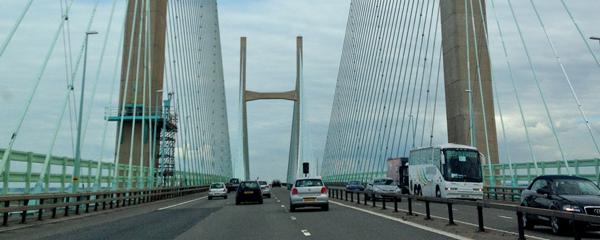
(Credit – David CC BY 2.0)
The sign of things to come?
If this change is a success, might the government also look at lowering, or abolishing, toll charges on other roads? The UK is on a delicate economic path over the next few years. If a link between removing toll charges and significant economic improvement can be proven, no doubt many other areas will be keen to cash in on the example being set by the Severn crossings.
Removing toll charges from other areas would also help out motorists who are struggling to meet the financial costs associated with driving, either due to having to pay tolls or by taking longer routes in order to avoid them.
Whether this sparks a chain of events that sees toll roads across the UK becoming free to drive on remains to be seen. Certainly, for now, the PetrolPrices team will be watching the impact of the Severn crossings toll scrappage scheme on the UK’s economy with keen interest.
Will scrapping the Severn crossing tolls deliver the expected economic benefits? If it does, will the government scrap other toll charges around the UK? Leave a comment to let us know your views.
Jul 27, 2017
If you’re in the market for a new car, you no doubt have a list of requirements that you want your chosen vehicle to meet. Safety, comfort, reliability, environmental friendliness, economy – all of these impact on the choices we make when it comes to which brand and model of car suits us best.
Guaranteed reliability?
Reliability is understandably a key factor for many car buyers. Dealing with problems and breakdowns can be expensive and inconvenient, particularly if you rely on your car for getting to work or doing the school run.
You might be forgiven for assuming that more expensive vehicles offer enhanced reliability. However, a recent Which? survey has found that 36% of luxury car owners, with models valued at around £50k, had a fault with their vehicle in the past year. Meanwhile, just 25% of those with a vehicle valued at around £10k experienced an issue.
The surprising results suggest that cheaper car models are more reliable than their luxury counterparts.
More money = more faults
One reason for this could be that high-end cars are so packed full of technology that more can go wrong with them. A car with a simpler specification has fewer parts that can cause a fault. Luxury car owners face the prospect of an increased range of electrical malfunctions, as well as mechanical issues. Alarms and warning lights for faulty sat nav systems, low tyre pressure and a range of other issues may be a great way to keep your vehicle in tiptop condition, but they hardly make for a stress-free driving experience.
Large SUVs were found to be the most unreliable cars, with 35% of owners facing a fault. These were closely followed by luxurious estate cars, with 34% developing an issue. The figure dropped to 28% for sports cars.
For those who prioritise reliability above all else when buying a new motor, Auto Express has revealed the most reliable cars of 2017. Toyota, Skoda, Audi, Seat, and Lexus may not be brands that you immediately associate with reliability, but most of these have held top spots for many years. The ranking is based on owners’ experiences – drivers submitted an overall score for reliability, plus one for build quality. They also noted any problems they experienced with their cars.
As well as experiencing fewer faults, cheaper cars come with the added advantage that they are less costly to fix when they do go wrong, as their parts cost less than those of luxury models. This offers another saving opportunity for drivers of less expensive vehicles.
Fashion over function?
The Which? report raises the question of whether those who opt for luxury brands are choosing fashion over function. Many drivers associate a certain degree of prestige with buying luxury car brands, instinctively opting for the most expensive brand that their budget will allow. However, the Which? survey indicates that such a feeling may well be short-lived. There’s nothing overly prestigious about sitting in a garage waiting room while your new motor undergoes repairs!
What are your experiences of luxury versus cheaper car models? Are you surprised to find that cheaper models are more reliable? Leave a comment to let us know.
Jul 26, 2017
Diesels’ pollution credentials have been under extensive scrutinty for some time now. Diesel’s fall from grace has been fast. Many car buyers have been discouraged from buying vehicles that were not so long ago being flagged as the way forward. However, one positive effect has been a reduction in price of diesel cars. In fact, many diesels are now cheaper than their equivalent petrol models. But will people still buy them?
Increasing pressure
The number of diesels sold in recent months has plummeted in response to the negative press that the vehicles have been receiving. This has led to many dealers accumulating a larger stock of these cars than usual. According to the SMMT, diesel sales have dropped by 10% over the past year – that means some 67,000 fewer diesels were sold in the first six months of this year.
Many dealers are now keen to clear their forecourts of diesels. One way that they’re approaching this is to offer substantial discounts on diesel models. While lower running costs have traditional balanced the fact that diesels cost more than their petrol equivalents, it seems that balance is now shifting, with discounts for diesels meaning that they are in may circumstances now the cheaper option.
Bargain prices
Diesel vehicles such as the BMW 3 Series, Audi A3, Nissan Qashqai, Renault Kadjar and Ford S-Max now offer savings of £5,000 or more when compared with equivalent petrol models. Some price comparison websites say that the savings on diesel vehicles are double those available on the same model with a petrol engine.
The bargain prices show that garages and sellers simply have too many diesel vehicles in their stocks. They want to shift them, but are running into fears about pollution levels, especially for drivers in inner city areas. News reports of health scares potential tax rises and inner city areas surchargers have combined to cause drivers to shy away from diesel models. Motorists are instead opting for petrol, electric or even hybrid vehicles.
The great diesel revival?
Could the current discounts lead to a revival in diesel sales? Dealers are certainly keen to reassure drivers that they are buying vehicles that comply with the latest emission checks, after the chaos of the Volkswagen scandal. These vehicles are also exempt from the T-Charge that comes into force in London in October.
Despite this, a poll from This is Money found that just 37% of people intended to buy a diesel car when they next made a purchase, while 43% planned to opt for an unleaded petrol car. The rest were interested in electric or hybrid vehicles.
Finance deals
For those who are prepared to look beyond the scare stories, the current diesel discounts make for some very appealing prices. Using a PCP finance deal, which guarantees the value of the vehicle at the end of the loan agreement, means that drivers won’t face a massive loss even if the value of diesel vehicles continues to drop. As such, if you want to take a chance and grab a bargain, diesel might just be the way to go!
Would the current low prices tempt you to buy a diesel instead of a petrol model? Will they lead to a temporary revival of diesel cars? Leave a comment to share your thoughts.
Jul 26, 2017
The government is due to announce shortly that new petrol and diesel cars and vans will be banned from 2040. The measure is part of plans to tackle the UK’s air pollution problems. It mirrors the approach being taken by France and other parts of Europe. While tackling air pollution is laudable, the move looks set to throw the UK’s petrol industry into chaos.
The price of clean air
Clean air is obviously a good thing. However, achieving it could have costly economic implications at a time when the UK economy needs careful handling. Car manufacturers can easily adapt to producing electric and hybrid cars. Many already plan to do so, with BMW being the latest to announce its plans for fully electric vehicles (in this case Minis). Little has been said though, of what will happen to the petrol retail industry when the number of electric vehicles on the UK’s roads rises steeply.
Just under 45 billion litres of road fuel is sold in the UK every year. That works out at around 77 million litres of diesel and 45 million litres of petrol per day. 2.69 million cars were registered in the UK in 2016, the vast majority of which were petrol and diesel models. The sudden disappearance of more than 2.5 million customers per year, when all those buying new cars purchase electric models, could very quickly destroy the petrol industry as we know it. If the government has considered this angle, it’s certainly keeping quiet about it thus far.
What about other vehicle types?
The government has also been conspicuously quiet when it comes to plans for other classes of vehicles. Lorries and buses contribute plenty of nitrogen dioxide to our air, yet the government seems to be pushing the responsibility to tackle those out to local authorities.
Environment Secretary Michael Gove has stated, “What we’re saying to local authorities is come up with an imaginative solution to these proposals.” This puts the ball firmly in the court of local councils when it comes to tackling pollution from public transport. The government will dish out some £200m in funding to those local authorities, which will need to focus on tackling the worst polluted roads through measures such as making buses less polluting, changing road layouts and re-shaping traffic flows.
While it’s good to see the government finally on the brink of announcing its plans to tackle air pollution, PetrolPrices can’t help but think that it is missing a trick by ignoring recently announced technological advances relating to the cleanliness of diesel.
Could it be that the emissions testing scandal vilified diesel to such an extent that the government is unwilling to shout about developments such as Continental’s Super Clean Electrified Diesel technology, which reduces real world emissions by some 60%? Surely it would be more sensible to make it compulsory to retrofit super diesel technology into all diesel cars by 2025, for example. Such a plan could provide a serious head-start on tackling air pollution, with other measures still able to follow in due course.
What’s missing from the government’s plans?
Glaringly absent from the government’s plans is the much-anticipated diesel scrappage scheme. Ministers are believed to be due to consider such a scheme in the autumn, but any firm commitment to do so has been lacking. The possibility of local council diesel scrappage schemes has also been mentioned – a clear sign that the government wants to distance itself from paying any kind of compensation to diesel drivers who feel let down by the U-turn in approach to their vehicles.
Also in doubt are plans for ‘clean air zones’ within cities. When pressed on the issue of charging drivers of high polluting vehicles, Michael Gove commented,
“I don’t believe that it is necessary to bring in charging, but we will work with local authorities in order to determine what the best approach is.”
Again, it seems that central government is keen to sidestep the issue and push it out to local councils to deal with. Could it be that, even with the pressure to produce detailed plans to tackle air pollution by the 31 July deadline, and the announcement of plans to ban new diesel and petrol cars by 2040, the government is still unwilling to tackle the issue head on?
Do you think of the government’s plan to ban petrol and diesel cars and vans by 2040 is the right move? Or should there be more of an effort to embrace newer, cleaner technologies to reduce emissions instead? Let us know what you think in the comments.
Jul 26, 2017
According to the latest government figures, nearly 100,000 vehicles were stolen last year. Break-ins rose to 250,000 over the same period. The increase in theft marks the single biggest leap in vehicle crime in a decade.
Figures from the Office for National Statistics show that 97,152 vehicles were snatched in the year to March 2017. Meanwhile, break-ins were up 8% compared to the previous year. Attempted thefts also rose, with 2016 seeing a 14% increase.
Mrs May’s fault?
The figures make for sobering reading, especially when you consider that they buck the previous trend of car crime falling in recent times. The main reason for such a dramatic reversal is being laid firmly at the feet of the government and the fact that police numbers are at their lowest since 1985.
Steve White of the Police Federation of England and Wales asks,
“What more of a wake-up call does the government need? Government needs to start to invest now in backing the police service so that it can carry out its primary responsibility, which is the safety and security of its citizens. These figures demonstrate that this has not happened.”
Which cars are stolen?
The sudden spike in car crime means drivers are left struggling to secure their vehicles from thieves. Inevitably, certain makes and models of cars are at the top of thieves’ wish lists. As such, making a purchasing decision based on how ‘nickable’ a car is could be a shrewd move. Car tracking company Tracker recently released its top 10 list of the most stolen (and recovered) cars:
10. BMW 5-Series
9. Land Rover Defender
8. Range Rover Vogue
7. Range Rover Autobiography
6. BMW 3-Series
5. Mercedes-Benz E Class
4. Mercedes-Benz C Class
3. BMW M3
2. Range Rover Sport
1. BMW X5
According to anecdotal evidence heard by PetrolPrices, less expensive cars are also being heavily targeted, including models from Ford, Vauxhall and Volkswagen. We’ve also heard that particular favourites among thieves are the Volkswagen Golf R and Audi S3.
Consider where you park
Where you park can play a big role in whether you’ll be targeted by car thieves. Tracker highlights the worst affected areas. The breakdown reveals a particular emphasis on targeting vehicles in the North:
10. Lancashire
9. South Yorkshire
8. Merseyside
7. Greater Manchester
6. Surrey
5. Kent
4. West Yorkshire
3. West Midlands
2. Essex
1. London
Thieves taking advantage of tech
Technology has helped crush the old technique of breaking into a car and ‘hot-wiring’ it. However, tech is now becoming the Achilles’ heel of security in the eyes of more savvy criminals. For instance, the keyless entry technology used by 30 carmakers was shown to be flawed by the German AA earlier this year. It managed to perform a simple hack with a device that can be bought for £80.
In another incident, car thieves were caught on camera holding up a bag to a car owner’s front door. Inside the bag was a range extender. It increased the range of the BMW key fob inside the house and allowed the thieves to start the car without entering the property. They subsequently made off with the BMW X5 in the driveway.
At least in such cases, the car owners are left to sleep, often unaware their vehicle has been stolen until long after the thieves have gone. A far more worrying trend is when thieves break in to grab keys. While many cases see thieves making off with keys without disturbing the household, there have been tabloid horror stories of people being attacked by burglars as they come downstairs to investigate the noise.
To counteract such occurrences, police encourage car owners to take their keys up to bed with them – though we’re not sure how wise such a strategy is if a thief is determined to get the car that night. The police also advise people to follow standard anti-burglary procedures to secure their properties.
Take action now
While any car can be a target for thieves, it’s inevitably luxury vehicles that attract the most attention. Sadly, it’s an issue that more and more drivers must consider when deciding on which new car to purchase.
While it feels wrong to make a choice based on the chances of a thief stealing your vehicle, one upside to buying a less alluring car is that it will inevitably be cheaper and more economical to run. You’ll experience lower costs all-round, as well as being able to use PetrolPrices to source cheaper fuel. If that means you and your loved ones can sleep easier at night, we’re all for it.
Could the police be doing more to tackle car theft? Or do vehicle manufacturers need to shoulder some of the responsibility for the increase in stolen motors? Let us know your thoughts below.
Jul 26, 2017
New research shows that 30% of drivers could be risking a ban because they don’t realise their eyesight is too poor to operate a vehicle safely. According to Vision Express and road safety charity Brake, five million UK motorists would fail the practical driving test’s number plate test. Drivers have to read a number plate from at least 20 metres away in order to pass.
Don’t be one of those who contribute to the 2,900 casualties per year due to poor vision. If you have even the slightest of concerns about your vision, book an eye test today. If you do have an accident and your eyesight is shown to be a contributing factor, you could end up being disqualified from driving, with your car insurance potentially invalidated as well.
The eyesight issue highlights a bigger risk though – that some motorists could be breaking the law without even realising that they are doing so. It’s a far more common issue than you might think, as PetrolPrices reveals in its top six biggest unknown risks to your driving licence.
1. Drive with dry feet
What you should wear on your feet when driving has caused some debate over the years. There has been much discussion on whether it is illegal to drive in flip flops or with bare feet. According to the RAC, neither is illegal as long as you are in full control of the car.
When it comes to going barefoot behind the wheel though, the organisation says that you mustn’t have wet feet, because that poses a serious risk to your ability to control the car – and that is illegal.
2. Keep Rover restrained
The image of a dog with its head out of the window, ears flapping in the wind, brings a smile to many of us – until there is an accident and the dog becomes lethal projectile for all those in the canine-carrying car. It also means that dear pooch will be unlikely to survive in the event of an accident.
That’s why the Highway Code states that dogs and other animals must be “suitably restrained so that they cannot distract you while you are driving or injure you, or themselves, if you stop too quickly.” If you are found to be driving with an unrestrained dog, you could lose your licence. In the case of an accident, you could also end up with no insurance cover.
3. Put your foot down
While we’re not condoning speeding, it is an offence to drive too slowly in the UK. Police can stop and charge you with ‘careless driving’ in extreme cases, leading to potential points on your licence.
That might sound strange but research has shown that other drivers can become frustrated with slow drivers and are more likely to make rash over- or undertaking decisions. This leads to an increased chance of an accident.
4. Avoid mobiles and… fast food?
To use a mobile phone legally when in your car, you must be parked up safely with the handbrake engaged and the engine off. Even sitting in a queue at a fast-food drive through could land you in trouble with the police.
Using your phone to pay for the meal while your car is idling is actually a criminal offence. It could see you being prosecuted for using a mobile while driving. Expect an extra large £200 fine and six points on your licence to go with that Big Mac and fries.
5. Watch your medication
The idea of police cracking down on drug drivers inevitably brings to mind a stoned young driver with a joint hanging from their bottom lip, but there are also serious consequences for those found to be driving while on certain prescription medicines. These medications include clonazepam, diazepam, flunitrazepam, lorazepam, oxazepam, temazepam, methadone and morphine.
If you are taking these medicines at their prescribed levels, you are in theory not breaking the law – but any higher and you could face a driving ban. It’s best to check with your doctor when any medicine is being prescribed to ensure you are on the right side of the law.
6. Mute your music
After a long day, it’s not uncommon for many of us to crank up the volume to clear the mind and destress. But be warned – if you play your music too loudly and fellow motorists report you, you could be penalised for causing alarm, annoyance or distress to those round you.
The police may proffer a simple verbal warning. If you ignore it, they have the power to take your car. So please consider your fellow motorists and turn it down!
Should such obscure driving laws be enforced by the police? Or are they a sign of a nanny state that needs to back off? Let us know your thoughts below.
Jul 20, 2017
Emergency pull off areas on smart motorways, spaced every 1.6 miles, are to be painted bright orange in an effort to make them stand out so drivers know where they are and what they’re to be used for. Highways England has said that 52% of drivers didn’t even know emergency refuge areas existed on smart motorways. This is of grave concern, as if an accident or fault on a vehicle occurred, drivers would not know where to stop.
According to the Daily Mail, an RAC study of 2,000 drivers indicated ‘considerable confusion’ about how to use emergency refuges. In addition, 64% were unsure about what to do after stopping and 65% were unclear about how to re-join the road with such a short lay-by to pull out from.
Orange refuge bay trials in Surrey
For the last few weeks, there have been trials on the M3 smart motorway in Surrey and Hampshire, where emergency refuge bays have been painted bright orange and new signage has been put up. The refuge areas are in place for when drivers have an emergency while there is no hard shoulder. Those drivers otherwise run the risk of causing congestion or accidents.
To support the trial, a marketing campaign across social media, radio and television, has been put in place to remind motorists to check their tyres, water, oil levels and fuel before making journeys, to avoid unnecessary breakdowns.
The campaign also highlights that drivers should not use lanes with a red X above them, as this means that there is an obstruction ahead which could disrupt the flow of traffic.
Orange bays as a deterrent
It is hoped that the creation of orange bays, combined with concentrated marketing activity, will deter drivers from using emergency bays other than in an emergency. Some drivers are mistakenly seeing the emergency bays as lay-bys to pull over in, similar to lay-bys that appear on the UK’s A roads.
The point of changing the signage and painting the bays bright orange is to visually notify drivers that you must only go into them if it’s an emergency and to deter drivers from using the bays for other purposes. Whether Highways England is considering the introduction of cameras to police the bays (and fine those who use them for non-emergency reasons) has not been discussed.
Experts concerned orange bays not enough
Despite these new measures, motoring experts do not think that orange bays are enough.
AA President Edmund King feels there needs to be double the amount of emergency refuges on smart motorways without a hard shoulder. The current plan is a refuge every 1.6 miles or 75 seconds of driving at 60 mph.
King comments,
“Whilst we support measures to improve motorway capacity, we do not think that safety should be compromised. We do not accept that the current criteria of emergency refuge areas are safe. Breaking down in a live running lane with trucks thundering up behind you is every driver’s worst nightmare. The official advice is to dial 999, which just shows how dangerous the situation can be.”
The RAC is equally concerned that not enough has been done to protect motorists through orange bays. RAC road safety spokesperson, Pete Williams, comments,
“Smart motorways are becoming an increasingly common feature of our motorways across England as they are rolled-out in effort to tackle congestion but there is still a good deal of misunderstanding about what to do in the event of a breakdown or an accident.
“The planned development also includes a clear indication of where to stop, additional distance markers between ERAs, and better signage with the internationally recognised SOS acronym to improve understanding of how they should and shouldn’t be used. We hope this will be rapidly adopted across existing and all new smart motorways.”
Congestion solution at cost of road safety?
Smart motorways have long been seen as a more cost effective way to tackle road congestion than a huge road widening programme. However, in some people’s eyes, smart motorways have helped ease road congestion at the overall expense of road safety, due to the elimination of the hard shoulder.
There is a lack of data to support any argument against emergency refuge bays. However, without a hard shoulder, if there is an accident or a vehicle needs to pull over in an emergency, smart motorways feel less safe to drivers. Tackling this perception is a big challenge for the government over the next few years.
What do you think about orange emergency refuge bays? Do you think they’re a good idea or do you think they put drivers at risk? Have you used one on the M3? Let us know in the comments below.
Jul 20, 2017
A graduate transport planner has won the annual Wolfson Economics prize by coming up with a radical way for motorists to pay for all forms of motoring taxation. The universal “pay as you drive” model combines car insurance, road tax, congestion and pollution levies, as well as fuel duty.
The Wolfson Economics Prize, founded by Next fashion chain boss Lord Simon Wolfson, invites people to submit ideas for addressing important economic issues, with a prize of £250,000 up for grabs.
This year, people were asked to submit ideas for making the UK’s roads better and safer, while benefitting the economy and the environment. This is something that all motorists would like to see happen soon. With 120 entries coming in from seven different countries, judges were impressed with the range of innovative ideas that were submitted. However, there could only be one winner.
Scrapping vehicle excise and fuel taxes
The winning idea came from 27-year-old graduate transport planner, Gergely Raccuja. Raccuja was born in Hungary but now lives in the UK after moving here to study. He suggested that both vehicle excise duty and fuel duty be scrapped and replaced with a pay-per-mile tax plan. He believes this would help to restore trust between politicians and motorists, something that has certainly been lacking.
Originally, vehicle tax was introduced to raise revenue to maintain and repair roads. It was later changed to become a general taxation. However, even when the funds were dedicated to the roads, there wasn’t enough to cover everything that needed fixing.
Fuel duty is paid on several fuels, which are used by most UK motorists (with the exception of local bus services and some farm and construction vehicles) and which adds significantly to the cost of fuel. An abolishment of this tax would see a significant drop in prices at the pumps. Not only would drivers welcome this, but it would also lead to significant economic stimulation, as the cost of running a vehicle would decrease.
Pay-per-mile driving tax plan
The proposed tax plan also has input from the RAC Foundation. It would see motorists being taxed per mile driven, with drivers of heavier, less eco-friendly vehicles paying more than those who’ve opted for lighter models that produce less pollution. The tax would be enforced by insurers based on mileage and car model, paid either monthly or as an annual charge.
Drivers won’t be asked to pay more overall and, as insurers already hold all of the required details, it will not affect people’s privacy. The proposed system will also mean that there won’t be any extra administration charges; drivers will simply pay their road bill alongside their insurance premium.
With the £27 billion being made from fuel duty each year under threaten from the increasing number of electric vehicles on the road, this new tax plan could redress the balance and ensure that drivers of these vehicles would still be contributing to the exchequer’s stream of revenue.
The plan also suggests that if 20% of the new tax funds were allocated to repairing roads, the UK’s potholes could all be gone within five years, making the roads far safer than they are currently by reducing the risk of punctures, bent wheels, and damaged suspensions.
Raccuja’s simple but inventive plan beat a number of other entries, including one proposing tradable road miles, and another which suggested rewarding drivers who changed their driving habits to help to ease congestion.
Is it a way to tax polluters by stealth?
A universal pay-per-mile tax plan would certainly make working out motoring costs a lot easier. It could also benefit the environment, while still bringing in money from eco-friendly cars. It seems to be the perfect plan for creating safer, better roads that everyone pays fairly to use.
However, cynics could argue that a universal pay-per-mile tax model would serve to enforce efforts to remove high polluting vehicles from the road. It could also impact negatively on low income groups who drive for a living.
Similar “pay as you drive” models have been suggested by previous governments . Motoring lobby groups have resisted attempts to charge on a per-mile basis, in the same way that identity cards were resisted as they were seen as too “big brother” and an invasion of civil liberties and privacy.
There are two ways for motoring taxation to function: either tax the products and services we need to drive, or tax the action of driving itself. Taxing the products and services means that there is a higher barrier to entry for people driving but that the costs level off once past that point. With pay as you drive, the barrier to entry is very low and more cost effective for occasional drivers. However, those who drive a lot will end up paying for those who drive less, which we’re not sure is a fair model.
What do you think of the “pay as you drive” idea that has won this economics prize? Would you be happy to embrace the idea if it meant no fuel duty? Is it a way to penalise polluters and low income groups who drive a lot for a living? Let us know in the comments below.
