Aug 9, 2017
Motorists in Derby are claiming that a new roundabout has caused ten accidents in 48 hours. They are blaming a lack of lighting and signage for the cluster of fender benders. But are such road issues just the tip of the iceberg when it comes to Britain’s road network? Are you up to speed with all the dangers that the UK’s motorists face?
The roundabout on the A516 in Derby had only been open for two days when drivers revealed that it had caused multiple accidents because motorists were failing to see it in time. So bad was the situation that one motorist, David Wilson, not only crashed his car but witnessed another car drive over the roundabout while he waited to be rescued. Wilson told the Daily Mail,
“Fortunately, for whoever was driving, it was a Land Rover and they were able to get over the island without too many difficulties, but other people are going to crash there until something is sorted.”
What went wrong?
Thankfully, no one has been hurt in the accidents thus far. The roundabout was built to service a new housing estate development. It has subsequently been fiercely criticised by locals, who are demanding that the council install rumble strips. The council has investigated. It believes that the roundabout’s new lighting had stopped functioning and that the issue has now been resolved.
However, some could argue that the roundabout is a typical sign of Britain’s increasingly inferior road network. There are a host of issues that, at best, infuriate drivers and, at worst, can cause serious damage to cars and those in them.
Potholes driving motorists potty
As many a swearing driver will attest to, potholes are public enemy number one. According to recent research, there is one pothole per 110 metres of road in Britain. These cost motorists £684 million a year in car repairs, with a pothole compensation claim being made every 17 minutes. Successful claims cost the government £2.3 million in 2016.
To tackle the pothole plague, the government has set aside £250 million for its Pothole Action Fund. However, the funding is a drop in the ocean according to the Asphalt Industry Alliance, which claims that £12 billion is needed to sort out Britain’s potholes. A recent report by Car Parts 4 Less highlighted the 10 worst afflicted roads:
Cottage Lane, Ormskirk
Liverpool Road (A57), Salford
Chester Road, Poynton
Topsham Road, Exeter
Bingley Relief Road (A650), Bradford
Dunstable Road, Luton
Dividy Road, Stoke-on-Trent
Hills Road, Cambridge
Stratford Road, Solihull
Garrett Lane, Wandsworth
Skid-happy highways
An investigation by the Department for Transport revealed that 26% of our A roads require “further investigation” because they offer inadequate skid resistance. The findings are the highest since records began back in 2007/2008. Some 11,000 vehicles skidded on dry roads and led to accidents in 2015.
AA president Edmund King told the Express newspaper,
“It means that, if a law-abiding driver is travelling within the speed limit and a child steps out, what may have been an avoidable accident could become a tragedy.”
Road signs driving us to distraction
The onus is on drivers to keep abreast of the Highway Code. However, our mass of road signs and their meanings are leaving two in five motorists flummoxed. Driver confusion can lead to sudden braking that can cause congestion and accidents. While many of us may pride ourselves on our knowledge of the rules of the road, it’s worth taking this test to see just how clued up you really are about the UK’s road signs.
The issue is being exacerbated because our roads have been flooded with too many unnecessary road signs, claim some critics. In 1993, there were 2.45 million signs in England; by 2013, this had increased to a staggering 4.57 million. Many believe that such prolific use of signs can lead to confusion and sudden, risky driving manoeuvres.
To tackle the issue, the government gave powers to councils in 2016 to rip down unneeded signs, “ensuring road signs that are used far longer than needed have a ‘remove by’ date; making sure traffic signs are visible on unlit roads; stopping temporary message signs from being cluttered with adverts and distracting logos.” The government believes that the move could “save £30 million in taxpayers’ cash by 2020, leaving drivers with just the signs they need to travel safely.”
What needs to be done to sort out the dangers of the UK’s highways? Is the only solution more investment, and in the current economic climate, will that ever happen? Let us know your thoughts below.
Aug 4, 2017
The Driver and Vehicle Licensing Agency (DVLA) sold more than 1.7 million drivers’ details to private parking firms between April and June. This compares to 1.06 million over the same period in 2016.
The vast increase has sparked concerns that, if this trend continues, there will be a 64% increase in fines annually. That would mean a total of 7 million sets of details being shared, compared to the 4.7 million released during the 2016/17 financial year.
Additional income
The DVLA charges £2.50 per record. That means it made the tidy sum of £4.35 million between April and June. The figure equates to around 19,000 tickets being issued each day, or one parking fine every 4.5 seconds.
The government steps in
The three private parking firms who bought the most records were ParkingEye, which bought 570,000, Smart Parking, at 125,000, and Euro Car Parks, with a total of 118,000 records. By being members of a trade association, such as the British Parking Association or Parking Community, such firms are legally allowed to purchase the driver information that they need in order to issue fines.
The staggering new figures have led to support for the introduction of laws to ensure that private parking firms are regulated in a transparent and consistent way. The aim is to protect drivers from being caught out by firms that aren’t explaining their parking terms clearly enough.
Conservative MP Greg Knight tabled a bill last week proposing a code of conduct for private parking firms. Self-regulation has evidently not worked, with drivers who park on private land facing hugely inconsistent procedures and standards.
Quite often, parking charge notices are issued on dubious grounds, with people not understanding what it is that they did in order to receive one. This adds stress and confusion on top of concern about having to pay the fine.
Do you know your notices?
Drivers can receive two types of parking notice: penalty charge notices, and parking charge notices. These look very similar, but aren’t the same thing.
Both are yellow in colour, affix to the windscreen and carry the same message. However, a penalty charge notice is an official parking fine from the police or council. These are issued for offences such as parking on double yellow lines.
A parking charge notice is an invoice from a private parking firm. These could be given to you in a number of locations, including supermarket and hospital car parks.
To pay or not to pay?
If you find a parking charge notice on your windscreen, and don’t understand why it has been issued, you might not have to pay it.
First, take photographs of where you’re parked, any signs that are around and anything else that is present that you think may make it an unfair charge. This way, you have evidence to support your decision to not pay, should you need it.
If you’ve parked blocking an entrance, or stayed for longer than you were supposed to, you should pay the charge, just as you would if it were a penalty charge notice.
With so much confusion around which charges should be paid and when, it’s not surprising that the number of tickets being given out is rising. The causes of issuing notices are becoming increasingly blurred. As such, it’s certainly possible that some private companies are trying their luck, hoping that drivers will pay the fee without question.
A consistent code of conduct for private parking firms would definitely help to keep everything fair and in order. It would benefit drivers by removing confusing grey areas. As such, PetrolPrices is delighted to see the government finally stepping in to address the matter.
Do you think the government should regulate the conduct of private parking firms? Will this help or will it merely add another layer of bureaucracy to the whole industry? Leave a comment to let us know your views.
Aug 3, 2017
A recent report from the Society of Motor Manufacturers and Traders (SMMT) has revealed that the cost of car services, repair bills and replacement parts could all end up costing British motorists 10% more if the UK leaves the European Union without a beneficial trade deal in place.
If Theresa May decides that no deal is better than a bad deal, the UK would be forced to follow World Trade Organization (WTO) rules. That means British motorists could be looking at a collective bill increase of more than £2 billion per year due to new tariffs that would be put in place.
Do you fancy paying more for your car repairs?
The WTO tariff on imported car parts falls between 2.5% and 4.5%. It would cost the average motorist an extra £21 each year for replacement parts, plus an extra £49 annually on top of this to cover subsidies, customs costs, and regulatory barriers.
80% of car parts in the UK are imported, three quarters from EU countries. Many of these would also be subject to higher charges. The UK would probably have to pay higher tariffs on the parts that are exported to EU countries too.
As such, although there are more components being manufactured in the UK now, the cost of selling them to different countries could jeopardise the amount of money being made by this industry. In fact, it has been suggested that a ‘no trade deal’ could cost British exporters more than £6 billion per year in newly implemented tariffs.
The best way to manage this would be for the government to maintain the UK’s single market and customs union membership until an acceptable trade deal has been reached.
How about paying over the odds for your car insurance too?
As well as the looming spectre of rising repair bills, the Telegraph has recently discovered that motor insurance companies have been inflating repair bills. This is one of the reasons why premiums have been rising.
By charging rival insurance companies up to 100% more than the repairs have cost them, car insurance firms have created a hidden cost layer of around £750 million. That’s equivalent to 5% of the insurance premiums paid by British motorists each year.
With the average cost of comprehensive car insurance now at a record high of £462, this rise in costs has until now been blamed on young drivers, excessive whiplash claims, and tax increases. However, it seems that the insurance firms themselves are partly to blame too.
The Telegraph has revealed that when an insurance firm uses a particular company to fix cars, they can receive discounts for sending multiple vehicles to them. They are under no obligation to pass these discounts on to the rival firm representing the ‘at fault’ driver. Thus repairers will produce invoices for the ‘at fault’ party, then pay the ‘not at fault’ party the difference.
Could the brand be a factor?
Repairers working on BMWs, Audis and Mercedes were found to charge up to 100% higher labour costs than they usually would. This means that the second firm ends up paying far more than the repairs actually cost, and thus increases its premiums to cover this.
The Association of British Insurers, which represents most of the large insurance firms, has been unable to deny the findings. It has stated that the system used by motor insurance firms “could work better.” MPs, consumer groups and repair companies have called for an investigation into the matter.
With repair, maintenance and insurance costs on the rise, it’s more important than ever to ensure that we look after our cars with regular services and by checking tyre pressures, water and oil levels before long trips. A few minutes’ regular attention can help to avoid unwanted trips to the garage, along with extra expense in what is already a difficult financial climate.
Do you think Brexit will lead to higher car repair bills? Could action to bring down insurance companies’ inflated repair bills help to even things out? As ever, share your thoughts in the comments below.
Aug 2, 2017
A petition to introduce compulsory, age-related driving tests is gathering momentum. Benjamin Brooks-Dutton started the petition to the Department for Transport and Secretary of State for Transport after his wife Desreen was killed by an 85-year-old driver who mistook his car’s accelerator for the brake. The vehicle was travelling at 54 miles per hour in a 20 mile per hour zone when it mounted the pavement and struck Desreen.
The petition now has more than 250,000 of the 300,000 signatures that it is seeking. In addition, Harriet Harman MP has written to Lilian Greenwood MP, Chair of the Transport Committee, urging it to hold an inquiry into the mandatory re-assessment of drivers over the age of 70.
You can read about the petiton here

The news comes as DVLA figures reveal that the number of drivers aged 90 and over in Great Britain has topped 100,000 for the first time. When it comes to drivers aged between 80 and 89, the figure rises to more than 1.2 million.
Are older drivers more dangerous?
In 2016, the Older Drivers Task Force report from the Road Safety Foundation reported that,
“Older drivers have reduced ability to judge and adapt to speed and to read complex driving situations. Vision, reaction times and skills in executing manoeuvres decline with age.”
Medical conditions as well as age can impact on driving ability. As such, older drivers are already required to self-assess their medical fitness to drive every three years. However, the Older Drivers Task Force report highlights the fact that self-declarations are unreliable, citing one study that found a 60% disparity between self-declarations of cardiac problems and physicians’ evidence of the same.
Despite this, there is a growing body of evidence to show that older drivers are actually less dangerous on the roads that younger drivers. An accident data study by Swansea University found that drivers aged 70 and over are involved in between three and four times fewer accidents than male drivers aged between 17 and 21. Meanwhile, the Older Drivers Task Force study of police records found that drivers aged over 70 are less likely to kill a pedestrian than middle-aged drivers, and only half as likely to do so as drivers below the age of 25. The report also confirmed that,
“Drivers over 70 are less likely to be involved in crashes involving speed, loss of control or alcohol as a cause. They are more likely to be involved in a right of way violation.”
Should regular testing be compulsory for older drivers?
The Older Drivers Task Force reports that self-regulation is common among older drivers. Many choose to make fewer journeys and avoid more challenging conditions, such as driving at night or travelling on the motorway. However, self-regulation does not work for all. As the judge sentencing the driver who killed Desreen Brooks observed,
“An elderly driver who knows, or should acknowledge, that he or she is losing his or her faculties is no less a danger than a drunken driver who knows the same.”
Driving refresher courses are widely available and provide an option for older drivers to hone their skills. These are voluntary courses, though, and only available to those who can afford to take them.
The idea behind mandatory testing for older drivers is that it would catch those drivers whose faculties are no longer sharp enough that they should be behind the wheel, but who are not self-aware enough to realise this. One must query, however, why it is only older drivers who should be subjected to re-testing. Drivers aged 17-19 are disproportionately involved in car accidents according to DVLA figures. They account for just 1.6% of drivers, but are involved in 6% of accidents. Older drivers, meanwhile, account for 10% of drivers but are involved in just 6% of accidents.
Based on the statistics, wouldn’t it be a better road safety investment to annually re-test those who have just qualified to drive, rather than homing in on those who have decades of experience under their belts?
Do you think older drivers should undergo mandatory re-testing in order to keep their driving licenses? Or is the risk posed by elderly drivers being blow out of proportion? Leave a comment below to let us know your view.
Aug 2, 2017
As we revealed last week, car crime is on the up ,with a 20% spike in vehicles stolen in 2016/17. The rise means that, more than ever, motorists need all the help they can get in protecting their vehicles from thieves.
Enter your postcode into the Co-op Insurance’s new interactive map, which reveals the level of car crime in your area.
Check your street
Simply enter your postcode/location in England or Wales and the map displays the number of car crimes that have occurred on your street and in the surrounding area (based on Home Office data). If car crime has occurred in the past six months, the map will display one of three circles: a red circle indicates six or more incidents; an orange circle between three and five instances; and a yellow circle between zero and two crimes.
You can zoom out to check the overall car crime rate in a particular area. It means you can quickly check before heading out where the safest – and unsafest – areas are to park when you arrive at your destination.
For instance, according to Daily Mail research, the area surrounding Bridge Street in Manchester is a hotbed of car crime. Over in Cardiff, Walker Road and the surrounding area is a particular magnet for thieves. The Sun newspaper found that Broad Street and the surrounding area in Birmingham saw high car crime figures as well.
Of course, if your own street is marked as an area with a car crime issue, the map makes for cold comfort. However, according to several experts, including Co-op Insurance, there are several techniques that can be deployed to reduce the chance of car thieves targeting your vehicle:
Protect your vehicle at home
• Don’t reverse into your driveway or garage; instead, drive in nose-first. This makes it more difficult for thieves to make a quick and tidy getaway.
• Park in front of your home if possible, ideally in front of your living room window. This can deter thieves from making an opportunistic theft because they risk you spotting them.
• Ensure your car is locked and its alarm activated. This might sound like stating the obvious, but car thieves are using jammers to block cars’ systems from being activated by their key fobs – so double check your doors are actually locked before walking away.
• Consider additional security equipment for your car, such as a steering wheel lock. While these can be removed by thieves given enough time, they act as a deterrent because they represent a time-consuming challenge.
• Fit a CCTV camera overlooking your driveway or the immediate area outside your home if you park on the street. Such technology is reasonably priced and simple to install.
• Install a tracker device. That way, if your car disappears from your driveway, there’s a very good chance you can track and recover it.
• Never leave your car running on your driveway, even to defrost it on a cold morning! Firstly, it is illegal to do so. Secondly, you can wave your car insurance goodbye if the vehicle is stolen.
Protect your vehicle while out and about
• Always park your car under a streetlight if possible. When using a carpark, park near or next to other cars. Don’t leave your vehicle tucked away in the corner of an under-populated carpark. That gives thieves more time to make off with it, as they are less likely to be seen.
• Park outside restaurants, bars and pubs wherever possible if using street parking. The threat of a customer inside spotting someone interfering with a car’s locks is enough of a deterrent for many thieves to move on to a vehicle that is parked down a dark side street.
• Finally, ensure all valuables are out of sight or removed when leaving your car. From mobiles and sat navs to bags and jackets, shove everything into the boot or take it with you.
There were 250,000 car break-ins last year – don’t end up with your car being featured in next year’s statistics.
What else can you do?
The most obvious thing to do is take action and protect yourself, as mentioned earlier there are a few ways you can do this that works in concert with your car alarm, sadly just relying on a car alarm is not enough to deter the modern car criminal. Stealing and mobilising a car is hard work these days which is why most car thieves break into your house to simply get your keys instead. You can monitor both your driveway and the entrance to your home with a high quality HD video camera. We have the perfect offer from Y-cam, with a HUGE 30% off (£54 RRP) the retail price this week.
The Y-cam Outdoor HD Pro can monitor your driveway and the entrance to your home. Its controlled by a free app and can be viewed at any time, day or night, from anywhere in the world. FREE rolling 7 day cloud storage for 3 years. Sends automatic motion notifications if anyone comes your driveway or entrance to home, watch the clip of who has triggered the notification. Simple to set up, just mount the camera to the wall, turn on and connect to your Wi-Fi router and start protecting your vehicle as well as your home.
Just click on find out more to see the offer and how to get it – Y-CAM offer ends Weds 9th August 2017.
Apply code PP30OFF in promo code box in checkout
Find out more
What techniques do you use to ensure your vehicle remains safe when parked up? Or do you feel that if thieves are determined enough to take your car, they’ll steal it whatever you try and do? Let us know your thoughts below.
Aug 2, 2017
With the summer holidays in full swing, many people are heading off on their summer break. Whether you’re driving to the airport or using the UK road network for a domestic getaway, traffic can wreak havoc with your plans.
From the increased number of road users to scheduled maintenance work during ‘quieter’ times, many factors have the potential to affect the length of our journeys this summer. So, how can you avoid the worst of summer traffic?
The worst culprits named
Transport Minister Jesse Norman has helpfully named and shamed some of the worst roads when it comes to congestion. The 12 mile stretch of the A458 connecting the West Midlands with Wales was highlighted as one of the worst affected roads during the summer holiday period. Some 23% more vehicles use the road in the six-week holiday period than at any other time of the year – definitely one to avoid if you possibly can!
Another road to steer clear of is the A30, which runs from south-west London to Cornwall. The 117-mile-long road sees a 19% increase in traffic during the school holidays. In third place was the 14.5 mile stretch of the A2070 in Kent, which is used to reach a number of beach destinations, including Camber Sands. That route experiences a 16% rise in traffic over the summer period.
Journey problems
It’s not just those who are off on their holidays who suffer as a result of overcrowding on the UK’s roads. Heightened traffic can cause misery for those living in areas that experience significant seasonal increases, meaning that travelling to work or visiting friends can take much longer than usual.
The RAC predicts that some 37 million leisure trips will be made during the first fortnight of the summer holidays. The worst times to travel are between 1pm and 8pm on Fridays, and between 11am and 4pm on Saturdays and Sundays.
Avoiding the chaos
Clearly, avoiding the roads entirely over the summer months isn’t feasible, but how can drivers get where they need to without losing valuable time to traffic jams? And how can locals make their normal routines less stressful when traffic volume has increased?
Use alternative routes
Whether you have a sat nav in your car or prefer to use your smartphone, there are now plenty of options for finding alternative routes and avoiding the most used areas. One example is the heavily used A30 in the Bodmin Moor area – rather than following the road, cut through Bodmin and join it down where the route meets the A39. The detour makes for a great lunch break and cuts out some of the worst of the traffic on the A30.
Google Maps Traffic Updater
A handy facility for dodging the jams is the Google Maps Traffic Updater. Google Maps is a great tool to use as a sat nav system, and its traffic updater can be even more helpful. The free service allows you to see where the worst traffic is along your route and on alternative routes. Red sections indicated traffic moving at below 25 miles an hour. Red-black sections denote stationary traffic.
Travel at off-peak times
Travelling off-peak, such as late at night or in the early hours of the morning has several benefits. Firstly, there’s less traffic on the road, so the journey won’t take as long. Secondly, if you have kids, they might sleep through some of the journey. Just remember that some facilities such as service stations and motorway services might not be open 24 hours a day, so plan accordingly.
Making the most of it
A little forward planning means you can reduce your chances of sitting in a queue of unmoving traffic this summer. Sometimes, however, it isn’t possible to avoid the jams, despite careful planning and use of the latest technology. With that in mind, pack plenty of snacks and other treats, along with a good selection of music and lots of fluids, in case you get stuck on your travels. Think about ways to keep cool as well, and be sure not to let your petrol levels drop too low – using PetrolPrices to make sure you get the best value on your journey, of course!
What are your tactics for avoiding the worst of the summer traffic jams? Share your inspiring jam-dodging techniques by leaving a comment.
Aug 2, 2017
According to an annual report by the Driver and Vehicle Licensing Agency (DVLA), there has been a 166% rise in vehicle clamping over the past three years because of drivers failing to pay their vehicle excise duty (VED). That’s a two-fold increase in clamping since the road tax disc was abolished in 2014.
In the last year alone, nearly 160,000 vehicles were clamped or towed away. This compares with roughly 60,000 vehicles clamped per year before the paper tax disc was consigned to the history books.
The report also highlights that in the three years to April 2017, out of court settlements for unpaid VED shot up by 168%. Over that period, the number of penalties issued also increased (by 155%), while prosecutions leapt by 159%. More sobering still is that drivers have been fined up to £800 for non-payment of VED.
Evasion, confusion – or just plain forgetfulness?
Evasion, confusion and forgetfulness are all being blamed for the upturn in clamping. Either motorists are deliberately trying to play the system, aren’t aware they need to pay VED when they buy a car privately, or are simply forgetting to pay the tax altogether. Some motoring groups are concerned that the lack of a tax disc in windscreens means that some drivers don’t have the visual reminder that a VED payment is due. According to the AA’s Jack Cousens,
“Although the majority get a reminder by post, some won’t as they have failed to inform DVLA of a change of address, while others simply get lost in the post.”
Perhaps the best solution for those who are forgetful is to take advantage of the DLVA’s option to pay VED by monthly direct debit. It means that the absent-minded motorist need never miss a payment again.
Motoring groups also believe that part of the problem is caused by consumers buying cars in a private sales. Previously, the tax would automatically continue, but now the new owner must ensure that their purchase is taxed before they head out on the road. As the RAC Foundation’s Phil Gomm points out:
“The data suggests there are still too many people unaware that when they buy a car the tax no longer comes with it.”
Clamping down on dodgers
Alas, some drivers simply believe that they can game the system and not bother to pay at all. The reason? They believe it’s far more difficult for the authorities to catch them, as a tax disc no longer has to be displayed.
However, the DVLA argues that automatic number plate recognition cameras will spot VED dodgers. It is standing firm on the changes to how the duty is collected – and on the punishments it hands out to those who fail to pay. After all, the DVLA claims that it is losing £78 million in revenue because of the problem. That’s a sizeable chunk of the £5.9 billion raised by the duty each year. A DVLA spokesperson commented,
“It’s easier than ever before to tax your vehicle, and more than 98 per cent of vehicles on the road are correctly taxed. The law is clear and that is why we take action against those who break the law on behalf of the taxpayer.”
To ensure that you are fully paid up, head here to tax your vehicle. Alternatively, check to see if the vehicle is taxed already by clicking here. Bear in mind that any changes to the DLVA’s records can take up to five working days to update.
How to pay your fine
If you are fined for the non-payment of VED, there are several options for paying the fine quickly. Doing so ensures you don’t fall foul of further DVLA penalties. Such penalties can include having your car clamped or crushed. DLVA can also pass your outstanding fine to a debt collection agency to ‘administer.’
Pay online
Click here to begin the process – remember, you will need the DVLA letter that states the fine to be paid, as well as your car’s registration number and the debit or credit card you intend to use to pay the fine.
Pay by phone
Call the DVLA direct on 0300 790 6808 on weekdays between 9am-5pm. Again, have your DVLA letter, registration number and payment card to hand.
Pay by post
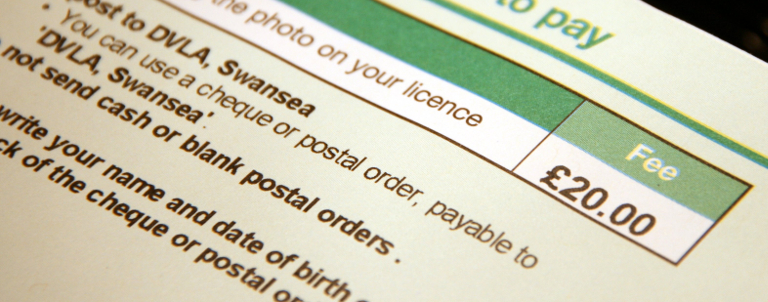
You can send a cheque or postal order made payable to the DVLA. Ensure you write your registration number on the back before posting it to:
DVLA Enforcement Centre
D12 Longview Road
Morriston
Swansea
SA99 1AH
– Should the clamping increase be ignored because the responsibility should be on the driver, not the DVLA? Or should the agency reintroduce the tax disc to help people remember more easily and make it harder for VED dodgers? Let us know your thoughts below.
Jul 28, 2017
The government has announced that the Severn crossing tolls will be scrapped in 2018. The move plans to boost the economies of South Wales and the South West of England, by making them more accessible to each other. If it works, might the scrapping of the Severn tolls be a sign of things to come for the UK’s other toll roads?
A new economic era
Used by 25 million vehicles every year, the Severn crossings give businesses, commuters, and tourists a simple way to travel between South West England and South Wales. By banishing the tolls, the government hopes this will show that it is committed to improving the Welsh economy.
The government claims the move will help to boost Wales’ economy by £100 million annually. The change will also purportedly save some motorists as much as £1,400 each year.
The road to zero tolls
Opened in 1966, the Severn Bridge took three and a half years to build, at a cost of £8 million. It was hailed as marking the beginning of a new economic era for South Wales. The second Severn crossing was inaugurated in 1996 to help ease the traffic on the original bridge and offer a shorter route into Wales. Built by Severn River Crossing plc, which also took over the management of the original Severn Bridge, this second crossing cost £330 million to create.
The plan is for Highways England to take over the running of the bridges at the start of 2018. Toll charges will first be reduced and then scrapped completely by the end of the year, as pledged by Theresa May in the General Election.
The initial decrease in cost will see cars, minibuses and vans paying £3 to cross and lorries paying £10. The money will be used to help meet the cost of maintaining, fixing and resurfacing the crossings, at an estimated £95 million.
The toll reduction comes with an estimated congestion increase of 17%. It is unknown what the impact on congestion will be once the toll charges are removed completely. One can imagine that noise and air pollution will rise steeply.
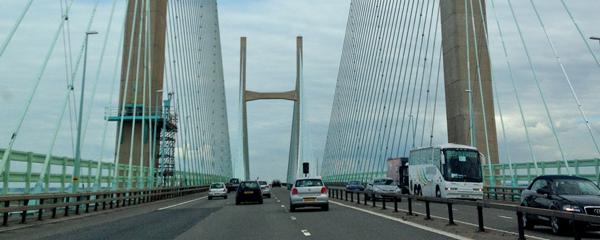
(Credit – David CC BY 2.0)
The sign of things to come?
If this change is a success, might the government also look at lowering, or abolishing, toll charges on other roads? The UK is on a delicate economic path over the next few years. If a link between removing toll charges and significant economic improvement can be proven, no doubt many other areas will be keen to cash in on the example being set by the Severn crossings.
Removing toll charges from other areas would also help out motorists who are struggling to meet the financial costs associated with driving, either due to having to pay tolls or by taking longer routes in order to avoid them.
Whether this sparks a chain of events that sees toll roads across the UK becoming free to drive on remains to be seen. Certainly, for now, the PetrolPrices team will be watching the impact of the Severn crossings toll scrappage scheme on the UK’s economy with keen interest.
Will scrapping the Severn crossing tolls deliver the expected economic benefits? If it does, will the government scrap other toll charges around the UK? Leave a comment to let us know your views.
Jul 27, 2017
If you’re in the market for a new car, you no doubt have a list of requirements that you want your chosen vehicle to meet. Safety, comfort, reliability, environmental friendliness, economy – all of these impact on the choices we make when it comes to which brand and model of car suits us best.
Guaranteed reliability?
Reliability is understandably a key factor for many car buyers. Dealing with problems and breakdowns can be expensive and inconvenient, particularly if you rely on your car for getting to work or doing the school run.
You might be forgiven for assuming that more expensive vehicles offer enhanced reliability. However, a recent Which? survey has found that 36% of luxury car owners, with models valued at around £50k, had a fault with their vehicle in the past year. Meanwhile, just 25% of those with a vehicle valued at around £10k experienced an issue.
The surprising results suggest that cheaper car models are more reliable than their luxury counterparts.
More money = more faults
One reason for this could be that high-end cars are so packed full of technology that more can go wrong with them. A car with a simpler specification has fewer parts that can cause a fault. Luxury car owners face the prospect of an increased range of electrical malfunctions, as well as mechanical issues. Alarms and warning lights for faulty sat nav systems, low tyre pressure and a range of other issues may be a great way to keep your vehicle in tiptop condition, but they hardly make for a stress-free driving experience.
Large SUVs were found to be the most unreliable cars, with 35% of owners facing a fault. These were closely followed by luxurious estate cars, with 34% developing an issue. The figure dropped to 28% for sports cars.
For those who prioritise reliability above all else when buying a new motor, Auto Express has revealed the most reliable cars of 2017. Toyota, Skoda, Audi, Seat, and Lexus may not be brands that you immediately associate with reliability, but most of these have held top spots for many years. The ranking is based on owners’ experiences – drivers submitted an overall score for reliability, plus one for build quality. They also noted any problems they experienced with their cars.
As well as experiencing fewer faults, cheaper cars come with the added advantage that they are less costly to fix when they do go wrong, as their parts cost less than those of luxury models. This offers another saving opportunity for drivers of less expensive vehicles.
Fashion over function?
The Which? report raises the question of whether those who opt for luxury brands are choosing fashion over function. Many drivers associate a certain degree of prestige with buying luxury car brands, instinctively opting for the most expensive brand that their budget will allow. However, the Which? survey indicates that such a feeling may well be short-lived. There’s nothing overly prestigious about sitting in a garage waiting room while your new motor undergoes repairs!
What are your experiences of luxury versus cheaper car models? Are you surprised to find that cheaper models are more reliable? Leave a comment to let us know.
Jul 26, 2017
Diesels’ pollution credentials have been under extensive scrutinty for some time now. Diesel’s fall from grace has been fast. Many car buyers have been discouraged from buying vehicles that were not so long ago being flagged as the way forward. However, one positive effect has been a reduction in price of diesel cars. In fact, many diesels are now cheaper than their equivalent petrol models. But will people still buy them?
Increasing pressure
The number of diesels sold in recent months has plummeted in response to the negative press that the vehicles have been receiving. This has led to many dealers accumulating a larger stock of these cars than usual. According to the SMMT, diesel sales have dropped by 10% over the past year – that means some 67,000 fewer diesels were sold in the first six months of this year.
Many dealers are now keen to clear their forecourts of diesels. One way that they’re approaching this is to offer substantial discounts on diesel models. While lower running costs have traditional balanced the fact that diesels cost more than their petrol equivalents, it seems that balance is now shifting, with discounts for diesels meaning that they are in may circumstances now the cheaper option.
Bargain prices
Diesel vehicles such as the BMW 3 Series, Audi A3, Nissan Qashqai, Renault Kadjar and Ford S-Max now offer savings of £5,000 or more when compared with equivalent petrol models. Some price comparison websites say that the savings on diesel vehicles are double those available on the same model with a petrol engine.
The bargain prices show that garages and sellers simply have too many diesel vehicles in their stocks. They want to shift them, but are running into fears about pollution levels, especially for drivers in inner city areas. News reports of health scares potential tax rises and inner city areas surchargers have combined to cause drivers to shy away from diesel models. Motorists are instead opting for petrol, electric or even hybrid vehicles.
The great diesel revival?
Could the current discounts lead to a revival in diesel sales? Dealers are certainly keen to reassure drivers that they are buying vehicles that comply with the latest emission checks, after the chaos of the Volkswagen scandal. These vehicles are also exempt from the T-Charge that comes into force in London in October.
Despite this, a poll from This is Money found that just 37% of people intended to buy a diesel car when they next made a purchase, while 43% planned to opt for an unleaded petrol car. The rest were interested in electric or hybrid vehicles.
Finance deals
For those who are prepared to look beyond the scare stories, the current diesel discounts make for some very appealing prices. Using a PCP finance deal, which guarantees the value of the vehicle at the end of the loan agreement, means that drivers won’t face a massive loss even if the value of diesel vehicles continues to drop. As such, if you want to take a chance and grab a bargain, diesel might just be the way to go!
Would the current low prices tempt you to buy a diesel instead of a petrol model? Will they lead to a temporary revival of diesel cars? Leave a comment to share your thoughts.
