Fuel price surge leaves drivers £18 worse off per tank, with over 2 in 5 cutting back on driving.

Fuel price surge leaves drivers £18 worse off per tank, with over 2 in 5 cutting back on driving.

Rising fuel prices are continuing to put pressure on UK motorists, with new research revealing many drivers are cutting back on journeys and household spending to cope with higher costs at the pumps.

A survey of 2,000 petrol and diesel drivers commissioned by temporary car insurance experts, Tempcover, found motorists are now spending an average of £18.20 more to fill up their tanks, rising to £23.10 for diesel drivers, compared to before the fuel price surge in March 2026. With 88% admitting they are concerned about the continued increase in fuel costs, the survey highlights the growing financial strain facing motorists across the UK.

Drivers Cutting Back on Journeys To Combat Fuel Costs*

This financial pressure is already changing behaviour on the road, with over two in five drivers (44%) saying they are driving less as a direct result.

When asked how they are changing their travel habits, the most common responses focus on reducing unnecessary journeys and improving efficiency. Reducing non-essential trips is the most common change (62%), followed by walking or cycling more often (39%) and over one in four (26%) are using public transport more frequently.

Drivers are also adjusting how they plan journeys, with a third (33%) reducing long-distance travel and a similar proportion (33%) combining multiple trips into one. A further 24% say they are planning routes more carefully to reduce mileage.

Everyday Spending Cut Backs To Cover Fuel Costs**

Nearly half of respondents (49%) say they have reduced at least one area of household spending in order to continue paying for fuel. Eating out or ordering takeaways is the most common cutback, with 28% saying they have reduced spending in this area.

Clothing and other non-essential shopping has been cut by 23% of drivers, while 21% have scaled back on social activities, including nights out, events and hobbies. One in six (16%) have reduced spending on holidays or travel, and 13% say they have dipped into savings or investments to manage higher fuel costs.

Essential budgets are also being affected, with 12% of motorists reporting reduced grocery spending as they adjust to rising fuel prices.

Drivers Keep a Close Eye on Fuel Usage*

Motorists are also changing how they buy fuel. More than a quarter (28%) now monitor their fuel usage more closely than before. One in five (20%) are delaying refuelling until absolutely necessary, and 19% are actively choosing cheaper forecourts over their usual station. Around one in six (17%) are making greater efforts to improve fuel efficiency such as checking tyre pressure or reducing vehicle load, and the same proportion are buying smaller amounts of fuel at a time rather than filling up completely.

Fuel price comparison apps and tools are gaining traction, with 14% of drivers now using them to track down the cheapest prices nearby.

Fuel Costs Accelerating the Shift to Electric

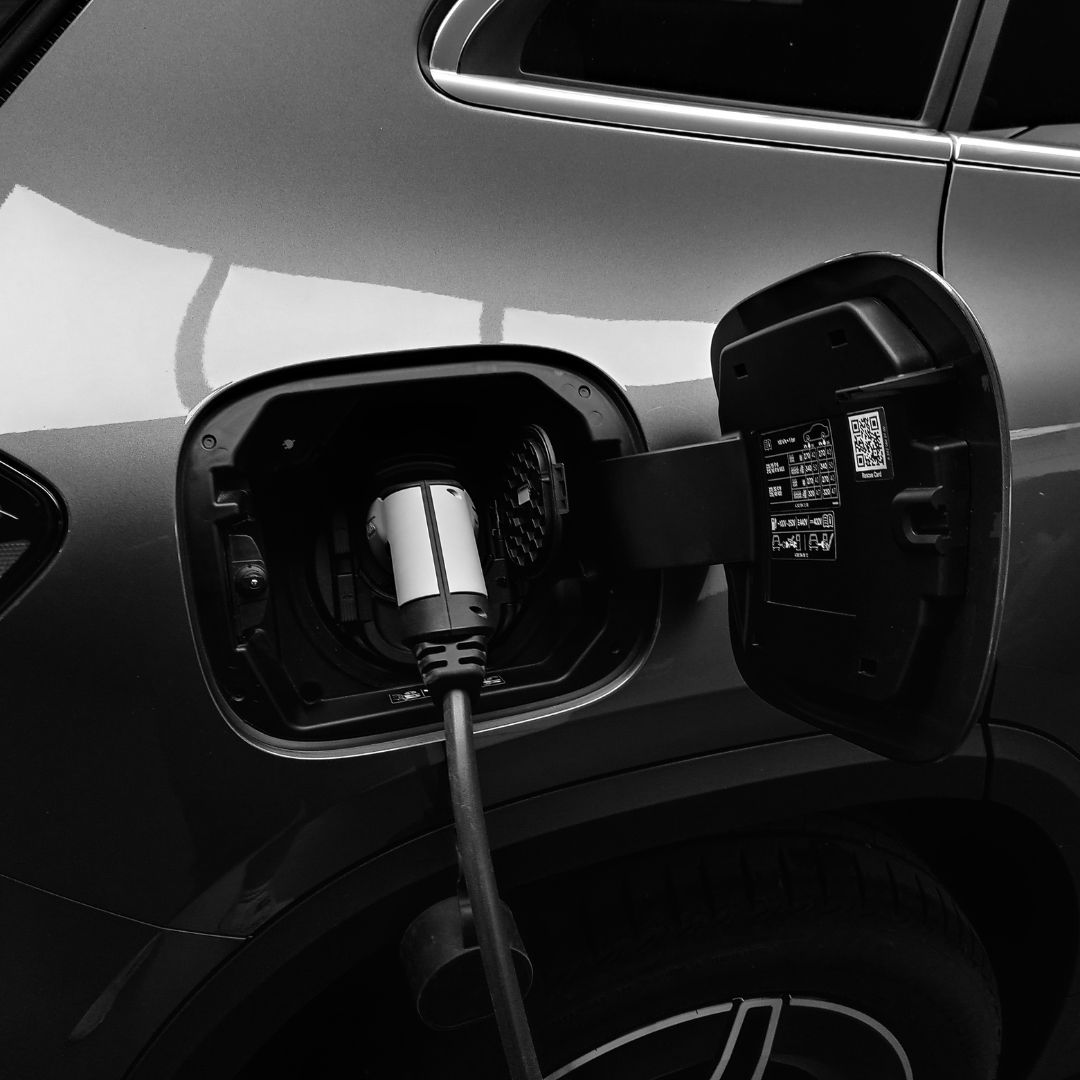
The survey suggests that rising fuel costs are becoming a primary catalyst for the UK’s electric transition. Nearly a quarter of drivers (24%) say they are now likely to switch to an electric vehicle (EV) if fuel prices remain high – a sentiment that aligns with record-breaking adoption across the country. The UK celebrated a major milestone in April 2026 as the two-millionth fully electric car hit the road**.

While a further 28% of survey respondents are eyeing a hybrid vehicle as their next move, very few are willing to abandon car ownership entirely. Only 9% say they would consider parting with their vehicle altogether, compared with 44% who say they would definitely not give up their car.

Overall, the findings suggest that while rising fuel prices are putting immense financial pressure on motorists, car ownership remains a central part of everyday life for most UK households – even if the way those cars are powered is changing.

Claire Wills-Mckissick, temporary car insurance expert at Tempcover adds: 

“Rising fuel prices are putting real pressure on household budgets, leading many drivers to change everyday behaviour behind the wheel. We’re seeing a shift towards more conscious driving – combining journeys or cutting back where they can to help manage the cost of getting from A to B.

“In this climate, flexibility is key and drivers are increasingly looking for ways to make their money go further. This includes using comparison sites to track down the cheapest fuel prices nearby or more competitive rates.

“Other options such as temporary car insurance also enable motorists to adapt to these changing circumstances, whether that’s sharing the driving on long trips, borrowing a car when needed, or adding flexible cover for occasional use. It’s about making every mile, and every pound, count.”
Fuel Costs Accelerating the Shift to Electric

Sources & Methodology

This online survey of 2,000 UK petrol and diesel drivers was commissioned by RVU on behalf of Tempcover and conducted by market research company OnePoll, in accordance with the Market Research Society’s code of conduct. Data was collected between 5th May and 12th May 2026. All participants are double-opted in to take part in research and are paid an amount depending on the length and complexity of the survey. This survey was overseen and edited by the OnePoll research team. OnePoll are MRS Company Partners, corporate membership of ESOMAR and Members of the British Polling Council. Unless otherwise specified, all insights are drawn directly from this survey’s results.

*Respondents could select more than one answer option
**https://www.smmt.co.uk/two-millionth-electric-car-registered-as-market-rebounds-strongly-from-tax-changes/

May 2026 UK Fuel Market Review

May 2026 UK Fuel Market Review

Diesel and unleaded prices moved in different directions during May, with diesel continuing to ease while unleaded edged higher. The average UK price of unleaded increased from 153.7ppl to 157.0ppl over the month, while diesel fell from 183.9ppl to 180.3ppl. As a result, the gap between the two fuels narrowed significantly from 30ppl to 23ppl, reversing some of the unusually wide diesel premium that emerged following the disruption to global middle distillate markets earlier in the spring.

Diesel saw the largest reductions at supermarket forecourts, where competition intensified as wholesale costs declined. Average supermarket diesel prices fell 5.7ppl during May, with Morrisons recording the largest reduction at 6.4ppl. The scale of these cuts reflected falling wholesale diesel costs and growing pressure on retailers to pass savings through to motorists.

Across the UK, there were almost seven times as many diesel price cuts as increases during May, highlighting the extent of downward pricing pressure. Unleaded told a different story, with 2.7 times more price increases than decreases.

Retailers have also come under increasing scrutiny from government and regulators following the sharp fuel price increases seen earlier in the year. The launch of the Fuel Finder scheme in February, alongside new powers for the Competition and Markets Authority (CMA) to investigate fuel retailers, coincided with the escalation of the US-Iran conflict and the subsequent volatility in wholesale markets.

In its latest Road Fuel Monitoring Report, published on 1 June, the CMA stated: “Our analysis indicates that elevated wholesale prices continue to explain most of the increase in pump prices in March and into April and we have not seen evidence of retailers actively changing their pricing strategies to take advantage of the crisis.”

The regulator added: “We will be monitoring this closely as we scrutinise data for May and June and will provide an update on our findings in our next report, with an expectation that any reductions in wholesale prices are rapidly and fully passed through in lower retail prices.”

Wholesale markets softened considerably through May. Diesel prices fell by almost 10ppl, while wholesale unleaded declined by nearly 11ppl. Much of the weakness came during the final third of the month as markets increasingly priced in the prospect of a diplomatic breakthrough between the United States and Iran. While no formal agreement was reached, hopes of a deal reduced fears of prolonged disruption in the Middle East and prompted traders to remove some of the geopolitical risk premium that had supported prices earlier in the year.

The same trend was evident in crude oil markets. Brent crude opened May at $108/bbl before easing steadily. The most significant decline came after the middle of the month, with Brent falling $11/bbl during the final third of May as concerns surrounding the Strait of Hormuz and wider regional supply disruptions began to ease.

Attention is now turning to the potential secondary impacts of disruption in the Strait of Hormuz. Although less than 1% of the UK's oil supply is sourced directly from the Persian Gulf, global trade flows are highly interconnected. Any disruption forces Asian, African and Australasian buyers to source alternative barrels, tightening supply into Europe and the UK.

Outlook

The outlook for June remains heavily dependent on developments in the Middle East. Wholesale fuel prices entered the month significantly below their April peaks and, should progress towards a US-Iran agreement continue, further downward pressure on wholesale markets is possible.

Both unleaded and diesel retail-to-wholesale spreads have moved above their six-month averages following the recent decline in wholesale costs. This suggests there remains scope for further reductions at the pump over the coming one to two weeks, particularly if wholesale prices remain stable.

However, the status of the US-Iran conflict and the ongoing disruption to shipping through the Strait of Hormuz remain the key drivers for fuel markets. While volatility has eased from the extreme levels seen in April, any deterioration in the geopolitical situation could quickly reverse recent gains and place renewed upward pressure on wholesale and retail fuel prices.

BP Shares Tumble After Chairman Ousted in Fresh Boardroom Drama

BP Shares Tumble After Chairman Ousted in Fresh Boardroom Drama

BP has been plunged into fresh turmoil after the oil giant abruptly removed its chairman, Albert Manifold, triggering a sharp fall in the company’s share price and raising new questions about stability at one of Britain’s biggest energy firms.

The company’s shares dropped by more than 9% at one stage following the announcement before recovering slightly to close around 4% lower by the end of trading.

BP said Manifold had left with “immediate effect” after the board uncovered what it described as “serious concerns” relating to governance, oversight and conduct issues.

The move marks yet another major leadership controversy for the company following the resignation of former chief executive Bernard Looney in 2023 over allegations surrounding personal relationships with colleagues.

What happened?

Albert Manifold had only recently taken over as BP chairman, having been appointed in July 2025 and formally stepping into the role in October.

In a brief statement, BP said the board had been “surprised and disappointed” by information it had received and considered the issues raised to be unacceptable.

Reports suggest concerns centred on allegations of aggressive behaviour towards colleagues, with Reuters reporting that a whistleblower complaint led the board to conclude there was evidence of a wider pattern of conduct issues.

Manifold has strongly denied wrongdoing.

In a statement released after his departure, he said he had been “removed without warning and without explanation” and rejected claims surrounding his behaviour.

“I dispute entirely the characterisation of my conduct and I will not allow a false narrative to go unchallenged,” he said.

Why motorists should care

While boardroom disputes may seem distant from drivers filling up at the pumps, instability at major oil companies can have wider consequences for fuel markets, investor confidence and future energy investment.

BP remains one of the biggest players in the global oil and fuel supply chain, with operations spanning oil production, refining and petrol retailing across the UK and beyond.

Sharp movements in BP’s share price can also affect pension funds and investments held by millions of UK savers, as the company remains a major part of many retirement portfolios and FTSE 100 index funds.

The latest controversy also comes at a time when oil companies are already under pressure from investors over the transition to cleaner energy, fuel pricing and long-term profitability.

Concerns over governance

Questions about governance at BP had already been mounting before Manifold’s departure.

At the company’s annual general meeting last month, around 18% of shareholders voted against his re-election as chairman.

Shareholder advisory firm Glass Lewis had recommended investors oppose his reappointment due to concerns over governance standards.

The latest developments are likely to intensify scrutiny of BP’s leadership and corporate culture, especially after the company spent the last two years attempting to rebuild trust following previous controversies.

Fuel Duty Freeze Delays Pain for Drivers, But 5p Hike Looms in Early 2027

Fuel Duty Freeze Delays Pain for Drivers, But 5p Hike Looms in Early 2027

Drivers welcomed news earlier this month that the Government would extend the fuel duty freeze for the rest of the year, with campaigners hailing the move as a victory for motorists already struggling with high living costs.

Prime Minister Sir Keir Starmer confirmed that fuel duty would remain frozen throughout the remainder of 2026, easing fears of an immediate increase in petrol and diesel prices.

However, newly released HMRC figures suggest the relief may only be temporary.

According to the documents, drivers are now expected to face the full 5p per litre fuel duty rise in early 2027 instead of gradual increases spread across several months.

Under the revised timetable, fuel duty is set to rise by 3p per litre on January 1, 2027, taking the rate from 52.95p to 55.95p per litre. A further 2p increase is then expected on March 1, returning duty to the level it stood at before the temporary 5p cut introduced in 2022.

The Government had previously planned to phase the increase in over time. The original schedule would have seen fuel duty rise by 1p per litre on September 1 this year, followed by another 2p on December 1 and a final 2p increase in March 2027.

Instead, the latest plans indicate motorists could now face a steeper rise at the start of next year.

The temporary 5p cut to fuel duty was first introduced in 2022 in response to soaring petrol and diesel prices following Russia’s invasion of Ukraine. Since then, successive governments have repeatedly extended the reduction amid ongoing concerns over household finances and inflation.

While the extended freeze means drivers avoid higher costs at the pumps for now, the prospect of a sharp increase in early 2027 is likely to raise concerns among motorists and businesses alike, particularly if wholesale fuel prices remain elevated.

For drivers filling a typical 55-litre family car, a 5p per litre rise would add around £2.75 to the cost of a tank of fuel. Frequent drivers and businesses operating larger fleets could see significantly higher annual fuel bills if the increases go ahead as expected.

Petrol prices hit highest level since 2022 as Middle East tensions keep oil markets volatile

Petrol prices hit highest level since 2022 as Middle East tensions keep oil markets volatile

Petrol and diesel are now moving in different directions

PetrolPrices data shows a clear split emerging between petrol and diesel pricing trends. Since 9 May, every single day has seen more unleaded price increases than decreases across UK forecourts.

Diesel has shown the opposite trend. Since 4 May, every day has recorded more diesel price cuts than increases. As a result, the average gap between petrol and diesel prices has narrowed from around 30ppl earlier this month to 25ppl nationally.

Petrol prices have continued to rise alongside higher crude oil costs, while diesel prices have benefited from improving supply conditions after reaching extremely elevated levels earlier this year.

UK drivers are seeing petrol prices climb to their highest level in more than two years as instability in the Middle East continues to unsettle global oil markets.

According to our (PetrolPrices) data, the average price of unleaded has risen to 157.9ppl, up from 155.8ppl at the start of May and now at its highest point since November 2022.

Diesel prices, however, have moved in the opposite direction. The national average has fallen from 185.7ppl to 182.7ppl over the same period, although diesel remains historically expensive and significantly higher than petrol.

Diesel remains expensive despite recent falls

Despite diesel prices easing slightly, wholesale supply pressures remain significant.

European diesel inventories in the Amsterdam-Rotterdam-Antwerp (ARA) trading hub remain near multi-year lows, while US diesel stockpiles have hovered close to two-decade lows throughout May as refiners prioritise jet fuel production where margins are currently stronger.

That ongoing pressure helps explain why diesel still sits significantly above unleaded prices across the UK.

At current averages:

  • Filling a typical 55-litre petrol car costs around £86.85
  • Filling the same size diesel vehicle costs approximately £100.49

Could drivers see some relief?

There are early signs that the recent upward pressure on petrol prices may begin to ease.

The gap between wholesale and retail unleaded prices has now returned to around its six-month average, while diesel margins are sitting only slightly above normal levels. That could lead to a more stable period for pump prices over the coming week, with further diesel reductions still possible.

However, the market remains highly sensitive to developments in the Middle East.

Daily swings in sentiment around potential peace negotiations between the US and Iran continue to drive movements in oil prices and those fluctuations are likely to remain the biggest factor influencing what drivers pay at the pumps in the weeks ahead.

Government Freezes Fuel Duty as Drivers Face Growing Pressure at the Pumps

Government Freezes Fuel Duty as Drivers Face Growing Pressure at the Pumps

The government is set to freeze fuel duty this autumn and offer hauliers a 12-month road tax break as concerns grow over rising fuel costs linked to tensions in the Middle East.

The measures are expected to form part of a wider package of announcements aimed at easing mounting cost of living pressures for households and businesses across the UK.

Fuel prices have come under increasing pressure in recent weeks as instability in global oil markets raises fears of further increases at petrol stations. Any prolonged disruption to supply or sharp rise in crude oil prices is likely to feed directly into the cost of petrol and diesel for UK drivers.

For motorists already managing higher household bills, the decision not to increase fuel duty will offer some welcome relief heading into the autumn and winter months.

The road tax support for hauliers is also designed to ease pressure on the transport and logistics sector, where rising diesel costs continue to have a major impact on operating expenses and supply chains.

Political debate over energy policy intensified at Westminster, with Conservative leader Kemi Badenoch challenging Prime Minister Keir Starmer over the government’s approach to Russian oil sanctions and North Sea energy production.

Starmer defended the government’s position, arguing that sanctions on Russia were continuing to tighten overall while insisting oil and gas extraction in the North Sea remains ongoing and will continue for years.

Government Freezes Fuel Duty as Drivers Face Growing Pressure at the Pumps

The latest intervention highlights growing concern within government about the impact rising fuel and energy costs could have on inflation and everyday living expenses if geopolitical tensions worsen further.

Commenting on the announcement, Gordon Balmer, Executive Director of the PRA, said:

“Rising fuel prices continue to place real pressure on drivers, families and businesses across the country. I have been urging Government to recognise the impact these increases are having, so the decision not to add further costs through fuel duty will come as welcome news for many motorists at a difficult time.

“Drivers looking to reduce costs further can also compare local fuel prices using the PetrolPrices.com app.”

While the fuel duty freeze may help limit immediate increases at the pumps, motorists will still remain exposed to movements in global oil prices and wholesale fuel costs in the months ahead.

Drivers across the UK will now be watching closely to see whether the measures are enough to prevent further pain at the pumps as uncertainty in global energy markets continues.

Automatic driving tests have doubled in the last 5 years

Automatic driving tests have doubled in the last 5 years

The number of driving tests taken in automatic cars has more than doubled (106% increase) over the last five years*. Uswitch car insurance experts recently looked into the motivations behind learning to drive in an automatic, the challenges automatic-only drivers face and the sentiment towards their decision.

Convenience drives motorists to learn in an automatic 

The study revealed that over two-fifths (41%) of respondents chose to learn in an automatic because they believed it would be easier than a manual, while 37% thought they would learn quicker. Additionally, 31% already had an automatic car within their household that they planned to drive. 

Despite the perception that learning automatic is easier and quicker, test data contradicts this, with the overall pass rate in 2025 being 10% less in automatics than manuals**.

The top perceived disadvantages among automatic-only drivers

Disadvantage 

% Automatic drivers who selected it

Limited choice when buying used cars

36%

Missed opportunity of manual driving skill

28%

Higher vehicle purchase cost

28%

Restricted when borrowing friend / family members’ cars

25%

Higher vehicle maintenance costs

24%

On top of the practical and cost-related challenges highlighted by respondents, Uswitch found that it can be more expensive and inconvenient to find an automatic driving instructor. Instructors teaching automatic charge £5.05 more per lesson on average than those offering manual lessons***. For a typical learner, this could add an extra £224.94 onto the overall cost of learning to drive****. Only a quarter (25%) of instructors at two of the biggest UK driving schools (AA and BSM) were teaching in automatic cars as of January last year. However, more instructors are moving towards automatic over time, with this figure increasing by 76% since 2022*****. 

Do automatic drivers regret their decision? 

There is sometimes a stigma surrounding automatic-only licence holders, with over half (56%) saying they can feel negatively judged by other motorists. 

Reflecting on their decision, almost one in five (19%) revealed they generally regret learning to drive in an automatic. Over a third (35%) also said they would consider learning to drive a manual car in future, while a quarter (25%) have already done so since passing their automatic test.

Automatic drivers are prepared for the EV takeover 

With the government set to ban the sale of ICE (internal combustion engine) vehicles by 2030 and with almost all EVs being automatic******, automatic drivers may be better equipped for the future. Over seven in 10 (74%) respondents feel that learning in an automatic car has prepared them well for driving EVs. While the shift to EVs wasn’t one of the top motivations for learning in an automatic, planning to drive an EV or hybrid was a factor for just under a quarter (22%) of respondents. 

Convenience drives motorists to learn in an automatic

Uswitch insurances expert, Leoni Moninska, reveals what to consider when deciding between automatic and manual driving lessons: 

“It’s important to research the pros and cons to decide what’s best for your situation, but there are a few key factors to think about:

  • Account for all costs: Learning to drive an automatic car, as well as owning one, is generally more expensive than a manual. Driving lessons are pricier in an automatic, as highlighted by the Uswitch research, and so are the vehicles themselves to buy and maintain. Insurance premiums can similarly increase, reflecting higher repair costs, for example, from November 2025 – April 2026, quotes for automatic vehicles were on average 17% more expensive than manual vehicles^.
  • Consider the future of manual cars: With the ongoing shift away from ICE (Internal Combustion Engine) vehicles, being prepared for a future dominated by EVs, which are almost all automatic, may be sensible. It’s worth noting that the government’s ban will only apply to new car sales, so manual vehicles will still be available on the second-hand market beyond 2030. Additionally, consider that manual licence holders are legally allowed to drive an automatic as well.
  • Prioritise your safety: Learning to drive requires care and attention to ensure the safety of you and other road users. Avoid basing your decision between automatic and manual solely on the speed or ease to learn, as this will differ for each individual. Instead, prioritise finding an instructor you are comfortable with so you have a supportive learning environment, as well as ensuring you have sufficient practice to build key driving skills such as hazard perception, vehicle control, planning and of course, confidence.” 

Survey of 500 UK full driving licence holders who learned and passed their test in an automatic car. Responses were given between 2nd to 13th April 2026. 

[* & **] https://www.gov.uk/government/statistical-data-sets/driving-test-and-theory-test-data-cars

[***] Based on analysis of 1334 instructors from GetDriving.co.uk 

[****] Typical number of lessons required based on range reported in a UK government consultation https://www.gov.uk/government/consultations/introducing-a-minimum-learning-period-for-learner-drivers/introducing-a-minimum-learning-period-for-learner-drivers-category-b-driving-licence

[*****] Data on driving instructors is based on data from specific schools that have released it 

https://www.theguardian.com/money/2025/sep/21/uk-driving-instructors-automatic-cars-manual-gearshifts & https://www.whatcar.com/news/should-you-still-learn-to-drive-in-a-manual-car/n26576

[******] https://www.gov.uk/government/speeches/phasing-out-the-sale-of-new-petrol-and-diesel-cars-from-2030-and-support-for-zero-emission-vehicle-zev-transition

[^] Uswitch internal data on Median Annual Top Premium by Vehicle Transmission between November 2025 to April 2026.

The Services King attends the relaunch of MFG Aerodrome

The Services King attends the relaunch of MFG Aerodrome

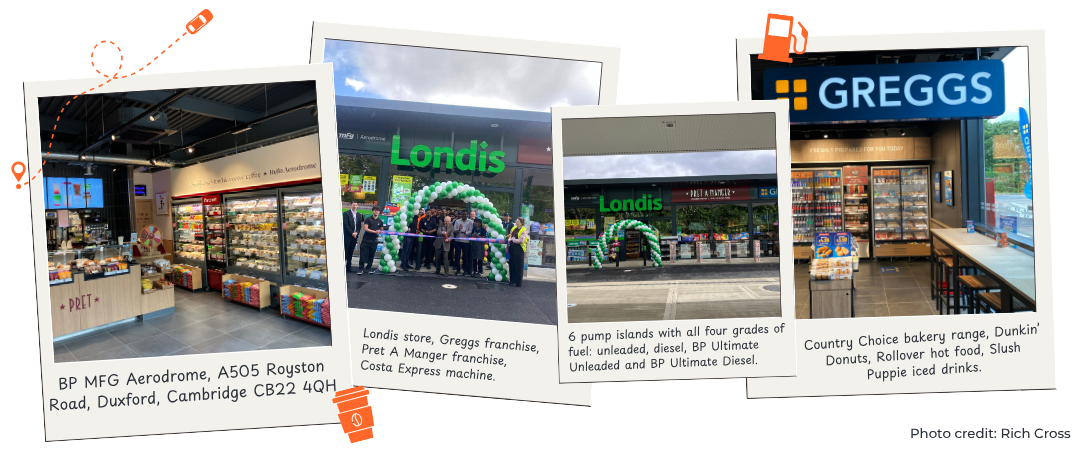
The middle of May saw The Services King head to Duxford in Cambridgeshire for the relaunch of MFG Aerodrome.

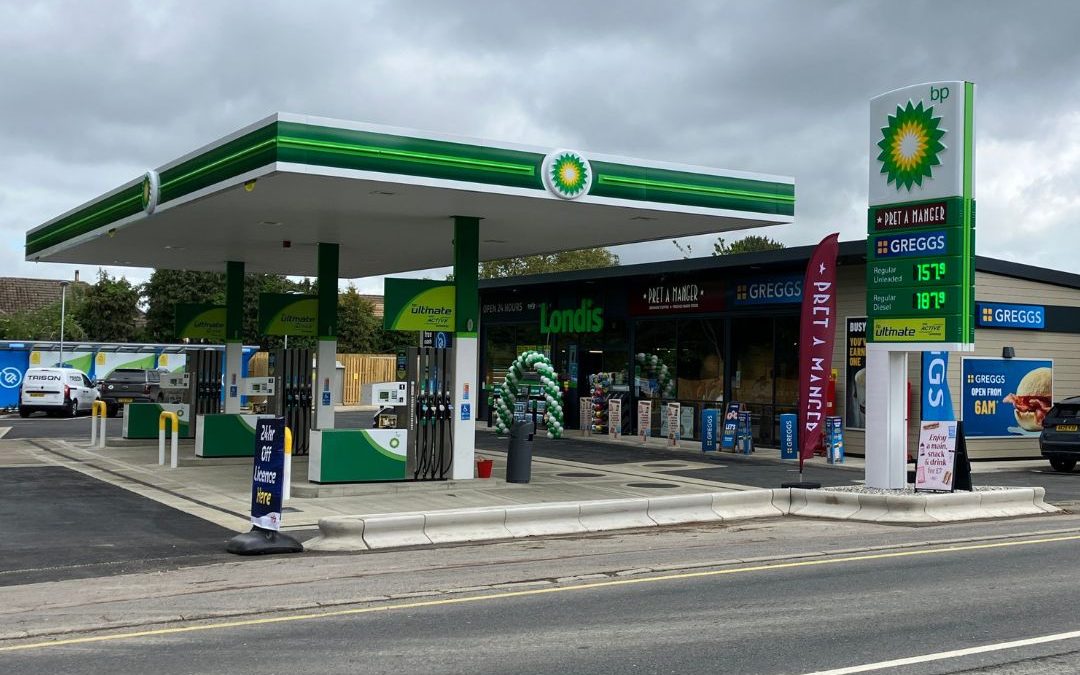
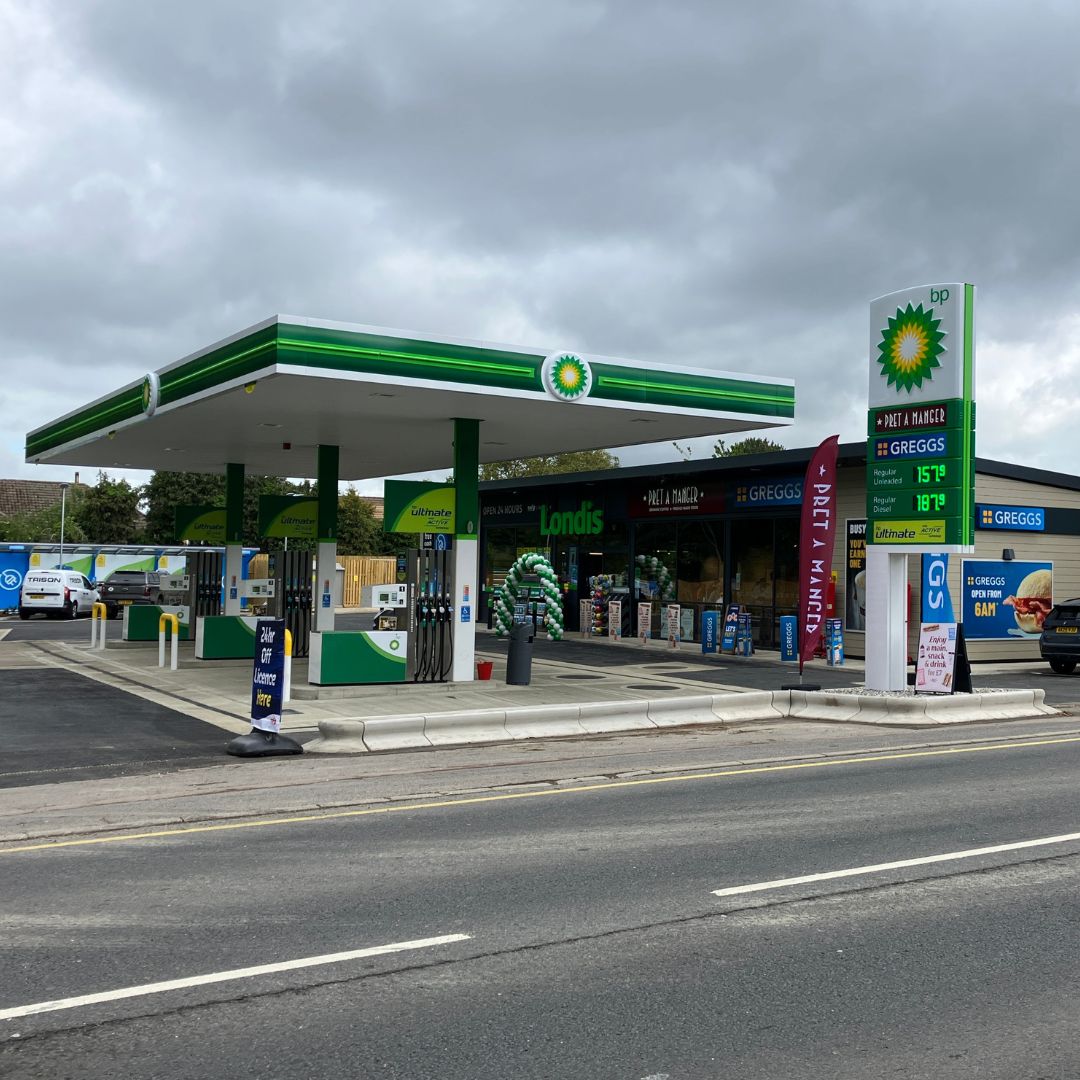
Situated on the busy A505 between Royston and Cambridge, this bp filling station has been located opposite RAF Duxford and the Imperial War Museum for decades and originally began life under the Mobil brand. MRH operated the site in the 2010s before MFG inherited the site into their estate in 2018.

The Services King attends the relaunch of MFG Aerodrome

In November 2025, MFG began a full knock-down rebuild project at Aerodrome with the demolition of the existing sales building and neighbouring bungalow. The site relaunched on 14 May 2026 and features a six-pump bp filling station along with a brand new Londis store. MFG utilised spare land behind the former bungalow to reconfigure the site and introduce a larger sales building as well as a four-bay MFG EV Power electric vehicle charging hub.

Inside the new Londis store, franchises from Greggs and Pret A Manger are available along with a large range of shop goods and additional food to go offers from Costa Express, Slush Puppie from Celtic Frozen Drinks, Rollover hot food and a full bakery range from Country Choice. The bakery range includes freshly baked breads and rolls daily along with other bakery products.

An official ribbon cutting ceremony took place on the day with Retail Area Manager Sarah Ralph and Regional Manager Scott Harris present. I also took time to catch-up with Paul Etherton from Broham Forecourt Developments who were the principle contractor for the civils and groundworks on site, with MBH Design delivering the sales building.

The Services King is set to feature in a one-off documentary titled ‘Britain’s Best Service Station’ airing this Sunday, 24 May, at 7pm on Channel 5.

BP MFG Aerodrome<br />
Location - BP MFG Aerodrome, A505 Royston Road, Duxford, Cambridge CB22 4QH<br />

Majority of UK drivers back stricter rules for new motorists

Majority of UK drivers back stricter rules for new motorists

A majority of UK motorists believe tougher rules for newly qualified drivers could improve road safety. New research from learner driver insurance provider Tempcover suggests there is broad support for a Graduated Driver Licensing (GDL) system similar to the one being introduced in Northern Ireland from October 2026.

The proposed measures are aimed at reducing accidents among younger drivers, particularly those aged 17 to 23, who are statistically the most at risk on UK roads.

Potential changes include:

  • Longer supervised learning periods before taking a test
  • Mandatory training modules signed off by instructors
  • Restrictions on carrying passengers at night
  • Extended use of ‘R’ plates after passing

These rules are designed to target higher-risk situations, such as late-night driving and in-car distractions.

Most drivers think safety would improve

Support for the concept is clear. According to the survey of 1,500 motorists:

  • 41% believe the rules would reduce crashes involving young drivers
  • 63% think they would cut road collisions overall
  • Around a third say they would help build better driving skills and safer long-term habits

That lines up with a stark reality: around one in five young drivers crashes within a year of passing their test, and more than 1,500 are killed or seriously injured on UK roads each year.

The most popular changes

Not all elements of the scheme are viewed equally.

  • Mandatory training modules receive the strongest backing, with 57% support
  • Night-time passenger limits follow closely at 56% support
  • Extended R plate use is backed by 53%

However, longer minimum learning periods before taking a test draw the most resistance, with 22% opposed.

Interestingly, while training modules are the most popular overall, they also divide opinion — with nearly one in five drivers somewhat against them, suggesting concerns around practicality or cost.

Concerns over independence and rule-breaking

Despite the safety benefits, there’s clear unease among some drivers:

  • 22% think the rules could frustrate young motorists
  • 18% believe they may limit independence
  • 13% say they could make day-to-day travel harder
  • 10% worry they could even encourage rule-breaking

A smaller proportion (8%) believe the changes could put young people off learning to drive altogether.

Could this affect insurance costs?

There’s also a financial angle. Younger drivers typically face the highest premiums due to their higher risk profile. If stricter rules succeed in reducing accidents, insurers could see fewer claims — which may help stabilise costs over time.

Claire Wills-McKissick from Tempcover says the measures are designed to build experience and reduce risk in the most challenging conditions:

“Extending the supervised learning phase gives more time to experience a wider variety of road and weather conditions… limiting late-night passengers helps new drivers maintain their focus.”

New Rules for Learner Drivers take affect this week

New Rules for Learner Drivers take affect this week

Learner drivers across England, Scotland and Wales are facing a shake-up to how driving tests are booked and managed, with new rules being introduced throughout spring 2026.

The changes, brought in by the Driver and Vehicle Standards Agency (DVSA), are designed to reduce misuse of the booking system and make test availability fairer. But they also place more responsibility directly on learners.

Here’s what’s changing and how it could affect you or your family.

Only the learner can book and manage the test

As of 12 May 2026, learners must take full control of their bookings.

  • Driving instructors can no longer book tests for pupils
  • Only the learner can change, cancel or swap their test

It’s now illegal for someone else to book or manage a driving test on your behalf.

You can still help a friend or family member, but they must be present and involved in the process.

Why this matters:
This move targets bots, resellers and bulk bookings but it also removes a layer of support many learners relied on.


booking-driving-test

Fewer changes allowed to your booking

One of the biggest changes is the limit on how many times you can move your test.

  • Before: Up to 6 changes allowed
  • Now: Just 2 changes per booking

This rule has already been in place since 31 March 2026.

If your plans change more than twice, you’ll need to cancel your test and book again. As long as you cancel with at least 10 full working days’ notice, you’ll still get a full refund.

What this means for motorists:
There’s much less flexibility, so learners need to be realistic about when they’ll actually be ready to pass.

fewer-booking-changes

You can only switch to nearby test centres

 From 9 June 2026, there are new limits on where you can move your test.

You’ll only be able to switch to:

  • One of the 3 closest test centres, or
  • The original centre you booked

This restriction applies even if you booked your test months earlier — what matters is where your test is booked as of 9 June 2026.

In practice:
Booking a test far away with the hope of moving it closer later will no longer work.


nearest-test-centre