Fuel Prices Stayed Steady in August – But Did You Notice?

Fuel Prices Stayed Steady in August – But Did You Notice?

Unleaded prices remained steady through August, with the average pump price dropping 1.5 pence per litre across the month. Many drivers may not have noticed a drop at all as the four main supermarkets held prices almost unchanged through the month.

Morrisons customers were the most likely to see a change, as unleaded retreated by an average of 0.50ppl across the month, securing their position as the second lowest priced unleaded retailer behind Asda.

Diesel followed a similar trend, with average prices falling by 1.9ppl, but this was significantly less pronounced at supermarkets, where the average drop was only 0.20ppl.

Wholesale data from Portland Pricing shows that both grades traded within a tight band through the month, with the lowest and highest prices less than 2.5ppl apart. A stable underlying wholesale market helped translate to a more stable retail price for UK motorists during the peak driving season.

Tap on our interactive graphs below to compare supermarkets throughout the weeks in August

The spread between retail and wholesale prices is currently at, or close to, the 6-month average. However, wholesale prices did push higher during the final ten days of August and have continued to move higher into September.

This is largely due to risk premiums being priced into the markets. There remains uncertainty around the Russia-Ukraine conflict and increasing pressure from the US on secondary tariffs for countries such as India that are purchasing Russian oil.

Countering these pressures is the threat of a supply glut as OPEC+ completes the unwinding of 2.2 million barrels per day in September.

Did you notice any change in fuel prices last month?
  • Add your answer
© Kama

For now, prices seem to be holding, and there is no clear direction for retail prices to take. Price decreases are outweighing increases, and 2nd September saw more daily price decreases than any day in August as bp and Asda dropped prices at some of their stores.

However, with rising wholesale costs, it is unclear whether this represents a market trend or an effort by bp and Asda to increase competitiveness. It remains to be seen if other stations will cut margins to increase market share as we head out of the summer driving season.

5.7% more UK drivers used the PetrolPrices app to navigate to a Petrol Station in August than they did in July. The number of drivers travelling to stations in France increased by 20.6% month on month.


Did you use the app to save money this summer? Let us know your successes in the comments below

2025 UK Car Buyers: Spending Soars to £20K, but EV Adoption Remains Low at 18%

2025 UK Car Buyers: Spending Soars to £20K, but EV Adoption Remains Low at 18%

As electric vehicles edge closer to the mainstream, new buying platforms emerge, and living costs continue to shape big financial decisions, new research reveals how Britain’s drivers are navigating one of life’s most significant purchases.

With the 2025/26 number plates arriving on 1 September, day insurance experts Tempcover carried out a survey of 2,000 UK drivers to uncover the state of car purchasing across the country, from how much drivers are willing to spend and where they are buying, to their top priorities and plans for the future. The research also looks at the second-hand cars most readily available on the market today.

As UK car buyers spend an average of £20K on their latest vehicle, only 18% plan to switch to electric. What’s holding you back from buying an electric car?
© Kama

Brits Spent an Average of Nearly £20,000 on Their Most Recent Car

When asked about their most recent car purchase, UK drivers reported spending an average of £19,703. Younger buyers led the way, with 25–34-year-olds spending an average of £24,492, followed closely by 18–24-year-olds at £23,704. In contrast, 55–64-year-olds spent nearly £10,000 less than these younger drivers, averaging £15,449.

44% of respondents bought their most recent car brand new, while over half (55%) went for a second-hand vehicle. Even with online marketplaces becoming more visible, nearly half of respondents (49%) bought their car from a main dealership, 29% from independent dealers, 7% online, and 5% from a private seller.

When it comes to payment, despite rising living costs, 59% of drivers paid in full using cash or a debit card, while 11% used a personal contract purchase (PCP) and 8% relied on a personal loan.

Brits Spent an Average of Nearly £20,000 on Their Most Recent Car

UK Car Buyers Prioritise Price Over Safety and Environment

When asked about their top priorities when buying their most recent vehicle, price came out on top, with 52% citing it as their main concern. Reliability followed at 41%, highlighting that many Brits want to avoid costly repairs down the line. Completing the top five were practicality (33%), fuel efficiency (31%) and mileage (23%). For those who bought a second-hand car, the average mileage was just over 31,000, reinforcing that drivers are looking for vehicles built to last.

Claire Wills-Mckissick, day insurance expert at Tempcover, says:
“Despite cost-of-living pressures, cars remain a priority for many drivers. While price matters, most are looking for reliability and long-term value, even if it means paying a little more.”

At the other end of the scale, far fewer drivers considered environmental impact or EV technology a priority (7%), with tech features (10%) and safety features (15%) also ranking low, despite many new cars being designed around these aspects.

Drivers Still Reluctant to Make the EV Switch

While the Government grant of up to £3,750 has encouraged nearly half of motorists (48%) to consider an EV for a test drive[1], 18% of drivers say they plan to go fully electric when buying their next vehicle. Petrol remains the most popular choice at 37%, followed by hybrids at 21%, showing that while interest in greener options is growing, most drivers are still sticking with traditional fuel types for now.

Claire adds: “This doesn’t mean drivers aren’t interested in going electric. Many are open to test driving but may be held back by upfront costs, charging infrastructure, and uncertainty around running costs, showing that practical concerns often outweigh the appeal of new technology.”

The Best-Stocked Used Cars for UK Buyers

With drivers spending just under £20,000 on average and 71% opting for cars with fewer than 50,000 miles, the research also examines which used models are most widely available within this typical price and mileage range.

Top Cars Available Under 50,000 Miles

  Make Model Availability under 50,000 miles*
1 Vauxhall Corsa 4,947
2 Ford Fiesta 4,561
3 Nissan Qashqai 4,219
4 Volkswagen Golf 4,198
5 Ford Puma 3,847

*Autotrader as of 23/07/25

Top Cars Available Between £15,000 and £20,000

  Make Model Availability £15000-£20000*
1 Ford Puma 2,424
2 Volkswagen Golf 1,922
3 Mercedes-Benz A Class 1,593
4 Volkswagen Polo 1,472
5 Audi A1 1,306

*Autotrader as of 23/07/25

The Best-Stocked Used Cars for UK Buyers

With drivers spending just under £20,000 on average and 71% opting for cars with fewer than 50,000 miles, the research also examines which used models are most widely available within this typical price and mileage range.

Claire Wills-Mckissick, adds: 

“Buying a car is one of the biggest financial decisions many of us make, and our research shows drivers are carefully weighing cost, reliability, and practicality before committing. With options ranging from new and used to petrol, hybrid, and electric, it’s clear buyers want to make the right choice.

“Temporary car insurance offers a simple, affordable, and flexible way to test drive a vehicle before buying, providing crucial peace of mind. For private sales in particular, this type of insurance is essential. Unlike dealerships, which often provide cover, a private seller’s policy usually won’t, and getting added as a named driver can be complicated and risk their No Claims Bonus. 

By taking out a temporary policy, which can last from as little as one hour, you can drive a car with comprehensive cover, giving you the confidence to make a larger investment safely.”

For more information on the state of UK car buying in 2025 and top tips for buying a car, visit: https://www.tempcover.com/front-cover/car-buyers-report 

Sources

This online survey of 2,000 UK drivers who own a car which they bought themselves was commissioned by RVU on behalf of Tempcover and conducted by market research company OnePoll, in accordance with the Market Research Society’s code of conduct. Data was collected between 15 and 21 July 2025. All participants are double-opted in to take part in research and are paid an amount depending on the length and complexity of the survey. This survey was overseen and edited by the OnePoll research team. OnePoll are MRS Company Partners, corporate membership of ESOMAR and Members of the British Polling Council. Unless otherwise specified, all insights are drawn directly from this survey’s results.
[1]Research conducted by Mortar Research amongst 2,002 UK adults, all with a driving licence and access to a car, from 12th- 14th August 2025.

The Brown family relaunch Oversley Mill Service Station

The Brown family relaunch Oversley Mill Service Station

The Services King Feature

The start of August saw my travels head to the West Midlands and Warwickshire for another super busy week of site visits. To finish the week, I visited the recently relaunched Oversley Mill Service Station on the A46 near Alcester.

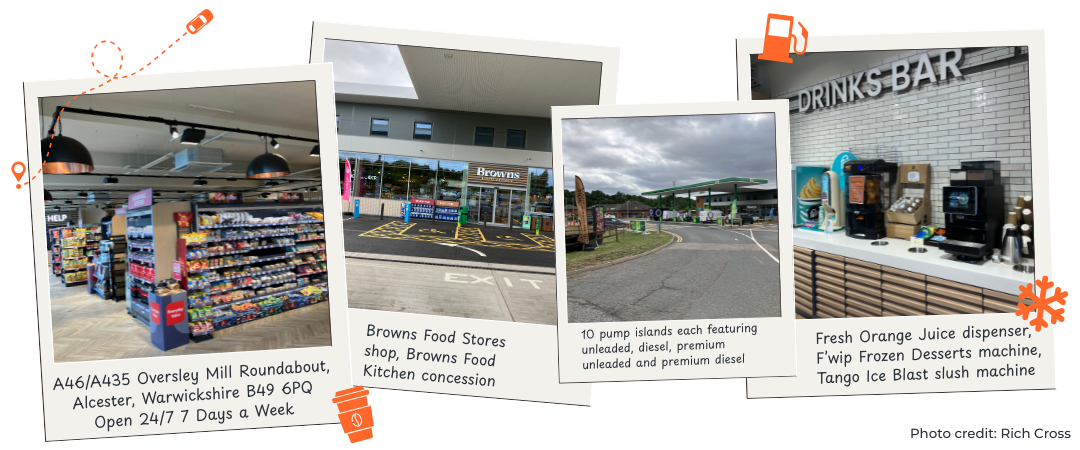
Oversley Mill Service Station is conveniently located at the A46/A435 Oversley Mill Roundabout to the south of Alcester and caters for both transient passing traffic as well as a pool of locals from the surrounding villages. The site is also located a stones throw away from Ragley Hall, taking advantage of any events which are held there.

The site was built in 1990 when local garage owner Andrew Brown acquired land alongside the proposed new A422/A435 Alcester Bypass. The bypass opened on 16 October 1990, with Andrew opening a new Shell filling station at the new Oversley Mill Roundabout shortly after this. He then leased the remaining land to Trusthouse Forte, who opened a Little Chef restaurant and Travelodge hotel in 1995, whilst the fuel supplier was also switched to bp around this time.

In August 2024, The Brown family undertook their biggest project to date at Oversley Mill with the reconstruction of the existing forecourt. Whilst the forecourt’s iconic pointed roof canopy was removed during the works, the site had outgrown itself and was in much need over a modern overhaul. The project wasn’t without its issues though, with many delays caused by poor weather, availability of materials and a labour shortage within the construction industry.

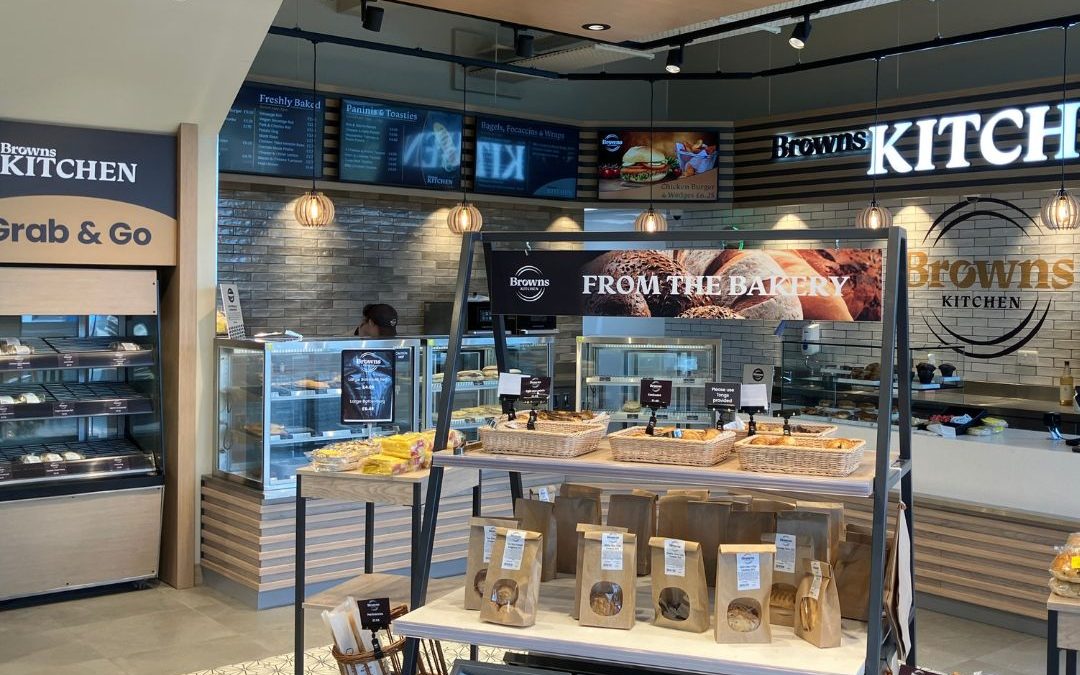
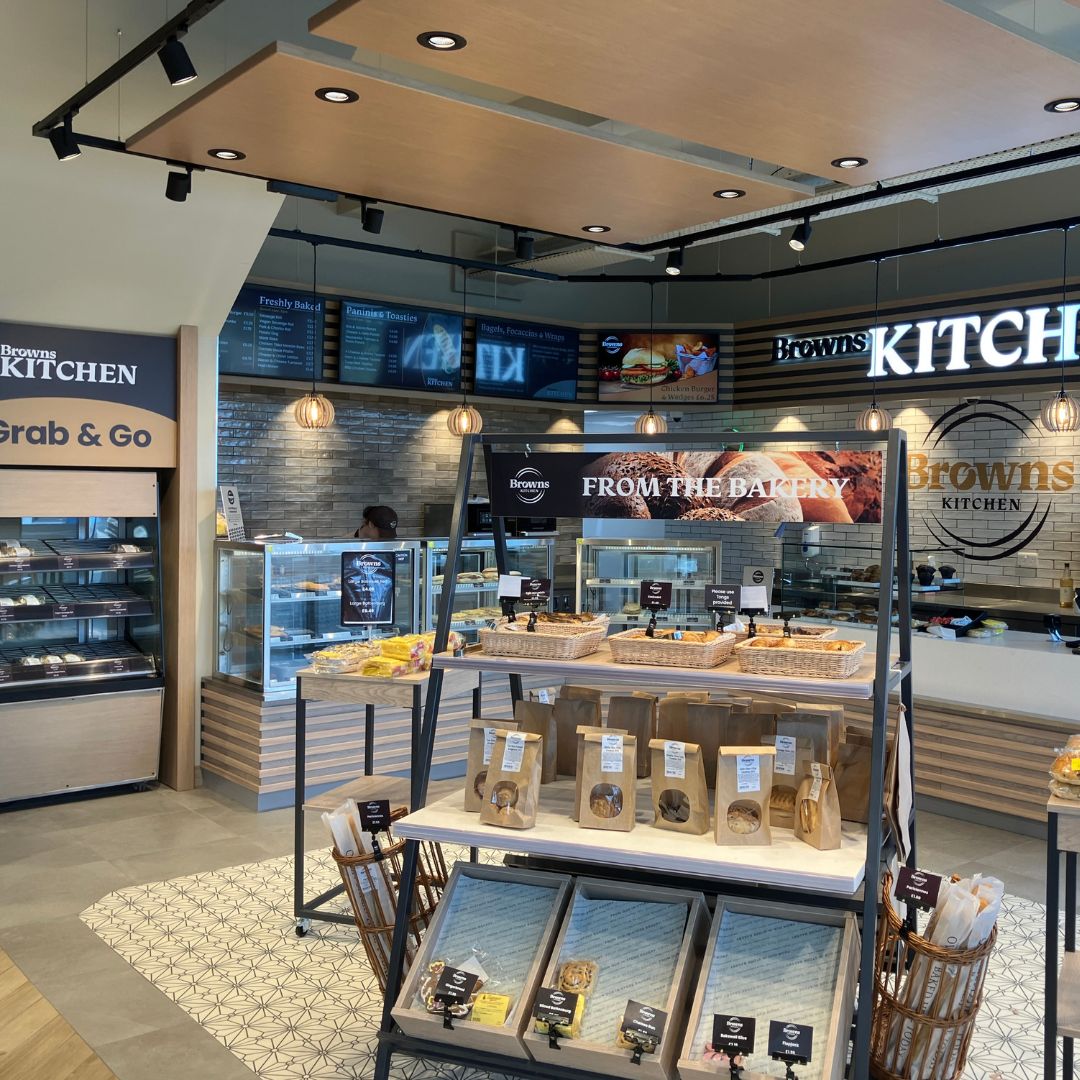
The relaunched site opened its doors on 12 June 2025 and features a bp forecourt with 10 pump islands, 2 dedicated HGV refuelling lanes and a significantly larger shop building branded as ‘Browns Food Stores’. Browns Food Stores is predominantly supplied by Co-op Wholesale but the Brown family also try to introduce local suppliers into their ranges where possible too. A new food to go concession has been added inside the shop to and is branded ‘Brown’s Food Kitchen’, supplied by Country Choice, with Lawrance’s Quality Bakers from nearby Evesham providing many of the bread products.

The start of August saw my travels head to the West Midlands and Warwickshire for another super busy week of site visits. To finish the week, I visited the recently relaunched Oversley Mill Service Station on the A46 near Alcester.

During my visit on 7 August, I caught up with Andrew’s son Harry Brown who is the second generation of the business. Harry told me that the site relaunch had gone exceptionally well in the first few weeks, and that more improvements to the site were set to come including a rollover car wash and two jet wash bays to be installed as well as a Costa Drive Thru in September.

To read more articles from Rich Cross The Services King follow him on LinkedIn here.

Oversley Mill Service Station
Location - A46/A435 Oversley Mill Roundabout, Alcester, Warwickshire B49 6PQ

Oversley Mill Service Station

Location –A46/A435 Oversley Mill Roundabout, Alcester, Warwickshire B49 6PQ

Opening Hours – 24 hours, 7 days a week

Shop Brand & Facilities –bp fuel, Browns Food Stores shop, Browns Food Kitchen concession, Coffee Machine, Fresh Orange Juice dispenser, F’wip Frozen Desserts machine, Tango Ice Blast slush machine, InPost parcel locker, Free Cash Machine, Car Wash and Jet Wash coming soon, Costa Drive Thru coming soon

Number of pumps & fuel grades –10 pump islands each featuring unleaded, diesel, premium unleaded and premium diesel, with an additional two dedicated HGV refuelling lanes also featuring an AdBlue pump.

Fined and Frustrated: 47% of Drivers Report Unfair Fines While Using Parking Apps

Fined and Frustrated: 47% of Drivers Report Unfair Fines While Using Parking Apps

Parking apps are falling short of drivers’ expectations, according to new research from temporary car insurance experts Uswitch. Though designed to simplify parking, drivers are being left frustrated by unfair fines, the hassle of managing multiple apps, and a lack of transparent pricing. 

Almost half of UK drivers say they’ve been unfairly fined while using parking apps

47% of UK drivers claim they have been fined incorrectly or by accident while using a parking app[1]. Specifically, 22% report being unfairly fined once, while 25% say it has happened multiple times[1].  A further 6% admit to receiving parking app-related fines but believe they were justified[1].

Would you like to see car parking information in the PetrolPrices app?
© Kama

Drivers report a range of frustrations with parking apps, from confusing interfaces to hidden fees

When asked about issues experienced with parking apps, more than a third (35%) of drivers said they’ve had problems downloading and registering for multiple apps to park[2]. Nearly three in ten (29%) have faced app crashes or poor signal, while 27% have found the interfaces confusing or clunky[2].

Other common problems included hidden admin or service fees (19%), forgetting which app is needed for specific locations (19%), and unclear location codes or space selections (19%)[2]. 16% of drivers also reported payment issues, while a further 16% reported app-related delays or confusion when parking[2].

Most drivers use parking apps because they are required to or to avoid fines

The primary reason UK drivers use parking apps is that they are required to by the car park, with nearly a third (32%) citing this as their main motivation[3]. A further 29% of drivers cite using the apps to help steer clear of penalties[3].

Saving time finding a parking space is the main driver for 17% of respondents, while 14% use the apps for convenience features such as paying remotely or extending parking time without returning to the car[3].

Other reasons include the ability to pay by card where machines only accept cash (6%), and a smaller percentage (2%) use the apps to secure the best price[3].

Rank

Issues experienced when using a parking app

Total respondents (%)

1

Having to download and register for multiple apps

34.8%

2

App crashing or poor signal

29.0%

3

Confusing or clunky interfaces

27.2%

4

Forgetting which app is needed for which location

19.3%

5

Hidden admin or service fees

19.1%

6

Unclear location codes or space selection

18.9%

7

Delays or confusion when parking

16.3%

8

Payment not registering correctly

16.1%

9

No issues – I’m happy using parking apps

13.1%

10

Lack of real-time space availability or pricing information

8.3%

Source: Uswitch

Majority of drivers believe the national parking platform could ease some parking app frustrations

Drivers are set to benefit from simpler parking nationwide as the industry delivers a ‘one app fits all’ platform[6]. The British Parking Association (BPA) is leading the development and management of the National Parking Platform (NPP), working alongside major players like RingGo, JustPark, and PayByPhone[6].

The platform allows drivers to pay for parking across all participating car parks using their preferred app, aiming to end the need to download multiple apps and encouraging a more flexible, streamlined parking experience[6].

Over one in five (21%) UK drivers say the new NPP will solve most of the problems drivers face with parking apps[4]. Meanwhile, half (51%) believe it will help with some of the issues[4]. Together, the results suggest 72% of drivers expect the platform to have a positive impact to some extent[4].

However, 14% of drivers are unsure how much difference it will make; 9% think it’s unlikely to make much difference, 3% believe it won’t help at all, and a further 3% worry it could make things worse[4].

Half of UK drivers want transparent pricing in the new national parking platform

When asked about the most important features for the NPP, half of drivers (50%) said upfront pricing with no hidden admin fees is a priority[5]. Timely alerts before parking time expires (33%) and clear local restrictions and time limits (33%) were also highly valued[5].

Real-time availability of parking spaces came next (31%), followed by one-tap payment and the ability to extend parking time (24%)[5]. Other features like map views of nearby car parks (14%) and in-app customer support (10%) were less commonly selected[5].

Almost half of UK drivers (47%) say they’ve been wrongly fined while using a parking app, and a quarter (25%) claim it’s happened multiple times

Rank

Desired features for the future National parking app

Total respondents (%)

1

Upfront pricing with no hidden admin fees

49.5%

2

Alerts before time expires

33.4%

3

Clear local restrictions and time limits

33.0%

4

Real-time space availability

31.0%

5

One-tap payment and extensions

23.5%

6

Map view of nearby car parks

14.3%

7

In-app customer support

9.9%

8

Saved favourites or recent car parks

7.4%

9

Integration with EV charging spaces

3.4%

Felicity Ferguson, temporary car insurance expert at Uswitch, shares her top tips for making the most of parking apps to save time and money:


  • Check your location code: Before you hit ‘pay’, double-check your location code or bay number. It might seem small, but entering the wrong spot is one of the easiest ways to get a fine.
  • Set reminders: Don’t let your parking time sneak up on you. Most apps let you set alerts before your time runs out, and some even let you extend remotely from your phone – perfect for when you’re caught up and can’t get back to your car right away.
  • Prepare in advance: If you are heading somewhere new, download the relevant parking apps ahead of time. This saves you from last-minute scrambles to register or find the right app, especially useful during busy travel seasons or events when demand is high.
  • Compare prices between apps: Don’t just settle for the first app you find. Some apps offer better rates or lower admin fees for the same car park.
  • Save your details: Keep your payment info up to date in the app to make checkouts quick and hassle-free.
  • Read reviews and update your apps: Apps update all the time. Checking user reviews regularly can help you avoid buggy versions and find hidden features that make parking even easier.

Have you experienced what you feel is an unfair parking fine? Let us know in the comments.

EG On The Move Bedworth

EG On The Move Bedworth

The Services King Feature

After a brief hiatus to take a family holiday to Cornwall, I was back on the road at the end of July in the Warwickshire area to take a look at a couple of sites that EG On The Move have recently acquired.

As previously announced in February 2025, EG On The Move acquired 98 sites from the former Applegreen UK estate. This took their total number of sites to just over 150 in the space of just nine months. Following the acquisition, EG On The Move set about revamping the Applegreen estate, with the busy Bedworth site one of the first to be completed.

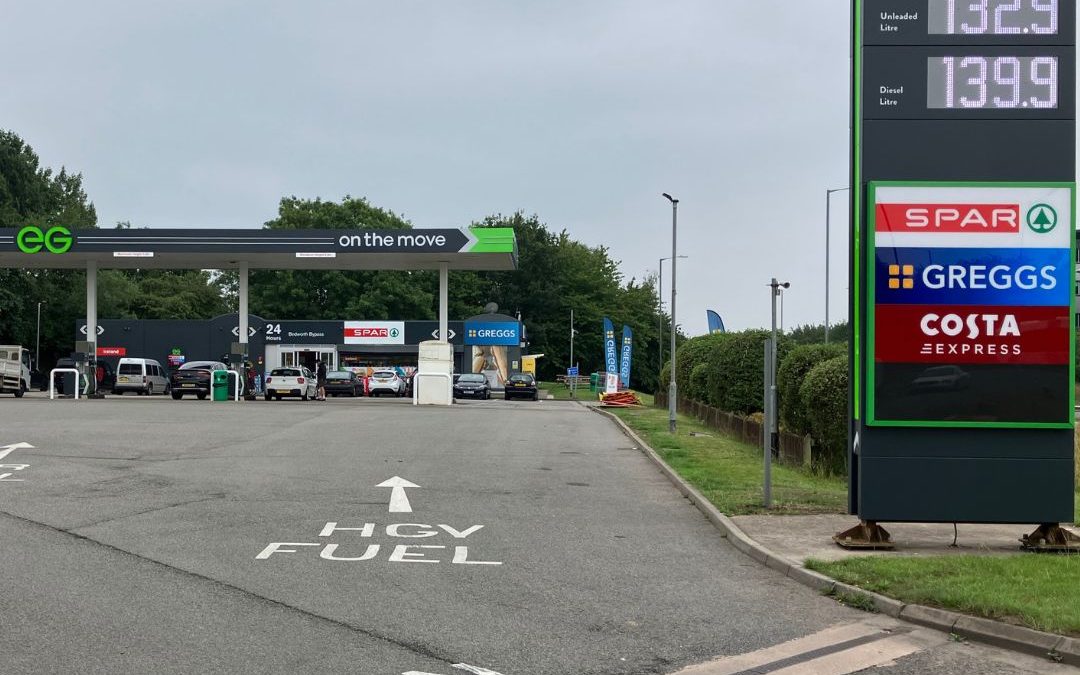
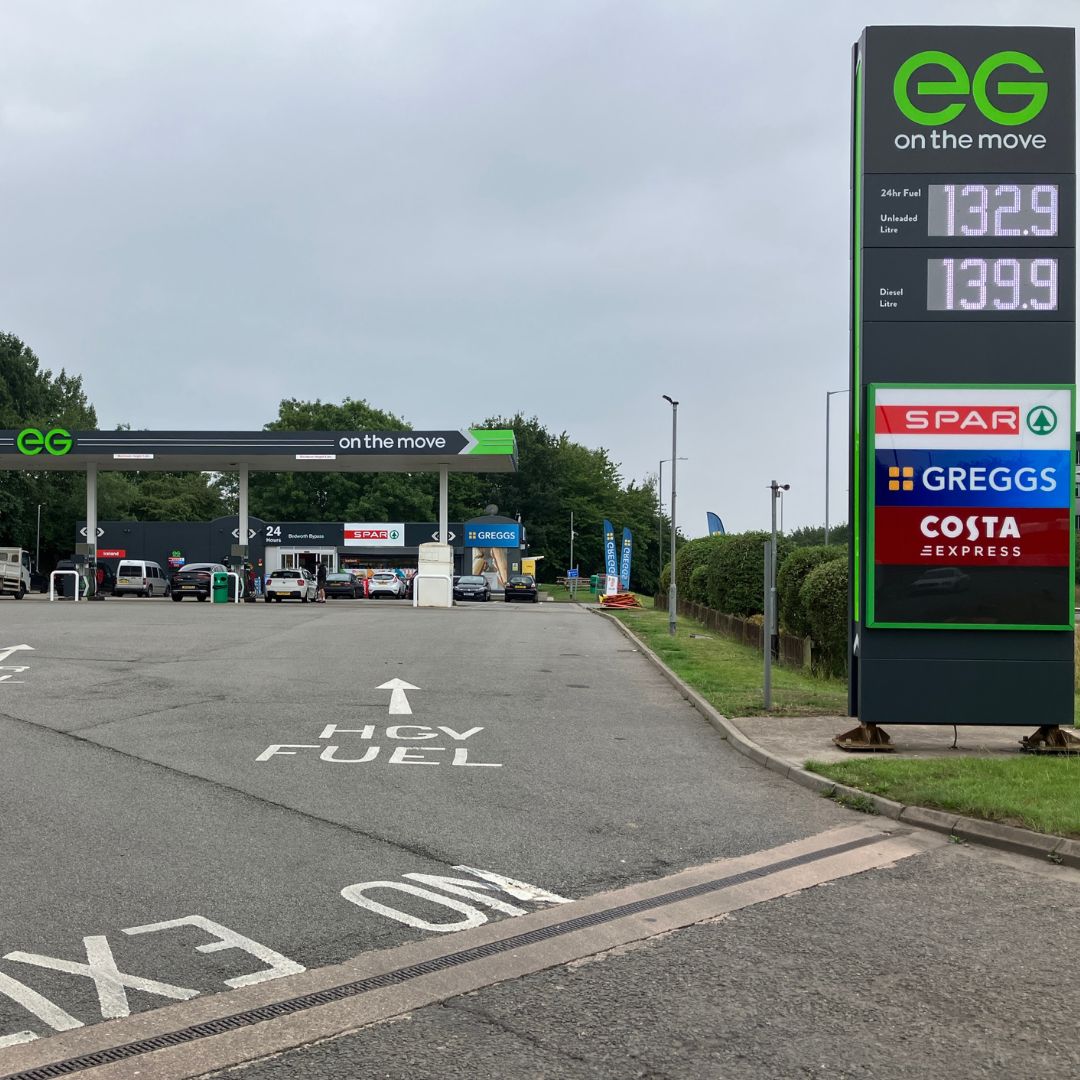
Situated on A444 Griff Way directly opposite George Eliot Hospital between Nuneaton and Bedworth, EG On The Move Bedworth relaunched in June 2025. The site was originally built in 1989 as a Mobil filling station, and a Travelodge hotel was built alongside later that same year. The site later became part of the BP estate in the late 1990s, following the merger of BP and Mobil, gaining a Wild Bean Cafe in the mid-2000s. Applegreen acquired the site in 2018, replacing the Wild Bean Cafe with a Subway concession.

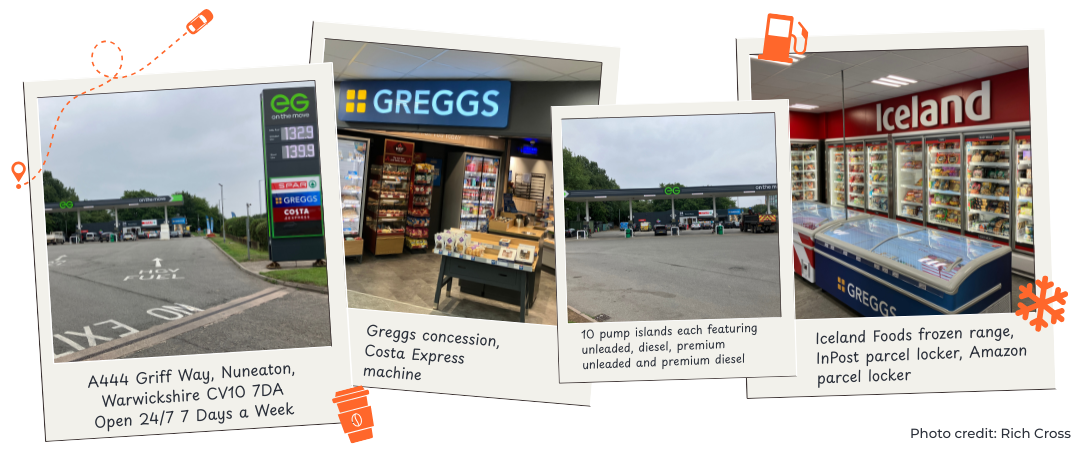
Following the EG On The Move takeover, the forecourt now features a new EG On The Move branded canopy with eight fuel pump islands dispensing all four grades of fuel. Two HGV pump islands are also available, with AdBlue pumps on each of these.

The shop fascia is now SPAR and the interior has received a major overhaul as a result. The existing Greggs franchise, which replaced the Subway under Applegreen ownership back in 2019, has also been relocated next to the front doors. As a result of the relocation, the latest Greggs features have been added including a hot food tower.

As part of the shop refit, a new Iceland Foods frozen range has also been introduced, with offers available from Iceland partners such as Greggs and TGI Fridays now available.

Following the acquisition, EG On The Move set about revamping the Applegreen estate, with the busy Bedworth site one of the first to be completed.

During my visit on 23 July, I spent some time with site manager Kizzy Hibbs who was super excited to have joined the EG On The Move family and is looking forward to a busy summer season with her new store and branding on display.

To read more articles from Rich Cross The Services King follow him on LinkedIn here.

As previously announced in February 2025, EG On The Move acquired 98 sites from the former Applegreen UK estate. This took their total number of sites to just over 150 in the space of just nine months

EG on the Move Bedworth

Location – Bedworth Bypass, CV10 7DA

Opening Hours – 24 hours, 7 days a week

Shop Brand & Facilities – EG On The Move fuel, SPAR store, Greggs concession, Costa Express machine, Iceland Foods frozen range, InPost parcel locker, Amazon parcel locker, Cash Machine (charges apply)

Number of pumps & fuel grades – 10 pump islands each featuring unleaded, diesel, premium unleaded and premium diesel, with pumps 1 and 2 dedicated HGV fuelling lanes also featuring an AdBlue pump

July Fuel Price Update: Stability Returns to the Forecourt 

July Fuel Price Update: Stability Returns to the Forecourt 

Fuel prices remained relatively stable throughout July, with unleaded and diesel trading within a narrow range. The average pump price for unleaded closed the month at 134.8ppl, up 0.6ppl from the start of July. Diesel saw a slightly larger increase, ending at 142.7ppl, up 1.3ppl.

This marks a notable shift from June’s volatility, with a 39.5% reduction in price changes month-on-month. The steadier retail environment was likely driven by calmer wholesale markets. According to data from Portland Pricing, the spread of wholesale diesel prices in July was three times narrower than in June, while unleaded also saw reduced volatility, albeit to a lesser extent at 1.4x.

Portland also highlighted that the retail-to-wholesale price differential was more consistent in July. For much of the month, unleaded margins aligned closely with 3- and 6-month averages, while diesel margins remained slightly below those benchmarks.

However, the final week of July introduced new pressures. The GBP/USD exchange rate weakened from 1.3600 on 23 July to 1.3233 on 31 July, a near 3% drop. This translates to an estimated 1.25ppl increase in wholesale costs. Fortunately, this was partially offset by a $9/bbl decrease in wholesale diesel prices during the same period. Meanwhile, Brent crude rose to $72/bbl, up from $67.50/bbl on 23 July and $66.80/bbl at the start of the month.

Looking ahead to August, diesel margins face upward pressure of 0.5 to 1.5ppl, while unleaded remains neutral. Key global factors include the US tariff expiry dates, which could influence both crude prices and exchange rates. Domestically, the Bank of England is expected to announce a 25-basis point rate cut, with an 83% probability currently priced in.

In terms of infrastructure, the UK fuel supply chain is under increasing strain. The Lindsey Oil Refinery (LOR), located on the Humber, is set to close following the collapse of State Oil and the absence of a buyer. Although LOR was the smallest of the UK’s remaining refineries, it accounted for 10% of national output. This follows the recent closure of Grangemouth, reducing the UK’s refinery count from six to four and cutting total output by 25%.

Compounding supply concerns, diesel and gasoil reserves in the Amsterdam-Rotterdam-Antwerp (ARA) trading hub have fallen to 19-month lows, down 14% year-to-date. These developments could lead to localised supply issues, price spikes, and potential stock outages across the UK.

On the 3rd August OPEC+ announced the unwinding of 547,000 bpd of voluntary cuts in September. This is the final tranche, completing the 2.2million bpd cut program. Originally a timetable of smaller monthly increments had been planned, spreading over 14 months. However, the cuts have been unwound in just six.

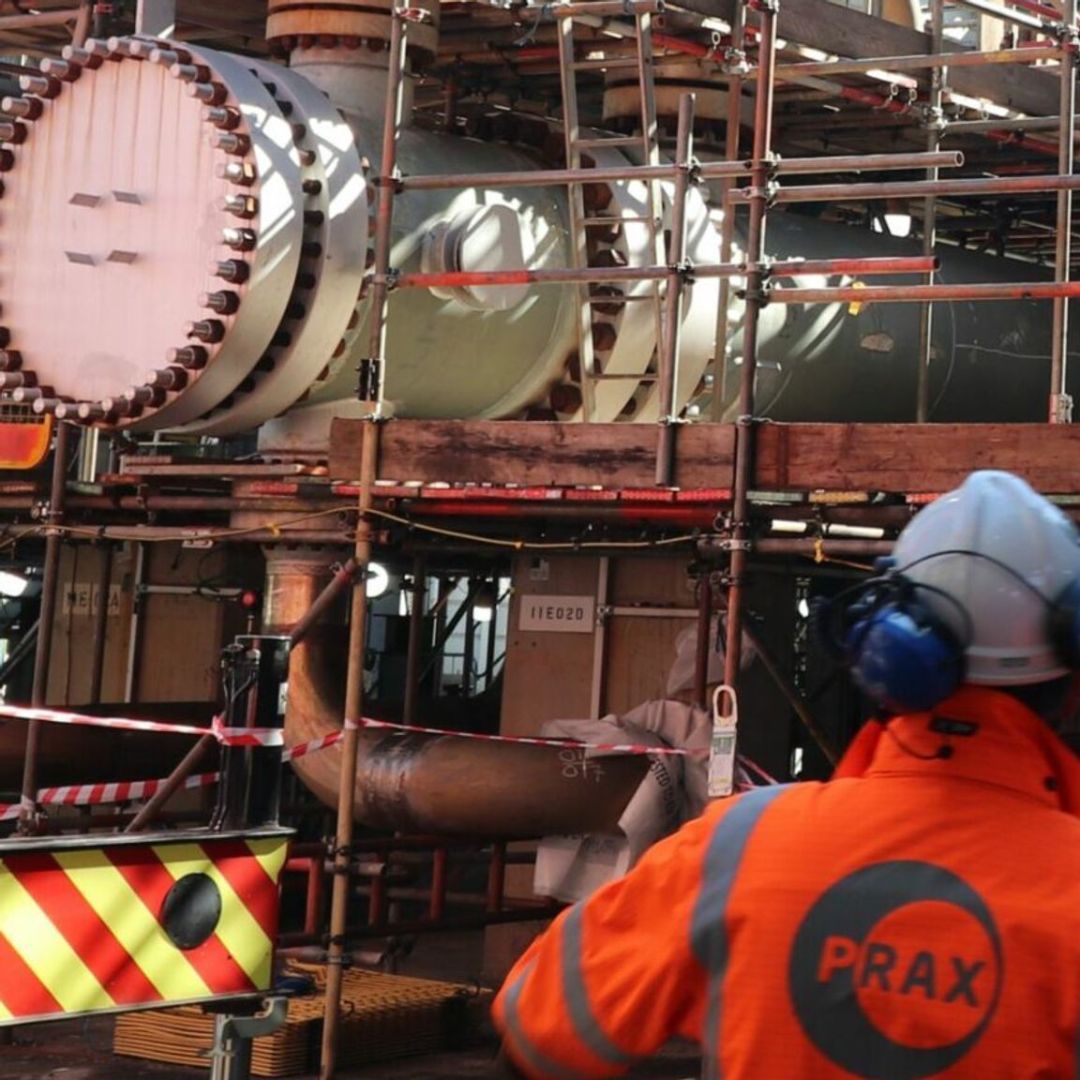
At the end of June, State Oil, the owner of the Prax Group, entered insolvency, casting uncertainty over the future of the Lindsey Oil Refinery and placing over 440 jobs at risk.
Fuel Me Once: The True Cost of the Taxi of Mum & Dad

Fuel Me Once: The True Cost of the Taxi of Mum & Dad

Sponsored. 

For many parents, the family car is more than a mode of transport – it’s the unofficial ‘Taxi of Mum and Dad’ for running their little ones between school, extracurricular clubs and weekend play dates.

But with rising fuel and charging costs leading up to 73% of parents having to rethink their household budgets this year*, used-car marketplace Motorway reveals the true financial cost of what it takes to be the ‘family chauffeur’.

Motorway’s study found that the average UK parent racks up over 3,000 miles ferrying their families around, clocking up enough mileage to drive to Greece and back**, costing parents a staggering £3,980 each year on average on fuel and charging.

For many parents, the family car is more than a mode of transport - it’s the unofficial 'Taxi of Mum and Dad' for running their little ones between school, extracurricular clubs and weekend play dates.

When it comes to time spent behind the wheel, parents spend an average of 176 hours a year on driving duties alone – more than an entire week in the driver’s seat on ‘taxi’ duties.

In fact, the average parent racks up enough hours on the road to earn up to £21,120 per year as a paid taxi driver*** – all while spending an additional £2,309 each year on average, on drive-thru family dinners and snacks.

That’s why this summer break, Motorway has teamed up with financial expert and parent, Clare Seal, to help parents keep costs down without compromising on family life and the everyday chaos and joy that comes from the next school run, football drop-off, or road trip adventure.

Whether embracing hours upon hours of Baby Shark on repeat, or the inevitable drive-thru mess in the back seat,  Clare shares five practical tips on managing car expenses and making informed decisions about when to sell or switch your four-wheeled home:

Think Beyond the Sticker Price and Budget for a ‘True Cost Check’

Before upgrading your car, look beyond the monthly payment and consider the full cost of ownership. A newer car might save on fuel or repairs, but it could also mean higher insurance or an extra tax burden – especially if its original value is over £40,000.

Also remember that it’s not just about affording the finance or lease payment. Regular costs like MOTs, annual servicing, and unexpected repairs can add up, so setting aside £30-£50 per month for a car maintenance sinking fund can make those surprise expenses far less stressful, and spread the cost over the year instead of breaking your budget.

Sell at the right time (don’t wait for a breakdown)

Before upgrading your car, look beyond the monthly payment and consider the full cost of ownership. A newer car might save on fuel or repairs, but it could also mean higher insurance or an extra tax burden – especially if its original value is over £40,000.

Many parents hold onto cars until something major goes wrong, at which point it’s often too late to get a good resale value. Instead, keep an eye on depreciation and mileage milestones (like 60k or 100k) that can reduce value. If you’re even thinking of selling, it’s worth tracking how much your car is worth using tools like Motorway’s free car value tracker. You might be surprised how much you could get, especially if the car is in good condition.

Think substance over style

The best family car isn’t always the newest or biggest. It’s the one that fits your lifestyle and your budget. Look for cars with features that truly add value (e.g. fuel efficiency, a decent boot, Isofix seats and easy-to-clean upholstery) rather than extras like premium trims or built-in entertainment systems that you’ll pay more for but won’t necessarily be as useful.

In fact, expensive alloys, custom finishes, or modifications can be costly to repair or replace – and they can make the car harder to sell later, as they reduce the pool of potential buyers to those who share your specific taste.

Shop smart with future resale in mind

When buying your next car, consider how easy it will be to resell later. Popular models with a good reliability record tend to hold their value better, so it’s worth weighing up potential return on investment.

*Research conducted by OnePoll on behalf of Motorway between 23rd – 27th June, 2025 among 2,000 nationally representative UK parents of under 18s who drive.

**The exact driving distance from London to the Greek border (or central Greece) is approximately 1,854 miles one way.

***Calculation based on an average fare of £120 per 60 minutes between Heathrow and Central London area, over a 176-hour period in June 2025.

Pump Prices Edge Higher as Wholesale Markets Experience Extreme Volatility

Pump Prices Edge Higher as Wholesale Markets Experience Extreme Volatility

Pump prices continued to rise throughout June, though they remained relatively stable compared to the extreme volatility seen in wholesale markets.

On 12th June, Israel launched a series of strikes targeting Iran’s nuclear and military facilities, prompting a sharp reaction in global oil markets. Brent crude surged from $68 to $78 per barrel between the 12th and 19th June. Wholesale diesel (B7) prices spiked by over 10 pence per litre during the same period, while unleaded (E10) rose by around 4ppl. This widened the gap between the two fuel grades to more than 10ppl, up from under 3ppl at the start of the month.

Further escalation occurred on 22nd June when the United States conducted air strikes on three Iranian nuclear sites. However, tensions quickly cooled after Iran responded with a limited and largely symbolic missile attack on U.S. bases in Qatar. A tentative ceasefire followed, and oil markets fell back sharply.

By 24th June, wholesale prices had returned to pre-conflict levels, as market sentiment shifted back to concerns about oversupply and sluggish global economic growth. Diesel ended the month over 4ppl higher than it began, while unleaded remained flat, leaving the spread between the two grades still above 7ppl.

At the forecourt, motorists were largely shielded from the sharp swings in wholesale markets. Pump prices rose steadily, with diesel increasing by an average of 2.6ppl and unleaded by 3.5ppl across the month. Tesco passed on the lowest increases, raising diesel by just 0.7ppl and unleaded by 1.2ppl on average. Asda followed closely with increases of 0.8ppl for diesel and 1.3ppl for unleaded.

A strengthening British pound also helped cushion retail prices. Sterling rose from $1.35 to $1.37 during June, hitting a 44-month high of $1.3770 on 26th June. This 2-cent appreciation equated to a pump price saving of around 0.5ppl.

Early July Trends and Outlook

Early July has seen renewed upward pressure on both unleaded and diesel prices. Diesel margins are tightening, and sustained wholesale increases could translate into further pump price rises. The diesel-to-unleaded price gap may continue to widen, with wholesale spreads already back above 10ppl.

Sterling’s strength has also come under threat. The temporary 90-day delay on U.S. tariffs is due to expire soon, and growing optimism about trade negotiations could strengthen the dollar. At the same time, the UK’s fiscal outlook is facing scrutiny following the government’s reversal of planned welfare cuts, which could weaken the pound further.

However, OPEC+ has announced it will unwind 548,000 barrels per day (bpd) of voluntary production cuts in August, higher than the anticipated 411,000 bpd. The group has now restored 80% of its previous voluntary reductions, releasing more crude into the market, which could help reduce prices.

At the end of June, State Oil, the owner of the Prax Group, entered insolvency, casting uncertainty over the future of the Lindsey Oil Refinery and placing over 440 jobs at risk.

UK Supply Concerns Mount

Domestically, the UK faces structural supply risks. At the end of June, State Oil, the owner of the Prax Group, entered insolvency, casting uncertainty over the future of the Lindsey Oil Refinery and placing over 440 jobs at risk. This development coincides with the winding down of Grangemouth Refinery, ahead of its closure,  further tightening domestic refining capacity.

A government spokesperson from the Department for Energy Security and Net Zero (DESNZ) confirmed on 4th July:

“An agreement has been reached to resume deliveries in and out of the Prax Lindsey Oil Refinery. The official receiver is ensuring continued safe operations at the site.”

Where Next?

June reminded us that geopolitical tensions can quickly change the outlook for prices. However, as quickly as wholesale prices increased, they decreased as oversupply and low growth forecasts became the main drivers once again.

With diesel margins under pressure, we could see further increases at the pump. There are also renewed concerns about supply in the European diesel market as we enter the summer season. This could see diesel prices push higher.

The Services King officially opens MFG Shepton Mallet petrol station just in time for Glastonbury 2025

The Services King officially opens MFG Shepton Mallet petrol station just in time for Glastonbury 2025

The Services King Feature

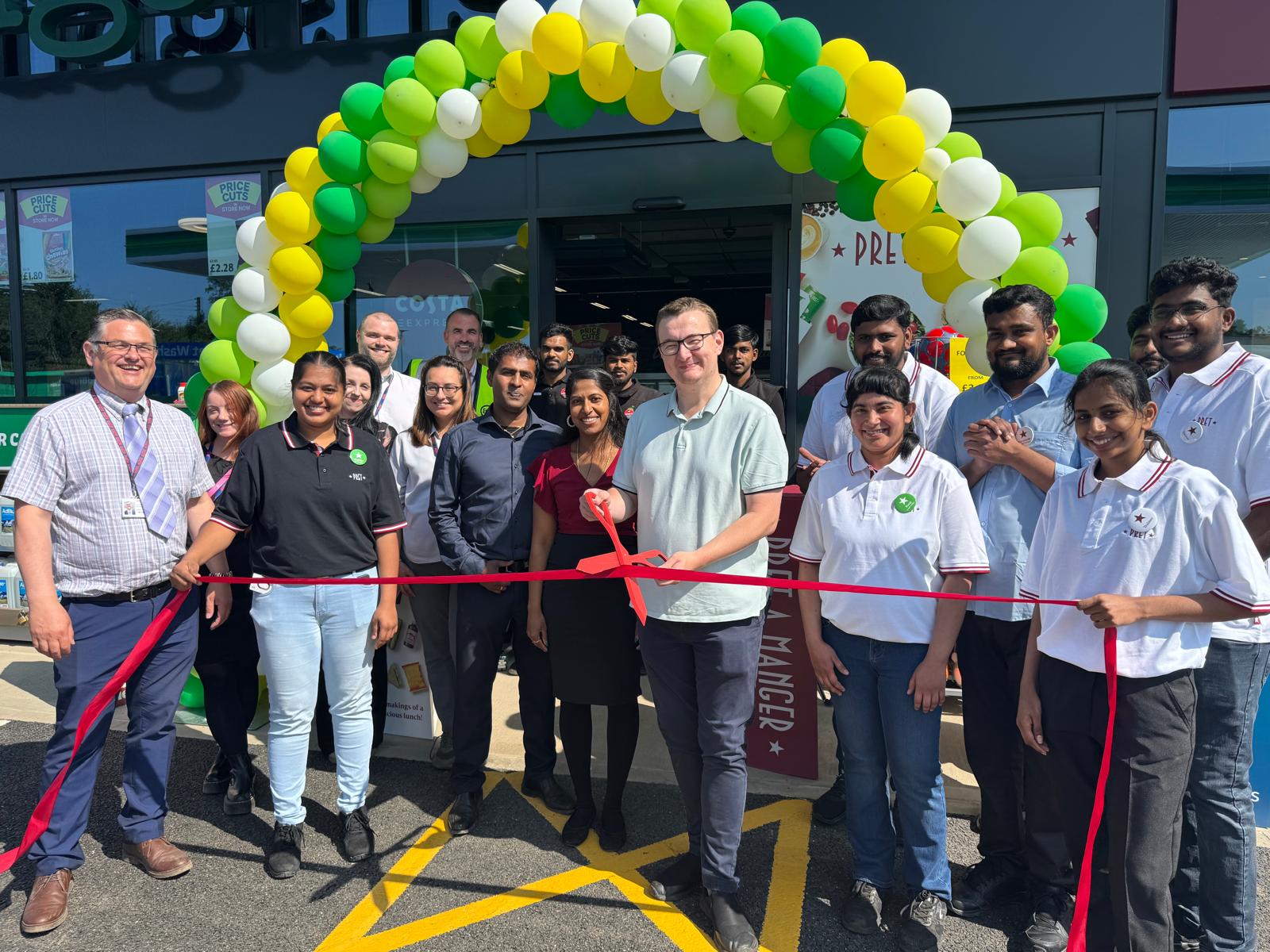
On 19 June, I had the honour of officially opening the new to industry Motor Fuel Group Shepton Mallet site on the A37 in Shepton Mallet, Somerset.

Situated on the main road from Bristol to the historic Jurrasic Coast, the site was previously a hand car wash and is located less than 5 minutes from the Bath and West Showground as well as the Glastonbury Festival site in the nearby village of Pilton. Following the acquisition of the site by MFG in Summer 2024, a full knock-down rebuild project was undertaken.

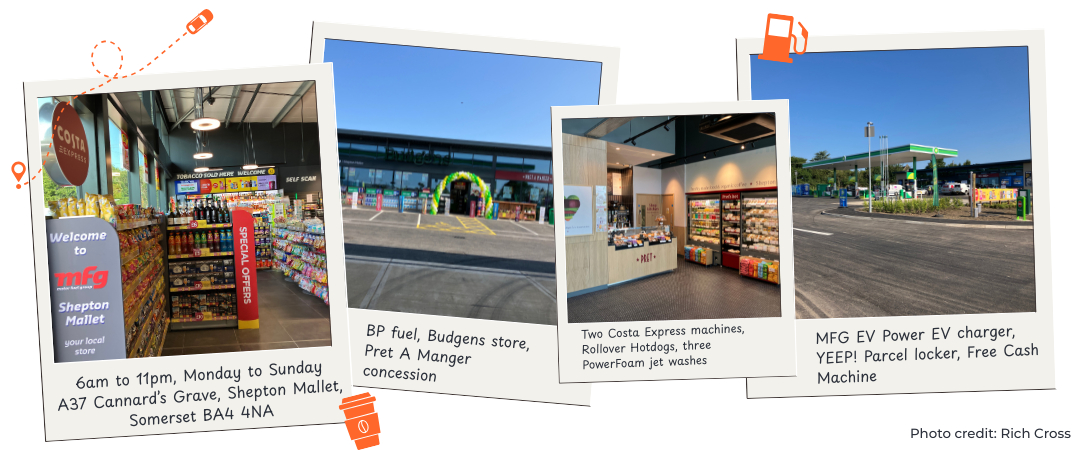
The new to industry site at MFG Shepton Mallet offers bp fuels and a Budgens shop fascia, with the Budgens signage being the first in the MFG estate to be suspended in front of the shop.

Inside the Budgens store, two food to go concessions are available from Pret A Manger and Greggs, with Greggs set to launch on 17 July. The Budgens store features a full shop range from MFG’s retail partner Booker and includes the Jack’s by Tesco range as well as premium ‘food for later’ offers from COOK. The store also features a ‘food for now’ area which includes Costa Express and Rollover Hotdogs.

Out on the forecourt, three PowerFoam jet washes have been installed by MFG’s preferred partner Istobal. A new partnership between MFG and YEEP! has also saw the installation of one of their parcel lockers here, with plans for another parcel locker provider to be installed alongside soon.

The Services King officially opens MFG Shepton Mallet just in time for Glastonbury festival 2025

EV drivers are also covered at MFG Shepton Mallet, with a 50kW MFG EV Power charger installed. MFG offer exclusive deals for EV drivers who use their MFG Connect app, with in-store offers available at all of their EV charging locations. MFG also intend to upgrade the EV charging infrastructure here once the power capacity in the area is made available.

Whilst visiting the site, I caught up with many of the MFG hierarchy including MFG’s Retail Managing Director Steven Fox and Operations Director Matthew Bird who were thoroughly impressed with MFG Shepton Mallet.

MFG Shepton Mallet is a fantastic addition to Somerset and the teams did a fantastic job in getting the site open and ready for Glastonbury Festival the following week.

To read more articles from Rich Cross The Services King follow him on LinkedIn here.

The Services King officially opens MFG Shepton Mallet in time for Glastonbury 2025

MFG Shepton Mallet

Location – A37 Cannard’s Grave, Shepton Mallet, Somerset BA4 4NA

Opening Hours – 6am to 11pm, Monday to Sunday

Shop Brand & Facilities – BP fuel, Budgens store, Pret A Manger concession, Greggs concession (opening 17 July), two Costa Express machines, Rollover Hotdogs, three PowerFoam jet washes, MFG EV Power EV charger, YEEP! Parcel locker, Free Cash Machine

Number of pumps & fuel grades – 8 pump islands each featuring unleaded, diesel, premium unleaded and premium diesel. Pump 1 also features an AdBlue pump.

Wholesale fuel prices are rising. Is it time to fill up?

Wholesale fuel prices are rising. Is it time to fill up?

Since the start of June, wholesale unleaded prices have risen three pence per litre, while diesel has increased by over eight!

The majority of these increases have come since the 12th June, when Israel launched a series of strikes targeting Iran’s nuclear and military facilities. The conflict has seen oil prices rally, with Brent crude prices increasing from $62.50 per barrel at the start of the month to over $78.50 per barrel by Monday, 16th June.

Despite this increase, pump prices in the UK have remained relatively flat. Prices are broadly in line with the start of the month. However, momentum has now shifted, and we are seeing 10-12 times as many price increases as decreases.

With the rise in wholesale prices, the difference between wholesale and retail (pump price) has narrowed, putting upward pressure on pricing. Depending on replenishment deliveries, pricing methods and margin aspirations, these increases can affect different stations at different times.

We have already begun to see an increase in pricing spreads nationwide. This is the difference between retailers’ fuel prices. In times of significant price changes, it is common to see a larger difference between the prices stations are charging. It is therefore important to check prices not only in the PetrolPrices app but at the station, and if you see a price change, please submit it to the app. This helps our community of drivers stay informed.

Asda and Tesco have been leading the supermarkets in pricing this month, so a close eye should be kept on their approach. At present (18th June), both supermarkets have held prices for unleaded steady since the 12th June at 94% and 96.5% of their stores respectively.

In contrast, only 12% of Morrisons locations haven’t seen an increase in unleaded price. At the same time, Sainsbury’s has held prices at 84% of their stations.

If wholesale pricing holds or increases, it is difficult to see retailers maintaining prices at current levels. Diesel drivers are likely to be affected more than petrol drivers, but both can expect prices to climb higher soon.

Are you a business owner or buyer?

Anyone using a fuel card should pay close attention to their prices over the next few weeks. While wholesale prices continue to rise faster than retail prices, you can end up worse off. If your business purchases more than 4,000 litres of fuel per week on fuel cards, Portland Pricing can help you monitor your spend. Email [email protected] to find out more.

are supermarket petrol prices cheaper