Jul 6, 2017
Swedish automotive brand Volvo has announced that it will be the first mainstream car brand to cease production of combustion engines powered solely by petrol or diesel. The landmark announcement stats that from 2019 onwards, Volvo will only produce electric charge or hybrid vehicles. The RAC Foundation believes this could be the “spark which turns modern motors electric.”
Volvo is owned by Chinese firm Geely, which plans to launch five electric cars under the Polestar brand between 2019 and 2021. It has yet to make any electric cars but it already has four hybrid cars available globally.
Volvo will continue to provide service repair and support for diesel and petrol vehicles – the only change is that it won’t launch new cars with combustion engines.

(Credit – Pixabay)
Volvo takes the lead again
Volvo has a long history of being a pioneer in the automotive industry. Widely regarded as the gold standard for driver safety, the company invented the three-point seatbelt in 1959. This is now fitted as standard across almost all road cars. In 1967, Volvo invented the first child-friendly car seat and its crash test safety record has become the benchmark for the automotive industry as standard best practice.
The Volvo announcement comes just before Tesla is to launch its fully electric Model 3, a £27,000 saloon car pitched squarely at the mainstream car market. Previous Teslas have been out of reach financially for most drivers, with prices starting from around £50,000. While Tesla has been desirable for the few, its new model is trying to compete directly against the major automotive companies’ combustion engine cars.
The real battle will start in a year’s time, when the Model 3 will be available to buy in the UK. Volvo is simply the first firm to step in this direction, with many more automakers expected to follow suit in the next few years.
Britain’s infrastructure not ready
While all these changes are certainly exciting, and the promise of a cleaner, greener future is good news, the reality today is that Britain is not ready to cope with a massive increase in electric cars. The 2017 Queen’s Speech contained the Driverless and Electric Car Bill, which will make it compulsory for petrol forecourts to contain electric charge points, but there is no detail beyond that.
Of the current 11,000 charge points in the UK, only 800 are super-fast charge points. Additionally, there are still issues with both the range of electric cars for long journeys and the truth of how many miles an electric car can deliver on one charge, as this is often at odds with the manufacturer’s claims.
Charlie Elphicke, MP for Dover and Deal, comments,
“The decision by Volvo is a watershed moment and underlines the urgent need to be ready and prepared for an electric future. But to make that happen we need to make sure we have the fast charging points and infrastructure to make these cars practical for families travelling up and down the land.”
Creating the infrastructure to support electric car usage cannot be achieved solely through the Government ordering petrol stations to have electric vehicle charge points. It must make financial sense for the private sector to front up the cost to do it in the first place. There are no more than 150,000 electric cars on the roads in the UK today, and while this figure is doubling every year, it’s dwarfed by the 45 million internal combustion engine vehicles on the roads. Analysts predict that it will take until 2050 for electric cars to make up 50% of the UK vehicle market.
Driverless problems with kangaroos
Volvo is also leading the way with driverless technology. Its vehicles were used by Uber to trial driverless car technology first in Pittsburgh and now in other parts of the world such as Australia.
Although the driverless system was found to successfully detect large animals such as deer, elk, and caribou, a problem was discovered when the car was tested in Canberra, Australia, due to the unusual way that kangaroos move. Their jumping motion means that they look further away when they are in the air than they do when they are on the ground, which confuses the system when it detects them hopping up ahead.
This issue was found during the development and testing stages, which is why Volvo tries the cars out in as many situations a possible, to ensure that all bases are covered before they can be deemed as safe to use on the roads (which Volvo expects to be in 2020).
90% of collisions involving a car and an animal in Australia include a kangaroo, so this is something that needs to be remedied before the driverless Volvo is released there, to ensure the safety of those driving on Australia’s roads.
What do you think of Volvo’s announcement? Is this the death knell of the internal combustion engine? Can we cope with the increased demand in electric? And is it as environmentally as sound as it claims? Let us know in the comments below.
Jul 5, 2017
A £6.1 billion programme of road improvements has been announced by Transport Minister Jesse Norman as part of the £23 billion already earmarked for upgrading England’s road network. The ambitious programme is designed to help road users by reducing journey times, driving down congestion and ramping up capacity on key roads.
Over the next six months, the money will help fund 55 road improvement schemes, including opening eight roads, consulting on ten and finalising plans for 29 others. Major projects include adding capacity to sections of the A1 in Northumberland and at the Colchester bypass. Improvements are also expected at Junction 19 of the M6. There will also be an upgraded link between the Port of Liverpool and the motorway, along with a ‘new strategic corridor’ to the south-west, via the controversy-dogged A303. The route for the new A19 Downhill Lane junction has also been published.
Facing the road network’s future
Unveiling the funding programme, Jesse Norman said,
“Road users across England should soon be seeing the benefits of these improvements in their daily lives, which are designed to link people better with their jobs, friends, family and local amenities, as well as connecting businesses with customers.”
“Over the next six months we expect to roll out our vital upgrade plan — taking next steps on £6.1 billion-worth of schemes and seeking to hear from local people, organisations and businesses to help shape our plans and ensure they benefit local communities.”
The £6.1 billion follows on from the government’s allocation of £1.2 billion in January, a figure that was roundly criticised by councils at the time for not being enough to improve England’s struggling road network, as local authorities struggle to clear a £12 billion backlog of road repairs. The funding commitment will also help deal with the National Audit Office’s claims that decisive action is needed to safeguard road investment projects deemed at risk.
Good news for drivers
The announcement has been well received by organisations representing private and commercial road users. Both the RAC and the AA have given the programme their official approval, with the AA’s Edmund King stating that,
“As well as increasing capacity and smoothing traffic flow, we believe that significant road safety benefits can be to be achieved especially with the A1 improvements.”
Steve Gooding, director of the RAC Foundation, argues that it sends a clear signal that travel needs are being taken seriously by the government:
“The fear has always been that road programmes, like the morning mists, have a tendency to fade away before our eyes. This latest unveiling is therefore a particularly welcome demonstration that the promised money is not only available but is being spent on schemes that really matter.”
Bodies representing haulage and manufacturing are also optimistic about the funding programme. The Road Haulage Association’s chief executive Richard Burnett stated,
“We hope that this investment will reduce congestion, reduce journey times which in turn will improve delivery times. For road hauliers, responsible for moving 85% of the UK economy, the road network is their place of work.”
And Chris Richards, Head of Business Environment Policy at EEF, which represents British manufacturers, said that the announcement “brings reassurance that post-election, the government remains committed to the Road Investment Strategy which has begun the task of fixing England’s strategic road network.”
Scheme highlights
East
A12 Colchester bypass widen – Consultation
A5 to M1 link – Scheme opening ceremony
South East
M27 Southampton junctions (London and South East) – Consultation
M271 Redbridge roundabout – Preferred route announcement
London East
A12 M25 to Chelmsford – Consultation
North East
A19 Downhill Lane – Preferred route announcement
A1 Scotswood to North Brunton – Preferred route announcement
A1 Northumberland (Yorkshire and the North East) – Preferred route announcement
Midlands
A52 Nottingham junctions – Consultation
M42 J6 – Preferred route announcement
Yorkshire
M621 J1-7 improvements – Consultation
A1 Leeming to Barton – Scheme opening
North West
M6 Junction 19 improvements – Preferred route announcement
M56 J11a – Preferred route announcement
A585 Windy Harbour – Preferred route announcement
South West
A358 Taunton-Southfields – Preferred route announcement
A30 Chiverton to Carland Cross – Preferred route announcement
A303 Sparkford to Ilchester – Preferred route announcement
The PetrolPrices view
The announcement is great news, particularly given the austerity restrictions that have been put in place on public spending. However, does the government’s new plan for road improvements go far enough? The Chancellor says that we can only leave austerity behind us through strong fiscal policies, a good Brexit deal and higher productivity. Investing in our road and rail infrastructure as heavily as the US intends to invest in its infrastructure would contribute towards greater productivity figures and ultimately a stronger economy. We can only hope that further infrastructure funding will be announced in the autumn budget.
Do you believe £6.1 billion is enough to whip England’s road network into shape? Or is the funding announced by the government too little, too late? Let us know your opinions below.
Jul 5, 2017
New research shows that if you live in London, you could pay up to 42% more for your car’s servicing and MOT than you would in Stoke-on-Trent. Such disparities have been highlighted by MyCarNeedsa.com‘s research into the often murky waters of the trade. South West London is the priciest area, with a service and MOT costing an average of £195.95.
Snapping at the region’s heels are Leicester (£187.85), Portsmouth (£186.08), Bristol (£180.72) and Nottingham (£176.32). At the other end of the spectrum is Stoke-on-Trent with an average cost of £113.06, followed by Walsall (£117.89), Doncaster (£127.20) and Coventry (£127.99). Scott Hamilton, MyCarNeedsA.com‘s managing director, said,
“Our research shows that motorists are paying a premium for servicing, MOT, brakes and clutches in certain parts of England … There is undoubtedly a postcode lottery and some motorists are being hit hard, paying over the odds for a standard MOT and servicing.”
The research was based on comparing the price of 6,800 car services.
The priciest
1. South West London – £195.95
2. Leicester – £187.85
3. Portsmouth – £186.08
4. Bristol – £180.72
5. Nottingham – £176.32
6. Dartford – £174.92
7. Wigan – 174.66
8. Bradford – £174.50
9. Preston – £171.55
10 Crewe – £170.83.
The cheapest
1. Stoke-on-Trent – £113.06
2. Walsall – £117.89
3. Doncaster – £127.20
4. Coventry – £127.99
5. Swansea – £129.44
6. Derby – £129.65
7. Birmingham – £130.50
8. Manchester – £130.55
9. Stockport – £130.66
10. Oldham – £131.25.
Two sides to the story
Why are there such disparities? One potential reason is geography, with prices sometimes varying depending on a particular area’s cost of living. For instance, London is notorious for its high living costs and rents in both the private and commercial sectors.
Garages located in the capital must factor in increased rents, as well as any London weighting for wages, with the extra costs being passed on to customers. Contrast this with Stoke-on-Trent, which is one of the 12 most economically-struggling cities in the UK, and it’s hardly surprising that the city has been named as the cheapest place in the UK to have a service and MOT.
The cost of a service undertaken by an authorised dealer versus a reputable independent also comes into play. Statistics show that franchised dealers typically quote 18% higher for car services, though it’s worth bearing in mind that they have been battling to win back custom through a host of special offers. The specific work that needs to be carried out on the car during a service can also have a significant impact. Research shows that standard work is potentially cheaper at dealers, while more labour-intensive repairs or fixes cost less at independents.
Research now, pay less later
Perhaps the lesson to take away from the survey is to check servicing and MOT costs not only in your immediate area but further afield. For instance, instead of paying £174.66 in Wigan, consider heading to Manchester, where the average cost is £130.55 – a round trip of 50 miles that even with petrol costs included could see a modest saving on your final bill.
Making an effort to compare prices and travel a little further afield could pay dividends in the long term – and as PetrolPrices customers will attest to, it really does pay to do your research.
Are such pricing discrepancies simply down to geographic reasons? Or is there a genuine issue with what motorists are having to pay for their servicing and MOTs? Let us know your opinions below.
Jul 5, 2017
Anyone driving on the M3 last week may not have realised it but they were taking part in a secret test of variable speed limits. Highways England said that though it didn’t publicise the fact, it was testing an increase from 50mph to 55mph on the new smart motorway section in Surrey and Hampshire.
Highways England is trialling different variable speed limits for certain road conditions, such as roadworks, traffic congestion and accidents. If the tests are successful, we could be seeing more variety than the standard 50 mph usually imposed as a traffic speed management measure.
Secret tests
The test took place after the government asked Highways England to observe the impact of increasing the daytime speed limits on motorways, as drivers continue to complain that they are slow and causing delays that are often unnecessary.
The agency confirmed that the speed signs were changed from 50 to 55 mph for a short time as part of a new review of speed limits taking place around the country. Construction unions, however, are concerned by the move, saying that higher speeds could lead to more accidents involving road workers, especially at night.
Not so smart motorway
This was also the first sign that the new smart motorway was operating in its designed manner, after initially being opened as a smart motorway that wasn’t so smart – with the technology being switched on ‘shortly afterwards.’ The upgrade to a 13.4-mile section of the motorway from the M25 to Farnborough has added an extra lane and work was completed on time, with the extra lane operating for traffic as scheduled. However, the smart element of the motorway was running a little behind. This led to a 50mph speed limit being kept in place.
The smart motorway concept is said to give drivers better information about road conditions ahead of them and allow everyone to enjoy a smoother journey. It is also designed to add extra capacity, thereby improving journey times and making the motorways safer.
Cynics argue that smart motorways are “money-making roads” that contain speed cameras every few hundred yards to catch out drivers who break variable speed limits or the national speed limit. The government earned £1.1 million from smart motorway fines alone in 2015. That figure is growing by 20% annually as the smart motorway network expands and is estimated to reach £2 million a year in earnings by 2018.
Benefits of variable speed limits
This isn’t the first time variable speed limits have been trialled on UK roads – a well publicised test on the M1 that limited the speed to 60mph is one example of a trial of the idea that has been paired with smart motorway technology.
One of the potential benefits of variable speed limits is the reduction in air pollution and therefore the easing of harmful emissions in the air from cars. The move is part of a series of steps that the National Institute for Health and Care Excellence (NICE) has suggested to reduce the effects of air pollution on health across the UK.
There are around 25,000 deaths every year in England that cite air pollution as a contributing factor – around 5% of all deaths. The health watchdog has offered a series of measures it believes will help reduce this number.
Reducing pollution
Alongside variable speed limits on motorways, NICE also suggests promoting smoother driving, building homes further away from the road and adding hedgerows to help protect cyclists on cycle paths.
Speed bumps, a current favourite with local authorities, are less favourable, as there is a chance they increase emissions rather than reduce them. Another issue is the idea of ‘no-idling’ zones around schools to stop parents leaving their cars running while waiting to pick up children.
The idea of variable speed limits is that, in traffic, cars are accelerating and decelerating. This increases the amount of emissions. However, by limiting everything to 50-60mph, cars ideally proceed at a steady rate. Suggested times and locations for the measures include all the time on the M25, Sunday on the M4 and Friday evenings on the M1.
It seems that on the surface these changes are part of a wider plan to control traffic not only to ease congestion but to help the environment at the same time.
What do you think of measures such as a 50-60 mph speed limit on the M25 ALL the time? Is this the beginning of a move to align UK speed limits with an EU-wide speed limit of 100 kilometres an hour (62 mph) on UK motorways? Let us know in the comments below.
Jul 5, 2017
MPs have called for the car finance industry to begin publishing the details of defaults and arrears rates, as concern about the amount and type of finance being offered continues to grow. Concerns about the health of the car finance industry and the value of vehicles have led to MPs asking questions about how these deals are being made.
Massive losses
Banks and finance companies could see losses of some £1.7 billion if the value of second hand cars keeps falling, according to the Bank of England. Around £17 billion of major banks’ cash is directly exposed due to the way that car prices are inflated at the moment because there is always a fear of a collapse. This could see around 10% of the value being wiped out.
The root of the problem is that too many people are buying cars on finance and this fuels a debt boom. Many of them use a personal contract plan, which lets them make monthly payments across a fixed period. At the end, they can then get cash to put down a deposit for another car, based on the value of their current car second hand.
Concerns about finance quality
The other reason that MPs and experts are so concerned about the situation is the finance quality that is being offered. For example, young drivers are being tempted to take car finance on deals that mean they pay no deposit up front. These deals do not take into account whether the young people are unemployed, are on low incomes or have a poor credit rating.
The deals mean they pay hundreds of pounds every month for cars worth up to £20,000. If they don’t keep the payments up, they face having the vehicle repossessed and court orders to make them pay the balance.
Examples include a 24-year-old who was shown by the salesman how to write a credit check form so that he could be accepted, while in another case a salesman tried to sell a £15,000 Audi to someone who was out of work. Older drivers are also being targeted, such as the 71-year-old left with a £3,500 debt on a car after having a heart attack.
Financial crash
One investigation by the Daily Mail found that irresponsible car dealers could risk another financial crash by offering loans to people that they can’t afford and wouldn’t be accepted for under other circumstances. If there are huge numbers of defaults on these loans, it could cause a ripple effect that could lead to another financial crisis.
The situation has eerie similarities to the situation in 2007, with car finance firms selling some £5.5 billion in risky loans last year – double the figure of the year before. The Bank of England has said that drivers now owe £58 billion in car finance, an increase of 15% on 2015’s figures.
Sensible borrowing
In most cases, drivers do need to pass credit checks. However, these checks aren’t as comprehensive as with other types of finance and there are no checks to ensure someone can afford the loan. As long as the driver doesn’t take a loan with a monthly repayment that exceeds more than a quarter of their take-home pay, they are deemed fit to pay. This means that drivers earning £8,200 a year could potentially buy a new £12,500 Ford Fiesta.
MPs and campaigners are calling for a crackdown on these ‘reckless’ tactics. Meanwhile manufacturers Vauxhall and Suzuki are investigating the conduct of their own dealerships. Furthermore, the Financial Conduct Authority (FCA) has already said it is investigating ‘irresponsible lending’ in the motor industry.
Do you think the subprime car finance market has the potential to cause another financial crash? Have you taken out a car finance plan without knowing the consequences? Let us know in the comments below.
Jul 5, 2017
The thought of getting into the car during the summer months can be an unpleasant one, as there is rarely a more uncomfortable place to be than in an overheated vehicle.
Thankfully, there are plenty of options for keeping you and your passengers cool during summer car journeys, so we’ve put together a list of our five top rated accessories to help you keep cool this summer.
1. For cold drinks and snacks
Indel B TB18 Portable Compressor Refrigerator
[link]
No long car journey is complete without a selection of food and drink, but during the summer months it can be difficult to keep snacks and beverages cold, which always makes them less appealing.
An in-car fridge is the ideal remedy for this issue, and the compact and lightweight Indel B TB18 Portable Compressor Refrigerator is the perfect option for cars of any size. Due to its size and high performance, this is the ideal for both cars and campervans.
Boasting an 18-litre volume and extremely low combustion rates, this fridge has an adjustable strap so is easy to carry around when it’s not in use in the car. It is also one of the highest rated for keeping a consistently low temperature condition.
Highlights
- Compact size
- Easy to carry
- Low consumption rates
FIND OUT MORE
2. For cooling the air
Florally Dual Head Car Auto Cooling Air Fan
[link]
Keeping the car cool can be tricky, especially when you’re stuck in traffic or parked up, making a dual head car fan a great addition to any journey. It’s also a great way to save money by not using the air conditioning system, as it uses less energy and so saves you money on fuel.
Designed to blow hot air out of the car, and to improve air circulation and quality, the Florally Dual Head Car Auto Cooling Air Fan will instantly cool all passengers, and conveniently can be attached anywhere on the dashboard.
Highlights
- Lifetime warranty
- Keeps passengers cool
- Improves ventilation
FIND OUT MORE
3. To protect your eyes
ATTCL Men’s Sports Polarized Sunglasses
[link]
There are thousands of different sunglasses available for use while driving, but do they all protect you from harmful UV rays and (more importantly) make driving easier?
It is vital that your vision is not compromised while you are driving, but this can be an issue when the sun is blazing into your car, and reflecting from the road into your eyes. The best way to combat this is to wear high UV protection sunglasses, like thsee highly rated ATTCL Men’s Sports Polarized Sunglasses. The glasses, which reduce the effects of glare from the road, protect your eyes and have a comfortable fit, while looking stylish too.
Highlights
- Polarized lenses
- Available in a range of colours
- UV resistant
FIND OUT MORE
4. To improve your air con
Air Conditioning Recharger Auto Freeze
[link]
Although air conditioning in the car is often enough to keep you and your passengers cool during summer car journeys, sometimes it isn’t powerful or quick enough to keep you comfortable in the heat.
Air Conditioning Recharger Auto Freeze can be used to make your air con colder, as well as help it to work up to 50% faster. It also helps to extend the life of your air conditioning system by protecting it and sealing any leaks. We really rate this product because it means you can turn the air conditioning right down, thus saving on fuel costs while keeping ice cold.
Highlights
- Provides cold air quickly
- Suitable for all cars with air conditioning
- Fast and easy to use
FIND OUT MORE
5. For your backseat passengers
JellyBabaBaby Car Window Sun Shades
[link]
Having pets or children sitting in the back of the car on a hot day can be a concern, as they can be more affected by the heat than adults are. Protecting them is important, especially on long journeys. JellyBabaBaby Car Window Sun Shades are perfect for achieving this. They are created from double layer material which blocks UV rays, shading those in the backseats from both heat and light.
Designed to fit over the door frame, the sun shade covers the entire window pane. The windows can still be opened when the shades are in use, so a cool breeze can enter the car through the material.
Highlights
- Blocks UV rays
- Easy to fit and remove
- Windows can still be opened
FIND OUT MORE
With these cooling car accessories, you can be sure that travelling will be a comfortable experience all summer long. Tell us what you think about these products in the comments below.
Photo Credit: Pixabay
Jun 30, 2017
The DVLA has shared statistics which show where the hardest and easiest places to pass a driving test are in the UK, based on data collected from 2015 to 2016. Interestingly, just 48% of the 1.3 million driving tests conducted each year were passed. At a cost of £62 per test, this means that Britons are spending a staggering £42 million a year on failing their driving tests.
While this appears quite lucrative for the DVLA, it’s worth remembering that it has to fund the operation of 380 test centres across the UK, including 2,000 examiners. The DVLA also has to fund the services it provides for the UK’s 46.5 million driving licence holders.
Based on the DVLA data, the most difficult places to pass include Glasgow City, Greater London, and Bedfordshire. The worst pass rate in the country is in the West Midlands, at just 39.8%.
The DVLA has also shared information about the test centres with the lowest pass rates. Many of these are in Greater London, including Belvedere (with a 28% pass rate), Wanstead (32% pass rate), and Barnet and Erith (both with a 33% pass rate).
It is unsurprising that the lowest driving test pass rates are found in areas with higher congestion, more complex road signage, and a greater number of potential hazards to look out for, while higher pass rates are more common in rural areas. The places that are more likely to see driving test success are the Orkney Islands, Shetland, Northumberland, and Powys, with the top three driving centre pass rates being found in the Highlands: Golspie (80%), Mallaig (77%), and Ullapool (76%).
Further data analysis shows that males are more likely to pass their practical driving test, whereas females are more likely to pass their theory test. Furthermore, 48% of learner drivers pass their practical test the first time, while a further 25% pass on their second attempt. Just 2% of those who pass first time round do so with no faults.
At the other end of the scale, 2% of learner drivers take six or more tests before they are awarded their driving licence.
Driving test changes on the way
There are plans in place to change the format of practical driving tests later this year to include longer independent driving sections. The changes means that those taking their test will be required to use a sat nav to show that they are capable of doing so. This is in line with changes in the way that people are now driving due to the introduction of this technology.
The revised tests will also see the elimination of certain manoeuvres, such as reversing around a corner and turning in the road. They will be replaced by more relevant, day-to-day manoeuvres, like safely driving in and out of parking spaces.
The government has also proposed that learner drivers should be able to drive on motorways with their driving instructor, in a dual-controlled car, to give them experience on this road type before they pass their test.
An overwhelming 79% of motorists stated that they thought this would be a good idea in a survey carried out by the RAC, with 78% saying that they thought it would improve the ways that new drivers use the motorway network, and just 3% believing that it would have a negative effect on driving standards.
However, this may not be practical to include as a mandatory part of a driving test, due to many learner drivers living nowhere near a motorway and therefore not having easy access to one for lessons.
With these aspects to consider, it does seem that learning to drive in a rural area has its advantages, certainly when it comes to passing a practical driving test. However, this may not prepare drivers for those times when they do head into areas with higher congestion.
Do you think the driving test has got easier or harder over the years? Do you welcome plans to update the driving test to include sat navs and parking safely? Let us know in the comments below.
Jun 29, 2017
According to motoring experts, you shouldn’t fear snow and rain; the REAL threat is sunshine. The Lookers car-buying firm claims that drivers should not dread dark nights and black ice in winter, because it’s actually during the summer months that UK drivers experience the majority of fatal and serious accidents.
This is backed up by official government statistics, which prove that more fatal and serious driving accidents occur on Britain’s roads in the summer. Between July and September 2015, 6,290 accidents involving death/serious injury occurred on UK roads. By contrast, 5,890 fatal and serious accidents occurred between January and March 2016.
The RAC has also revealed that “during heatwaves we often experience a 20% increase in call-outs, and this can even get as high as 30% in coastal areas.” However, the RAC states that if drivers carry out the right checks, the risk of breakdown (or worse) can be reduced to ensure that summer driving remains safe.
Why is the summer worse for accidents?
In a word, holidays. According to research, holidays mean more people on the roads heading to airports and domestic holiday destinations. Many of those driving are more stressed and/or more distracted than usual, whether by other drivers, noisy children in the back of the car or both. Typically, many drivers will also be heading to their holiday destinations along roads with which they are unfamiliar, leading to further stress and distraction. There are also more children playing near roads because of the school holidays.
Finally, because we all tend to make longer car journeys in the summer, this “can lead to pre-existing problems [with a car] coming to the fore,” according to the RAC. It’s here that drivers can take practical steps to ensure safer driving.
What can you do to reduce risk?
Here are the top five things you can do to reduce risk while driving in the summer.
1. Take care of tyres
It’s essential to check tyre treads. Use a 20p piece to ensure they are road legal. Also, check tyres are inflated to the correct level for the number of people and amount of luggage being carried. Heat can decrease tyre pressures, hitting fuel economy and increasing the chances of a blowout. Consider too the type of tyre you have fitted, as there is a 30% increase in stopping distances if you leave your winter tyres on in summer.
2. Monitor fuel and fluid levels
Vehicles burn through fuel faster in hot weather, so hunt down the cheapest petrol and diesel prices in your area by signing up to the price alert email. Minimise the use of air conditioning where possible, but also be aware that the extra drag will impact fuel economy if you open windows. Once your journey is over, try to park your car in a shaded area to stop fuel evaporating and potential damage to your battery’s longevity.
Critical fluids such as coolant and oil must also be checked regularly. The former should be topped up as required, as extreme heat can lead to evaporation. The latter should be changed frequently because it thins during warm weather, increasing the risk of engine failure.
3. Consider the human factor
To be blunt, people are the weakest link of the driving process. Tiredness can cause accidents in the blink of an eye, so take regular stops on long journeys. Be sure to stock up on essentials in the car such as food, water and sun cream, in case you do break down at the side of the road. If it’s sunny, always use the sun visor and have a pair of sunglasses in the car; sunshine in drivers’ eyes is a leading cause of accidents, especially at dusk and dawn.
The summer months can also usher in a period of potential misery for those blighted with hay fever, which can be lethal when behind the wheel – sneezing while driving can cause a driver to instinctively close their eyes for 50 feet and it is believed that up to 2,500 accidents every week are caused by this simple act. Counteract hay fever symptoms by taking non-drowsy medicines. If your hay fever is extreme, check the pollen count along your route before setting off.
4. Say no to mobile
Driver distraction, alongside speeding, is the leading cause of all serious and fatal accidents. In the summer, we appear to be more distracted by what is happening inside and outside the car. There is greater temptation to play music with the top down or windows open; this means more fiddling with the stereo. Talking with passengers also increases drivers’ distraction.
It’s best to switch off your phone or put it in the glovebox, so you aren’t tempted to take a peek while driving. Also, if you are using your mobile as a sat nav, ensure you plot your route before heading off. If you’re caught using your mobile with your engine on, even at a drive thru, you can expect six points on your licence.
5. Entertain the kids
Summer holidays are a prime time for accidents on UK roads. If you have children, sort out how they are going to occupy themselves before setting off. There is nothing more distracting than a child vying for your attention while you’re trying to negotiate traffic.
To stop them from becoming hot (and therefore loud and cranky), use sun blinds on their windows if needed and make sure to open a window. Consider car games or iPads and be sure to plan an all-important stop so the kids can get some fresh air and burn off any pent-up energy.
Why do you think there are more accidents in the summer than in the winter? Do people take more risks and face more distractions when driving in summer? Let us know your thoughts below.
Jun 28, 2017
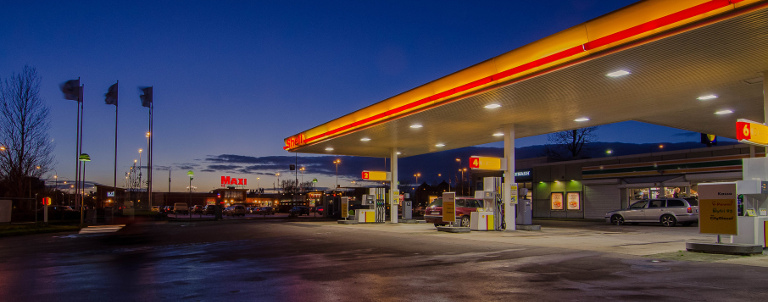
Diesel car owners may feel a little under siege of late, given the sudden emphasis on diesel cars being the cause of much of the pollution in our towns and cities, along with plans to impose toxicity charge zones across the country.
However, are diesel cars really the main culprits, or are other sources of pollution with far greater impact being ignored? We may be about to witness a fightback against politicians and experts about diesel and the extent of the pollution it generates.
Under siege
According to the Managing Director of Jaguar Land Rover, Jeremy Hicks, motorists are being ‘frightened off diesel cars’ by a combination of the threat of council bans, extra charges and the ‘false impressions’ that are demonising diesel cars. He points out that other causes, ranging from buses and trucks to log-burning stoves, are largely being ignored.
Hicks’ comments follow statistics from the London Assembly Environment Committee that seem to agree with him. Figures show that diesel cars emit less nitrogen oxide (NOx) than gas central heating systems and buses in the areas suffering the worst congestion around the capital.
Costing drivers money
FairFuelUK, a motorist campaign group, said that a combination of opportunistic politicians and environmentalists have used factually incorrect information about diesel cars to create a panic. The result of this looks set to be a surcharge on people who own diesels.
This is costing drivers money, with some estimates putting the figure at £35 billion in lost vehicle value. This is all due to figures that some consider to be questionable. The FairFuelUK report added that basing legislative decisions on this misinformation risks a ‘negligible improvement on urban air quality.’
London Mayor Sadiq Khan received personal criticism in the report. He looks set to announce tougher proposals for diesel cars around the capital this week. However, the report points out that the committee that provides the mayor with his information has not considered other sources of emissions in its decisions. Or is it simply that the mayor is unwilling to tackle gas central heating or buses as greater sources of NOx emissions because he can’t tax them?
NOx output
FairFuelUK’s analysis shows that diesel cars are responsible for 11% of the NOx pollution in London, while gas central heating contributes 16% and the capital’s buses a similar amount. Diesel plants and machinery are responsible for around 14% of the emissions, while other sources include HGVs (12%), rail (8%), petrol cars (7%) and diesel vans (5%).
Jaguar Land Rover’s Jeremy Hicks, attending an industry summit in London, said that critics were identifying the ‘wrong villains’ by criticising modern, clean diesel cars and completely ignoring pollution from buses, trucks and taxis. Jaguar Land Rover’s diesel vehicles are comparable with petrol ones in terms of the nitrogen oxide, nitrogen dioxide and particles that they emit. Hicks added that there is an impression that city air quality will be improved simply by banning diesel cars.
The NOx problem
Since the Volkswagen debacle highlighted possible emissions problems with diesel cars, there has been a great deal of focus on the NOx problem and on air quality in general. The NHS says that urban air quality is responsible for 40,000 early deaths each year, with NOx emissions being one of the main causes of the problem.
Nick Molden, CEO and founder of Emissions Analytics, which tests car emissions in real-world situations, has said that in their research, several diesel cars meet and even exceed the Euro 6 emissions regulations. However, there are some vehicles that exceed NOx emissions levels by as much as twenty times.
Latest additions to the EQUA Air Quality (Aq) Index
| Make |
Model |
Engine size (Litres) |
EQUA Aq Index |
| BMW |
5 Series |
2.0 |
A |
| Mercedes-Benz |
E-Class |
2.0 |
A |
| Mercedes-Benz |
V-Class |
2.1 |
A |
| Mercedes-Benz |
C-Class |
2.1 |
A |
| BMW |
7 Series |
3.0 |
A |
| BMW |
3 Series |
2.0 |
B |
| Skoda |
Kodiaq |
2.0 |
B |
| Mini |
Countryman |
2.0 |
C |
| Audi |
A4 |
2.0 |
C |
| Mercedes-Benz |
GLC-Class |
2.1 |
D |
| BMW |
X1 |
2.0 |
D |
| Suzuki |
Vitara |
1.6 |
E |
| Alfa Romeo |
Giulia |
2.1 |
E |
| Peugeot |
308 |
2.0 |
E |
| Ford |
Focus |
2.0 |
E |
| Maserati |
Quattroporte |
3.0 |
E |
| Mazda |
6 |
2.2 |
E |
| Renault |
Kadjar |
1.6 |
E |
| Land Rover |
Discovery |
2.0 |
E |
| Kia |
Rio |
1.1 |
G |
| BMW |
2 Series Active Tourer |
1.5 |
G |
It’s not only older diesel vehicles that fall into this “very high polluting” bracket and that could be covered by a diesel scrappage scheme. There are also diesel vehicles under nine years old where drivers have removed the diesel particle filters – these can emit 20-40 times more NOx that the Euro 6 standards.
Changing diesel’s perception
Car manufacturers and campaigners are working hard to repair the damage caused to diesel’s reputation by the Volkswagen scandal. However, with politicians and others focusing their efforts on diesel cars as the cause for poor air quality problems, this may be a difficult fight.
The government could go a long way to addressing the problems with a moratorium on the sources of NOx emissions (rather than just cars), a scrappage scheme to remove diesel cars 15 years or older, and legislation making it illegal to remove diesel particle filters from cars less than nine years old. It seems, however, that the only way it can think to tackle the issue is by taxing diesel drivers for driving.
Do you think motorists are being frightened off diesel cars? Why do you think diesel cars are being demonised when the evidence proves that 89% of NOx is created by other sources? Let us know in the comments below.
Photo credit: “A Petrol Station” by Frank is licensed under CC BY 2.0
Jun 28, 2017
Motorists around the country could be seeing another drop in the price of fuel, as the cost of oil continues to fall. It dropped to $45 a barrel last week. Fuel prices have reached their lowest point since the beginning of the year, as the price of Brent crude has fallen steadily from $57 a barrel in February to the current low of $45.
This has meant that motorists are paying around 5p less on petrol and 6p less on diesel than they were five months ago. Now, the question on everyone’s lips is, how much lower will prices go?
<div id='div-gpt-ad-1552916936912-0'><!-- [et_pb_line_break_holder] --> <script><!-- [et_pb_line_break_holder] --> googletag.cmd.push(function() { googletag.display('div-gpt-ad-1552916936912-0'); });<!-- [et_pb_line_break_holder] --> </script><!-- [et_pb_line_break_holder] --></div>
The price of crude oil has fallen more than 20% since the beginning of 2017. The price drop was expected, but the scale of the drop has been larger than most had anticipated, for several reasons.
An increase in oil production by both Nigeria and Libya pushed the price down to around the $45 mark earlier this week. Both of those countries are exempt from the supply cuts announced by OPEC members and other oil-producing countries back in November 2016.
Another factor is the continued oil production in the US, which has undermined the OPEC deal and meant that there was less confidence in the deal’s long-term viability. The deal was aimed at keeping the price of oil (and fuel) up, but it doesn’t seem to be having the effect that OPEC desired.
Motorists are now hoping that these falling oil prices will translate to savings at the pump. However, according to Brian Madderson of the Petrol Retailers’ Association, the fall of the pound might offset the price fall, as oil is traded in dollars and the uncertainty around Brexit might cause fuel prices to fluctuate rather than fall.
<div id='div-gpt-ad-1511452598873-6'><!-- [et_pb_line_break_holder] --> <script><!-- [et_pb_line_break_holder] --> googletag.cmd.push(function() { googletag.display('div-gpt-ad-1511452598873-6'); });<!-- [et_pb_line_break_holder] --> </script><!-- [et_pb_line_break_holder] --></div>
Prices are expected to fall to around 110-112 pence per litre, from the current average price of 114.9p for unleaded. The supermarkets will lead the change, with the big four supermarket retailers having already dropped their prices this month, forcing the large petrol retail brands to follow suit.
On 15 June, ASDA, Sainsbury’s, Tesco and Morrison all moved their prices down by around 2 pence, as the cost of oil reached $48 a barrel. ASDA then went one better by saying that motorists would pay no more than 111.7 pence per litre for fuel at any of its petrol stations around the UK (currently 308 sites).
As the price of oil has fallen another $3 per barrel since the retailers last changed their prices, there is growing pressure to make another cut in fuel prices, to allow motorists to feel the benefit of the change.
The price on 24 June;was 115.0 pence per litre for unleaded on average, while diesel was 115.7 pence per litre. This is substantially above the price guaranteed by ASDA before the latest change in crude prices. The reason? Non-supermarket retailers are selling their fuel at an average of 4-5 pence per litre more than the supermarkets, as we indicated in our article last week.
PetrolPrices believes that prices will continue to fall at the pump, with prices of around 110 pence per litre for unleaded, and diesel 0.5 pence above that, by mid-July. ASDA is expected to lead the way again; we estimate it will put its price at around 107.9 pence per litre.
Other supermarkets will likely be around 108-109 pence per litre, while non-supermarket retailers are likely to set prices around the 112-114 pence per litre mark by the middle of the next month.
While cheaper fuel prices are definitely on the cards for July, it’s not clear as to what will happen beyond that point with the price of oil. If countries continue to defy the production limits set by OPEC, then we could be seeing further price falls this year.
<div id='div-gpt-ad-1511452598873-4'><!-- [et_pb_line_break_holder] --> <script><!-- [et_pb_line_break_holder] --> googletag.cmd.push(function() { googletag.display('div-gpt-ad-1511452598873-4'); });<!-- [et_pb_line_break_holder] --> </script><!-- [et_pb_line_break_holder] --></div>
