
The cost of learning to drive could more than triple over the next two decades, rising from around £2,460 to almost £7,600 by 2045*. With costs already on the rise, more parents are supporting learner drivers at home to help speed up progression, build confidence, and offset expenses, spending an average of 3.31 hours per week doing so.
To better understand how this shift is shaping the learning journey, learner driver insurance experts, Tempcover, surveyed 1,000 UK parents. The findings suggest that while a ‘blended learning’ approach is becoming more common, it is not always smooth sailing for parents and learner drivers.
More Than Half of Parents Worry About Passing on Bad Driving Habits
While many parents are keen to help their children practise driving at home, 57% worry about ensuring their children don’t pick up habits that could compromise their test success.
Rather than a reflection on their own driving ability, it seems these concerns speak to the pressure parents feel as non-professional instructors who want to do a good job. Without formal training, many worry about how to teach strict test-level standards.
Speeding (18%) is the top concern parents worry about passing on, followed by forgetting to check mirrors or blind spots (15%) and poor parking or spatial awareness (13%). One in ten also worries about managing road rage while mentoring.
|
Habit |
% |
|
Speeding |
18% |
|
Not checking mirrors or blind spots |
15% |
|
Poor parking/lack of spatial awareness |
13% |
|
Road rage/aggressive driving |
10% |
|
Not indicating/improper use of indicators |
10% |
|
Braking harshly or at the last minute |
9% |
|
Tailgating/following too closely |
8% |
|
Distracted driving (e.g., using a phone, eating, adjusting music) |
8% |
|
Over-reliance on driver assistance (e.g., parking sensors, cruise control) |
8% |
|
Unsafe lane changing/weaving in traffic |
7% |
|
Running red lights or ignoring stop signs |
5% |
Arguments are Common During Driving Practice
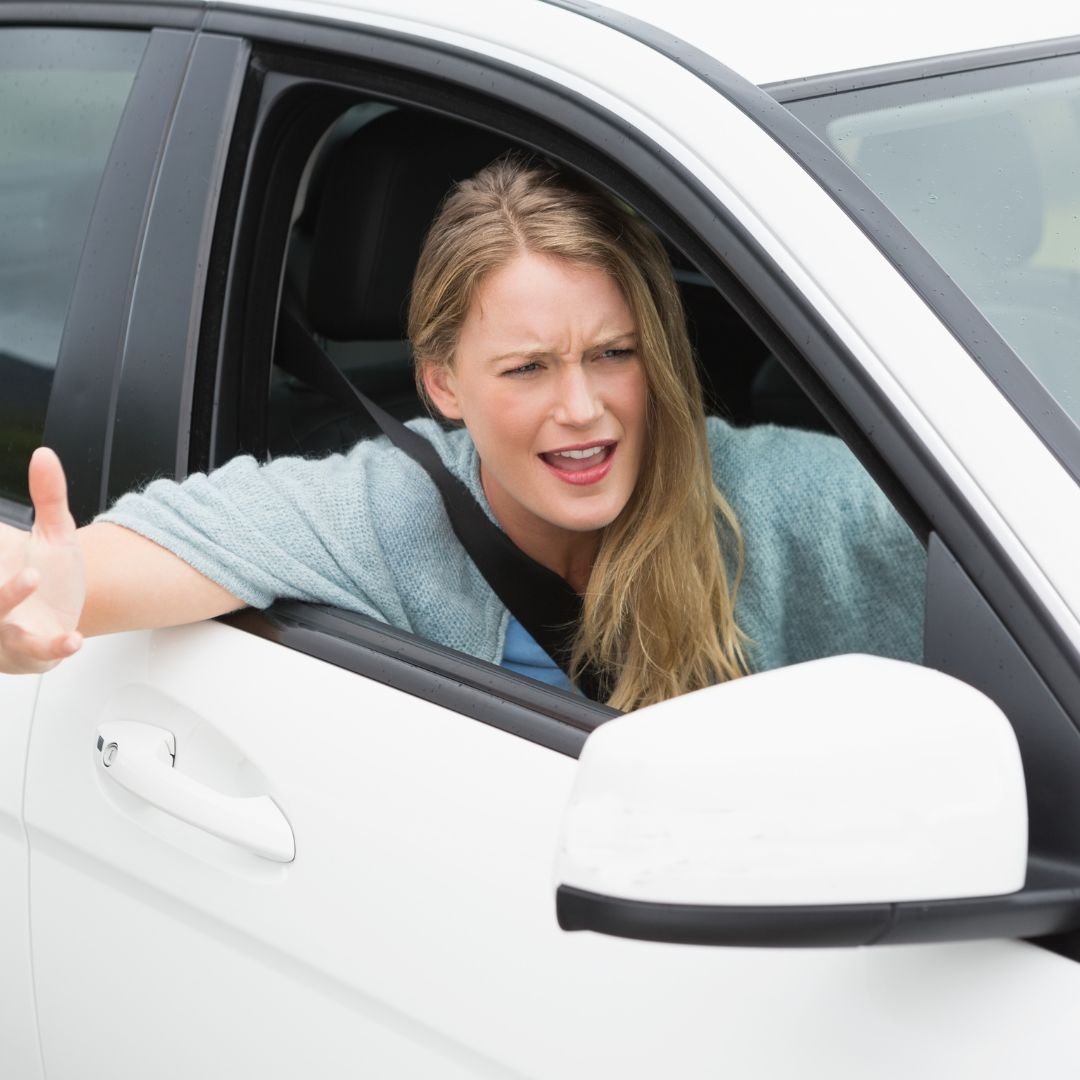
Alongside the pressure of teaching, many parents are also navigating tension in the passenger seat, with more than a third (38%) reporting arguments with their children during practice sessions. This friction often stems from the unique dynamic of teaching a family member. The most common trigger for these disagreements is children not listening (41%), followed by issues around speed control (26%) and managing nerves (21%).
|
Argument Reason |
% |
|
Children not listening |
41% |
|
Speed control |
26% |
|
Confidence/nerves |
21% |
|
Tone of voice |
21% |
|
Following directions |
20% |
|
Use of mirrors |
19% |
|
Decision-making in traffic |
18% |
|
Use of clutch/gear changes |
14% |
|
Lane discipline/positioning |
13% |
|
Parking |
10% |
|
Handling roundabouts |
7% |
|
Night driving |
3% |
Learners are Helping Parents Brush Up on the Highway Code
It seems the learning dynamic is a two-way street, with over half (53%) of parents revealing they have been corrected by their children on driving theory or Highway Code rules.
With road regulations frequently updating, these corrections most commonly relate to speed limits or zone rules (12%), followed by the interpretation of road signs (10%) and roundabout or junction rules (8%).
Other areas include lane discipline and road markings (7%), low-emission zone rules (7%), and pedestrian or cyclist priorities (6%). Parking regulations (6%) are also highlighted. While it highlights how quickly rules can evolve, it also shows that supervising a learner is a great opportunity for parents to refresh their own knowledge.
Parents Remain Confident Despite Challenges of Home Practice
Despite the unique pressures of home practice, the vast majority of parents (79%) feel confident stepping into the instructor role. However, comfort levels naturally shift depending on the driving environment.
While most feel assured handling everyday situations such as junctions (81%) and roundabouts (80%), confidence can dip during higher-risk scenarios, including overtaking (62%), night driving (60%) and driving in bad weather (57%).
To understand how home practice and professional instruction work together to shape learner confidence, learner driver insurance experts, Tempcover, spoke to driving instructor James Platt:
“A qualified instructor is there to introduce skills in a highly structured way, focusing on technical routines and test criteria. We know the exact blueprint of the modern driving test and how to build core safety habits from scratch. For many drivers, this is the go-to standard, but adopting a blended model can be an effective route for some learners.
That is where private practice with a parent can become an essential extension of the classroom. By taking those structured lesson routines and pairing them with parental support and private mileage, learners get the opportunity to clock up basic repetition and turn theory from professional lessons into muscle memory.
Ultimately, this type of blended approach can help to bridge the gap between learning the technical skills required to pass a test and building confidence through greater hours behind the wheel, developing a well-rounded driver who is better prepared for the road before they go out on their own.”
Methodology: Tempcover surveyed a sample of 1,000 UK parents with children aged 17+ who are currently learning or have learned to drive with parental support. The survey was conducted by market research company One Poll in April 2026. The following questions were asked:
- On average, how many hours per week do you/did you spend teaching your child to drive?
- What is/was the main reason you are/were teaching your child to drive?
- To what extent do you agree or disagree with the following statement? “I set a good example for my child when I am driving”
- Which, if any, of the following driving habits are you/were you worried about passing on to your child?
- Have you and your child ever argued while you were teaching them to drive?
- What was the main reason for the arguments when you were teaching your child how to drive?
- Which, if any, of the following has your child ever corrected you on, based on something they learned about driving from the Highway Code, professional lessons, or theory study?
- Overall, how confident, if at all, do you/did you feel teaching your child to drive?
- How confident do you/did you feel teaching your child to drive in the following situations?
[1] www.driving.org/learning-to-drive-could-cost-nearly-7600-by-2045-new-analysis-warns/