Four out of five airports have increased drop-off charges, are you feeling the sting?

Four out of five airports have increased drop-off charges, are you feeling the sting?

Just in time for the holiday season, comes research by a major motoring organisation that says, this year, four out of five airports in the United Kingdom have increased the fees for drivers dropping off and collecting passengers.

Travellers and those making the trip to wave them off, or welcome them back, are in an uproar to find themselves stung by expensive so-called ‘kiss and fly’ charges, with many taking to social media to complain. We look at the airports raking in the parking profits and what you can do to avoid paying more than you must.

Charged up

The investigation by the RAC found eight out of 10 (82%) of the UK’s 22 busiest airports introduced or raised their fees this year, with London Stansted Airport the most expensive for both drop-off and pick-up costs.

The automotive company based their study on 22 airports that serve over 1million passengers each year.

They looked at fees charged to motorists who leave their vehicles in what is most often known as a ‘short stay’ car park to drop off passengers either outside or as close to the front of the terminal as possible, or meet someone at the arrivals gate.

Gathering their information this month, the RAC scoured the airport websites’ recommended parking tariffs for motorists to use for passenger collection.

Just as you may be when you find out the cost, the required fee is often in tiers. What you’re charged may depend on how long you’re at the airport. For instance, you might need to pay a set price for the initial charge—the first 10 minutes, say—with the next 20 minutes costing a different price.

The biggest price-hike culprit—London Stansted Airport—will charge you £4 for a 10-minute drop-off (a 50p increase from last year) and £8 for a 30-minute pick-up (up £2.50 since 2018).

A ‘goodbye’ tax?

Only recently PetrolPrices covered the news that Heathrow Airport would soon be the world’s first airport to use an Ultra Low Emission Zone (ULEZ) so it’s little surprise to hear that the rise in drop-off and pick-up parking charges is being attributed to pollution.

A spokesman for The Airport Operators Association said:

‘Airports that operate drop-off charges directly outside the terminal do so for a number of reasons, including to manage congestion and to limit the environmental impacts of kiss and fly journeys.’

What seems crazy is that despite aviation also being a huge contributor to environmental pollution, some airports are now charging more for drop-off and pick-up fees than for the price of some flights

Simon Williams, Media Relations Manager at RAC, said:

‘Many airports charge drivers to drop off and pick up to keep the terminal entrances clear of traffic and to discourage long stays in car parks.

‘Some might also see this as a way to encourage other forms of transport to the airport, but nevertheless, these fees are still unwelcome, especially when you consider how little time most people actually spend at the airport.

‘In reality, many travellers simply either do not have easy public transport access to get to the airport and even if they do, they can’t always depend on it getting them to the airport in good time.’

Off to a flying start

While it’s expensive to drop off passengers right outside the terminal, you can still help your loved ones while avoiding steep charges.

You can also do things to avoid stress and keep your time at the airport as short as possible, such as reading the parking information on the airport’s website to find out the fees, payment options, and stay times. Some airports may even offer lower rates for pre-booking your parking online.

Many airports offer a cheap or free alternative such as car parks further from the terminal, either within walking distance or requiring a shuttle bus connection.

Some airports may also offer free pick-up and/or drop-off for a limited time.

Consider saying your goodbyes to your passengers before you get to the airport to keep the farewell time short.

Ask your friends or relatives to call you once they’ve got their luggage and passed through passport control so you can park at the best time. Remember, though—use a hands-free device!

Check out nearby free parking places in case of a delay with your friends or relatives’ flight so you can wait for the plane to land before heading to the terminal. If you’re picking somebody up, make sure you keep track of the plane’s landing time.

Are you flying overseas this summer? Did you agree to drive somebody to or from the airport? What airport will you use and will an increase in parking prices change your plans? Share your thoughts in the comments.
One in four motorists liable fined under ULEZ

One in four motorists liable fined under ULEZ

Since the introduction of the new Ultra-Low Emission Zone on April 8th, Transport for London has raked in around £26m in levies and penalty charges. That’s approximately £198,473 each day.

We shouldn’t forget that the figure is on top of the regular congestion charge (£250m raised 2016/17), and the fact that just 28 employees of Transport for London earned just under £7m between them for the year 2016/17, according to the TfL Annual Report & Statement.

At nearly £900,000 / day in revenue, you’d have thought that TfL would be a little more forgiving when it comes to enforcing their strict 7-day doubling of the penalty fine for missing a ULEZ payment; the £12.50 charge automatically raises to £80 after the deadline of payment is missed (within a day or two of the infringement), which doubles to £160 if the penalty charge isn’t paid within seven days.

ULEZ charges

The ultra-low emission zone charge is payable 365 days of the year, 24-hours a day, and the charge doesn’t cover anything more than for the day – arrive at 23.59hrs and leave at 00.01, you’ll pay twice.

Around one in four motorists that are liable for the charge have been fined so far, with many complaining of lack of clear signage or a misunderstanding of the whole situation; how to pay, where they pay, what area it covers – 130,000 motorists have been hit with a fine since April.

Which also leads to an issue over non-authority websites offering to take payments for the charge, and charging a further £7.49 for the pleasure – the total fee, including ‘processing fees’ comes to £19.99. It seems as though it isn’t just Transport for London that want their fat slice of the pie.

Taking advantage

Of course there is the argument that London has some of the best public transport networks available, certainly within the UK, so in theory, there’s little need for personal transportation if you’re going about your daily business within the city.

And yet, 28% of Londoners live in poverty, that’s six percentage points above the national average, and if you look at inner London, that figures rises to 32%. For many Londoners, owning a car is an essential lifestyle necessity, not a luxury.

In a recent study by Deutsche Bank, London was ranked as having the most expensive public transport in the world, which leaves millions of Londoners relying on their own car for transportation, and yet they’re being penalised for the privilege. It would seem that there are very few options, other than to walk everywhere.

Maximising profits

Ask yourself, if car insurance wasn’t a legal requirement, would it still be so expensive? You can guarantee that the market would change significantly, as competing providers made deals and offered more for the money, all in a bid to win your business.

It’s the same for the ultra-low emission zones – if you positively need to enter the zone, you have to pay the price, and while some may say that £12.50 per day is a small price to pay, I’d argue that it’s a family meal for some, and with no viable alternative transport, families are going without.

Also, we shouldn’t forget that the Congestion Charge (when first introduced) was such a horrifying idea that even Westminster Council, with the backing of Kensington and Chelsea borough council tried to block it. Now, we happily await for the next charge to come along, and accept it with nothing more than a minor grumble. It’s also worth pointing out that the charge has more than doubled since the introduction.

Air pollution

Air pollution is a very real thing, no one (least of all, me) is denying that. But it seems as though Transport for London want their cake and to eat it too; the world’s most expensive public transport, and charging you to enter the city in certain vehicles.

As we reported last week, electric buses account for just 2.6% of the TfL fleet, so they’re not exactly leading by example, and the issue isn’t about changing private vehicle usage, it’s more about incentivising rather than penalising.

You want polluting cars to stop entering the city? Give them discounted public transport. Stop looking at the bottom line of the bank balance, and start thinking about genuine ways to improve transport networks that benefit more than the few.

Use some of that £900,000 per day revenue to subsidise the networks, to offer something viable, that isn’t going to take food out of the mouths of the poorest in our society. Give them the option to give up their car, not force them further into poverty.

MPs propose to ban all hands-free devices in cars

MPs propose to ban all hands-free devices in cars

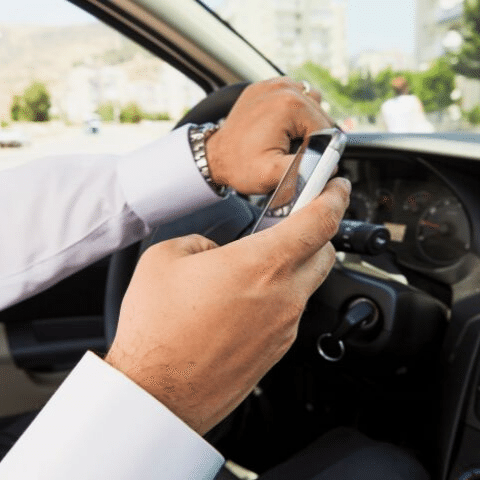
Someone using a mobile phone behind the wheel is four more times more likely to crash yet statistics show mobile phone use being a factor in collisions has actually risen every year since 2017. MPs warn that the current regulations make it seem like hands-free driving is safe, whereas they say it has the same risk as actually holding the phone.

Now, MPs from a cross-party group are calling for all hands-free use to be banned and for the current legislation to be reviewed, taking into account new technologies and it being socially acceptable in some circles to decrease use and increase the social stigma around it to try and deter more people.

What’s the case?

Ever since the increase in technology and the percentage of the population that own a mobile phone (94% in 2017, up from 82% in 2005) has also risen drastically.

Alongside that 25% of motorists admit to making a call or texting behind the wheel, with that rising to 39% when doing so while the engine is idling. The annual RAC report on motoring showed no decline from 2017 to 2018, even though a stricter penalty of £200 and six points was introduced.

For someone in their first two years of driving, this would mean an immediate licence removal and they would have to retake their test.

Toughen up

The penalty for using a phone was doubled back in March 2017 but Road Traffic Officer (RTO) numbers have decreased leading to fewer people going to the High Court over such matters. In the cross-party government report, the RAC cited a study that said in the years before 10 years to 2017, the number of full-time road traffic officers in England and Wales fell by almost a third from 3,766 to 2,643. The number of offences for using a hand-held mobile phone while driving that resulted in a Fixed Penalty Notice (FPN), driver retraining or court action fell by over 30% between 2016 and 2017 and has been falling steadily for the past six years—by more than two thirds since 2011.

In order for a law to be effective, it must be enforced and the above stats show it isn’t at the minute. The previous minister for Road Safety, MP Michael Ellis requested a review into RTOs and how technology may be able to increase their effectiveness.

Near our offices in Aldershot, we have what has been affectionately nicknamed “vulture cameras” along the A3 which can detect eating, mobile phone use and the driver and passenger not wearing seat belts behind the wheel. These could potentially be used across the country to automatically detect such offences.

Industry implications

But what would an outright ban on hands-free use behind the wheel mean for mobile workers such as mobile repair technicians, taxi drivers and others who rely on their cars as their job.

The BBC spoke to Kelvin Hardy who repairs, inspects and maintains incinerators across the country. He said “I use a hands-free phone with voice recognition and I have to have one. I could get a call out to a job and then get another call telling me I’m not needed. Being able to take that call can save a wasted journey. I’m not a big business, it’s only me involved. If you have a secretary taking calls it might be fine, but I don’t have that. [If the ban happened] I’d have to stop every hour on the motorway.”

“For me it’s all about responsibility. You don’t have to take a call. I don’t pick up calls if I’m surrounded by lorries or there’s heavy rain. It’s about not being distracted. I see some horrendous driving on the roads that no one seems to bother about.”

This also comes into play with in-car entertainment systems. Where is the line drawn here as some could argue this is a form of handsfree and therefore should be banned, effectively rendering millions of cars illegal. Does this then also mean all other distractions should be banned? Noisy children, arguing over directions with the passenger, music of any kind, other noises, in fact, could we not ban roads near historical monuments in order to prevent driver distraction?

This does open a can of worms on distracted driving. We as a society have a decreased attention span and are becoming more and more distracted. Could this be the start of an automation switch into cars that are intelligent and reduce the risk of human accident? Or could this be the start of an anti-mobile revolution where people start going back to smaller more basic phones?

Facebook’s user base has declined 15 million since 2017, and people are turning against the ever-connected world. But how far will this go?

What do you think of this ban? Would it affect your work? How far will the distracted driving go? Let us know below

Privately owned cars should be BANNED by 2030 says pro-Corbyn think tank

Privately owned cars should be BANNED by 2030 says pro-Corbyn think tank

Politics; “the art of looking for trouble, finding it everywhere, diagnosing it incorrectly and applying the wrong remedies” – Groucho Marx.

Here at PetrolPrices, we try and stay clear of politics, but very occasionally we need to dare to tread that path, to have a say, to inform you, and to take a stand. From a personal point of view, I’m very apolitical, certainly in a professional capacity, but occasionally, I read something that I feel should be discussed.

With talk such as “ownership models”, “the relentless subjugation of the public realm to the exigencies of the private motor car”, “rapid de-carbonisation” and “isolate and atomise society” being used to describe owning a car, I for one feel that there are some pretty powerful words being used, all with the intent of further demonising the ‘motor car’, you could even perhaps call it propaganda, for that is really what it is.

But they’ve saved the most powerful sentence until last – “inside armoured shells that protect those inside by endangering everyone else”.

Away with all cars

Would you be overly surprised if I told you that this came from a radical left-wing pro-Corbyn supporting think tank? That the white paper (unashamedly called ‘Away with All Cars’) has been written in conjunction with Greenpeace UK and a group called ‘Common Wealth’.

Before you accuse me of being a climate-change denier, you should understand that the group want to ban all cars; fossil-fuelled, EVs, PHEVs … ALL privately owned vehicles. The reasons given are ‘emissions’ and ‘air pollution’. But it begs the questions; do we all just accept being herded on to mass transit solutions? Like some form of communist state?

If this was a regular government ‘think’ tank, we’d be calling it nonsense, passing it off as some sort of buffoonery, and complaining that it’s the motorist being punished again, but it isn’t, the whole tone of the white paper, its sponsors and their values are driven by the radical left-wing; they’re sharing their political values, it isn’t about the motor car, it’s about a political ideology.

The impact of road pollution

No one is denying, including myself that road pollution is a massive killer. The statistics are very clear, according to COMEAP, road pollution leads to between 28,000-36,000 premature deaths a year. London is one of the worst cities in the world for deaths caused by road pollution.

The Mayor of London is trying to discourage drivers from bringing in high polluting vehicles and encouraging lower emission petrol and diesels that meet tough EU standards, EV or hybrid cars into the new ULEZ zone. This is a sensible and pragmatic approach. But this think tank just wants to ban vehicle ownership outright, is there is something bigger at play beyond zero carbon emissions?

The banning of cars

We’ve become used to being the scapegoat for all things climate related, it seems that the answer to any questions relating to air pollution end with ‘make the (private) motorist pay’. Just last year, the Government came under attack for their policy with the ministerial cars – from the 84 vehicles run by the Government Car Service, there are just six electric cars and one hydrogen fuel powered vehicle in the fleet.

The Prime Minister’s runaround is a supercharged 5.0 litre V8 Jaguar, and that’s followed around by a fleet of Land Rovers. None of those shout ‘economical’ as they drive past. Isn’t it time that our ‘leaders’ started doing just that, and lead by example?

Currently, electric buses in London account for just 2.6% of Transport for London’s fleet, and Sadiq Khan has been accused of misleading the public with some of his claims; “London will soon have the largest double-decker electric bus fleet in Europe” is a prime example.

Technically, what he said wasn’t wrong, but the reality of the situation is that Dublin is the only other city in Western Europe that uses double-decker buses in significant numbers.

Car-free days

Plans are already in place for the first car-free day to be held in London, and the transport research manager for the Centre for London has already stated that we need to think about ‘locking in car-free lifestyles for good’.

When all’s said and done, the reality of banning privately owned cars, or banning them from London permanently is quite frankly, ridiculous. While it could be argued that there are many other great cities in the UK, it’s London that’s the hub of the country, and with no reliable means of cheap transportation available to those that are less fortunate, the city will grind to a halt.

We’re already seeing on a smaller scale, that when a city makes life difficult for a motorist, they vote with their wheels and park, shop or eat out of town. It’s unlikely that London will ever become a ghost town, but financial losses only need to be small for someone to take issue.

And that’s why the ‘Away with All Cars’ white paper is a non-event, with nothing more substantial behind it than pushing a weak political agenda. With that said, similar to what we see with certain other world leaders, quite often the rhetoric isn’t designed to convert new people, rather than reinforce the message to the already converted, you could even say, to radicalise them.

What do you think to the plans to ban all private owned cars by 2030? Is it as ridiculous as it sounds? Or should we sit up and take notice? Let us know in the comments.

Speed limit technology to be implemented in all new cars by 2022

Speed limit technology to be implemented in all new cars by 2022

Speed limiters will be made compulsory fitted to all new vehicles in 2022 under proposals put forward by the European Union and this will be copied by the UK Government, as confirmed by the Department of Transport. The official purpose of the speed limiters is that it will reduce road deaths by 20%, however drivers can still override the stated speed limit if they need to in case of an emergency manoeuvre.

This is the first step towards the gradual full automation of all vehicles. Driver safety and the reduction in road deaths is being used as the justifiable reason to impose it, but this is only the beginning of a set of rules that will eventually lead to all vehicles driving themselves.

The driving Nanny

New European legislation is to come in to force for 2022, in which all new cars will be fitted with ‘Intelligent Speed Assistance’; a system that automatically restricts power when it recognises, you’re speeding, thereby slowing the vehicle down to the limit.

This isn’t really about the kind of unobtrusive technology being used to monitor our daily movements though, we’re now talking about technology that interacts with our surroundings to physically prevent us from taking part in any ‘wrongdoing’.

And in this case, ‘wrongdoing’ isn’t robbing a bank, flashing an innocent bystander or physically harming someone, wrongdoing is all about the evils of speed, for no matter what the reasoning, you’re the Devil Incarnate should you allow your speedometer to creep above the permissible limit; this is speed enforcement en masse.

And it gets worse.

Given the fact that it uses a combination of GPS-tracking black box technology, sign-reading cameras, and connectivity, it’s entirely possible for the system to tag your time, location, and speed to send off a detailed report about your nefarious activities, all ready for prosecution. And while that sounds extreme, think of this: with Intelligent Speed Assistance, revenue from convicting speeders will be down, and relying on safety cameras alone to make the difference just won’t cut it.

No obvious reduction in deaths per year

These new proposals are down to the fact that for the last decade, fatalities and casualties from road accidents have remained pretty constant – around the 1,700 per year mark. And yet the number of cars has increased by around 2m in the last decade, and so while the numbers are similar, the percentages are smaller – a fact not mentioned by the government.

Further still, much of the in-action with road safety comes down to budget cuts and a drop in the long-term spending; there’s no road safety expertise at local council level, and no long-term strategies in place to reduce accident numbers.

With an estimated price of £2,000 added to each new car (for the incorporation of the system), it’s the motorist (once again) that’s been tasked with footing the bill.

Safest roads in Europe

And yet still there’s another question. Is this really about road safety? Are our roads dangerous enough to warrant the actual physical interference of the government in our daily driving activities?
According to a new European Commission study, Britain has the safest roads of any European country, so while we’re a country (apparently) full of speeders and hooligans, we’re doing OK.

Of course, it’s easy to blame this at the feet of the Eurocrats, and thank all things holy that Brexit is happening, but despite it being a European Commission approved legislative act, we’re set to follow the legislation with or without Brexit. This is most definitely happening.

I’m not against measures that work to reduce inappropriate speeding, I don’t see my local ring-road as my own personal racetrack, and as an automotive engineer, I’d argue that ‘speeding’ in one car could be a completely different experience to breaking the law in another. And what does this mean for high performance cars, sold by all the main automotive brands? Does that mean that a shiny top of range Bugati Veyron can only pootle along at 70 MPH in the UK? It seems almost laughable, but this is the imminent reality we all face.

But what I do object to, is the physical interaction, taking control away from the motorist, and wresting it in the hands of a government think tank that tells us they know best. It’s allowing the government to take drastic measures to force us to comply with the lowest standard of driving permissible, while I’ve spent a lifetime improving, learning and demonstrating courteous & respectful driving, albeit with the occasional burst of speed. What is point of Advanced Driving Courses anymore if this happens?

More accidents not less?

Finally, we’ve already learnt that reducing the speed limits to 20mph has the opposite effect; accident statistics rise, and it’s proven to be down to lack of concentration or complacency for the lower speed. What happens when the driver must concentrate less because the car will automatically monitor & adjust the speed? We could actually see more accidents because the drivers think, ‘the car has this under control’ and increases in accidents caused by driver distraction could skyrocket.

What do you think to the new speed limiters? Will they be a good thing for road safety? Or is this a step closer to being forcibly stopped from controlling our vehicles? Let us know in the comments below please.

Retailer of the month: Co-op Fuel

Retailer of the month: Co-op Fuel

Interview with Eddie Jenkinson, National Fuels Manager, Co-Op Fuel

When did you start selling petrol? “In the 1990’s”
How many forecourts does the Co-op have? “147 Co-op own brand plus 60 that have a Co-op shop but may sell a different brand of fuel”
On average, how many litres of fuel went through Co-op owned sites last year? “Around 650 million litres”
What was the last site you opened? “We last opened Chester Handbridge on the 19th July”

Petrol Forecourts as a ‘Community Hub’

“We are delighted to have had the opportunity to make a significant investment in our Kirk Hallam site. The work to enhance the petrol filling station forecourt and food store will allow us to better serve the needs of the local community. The conclusion of this investment in the community is a great way to mark the 175th anniversary year of the Co-op!”

Eddie, added: “Petrol stations are often seen as a “community hub” supplying local residents with groceries and services alongside fuel and food to go offers, coffee and other refreshments for visitors passing through the area. We are also ensuring that EV capability is built into all new forecourt developments in readiness for the expected growth in EV car ownership. Handbridge and Kirk Hallam are the latest in a series of significant makeovers for our forecourt sites – in the last two years around 10% of our forecourt Estate has been renewed and received major investment to better serve the community.”

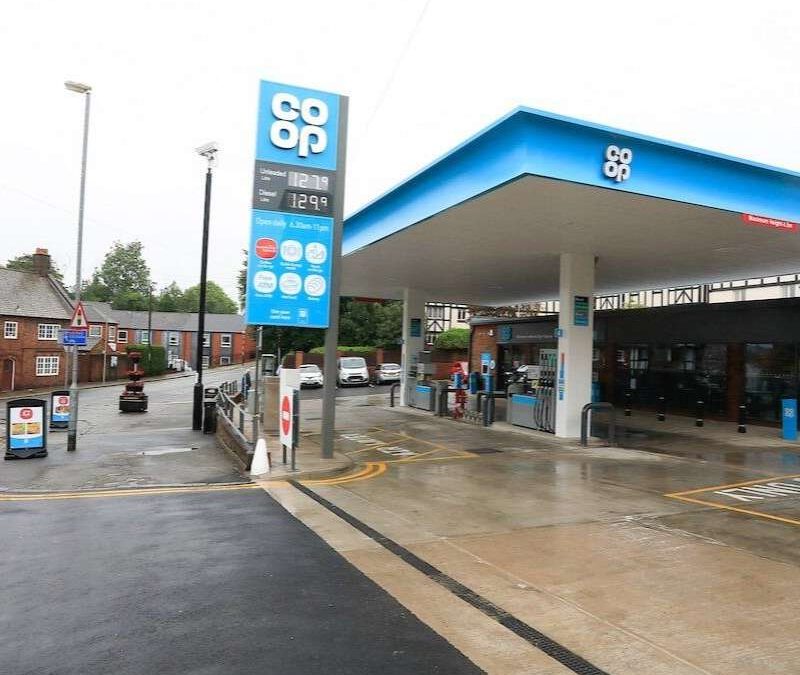
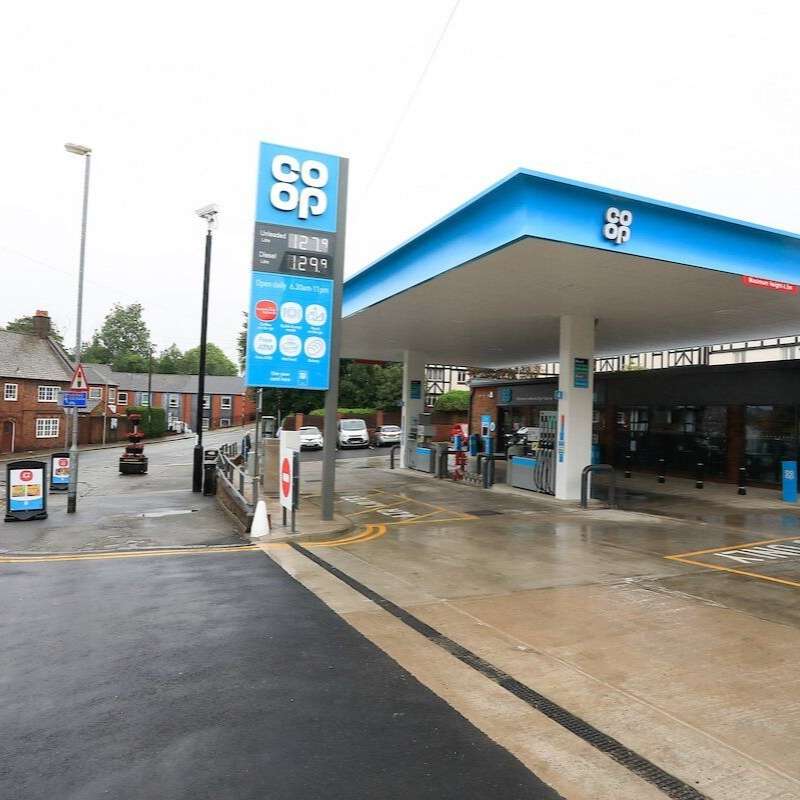
Co-Op Fuel Chester Handbridge

The latest addition to the Co-op forecourt roster is Handbridge Service Station in Chester. Previously an Esso and owned privately, it’s now become part of the wider group.

After opening on the 19th July to a great reception, the multi-million-pound redevelopment has a changed layout to improve traffic flow and an overhaul of the infrastructure.

As part of the international push for saving the environment, the new site runs on 100% renewable energy and offers compostable carrier bags instead of single-use plastic. The compostable bags double up as a caddy liner for your food waste collections and are certified for home-composting.

Over-70’s could soon have eye tests every three years under new DfT plans

Over-70’s could soon have eye tests every three years under new DfT plans

In the 90’s only 33% of those over 70 had a driving licence, and now, 20 years later that figure has doubled with last year 67% of people aged 70 or older holding a driving licence. Alongside that, over 113,000 90-year-olds hold a valid driving licence and still drive.

Now, the Department for Transport is considering enforcing eye tests every three years for over 70’s in a bid to remove potential risky drivers from our roads.

Government proposal

“Good eyesight is important,” the document said. “We are minded to consider there may be a case for mandatory eyesight tests at 70 and at three-year intervals thereafter, to coincide with licence renewal.

We’ve reported before on different suggestions by various charities such as compulsory eye tests for everyone at a 10-year mark, to adapting the laws on older drivers as the numbers rise so drastically.

However, this time the government has formally announced it’s consideration of such a scheme. Research previously has show that 44% of optometrists have seen someone who isn’t fit to drive yet does, so is this a bad thing?

Eye tests

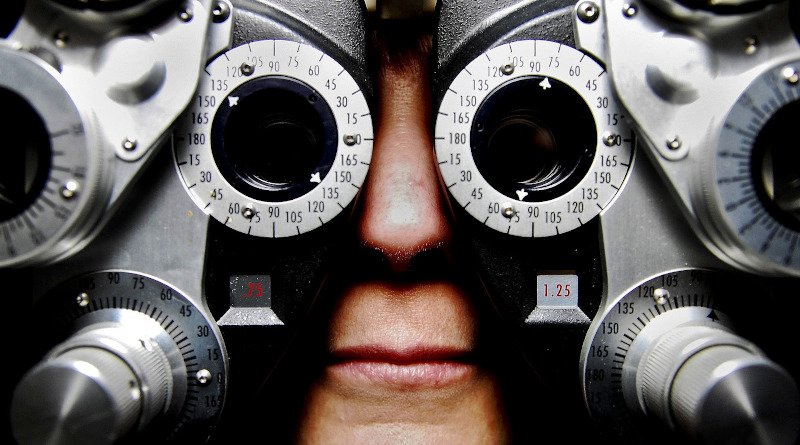
For anyone who’s ever had an eye test, you will know how simple it is. Normally, an initial photo of the retina is taken, followed by a check of your vision by an optometrist using different tests. They then determine your prescription and can check any other looming problems.

An eye examination can often pick up on other health problems such as brain tumours, high blood pressure, high cholesterol and diabetes, along with regular eye problems such as macular degeneration, cataracts and glaucoma. Getting an eye test could quite literally save your life, and from as little as £10, it makes sense to get checked regularly.

Plus if you claim certain benefits or fall into specific categories you can get free eye tests, so it’s always worth checking.

Industry reaction

Caroline Abrahams, a director at Age UK, said: “Every driver, regardless of age, is responsible for ensuring they are safe on the road. Being able to see clearly is obviously absolutely crucial.

“When it comes to the suggestion of mandatory eye tests however, we are not aware of any evidence showing poor eye sight is a significant cause of accidents among older drivers. The Department for Transport says it will review the research, but until the results are known it feels premature for drivers to have a compulsory eye test at 70 and at intervals thereafter.”

What to do if you are concerned?

Previously other age focused driving groups such as the Older Drivers forum have issued advice to the elderly. They encourage drivers to drive during daylight and avoid unknown routes unless necessary.

Once you reach the age of 60, you are automatically entitled to a free eye test. It is worth booking in and taking advantage of this, as it can help to detect other medical conditions, not just your eyesight.

Keep fit by doing 15-20 minutes of exercise a day. Whether this is a short walk through a local park, or attending a class at your nearest gym, keeping fit will make sure your joints are mobile and can help with coordination, both useful skills for driving.

Get a drivers assessment or speak to a local driving instructor for a one-off lesson that you can use to make sure you are aware of the roads. With this, you also get a professionals opinion on how you drive and things for you to watch out on. The Older Drivers Forum has a great collection of courses by professional bodies such as the Fire and Rescue service, the Institute of Advanced Motorists and more. The aim of these is not to criticise your driving but instead to make sure that you are confident on the roads, and to keep you driving for longer.

Take a look at your car. Is it the most appropriate for your needs, and have your needs changed? What may have been a luxury, good-looking car may now need to turn into something that is easy to get in and out of, clear speedometer and bright enough lights.

Sgt. Heard from the Older Drivers Forum said that those who have a eye test and driving assessment regularly are less likely to crash or be involved with a collision, so it is worth investing in these things before it is too late.

If you are concerned about a family member or a friend, it is perhaps worth having a conversation with them to see if you can help them in any way, or if you are concerned they may be driving unsafely then offer to drive them to shops or to other events they may attend. Consider helping them to apply for a bus pass or similar as a car is often a lifeline for the elderly to meet up with friends, see doctors and more.

Let us know what you think about this. Do you think this is a good idea? Would you want to have a eye test frequently? How do you make sure you are fit to drive?

Jet launches premium fuels range called Ultra

Jet launches premium fuels range called Ultra

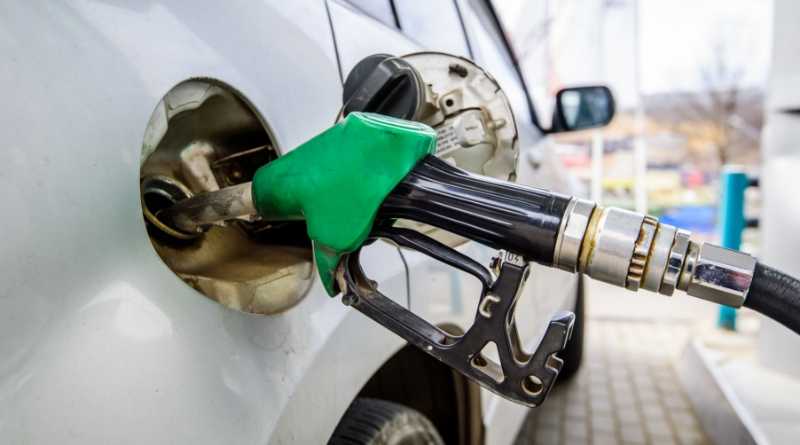
The filling station brand, Jet, has launched a new dual range of ultra-premium fuels. Their latest products, Jet Ultra Premium Unleaded and Jet Ultra Premium Diesel, are available at filling stations that offered their former premium fuels.

The well-known name in the fuel world has also made over their forecourt image, but will their announcements tempt you to switch to their premium fuel?

New fuels

To make the energy to drive your vehicle forward, your car’s engine injects fuel into a chamber to mix with the air (combustion), which creates carbon deposits that stick to vital injectors, valves, and cylinders, and may impact emissions and fuel efficiency, etc.

Actual benefits of using premium fuels (e.g. how well they clean) varies. Factors like other fuels you’ve used, the age and condition of your car; road conditions, your driving style, and journey time. Performance improvement may be more noticeable in high-performance cars.

Jet boasts that both new products contain more of their powerful anti-corrosion additive and use strong detergents that deep-clean and attack dirty deposits, improving acceleration and providing a smoother drive.

By coating these key components with a special film, Jet claims these products will prevent future build-up, which can help your engine to work better and prolong its life.

The brand says their results are the outcome of laboratory and engine research and tests by a world-leading road fuel detergent provider and that the detergent in their ultra-premium fuel undergoes world-recognised engine testing standards.

Jet says all their road fuels are “sulphur-free”—containing a sulphur content level of less than 10mg/kg—and their additives are expert-approved.

Jet-ting into the future

Phillips 66 — who owns the Jet brand and markets under its name—is an international, integrated energy firm that has a Humber refinery in Lincolnshire with a crude oil processing capacity of 221,000 barrels per day.

The Jet brand, who developed the contemporary design in response to feedback from dealers and consumers and say they’ve incorporated an array of improvements, unveiled a fresh image prototype at a new company-owned site—Jet Abbeyside, in Selby, North Yorkshire..

Oliver Müller, Retail Business Manager at Phillips 66, said:

‘Our dual range of Jet Ultra Premium fuels and our four-price LED-lit pole sign design are key elements of Jet’s new-look forecourt.

‘The pole sign mirrors our new soft-angled canopy design, while our Jet Ultra branding is an eye-catching ultramarine blue which stands out on the forecourt.

‘Introducing an attractive and recognisable premium fuels offering was one of our main objectives for 2019.

‘We commissioned independent consumer research, which showed that there is a willingness among consumers to try a new brand of premium fuels.

‘We wanted to tap into this opportunity and provide our dealers with a premium fuel product offering which not only complements their existing fuels mix but also puts them in a stronger position with their customer base.’

Jet says the makeover creates a welcoming environment that’s still the distinctive Jet brand.

Their company-owned sites plan to pilot the prototype before a further trial at several independent Jet filling-stations later this year.

Mary Wolf, Managing Director of UK Marketing for Phillips 66 Limited, said:

‘We are proud of Jet’s UK heritage, and we are dedicated to remaining a strong, reliable brand that is competitive in the market.

‘We’ve listened to the consumer, and to our dealers and have developed a new image that is modern and inviting and provides a safe, friendly, clean environment for consumers.

‘By strengthening our brand and reimaging our forecourts we will support our dealers to better compete in today’s challenging fuel market.’

Burning money?

If you fill up with premium fuels in high-performance cars or hot hatchbacks, you’ll notice the improved throttle response, the engine will rev more and should deliver more power.

Premium diesel can have a higher cetane rating than diesel, igniting quicker when injected into the compressed air in the engine.

It’s rare for the higher cetane rating to mean anything to the engine, as manufacturers now make diesel engines to strict standards to make little difference, but the effect using a premium diesel has on your car gives the engine a good clean.

Premium fuels are more so luxury products because the components are more expensive to create, making the price higher and, although built for unleaded petrol, it’s worth filling up high-performance cars or hot hatchbacks with super unleaded for longer journeys—or every 1,000 miles—just to give the engine an extra boost and keep it at full potential.

It’s also good practice to fill up with a premium diesel every 1,000 miles or before lots of long journeys, as this will help to clean out the engine and remove any residual soot or particulates.

While the cost may seem expensive, this habit will save you money in the long run by extending the life of the engine and helping to reduce the need for repairs and engine maintenance but unless you have money to (literally) burn or drive a high-performance car, it’s unnecessary to use premium fuels instead of regular fuel.

Whatever petrol or diesel you use, find the best prices and by becoming a PetrolPrices member for free. For added convenience, download our new app!

Do you use premium fuel? Do you think premium fuels are worth the money? Share your opinion in the comments.
Rise in petrol lease cars drives up CO2 emissions

Rise in petrol lease cars drives up CO2 emissions

We recently told you that government ministers were looking for the link between outdated fossil-fuelled vehicles, and super clean, modern vehicles; the link they found was brakes & tyres – the ultimate saviour of all road transport air pollution problems (the electric vehicle) would still be dirty (which of course means taxable).

In that article, I questioned just how many industry qualified engineers were sat on the panel of experts, for it seems that air pollution is the zeitgeist of the modern era, to the detriment of everything else.

This is exactly what happened when the government of the time incentivised us to by diesel; “much cleaner, less CO2, less pollution” – any automotive engineer would have told them that they’re selling a kipper to the public.

Rising CO2 levels

Similarly, it was our very own Jason Lloyd that spoke about the law of unintended consequences all the way back in 2017, in which it had become apparent even then, that CO2 levels were rising again, thanks to the demonisation of diesel fuel, the previously loved answer to all things air-pollution related.

Surely, getting on for almost two years later, lessons have been learned?

The British Vehicle Rental & Leasing Association (BVRLA) have just published their Q1 2019 Quarterly Leasing Survey; the average CO2 emissions for all new leased cars is 118g/km – a rise of 7% since 2017. So that’s a no then.

Further still, it isn’t just lease cars – the whole new car market has spiked at 129g/km for the same period, which is the highest recording of CO2 for just over a decade. It also shows that thanks to the ridiculous taxation (either directly or otherwise), diesel car sales are falling year on year, by around 15%. In 2017, the average values of diesels were down 26%. They’re still nose-diving.

Two problems for every solution

Realistically, there are a number of problems that have led to this situation, the first being a straight choice between an asthmatic 3-cylinder turbocharged petrol engine or something that can be used (safely) on motorways, lugging loads, carrying a full family … a larger-engined vehicle (petrol of course).

Despite their faults, the nature of diesel engines meant that torque was plentiful, you weren’t needing to wait until you hit ‘valve bounce’ (maxed into the red line) to change gear, and cruising along at motorway speeds was pretty lazy and effortless. To replicate that, you need that larger petrol engine.

Added to that, is the change over to the new WLTP regulations (World harmonised Light vehicle Test Programme), which aims to give a more realistic figure than what we’d come to expect when the manufacturers ruled the roost; CO2 figures were always going to rise because of this.

It’s more than likely the combination of both these factors that sees the CO2 levels spiking at such high numbers – cars are more fuel-efficient than ever, measured like for like, a modern car will always be cleaner than the same car from even just three or four years ago.

Electric vehicles

Until the majority of road transport is electric, we are always going to have an issue surrounding air quality, that’s simple fact. Of course there’s the issue of ever-moving goal posts in the fact that as soon as we get close to meeting one arbitrary limit, it gets changed to something else, and as we’ve seen, the politicians already have their eyes on what could be used next for a little revenue earner.

But no matter how much we clean up our vehicles, it’s never going to solve the issue of air pollution. Electric vehicles are extremely resource-heavy to manufacture, we also need to consider end-of-life plans for recycling, and of course, the elephant in the room is charging … electricity generation doesn’t come free from pollution.

Yes, there’s a movement toward ‘green’ or sustainable energy, but even with our existing grid, we’d struggle to cope with demand if we switched to all-electric, even over a period of time.

The Green Alliance is a British think tank, specialising in eco & environmental issues, they’ve warned that “if no action is taken by 2020, local clusters of the battery powered cars could lead to 1% of Britain suffering unplanned voltage drops, so-called ‘brownouts’, which can damage electronic equipment. It only takes six electric vehicles located close to one other to lead to such voltage drops.”

Other European countries are in the same dilemma.

So what is the answer? Should we impose a limit for pollution now, and stick to it? Or should we keep trying to find other ways of reducing pollution from our vehicles?

What do you think the solution could be? Do you think there will come a time when we’re pollution free? Or, do you think like Bob Dylan: The answer is blowing in the wind. Let us know in the comments.

Councils pocket more than £320m in PCN fines in one year

Councils pocket more than £320m in PCN fines in one year

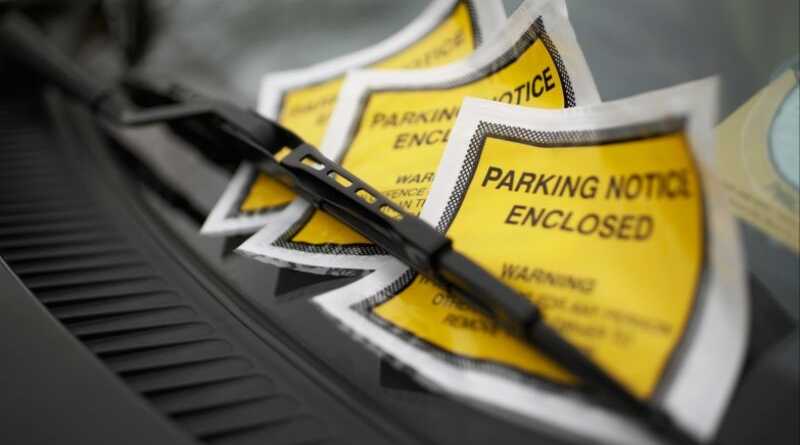
There were over nine million Penalty Charge Notice (PCN) fines issued by local councils in 2018, for offences including parking, misusing a bus lane or box junction, and illegally turning left/right.

These fines amounted to just over £326m. With London, or parts of London, taking the lion’s share; the top four revenue generators included Westminster City Council, and the London Boroughs of Hammersmith & Fulham, Islington, and Newham. They pocketed nearly £55m between them.

With that said, it was Manchester City Council that issued the largest number of PCNs – 598,060 in total, Westminster City Council were second on the list, issuing just over half of Manchester’s total – 313,012.

Unfair issues

A new report by Confused.com, written after obtaining information under a Freedom of Information request has highlighted just how rife this problem is, and quite possibly, how ‘creative’ the councils are when it comes to issuing fines for such offences.

74% of appellants that fought the ticket (approximately 2,664,000 motorists) either paid a reduced amount, or nothing at all. You’d have to wonder – how valid are the methods & processes when it comes to issuing a ticket, if so many are overturned on appeal? Such a widescale problem is this, that around 48% of all UK motorists have been hit with a PCN at some point.

For many motorists, the issue is signage, or to be more precise, unclear signage; three out of ten drivers who appealed against the PCN fine blamed unclear, misleading signage for the problem, and with the fines being overturned by the governing body, you’d think they have a point.

Amanda Stretton, motoring editor for Confused.com says: “The fact that almost three quarters of PCN appeals were successful last year suggests that some fines are being issued unfairly. With councils raking in over £326m in PCNs, it’s only right that some of this fine money is invested to help make road signs clearer to eliminate the number of fines being distributed unfairly”.

Cashing in

Surprisingly, only 42% of motorists feel that councils see them as an easy revenue generator, I’d have expected that figure to be quite a bit higher, but what incentive do they have to change the signage or relax regulations?

The whole attitude to this kind of problem is represented perfectly by independent adjudicators when they were asked to investigate numerous problems relating to PCNs within the City of Coventry. The independent adjudicators stated: “Yet Coventry City Council, seemingly with a determination and delusion reminiscent of King Canute himself, has continued to enforce PCNs”.

The council were advised many times to change the confusing or misleading signs relating to parking restrictions but refused to act, stating that they complied with regulations. Effectively, they’d done the bare minimum to comply, and numbers of PCNs rocketed thanks to their in-action. Bloody-mindedness or budgetary choice?

The price of PCNs

The reality is that councils can generate some much needed revenue through the use of PCN fines – in Coventry, the layout and signage of one junction alone was so poor that it ‘earned’ the council over £1m before they agreed to update the signs; it went from between 2,500 – 3,000 infringements per month to just over 1,000 after changes.

It’s a lazy argument to trot out the ‘cash cow’ phrase too often when it comes to motoring expenses, fines and taxes, either direct or stealthily, but there does seem as though there is a genuine argument for tighter controls to be put in place for the issuing of PCNs; perhaps instead of being enforced locally, it should be a national body that distributes the wealth based on performance?

How many appeals won, against PCNs issued would be a great starting point – it would certainly force the councils to play on a more level playing field by updating their signs and processes to be clearer and less biased in their favour; if they knew that there was a greater chance of losing money because their process or signage was unclear, you can be sure they’d soon update them.

Secondly, the appeal process should be made easier and more straightforward; 60% of drivers that received a PCN didn’t challenge it, with 13% being put off by the confusion of information, and 17% claiming that they didn’t even know how to appeal. Over 50% of these drivers stated that if the process was clearer, they’d have challenged the unfair fine. You can see the official government advice on challenging a fine here: https://www.gov.uk/parking-tickets/challenging-a-ticket

Do you feel that PCNs are mostly unfair? Would you know how to challenge a PCN? Have you won an appeal against an unfair fine? Let us know in the comments.