
Park in a bicycle lane and you could get a £130 fine

To improve road safety, the Department for Transport (DfT) is bringing in new rules, which mean drivers face fines if they’re caught parking in cycle lanes—and the penalty could be a whopping £130. Not only that, but cyclists using helmet cameras will aid police to charge motorists with dangerous driving.

The Highway Code is also under review to offer more protection to cyclists in a crackdown by authorities who want to get drivers out of their vehicles and, instead, onto bicycles, but cycling organisations say the new measures aren’t enough.

Bikes, camera, action!

As part of a two-year action plan involving measures ‘to combat road rage, encourage greater mutual respect between road users and protect the most vulnerable’, the DfT said that, for the first time, local councils would have the power to use CCTV cameras to monitor mandatory cycle lanes. London drivers found breaching cycle lanes face a fine of £130. Elsewhere in the UK, councils can issue fines of up to £70.

Together with the DfT appointing a new Cycling and Walking Champion to promote ‘active travel’, police will get a bespoke new back-office unit—using a £100,000 grant at first—to examine and share footage captured by dash-cams and cyclists’ helmet cameras.

It won’t be the first time the public has helped prosecute motorists for careless or dangerous driving. North Wales created ‘Operation Snap’ in 2016, which gives people the ability to upload personal footage of motorists breaking the law. This strategy saves around 14 hours of work per case compared with traditional investigative methods.

Further key measures of the plan include a Highway Code review, on how drivers should behave towards vulnerable road users—such as maintaining their distance when passing cyclists—and encouragement for local authorities to increase their total transport infrastructure spending to 15%.

On your bike

The government has rejected calls from certain members of the public, for cyclists to undergo cycling tests, have licences, insurance, and number plates for their bikes.

Extra safety gear won’t be mandatory for cyclists, either. The DfT stated that they believe wearing helmets and high-vis clothing should be an individual’s choice and they did not want to impose more regulations which would be difficult to enforce.

In his announcement last week, Minister of State for Transport, Jesse Norman MP said:

“Greater road safety—and especially the protection of vulnerable road users such as cyclists, pedestrians and horse riders—is essential. We want to improve air quality, encourage healthy exercise, reduce obesity, and boost our high streets and economic productivity. That means more support for cycling and walking, and that’s why [sic] these new measures are designed to deliver.”

Walking and cycling organisations gave their support for the changes to the Highway Code but showed disappointment that the action plan didn’t tackle speed reduction.

Paul Tuohy, Cycling UK Chief Executive said lowering vehicle speeds around people walking, cycling, and horse riding doesn’t just reduce the danger to them, but also their perception of the danger.

“While the DfT’s proposals for amendments to the Highway Code will help save lives, ignoring the threat and dangers of speeding is disappointing,” he said.

In 2017, 101 cyclists died on the UK’s roads and there were 18,220 injured. 2017 also saw a 5% rise in pedestrian deaths. In the years 2007 to 2016, around three pedestrian fatalities each year and 82 serious injuries involved cycles—or 0.6% of pedestrians. Yet, 99.4% of collisions in which a pedestrian died involved motor vehicles (e.g. cars, motorbikes, lorries, vans, etc.).

Do you know the code?

In case your knowledge of the Highway Code is rusty, here’s how things stand on cycle lanes and cyclist waiting boxes:

Motorists—and motorcyclists unless the signs dictate otherwise—mustn’t drive or park in cycle lanes with a solid white line running down their right side. These are mandatory cycle lanes.

Other cycle lanes have a broken white line running down the right side. Drivers shouldn’t drive or park in these either unless unavoidable. An example might mean a large vehicle is approaching on the opposite side of the road, which may need more road space, or a vehicle parked inappropriately on the opposite side of the road prompts traffic to drive around it.

Advanced stop lines (ASL), also known as cyclist waiting boxes, are another area motor vehicles mustn’t enter. If you’re found doing this, you might receive up to a £100 fine and three penalty points on your licence. To lessen the chance of having to stop in the cyclist waiting box when in slow-moving traffic, pause at the first white line and make sure there’s ample space for your vehicle to clear the junction safely before moving onto the box. If your vehicle has crossed the first solid white line and the traffic lights turn red, you must stop before the second white line and wait in the cyclist waiting area. You’re not committing an offence if you drive onto the box while the traffic light is green and can’t clear it before the light changes to red. For you to risk prosecution, a police officer or camera would have to witness you crawl along onto the box while the traffic light is already red.

How do you feel about cameras policing cycle lanes? Are you a cyclist and/or motorist who is looking forward to capturing footage of bad driving? Do these changes worry you? Tell us in the comments.

500 number plates are stolen weekly – is your car safe?

Across the country, 500 number plates are stolen every week leaving many motorists facing penalty notices and boxing in for crimes they haven’t committed. The ordeal of recovery and the fines and penalty notices that have to be contested has been described as “incredibly upset[ting]” by one person involved.

Last year 25,000 numberplates were taken from cars, and the figure this year has already reached 22,000 as released by the AA under a Freedom of Information request. Police are now urging drivers to report stolen plates immediately in order to aid investigation and to prevent further accusation of innocent drivers.

Technology increasing theft

Motorists across the country have received numerous penalty notices, fines and more for crimes they haven’t committed as criminal gangs steal and use the number plates to avoid getting convicted for crimes.

Criminals, both individuals and organised gangs, have taken numberplates to conceal crimes such as stealing petrol from forecourts, known as bilking, or reckless driving. Automatic number plate recognition (ANPR) cameras only pick up the number plate, as suggested by the name, so any theft, even if its only one plate, should be reported to police.

Advances in ANPR technology mean that numberplate theft is on the rise, Sheffield County noted an increase of 36% from 2013 to 2017 in theft, taking it from 501 thefts in 2013 to 680 in 2017.

Since the introduction and national adoption of ANPR technologies, starting in 2005, stolen number plates value has increased drastically as criminals try to avoid prosecution. Nationwide thefts have risen by 76% since 2005 when the BBC reported a rise in number plate theft, and since then theft has increased risen by approximately 800 thefts annually. Back in 2005, 14,176 number plate thefts were recorded, and the figure of near 25,000 this year is a monumental increase over time.

Jack Cousens, head of roads policy for the AA said; “While a small percentage of the UK’s national vehicles suffer the inconvenience and frustration of having their number plate stolen, it is an incredibly serious issue.

Stolen plates are often cloned and put onto other vehicles. These are then used to cover up further criminal activity, such as selling stolen cars or burglary. Other instances of criminality under stolen plates include ram raids and even not paying congestion charges.

More than a quarter (28%) of drivers say that if one plate were missing from their vehicle, they wouldn’t report it to the police. Drivers should report any number plate theft as the innocent victim could end up receiving speeding tickets and other traffic fines.”

“A horrible experience”

One driver who was the victim of plate cloning had her car boxed in, while driving on the M1. Tia Kinnard from Dunstable described the ordeal as “a horrible experience.” After the mishap was cleared up, it came to light that a gang had cloned her number plates and used them for numerous burglaries in and around London.

Meanwhile, in Brighton and Hove, Mariam Castle was the victim of number plate theft when the plates were stolen off her VW Polo. While she reported the stolen plates to the police immediately, she received two Penalty Charge Notices (PCN) for driving in bus lanes and had to contest the fines in a lengthy process.

She said: ‘It really shook me up, receiving those penalty notices. Finally, they were dropped, but it was a lot of hassle, and the whole ordeal left me incredibly upset.’

What can you do?

In some cases, there is very little that the motorist can do.

In older cars where the number plate is stuck on with double-sided tape, it is best to add in anti-theft screws to put off thieves initially, as they will be less likely to steal plates that are more secured, the risk of them being noticed is much higher.

Anti-theft number plates are also available to buy. Launched back in 2006 by the then Transport Minister, Stephen Ladyman, they are designed to shatter into pieces upon removal, making them unusable by criminals.

Inspector Craig Clifton, from South Yorkshire Police’s Roads Policing Group, said: “The reason criminals steal number plates, and quite possibly the reason numbers of reported thefts have risen, is because of the advancement in ANPR (Automatic Number Plate Recognition) technology. Number plates are stolen for a variety of reasons to mask criminality.

In order to protect your number plate, if it isn’t permanently affixed to the vehicle then it’s vulnerable and because we change plates generally they are not a permanent fixture.

All people can do is make the plates harder to remove, so ensure they are screwed on with anti-theft screws rather than affixed with double-sided tape.

You could also use anti-theft number plates which break upon removal. It’s worth trying to park in less conspicuous areas to make it harder for criminals to hide while removing the plates.”

Have you ever been affected by stolen number plates? Do you think more should be done to protect drivers from this? Let us know below

20mph zones don’t make our roads safer, says DfT

A report for the Department for Transport has concluded that 20mph zones have made no impact on road safety and that drivers have reduced their speed by just 0.7mph within those zones.

The study has been carried out over four years, in twelve different areas. One of the main findings is that up to 94% of drivers break the speed limit if they usually drove above 24mph before the 20mph zone was introduced.

Revenue raising

Before we jump on the revenue-raising bandwagon, which undoubtedly will be an issue, a close look at the report will perhaps reveal a more political nature to the introduction of 20mph zones.

While there is an argument for road safety, there are three main factors in the decision for a 20mph zone; these are broken down as: transport related, community or politically driven, and health-related. Within these three categories are three weak answers – to reduce the negative impact of cars in urban centres (such as parking space pressures and congestion), a low-cost way to ‘improve’ the lives of residents, and as a way to tackle the perceived quality of the environment.

It would seem that road safety was the intended by-product, rather than the driving force behind implementation.

Speed kills

Twelve areas took part in the study, including parts of Winchester, Liverpool, Brighton, Portsmouth and Middlesbrough, where data could be collected before and after implementation of the 20mph zone. The cost for each zone ranged from £10,000 through to £1.7m and focused solely on zones with no other traffic calming measures such as chicanes, speed humps or directional rights of way.

It was found that typically, drivers ignored the signage, believing that the risk of being caught speeding was minimal, which led to just a 0.7mph reduction in speeding through the zone, with an overall reduction of 0.9mph in the surrounding areas approaching the zone. 47% of drivers admitted to regularly breaking the 20mph limit, that figure increased to 94% of drivers where the road was previously faster than an average of 24mph.

Edmund King, president of the AA, says: “We believe that targeted 20mph limits work best where they’re needed – outside schools or hospitals, or places where other vulnerable road users may be encountered. Speed limits need to reflect the nature of the road, and this report has vindicated the reservations of motorists with regard to 20mph zones”.

Road safety

Within the study, it was found that the biggest contributing factor to an accident was ‘failure to observe’, either as a pedestrian (17%) or motorist (37%), but the lower speeds should mean that a road user has more time to react to an incident – which in theory means a lessened chance of injury.

However, it’s that very reason that could also cause a problem – with road users having more time to react, it seems that complacency is increasing. Further still, and perhaps the biggest takeaway from the study is that there is a small amount of evidence that shows an increase in driver frustration and distraction.

The frustration part is purely from learned behaviour – that can change with time, but the distraction part could be down to the need for constant checking of the speedometer; ensuring that you’re driving below a 20mph limit takes concentration and a certain amount of skill, and with the influx of silent-running electric vehicles, that could be made worse – there will be no engine note as guidance.

With no significant change in accident rates, and no benefit to the environment, can the local authorities justifiably continue to spend the amount of money required to create such folly? It would seem that these 20mph zones are now purely about the perceived perception of a neighbourhood, rather than offering any benefit whatsoever, and in a time when councils are going bust, surely the money is better spent elsewhere?

Of course, there is always a need to back causes that improve road safety, including reduced speed limits where there is proven benefit, but an inappropriate blanket 20mph zone isn’t that. Perhaps we should be thankful that currently, many of these reduced speed zones aren’t enforced with speed cameras as a simple money-making hotspot, but the cynics amongst us would ask how long it will be before that happens?

What do you think of this latest report? Are the findings a revelation? Or just as you’ve suspected all along? Will local authorities view them as a quick way to raise revenue? Let us know in the comments.

BP switches loyalty scheme, Esso gets Nectar

Esso has announced a significant transformation to their fuel loyalty scheme. From next year the company will end their partnership with Tesco Clubcard and, instead, are to team up with Nectar.

Not alone in the changes to fuel loyalty programmes, BP is cutting ties with the Nectar points scheme and is also to offer a different system for their customers. Drivers can expect the changes to take place from June 2019.

All change

From June of next year, drivers who fill up at Esso-branded filling stations can earn Nectar points on their purchases. Esso Nectar will replace Esso’s partnership with Tesco Clubcard and will allow motorists the ability to accumulate Nectar points at Esso-branded stations when they make purchases in store, or through the Esso App.

While this will be good news for those who shop at Sainsbury’s or who already collect Nectar points from other partners, keen Tesco Clubcard collectors may not welcome this announcement.

BP is also making big changes, confirming they will withdraw from their Nectar partnership in 2019 and launch a brand-new loyalty programme for its UK retail business.

They haven’t said just what this new scheme is, but say the new BP programme will support a digital platform that will offer more engagement with customers on various levels and will allow consumers the chance to personalise their benefits with rewards on a broad variety of goods and services across their 1,200 forecourts.

BP is also growing and its retail network within the UK. Over the next twelve months, they plan to increase both the amount of M&S ‘Simply Food’ shops and ‘Wild Bean’ cafés. And with electric vehicles (EVs) on the rise, BP will add Chargemaster EV charging points to their arsenal.

In June of this year, BP announced they were buying the nation’s leading EV charging company, Chargemaster, to become the largest supplier of energy to low-carbon vehicles.

What the customer wants?

ExxonMobil is best known in the UK for their famous brands: Esso and Mobil. They’re one of the largest petrol retailers in the UK and serve around 800,000 customers every day of the year through their retail network of around 1,100 Esso-branded petrol stations.

David Chilton, Global Loyalty Programs Manager at ExxonMobil said:

“Our customers are our number one priority, so we’re very excited to be launching the Esso Nectar partnership,”. Mr Chilton said it will allow Esso to expand upon how they reward customers’ visits to Esso stations. “The launch of Esso Nectar will enable us to continue to develop our loyalty offer in step with our customer’s needs,” he added.

Managing Director of Nectar Loyalty Ltd at Sainsbury’s, James Moir announced:

“We’re pleased to be welcoming Esso on board the Nectar scheme as of next year.” The managing director explained that Nectar cardholders can later convert the rewards they earn on petrol or diesel into money off their grocery shop and hundreds of other Nectar offers.

BP has over 300 filling stations in the UK and 900 more BP-branded forecourts owned and run by independent dealers.

Nicola Grady-Smith, BP UK Retail Director/BP Oil UK Director said:

“We’ve listened to what our customers have been telling us.” She added that, for the last year, BP has been working on producing a compelling and worthwhile personalised offer.

Ms Grady-Smith said all of these developments serve the commitment BP has in offering its customers ‘convenient, differentiated and high-quality products and services throughout our retail business—now and into the future,’.

Points mean prizes

Drivers who want to continue to collect Tesco Clubcard points on their petrol or diesel can use Tesco filling stations in the same way those who wish to collect Nectar points on their fuel purchases can fill up at Sainsbury’s forecourts.

The cost of petrol and diesel from supermarkets is certain to be cheaper than from major oil brands, but many drivers prefer to buy from brands such as Esso and BP, as they believe it gives their cars better performance. This is an ongoing and controversial debate that there’s no space to cover in this article.

It’s not yet clear which Esso purchases will be eligible for Nectar point collection, as Esso haven’t yet released the full details of the offer, but they say they’re working to offer Nectar points on most Esso products such as fuel, shop purchases, and carwash services following the launch. Esso says they will announce further details closer to the launch time. Until then, customers will still be able to collect Tesco Clubcard points at Esso stations.

Are you a BP or Esso customer? How do you feel about the change to their loyalty programmes? Will this change affect which of the two brands you visit, to fill up your vehicle? Let us know in the comments.

Councils make record profit in parking fines

Councils make record profit in parking fines

Parking charges and penalties have been labelled as a stealth tax by motoring organisations after councils have made record profit of £867m in the 2017/18 financial year.

London councils topped the charts, averaging £1m per day. Just 39 of the 353 councils failed to make a profit or break even.

Record charges

A recent report has found that parking charges (on & off-street parking) and fines have raised over £1.6bn in revenue for local councils between 2017/18, of which, £867m is pure profit – an increase of over £50m from the previous financial year.

The law states that any surplus monies made from parking have to be reinvested in the local transport infrastructure, which includes the running of subsidised buses – it can’t just be added to the council’s coffers, to be used where they see fit.

The RAC Foundation carried out a similar study seven years ago, the latest findings show that the profit made by councils has increased by around 70% in those seven years; this is no longer about covering running costs, this is pure profit.

Stealth tax

We’re used to hearing the phrase ‘stealth tax’ being associated with the motorist, many of the large motoring organisations have argued that the parking charges are just that – a stealth tax – and are partly responsible for the closing of the high street as a commercial destination; drivers are voting with their wheels and preferring to shop at out-of-town retail parks, where parking is often free.

It may be no surprise that Westminster council topped the charts with parking charges and fines, raking in just over £1m per week, outside of London, it’s Brighton and Hove that top the list – pulling in £23.4m profit each year.

Councillor Martin Tett, the spokesman for the Local Government Association said: “Councils are on the side of the motorist and shoppers, they have to try and strike a balance when setting parking policy, for both on and off-street parking to make sure that there are spaces available for residents, and that high streets are kept vibrant, and that traffic is kept moving”.

But, Edmund King, President of the AA is clear: “At a time when the high street is under intense pressure, more parking incentives are needed to attract, not deter, potential customers. The cost of parking should cover the cost of providing the service, not become a stealth tax paid by a few thousand in each town”.

1 in 10

It would seem that statistics give credence to King’s argument; over the last few years, footfall in town centres has dropped by around 1.6%, while the out-of-town retail parks have seen a 1.5% increase in usage, and the high street is suffering as a direct result – over 10% of shops in town centres are currently vacant. With customers having to find more money to spend on parking, retail spend will be reduced, leading to further cuts on the high street.

While some councils are offering reduced or even free parking for certain vehicles, it’s worth remembering that a number of councils are hitting the diesel motorist even harder – adding a 50% surcharge to any parking rate.

Back in July of this year, we published a report of the most expensive places to park in the UK, and as part of that, we suggested that an investigation should be held to justify the differing amounts and parking charge policies – how can it be that some councils are trying to develop business interest on the high street – charging as little as £0.15 to park, while others can charge up to £8 for a single hour?

It would seem that with the publication of this report on ‘record profits’ that the councils are doing exactly as was suspected – propping up their ailing budget with a little help from the motorist, and yet with the money supposedly ringfenced for transportation needs, there seems little evidence that these profits are finding their way back to transportation.

How about you?

It seems that there is little that can be done regarding the parking charges. Yes, you could try an alternative form of transport, but that’s not viable for millions of motorists, and it isn’t addressing the bigger issue – that the motorist is all but virtually banned from driving in the city centre.

With councils clearing nearly £2.5m of profit each day from parking charges, it’s time that the motorist was given credit where it’s due, rather than continuing punishment for having the audacity to rely on the internal combustion engine. For some drivers who are disabled, they have no choice but to drive, and while most of the time they are able to park for free, it still seems unfair that all motorists should be punished for shopping and contributing to smaller high street shops.

What do you think about these record profits? Should something be done at a national level to curb the charges? Let us know how you feel in the comments.

New cameras to spot drivers over a kilometre away

New cameras to spot drivers over a kilometre away

A new police camera that can catch motorists from over half a mile away unveiled by Gloucestershire police last week as part of Operation Indemnis, a pilot project designed to help reduce the number of accidents caused by dangerous driving.

The new camera, affectionately dubbed “The Long Ranger,” not only catches drivers who are speeding but also those who are tailgating, not wearing a seatbelt or using a mobile phone at the wheel. The culmination of all of the above makes this camera a truly powerful tool for the police, enabling them to identify number plates and drivers from over a kilometre away.

Aims and hopes

One of the main ways the camera will be used is the education and awareness of drivers. It is part of a collaborative scheme to police the A417 and A419, a major route link between Gloucestershire and Wiltshire. This road is a major accident hotspot, and so police hope that the new camera will help not only to reduce collisions but help to reduce the dangerous, and sometimes collision causing driving.

Those who are driving in a potentially dangerous manner will be educated, while those who are driving illegally will be prosecuted.

Martin Surl, Police and Crime Commissioner for Gloucestershire, is hopeful that the camera will help to not only reduce the number of accidents in the area but also educate drivers on practices such as using a mobile phone behind the wheel.

Mr Surl said “This is one of the county’s busiest roads which also has one of the worst accident records due to the way it’s used.

Many people have come to me with their concerns about speeding and other safety issues along this road.

We now have a chance to test a new model of collaborative road policing which, if it proves a success, can be put into practice elsewhere.

The aim is not just to penalise motorists but to uphold the law by creating a change in people’s behaviour. But the police will enforce the law when necessary.”

Repeated across the country

If successful, more of these cameras could be rolled out across the country to help with more dangerous roads.

As seen at the top of this article, the person in the red car is driving at speed and incredibly dangerous. The police camera video footage, given to GlouscteshireLive by Mr Surl’s office, is from an incident on the A417 in January this year, captured by the new super camera, and was released to demonstrate it’s effectiveness. The driver of the red car, who was later prosecuted and fined for speeding, comes into view (top left of screen) in the outside lane and ‘shunts’ the car in front into the middle lane. You can see the red car driver remonstrate with the driver that he has just forced over In the top right corner you can see his speed is recorded at 93mph. The red car then begins to tailgate a second car, which crosses into its path.

At the end of this year, this ‘super speed camera’ along with other safety inducing methods, will be reviewed to determine their effectiveness along with their investment costs.

Safety reasons

As released in the latest Department for Transport documents, it was shown that over a quarter of people who died in road traffic collisions were not wearing a seatbelt, so the concern is well founded.

The number of people killed on the roads due to not wearing a seatbelt increased by 7% from 20% in 2016 to 27% in 2017. While not wearing a seatbelt carries a £100 fine, or £500 if taken to court, it places no points on a driving licence, unlike those who use a mobile phone behind the wheel or speed.

Just last week, we wrote an article showing that 46% of journeys conducted in the UK broke the speed limit last year, with 86% of 20mph limits broken.

Collaboration with both other forces and government bodies is the answer for Chief Inspector Mark Soderland, who believes that while the roads in England are some of the safest, there is always an opportunity to improve safety.

Mr Soderland said: “A core aim of the approach is collaborating wherever possible with other road safety stakeholders. The team has started with Highways England and the county council and is now approaching groups such as the Motor Insurers Bureau, The Institute of Advanced Motorists and the Driver and Vehicle Standards Authority to explore what opportunities there might be to work together and improve safety.

Criminality is also important to the operation. Having a police presence on a strategic road such as the A417 is also an excellent opportunity to prevent and disrupt criminals from entering the county. Hence the use of ANPR and intelligence briefings.

Officers have been instructed to stop any vehicle they deem appropriate to do so whether it is because of poor standard of driving, the condition of a vehicle, criminal intelligence-led enquiries or other intelligence like missing persons.”

Do you think that this is the right thing for the police to do? Would you like one of these cameras near you? Let us know below

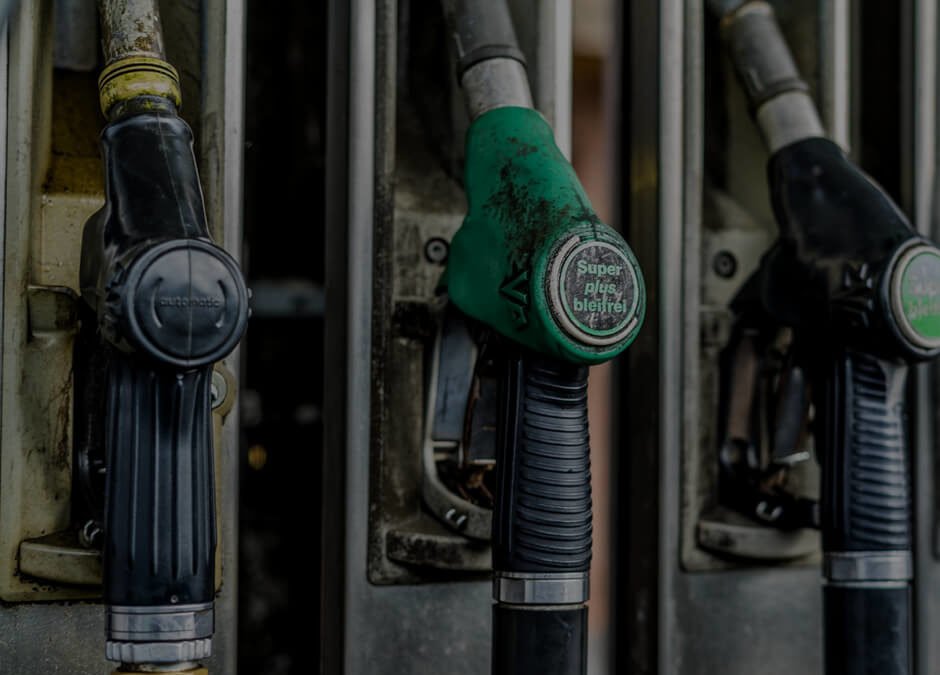
BREAKING: Supermarkets slash petrol and diesel prices by up to 3p a litre

After a long hard six months, drivers are finally starting to see some relief at the pumps, and this time it’s not just for those who drive a petrol car, diesel drivers are experiencing relief of up to 3p a litre across supermarkets.

“Dropped like a stone”

On the 15th of November, at 8:45 am, the RAC released a statement calling for retailers to cut their pump prices. Oil prices have dropped to $65 a barrel since the 16th of October, where prices sat at $81 a barrel. The wholesale price of petrol and diesel has also dropped considerably for unleaded, and more recently for diesel as well.

The end of concerns of oversupply has caused the falling oil price onto the markets; last time oversupply happened we witnessed the $100 a barrel costs in mid-late 2014.

Competition between heating oil and diesel has led to the high diesel prices we see currently, although now the oil price has fallen, drivers should experience relief over the next coming months.

Simon Williams of the RAC said “Put simply, the big retailers have not gone nearly far enough in cutting prices at the pumps, despite the fact the cost of buying the fuel on the wholesale market has dropped like a stone… While the pound has weakened slightly against the dollar, which means it costs a little more for retailers to purchase fuel in the first place, this hasn’t been enough to offset the collapse in the oil price and means there is tremendous pressure for some significant price cuts at forecourts. “

Cuts announced

Sainsburys, Morrisons and Tesco have all announced cuts of up to 3p a litre across all their forecourts, with Asda going one step further and announcing price caps across all forecourts.

Sainsbury’s have a 3p a litre cut coming into effect from Saturday 17th November across all UK forecourts. David Pegg, Fuel buying Manager for Sainsbury’s, said: “We are committed to helping our customers live well for less and this is why we have decided to lower fuel prices for the second time in two weeks. As of Saturday 17 November, both petrol and diesel prices will be reduced by up to 3 pence per litre. Customers know that when they shop at Sainsbury’s they can fill not only their trolleys but also their cars at fantastic value.”

Morrisons are introducing their nationwide cuts from Friday 16th November. Ashley Myers, Morrisons Head of Fuel, said: “With oil prices continuing to fall, we can now make the second big cut in fuel prices in November.”

Tesco is also bringing in the drops from Friday 16th November, with Tesco’s buying manager for fuel, Rodger Beer, commenting, “We’re cutting the price of fuel in our petrol stations to help our customers save money by shopping at Tesco.”

Asda has announced a nationwide price cap which came into effect on the 15th of November (Thursday). Asda’s Senior Fuel Buyer, Dave Tyrer, said: ” Our new national price cap of 119.7ppl on unleaded and 131.7ppl on diesel will be welcomed by the millions of drivers across the UK. Further decreases in the wholesale market mean we are able to reduce our prices again, seeing our unleaded price dropped by up to 8ppl in just under two weeks.”

Just in time for Christmas

While it may be slightly early for some to start thinking about the festive season, these drops do mean that those who struggle for cash in the holiday season will feel some relief. Petrol prices have been the highest since late 2014, so the cuts announced by supermarkets will bring the prices down, and if the oil price continues to drop, or stabilises, we should be able to see some relief in the long term for all motorists.

Ashley Beach, Data Analyst “This time last month the average price of unleaded in the UK was at the highest it has been all year at 131.74ppl. Luckily for those driving unleaded vehicles, this has dropped significantly by 3.14ppl to 128.6ppl as of the 14th of November.

As for those driving diesel vehicles, unfortunately, things aren’t looking any different and the price as of the 14th of November was only 0.4ppl less than this time last month. Moreover, throughout the previous month, the average price of diesel has only fluctuated by 0.4ppl either side of its mean, so there has been no significant change, but hopefully, the cuts announced this morning will amount to something.”

Apart from downloading the PetrolPrices app, there are more ways you can save money on fuel.

Look out for supermarkets near you, as shown above, they are quicker to react to price drops and pass on savings quicker. The age-old myth of supermarket fuel being worse than oil retailer fuel is incorrect. The UK has very tight regulations on the fuel at the pump, and the minimum octane number for unleaded is so much higher than US regulations, and most cars, aside from race cars and road legal race cars, will not be damaged at all by the octane numbers at supermarket forecourts. The same applies to diesel, and minimum regulations guarantee good quality of fuel.

Watch out for special offers at stations through loyalty schemes or minimum spends as they can offer considerable discounts on fuel or rewards in return.

What does this price drop mean for you? Do you think retailers should drop prices further as the wholesale price drops? Let us know below

Millions of drivers could be driving illegally due to poor vision

The Association of Optometrists (AOP) have called for tougher laws on vision testing for motorists after it was found that 44% of all optometrists have seen a patient that shouldn’t be driving due to vision problems.

It’s estimated that around 2,900 accidents and injuries occur on Britain’s roads each year as a direct result of poor vision, and with motorists only needing to perform a simple check at the time of their practical test, there are no other mandatory testing procedures in place to check a driver’s vision ability.

‘Shocking’ numbers

In our previous article, we reported that an estimated 1.5 million drivers have never had an eye test and that it’s possible to lose up to 40% of your visual acuity without even realising there’s a problem. Poor vision is such a problem that police forces in the West Midlands, Hampshire and Thames Valley have been carrying out on the spot checks.

Following the introduction of Cassie’s Law, the police have new procedures in place that can fast-track the process of revoking a motorist’s licence should they fail a spot test; this can be done within an hour rather than several days, and over 600 motorists had their driving licence revoked in 2015 as a direct result of the new power.

Henry Leonard, a spokesperson for the Association of Optometrists said: “It is shocking that so many drivers are overlooking the importance of good vision. Sight change can often be gradual, and people may not notice any changes that could affect their ability to drive; this campaign is about reminding drivers that they should ensure they meet the minimum legal standard to drive and help to make our roads safer”.

Standard eyesight test

The standard eyesight test was introduced back in 1937, and although it has been through minor changes, it is still basic, to say the least; reading a number plate at the distance of 20 metres – around 4 to 5 car lengths. Simple yet effective.

Following on from this test, the onus is on the driver to be self-aware and self-reporting of any changes in their eyesight, and while the majority of UK motorists do comply, clearly there’s an element that either don’t realise they need to or just plain don’t accept it. With over 14,000 optometrists in the UK, that equates to just over 6,000 drivers that shouldn’t be driving.

Perhaps it’s about time that we adopted a similar practice to other parts of the world, where a full eye examination must be carried out before the licence examination?

The average cost of a serious road accident is around the £230,000 mark, a minor accident around £24,000. With 2,900 accidents each year linked to poor vision, that’s close to £70 million per annum, at the very minimum.

Awareness isn’t enough

Driving with poor eyesight could lead to a fine of up to £1,000, 3 penalty points or a discretionary disqualification, it could also invalidate your insurance. Alongside the Association of Optometrists, road safety charity Brake is pushing for drivers to understand the implications and consequences of driving with poor vision, but they’re also aware that the current laws don’t go far enough.

“Awareness alone isn’t enough, the Government must take the lead to improve our driver licensing laws and implement mandatory eye tests for drivers” – Joshua Harris, Director of Campaigns, Brake.

Whether you’re a glasses/contact lens wearer or not, the latest advice is that you should consider getting your eyes tested every two years – don’t wait until you recognise that there’s a problem. Early detection could mean that the problem doesn’t get any worse, but it should also help to ensure that you comply with legislation.

Furthermore, an eye examination can often pick up on other health problems such as brain tumours, high blood pressure, high cholesterol and diabetes, along with regular eye problems such as macular degeneration, cataracts and glaucoma – getting your eyes tested regularly is a common-sense move.

Eye tests

A full eye examination can be found for as little as £10, free examinations and help to buy prescription glasses are available for certain people, and if you use a VDU (Visual Display Unit) through work, the Health and Safety (Display Screen Equipment) Regulations of 1992 state that any employee using a VDU should be given an eye test when requested.

Getting an eye test can take as little as 30 minutes of your time but could save you a great deal of time and trouble in the future, don’t wait for that near miss.

Do you need glasses to drive? When was the last time you had an eye examination? Should the government introduce compulsory eye testing? Let us know in the comments.

Most drivers don’t follow strict speed limits, statistics show

The Department for Transport (DfT), has published its 2017 figures and their data shows most motorists aren’t keeping to the speed limit when driving through 20 miles per hour (mph) zones.

While the DfT statistics show drivers break the law across all speed limits, the slower speed zones are the areas where they’re more inclined to spurn the law, which causes one to ask—are 20mph speed limits a waste of time?

Eighty-six per cent break the law

In 2017 the DfT examined 446.6 million journeys on 74 roads within England and found that 46% of the journeys monitored were in breach of the speed limit. The number of car drivers violating the speed limit went up as the speed limit lowered with 86% of journeys observed within 20mph zones above the legal limit.

Speeding within 20mph zones wasn’t only limited to drivers of cars though. Eighty-five per cent of motorcyclists, 77% of ‘long’ bus drivers, and 53% of ‘short’ bus drivers were also guilty of breaking the law, as were 84% of drivers of light commercial vehicles (LCVs) or vans and 75% of HGV drivers—all travelling at an average speed of 26mph in the 20mph zones.

It seems the night is a more tempting time for exceeding the speed limit in 20mph zones with 94% of car drivers exceeding the maximum speed at 2 am and 98% of motorcyclists breaking the law at midnight.

The DfT’s annual speeding data shows a somewhat steady picture of speeding over the last seven years, although the 2017 figures show more drivers exceeding 20mph zones than in the two previous years.

The study saw 52% of car drivers and 54% of motorcyclists exceeding the limit in 30mph zones, despite these restrictions being in place across residential areas.

Sixty mph zones are where motorists are most cautious, with just 9% of journeys recorded as over the limit.

Forty-eight per cent of the 34 million journeys monitored on the motorway exceeded the 70mph speed limit, 11% exceeded 80mph, while 1% of journeys exceeded 90mph.

‘Waste of money’

Last month, in response to a news story by The Sun newspaper that 20mph limits have cost over £11 million of taxpayers’ money, the motoring organisation, the AA described implementing these zones as a ‘waste of money.’

Edmund King, AA President said:

“Spending over £10m to put in blanket twenty-speed signs on over 1,500 miles of road without targeting is frankly a waste of money.

“If drivers understand the reason for the speed limit, they are more likely to obey it.

“Rather than spending millions on signs that are ignored, it would be safer to improve dangerous junctions and put in pedestrian crossings.”

Yet, road safety advocates insist 20mph zones improve safety, referring to data that shows a 6.2% fall in traffic accidents with each 1mph reduction in average speed.

In July this year, The Mayor of London, the Metropolitan Police Service (MPS), and Transport for London (TfL) published London’s first ‘Vision Zero’ action plan, which set out plans to end deaths and serious injuries from London’s transport network.
The core of the strategy includes a plan to lower speed limits to 20mph on London’s roads.

Josh Harris, Director of Campaigns at Brake, the road safety charity, said:

“The Mayor is right to focus on speed reduction and the rollout of 20mph limits—simply put lower speeds save lives. If you are hit by a car at 30mph, you are more likely to die, if you are hit at 20mph, you are more likely to survive. This stark fact should be reason enough for all to welcome the introduction of safe 20mph limits across the capital. London is setting an example the rest of the UK should follow and we urge the Government to make 20mph the default speed for built-up areas across the UK, helping make streets across the country safer and more welcoming.”

Frustrated drivers

The UK introduced 20mph zones in 1991 to address the problem of child pedestrian
casualties in and around residential areas. The government later allowed local highway authorities to impose limits without the need to apply to central Government for permission.

Many, though not all, 20mph zones are outside schools. The rationale behind 20mph zones is that motorists are less liable to have a collision when moving at this lower speed and pedestrians will have a greater likelihood of survival if hit by a vehicle travelling at or below 20mph. So, are these zones successful?

There’s much-reported data stating that not only did the rate of road deaths and accidents not decrease in most of the areas where councils installed 20mph limits, but they increased. This may be, in part, due to frustrated motorists taking risks to get past slow-moving vehicles.

Yet, a major study by the British Medical Journal determined that, after introducing 20mph limits, road casualties dropped by 42%, and the number of children who had serious injuries or died fell by 50%.

We’re all aware it’s more dangerous to get hit by a vehicle travelling at 30mph than by one travelling at 20mph but can we guarantee that, should we get knocked down in a 20mph zone, the driver will be sticking to the speed limit?

Do you think 20mph speed limits are excessive or necessary? Are there 20mph zones in your area that frustrate you? Would you like to see a 20mph limit introduced on a particular road? Tell us your opinion in the comments.

Police crackdown on uninsured motorists to save law-abiding citizens millions

Police across the country are this week cracking down on uninsured motorists as it is revealed that it costs law-abiding citizens up to £100 million a year in premiums. From Monday 12th November, police across the country will be using ANPR cameras and the Motor Insurance Database to try and catch those who do not drive with insurance.

Why now?

This isn’t the first year that ‘Operation Drive Insured’ has run, with tremendous success last autumn, leading to rollouts with Police Scotland further and now repeated annually.

Last month the Motor Insurance Board (MIB) confirmed that it had written to its five millionth uninsured car owner since 2011, an impressive number in eight years, around 625,000 a year or 1712 a day. They also revealed that at certain points in the year, they could write letters to as many as three thousand people a day, thanks to an automated system that is run with help from the DVLA, and set up seven years ago.

The introduction of the Continuous Enforcement Legislation has meant that both the DVLA and MIB can identify and prosecute the cars (and their owners) that appear to be off the road or driven without insurance but not declared with a Statutory Off the Road Notice (SORN.)

In 2017, the MIB received 11,000 complaints from people who had been involved in a road traffic collision with an uninsured party, costing those that do drive with insurance over £100 million a year from their insurance premiums. This is due to the MIB being a last resort for failed claims, meaning that the premiums of law-abiding citizens are used to make up for those who choose not to insure their cars.

Plans for this week

This week, officers from 35 forces across the UK will use ANPR cameras placed in strategic locations to identify cars without insurance.

They’ll then have a direct line to the Motor Insurance Database, provided by MIB, and will be able to quickly liaise the insurers to determine if there is valid insurance on the car. If there is none, they will be able to seize the car, and the driver could get up to six points on their licence and face court prosecution. At the same time that the vehicle is seized, police will be carrying out a series of additional checks for other road traffic offences.

Other offences being checked include ones for drink or drug driving, as statistics show that those who are uninsured are more likely to be committing another road traffic offence at the same time. Technological developments mean that these roadside tests can be conducted easily and quickly before more in-depth tests are conducted back at the police station.

Simon Hills, the inspector for roads policing operations at Thames Valley Police, said: “In my experience, drivers who willingly use vehicles without insurance are often committing secondary offences.

These range in seriousness from minor road traffic offences, to driving whilst disqualified and other crimes such as drug dealing and burglary.

The effective enforcement of uninsured vehicles allows us to deny criminals the use of the road and prevent further offending. Operation Drive Insured is a perfect opportunity for us to target our resources.”

Hotspots for uninsured drivers

Data from MIB, published back in 2015, shows that the North West, Yorkshire and the Humber and the West Midlands all have the highest number of uninsured drivers, with the number one top spot in the postal area of B9, under West Midlands police. An estimated 117,000 vehicles in the West Midlands area were uninsured in 2015, a shockingly large figure.

West Yorkshire Police released a statement backing the national push, as they are in the top 20 hotspots in the UK for uninsured drivers. MIB figures estimated that 55,000 cars in West Yorkshire were uninsured.
Superintendent Mark Jessop of West Yorkshire Police’s Road Policing Unit said:

“Driving on West Yorkshire’s roads uninsured is not safe and will not be tolerated. We have dedicated officers across the force dealing with incidents on the roads on a daily basis.

On average we seize around 25 cars a day across the county for having no insurance.

It is often the case that a driver who does not insure their vehicle may not take other responsible steps in ensuring it is roadworthy, making it a potentially dangerous vehicle on our roads.

We would encourage all drivers to stay insured and to drive safely. If your vehicle is seized for having no insurance, you will have to pay to release that vehicle whilst also providing proof it is now insured within a fixed time. Ultimately, the vehicle could be crushed. In addition to the seizure costs, you face a fixed penalty of a £300 fine and six penalty points.”

Do you think it is fair that law-abiding citizens have to pay out £100 million a year for those who break the law? Should more be done for those who don’t pay for insurance? Let us know in the comments below