Nov 22, 2017
A study carried out by airport transfer company Hoppa has found that 99% of drivers would fail their theory test if they were to retake it now. With Road Safety Week (20-26 November) in full swing, the statistic is alarming in its implications for the safety of our roads.
Theory test problems
As part of the study, 1,000 license holders sat a condensed version of the current theory test. They were asked to answer 15 multiple choice questions (rather than the 50 that new drivers are required to answer). To reach the 86% pass rate, they needed to answer 13 of the 15 questions correctly. However, the average score was a dismal 46%.
A question about stopping distances defeated 81% of the participants. Encouragingly, 82% answered the question about residential speed limits correctly. However, just eight of the 1,000 drivers passed the test.
Londoners were found to have the worst average score, at just five out of 15. Meanwhile, those in the 55+ age category scored the highest, showing that they have the best understanding of the Highway Code out of any age group that participated in the study.
The theory test pass rate has seen a dramatic drop over recent years. Just 49% of those who sat it in 2017 passed, compared to 65% in 2008. The results could imply that new drivers don’t understand the importance of these laws and rules of the road, or perhaps that the driving instruction process doesn’t focus heavily enough of them.

Road Safety Week
These results highlight how important having Road Safety Week is. The national initiative encourages both drivers and passengers to be aware of the types of things that can cause accidents on our roads. With an average of five people dying every day in car accidents, it’s vital that people understand how they can be safe at all times while they are on the road.
Road Safety Week asks people to pledge to drive in a slow, sober, secure, silent, sharp and sustainable way. The goal is to ensure that they do not put themselves and their passengers at risk, and all of these things can contribute to driving in a safe way.
By sticking to speed limits, not drink driving, making sure everyone in the vehicle is wearing their seatbelt, avoiding loud music, not using mobile phones, being aware at all times and only driving when absolutely necessary, drivers can ensure that there are fewer accidents and deaths occurring on the roads.
Five tips for safer driving
Keep your car in a safe condition – Before a car journey, especially a long one, always ensure that you’ve checked your tyre pressures, your lights are in full working order, and there are no water or oil leaks leaving puddles under your car. This way, you know that your car is safe to take out onto the roads.
Avoid distractions – Although it is nice to have music on when you’re driving, make sure that you keep it at a suitable volume, so that it doesn’t distract you or drown out the noise of sirens or other important road noises. You should also make sure that your phone is out of reach and sight, so that you’re not tempted to use it.
Don’t allow yourself to be put under pressure – When you’re out in the car and another driver comes up behind you and sits too close to your rear bumper, it can sometimes pressure you to go faster. If this happens, simply pull over when it is safe to do so and let them drive past. This will be safer for you both.
Expect the unexpected – Just because the car in front of you is indicating is doesn’t necessarily mean that it will turn, and just because you can’t see anything on the corner you are turning around, it doesn’t necessarily mean that there’s not a slow moving vehicle awaiting you. Always expect the unexpected and be extra cautious and aware at all times.
Always wear your seatbelt – Putting your seatbelt on when you get in your car should come as second nature to every driver and passenger. Always check that everyone has buckled up before you set off. Doing so could save your lives.
Have you thought more about the way that you drive as a result of Road Safety Week? Have you made any changes to your driving as a result? Leave a comment below to let us know.
Nov 15, 2017
Road safety professionals have flagged that a lack of investment into the UK’s roads is causing a failure to tackle road safety. Limited funding is one of the main reasons that the UK is missing out on road safety innovation, which experts believe is linked to an increase in road deaths last year for the first time in 10 years.
Making our roads safer
At the Premier Highway Event, 60.3% of 2,000 road safety professionals said that new innovation and technology are integral in improving both road safety and driver behaviour. However, 42% stated that the lack of budget available is creating a barrier preventing them from implementing new ideas.
32% of the professionals surveyed also felt that unwillingness to change and aversion to risk are getting in the way of the UK trying out new techniques to make our roads safer to drive on.
(Credit – Darren Moloney)
Pothole season
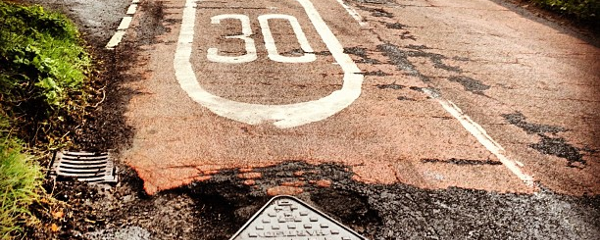
One of the biggest safety issues facing road users is potholes. They caused 96 crashes in 2016, an increase of 12% compared to the previous year. In addition to this, 467 cyclists were in accidents caused by poor quality, defective roads. Meanwhile, one in three motorists claim to have suffered vehicle damage due to a pothole. This includes damage to tyres and suspensions, which are both costly to replace.
Over a million potholes were reported to highway authorities and councils last year. They cost £3.1 million to repair. The local authority who made the most pothole-related pay outs was Wiltshire Council, which ended up with a £505,000 bill. Westminster City Council paid out the most per pot hole, at a staggering £2,400 each.
Despite all of the money that has already been spent on repairing potholes and paying out for damage caused to vehicles, 70% of drivers think that more should be done. This shows just how dangerous and worrying these road defects are. The situation is made worse by the fact that some local authorities judge certain potholes to be too shallow to fix – one North Yorkshire cyclist suffered a concussion after hitting a pothole, but the local authority argued that the road had passed a recent inspection.
New technology
Prevent potholes from occurring would mean that the money spent repairing them could be invested into trying out new road safety technology and innovations.
Nottingham University Lecturer Dr Alvaro Garcia may have the answer. He was inspired by a surprising source: a contestant on the Spanish version of MasterChef. The contestant gave Dr Garcia the idea to use spherification to create small, solid balls of sunflower oil. These can be mixed in with road asphalt and help to prevent cracks from becoming worse.
The balls work by sensing when cracks appear in the asphalt and breaking to release the oil to help to stick the road back together. Tests have shown that within just two days, the damaged road has been restored. This is fantastic news for local authorities who are spending so much of their budget on repairing potholes.
It has been said that this innovative solution could extend a road’s lifespan from around 12 to approximately 16 years.
This self-healing road research at Nottingham University is being funded by Highways England. It demonstrates the impact that investment in new technology can have on road safety. The innovation is particularly exciting due to its sustainability and environmentally friendly nature.
The price of innovation
Cuts are being made across the board in the UK. However, it seems that not providing enough funding to keep drivers safe on the road is a dangerous move by the government. Road deaths in the UK increased by 4% last year, reversing a decade of improving safety figures. Investing in improving road safety would be more cost effective than responding reactively to issues and could also help to save lives.
With this in mind, surely the government should find further funding to invest in new technology and innovations to keep our roads safer. Doing so could help to keep motorists safe, as well as reducing the need for future expenditure on repairing our decaying road network.
Have you noticed a decline in the quality of the roads in your local area? Has your council been quick to act or have things simply been left to deteriorate? Share your experiences below.
Nov 15, 2017
When you look at a new or used car, one big factor that helps you make the right selection is fuel economy. If you travel a lot, this is crucial. Even if you don’t, you still want the best possible fuel economy for your usage. However, experts claim that the difference between official fuel economy figures and those from real world use could be as much as 42% – with the real-world figures being the higher of the two.
The changing face of fuel economy
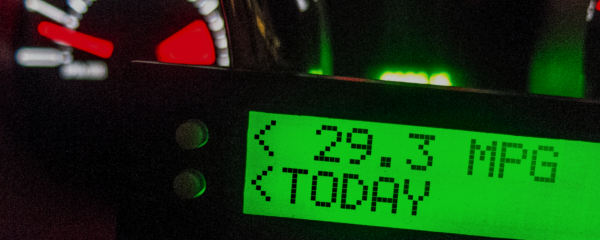
According to the International Council of Clean Transportation (ICCT), there is a massive 42% difference between the official fuel economy figures that are given out by car manufacturers and the results from real-world tests. This is a huge leap from 2001, when the difference between the two sets of figures stood at just 9%.
This misinformation could be costing drivers an average of £350 a year in extra fuel bills, the report revealed.
(Credit – Robert Couse-Baker)
Economy and emissions
The latest analysis is based on the official figures and also those achieved during controlled laboratory tests by the ICCT. It measured both CO2 emissions and the miles per gallon fuel efficiency. According to official figures, the CO2 output for new cars has been in gradual decline since 2008. However, the real-world tests from the ICCT painted a very different picture – the figures have changed little in the last five years.
This contrasts starkly with the information provided by car manufacturers. Official tests since 2012 show that the new car outputs of carbon dioxide have dropped by nearly 11%, to a new, lower average of around 120g/km. However, the real-world tests show that in the same period, the reality is a drop of only around 2% meaning cars hover at an average of 170g/km, polluting the atmosphere much more than drivers are led to believe.
The effect on fuel
Even if the effect on the environment isn’t at the forefront of drivers’ minds, the effect on fuel consumption and the resulting increased cost of running the car certainly will be. Higher emissions mean that cars use more fuel. The difference of 42% between official and real-world figures could be hitting drivers in the pocket to the tune of around £350 a year in extra petrol or diesel.
The news will no doubt particularly irritate diesel drivers, who are currently being scapegoated as the cause of all pollution around Britain’s towns and cities. With their vehicles classed suddenly as ‘dirty,’ after years of government advice to switch to this fuel type over petrol, as it is less polluting, many diesel drivers feel betrayed by the government’s change of direction.
Abject failure
According to Greg Archer of Clean Vehicles at Transport & Environment, the tests show the abject failures of the current CO2 regulations. The regulations were agreed in 2009. Since then, just 40% of the promised improvement has been delivered, with little real-world change to emissions for the last five years.
In addition to the new figures from the ICCT, the new WLTP test cycle is being introduced from September. This is part of EU measures to have stricter new CO2 targets by 2030. The test isn’t mandatory until September 2018 but should produce more realistic figures. It replaces a test – the NEDC – which itself hasn’t been updated since 1997.
Performance gap
The ICCT says that while the new test will help the problem, more needs to be done to address the vast discrepancy between the official and real-world figures. It is also concerned that the new test could have ‘loopholes’ that could permit the performance gap to increase once again.
The European Commission has just released new targets for the next ten years, by which time 30% of all new vehicles should be electric powered. It also looks for the average CO2 output for vehicles to fall by 15% between 2021 and 2025 and by 30% by 2030. However, unless more accurate figures are achieved, it will be almost impossible to know if these standards are being met.
Are you surprised by the difference between official figures and the real-world data? Does your vehicle achieve the fuel economy that it should? Leave a comment to let us know.
Nov 15, 2017
According to the latest Autumn Budget predictions, Chancellor Philip Hammond looks set to further demonise diesel drivers, with new measures to tax vehicles more heavily. The move will be presented in the 22 November Budget announcement. It is being presented as a means of improving air quality, but it seems to be yet another step towards making diesel vehicles untenable for drivers.
New tax
The Chancellor is expected to penalise drivers of diesel vehicles in order to boost initiatives created by Environment Secretary Michael Gove, which were announced in July. The measures are aimed at improving air quality in towns and cities around the country. The punishing new tax is believed to either take the form of a raise in VAT on diesel fuel or a new taxation on diesel vehicles.
The Treasury has already released a statement confirming that the clean air strategy would involve a tax that would treat ‘new diesel cars differently.’ It is yet another penalty being put on diesel drivers in this period of anti-diesel rhetoric, just like the ‘Dieselgate’ scandal that broke back in 2015.

(Credit – DFID)
Falling sales
The sale of new diesel vehicles is already in free fall. Car sales in the UK contracted by 12.2% in October compared to same period in 2016. Diesels have seen a 29.9% decline over the same period.
According to the AA, some 41% of members have diesel vehicles. However, when drivers are asked what their next vehicle will be, the figure drops to just 16%. People are being forced away from diesel as it continues to be demonised in relation to the UK’s air pollution problems.
Meanwhile, the government continues to encourage the use of electric and hybrid vehicles. This segment of the care industry enjoyed sales growth of 36.9% in the 12 months to October 2017. It now represents 5.2% of the total market.
Pressure on diesel drivers
Rumours also abound that the Chancellor may not only increase the tax on diesel cars, but decrease it on petrol cars, which are viewed as less polluting than their diesel counterparts. Such a move would no doubt been seen as yet another kick in the teeth for diesel drivers.
When people are asked, there’s little doubt that most are against the proposed tax increase for diesel vehicles. In a Facebook poll, PetrolPrices asked: Do you think it’s a good idea to tax diesel drivers more to help reduce pollution and invest in low emissions transportation schemes?
Of those who answered, a resounding 81% said “no.” Just 19% of respondents believed that diesel drivers should face more taxation to help deal with the higher emissions from these vehicles.
Unfair measures
The RAC also believes that the proposed measures aren’t the right way to deal with the problem. Chief Engineer David Bizley said that the foundation is concerned particularly about business drivers and those who drive long distances. They often stick with older diesel vehicles because they offer better fuel economy. Increasing tax in a ‘knee-jerk’ reaction could mean owners continue to stick with older, more polluting vehicles because they can’t afford to swap to newer models.
He further added that the irony in all of this is that the new generation of diesel vehicles have had so many improvements from car manufacturers that they are likely to be no more polluting than their petrol counterparts. So, within 12 months, the measures will already be outdated. No doubt the new tax will still remain in force, though.
Rising fuel prices
The measures could come alongside a period of rising fuel prices that make it even harder for drivers to afford to run their vehicles. Experts predict that the price of Brent Crude oil could rise again in November. It’s already up £13 a barrel since the middle of the year. Currently, it’s trading at $63 dollars a barrel, the highest price since June 2015.
This could mean an increase of around 3p per litre for petrol drivers and around 1p per litre for diesel drivers. If the Chancellor adds additional tax onto the cost of diesel fuel, this could make travelling by car this Christmas a very costly experience.
Will the latest financial punishment lead you to ditch your diesel? Or is driving simply becoming more expensive across the board, no matter which vehicle type you opt for? Leave a comment to air your opinions.
Nov 15, 2017
Being stuck in a traffic jam is one of the most frustrating things that a motorist can face, especially on their daily commute. 61% of drivers say that congestion has become worse in the past year. The UK is in desperate need of a solution – but are traffic lights on motorways really the answer?
Motorway traffic lights trial
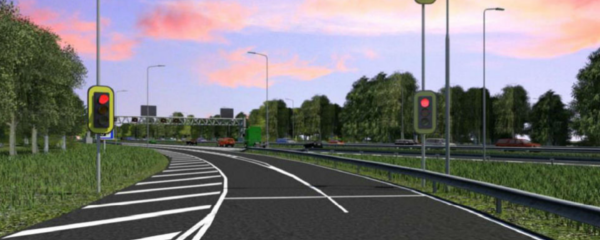
In order to combat some of the UK’s traffic woes, Highways England is investing £7 million into a trial that will see traffic lights being used on the link road between the M6 and M62 motorways during the morning rush hour.
Accompanied by electronic signs displaying congestion warnings and variable speed limits, these traffic lights will be switched on between 6.30 am and 9.30am. The hope is that they will ease the flow of traffic and create a smoother journey for commuters.
The lights were tested last month and will be switched on in December. They will be monitored by cameras for a year to see if they are having the desired effect. If so, such schemes may be rolled out across the country.
Until now, traffic lights have only been installed on slip roads to slow traffic as it joins the motorway. However, this new plan aims to monitor the vehicles leaving the M6 so that they can be controlled as part of efforts to minimise queuing on the M62.
(Credit – Highways England)
A topsy turvy plan?
While transport professionals believe that the traffic lights will help to ease congestion, it seems contraindicative to think that slowing down traffic will help to speed up journey times. Indeed, many motorists are concerned that the traffic lights will simply increase the number of accidents on the link road, with commuters engaging in drag racing-style efforts to get ahead on their route between the motorways!
Naturally, the chance to raise revenue as part of the scheme has not been missed. Drivers who don’t obey the variable speed limits or stop at the red lights will be fined. No doubt this will anger motorists already facing the risk of fines due to newly implemented smart motorways, with all their related (and widely misunderstood) rules.
A growing problem
There were 1.35 million traffic jams on motorways and A roads in the past year. That equates to an average of 3,700 tailbacks each day. The estimated cost to the economy of all this congestion is £9 billion per year.
Motorways are definitely causing drivers the most issues. Although they only make up 1% of the UK’s road network, they are responsible for 21% of all of the miles driven each year. Add to that the fact that traffic is up 30% in comparison to the mid-90s and the scale of the problem becomes apparent.
Where will it end?
New technological updates on the roads (smart motorways technology being the prime example) are simply making driving less enjoyable. This is definitely not being helped by the increasing congestion that motorists are facing every day. Could this be on reason that car sales have been dropping, as people opt to use public transport or car shares instead?
Even if congestion on our motorways isn’t stopping people driving to work, it could certainly be changing their behaviour. Many drivers are opting to use smaller roads instead of the motorway network. The likely result will be more congestion on our A and B roads, resulting in similar problems to those that drivers are already facing on the motorways.
Congestion on smaller roads also causes its own host of problems, including blocking crossings and making roads around schools more dangerous. Larger vehicles could even be at risk of getting stuck if they meet something of a similar size travelling in the opposite direction.
The government is in the process of investing £50 million into a number of large projects that aim to ease congestion. However, with motorists already feeling angry about the financial side of owning and using a car, the government will need to do an awful lot in order to make driving enjoyable again. Rolling out a nationwide motorway traffic light system is unlikely to win hearts and minds. There’s no simple answer to controlling the UK’s traffic during the busiest times of the day, but an answer is what we need – and fast!
Do you find driving less pleasurable than it used to be? What changes could be made that would enhance your driving experience? Share your thoughts by leaving a comment below.
Nov 9, 2017
October continued the recent trend of falling car sales in the UK, with a seventh consecutive month of reduced registrations year on year. The decline in sales started in April and has continued ever since. It seems people lack the confidence to spend money on a new vehicle right now.
Sales of cars in general fell by 12.2%, with diesel sales plummeting by 30%, despite a range of generous scrappage scheme offers. Year to date sales are currently down 4.6%, with 2, 224,603 new cars being registered in the first ten months of 2017. It is thought that by the end of December there will have been a 4.7% drop in total.
Which cars are people buying?
In contrast to this, sales of electric cars have risen by 36.9%, with 8,244 new models being registered within the month. Despite MoneySuperMarket’s finding that some 49% of the British public have never even considered buying a hybrid or electric vehicle, it seems that alternative fuels are catching on, albeit slowly.
Although car sales in general declined, there was a 3% rise in the sales of petrol cars in October. Consumers are worried about buying diesel cars in particular and opting for petrol or electric vehicles instead.
The October numbers were also affected by a 13% drop in fleet purchases, which was more than the 10% decline seen in the consumer figures for the month. Just as individual car buyers are bracing themselves for the impact of Brexit, so are the UK’s businesses.
(Credit – Jaggery)
The death of diesel
The figures will no doubt please people who have been fighting against diesel cars due to the high level of dangerous toxins that they produce. Many consumers have been left confused by the recent emissions debates surrounding the different types of vehicles on offer to them and it seems that even the various scrappage schemes aren’t enough to tempt buyers back to diesel models.
The Society of Motor Manufacturers & Traders (SMMT) Chief Executive Mike Hawes has said that the government needs to make it clear that consumers buying new, lower emission diesel cars won’t face additional taxes or charges like those who drive older diesels. He goes on to say that this issue should be addressed in the next budget. He calls for fleet renewal as one of the best ways to help to combat the air quality issue that is currently spreading across the UK.
Other factors
Another reason for the reduction in car sales is rising inflation, which has hit many families hard over the past few months in particular. Falling wages (in relative terms) are also playing a part, as is the recent interest rate rise. It seems that people just don’t trust the economy enough to make a big purchase. The Brexit vote and subsequent chaos around the negotiations with the EU are clearly having a negative impact on the motor industry.
As people put off buying cars, there’s also the fact that many are finding that they don’t actually need to own a car. They are opting to use public transport, share with a friend or family member, or join a car share for their commute to and from work. Freedom from the expense of taxing, insuring, servicing and maintaining a vehicle can certainly make a big difference to family finances.
Production figures falling
This is a heavy blow to UK car manufacturers. In response to the lack of demand from customers, manufacturers have seen production figures fall over the last five months. With no end in sight for plummeting sales figures, this only looks like it will get worse, as manufacturers rely heavily on Britain’s single market and customs union memberships, which are both at risk during the Brexit negotiations.
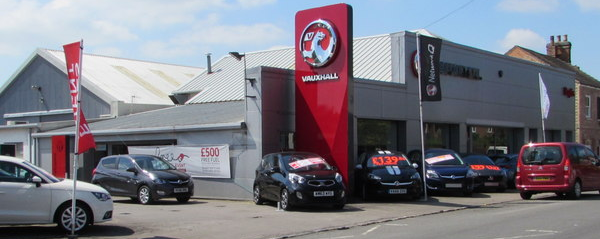
The devastating effect on Vauxhall workers has already been felt. The firm has announced that it will need to cut 400 jobs from its site near Liverpool. The redundancies have been put down to rising costs due to the fall of the value of the pound, on top of a change in customer car preference.
Nor is it only consumers who are holding back on buying cars and impacting production levels. Sales to businesses also fell in October, resulting in a 26.8% drop. Businesses and individuals are both cutting back on spending during these times of financial uncertainty.
These figures may make for depressing reading, but perhaps they also offer a chance to embrace people’s interest in alternative fuel vehicles. And perhaps motorists will resume buying diesels once they can be confident that doing so won’t turn out to be a mistake in years to come.
When do you think we will see a turnaround in the fortunes of the UK car industry? Will it come before the UK leaves the EU or after? Leave a comment to share your thoughts.
Nov 8, 2017
If you’ve ever driven around a corner on a dark night and been momentarily blinded by an oncoming car with its lights on full beam, you’re not alone. In fact, you’re one of around 29 million others! A recent survey has found that some 48% of drivers – around 29 million of us – report having lost vision for some two seconds or so in this situation. So how big a problem is this? And what other causes of concentration loss can impact our driving?
Dazzling drivers
The problem is such a common one, particularly as we head into the longer nights of winter. We’ve all been there – you come around a corner and the car heading towards you hasn’t dipped its lights. This means you have a second or two where you can’t see, either because you’ve been dazzled or because you instinctively raise your hand to protect your eyes.
Despite the fact that many cars having an automatic dip-beam function, night-time dazzling remains an issue. To see just how big a problem this is, Direct Line did a series of roadside experiments. Their results found that drivers are temporarily blinded for a full two seconds in this situation. While this doesn’t sound very long, bear in mind that a car can cover 60 metres during that time if travelling at 70mph. That’s quite a distance to drive without vision.
Furthermore, it takes another three seconds for the aftereffects of that flash of light to clear from a driver’s vision entirely. Until then, the driver experiences those little black dots and flashes that result from looking at a bright light and then looking away. This means a dazzled driver doing 70mph would have travelled the length around half a football pitch without being able to see properly.
Vision problems
The study went on to reveal that many people have had problems as a result of this situation. A fifth of respondents said they have had to brake suddenly to deal with the situation, while around 5% – some 1.5 million drivers – have had to take evasive action to avoid a crash because they couldn’t see properly.
Government statistics paint a similar picture. In the last five years, there have been 1,622 road accidents caused by drivers dazzled by headlights. Of those, 22% were serious or fatal – a total of 350 incidents. 44% of these believed that repeat offenders who were caught should be penalised with a fine and penalty points.

Quality of lights
The quality of lights in cars has improved in recent years. However, this itself can cause problems. Some 37% of those surveyed said that they were blinded by a vehicle even when the lights were dipped. This is due to the use of Xenon bulbs, which create a brighter light than traditional halogen ones. It improves the visibility for the driver, but creates a strong glow for oncoming motorists.
Thankfully, changing technology should mean the problem is soon one of the past. Most modern cars now have an auto-dip function that identifies when another vehicle is close and lowers the lights accordingly. However, the system does have flaws, including not being able to recognise cyclists or pedestrians.
Other causes of distraction
Dazzling headlights aren’t the only cause of distractions for drivers on the road. One of the major issues is fatigue, which is responsible for one in six crashes around the UK. Drivers may think they have just briefly nodded, but many actually fall asleep at the wheel for a few moments. These micro-sleeps can last for around six seconds. That’s enough time for a vehicle to veer across three lanes of traffic or into a central reservation.
The dangers of using a mobile phone while driving have been well publicised, but other causes of distractions are less obvious. Smoking at the wheel is one example – finding the cigarette, lighting it, then opening the window all distract the driver from the road. Smoking leads to 1% of road traffic accidents.
At other times, our concentration just wanders. Daydreaming is another way in which a driver’s attention can be taken away from the road. It is worst on long, straight roads such as motorways, where the body and brain switch into autopilot and you don’t completely concentrate on what you are doing. This is particularly dangerous when travelling at speed.
Avoiding distractions
While some distractions like dazzling headlights can’t be avoided, others can be. It is important to keep your attention focused on the road at all times. Take regular breaks when driving – around 15 minutes for every two hours that you’re behind the wheel. And if you feel drowsy, stop as soon as it is safe to do so.
72% of drivers have admitted to multi-tasking behind the wheel. Are you one of them? Are distractions for drivers increasing and causing more accidents? Share your thoughts below.
Nov 8, 2017
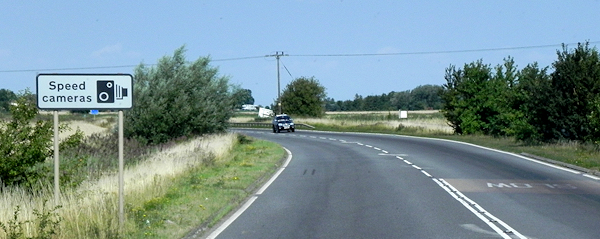
The Press Association recently asked 45 UK police forces for data on how many fixed speed cameras they have, and how many of them are switched on. The results make for interesting reading – it seems that differing approaches to managing speed cameras mean that drivers in some areas have a much better chance of dodging speeding fines than those in other regions. Furthermore, only around half of the fixed speed cameras in the UK are active, which means that there are hundreds across the country that are not catching speeding motorists.
Regional results
From the 36 forces who responded, it was discovered that 13 regions have fewer than half of their fixed speed cameras switched on. Meanwhile, four areas admitted to having none of theirs on at all. The four regions with no active speed cameras are Durham, Cleveland, North Yorkshire and Northamptonshire. The cameras in Northamptonshire have actually all been switched off since April 2011. While the authorities there do have other devices in place to catch those who are driving over the speed limit, drivers whizzing past fixed cameras faster than the speed limit are unlikely to suffer financially as a result.
Of the 2,838 fixed speed cameras dotted around the country, only 1,486 are active, based on the figures from the 36 forces who responded to the information request. However, this does not include the mobile speed devices that many forces declared that they regularly use. All forces also stated that there are frequent reviews about which of their region’s fixed speed cameras should be switched on.
(Credit – David Dixon)
Worrying figures
Brake, a road safety charity, has said that these figures are concerning and that all fixed speed cameras should be switched on. Such a move would certainly help to tackle speed in the UK. Meanwhile, AA president Edmund King believes that the reason so many cameras are inactive is because of limited budgets.
This is supported by the fact that all money received from those paying speeding fines goes straight to the Treasury. It is not automatically put back into running fixed speed cameras. Thus it costs local police forces to run their speed cameras. Many people think that the resulting fines should go to those police forces operating the cameras, thus further incentivising them to deter motorists from speeding.
The great speed camera lottery
Do you feel it’s fair that the speed camera lottery means some drivers are more at risk of being caught than others? The answer probably depends on where you live!
For example, in Staffordshire there are 272 fixed speed cameras, with only 14 switched on. Derbyshire has 122 cameras, but only 10 are active. In addition, there is a whole range of regions that use less than a quarter of their fixed speed cameras to catch speeding drivers. These include Kent (25%), West Yorkshire (25%), South Yorkshire (24%), Greater Manchester (24%) and Cheshire (17%).
In comparison, London, Lancashire, Nottinghamshire, Suffolk and Northern Ireland have all of their fixed speed cameras switched on. As such, people speeding in these regions are far more likely to be caught than those driving elsewhere in the UK.
In the West Midlands, all of the cameras had been switched off. However, eight newly implemented cameras are now active, and there is one particular hotspot in Birmingham that saw 500 speeding tickets being issued within a single month!
Even though you now know your odds of being caught by a fixed speed camera, based on where you drive, it is strongly advised that you do not gamble on whether they are switched on or not. Not only could you end up with a hefty fine and points on your licence, speed limits exist for the safety of all road users. Sticking to them means those in your car and others around you are at less risk of injury.
Although some organisations feel that the roads would be safer with more police patrolling them, fixed speed cameras do tend to work as a deterrent, meaning that most motorists are driving safely. It is hoped that the revelations of these figures won’t change that situation.
Finally, remember that no matter which region you are driving in, all police forces use mobile speed cameras. These could be active at any point during your journey, and are much more difficult to spot than the fixed yellow boxes that may or may not be active at the time.
Will knowing about regional differences in speed camera use affect the way you drive? Should police forces be using these resources more in order to keep us within the speed limit? Let us know your views by leaving a comment below.
Nov 8, 2017
The DVLA has launched a big campaign to track down and penalise people who are dodging paying car tax (also known as vehicle excise duty – VED). The measure comes after the department admitted that revenue from VED fell by £93 million in the year following the abolition of the paper tax discs. It turns out that plenty of drivers used the change to chance not having tax on their car – many of them successfully.
Getting tough
According to the DVLA, the new campaign will highlight what can happen to drivers who haven’t paid their car tax. It will run on radio, catch-up TV and online, as well as in newspapers throughout November. While the supermarkets and other retailers paint an idyllic picture of Christmas in between TV shows, the DVLA will be running an advert featuring a hand-painted car that looks transparent, to show that even if drivers think their car is invisible, it can still be found and clamped.
The RAC welcomed the new scheme, saying that it is good to see that the DVLA is publicly warning drivers about the penalties for not taxing their cars. Untaxed vehicles are often also uninsured. These are a nuisance to society and cause higher insurance premiums for everyone. Thus the RAC welcomes all steps taken to cut down on the number of untaxed vehicles.
(Credit – Dafydd Vaughan)
In the figures
According to figures released by the DVLA, around 10,000 untaxed vehicles are clamped or impounded every month. In 2016, 106,000 untaxed vehicles were immobilised or impounded for dodging car tax. The figure was almost double that of 2014 (at just over 57,000), and a notable increase on the 2015 figure (of 85,000).
Dodging car tax is one of the big reasons for the dip in revenue and the rise in impounded vehicles. However, the DVLA also says that the push towards low emission vehicles has played a part. Overall, it will collect around £147 million less in 2016-17, compared to the 2014-15 period.
A further consideration is that in 2014, new reforms were brought in that meant car tax couldn’t be transferred from one owner to another when a vehicle was sold. Even if a car had a good number of months remaining on the tax, the new driver had to re-tax the vehicle and the seller had to get a refund for the unused time from DVLA. The change caught many buyers off guard and no doubt led to many vehicles going untaxed in error.
The DVLA points out that it has never been easier to tax a vehicle, so drivers have no excuse for not doing so. The online system is available 24 hours a day and you can spread the cost with monthly Direct Debit payments, so there’s no need to pay in a lump sum.
2017 car tax reforms
Reforms in 2017 further changed the car tax system, with greater rewards for lower emission drivers. From 1 April 2017, only electric cars that produce zero emissions and were valued at less than £40,000 are exempt from car tax payments.
Any car worth more than £40,000 will need to pay a £310 surcharge on top of the normal cost of car tax. Cars registered after 1 April will pay a standard rate for their car tax after the first year. This depends on the type of car and fuel used:
- £140 a year for petrol and diesel vehicles
- £130 a year for alternative fuels such as hybrids
- £0 for zero-emissions vehicles such as fully electric cars
This means that a vehicle in the 120g/km band for emissions has gone from paying £30 under the old system to paying £160 for the first year and then £140 a year thereafter under the new system.
Push towards electric
The new, higher tax rates for all types of vehicles (apart from electric) show the real-world application of the government’s big push towards zero emissions vehicles in coming years. At the same time, those who chance leaving their vehicle without tax now face an even greater chance of being caught. This could potentially lead to them losing their vehicle entirely.
Will the new DVLA campaign result in more drivers taxing their vehicles? Or has the switch to an electronic system created loopholes for drivers to hide in? Share your views by leaving a comment.
Nov 3, 2017
For the world of fuel prices, October was very much the calm after the storm and prices remained much the same or even fell very slightly in some parts of the country. The average price of unleaded stood at 118.1p per litre compared to 119.3p in September while the overall cost of diesel was 120.3p versus 120p in September.
Current price trends
Looking at the current price trends from October, Asda remains the cheapest place to get fuel on average around the country. Their unleaded price was 113.9 versus 114.5 at Morrisons and 114.6 at Sainsbury’s, Tesco was in fourth place with a price of 114.9. The pattern on diesel prices is also similar with Asda offering 116.2 for their customers followed by Morrisons at 116.8, Sainsbury’s at 117.1 and Tesco at 117.7.
When compared with other retailers around the UK, it shows that drivers are still best going to the supermarket for their fuel. The cheapest average price for unleaded at other retailers, apart from supermarkets, was 117.7 at Jet garages followed by 118.9 at Texaco and 119.1 at Esso. Highest of the big fuel retailers was BP at 120.3p per litre. Diesel displayed a similar picture – Jet at an average price of 119.9 followed by Texaco at 121 and Esso at 121.1. BP was again the most expensive at 122.3 on average.
Looking back
Current prices for unleaded are higher than in 2016 and 2015 in the same months but go back a little further to the 5-year mark and prices are still considerably lower – the figure for unleaded in October 2012 was 138.5p per litre. Go back even further and the comparison to prices 10 years ago highlights why running a car can still be expensive – the average cost was just 97.8 in October 2007.
Diesel prices compared to historical figures are a little less severe but still show an interesting pattern. Last month’s price compared to a price of 110.4p two years ago but favourably to the price in 2012 at 143.5p. Like petrol, the price 10 years ago was a much healthier 100.1p per litre.
Increases ahead?
While the rise was modest in October, experts are already predicting that prices are set to rise in November. One of the key reasons for this is the agreement between Russia and nine other OPEC producers to limit production to 1.8 million barrels a day. The agreement was put in place in January 2016 with the aim of clearing a supply glut. While it is due to expire in March 2018, many experts believe it will be renewed for a second time.
The result was that Brent Oil closed at its highest levels since July 2015 when the market closed on Monday with prices in the US finishing at $60.90 a barrel, an increase of 46 cents. This means that Brent has increased by 9.5% in the last 16 trading days.
Wholesale and pump
While this rise in the price of wholesale may increase prices at the pump, the two don’t always directly correspond. For example, there was a spike at the end of August that saw wholesale petrol rise to 95.73p but the price at the pump only moderately increased – because the spike was a short-lived one. Within a week or so, the price was back to 92.04p, around the same figure as before.
Prices for both diesel and petrol did fluctuate during October in terms of the wholesale price but the price at the pump remained largely consistent. This shows that while the price of wholesale can change rapidly for short periods, it doesn’t always mean we end up paying more at the pump.
Conclusion
While prices in October were generally quite steady, there is worry that the trend could see increases during November. And with the busy Christmas season around the corner, the advice remains to watch out for those deals and special offers to try and get the best price for your fuel, wherever you live in the UK.
