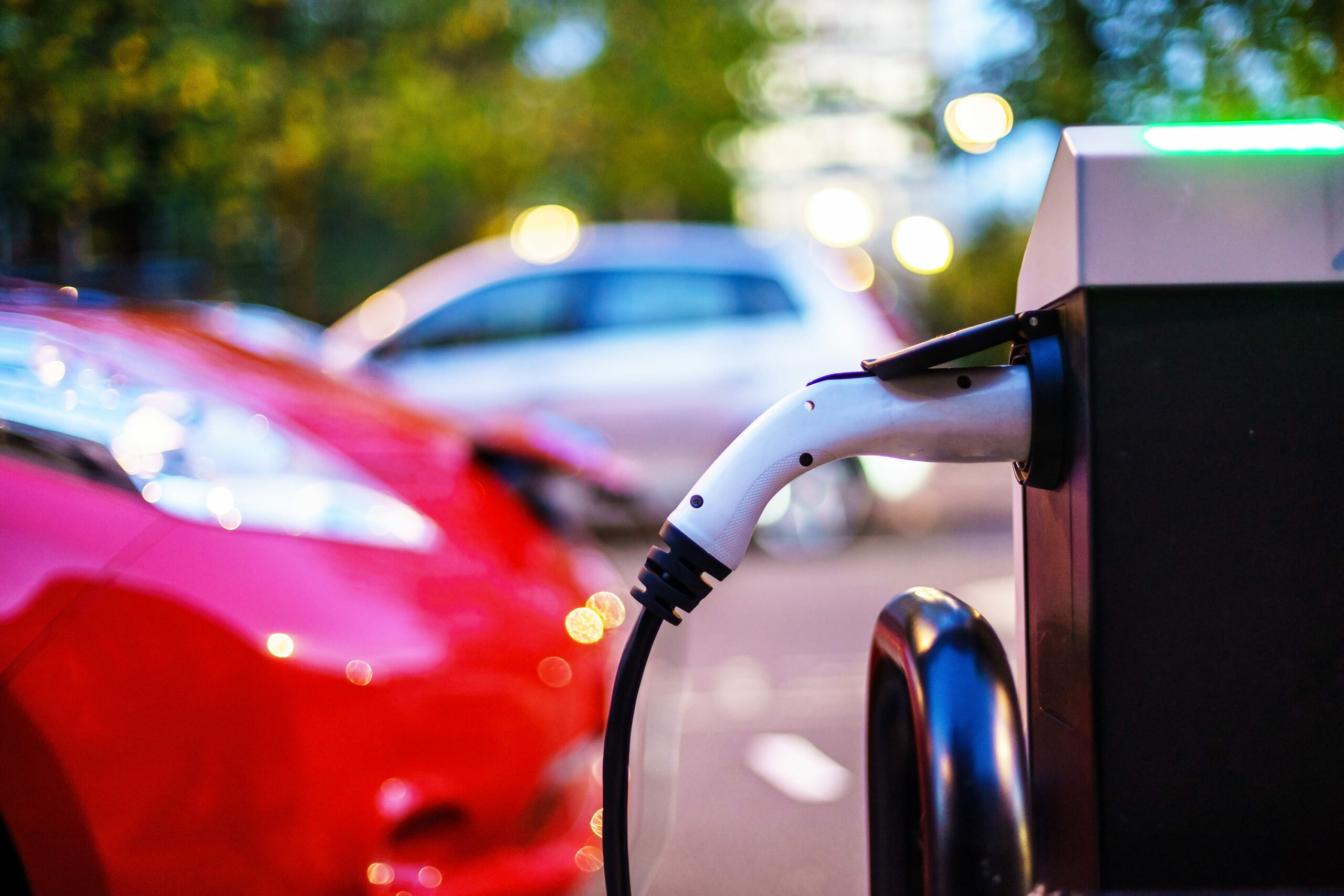
Tinkerbell is the most popular name for a first car in 2022

Tinkerbell is the most popular name for a first car in 2022

Sponsored content

Research commissioned by online used-car marketplace Motorway.co.uk shows just how important a first car can be, with three-quarters of car owners admitting their first car still holds fond and special memories. In fact, over a third of respondents claim their first vehicle has its own personality, with nearly half naming their beloved first car.

When it comes to choosing a name, nearly a quarter of car owners choose this to match the make of car; 20% base it on the colour of the car and 19% name their cars after someone they know. The top 10 most popular names for first cars in 2022 include:


  1. Tinkerbell (17%)
  2. Peggy (15%)
  3. Hercules (13%)
  4. Bullet (11%)
  5. Roxanne (11%)
  6. Jolly Roger (11%)
  7. Betty (11%)
  8. Dave (9%)
  9. Ghost (9%)
  10. Selena (9%)
Tinkerbell is the most popular name for a first car in 2022

Memorable moments associated with a first car include taking a first road trip with friends (45%), driving to a first job interview (28%), as well as monumental moments like fitting a baby seat for the first time (21%).

40% of Brits cite owning a first car as a rite of passage, with 16% admitting that they have put off selling their first car purely because of the memories attached to it. When it is time to part with the first set of wheels, the top reasons first car owners sell up are:

  1. It was on its last legs (37%)
  2. For an upgrade (27%)
  3. Unable to afford repairs (13%)
  4. Having a family and needing a bigger car (12%)
  5. Relocating and no longer needing a car (4%)

Alex Buttle, co-founder of online used-car marketplace Motorway, said: “A first car often holds special memories, no matter what the owner’s stage in life. But as we go through life, our motoring needs and budgets change.”

(The research carried out in June 2022 by Censuswide with a sample of 2,000 British car owners aged 18+.)
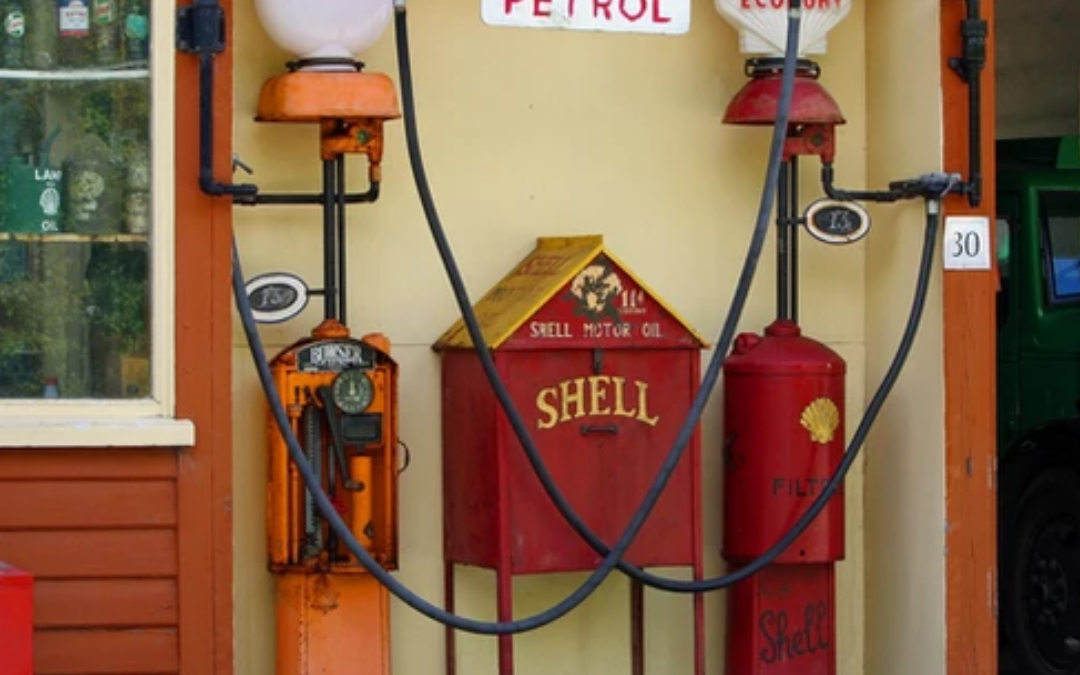
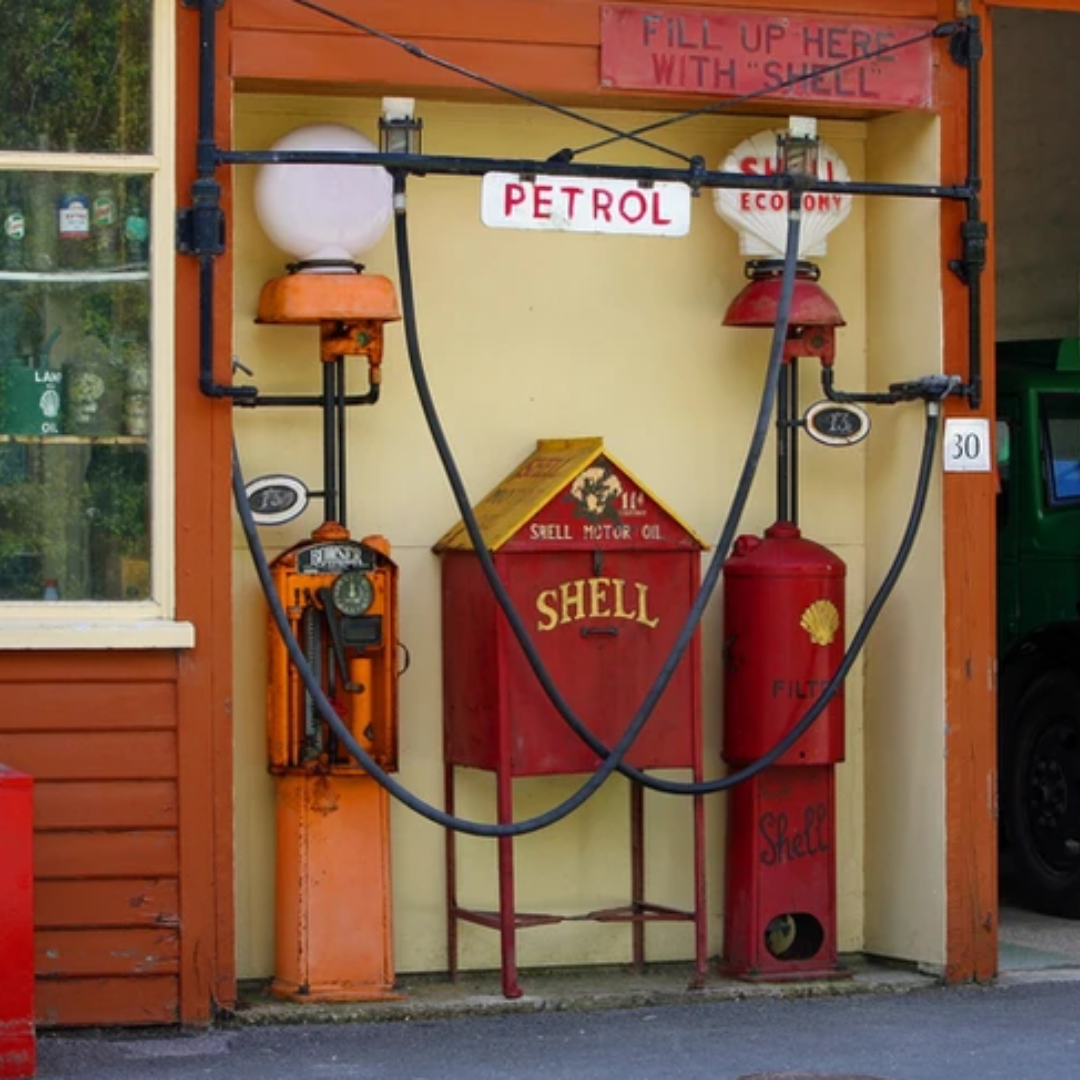
The first fuel station in the UK

The first fuel station in the UK

The first roadside fuel station in the UK opened in November 1919 and was located just outside the village of Aldermaston in Berkshire. There is sadly no trace of this motoring landmark, and the site of the station is now a layby on the A4.

The Development of petrol stations in the UK and elsewhere

The Automobile Association (AA) ran the Aldermaston petrol station, one of several they opened in the 1920s. Before the opening of these stations, there were no specialist filling stations, and fuel was obtained in nine-litre cans from a number of different retail outlets. Pavement pumps were installed in some places in the years before 1919, but the AA led the way with the idea of selling fuel from dedicated roadside locations. Part of the rationale behind the AA’s venture into fuel locations was to sell benzole, a motor spirit derived from coal and tar seen as a patriotic alternative to petrol imported from communist Russia. The AA stations were not open to the general public, you had to be an AA member to use them, and they were a non-profit offering.

The first petrol station in the UK

Other parts of the world had developed roadside stations well before the UK. The first record of a roadside petrol station anywhere in the world was in Wiesloch, Germany. Bertha Benz, the business partner and wife of the creator of the first internal combustion engine in a car, Karl Benz, refilled the tank of the first automobile on its maiden trip in 1888. In 1905 St Louis Missouri was the site of the first station in the USA. However, Reighard’s Gas Station in Altoona, Pennsylvania claims to be the oldest existing station in the US, dating from 1909.

The 1920s saw a significant increase in the number of petrol stations in the UK. By the end of the decade, there were over 28,000 petrol stations, with a peak of around 40,000 reached in 1967. Today there are 8,385 petrol stations in the UK, a significant drop in the number of stations but the locations are much larger, and they offer a far more extensive range of facilities.

What is the future of petrol stations?

RS Automotive in Takoma Park, Maryland, become the first petrol station in the USA to stop selling fossil fuels and replace its pumps with electric vehicle chargers. Many petrol stations in the UK have installed chargers, but none have taken the step of removing fuel pumps altogether. One hundred years on from the first roadside petrol station in the UK, we await the next phase of development in how we refuel our cars.

Future Classics: top five imported cars set to soar in value

Future Classics: top five imported cars set to soar in value

Sponsored content

Classic cars are an investment like no other. However, identifying the right one can be tricky.

Leading online used-car marketplace, Motorway.co.uk, polled a number of dealers from its network of verified car dealers1 to reveal their top 10 list of ‘future classics’ – cars set to soar in value over the next decade. In the second of two articles, we have included the top five imported cars they identified as ones worth an investment.

Alex Buttle, consumer spokesperson from Motorway, said, “When it comes to predicting future classics, there are a few key signs to look out for, including rarity, styling and desirability. Quirky and unique features can also go a long way to adding potential value.”

Alpine A110S, 2019

Alfa Romeo Stelvio Quadrifoglio, 2018

Abarth 695 Biposto, 2014

Fiat 124 Spider, 2017

Edition 1 Mercedes, 2016

Alpine A110S, 2019

The beautiful Alpine A110S is a lightweight coupe characterised by high engine power, a focused chassis setup and refined design elements. The A110S was engineered to deliver sharp handling response and high-speed stability. The smart styling flourishes both inside and out, helping amplify the car’s purposeful nature and give it true potential to become a future classic.

Alfa Romeo Stelvio Quadrifoglio, 2018

Alfa Romeo’s unexpected contribution to the shortlist of future classics is its latest model of the Stelvio Quadrifoglio. Built with many class-topping features, the premium compact SUV immediately set a new benchmark in its segment. With its design, performance and technology, Stelvio Quadrifoglio is officially the fastest SUV around the circuit, having registered a new record for its class on the iconic Nürburgring racetrack at 7 minutes 51.7 seconds.

Abarth 695 Biposto, 2014

The only road legal production car with an optional ‘dog ring gearbox’ is the Abarth 695 Biposto. The 695 Biposto is the most extreme version of the Abarth – essentially a Fiat 500 –  with a 1.4 litre turbo engine. The car weighs just under a tonne at 997kg and accelerates from 0-62 in a remarkable 5.9 seconds.

Fiat 124 Spider, 2017

The 2017 version of the Fiat 124 Spider revives the original’s classic styling and typically Italian performance to a new generation. Paying homage to the original open-top 124 Spider that launched 50 years ago, the 2017 124 Spider delivers an authentic Italian roadster experience filled with driving excitement and technology, combined with a classic Italian design.

Edition 1 Mercedes, 2016

The special “Edition 1” model of the Mercedes-AMG C63 Coupé marks an extraordinary and powerful combination of exclusive design and equipment characterised and inspired by the aesthetics of future Mercedes-AMG racing coupés, which went on to compete in the popular DTM racing series in 2016.

1 William Kikham, Director at Targa Florio Cars, John Graeme, Redline Specialist Cars, The Team at Cornerhouse Garage

Fuel Price Analysis: Jan 2021 to June 2022

Fuel Price Analysis: Jan 2021 to June 2022

The last few months have been a challenging time for motorists. At PetrolPrices, we analyse how prices have changed in the 18 months and look at how prices vary across regions in the UK.

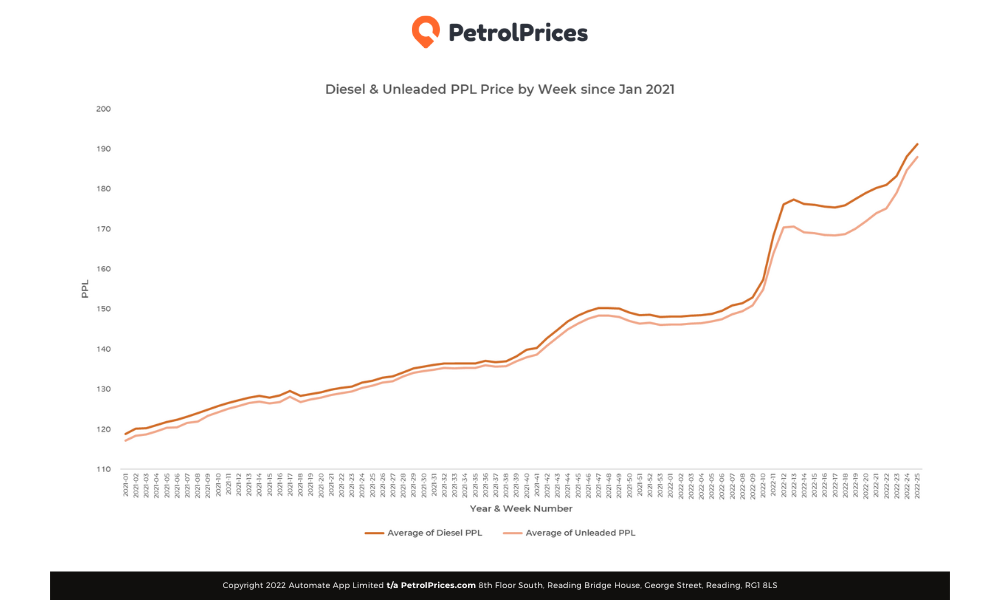
Diesel & Unleaded PPL Price by Week since Jan 2021 (1)

Price Changes in the Last 18 months

Unleaded and Diesel Trend

In the first week of 2021, the average price for Unleaded was 117.19ppl. There was a steady increase through to early December when prices hit an average of 148.37ppl. Prices remained relatively stable until the Russian invasion of Ukraine. The next few weeks of turmoil saw a further increase to 170.38ppl towards the end of March, followed by a lull after the changes in duty. Sadly, since then, prices have continued their upward trend. Average prices are now at 187.93ppl, with a worrying expectation that there may be more increases to come.

Diesel tended to follow the trend of Unleaded’s steady increase up to the beginning of December, generally around 2ppl higher than Unleaded. The Russian invasion of Ukraine had a more significant impact on Diesel prices. The difference in the average price of Diesel was up to 7ppl higher than Unleaded. Diesel prices hit a new height of 191.21ppl in the last week, around 3.5ppl higher than Unleaded.

Regional Trends

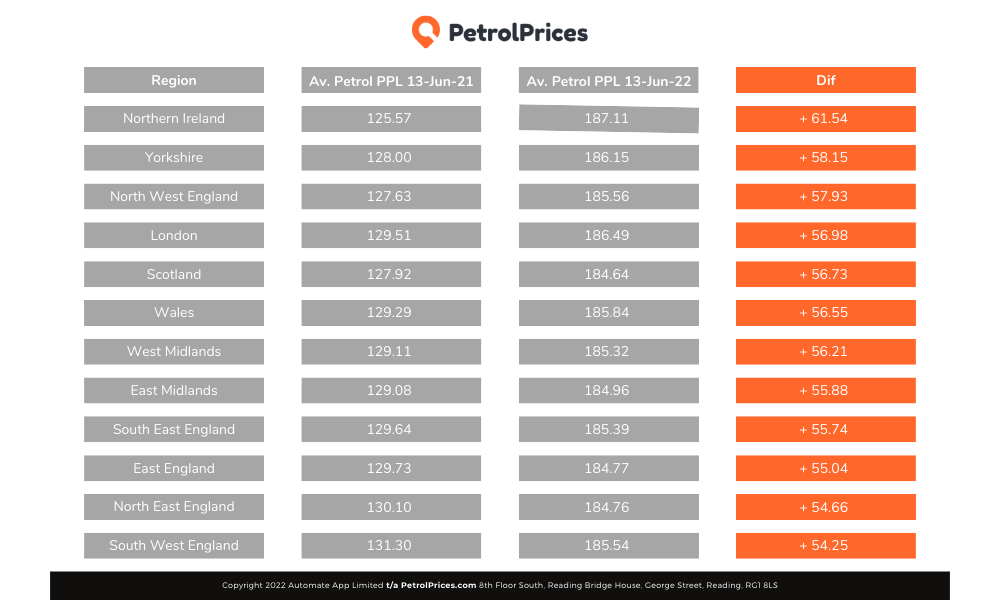
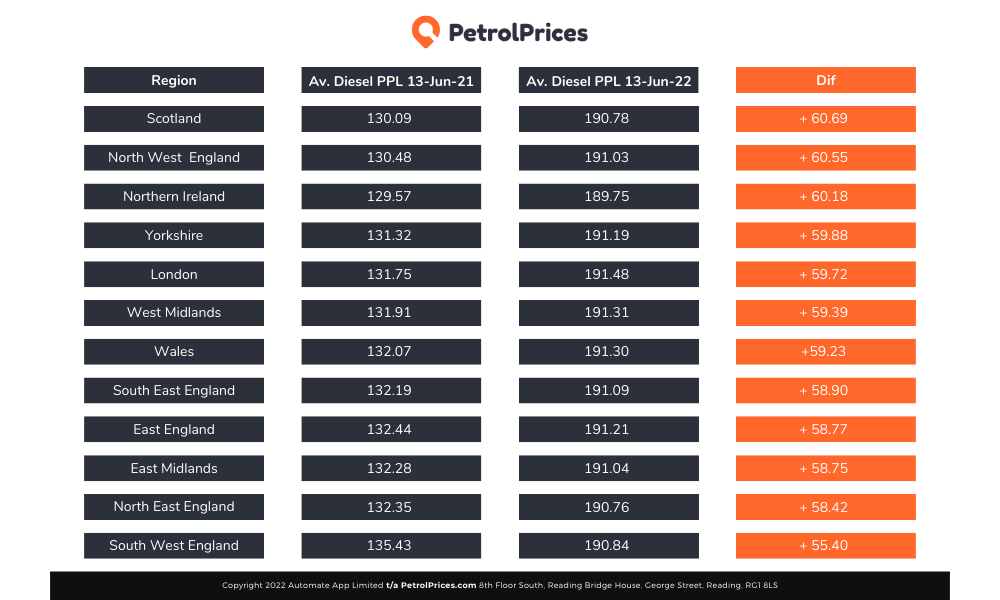
The regional tables highlight and compare Unleaded and Diesel prices on 13th June 2021 and 2022. The most significant increase in Unleaded over the past year has been in Northern Ireland, where the increase is over 7ppl higher than in South West England.

Diesel price increases in most regions have been in the high 50s and just over 60ppl in the last year. The outlier once again is the South West, with an increase of 55.40ppl in the past 12 months.

This surge in the price of fuel has translated to spending around £25 more to fill your car. There are regional differences, but the cost of Unleaded and Diesel at the forecourt will cause challenges wherever you live.

Unleaded by Region
Diesel by Region

Europe’s first Autonomous Petrol Station and Convenience Store

Europe’s first Autonomous Petrol Station and Convenience Store

There are already a number of automatic unmanned petrol stations in the UK, with Gulf, Asda and a number of other brands leading the way. Autonomus fuel stations are more prevalent on the continent, so it isn’t surprising that the first autonomous petrol station and convenience store has opened in Portugal. The first-of-its-kind autonomous petrol station store from Galp is the first to use Sensei’s new “Plug & Play: Autonomous Pod” concept

Sensei is a leading provider of autonomous stores, and it has teamed up with Galp, one of the largest petrol station networks in the Iberian Peninsula. Galp has over 1480 locations and is a leading energy company in Iberia and Africa. Both companies have their headquarters in Lisbon.

Sensei has created a 323 square foot autonomous convenience store at one of Galp’s locations in Lisbon

Sensei has created a 323 square foot autonomous convenience store at one of Galp’s locations in Lisbon. The store offers non-perishable goods, food, snacks and beverages to customers. It includes a network of cameras mounted on the ceiling and sensors on shelves to detect the items shoppers pick or leave. The autonomous software creates and keeps track of each person’s virtual shopping bag and charges them automatically through an app.

The store is open to customers from 8am until midnight every day, with 24/7 access available shortly.

“We are so excited to launch this collaboration with Sensei for our customers. This new autonomous pod, which is mobile and street-facing, enables us to offer more for people walking by on the street or stopping at the station for food, enabling them to purchase with the ease and speed that only autonomous technology provides whilst avoiding the queues caused by fuel purchasers,” said Teresa

Abecasis, Executive Board Member and COO at Galp.

Recent research by Sensei shows that most British consumers (70%) want to have autonomous retail experience when they shop, and it will be interesting to see if the concept will make its way to the UK in the near future.

“We are also eager to capitalize on the data captured through Sensei which will help us make the store increasingly better by implementing a highly efficient restocking operation and offering the most attractive products for each specific location. For example; this fully autonomous store will allow for smaller gas stations in lower traffic locations to offer non-fuel products to customers through a profitable operation,” added Abecasis.

Sensei has several new collaborations on the horizon, including further autonomous convenience store launches at petrol stations.

Petrol, Diesel and EV price increases

Petrol, Diesel and EV price increases

Petrol and diesel prices are continuing to hit new highs as the cost of crude oil increased to over $118 per barrel, levels not seen since before 2009. This is further compounded by a weakening pound to US dollar exchange rate, currently down at $1.26 from $1.35 at the start of 2022. These two factors have seen prices, reported by PetrolPrices users, increase to over £.181 on average for diesel and £1.71 for unleaded in recent weeks.

Public EV Charging Price Increase

However, it isn’t just fossil fuel drivers that have been affected by energy price increases. In April, approximately 22 million energy customers saw a £693 increase in the price cap for those paying by direct debit and a £708 increase for those on prepayment meters. This increase is passed to consumers as increases in costs per kWh and standing charges. Rates will vary by supplier and region, but many users will be paying around 28-30p a kWh for their electricity. With Electric Vehicles (EVs) generally getting 3.5-4.5 miles per kW, this could cost EV owners around 8.5p a mile.

However, not all EV charging is done at home, and the charging networks haven’t been immune from increased energy costs. InstaVolt, a leading rapid charging network, has increased its price to 57p per kWh; in February 2021, this stood at just 35p. This is an increase of 63% in a little over a year, meaning that a vehicle doing 3.5 miles per kW that only charged on this network would have an energy cost of 16p a mile.

However, it isn’t just fossil fuel drivers that have been affected by energy price increases. In April, approximately 22 million energy customers saw a £693 increase in the price cap for those paying by direct debit and a £708 increase for those on prepayment meters.

bp pulse has seen similar price increases, with guest users on their 50kW chargers paying 56p per kWh, up from 30p in January 2021. Osprey Charging has also increased its rates to 49p per kWh.

These increases in public charging costs have increased calls for the government to review the VAT rate on public charging; this currently sits at 20%, whereas domestic charging is subject to 5% VAT. Based on a 57p rate, changing the VAT rate would see a 7p decrease in the cost to public charging users.

The pricing discrepancy disproportionately affects those without off-road parking or access to a private charger. Companies such as Ubitricity, owned by oil and gas giant Shell, are looking to address on-street charging with their bollard and lamp post charging solutions. These typically charge at slow speeds, suitable for overnight charging, and with rates of 32p kWh are only slightly over the pricing cap rates.

It is possible to still charge for free; Pod point offers free charging at some supermarkets but do check parking restrictions and limits.

Do you drive for work?

The government has updated its advisory rates to reflect the increase in costs. For a 2 litre diesel, the advisory rate is now 20 pence per mile, up from 16p between March and May, and a 1.4-2.0 litre petrol at 17 pence, up from 15p.

However, if you drive an electric car, the rate remains at 5p per mile, which will leave many EV drivers potential out of pocket. As above, even users getting 4.5 miles per kW would be out of pocket if they are on the price cap.

For a full list of the rates, please visit Advisory fuel rates – GOV.UK (www.gov.uk) and see how you may be affected.

These energy price increases are a major factor in the increasing rate of inflation, which the Bank of England has predicted will hit 10% by the end of the year. Reducing travel and checking prices of petrol, diesel, and electricity will remain the best way to minimise your exposure to these increases.

Future Classics: Five British Cars Set to Soar in Value

Future Classics: Five British Cars Set to Soar in Value

Sponsored content

Classic cars are an investment like no other. However, identifying the right one can be tricky.

Leading online used-car marketplace, Motorway.co.uk, polled a number of dealers from its network of verified car dealers1 to reveal their top 10 list of ‘future classics’ – cars set to soar in value over the next decade. In the first of two articles, we have included the top five British cars they identified as ones worth an investment.

The list is compiled of everything from exotic coupes, such as the Jaguar XK R-S GT, to surprise inclusions such as the Rover 75 V8.

Alex Buttle, consumer spokesperson from Motorway, said, “When it comes to predicting future classics, there are a few key signs to look out for, including rarity, styling and desirability. Quirky and unique features can also go a long way to adding potential value.”

Rover 75 V8, 2004

Aston Martin Cygnet, 2011

Jaguar XK R-S GT, 2014

Ford Focus RS, 2016

Lotus Exige S1, 2000

Rover 75 V8, 2004

It might raise the eyebrows of some for a Rover 75 to make a list of ‘future classics’, but the V8 version is a different beast which has, in recent years, been soaring in popularity. Driving the rear wheels, the 4.6-litre engine and smooth automatic transmission offer refined and effortless performance entirely in keeping with the long-distance, no object associations of this historic British brand.

Aston Martin Cygnet, 2011

Another surprise inclusion to the bracket of ‘future classics’ is Aston Martin’s Cygnet – a miniature city car that helped set a new benchmark for compact luxury. The Cygnet was built upon nearly one hundred years of experience and Aston Martin heritage of high-performance sports cars, grand tourers, and competitive racing machines, all of which helped create a genuinely luxurious solution to urban mobility.

Jaguar XK R-S GT, 2014

Jaguar specially developed the beastly looking XKR-S GT to be a road-going iteration of the XK coupe. With numerous aerodynamic and suspension changes from the original XK model, plus the addition of carbon-ceramic brakes, the Jaguar XKR-S GT offers race-car inspired performance in a car that is road legal…somehow.

Ford Focus RS, 2016

Ford’s popular high-performance road car helped pioneer the Ford Performance All-Wheel-Drive system and still delivers class-leading cornering speed and performance. The 2016 Focus RS introduced advanced performance technologies. It was the first Ford RS equipped with selectable Drive Modes – including an industry-first ‘Drift Mode’ – a feature that only adds to its potential value.

Lotus Exige S1, 2000

Last but not least on the list is the beautifully crafted Lotus Exige S1 – a lightweight sports car first released in 2000 from the East Anglian-based brand. Under the rear engine was a 177bhp 1.8-litre engine. This, combined with the car’s weight of just 780kg, allows the Exige to shoot from 0-62mph in just 4.7 seconds.

1 William Kikham, Director at Targa Florio Cars, John Graeme, Redline Specialist Cars, The Team at Cornerhouse Garage

Waves Car Wash: Platinum for Platinum competition

Waves Car Wash: Platinum for Platinum competition

To celebrate the Queen’s Platinum Jubilee, Waves Hand Car Wash, the UK’s home of car washing and valeting, is giving 70 lucky customers the chance to win a Platinum Valet!

The Platinum Valet includes an interior and exterior clean combined with fine detailing and finished with a Radiant Wax polish – it really is the royal treatment!

All you need to do to be in with a chance of winning is pay for a service using the Waves Customer App at one of their car washes between now and the 5th June… it’s that simple.

If you haven’t already, you can download the Waves Customer App from the App Store and Google Play.

The App allows you to

  • Find your nearest car wash
  • Get Directions
  • View services & prices
  • Pre-book & pay

You can find out more about Waves Car Wash by visiting their website www.wavescarwash.co.uk    

Terms and conditions: Service must be paid for via the customer app. Winners must have an active Waves Customer App account in order to redeem their prize. Other terms and conditions may apply.

Leasing A Battery Electric Vehicle Almost 20% Cheaper than PCP

Leasing A Battery Electric Vehicle Almost 20% Cheaper than PCP

Sponsored content

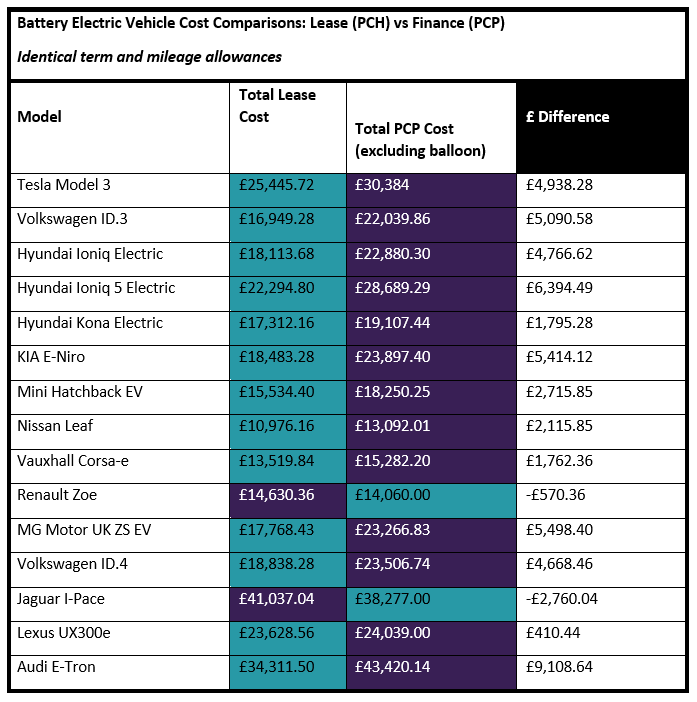
Recently released data from Leasing.com shows that leasing a battery electric vehicle (BEV) is on average 18%, and potentially up to 31%, cheaper than funding a new vehicle on personal contract purchase (PCP).


According to 2022 pricing data across Leasing.com’s top 15 most popular BEVs, leasing was the cheapest and most cost-effective option on 13 of those models. Across the list, the highest cost difference was 31%, with the average difference in cost being 18%. The highest saving came in at £9,108 for Audi’s all electric e-Tron, with the average saving across the board coming to £2,313.58.

One of the most popular cars in the BEV market is the Tesla Model 3. The Tesla has a list price of £42,935; however, when leased over four years, the total cost comes in at £25,445.77. Compare that against a PCP cost of £30,384, and leasing will save drivers 19% over the contract’s life.

The largest saving overall, though was found when comparing costs for an Audi E-Tron. On PCP, the Audi works out at a total cost of £43,420.14 at the end of a 48-month contract. On lease, the same make and model comes in at a total cost of £34,311.50. This would mean a saving of £9,108.64.

David Timmis, Managing Director of Leasing.com, says that the accessibility that leasing provides consumers will be vital in achieving an electric future: “With the shift towards an EV future, one of the most important challenges the industry faces is making BEVs affordable. Without this, the market simply won’t shift quick enough.”

This research comes when more and more drivers will be looking to move to an electric vehicle as the UK approaches the 2030 Net-Zero Government deadline. The recent increase in petrol and diesel prices has also seen a move towards electric vehicles.

EV Chargers at Motorway Service Areas: The Future

EV Chargers at Motorway Service Areas: The Future

For many motorists, motorway service stations offer a great deal of convenience, whether you are on a long journey with young children or using your vehicle for lengthy business journeys. The convenience of these locations providing food and coffee, toilet, and changing room facilities is invaluable, saving drivers the need to deviate off their route.

Ignoring the price of fuel, which is typically more expensive at these foecourts, they would naturally seem like an obvious place to be investing in electric vehicle charging stations. While many of them now have chargers installed, the variety of brands or CPOs (Charge Point Operators) available at motorway service stations has been somewhat limited.

What is a CPO?

A CPO is a customer-facing brand at the electric vechiole charging location. It is like the brand you see at the fuel forecourt and is the equivalent of saying you went to the “Esso” garage today.

The background of CPO motorway contracts

The Electric Highway was established in 2011 by the green energy provider Ecotricity, and whilst they sold their Electric Highway in June last year to GRIDSERVE, customer reviews and experiences of historic Ecotricity chargers were far from complimentary. Their app has an average rating of 1.5 stars, and a quick scan of the reviews will show you what early EV adopters thought of their chargers and network.

Whilst some motorway service stations have been investing in Tesla charger hubs, currently, in the UK, you cannot use a Tesla supercharger without driving a Tesla.

For non-Tesla EV drivers, the only other option for some time at most motorway locations has been the historic Ecotricity Electric Highway chargers. Whilst GRIDSERVE is upgrading a lot of the legacy chargers from Ecotricity, there has been criticism that the upgraded units no longer have Type 2 connectors, so cars like the popular Renault Zoe cannot utilise these new sites.

The Future of EV Chargers at Motorway Service Areas

Changes from the Competition Market Authority

There is, however, some good news as the UK transitions to more EV’s. The Competition and Markets Authority (CMA) unlocked the electric vehicle charging competition in March. The CMA has now secured commitments from GRIDSERVE not to enforce rights in contracts with Extra, MOTO, or Roadchef after 2026. In doing this, GRIDSERVE has committed to reducing the length of the exclusive rights in the current agreements with MOTO by around 2 years and Roadchef by around 4 years (the agreement with the third operator, Extra, is due to end in 2026).

Equally, they have agreed not to enforce exclusive rights at any Extra, MOTO, or Roadchef sites that are granted funding under the UK government’s Rapid Charging Fund (RCF). In such cases, competitor chargepoint operators will be allowed to install charge points regardless of the exclusivity in The Electric Highway’s contracts.

You can read more about these changes here.