Speed limit technology to be implemented in all new cars by 2022

Speed limit technology to be implemented in all new cars by 2022

Speed limiters will be made compulsory fitted to all new vehicles in 2022 under proposals put forward by the European Union and this will be copied by the UK Government, as confirmed by the Department of Transport. The official purpose of the speed limiters is that it will reduce road deaths by 20%, however drivers can still override the stated speed limit if they need to in case of an emergency manoeuvre.

This is the first step towards the gradual full automation of all vehicles. Driver safety and the reduction in road deaths is being used as the justifiable reason to impose it, but this is only the beginning of a set of rules that will eventually lead to all vehicles driving themselves.

The driving Nanny

New European legislation is to come in to force for 2022, in which all new cars will be fitted with ‘Intelligent Speed Assistance’; a system that automatically restricts power when it recognises, you’re speeding, thereby slowing the vehicle down to the limit.

This isn’t really about the kind of unobtrusive technology being used to monitor our daily movements though, we’re now talking about technology that interacts with our surroundings to physically prevent us from taking part in any ‘wrongdoing’.

And in this case, ‘wrongdoing’ isn’t robbing a bank, flashing an innocent bystander or physically harming someone, wrongdoing is all about the evils of speed, for no matter what the reasoning, you’re the Devil Incarnate should you allow your speedometer to creep above the permissible limit; this is speed enforcement en masse.

And it gets worse.

Given the fact that it uses a combination of GPS-tracking black box technology, sign-reading cameras, and connectivity, it’s entirely possible for the system to tag your time, location, and speed to send off a detailed report about your nefarious activities, all ready for prosecution. And while that sounds extreme, think of this: with Intelligent Speed Assistance, revenue from convicting speeders will be down, and relying on safety cameras alone to make the difference just won’t cut it.

No obvious reduction in deaths per year

These new proposals are down to the fact that for the last decade, fatalities and casualties from road accidents have remained pretty constant – around the 1,700 per year mark. And yet the number of cars has increased by around 2m in the last decade, and so while the numbers are similar, the percentages are smaller – a fact not mentioned by the government.

Further still, much of the in-action with road safety comes down to budget cuts and a drop in the long-term spending; there’s no road safety expertise at local council level, and no long-term strategies in place to reduce accident numbers.

With an estimated price of £2,000 added to each new car (for the incorporation of the system), it’s the motorist (once again) that’s been tasked with footing the bill.

Safest roads in Europe

And yet still there’s another question. Is this really about road safety? Are our roads dangerous enough to warrant the actual physical interference of the government in our daily driving activities?
According to a new European Commission study, Britain has the safest roads of any European country, so while we’re a country (apparently) full of speeders and hooligans, we’re doing OK.

Of course, it’s easy to blame this at the feet of the Eurocrats, and thank all things holy that Brexit is happening, but despite it being a European Commission approved legislative act, we’re set to follow the legislation with or without Brexit. This is most definitely happening.

I’m not against measures that work to reduce inappropriate speeding, I don’t see my local ring-road as my own personal racetrack, and as an automotive engineer, I’d argue that ‘speeding’ in one car could be a completely different experience to breaking the law in another. And what does this mean for high performance cars, sold by all the main automotive brands? Does that mean that a shiny top of range Bugati Veyron can only pootle along at 70 MPH in the UK? It seems almost laughable, but this is the imminent reality we all face.

But what I do object to, is the physical interaction, taking control away from the motorist, and wresting it in the hands of a government think tank that tells us they know best. It’s allowing the government to take drastic measures to force us to comply with the lowest standard of driving permissible, while I’ve spent a lifetime improving, learning and demonstrating courteous & respectful driving, albeit with the occasional burst of speed. What is point of Advanced Driving Courses anymore if this happens?

More accidents not less?

Finally, we’ve already learnt that reducing the speed limits to 20mph has the opposite effect; accident statistics rise, and it’s proven to be down to lack of concentration or complacency for the lower speed. What happens when the driver must concentrate less because the car will automatically monitor & adjust the speed? We could actually see more accidents because the drivers think, ‘the car has this under control’ and increases in accidents caused by driver distraction could skyrocket.

What do you think to the new speed limiters? Will they be a good thing for road safety? Or is this a step closer to being forcibly stopped from controlling our vehicles? Let us know in the comments below please.

Retailer of the month: Co-op Fuel

Retailer of the month: Co-op Fuel

Interview with Eddie Jenkinson, National Fuels Manager, Co-Op Fuel

When did you start selling petrol? “In the 1990’s”
How many forecourts does the Co-op have? “147 Co-op own brand plus 60 that have a Co-op shop but may sell a different brand of fuel”
On average, how many litres of fuel went through Co-op owned sites last year? “Around 650 million litres”
What was the last site you opened? “We last opened Chester Handbridge on the 19th July”

Petrol Forecourts as a ‘Community Hub’

“We are delighted to have had the opportunity to make a significant investment in our Kirk Hallam site. The work to enhance the petrol filling station forecourt and food store will allow us to better serve the needs of the local community. The conclusion of this investment in the community is a great way to mark the 175th anniversary year of the Co-op!”

Eddie, added: “Petrol stations are often seen as a “community hub” supplying local residents with groceries and services alongside fuel and food to go offers, coffee and other refreshments for visitors passing through the area. We are also ensuring that EV capability is built into all new forecourt developments in readiness for the expected growth in EV car ownership. Handbridge and Kirk Hallam are the latest in a series of significant makeovers for our forecourt sites – in the last two years around 10% of our forecourt Estate has been renewed and received major investment to better serve the community.”

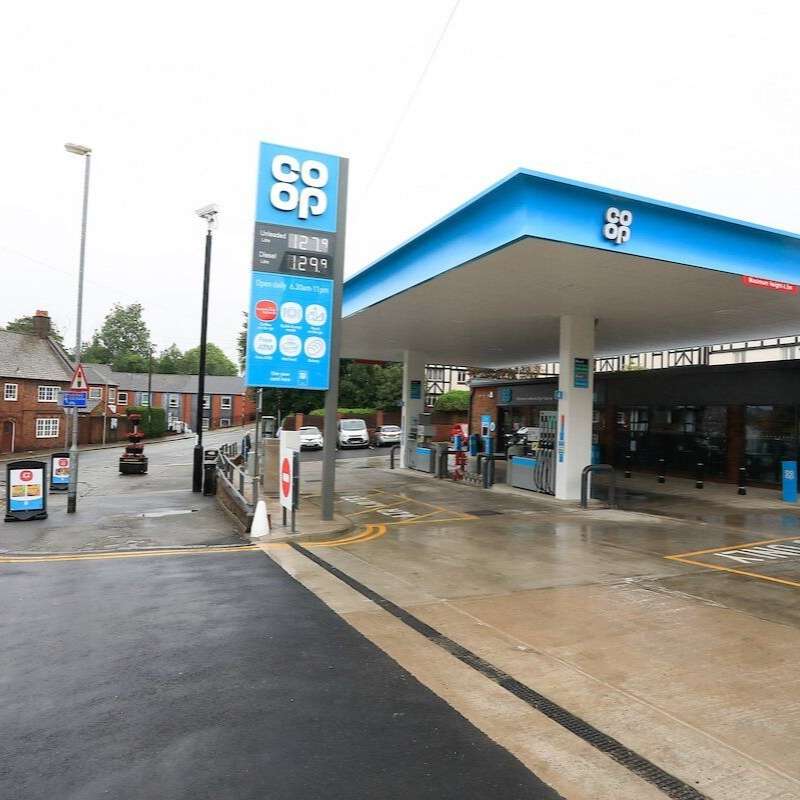
Co-Op Fuel Chester Handbridge

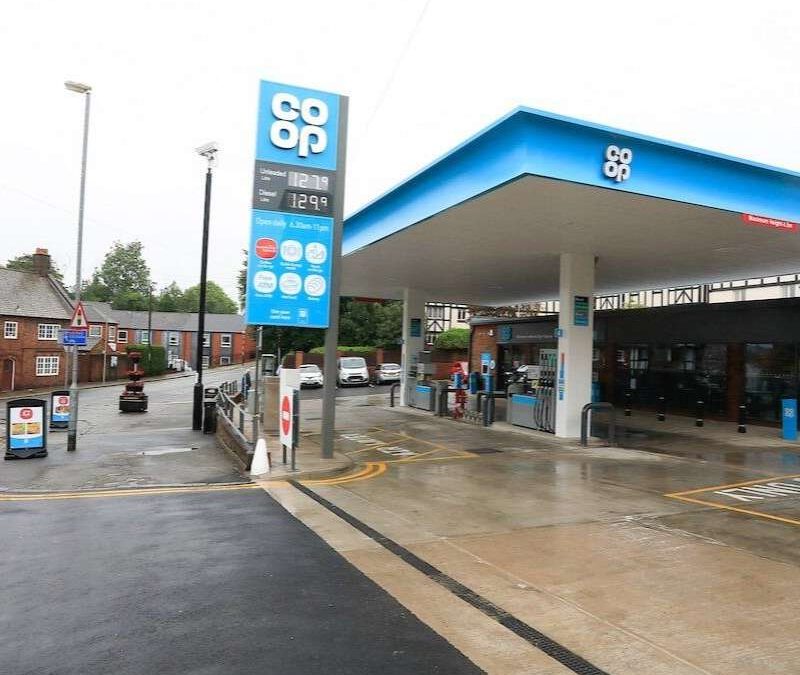
The latest addition to the Co-op forecourt roster is Handbridge Service Station in Chester. Previously an Esso and owned privately, it’s now become part of the wider group.

After opening on the 19th July to a great reception, the multi-million-pound redevelopment has a changed layout to improve traffic flow and an overhaul of the infrastructure.

As part of the international push for saving the environment, the new site runs on 100% renewable energy and offers compostable carrier bags instead of single-use plastic. The compostable bags double up as a caddy liner for your food waste collections and are certified for home-composting.

Over-70’s could soon have eye tests every three years under new DfT plans

Over-70’s could soon have eye tests every three years under new DfT plans

In the 90’s only 33% of those over 70 had a driving licence, and now, 20 years later that figure has doubled with last year 67% of people aged 70 or older holding a driving licence. Alongside that, over 113,000 90-year-olds hold a valid driving licence and still drive.

Now, the Department for Transport is considering enforcing eye tests every three years for over 70’s in a bid to remove potential risky drivers from our roads.

Government proposal

“Good eyesight is important,” the document said. “We are minded to consider there may be a case for mandatory eyesight tests at 70 and at three-year intervals thereafter, to coincide with licence renewal.

We’ve reported before on different suggestions by various charities such as compulsory eye tests for everyone at a 10-year mark, to adapting the laws on older drivers as the numbers rise so drastically.

However, this time the government has formally announced it’s consideration of such a scheme. Research previously has show that 44% of optometrists have seen someone who isn’t fit to drive yet does, so is this a bad thing?

Eye tests

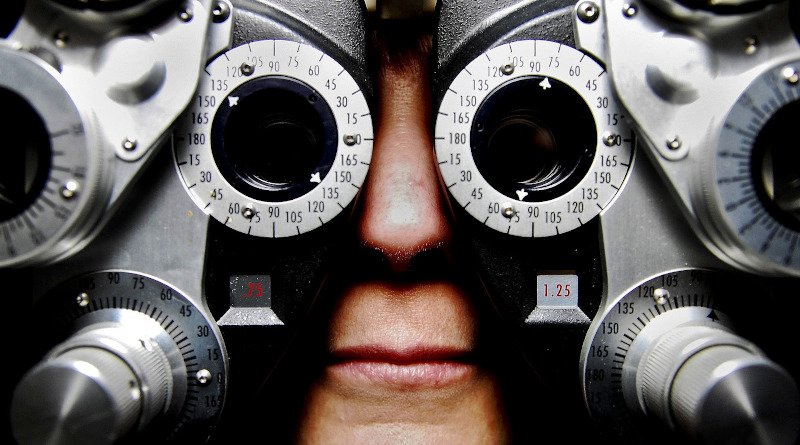
For anyone who’s ever had an eye test, you will know how simple it is. Normally, an initial photo of the retina is taken, followed by a check of your vision by an optometrist using different tests. They then determine your prescription and can check any other looming problems.

An eye examination can often pick up on other health problems such as brain tumours, high blood pressure, high cholesterol and diabetes, along with regular eye problems such as macular degeneration, cataracts and glaucoma. Getting an eye test could quite literally save your life, and from as little as £10, it makes sense to get checked regularly.

Plus if you claim certain benefits or fall into specific categories you can get free eye tests, so it’s always worth checking.

Industry reaction

Caroline Abrahams, a director at Age UK, said: “Every driver, regardless of age, is responsible for ensuring they are safe on the road. Being able to see clearly is obviously absolutely crucial.

“When it comes to the suggestion of mandatory eye tests however, we are not aware of any evidence showing poor eye sight is a significant cause of accidents among older drivers. The Department for Transport says it will review the research, but until the results are known it feels premature for drivers to have a compulsory eye test at 70 and at intervals thereafter.”

What to do if you are concerned?

Previously other age focused driving groups such as the Older Drivers forum have issued advice to the elderly. They encourage drivers to drive during daylight and avoid unknown routes unless necessary.

Once you reach the age of 60, you are automatically entitled to a free eye test. It is worth booking in and taking advantage of this, as it can help to detect other medical conditions, not just your eyesight.

Keep fit by doing 15-20 minutes of exercise a day. Whether this is a short walk through a local park, or attending a class at your nearest gym, keeping fit will make sure your joints are mobile and can help with coordination, both useful skills for driving.

Get a drivers assessment or speak to a local driving instructor for a one-off lesson that you can use to make sure you are aware of the roads. With this, you also get a professionals opinion on how you drive and things for you to watch out on. The Older Drivers Forum has a great collection of courses by professional bodies such as the Fire and Rescue service, the Institute of Advanced Motorists and more. The aim of these is not to criticise your driving but instead to make sure that you are confident on the roads, and to keep you driving for longer.

Take a look at your car. Is it the most appropriate for your needs, and have your needs changed? What may have been a luxury, good-looking car may now need to turn into something that is easy to get in and out of, clear speedometer and bright enough lights.

Sgt. Heard from the Older Drivers Forum said that those who have a eye test and driving assessment regularly are less likely to crash or be involved with a collision, so it is worth investing in these things before it is too late.

If you are concerned about a family member or a friend, it is perhaps worth having a conversation with them to see if you can help them in any way, or if you are concerned they may be driving unsafely then offer to drive them to shops or to other events they may attend. Consider helping them to apply for a bus pass or similar as a car is often a lifeline for the elderly to meet up with friends, see doctors and more.

Let us know what you think about this. Do you think this is a good idea? Would you want to have a eye test frequently? How do you make sure you are fit to drive?

Jet launches premium fuels range called Ultra

Jet launches premium fuels range called Ultra

The filling station brand, Jet, has launched a new dual range of ultra-premium fuels. Their latest products, Jet Ultra Premium Unleaded and Jet Ultra Premium Diesel, are available at filling stations that offered their former premium fuels.

The well-known name in the fuel world has also made over their forecourt image, but will their announcements tempt you to switch to their premium fuel?

New fuels

To make the energy to drive your vehicle forward, your car’s engine injects fuel into a chamber to mix with the air (combustion), which creates carbon deposits that stick to vital injectors, valves, and cylinders, and may impact emissions and fuel efficiency, etc.

Actual benefits of using premium fuels (e.g. how well they clean) varies. Factors like other fuels you’ve used, the age and condition of your car; road conditions, your driving style, and journey time. Performance improvement may be more noticeable in high-performance cars.

Jet boasts that both new products contain more of their powerful anti-corrosion additive and use strong detergents that deep-clean and attack dirty deposits, improving acceleration and providing a smoother drive.

By coating these key components with a special film, Jet claims these products will prevent future build-up, which can help your engine to work better and prolong its life.

The brand says their results are the outcome of laboratory and engine research and tests by a world-leading road fuel detergent provider and that the detergent in their ultra-premium fuel undergoes world-recognised engine testing standards.

Jet says all their road fuels are “sulphur-free”—containing a sulphur content level of less than 10mg/kg—and their additives are expert-approved.

Jet-ting into the future

Phillips 66 — who owns the Jet brand and markets under its name—is an international, integrated energy firm that has a Humber refinery in Lincolnshire with a crude oil processing capacity of 221,000 barrels per day.

The Jet brand, who developed the contemporary design in response to feedback from dealers and consumers and say they’ve incorporated an array of improvements, unveiled a fresh image prototype at a new company-owned site—Jet Abbeyside, in Selby, North Yorkshire..

Oliver Müller, Retail Business Manager at Phillips 66, said:

‘Our dual range of Jet Ultra Premium fuels and our four-price LED-lit pole sign design are key elements of Jet’s new-look forecourt.

‘The pole sign mirrors our new soft-angled canopy design, while our Jet Ultra branding is an eye-catching ultramarine blue which stands out on the forecourt.

‘Introducing an attractive and recognisable premium fuels offering was one of our main objectives for 2019.

‘We commissioned independent consumer research, which showed that there is a willingness among consumers to try a new brand of premium fuels.

‘We wanted to tap into this opportunity and provide our dealers with a premium fuel product offering which not only complements their existing fuels mix but also puts them in a stronger position with their customer base.’

Jet says the makeover creates a welcoming environment that’s still the distinctive Jet brand.

Their company-owned sites plan to pilot the prototype before a further trial at several independent Jet filling-stations later this year.

Mary Wolf, Managing Director of UK Marketing for Phillips 66 Limited, said:

‘We are proud of Jet’s UK heritage, and we are dedicated to remaining a strong, reliable brand that is competitive in the market.

‘We’ve listened to the consumer, and to our dealers and have developed a new image that is modern and inviting and provides a safe, friendly, clean environment for consumers.

‘By strengthening our brand and reimaging our forecourts we will support our dealers to better compete in today’s challenging fuel market.’

Burning money?

If you fill up with premium fuels in high-performance cars or hot hatchbacks, you’ll notice the improved throttle response, the engine will rev more and should deliver more power.

Premium diesel can have a higher cetane rating than diesel, igniting quicker when injected into the compressed air in the engine.

It’s rare for the higher cetane rating to mean anything to the engine, as manufacturers now make diesel engines to strict standards to make little difference, but the effect using a premium diesel has on your car gives the engine a good clean.

Premium fuels are more so luxury products because the components are more expensive to create, making the price higher and, although built for unleaded petrol, it’s worth filling up high-performance cars or hot hatchbacks with super unleaded for longer journeys—or every 1,000 miles—just to give the engine an extra boost and keep it at full potential.

It’s also good practice to fill up with a premium diesel every 1,000 miles or before lots of long journeys, as this will help to clean out the engine and remove any residual soot or particulates.

While the cost may seem expensive, this habit will save you money in the long run by extending the life of the engine and helping to reduce the need for repairs and engine maintenance but unless you have money to (literally) burn or drive a high-performance car, it’s unnecessary to use premium fuels instead of regular fuel.

Whatever petrol or diesel you use, find the best prices and by becoming a PetrolPrices member for free. For added convenience, download our new app!

Do you use premium fuel? Do you think premium fuels are worth the money? Share your opinion in the comments.
Rise in petrol lease cars drives up CO2 emissions

Rise in petrol lease cars drives up CO2 emissions

We recently told you that government ministers were looking for the link between outdated fossil-fuelled vehicles, and super clean, modern vehicles; the link they found was brakes & tyres – the ultimate saviour of all road transport air pollution problems (the electric vehicle) would still be dirty (which of course means taxable).

In that article, I questioned just how many industry qualified engineers were sat on the panel of experts, for it seems that air pollution is the zeitgeist of the modern era, to the detriment of everything else.

This is exactly what happened when the government of the time incentivised us to by diesel; “much cleaner, less CO2, less pollution” – any automotive engineer would have told them that they’re selling a kipper to the public.

Rising CO2 levels

Similarly, it was our very own Jason Lloyd that spoke about the law of unintended consequences all the way back in 2017, in which it had become apparent even then, that CO2 levels were rising again, thanks to the demonisation of diesel fuel, the previously loved answer to all things air-pollution related.

Surely, getting on for almost two years later, lessons have been learned?

The British Vehicle Rental & Leasing Association (BVRLA) have just published their Q1 2019 Quarterly Leasing Survey; the average CO2 emissions for all new leased cars is 118g/km – a rise of 7% since 2017. So that’s a no then.

Further still, it isn’t just lease cars – the whole new car market has spiked at 129g/km for the same period, which is the highest recording of CO2 for just over a decade. It also shows that thanks to the ridiculous taxation (either directly or otherwise), diesel car sales are falling year on year, by around 15%. In 2017, the average values of diesels were down 26%. They’re still nose-diving.

Two problems for every solution

Realistically, there are a number of problems that have led to this situation, the first being a straight choice between an asthmatic 3-cylinder turbocharged petrol engine or something that can be used (safely) on motorways, lugging loads, carrying a full family … a larger-engined vehicle (petrol of course).

Despite their faults, the nature of diesel engines meant that torque was plentiful, you weren’t needing to wait until you hit ‘valve bounce’ (maxed into the red line) to change gear, and cruising along at motorway speeds was pretty lazy and effortless. To replicate that, you need that larger petrol engine.

Added to that, is the change over to the new WLTP regulations (World harmonised Light vehicle Test Programme), which aims to give a more realistic figure than what we’d come to expect when the manufacturers ruled the roost; CO2 figures were always going to rise because of this.

It’s more than likely the combination of both these factors that sees the CO2 levels spiking at such high numbers – cars are more fuel-efficient than ever, measured like for like, a modern car will always be cleaner than the same car from even just three or four years ago.

Electric vehicles

Until the majority of road transport is electric, we are always going to have an issue surrounding air quality, that’s simple fact. Of course there’s the issue of ever-moving goal posts in the fact that as soon as we get close to meeting one arbitrary limit, it gets changed to something else, and as we’ve seen, the politicians already have their eyes on what could be used next for a little revenue earner.

But no matter how much we clean up our vehicles, it’s never going to solve the issue of air pollution. Electric vehicles are extremely resource-heavy to manufacture, we also need to consider end-of-life plans for recycling, and of course, the elephant in the room is charging … electricity generation doesn’t come free from pollution.

Yes, there’s a movement toward ‘green’ or sustainable energy, but even with our existing grid, we’d struggle to cope with demand if we switched to all-electric, even over a period of time.

The Green Alliance is a British think tank, specialising in eco & environmental issues, they’ve warned that “if no action is taken by 2020, local clusters of the battery powered cars could lead to 1% of Britain suffering unplanned voltage drops, so-called ‘brownouts’, which can damage electronic equipment. It only takes six electric vehicles located close to one other to lead to such voltage drops.”

Other European countries are in the same dilemma.

So what is the answer? Should we impose a limit for pollution now, and stick to it? Or should we keep trying to find other ways of reducing pollution from our vehicles?

What do you think the solution could be? Do you think there will come a time when we’re pollution free? Or, do you think like Bob Dylan: The answer is blowing in the wind. Let us know in the comments.

Councils pocket more than £320m in PCN fines in one year

Councils pocket more than £320m in PCN fines in one year

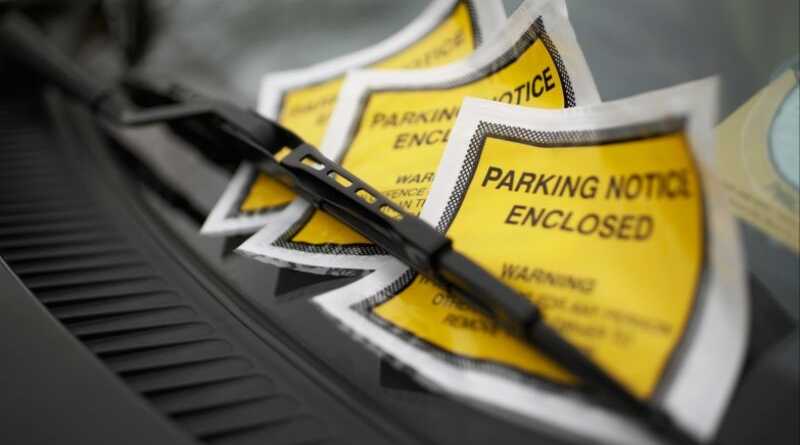
There were over nine million Penalty Charge Notice (PCN) fines issued by local councils in 2018, for offences including parking, misusing a bus lane or box junction, and illegally turning left/right.

These fines amounted to just over £326m. With London, or parts of London, taking the lion’s share; the top four revenue generators included Westminster City Council, and the London Boroughs of Hammersmith & Fulham, Islington, and Newham. They pocketed nearly £55m between them.

With that said, it was Manchester City Council that issued the largest number of PCNs – 598,060 in total, Westminster City Council were second on the list, issuing just over half of Manchester’s total – 313,012.

Unfair issues

A new report by Confused.com, written after obtaining information under a Freedom of Information request has highlighted just how rife this problem is, and quite possibly, how ‘creative’ the councils are when it comes to issuing fines for such offences.

74% of appellants that fought the ticket (approximately 2,664,000 motorists) either paid a reduced amount, or nothing at all. You’d have to wonder – how valid are the methods & processes when it comes to issuing a ticket, if so many are overturned on appeal? Such a widescale problem is this, that around 48% of all UK motorists have been hit with a PCN at some point.

For many motorists, the issue is signage, or to be more precise, unclear signage; three out of ten drivers who appealed against the PCN fine blamed unclear, misleading signage for the problem, and with the fines being overturned by the governing body, you’d think they have a point.

Amanda Stretton, motoring editor for Confused.com says: “The fact that almost three quarters of PCN appeals were successful last year suggests that some fines are being issued unfairly. With councils raking in over £326m in PCNs, it’s only right that some of this fine money is invested to help make road signs clearer to eliminate the number of fines being distributed unfairly”.

Cashing in

Surprisingly, only 42% of motorists feel that councils see them as an easy revenue generator, I’d have expected that figure to be quite a bit higher, but what incentive do they have to change the signage or relax regulations?

The whole attitude to this kind of problem is represented perfectly by independent adjudicators when they were asked to investigate numerous problems relating to PCNs within the City of Coventry. The independent adjudicators stated: “Yet Coventry City Council, seemingly with a determination and delusion reminiscent of King Canute himself, has continued to enforce PCNs”.

The council were advised many times to change the confusing or misleading signs relating to parking restrictions but refused to act, stating that they complied with regulations. Effectively, they’d done the bare minimum to comply, and numbers of PCNs rocketed thanks to their in-action. Bloody-mindedness or budgetary choice?

The price of PCNs

The reality is that councils can generate some much needed revenue through the use of PCN fines – in Coventry, the layout and signage of one junction alone was so poor that it ‘earned’ the council over £1m before they agreed to update the signs; it went from between 2,500 – 3,000 infringements per month to just over 1,000 after changes.

It’s a lazy argument to trot out the ‘cash cow’ phrase too often when it comes to motoring expenses, fines and taxes, either direct or stealthily, but there does seem as though there is a genuine argument for tighter controls to be put in place for the issuing of PCNs; perhaps instead of being enforced locally, it should be a national body that distributes the wealth based on performance?

How many appeals won, against PCNs issued would be a great starting point – it would certainly force the councils to play on a more level playing field by updating their signs and processes to be clearer and less biased in their favour; if they knew that there was a greater chance of losing money because their process or signage was unclear, you can be sure they’d soon update them.

Secondly, the appeal process should be made easier and more straightforward; 60% of drivers that received a PCN didn’t challenge it, with 13% being put off by the confusion of information, and 17% claiming that they didn’t even know how to appeal. Over 50% of these drivers stated that if the process was clearer, they’d have challenged the unfair fine. You can see the official government advice on challenging a fine here: https://www.gov.uk/parking-tickets/challenging-a-ticket

Do you feel that PCNs are mostly unfair? Would you know how to challenge a PCN? Have you won an appeal against an unfair fine? Let us know in the comments.
Graduated licences could mean no young drivers on the roads at night

Graduated licences could mean no young drivers on the roads at night

Passing your driving test is a rite of passage for lots of young (and often older) people and you can’t help but feel thrilled when you get hold of your licence.

The independence to go where you want, when you want, is a huge motivator for learning to drive—whether that means popping out for a late-night snack or taking somebody out on a date. Those days might soon be over as the government considers banning young people from driving at night.

Introducing the Graduated Driving Licence

A Graduated Driving Licence (GDL) sets restrictions for new drivers for a fixed period.

In February 2018, former prime minister Theresa May requested an investigation into the effects of a GDL on the high number of crashes involving young motorists.

The GDL is one of 74 actions the Department for Transport (DfT) will consider as part of a new Road Safety Action Plan (published last Friday) to reduce road deaths in the United Kingdom.

In May last year, the DfT decided they would pilot a GDL in Northern Ireland (NI). There, rookie drivers must display ‘R’ (restricted) plates for 12 months, limiting their speed to 45mph. For the rest of the UK, displaying a ‘P’ plate on your vehicle shows you’ve just passed your test. You can leave these on your vehicles for as long as you choose but they’re not required by law.

The planned roll-out of GDLs across NI is throughout 2019 and 2020—although this idea is on hold because of the current absence of government there. The results of the pilot will decide whether the government extends the scheme to England, Scotland and Wales.

At the moment, the only specialised treatment for fledgling motorists is the reality of harsher punishments for breaking the law.

Motorists who get 12 points on their licence face disqualification, but for those who have driven unaccompanied for less than two years, it takes just six points to lose their licence. Inexperienced drivers might soon need supervision during after dark or find themselves with overnight curfews.

The rate of young drivers involved in road traffic collisions (RTC) is disproportionate to other age groups. Various sources show:

  • One in five crash within 12 months.
  • 25% experience an accident within the first two years.
  • 400 young, UK motorists sustain serious or fatal injuries each year from RTCs.
  • There were around 1,770 deaths on UK roads in the 12 months to June 2018.
  • Young men are four times more likely than women to suffer serious or fatal injuries from an RTC.
  • A small 7% of licence holders are between the ages of 17 and 24.
  • Drivers aged 16 to 19 are a third more likely to die in a crash than those aged 40 to 49.
  • The RAC’s Report on Motoring showed that 35% of motorists say the standard driving test doesn’t cover all the skills needed to cope with modern driving.

The UK has rejected programmes such as these before because of fears it might prevent young people from getting jobs and accessing education, but the government says the pilot will examine the economic and social impact of licence restrictions.

Many road safety and motoring groups support the idea because motorists who have just qualified (lacking experience but often feeling overconfident) are at an increased risk of RTC.

Both the AA and RAC back the scheme which would restrict motorists between six months to two years.

Restrictions for all ages?

Besides restricting driving at night, the government’s plan will also consider a limit on the car engine size, a minimum learning period before taking a test, and a restriction on the number of passengers under a certain age.

Neil Greig, Director of Policy and Research, IAM RoadSmart said:

‘In any graduated driver licencing (GDL) scheme, the key is building experience.

‘Too many young drivers pass the practical test unprepared for the road and this approach would help them survive the high-risk early months on their own.’

The GDL could apply to all inexperienced motorists of any age, although other countries where similar regulations are in place have included only those under 25.

There is already compelling evidence from other countries:

New Zealand, New South Wales and Victoria in Australia, Ontario and British Columbia in Canada, New York and California in the US, and Sweden all use a GDL for drivers under 25.

In New York, they only allow unsupervised driving at night for those commuting to and from work, while in California, the restrictions are between 11 pm to 5 am.

James Dalton, Director of General Insurance Policy at the Association of British Insurers, said:

‘The potential for Graduated Driver Licensing to dramatically improve road safety in the UK is indisputable and insurers have long called for its introduction.

‘The main aim must be to reduce deaths and serious injuries but it is also true that a dramatic reduction in accidents would do a lot to alleviate the pressure on insurance premiums for young drivers.

‘This will be even more important given the recent move by Government to set the rate for major compensation payments in a way which is likely to increase motor insurance costs, particularly for those younger motorists.’

There have already been several motoring reforms for UK drivers and last June, it became possible for learner drivers to have motorways lessons. But despite the announcement, it seems doubtful the government will introduce any new licencing system before 2022.

Stay safe after dark

The Royal Society for the Prevention of Accidents (RoSPA) reports a spike in the number of road users killed or injured when the clocks go back. While we’re enjoying long evenings, autumn will soon be upon us so, whether you’re a learner, new, or skilled driver, the following tips might be useful:

It’s illegal in the UK to drive at night without functioning lights, so check that your lights work as they should.

Turn on your car’s dipped headlights about an hour before sunset and keep them on an hour after sunrise. This makes sure we’re visible to other road users.

When using full beam, switch to dipped headlights as soon as another vehicle appears, so you don’t dazzle them and turn your gaze away from other lights and oncoming high beams, to avoid being dazzled.

Condensation or dirt on your windows can impair your view of the road and increase the glare from oncoming headlamps, so make sure they’re clear before driving.

Watch your speed even more so when driving after dark because as visibility deteriorates, you must reduce your speed for extra time to respond.

If you’re learning to drive, insist on getting some experience at night. If you’ve just passed, consider taking a Pass Plus course, which includes modules on night-time driving.

What’s your view on the UK having graduated driving licence scheme? Are you in favour? Share your opinion in the comments.

Get to know our brand new app with our walkthrough!

Get to know our brand new app with our walkthrough!

If you haven’t already heard, we released our new app recently and we wanted to go over some of the main exciting features we’ve included and show you what it looks like.

We’ll go through all the main points of the app, from our new re-design, the station pages, reviews and more! We hope this helps you to get a better understanding of the app and what we plan. You can read Jason’s (our MDs) letter from last week here, in which he explains a bit more about the company, its future direction and what the main benefits are of the new service.

Installing the app

On first installing the new app, users don’t need to do anything other than accept the terms and conditions and then they can start searching. This is what we call “newbie mode” and for many people who don’t like to share personal data and just want prices, this is the best option for you.

However if a user wants to use the other functions in the app, (e.g. search preferences, garage, report prices, leaderboard, account) they will need to register an account and that means some information needs to be provided. In future when rewards are launched, these can ONLY be received if a user registers an account.

The new homepage!

The purpose of the new app homepage is to get you to the most important functions of the app quickly and explain what benefits you get from using each important part of the service. The homepage will become more dynamic in the future and will be used to promote new services, or display things that are more personal to you, such as recent searches or garage information.

We quite like the simplicity of the homepage here at PetrolPrices, and hope you do to!

List view

Our ever-popular list view has had a bit of a makeover and an extension! On the old app, we used to show a maximum of 10 stations per search, but we’ve only gone and done 5x that with the new search! Yes that’s right, you’ll see up to 50 stations in any one search.

We limit the number of stations we show to 50 stations to make sure we don’t overload the system and slow the app down while giving users far more stations per search.

On the list view, you’ll see the station name, it’s review score, the current price we have for that station, plus the date it was updated and by whom. If you see PetrolPrices, that means it’s a fuel card transaction price that we’ve received from Experian Catalist. Anything else means it’s a crowd sourced price. The more price updates that happen means that our search engine becomes more and more accurate for everyone else!

Pricing

On to pricing, we have an agreement with our data partner to display 10 prices from them on any search. 

This is where we want you to get involved and give us prices and reviews. We know that the price information from our partner is old and can be inaccurate, so you will earn points each time you give us that information on the app. The more you give the more points and other rewards you will receive.

One final point on this, we have implemented a series of checks to make sure that the price supplied by users is as accurate as possible, but its still based on trust. The users must consider that when they supply information its for the benefit of other users to save money, so please make sure its accurate.

Our filters

In previous app iterations filters were limited and didn’t match what was on the website. Well, we’ve now changed that and have introduced a harmonisation on the search on web and app. This means that search will work the same and has the same filters on both web and app, although it will look a bit different!

We’ve also got default search preferences back in the app, and it’ll be coming on web soon! This means that you can save your prefered radius, fuel type, brand and map or list view.

Map view

Map view is now in the app! When we first launched we had no choice but to not include it due to technical reasons but it’s now in and working, bringing our app up to scratch.

You can use the same filters on the map as you can on the list view search, and your default search will apply on the map as well as list view. You can also interact with stations and click on them to view the station page. The station with the star is either the cheapest or nearest, depending on what you have selected in the filters.

Station pages

Station pages are new and are filled with all the information you could possibly want! You can now update and confirm prices, see facilities and update the facilities at a station, review and see others reviews of a station.

They also have a directions button, and some have opening times, although we’re working to get more and more opening times. Soon we hope to have update stations feature, allowing you to report if a station is closed permanently, temporarily or just to update the branding of a station.

Review a station

We’ve now got a reviews platform, so you can either answer some simple star-based questions or provide a longer written review about your experience at the station. It doesn’t have to be anything special, just a couple of lines about what you think overall, the more the better for other users.

The additional questions (e.g. how is the customer service?) are really important for the future. Once we have accumlated enough reviews in these specific topics we will show them on the station pages too.

The Garage

Another new feature for 2.0 is the garage, our latest way to help the motorist. As well as seeing details about your car you’ll also get MOT and tax reminders for when the time comes. The purpose of the garage is to deliver value to members in various ways connected to the vehicle that sits within it. 

This is the first iteration of the garage, and we’ve got some big things planned which we can’t wait to share with you soon!

Leaderboard

Our final new thing for V2 is the leaderboard, something that is in a beta mode as we plan out how best to utilise it. We know a couple of things for sure, the first is that points mean prizes and the second is that we will have some good prizes 😉 We want to get some friendly competition going here, where winners will get more points and rewards.

In the meantime, you can earn points by completing tasks such as reviewing stations, updating prices and station data, putting a car in the garage and more!

Account settings and preferences

Yes we know it’s the boring screens at the back of the app but very important. Shortly we are about to go live with an update that will mean that all the fields that you can change on the website can also be done on the app, (Please note you need to be a registered user to do this).

We’ve heard many of you want to change the username or set up alerts from the app. If you complete your profile in the account then you will earn a completion bonus and more points.

We hope this has helped you to understand a bit more about the app and how it works, what features we have and what we’re focusing on building.

Our app is getting better and better, so why not download it now to use it for yourself!

As always, any questions can be answered by our support team by emailing: [email protected] and you can check our FAQ’s here: https://www.petrolprices.com/support/

Dashcam vigilantes lead to over 1200 prosecutions last year

Dashcam vigilantes lead to over 1200 prosecutions last year

Nextbase, a manufacturer of dashcams who pioneered and funded the not-for-profit database, launched The National Dash Cam Safety Portal (NDCP) July 2018 offer an easy way for motorists to pass on footage of unlawful actions on the road that may act as evidence to convict those found breaking the law.

Twelve months on, and the database has helped police to prosecute over 1,200 drivers but privacy campaigners say the database ‘risks breeding a culture of mistrust and suspicion’ with drivers ‘spying on each other’.

Who’s informing on you?

The new system has saved British police forces 68,474 hours evidencing dangerous driving. That’s the same as 2,685 days or over seven years of work—without a day off—for one officer.

Prior to the NDCP, each piece of dashcam clip received, took an average of 14 hours to review, process, and decide if an offence occurred because it required officers to handle dashcam evidence as they would eyewitness accounts—involving masses of paperwork and requiring interviews.

Yet, in 2016, North Wales Police discovered a loophole that means officers can treat dashcam and helmet cam footage the same as video from speed cameras—as sole evidence—and prosecute the motorists involved.

People submitted 4,891 clips to the portal in the first 12 months after the launch, which resulted in 1,223 prosecutions.

Nextbase says the NDCP has had a drastic effect on reducing police workload, which frees up critical policing time and saves valuable funds.

Twenty-two different forces use the system so far, with more expected to follow. Officers have direct access and don’t pay a fee for the privilege.

The police forces confirmed they reviewed 50% of the uploaded videos. Half of them ended with the driver either receiving a written warning and points on their licence, or a driving ban.

In 2015, the first person in the UK received a prison term because of dashcam evidence. The video showed the man’s dangerous overtaking—which forced another driver off the road. The Cheshire man received an eight-month sentence.

Officers review each video and send a penalty notice to the offender who can dispute the charge in court.

Offences might include: contravening red traffic lights, contravening solid white lines, dangerous driving, driving without due care and attention, improper control of a vehicle, and mobile phone offences.

A silly idea

Northumbria Police, among the most recent forces to adopt the portal, stated that it was the latest example of ‘modern policing’ and the best service available to their communities and report they’ve seen a great number of the public ‘getting behind this system’.

But the AA warned that the portal shouldn’t be a substitute for having police on patrol saying in the past, that cuts to traffic policing are hampering efforts to crack down further on driving offences.

Edmund King, President of the motoring group, said, while the group supports dashcam use ‘for safety and insurance reasons’, needing to rely on dashcam coverage to supplement policing is a ‘sad state of affairs’.

King complained of the 20% cut in traffic police in the last decade and stated: ‘If we had more cops in cars, we wouldn’t need to use dashcam vigilantes.’

Silkie Carlo, Director of the privacy and civil liberties non-profit, Big Brother Watch expressed that motorists filming each other all the time ‘may be well-intentioned, but it risks breeding a culture of mistrust and suspicion.’

Describing it as a ‘silly idea’, Carlo said the automatic number plate recognition (ANPR) network ‘that surveils innocent drivers’ captures 40 million photos each day without ‘ordinary people being encouraged to spy on each other’.

Dash off

Some feel the database encourages vigilantism, while many others welcome the opportunity to make our roads safer.

Spying is an active endeavour requiring at least some effort. While most of us buy dashcams for insurance and our safety, not to ‘grass up’ other drivers. If we’re driving and somebody causes a collision or a near-miss because of careless behaviour and our dashcam records it, were we ‘spying’?

Other people hold the attitude of, ‘let the police do the job they’re paid to do’ but our officers are struggling to work with reduced numbers. It isn’t their fault, but that of our government. In an ideal world, more police would patrol the streets. In the meantime, do we want them to put their efforts in, say, violent crime instead of motoring offences that technology can pretty well monitor?

Nicholas Lyes, Head of Roads Policy for the RAC, says their research shows law-abiding motorists are becoming ever more ‘fed up with the illegal actions of a minority that get away with tailgating, undertaking, and using handheld mobile phones when driving,’.

The database is for all road users including cyclists, drivers, horse riders, motorcyclists, and pedestrians. It’s simple to use and takes about 15 minutes to write a short description of the incident, answer a supporting questionnaire, and upload the clip. You’ll find the website here.

What’s your opinion on the NDCP? If you have a dashcam or helmet cam, would you submit footage of a driving offence? Tell us in the comments.
Ministers call for crackdown on brakes and tyres as adding to the pollution problem

Ministers call for crackdown on brakes and tyres as adding to the pollution problem

I often wonder, and I know that I’m not the first, what’s going to happen when vehicles are clean? When their emissions output is low, they can no longer be the single biggest factor in air pollution? We know that by 2040, diesel and unleaded car sales will be outlawed, so where will the missing revenue come from?

Many of us suspect that energy prices will skyrocket, that charging your electric vehicle will go from a few pounds to tens of pounds (at the very least), but what else is there? What could possibly link outdated ICE (Internal Combustion Engine) powered cars with the cleaner, greener, alternatives?

What will be the common denominator between the two?

The answer of course, is brakes, tyres and road surface degradation.

Government air quality experts

According to the Government Air Quality Expert Group, particles from tyre use, brake wear and road surface wear “directly contribute to more than half of particle pollution from road transport”.

Ding ding ding … we have a winner.

While nobody is actually denying that applying your brakes to slow down causes brake dust, it should be pointed out that at this moment in time, there’s very little choice (unless you want to find out how long NHS waiting queues are) in using the brakes, and more importantly, the question needs to be asked just how ‘realistic’ (read: truthful) that figure is?

Michael Ellis, Transport Minister, has been quoted as saying: “We are engaging at an international level to identify how to measure these emissions, as well as aiming to develop standards to control them”. The emphasis in that paragraph is mine; How to measure these emissions.

Tyre technology

As anyone that saw the British Grand Prix at the weekend can tell you, tyre technology, specifically tyre compounds, can be the difference between raising the laurels, or finding a doughnut with no jam. With current technology, the only way to reduce tyre particles is to reduce the wear rate of the tyre, which means harder compounds, harsher ride quality and less grip. Not exactly ideal in a country where (on average) it rains for 156.2 days of the year.

Yes, there are some manufacturers working on alternative tyres, mainly making them airless, but they’re years away from production, and they still may produce particles as part of their natural wear / grip cycle.

It’s a similar story for brakes – reducing particle pollution (with today’s accepted technology and designs) would amount to making the brake pads from a harder compound, which would then result in the need for a more wear-resistant disk, which of course reduces braking efficiency, along with costing the manufacturers millions in development.

Accepted level

It would seem as though all the ‘government experts’ are singularly focussed on one thing, in this case, air pollution caused by cars. It’s quite easy to introduce radical new plans to win approval from Europe, to show that we’re doing more than paying lip service to air pollution targets, but the reality is that the expert groups need to widen their horizons and knowledge base; how many of the Government Air Quality Expert Group are automotive engineers?

Banning cars from a city centre is the perfect example – yes without doubt, it will lower air pollution within that targeted area, but it will also have a financial cost, potentially kill-off any trade within that city, and lead to more people becoming jobless (and simply shift the air pollution problem somewhere else).

Radically re-engineering brakes & tyres will have a similar effect – development costs will be passed on to the customer, there could be a potential safety implication, and any benefits will be marginal in the extreme. There should be more of an understanding between the need for road transportation versus the need for cleaning up our cities, it’s a balancing act that so far, is heavily weighted in the one direction.

Of course, technology and manufacturing processes change and develop over time, but with government officials calling for an ‘urgent review’ into the materials and processes, we could just be heading toward another panicked decision without any forethought to the wider picture.

Just how far can these government experts take the ‘car = pollution’ argument? I’ve said for a long time that the next step to easy money for them is a green tax on speeding; along with a fine, there will be a tariff added for the extra emissions caused by going over the accepted speed limit … they’ve got to keep that revenue generation coming from somewhere.

What do you think to this latest air pollution argument? Do you feel that the government are just finding new ways to generate income? Let us know in the comments.