Brexit go slow drivers causing traffic chaos are prosecuted

Brexit go slow drivers causing traffic chaos are prosecuted

Brexit Protest and Direct Action Group (BDA), outraged by Prime Minister Theresa May’s negotiations, organised a series of ‘go slow’ protests on Friday ending in police prosecuting four pro-Brexit drivers.

The decision to push back the deadline for the United Kingdom to leave the European Union infuriated Brexiteer campaigners who, on Friday, attempted to cause chaos on rush-hour roads and ‘bring the country to its knees’.

<!-- /283405443/ptp_articles_midpage1 --><!-- [et_pb_line_break_holder] --><div id='div-gpt-ad-1552916378783-0'><!-- [et_pb_line_break_holder] --><script><!-- [et_pb_line_break_holder] -->googletag.cmd.push(function() { googletag.display('div-gpt-ad-1552916378783-0'); });<!-- [et_pb_line_break_holder] --></script><!-- [et_pb_line_break_holder] --></div>

Slow and furious

The protest occurred after news hit that Brexit wouldn’t happen until at least the 12th of April. Group organisers hoped that, by causing gridlock on motorways and A roads, the demonstrations would make sure the UK leaves the EU at the end of the month.

The police say they spoke to organisers of both protests beforehand and told them they must stay in the slow lane and not drive less than 45 mph. Inspector Simon Jenkinson said the force was ‘happy to facilitate’ the protests as long as they didn’t bring the roads to a standstill. Yet protesters drove as slow as 20 mph, occupied all lanes, and caused delays throughout the south-west, Hull, Lancashire, and parts of North Wales.

Video of the demonstration showed a slowdown on the M6 in Lancashire, with annoyed motorists trying to swerve past the slow drivers while honking their horns, yet a tweet by Highways England stated there had been a few issues but ‘nothing of any major impact’ and that everything was ‘running as usual’.

Devon and Cornwall’s forces said their officers stopped nine vehicles who ‘presented a risk to the road-using community’ and prosecuted the lead drivers of the convoys for careless and inconsiderate driving.

Members of the group are planning further such demonstrations throughout the country and claim they have hauliers prepared across the land.

Group organiser, Ian Charlesworth said they are planning a bigger event in London on the 29th of March — the same day as the planned ‘March To Leave’ demonstration in Parliament Square.

‘Come hell or high water’

Inspector Simon Jenkinson, from the Alliance Roads Policing Team, said the campaigners blocked both lanes of the A30 towards Cornwall and at least two lanes of the M5 northbound.

“We recognise the right to protest and make views clear but we will not tolerate careless and inconsiderate driving on our roads.”

“We engaged with organisers before the go-slow began, they ignored our advice to stay in lane one and limit speed to no less than 45 mph.”

Meanwhile, the protesters’ Twitter account stated:

“BDA group believe that our government should fulfil their manifesto and EU referendum pledge to exit the EU on 29th March with either an acceptable Withdrawal Agreement or WTO [The World Trade Organisation] managed exit.”

Organiser Ian Charlesworth, who said the protests could cause ‘serious gridlock’, assumed MPs and the Home Office would be ‘looking at it’ but added he didn’t know how effective the protests would be.

Mr Charlesworth said:

“The ultimate aim is to make sure, come hell or high water, that Britain leaves on March 29.”

The need for speed

Minimum speed limits keep traffic moving at a steady pace and may be mandatory where emergency services might have difficulty accessing, yet the UK seldom enforces minimum speed limits and many drivers have never seen a minimum speed limit sign—it’s a round blue sign with white numerals—but you can’t travel at any speed you like without breaking the law.

If police consider your slow driving to be a hazard to other road users, you may just get a verbal warning but, in more serious cases, you may find yourself charged with driving without due care and attention or without reasonable consideration for other road users. This might mean up to nine penalty points on your licence and a fine of up to £5,000. To prove you’re guilty of this offence, prosecutors must show that your driving inconvenienced another driver.

If you drive at slow speeds on motorways—and high-speed dual carriageways—you rely on drivers to realise that your car is travelling at a much lower speed than expected, which may cause abrupt braking or overtaking to avoid you and is even more dangerous for large vehicles that need more time to slow down or change lane.

Slow driving is also dangerous on single carriageways where overtaking is difficult and it’s common for motorists to become stressed and impatient whilst following a very slow vehicle and leads to the possibility of erratic driving and dangerous overtaking manoeuvres.

One proposed method to tackle slow drivers is to introduce speed cameras focussed on slow speeds but drivers spotting these could speed up when they shouldn’t—on icy or wet roads, for example. So, while ‘slow-speed cameras’ would no doubt increase revenue, the chance is they’d increase the number of accidents on our roads, too.

What are your views on the Pro-Brexit protests? Was it a justified or selfish move? Are you affected by slow drivers? Tell us in the comments.
Intelligent speed limiters may not be safe to use yet claim motoring experts

Intelligent speed limiters may not be safe to use yet claim motoring experts

While the chaos surrounding Brexit continues on, the European Commission is pushing out regulations continuously, and the latest one means that from 2022 all new cars will have to have an Intelligent Speed Assistant (ISA) built in.

Like the article we wrote recently, Volvo is leading the way in this, as they have already started producing top speed limiters for al cars.

Amongst all of this, industry experts are raising concerns that these new speed limiters are actually unsafe.

EU regulations

Back in May 2018, the European Commission put forward a proposal to introduce a speed system that would use GPS and then digitally limit the speed of the car. Along with other safety measures, this was proposed as a way to reduce the 25,000 deaths a year on roads across Europe.

Some may be currently questioning the relevance of this article, given the current Brexit situation; however, the Vehicle Certification Agency stated that all new EU laws would be mirrored, regardless of any outcome.

Along with the ISA, the EU also released a list of all additional safety features that have to be included which are:

  • Advanced emergency braking (cars, vans)
  • Alcohol interlock installation facilitation (cars, vans, trucks, buses)
  • Drowsiness and attention detection (cars, vans, trucks, buses)
  • Distraction recognition / prevention (cars, vans, trucks, buses)
  • Event (accident) data recorder (cars, vans, trucks, buses)
  • Emergency stop signal (cars, vans, trucks, buses)
  • Full-width frontal occupant protection crash test – improved seatbelts (cars and vans)
  • Head impact zone enlargement for pedestrians and cyclists -safety glass in case of a crash (cars and vans)
  • Intelligent speed assistance (cars, vans, trucks, buses)
  • Lane keeping assist (cars, vans)
  • Pole side-impact occupant protection (cars, vans)
  • Reversing camera or detection system (cars, vans, trucks, buses)
  • Tyre pressure monitoring system (vans, trucks, buses)
  • Vulnerable road user detection and warning on the front and side of the vehicle (trucks and buses)
  • Vulnerable road user improved direct vision from the driver’s position (trucks and buses)

A lot of these are already included in vehicles or would have been already, but some are more controversial than others.

The alcohol interlock installation, for example, will have to be fitted to all cars but will only affect those who have been convicted of drunk driving. Once their driving ban has been lifted, their car will have a breathalyser fitted for a set amount of time which they will have to use to get the car working, discouraging them from repeat offending. 12% of previous offenders will go on to drink drive again, and three out of ten high-risk offenders will go on to drink-drive a second or even third time.

Commissioner Elżbieta Bieńkowska, responsible for Internal Market, Industry, Entrepreneurship and SMEs, said: “Every year, 25,000 people lose their lives on our roads. The vast majority of these accidents are caused by human error. We can and must act to change this. With the new advanced safety features that will become mandatory, we can have the same kind of impact as when the safety belts were first introduced. Many of the new features already exist, in particular in high–end vehicles. Now we raise the safety level across the board, and pave the way for connected and automated mobility of the future.”

Objections

Along with the Big Brother argument, industry experts such as the AA, have come out against some of the proposals, citing them as unsafe. In a statement to the Mail Online, Edmund King, AA president, said: “When it comes to Intelligent Speed Assistance the case is not so clear. The best speed limiter is the driver’s right foot and the driver should use it to do the right speed in the right situation.

The right speed is often below the speed limit, for example, outside a school with children around, but with ISA there may be a temptation to go at the top speed allowed which may not be appropriate.

Sometimes a little speed also helps to keep safe on the road, for example, overtaking a tractor on a country road or joining a motorway.

Dodgem cars are fitted with speed limiters but they still seem to crash.“

The concept of a car being able to stop you from driving over a certain limit seems certainly peculiar but could this perhaps being the slow introduction of autonomy? All of the new safety features introduced are more autonomous. Are we slowly being stripped of our freedom to drive?

<!-- /283405443/ptp_articles_midpage1 --><!-- [et_pb_line_break_holder] --><div id='div-gpt-ad-1552916378783-0'><!-- [et_pb_line_break_holder] --><script><!-- [et_pb_line_break_holder] -->googletag.cmd.push(function() { googletag.display('div-gpt-ad-1552916378783-0'); });<!-- [et_pb_line_break_holder] --></script><!-- [et_pb_line_break_holder] --></div>

What are drivers saying?

Last week, when we published our article on in-car monitoring systems, we had plenty of responses from members protesting the move to autonomy and big brother taking over. George Orwell’s 1984 is a frequent reference that people use to show the state the world is heading towards.

Surely the question here could be asked is “If autonomy saves lives, should we accept the eventuality of it?” No accurate statistics exist on the safety of autonomy vs humans but we know human error and misjudgement account for the majority of accidents and so the introduction of widespread autonomy in vehicles could potentially be a life-saving exercise.

Autonomy could save lives and also enable those who are house ridden to get back on the roads as the car can do a lot of the driving for them. The possibilities and applications are endless but it requires a careful balance of introduction and not overwhelming us all.

What do you think of the new laws? Are there any that raise concerns? Do you think autonomy is a good thing? Let us know below

Jaguar Land Rover recall 44,000 vehicles over emissions

Jaguar Land Rover recall 44,000 vehicles over emissions

It never rains but it pours … and Jaguar Land Rover must be breaking out their Sou’westers right about now; in January of this year, they announced 4,500 jobs were to go, the following month they posted record quarterly losses and more recently, it’s been found that a number of their vehicles don’t comply with stated emissions.

44,000 vehicles, all using the 2.0 litre engine (both petrol and diesel) have been found to be producing a higher level of carbon dioxide (CO2) than certified through the Vehicle Certification Agency, but this isn’t a new Volkswagen-style scandal, it was JLR themselves that found the problem and reported it.

Change in overall vehicle experience

Currently, the Jaguar Land Rover engineers are working on a fix, but it’s not straightforward – some models will need a software update and reprogram, other models will need mechanical work to help them comply, and it’s thought that some Range Rover Evoque models will also need new tyres.

A Jaguar Land Rover spokesman said “Vehicles are being rectified to ensure that the correct CO2 performance is dependably achieved. All modifications will be free of charge, and every effort will be made to minimise the inconvenience to our customers”.

However, there’s a final line missing from that quote, and it’s perhaps the most important; “Some owners may experience minor changes in the overall vehicle experience”.

Diesel-gate with Volkswagen

Of course, we’re all too familiar with the Volkswagen scandal; it’s perhaps this very issue that has highlighted car manufacturers “interpretation” of vehicle emissions and compliance, but what hasn’t been quite so widely publicised is the effects of the ‘fix’.

Around 41,000 UK Volkswagen owners are part of a class action against the manufacturer, claiming that the emissions fix has severely affected their car – starting difficulties, loss of power, weak acceleration, poor fuel consumption and mysterious rattles have all been noted since the fix. Could this be part of the “change in overall vehicle experience” that Jaguar Land Rover is hinting at?

Any automotive engineer with an understanding of fuelling will tell you that changing the fuelling will, of course, change how the vehicle behaves. The fact that diesel Volkswagens were so powerful compared to the competition obviously came at a price – that they couldn’t comply with legislation, and when they were de-tuned to comply, it created a different driving experience.

The JLR problem

Until it’s known just how serious the problem is, it’s hard to gauge the effect of any fix to the fuelling strategy may have.

We do know that JLR didn’t set out to cheat the Vehicle Certification Agency, it was through their own routine testing that they found a problem, so mechanically, the engines are designed to deliver an expected output with a set amount of fuel. This means that they haven’t been designed & engineered as higher performance engines.

This (in theory), should mean that minor changes are possible with a ‘re-map’ without having too much a detrimental effect on performance or general running. We also know that JLR has said that some affected models may need mechanical work – the assumption being that these have been engineered to deliver slightly higher performance levels, so in this case, it’s entirely possible that an owner would have a very different experience.

The models affected are all manufactured between 2016 – 2019, that use the 2.0 petrol and diesel engine, and include some models of the 2016 – 18 Land Rover Discovery & Discovery Sport, a number of the Range Rover Evoque, Sport and Velar and the Jaguar E-PACE, F-PACE, F-TYPE, XE and XF.

Legal obligation

If you think that your car may be one of the models affected, your local dealership will be in touch to confirm the recall, you don’t need to do anything right now. We’d also point out that until a specified fix has been issued, and the results are known, it may be worth waiting to see how other customers find the repair, should you find yourself on the wrong end of a poorly running car.

We’d expect the situation to be the same as the Volkswagen emissions repairs, with no legal obligation to have your car repaired. It’s possible that you’re entirely satisfied with how your vehicle runs in its current state, in which case, you may just be better off leaving it.

If you have any concerns regarding the fix, your vehicle or the regulations that it may be breaking, you can contact Jaguar Land Rover customer services on the following numbers:
Jaguar 0345 303 2303
Land Rover 0370 5000 500

Do you believe that JLR have acted fairly? Is this just another case of a manufacturer ‘playing the game’? Let us know in the comments.

In-car monitoring systems will follow your every move soon

In-car monitoring systems will follow your every move soon

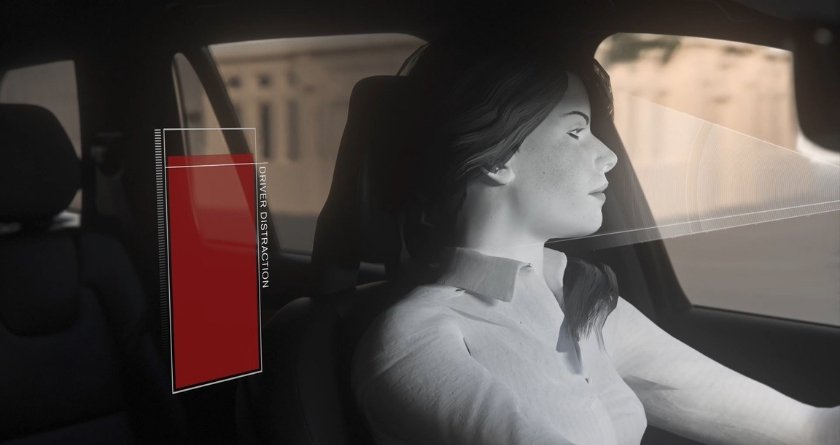
With well over 6 million CCTV cameras in the UK, we Brits are accustomed to being watched. This is even more obvious when you’re a British driver, with recent news telling us authorities will use cameras to detect drivers using cycle lanes and mobile phones. Now, in-car technology is being developed that takes driver surveillance to a whole new level.

With in-car cameras, lasers, and radar to detect who you are and what you and your passengers are doing, car manufacturers can soon track your habits and behaviours—but does this potential for safer driving mean a dangerous lack of privacy?

The road ahead

Connected cars are nothing new. In 1996, General Motors launched the first connected car with ‘OnStar’ in some of their Cadillac models, designed to get emergency help to a car in an accident. The Cadillac CT6 already uses cameras to check the driver’s eyes for lack of attention and drowsiness and many other carmakers are following along with some of their models possessing similar functions. But what else can drivers expect to see soon?

BMW has developed what they call ‘Natural interaction’—gaze recognition along with improved gesture and voice recognition—for their iNEXT model, available from 2021. BMW says the gaze recognition allows motorists not just to control the car interior with their eyes, but the high-definition camera in the dashboard can tell what the driver is looking at outside, too. The manufacturer says drivers can look at a restaurant as they drive past and find out the opening hours, what’s on the menu, and even book a table.

And thanks to improvements in vertical-cavity-surface-emitting lasers (VCSEL), cameras might soon have the same technology as Apple’s FaceID software to display a variety of data of who is inside the car.

Cameras don’t work at their best in cramped areas, such as cars, because of objects—like seats—blocking the camera’s view. This is where radar works better.

Firms such as Texas Instruments are using millimetre-wave radar technology, which takes very detailed measurements because it uses such small wavelengths. Developers are working on various applications, including the ability to differentiate between males, females, and even dogs within a car.

Radar technology could detect the direction passengers face in self-driving cars—where occupants may face in various directions—so airbags and other passive safety systems can configure themselves in a crash. Careys has built two radar systems; with one measuring biometrics and health—such as respiration and heart rate—and another that counts the number of passengers and their positioning.

Vayyar and Brose are working together to get cars to detect obstructions outside the car by limiting how far the door can open. This will not only prevent drivers from having their cars dented by hitting walls, poles, etc. but will also protect cyclists from ‘dooring’.

In a heartbeat

Earlier this year, Google got the approval of the Federal Communications Commission (FCC) to use millimetre-wave radar to work at higher power levels for their Project Soli. A microchip emits the radar and allows users to press a virtual button or turn a virtual dial by identifying fine finger gestures, which the chip then translates into commands resembling touches on a screen.

The FCC said the decision to provide a waiver for the project “will serve the public interest by providing for innovative device control features using touchless hand gesture technology,”.

B-Secur says everyone has a unique electrocardiograph (ECG) signature that technology can use to assess our condition while driving and even unlock our vehicles. The company is working on biometric technology that will place medical-grade ECG sensors inside car steering wheels to monitor the motorist’s health via their cardiac rhythm.

Dr Andrew Mitchell, Consultant Cardiologist, and advisor on the board for B-Secur said:

“Your car will only unlock for you, it will know when you’re alert and when you’re sleepy; your doctor or nurse will know with certainty who they are administering the medicine to; the insurance company will know for [sic] certainty who was driving the car at the time of the accident. The applications are limitless.”

‘No such thing as 100% safe’

No doubt these advances in automotive technology will provide many benefits to drivers and other road users, but they come with concerns; one of which is privacy.

Consider the information your connected car will collect: It will have access to your personal information, location, calendar; shopping and driving habits; whether you speed, forget to use your seat belt, the state of your health, your email content—and much more.

Sharing so many of your personal details has the potential of leaving you vulnerable to unwanted advertisers and hackers—or perhaps you might receive a fixed penalty notice or parking fine without a police officer or traffic warden in sight!

Yet, most of us own a smartphone these days, which means giving up a measure of privacy (think of Google Maps needing to know our location to work at its best) and the same applies to connected cars. When we enable and use certain car functions, we decide that the value we derive from the car’s software outweighs our privacy concerns.

Managing Director and Vice President of ABI Research, Dominique Bonte, said:

“Everything that hits the Internet is not 100% safe. There are cyber-attacks all the time.”

“There’s no such thing as a 100% safe network. So as soon as something gets connected, there’s a risk that someone could get hands on that data.”

But privacy is not the only concern; there could be fatal consequences if, for example, a hacker can download malicious software to the computer responsible for automatic braking. Only when these ‘cars of the future’ are part of day-to-day life will we understand the full repercussions of their use—both positive and negative.

Even today, Volvo released a set of new features for all cars from 2021 to improve the safety of drivers. One of these is an in-car monitoring system, and we’ve attached the video below for you to watch.

How do you feel about your car tracking and monitoring you? Do you already use any of the technology mentioned? Tell us your views in the comments.

Sainsbury’s commit to fuel price cap if they merge

Sainsbury’s commit to fuel price cap if they merge

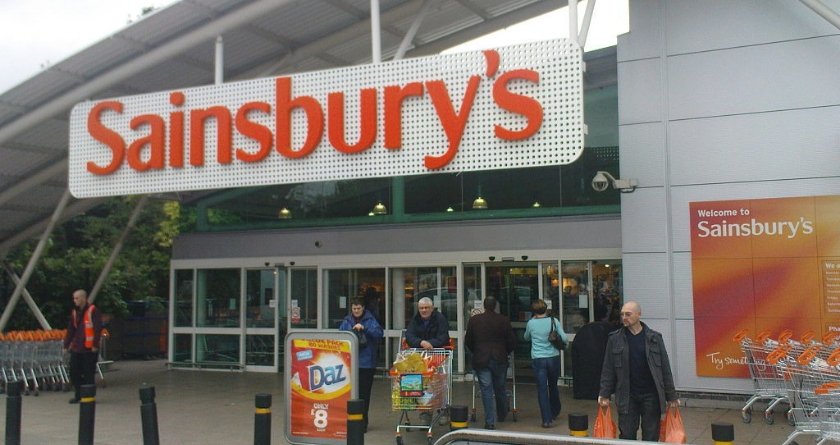
The proposed Sainsbury’s and Asda merger has been around for just under a year now, and on Tuesday 19th March they released a joint statement responding to the Competition and Markets Authority (CMA). Their response to the CMA’s Provisional Findings and Notice of Proposed Remedies included a nod to Asda’s fuel pricing, something we questioned before.

Along with their fuel prices comes news of an up to 10% reduction across the board, Argos entering Asda stores and more.

What issues does the CMA have?

In February, the CMA released their provisional findings and in it they raised concerns that at over 100 petrol stations petrol prices could be inflated and competitiveness in some areas would reduce if the merger went ahead.

They found a multitude of issues in the original documents, ranging from supplying to removing the competitive nature in areas where there are limited stores. The CMA proposed options to address their initial concerns, including blocking the deal or requiring the merging companies to sell off a significant number of stores and other assets – potentially including one of the Sainsbury’s or Asda brands – to recreate the competitive rivalry lost through the merger.

Stuart McIntosh, chair of the independent inquiry group carrying out the investigation, said: “These are two of the biggest supermarkets in the UK, with millions of people purchasing their products and services every day. We have provisionally found that, should the two merge, shoppers could face higher prices, reduced quality and choice, and a poorer overall shopping experience across the UK. We also have concerns that prices could rise at a large number of their petrol stations.

“These are our provisional findings, however, and the companies and others now have the opportunity to respond to the analysis we’ve set out today. It’s our responsibility to carry out a thorough assessment of the deal to make sure that the sector remains competitive and shoppers don’t lose out.”

New responses

Sainsbury’s and Asda released their report into the findings and heavily argued against the results. The main highlight for PetrolPrices was the statement about fuel profits.

Currently, Sainsbury’s are ordinarily second or third, tied with Morrisons, to drop fuel prices which are always led by Asda. Asda also has a price promise to be the cheapest petrol station of any station in a 3-mile radius of one of theirs. Back in May, we queried this in one of our articles, and it seems it has now been answered.

Sainsbury’s announced they would cap their gross profit margin on fuel at 3.5pppl for five years, showing that it is currently more than this. Asda confirmed they would keep their current fuel pricing strategy. These price commitments will be publicly annually verified by an independent body and released to all.

The interesting thing is perhaps the five-year limit on the profit margin limit, which implies that after five years, the prices could rise or could potentially fall.

Jason Lloyd, Managing Director of PetrolPrices.com, said “ASDA dominates the top 250 cheapest fuel locations in the UK, which was one reason why the CMA rejected the proposed merger. Although it’s a good thing for the newly combined group to guarantee their lowest price fuel strategy for ASDA and capping gross margin at Sainsbury’s forecourts at 3.5p a litre, it’s not clear if the CMA will accept the proposal, particularly being monitored by an independent 3rd party reviewer.

However it seems clear that Walmart really wants to sell ASDA off, so there could be an opportunity for the CMA to force the new group to guarantee lowest fuel price strategy for ASDA and Sainsbury’s combined. That would be very significant, and no doubt put them into UK market leader for petrol retail by volume sold for many years to come.”

Implications for consumer

Sainsbury’s currently own 311 forecourts (as of 2018) and Asda own 319 (2018). Combined the market share would be 17.6%, higher than Tesco, the current market leaders, share. This could potentially lower the other supermarket’s cost as they aim to compete with the market leader in both price and size.

Overall, prices could go down but if the share prices teeter any lower then they could drive up their prices slightly to compensate for any initial losses.

Sainsbury’s Chief Executive, Mike Coupe and Asda Chief Executive, Roger Burnley said:

“We are trying to bring our businesses together so that we can help millions of customers make significant savings on their shopping and their fuel costs, two of their biggest regular outgoings.

We are committing to reducing prices by £1 billion per year by the third year which would reduce prices by around 10% on everyday items. We are happy to be held to account for delivering on this commitment and to have our performance independently reviewed and to publish this annually.

We hope that the CMA will properly take account of the evidence we have presented and correct its errors. We have proposed a reasonable yet conservative remedy package and hope the CMA considers this so that we can deliver the cost savings for customers.”

What do you think of the merger? Do you think this will help lower fuel prices? Let us know below

Parking charge increases are another stealth tax on the motorist

Parking charge increases are another stealth tax on the motorist

£2,400,000, £2.4m, two million four hundred thousand … however you write it, it’s not an insignificant number, and yet that’s how much profit is being made each day through parking charges. Note the word profit, not revenue.

And despite that, some motorists are facing increases of up to 230% to park their vehicles from next month. The RAC Foundation are predicting that profits will clear £1bn for the year 2019/20.

That’s before we get to the whole ‘parking at work’ issue, and heaven help you if you happen to drive a diesel that’s a few years old. ‘Persecuted’ comes to mind, as does ‘cash cow’ and ‘stealth tax’.

Record profit, part II

Back in November 2018, we wrote an article about councils making record profits from parking, fines and charges for motorists daring to enter a city centre, we also noted that one in ten shops were empty, footfall in city centres fell by around 1.6% and out of town shopping was on the increase by a similar amount.

With that said, there was an element of at least a vague attempt by councils to assuage the concerns of the pro-motoring groups by keeping evening & Sunday rates lower; they couldn’t claim congestion was a problem, nor was there a need to limit church-goers from entering the city en masse. But come April, all pretence of ‘fairness’ ends.

Across the country, a number of councils are already planning on millions of pounds worth of extra revenue generation for the coming year and beyond, Edmund King, president of the AA says: “Some councils are already budgeting to make millions of pounds more from motorists, on top of the millions they already get, by increasing parking charges, extending restricted parking zones, enforcing new bus lanes and looking for new opportunities to catch drivers”.

Councillors are insisting that higher fees are necessary because of major budget cuts from central government, as well as “the need to tackle congestion”. Perhaps that’s the definitive proof that the motorist is seen as the answer to any budgetary shortfalls.

Transportation spending

Analysis from a money comparison site has shown that revenues from parking charges have increased by around £170m in the last five years, currently sitting around £867m per year, and yet the same analysis tells us that councils are spending approximately £400m less on road improvements than they were five years ago.
So where is that money going?

Some councils are on the verge of bankruptcy; in the early part of 2018, Northamptonshire County Council effectively went bankrupt, and a survey by the Local Government Information Unit thinktank found that typically, 8 out of 10 councils were gravely concerned by their finances.

On a completely unrelated note, Northampton council are trebling evening car parking charges, but it isn’t all bad news, Councillor Martin Tett, transport spokesman for the Local Government Association says that councils are on the side of the motorist and shoppers.

Residential parking

Perhaps the most significant blow to motorists is an upsurge in paying for their right to park at home, and some councils are looking to maximise what they feel is acceptable; Hampshire, Reading, Cambridge, Brighton and Exeter are all looking to raise residential parking prices, with Hampshire being the most … optimistic … with up to a 230% increase.

Residents of Camden should feel grateful that they’re only looking at a 70% increase in permit fees, and that in itself tells you that something is seriously wrong. When motorists are feeling relieved that a 70% increase in what amounts to an absurd stealth tax is the better option, you have to wonder just what happens next?

Indeed, residents in Romsey paying £50 per year to park at home doesn’t sound like the ending of the world, but an increase from £15 is significant, and once residents get used to £50, will that rise again by the same percentage? £50 becomes closer to £170.

The need for a car has never been greater; high parking costs have pushed traffic away from city centres, city stores raise their prices in a bid to survive lower footfall, shoppers can’t afford to spend more than necessary on their weekly shopping so drive out of town to their nearest supermarket where prices are cheaper. The statistics bear that out; there is no need to manipulate facts to give a pro-car viewpoint.

Yes, there are a number of people who agree that cars should be made to pay for air pollution, for damaging their environment, for bringing pestilence to the world, but a world without motorised personal transportation or the ability to deliver goods to the far corners of East Sussex or the wilds of the Highlands doesn’t make sense either. All we need is a balance.

Do you think this is just another shot at the motorist? Another stealth tax dressed up in green legislation? Or is it genuinely a good thing? Let us know in the comments.

Fuel prices on the rise once more, according to RAC

Fuel prices on the rise once more, according to RAC

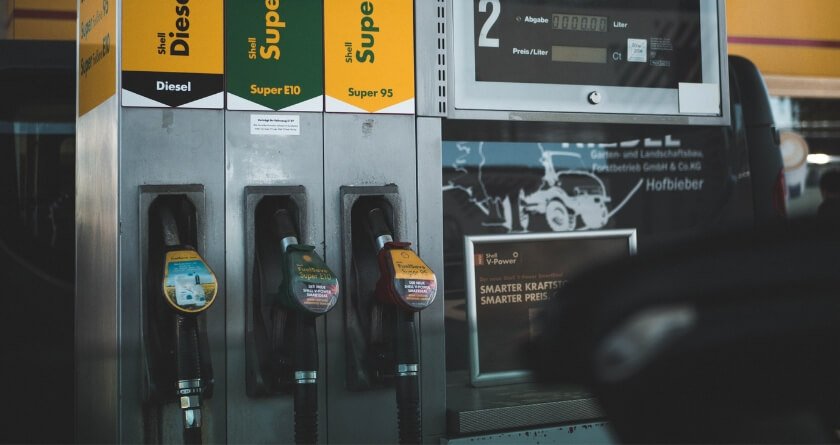
Drivers across Britain have enjoyed lower fuel prices for three months in a row because of price reductions across the UK’s filling stations. This now appears to be at an end as both petrol and diesel prices increased last month.

Fuel retailers were swift to respond to the news of increasing oil prices by raising the price of their fuel, but the motoring organisation, the RAC, has hit out against retailers, accusing them of being slow to pass savings on to drivers when wholesale prices fall, yet hike up pump prices the instant their own costs rise.

Driving up costs

Since the start of November 2018, the average price of unleaded went down by 11 pence per litre (ppl), taking it from 130.61 ppl to 119.60 ppl at the end of January. The cost of diesel also dropped, by 8p per litre to 128.7 ppl.

Production cuts made by OPEC (Organisation of the Petroleum Exporting Countries) in partnership with Russia have driven up the price of crude oil by 5%. This added $3 to the barrel price across February, taking it up to $65.13 by the end of the month. At one point, the price of a barrel reached $67—the highest it’s been since November 2018.

The jump in the price of oil drove up prices across UK forecourts at the end of February after retailers incurred higher wholesale fees. According to the RAC, the UK average price of a litre of unleaded petrol rose by almost a penny (0.88p) to 120.42ppl, while diesel increased by just over a penny (1.24p) to 129.88ppl.

After over six weeks of keeping its prices the same, Asda was the first supermarket of ‘the big four’ to pass the rise in wholesale prices on to its customers with a slight increase in the price of its unleaded petrol.

The February price rise means an average 55-litre family car now costs £66.23 to fill up with petrol and costs £71.43 for a diesel car.

Rocket Fuel

RAC Media Relations Manager and fuel spokesman, Simon Williams said the price rise would disappoint drivers.

“What they probably aren’t aware of is that retailers, who held off cuts for weeks when they were warranted, instantly raised their prices when they saw the wholesale price go up very slightly,” said Mr Williams and added that this was “clear proof of the infamous ‘rocket and feather’ pricing strategy where prices go up like a rocket and fall like a feather.”

The forecourt industry denies making good profits from petrol sales and it’s true that most retailers make only a little on a litre of fuel; often just one or two pence profit per litre.

“That is hardly sustainable,” said Brian Madderson, Chairman of the Petrol Retailers Association (PRA), in the past when defending earlier prices rises.

He explained the only way most petrol stations survive is by having other facilities attached to them, such as shops, car washes and cash machines.

Mr Madderson added: “If they were making substantial margins, we would see more investment coming into the business, rather than going out of it.”

Saving you money

Even though drivers can’t control the price of petrol and diesel, it’s possible to reduce how much you use.

Figures by The Department for Transport show we use up to 9% more fuel driving at 70mph than at 60mph and up to 25% more fuel travelling at 80mph instead of 70mph. The faster you drive, the greater your fuel consumption.

Go gentle on the accelerator, brakes, and steering. The most energy-efficient way of driving is smooth. Focus in the distance on what’s coming up so you can make adjustments early to prevent a disruption to your flow.

On average, every extra 50kg increases fuel consumption by 2%, so don’t keep unnecessary items in your boot and only fill up half-way if you’re an urban driver. Don’t leave your roof racks on, either—they cause ‘drag’. Even empty roof racks increase fuel consumption by around 10%.

Your tyres and brake pads can affect the overall performance and fuel economy of your car so inflate your tyres to the correct pressure as stated in your owner’s manual and keep up with your car maintenance and servicing.

Download the PetrolPrices app. The average user saves over £220 a year from using the app or website. We receive around 8,500 data updates for 98% of the fuel market, enabling us to find you the cheapest available fuel wherever you are.

The big supermarkets often tempt customers into their shops by reducing their fuel prices. Sometimes they’ll offer money-off vouchers at the till, for use at their forecourts. Supermarkets and other fuel retailers often run loyalty card schemes, too. Collect points each time you fill up and spend the points on future fuel.

Has the cost of petrol or diesel gone up where you are? Are forecourts too quick to pass increased costs onto customers? Tell us your views in the comments.

Driving with loud music could now get you a £100 fine

Driving with loud music could now get you a £100 fine

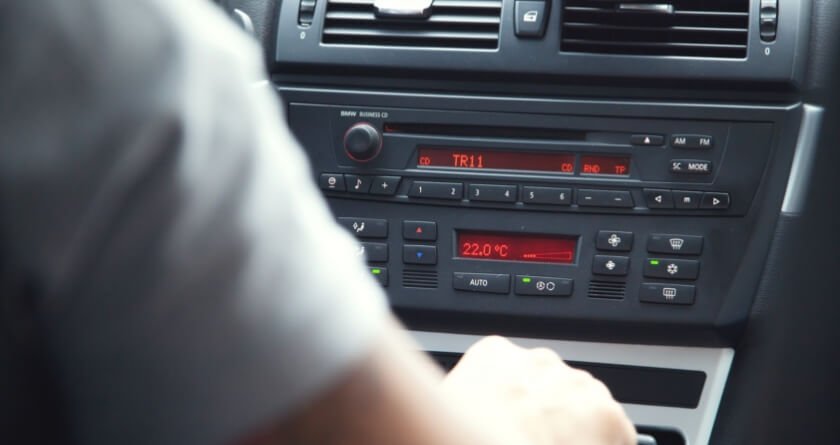
With more and more cars getting high tech sound systems, hearing loud music while driving has become a daily occurrence for most people. One council is fighting back and has introduced a Public Space Protection Order (PSPO) which gives officers the ability to fine people £100 for anti-social vehicle use.

This could include loud noise, shouting or being sexually suggestive. The measure was introduced after two-thirds of Bradford said they felt unsafe on the roads and said that nuisance drivers were a problem.

PSPO in place

A PSPO is already in place in certain areas of Bradford for antisocial behaviour and between March 2017 and June 2018, alcohol in various forms was confiscated 497 times. Bradford residents seem to be in favour of further PSPOs.

In a consultation of Bradford residents on the roads, 70% of those surveyed said they felt unsafe on the roads and 76% supported a PSPO to help reduce the anti-social behaviour in roads.

How will a PSPO help?

The PSPO is an order that protects the natural environment of an area and keeps residents safe in the area. Certain council enforcement officers are authorised to act upon a PSPO for the purpose of keeping the peace. Police officers are also able to enforce PSPOs.

In this instance, the PSPO can be used to stop anti-social driving. Whether this is wheel spinning excessively, blasting loud music, shouting from windows or being overtly sexual from a car, the PSPO can be used with correct judgement to help with the issue of anti-social driving in the area.

Mr Burns-Williamson, West Yorkshire’s Police and Crime Commissioner, said: “I support the step that Bradford Council have approved in the use of Public Space Protection Orders, a move which I believe will help to tackle a number of anti-social behaviour and road safety related issues.”

“Road safety is clearly a significant area of interest in Bradford and for many communities across the county and remains a key focus in my Police and Crime Plan. The PSPO will complement the significant work already undertaken by West Yorkshire Police, the Council and other partners in the District such as Operation Steerside which targets wider road safety offences and behaviour.”

Draconian or desired?

Some have come against the PSPO suggestion, labelling it “a bit draconian” and questioning how personal this could become.

Local councillor in Bradford, Simon Cooke, said of the PSPO “Is there the justification of making criminal what wasn’t criminal before? What we seem to have is a bit of virtue signalling, so we are seen to be doing something about the problem. But it doesn’t really address the problem to any great extent.”

He also raised a valid point of determining what anti-social behaviour in a vehicle was bad enough to warrant a fine or order. One person’s attitude could be completely different from someone else’s on what constitutes anti-social behaviour. “When it comes to music being played too loud is there not a risk that personal music preference may decide if music being played is ‘good or bad’?” he added, showing the potentially highly personal nature of the issue at hand. How can one person decide that someone’s driving is anti-social when it may be a personal prejudice? While strict training and regulations will no doubt be given, both having evidence of the act and being able to justify the reasons for the fine could easily be swayed through personal judgement.

Will the days of people driving around blasting music slowly be going out of fashion or is it overly restricting peoples behaviour? In recent months there has been a lot of talk of driving becoming very big brother like, with cars able to limit top speed depending on the road area soon and next-generation speed cameras that can pick up multiple fineable offences.

Anti-social driving

There are not many people who would openly admit to cutting people up in traffic, blasting loud music or sitting around in a car park drinking. However, the people who use their vehicles for things that aren’t illegal but aren’t seen as proper use could soon be feeling the sharp end of a £100 fine.

One can see both sides of the argument, they aren’t doing anything technically illegal, but people don’t want to be surrounded by anti-social driving. On the other hand, the small minority that does use their vehicles for anti-social purposes are more at risk of breaking the law, such as speeding or distracted driving.

People in Bradford have said bad driving is an issue, but in many large towns and cities across the country, this will no doubt be a very prevalent issue as well. You only need to watch Police Interceptors on Channel 4 to see the amount of dangerous driving that takes place come nightfall. Protecting our roads from dangerous drivers is essential but is this taking it one step too far or is this the next best thing to happen to residential areas?

What do you think of the PSPO? Would you like to see one in your local area? Let us know below

Britons are overcharged £300 million a year on financing cars

Britons are overcharged £300 million a year on financing cars

A shocking investigation by a British watchdog has discovered that car dealers are manipulating customers’ interest payments to earn larger commission totalling an ‘unacceptable’ £300 million each year.

The report comes almost two years after the Financial Conduct Authority (FCA) declared they would carry out mystery shopping trials of the industry and analyse millions of credit files.

On a mission for commission

In 2018, UK motorists borrowed a staggering £37billion on car finance to buy new and used vehicles. The popularity of loans such as Hire Purchase (HP) and Personal Contract Purchase (PCP) enable motorists to buy their car by paying instalments and mean big business for both car dealerships and lenders. In fact, Brits buy about nine out of ten new cars this way.

Yet, a recent investigation by the FCA found that lenders aren’t satisfactorily controlling the ‘conflicts of interest’ that are occurring from the extensive use of commission models that enable car dealers to make more in commission by deciding the interest rate.

Under certain commission models, the regulator estimates motorists can pay around £1,100 extra in interest charges over a four-year period for a typical car finance agreement on a £10,000 vehicle.

About 560,000 drivers have signed contracts where the loan price has a link to the level of commission received by the dealer, yet the watchdog discovered the bulk of dealers neglected to tell their customers they would receive a commission for setting up the loan.

How many car dealerships disclosed they would receive a commission on the sale?

Franchised car dealers: One in 37
Independent car dealers: Four in 60
Car supermarkets: Two in 14
Online brokers: Four in 11

<!-- /283405443/PTP_Video_640x442 --><!-- [et_pb_line_break_holder] --><div id='div-gpt-ad-1549281272220-0'><!-- [et_pb_line_break_holder] --><script><!-- [et_pb_line_break_holder] -->googletag.cmd.push(function() { googletag.display('div-gpt-ad-1549281272220-0'); });<!-- [et_pb_line_break_holder] --></script><!-- [et_pb_line_break_holder] --></div><!-- [et_pb_line_break_holder] -->

‘Not good enough’

After uncovering serious concerns about car finance agreements from 20 lenders, making up about 60% of the market, the FCA has contacted car finance companies and says it’ll get tougher on the rules of car finance commission deals.

FCA Executive Director of Supervision – Retail and Authorisations, Jonathan Davidson, said:

“We also have concerns that firms may be failing to meet their existing obligations in relation to pre-contract disclosure and explanations and affordability assessments.”

The FCA found a few dealers were only concerned whether their customer was a credit risk.

“This is simply not good enough and we expect firms to review their operations to address our concerns,” added Mr Davidson.

The watchdog is considering strengthening existing FCA rules, limiting the discretion that brokers have to set interest rates, and banning certain commission models.

For those firms identified as failing customers, the FCA will pursue them and take any necessary action.

Although this sounds like earlier mis-selling scandals such as Payment Protection Insurance (PPI), the FCA isn’t intending to make finance companies pay compensation to those customers who paid more than they should have, nor does it plan to do anything about any existing loans.

The motor finance trade body, the Financial Leasing Association (FLA), criticised the FCA’s report.

Adrian Dally, Head of Motor Finance for the FLA, said:

“Regarding the FCA’s concerns about commission structures, their survey work is based largely on out-of-date information and therefore does not reflect the very considerable progress the market has already made in moving away from such structures.

“We look forward to working with the FCA as it modernises its regulations in line with market best practice.”

Navigating the options

If you’re planning on getting a new car, shop around using reputable retailers, compare finance deals, check the total amount you’ll need to pay back, and ask how much the broker or dealer will receive in commission.

If you can’t afford to pay for your next vehicle outright, the next cheapest option is to make a one-off payment using an unsecured personal loan but, unless you’ve got a great credit score, it’s doubtful that you’ll get approved and, by purchasing a vehicle this way instead of taking the finance offered by the finance arm of the manufacturer, you won’t get any money towards the car.

Personal car loans are both easy to understand and set up and you might also get the dealer to reduce the price due to being a cash buyer. Once you’ve paid the dealer, you own the car outright, although that also means you’re responsible for all the repairs!

HP and PCP deals work out more expensive and you don’t own the vehicle until you make the last— often large —payment.

If you buy a car using HP or PCP, try to pay off at least part of the balance with a credit card so you have the extra protection offered under Section 75 of the Consumer Credit Act, which states that the credit card company has joint responsibility with the retailer—useful if you make a future complaint.

What do you think of the FCA’s findings? Are drivers being ripped-off or pressured into finance they don’t understand and can’t afford? Tell us your views in the comments.

Half of used cars have a hidden history, warns RAC

Half of used cars have a hidden history, warns RAC

A study using data from the RAC’s Vehicle History Check service, covering more than 32,000 vehicles has shown that over half (52%) of the vehicles checked had a history that could be a potential problem for any purchaser.

Some of these issues could be minor – like a registration change for example, but others were more serious – stolen, scrapped and outstanding finance were just some of the other problems found. Understanding what you’re buying has never been more relevant.

Caveat emptor

Whether you’re looking to find your dream car, a classic from a bygone era, or something more practical, finding the right car can be time-consuming, and if there’s some emotional attachment to it, you’re much more likely to overlook the odd blemish, running fault or bald tyre.

You may even view a vehicle history check as money for old rope; providing you know what you’re looking for, then it’s plain sailing, but not every problem is that obvious … 17.6% of the vehicles were still in the process of being paid off, so technically they weren’t the ‘owners’ vehicle to sell, a small percentage (0.1%) had been officially scrapped, some were even listed as stolen.

By far the largest discrepancy was a change of registration – 27.5% of vehicles weren’t on the original registration, but for the main part, that doesn’t ring alarm bells – cherished registrations are commonplace now, so providing it has been correctly documented, then there shouldn’t be a problem.

<!-- /283405443/PTP_Video_640x442 --><!-- [et_pb_line_break_holder] --><div id='div-gpt-ad-1549281272220-0'><!-- [et_pb_line_break_holder] --><script><!-- [et_pb_line_break_holder] -->googletag.cmd.push(function() { googletag.display('div-gpt-ad-1549281272220-0'); });<!-- [et_pb_line_break_holder] --></script><!-- [et_pb_line_break_holder] --></div><!-- [et_pb_line_break_holder] -->

Potential problems

In theory, purchasing a car with hire-purchase, or PCP already registered against it is possible, some potential purchasers may even it see it as the finance company’s problem if their customer is selling the vehicle on, but the reality is that should they default on payment, the finance company could look to repossess the vehicle, regardless of whether it was purchased ‘in good faith’.

Another expensive mistake could be purchasing a car that has been written-off by an insurance company, as 14.2% of the vehicle checks showed. There’s absolutely nothing wrong with that, providing you’re aware of the situation, but some unscrupulous sellers don’t declare it, and they may not have had to prove the roadworthiness or quality of the repair afterward. This could mean that you’re paying over the odds, for an un-roadworthy or potentially dangerous car.

The importance of such vehicle checks cannot be overlooked; there have been numerous cases where a stolen vehicle was sold on to an unsuspecting or innocent third-party, and it’s only when they go to sell it on again does the identity of the vehicle and its history become apparent. In a case like that, the new owner would most likely lose the vehicle and any monies paid for it.

Protect yourself

If you’re looking to purchase a used vehicle, there are a number of ‘good practice’ measures that you can use to help identify any potential issues. With that said, these aren’t infallible, and for the checking services that offer a guarantee against such issues, you need to adhere to strict guidelines if you stand a chance of winning any money back.

Turning detective will only get you so far – a good rummage through the accompanying documentation such as service history and MOT certificates can paint a pretty clear picture, as can a full mechanical inspection, but unless you truly know what you’re looking for, it may be worth having the inspection done by a professional.

Check that the VIN number looks to be original and matches the documentation; factory numbers don’t get ‘mis-stamped’, are at an even depth and spacing and are located in places that any ‘accidental’ damage is difficult to explain.

Check for unusually high wear patterns across the steering wheel, pedal rubbers and switches – pedal rubbers are easily replaced, steering wheels can be covered but switches are more difficult to disguise or replace.

Look for abnormal wear patterns across all four tyres – this could be an indication of poor misalignment or a geometry problem.

Remove the oil filler cap and look for white sludge – this could indicate a water/oil problem, although be aware that lots of short trips could also cause this.

Look to see if the panel gaps are consistent – a misaligned panel may be an indicator to body work replacement or damage.

If it’s a significant purchase, you may want to think about contacting the previous owner to see if they can add to the history, likewise, any dealer involved in the servicing of the vehicle will have full records of what was done and when (service history books can be faked very easily).

While these measures may not give you a definitive answer, they help to build up a bigger picture of the seller, their attitude toward the car, and how well it’s been looked after. This can be used in conjunction with your own judgement to help you decide if the car is ‘right’.

Have you ever been caught out with a bad car purchase? Do you have any other buying tips to share? Let us know in the comments.