3D zebra crossings slowing motorists down

3D zebra crossings slowing motorists down

Remaining untouched for around 70 years, the zebra crossing we know so well might soon appear very different after a road safety experiment in the London borough of Westminster to get drivers to reduce their speed.

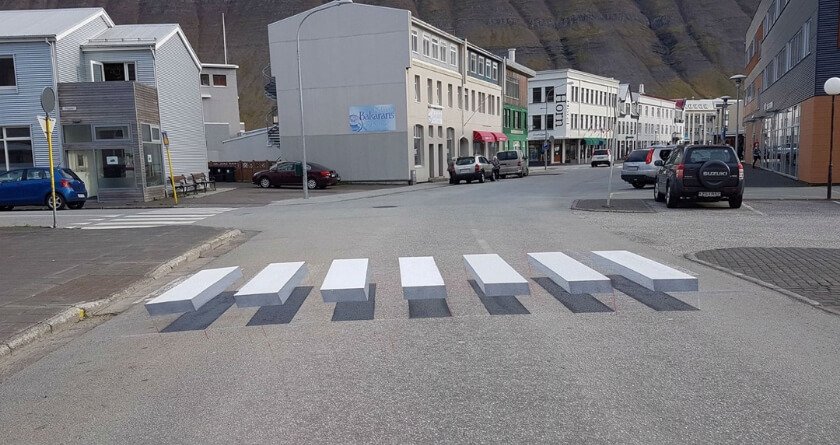
Although the location wasn’t an accident blackspot the council were receiving reports of children, elderly people, and pushchairs users having trouble crossing the street. The result? What appears to be lumps of concrete sprawled on the road ahead.

Trompe l’oeil

Eight weeks ago, after complaints about the speed of vehicles in affluent St John’s Wood High Street, Westminster Council installed a state-of-the-art £3,000 three dimensional-effect zebra crossing as a traffic-calming measure, at the junction with Wellington Place.

The council chose the site near the crossing pictured on the acclaimed Beatles’ Abbey Road album cover after local parent group NW8 Mums, along with Barrow Hill Junior School, and The St John’s Wood Society campaigned for introducing new safety measures in the street.

Traffic speed also concerned residents, with many arguing the 20mph limit is too fast—if drivers are sticking to the speed limit.

The clever floating effect that attempts to convince motorists they’re about to drive into an obstruction is ‘dual directional’. The design comprises the typical zig-zag lines on the approach and five white stripes across the width of the road. Around the stripes are some added blocks of grey paint that, as the driver approaches, appear to be white blocks on the road.

It’s interesting the experiment proved so effective when, before reaching the new crossing, a red sign reading ‘3D crossing trial marking ahead’ warned motorists.

And because most of the motorists using the street are local, soon after installation, one would expect the illusion would no longer cause anybody to slow down any more than for a standard zebra crossing.

Yet, at the start of the trial, Westminster Council fitted pneumatic tubes across the road to measure the effect the new crossing had on traffic speeds, so the results seem to show that a pedestrian crossing like this does appear to have something blocking the road.

‘Worth a try’

Councillor Tim Mitchell, Cabinet Member for Environment and City Management, said:

“We are delighted it appears to be working so well. Drivers are more cautious and feedback from locals has been positive. It’s really encouraging.”

Councillor Mitchell added, “Our 3D zebra crossing could be the future of road safety across the country and once again Westminster City Council is at the forefront in innovation in bringing this type of crossings to the UK.

“Far from being simply a brilliant innovation that makes the ordinary look eye-grabbing and modern—the 3D effect helps drivers to see the crossing easier.

“It’s been proven to make roads [safer] and is another example of why Westminster has a national reputation for providing excellent local services, driving improvements, and making sure the city is safe and well run.”

A spokesperson for Britain’s Automobile Association (AA) told the BBC the measures were “worth a try” but cautioned “its safety record needed monitoring”.

Edmund King, President of the AA may need convincing that 3D crossings are the answer, but he seemed open to the idea when he said:

“Once the novelty has worn off, will drivers continue to slow down? It should have a full evaluation. But if it’s successful, it could become as popular as Abbey Road.”

The AA suggested that just because the 3D crossing designs proved successful in other locations, the design may not work so well in London because of the city’s road layout. They said London authorities needed to “try new ways” to improve safety as roads grow busier.

Coming to a road near you?

The council—who said the prototype slowed motorists to a crawl—branded the experiment a success so the scheme may now extend across the rest of the borough. Local authorities throughout the United Kingdom are also proposing similar 3D crossings. This won’t alter the fact that, according to a 2018 study, 80% of drivers and pedestrians don’t know how to use zebra crossings.

This is the first time the UK has tried a 3D effect pedestrian crossing, but Transport for London (TfL) first tested illusory speed bumps in Newham, London in 2014, where they lowered traffic speeds by 3mph.

3D crossings used in a similar pilot scheme in New Delhi, India, resulted in average speeds of 31mph plummeting to 19mph. China, France, Germany, and Iceland are among the countries who have also tried out such optical trickery in the name of safer roads.

If the 20mph zones are too fast for the locals of St. John’s Wood, what about the increased pollution levels lower speeds bring, especially outside schools? Fewer vehicles using internal combustion engines seems to be the answer and is the government’s ultimate plan.

Whether the sightseers who visit St John’s Wood to pay tribute to The Beatles at the Abbey Road studios and walk across the legendary zebra crossing will now also visit the 3D crossing for their Instagram snaps, who can tell? In the meantime, here’s a video of the 3D crossing.

What’s your opinion on the new zebra crossing design? Do you think it will be a success across the UK? Tell us your views in the comments.
Two years on; have the mobile phone laws helped?

Two years on; have the mobile phone laws helped?

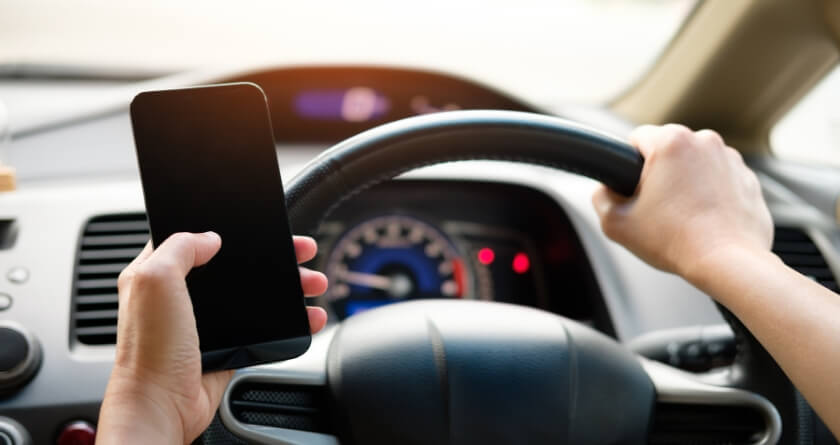
Using your mobile phone while driving has been illegal since 2003, the laws have been upgraded a few times since then, most notably the doubling of penalties in March 2017; getting caught using your hand-held mobile while driving could see you landed with a £200 fine and six penalty points. This, of course, means that any new driver (that’s held their licence for less than two years) will have their driving privilege revoked.

It isn’t just called either – using your phone for texting, social media, or even programming a destination through the sat nav feature will see you prosecuted – the easiest way to think of it is if there’s any physical link between you and your phone, you could be prosecuted. Unsure as to what exactly constitutes a link, I asked West Midlands Police whether a wired headset would be legal to use for calls.

It isn’t.

Phone numbers

There are around 85 million mobile phones in use within the UK, that’s 1.27 phones for every man, woman, child and baby, it’s no surprise that 54% of Brits self-admit to suffering from ‘nomophobia’ (yes, sadly it is a thing), and clearly it’s invading all manner of daily life.

In a RAC report, 25% of motorists admitted to making or receiving hand-held calls while driving, and in the year after the introduction of the stricter laws, that figure remained the same; the tougher laws don’t seem to be having the intended effect.

Looking back to 2012, there were 22,135 prosecutions for mobile phone use behind the wheel, that figure significantly decreased over the next four years, just 11,961 prosecutions for the same offence in 2016, but perhaps the 30% decrease in Traffic Police numbers could account for a portion of that?

Calling while driving

When the new driving laws were announced, the big headlines of the day were that you could be prosecuted for paying for your food in a drive-thru with your mobile phone, as the act of handling your phone meant that you were using it. As far as we can ascertain, no one has yet been prosecuted for the offence, but it does call in to question as to what constitutes ‘while driving’.

The law is clear, if a little overzealous; to legally use your phone behind the wheel, you need to be parked up, with your handbrake on and the engine switched off. The exception is if you need to call the emergency services and it’s unsafe or impractical to stop, essentially, all other contact with your phone could be deemed as a prosecutable offence.

While laws designed to make the roads safer will always find favour, it must be said that this (just like safety cameras) is a sledgehammer to crack a nut, and it’s the persistent offenders that we have to thank for it – sensible judgements have to be put aside in favour of obeying the law to the letter to avoid legal bother.

It’s a risk

Of course, this isn’t just a UK-wide problem, after analysing data from all over the world, the World Health Organization (WHO) have concluded that using a mobile phone while driving will mean that you’re four times more likely to be involved in an accident. That statistic doesn’t change whether it’s hands-free or hand-held – it’s the very act of the conversation that’s at fault, and contrary to a logical opinion, the risks are far higher than having a conversation with a passenger in the car.

The UK government deems it such a distraction, that if you’re supervising a learner driver from the passenger seat, you can also be prosecuted for using your phone; sledgehammer & nut.

To avoid prosecution, the advice is simple – when you’re driving, put your phone away, put it in ‘Aircraft’ mode, or switch to ‘Do Not Disturb’. If you must use it for navigation, it’s recommended that you pre-program your route before leaving – any ‘on the fly’ adjustments could lead to prosecution, and calls can only be made using a hands-free kit or Bluetooth headset – wired headsets aren’t acceptable.
Some motoring organisations say that driving while using your phone is more dangerous than drink-driving.

Typically, it’s taken around four decades for drink-driving to become widely thought of as socially unacceptable, and while we have a future of autonomous vehicles and self-driving cars to look forward to, they’re still far enough away that we need to treat ‘phone-driving’ with the same contempt and eradicate it from our roads.

How do you feel about phone-driving? Is it worse than drinking & driving? Should the laws be stiffer still? Let us know in the comments.

Could you be getting your fuel for 10ppl cheaper this week?

Could you be getting your fuel for 10ppl cheaper this week?

At present, fuel prices are rising at their fastest rate in over three years. The culprit is rising global crude oil prices determined by rising demand and concerns about further supply, such as the situations in Venezuela and Iran. Moreover, while these problems seem like a long way away, they have a direct impact on the price we pay at the pumps
The good news is that three brands are running spend and get promotions this May Bank Holiday weekend and next week. Sainsbury’s, BP and Morrisons have got some great money off vouchers to help reduce costs on fuel. With the bank holiday weekend coming up, it all helps towards that perfect staycation or a getaway.

Here are further details to make sure you don’t miss the chance to earn these three great money off spend and get fuel promotions:

Sainsbury’s spend £60 in store and get 10 pence a litre off fuel

Sainsbury’s are offering customers 10 pence a litre off fuel when they spend £60 or more in one transaction either in-store or through their online shopping. The offer runs between the 1st May, and 7th May and vouchers have to be redeemed 14 days after receiving it. If you know you’ve got a big shop coming up and your fuel tank is running low, saving 10 pence per litre could save you £5.50 filing up and average tank of 55 litres.
With the voucher, you get one fuelling of up to 100 litres of petrol, diesel or LPG but you can’t use it at Pay at Pump, so only pay in the kiosk with the voucher. The promotion itself also has a long list of exclusions, so make sure you check beforehand.

Offer ends: 7th May 2019, vouchers must be redeemed within 14 days afterwards

Please be aware there are some exclusions to this offer, so make sure you check them here: https://help.sainsburys.co.uk/help/website/fuel-tcs

BP spend £20 in store and get 10 pence a litre off fuel

While the spend threshold for this offer is lower than the supermarkets, the offer is only valid in BP M&S stores. However, the good news is that M&S has one of the best food ranges in the UK and this is the perfect way to take advantage of getting a great fuel discount at the same time. The promotion can only be done by purchasing in the stores themselves and is not available on BPme, their new payment app.
The offer itself also has some exclusions around fuel cards, tobacco, mobile phone tops ups, baby food, national lottery tickets and stamps; please check beforehand.

Offer ends: 7th May 2019

See here for terms and conditions: https://www.bp.com/en_gb/united-kingdom/home/products-and-services/latest-offers/10p-off-per-litre.html

Morrisons spend £40 in store and 5 pence a litre off fuel

Morrisons has been running the same spend and get promotion in selected stores during April, and now it’s been rolled out across more stores for May Bank Holiday, but there are still some stores not running it, so please check in advance.

When you spend £40 or more in one transaction at Morrisons, you can now get 5 pence per litre off one fuel purchase to the value of £100. There are exclusions to what is accepted in the £40 spend in store, such as tobacco, fireworks and lottery tickets, so please ensure you check before you buy.

Offer ends: 6th May 2019

For the full terms and conditions see here: https://my.morrisons.com/5pfueloffer/

While these promotions may not fit into your plans for the Bank Holiday Weekend, it’s always important to make sure that you always know where the cheapest and best fuel deals are out there, we will try to monitor them for you, but if you find a great deal, please tell us via www.petrolprices.com/support

With any of these, using these savings might not work out for you. If your closest filling station isn’t one of these but their price is better, then work out the savings you’ll make but also the time-saving. It might take longer to visit the station to save not much. You can use our app to compare prices near you and work out what could be the best value for you.

Are you planning to save money on your fuel this weekend? Do these offers help you out and more importantly do you want more when they come up next? Let us know in the comments below

Blanket parking ban considered by government

Blanket parking ban considered by government

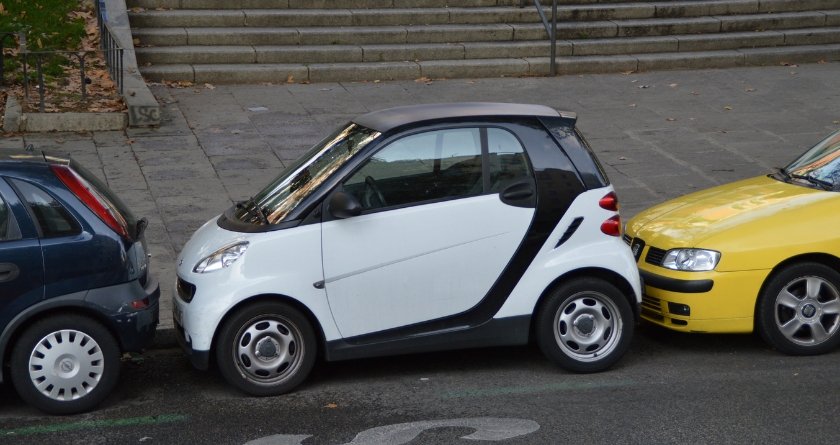
At a time when parking your car is subject to extreme focus, mainly thanks to the ever-increasing parking charges, the House of Commons Transport Committee is to look into different options to potentially stop people from parking on pavements.

At first glance, this could be a great thing – the age of social media and sharing means that we constantly get to see the cases of inconsiderate parking splashed across the many digital channels open to us, whether that’s a young parent with a child in a buggy being forced in to the road, or someone less able-bodied in a wheelchair risking life & limb to get past a poorly parked car. We’d all agree that the person responsible should suffer consequences.

However, as the saying goes, let those without sin cast the first stone (or a variant thereof).

New guidelines

You may be thinking that you have never, and will never, be responsible for such inconsiderate behaviour, but the guidelines being considered would treat you the same; whether you’ve parked all four wheels on the pavement, or accidentally raised one wheel on the kerb in an effort to park. Using that definition, who can honestly say they’ve never parked on the pavement?

Personally speaking, if a poorly placed wheel constitutes parking on the pavement, my local council could make up any budget deficit simply by spending a week or two outside my mother’s house, and that’s the problem; the term ‘blanket ban’ and the definition of which that it constitutes.

A blanket ban on pavement parking, by its very definition, encompasses all roads (London introduced similar in 1974), and this would mean an increase in overhead for all local authorities, not only to implement the changes, but to police it, and of course there are roads where parking on the pavement is essential for the flow of traffic, which could also lead to a strain in available parking spaces.

Then there’s the definition – one wheel or four, you’re guilty of parking on the pavement and liable to a fine of £70 for each offence. (That’s each time it happens, not per wheel). Given the fact that implementing and running such schemes would likely involve significant cost, you’d have to assume that any ‘Parking Officer’ would be razor sharp on delivering tickets.

Inconsiderate parking

Surely a better solution would be to clamp down on inconsiderate parking? This would find almost universal favour with both pedestrians and motorists alike, costs would be lessened, and they could even look to the public to help with self-reporting – providing there is photographic evidence. Of course, the cynic would say that revenue generation wouldn’t be as high.

Local authorities say that parking on pavements (even with just one wheel) has cost implications, mainly due to the extra wear & tear on the pavement, which hasn’t been designed to carry the extra load of a car. However, that extra cost should be balanced against the cost for employing a 24-hour service of parking officers, unless of course, they sub-contract the work to the highest bidder, which then take a percentage of any fines levied. Conflict of interest anyone?

This is a similar issue to that of speed cameras – catching motorists with a blatant disregard for safety and speed limits is good, treating all motorists in all conditions for a minor infringement of an arbitrary limit, not quite so good.

Simple answer

Unfortunately, there is no simple answer. How should we stop repeat offenders without causing inconvenience (or expense) to those that are more innocent? In days gone by, perhaps there would be more faith in the relevant authorities to act fairly, to understand that sometimes, circumstances beyond our control gave rise to a situation, but we live in a target driven society, and what may have been a judgement call once, is now usually called in favour of the authority.

Edmund King, AA president said: “It is right that anti-social pavement parking, which prevents and restricts wheelchair users, blind and partially sighted people and pushchairs travelling around our communities must be tackled, however, a blanket ban would be a step too far. A street-by-street assessment is needed to decide where it may be suitable to allow pavement parking. Pavement parking poses problems on both inner city streets and rural lanes, so the outcome needs to be tailored to the circumstances.”

The House of Commons Transport Committee are actively looking for feedback on how this issue can be resolved, and the difficulties that it presents, if you feel that your voice should be heard, closing date for submitting written evidence is 14th May 2019.

How do you think this issue could be resolved? Is it as simple as introducing a blanket ban? Or perhaps the authorities should look to clamp down on purely inconsiderate parking? Let us know in the comments.
Drivers hit with second month of pump price rises

Drivers hit with second month of pump price rises

New figures by the RAC show higher wholesale costs meant both petrol and diesel prices rose for the second consecutive month, last month with petrol prices increasing, on average, by two pence and diesel by almost a penny.

Petrol station retailers were quick to pass the higher costs onto drivers who are already noticing the effect that rising oil prices and the falling value of the pound are having on their wallets.

Feeling the pinch

Both a 4% jump in the cost of oil (from $63.81 to $68.07) and a 2% drop in the pound’s value against the dollar (from $1.32 to $1.30) during March have caused the pump price rises.

This means filling a 55-litre family car with unleaded now costs £67.22. Data from the RAC shows the average litre of unleaded increased two pence in March to 122.58 pence per litre (ppl). Diesel prices increased too. At the start of the month, they cost just under 130 ppl but have since risen to 130.67 ppl, meaning motorists pay around £71.87 to fill up their cars.

Petrol costs eight pence less a litre than in October last year, when drivers paid 131 ppl—the highest price seen since July 2014, when diesel was also expensive; selling at 136 ppl. The RAC, who described March as ‘a rough month’ for petrol drivers believes diesel drivers are feeling the pinch even more than petrol drivers at the moment. Their data shows that compared to this time last year and the year before, a litre of diesel is, on average, eight pence more expensive than petrol. Worse, though, diesel costs eight pence more than it did 12 and 24 months ago, meaning diesel drivers must pay an extra £4.30 to fill their tanks. For most people. that extra money isn’t coming in the form of a pay-rise.

It’s obvious that, in the past two months, retailers haven’t hesitated to increase their pump prices to get customers to shoulder the higher cost of wholesale petrol. Supermarket petrol went up 1.7 ppl in March to 118.59p while diesel rose from 1.27 ppl to 127.48 ppl.

Last month both Sainsbury’s and Asda raised their prices by two pence a litre, with Asda increasing their prices most days from the 21st of February. They ended the month with their petrol priced at 117.31 ppl.

Price of petrol to rise further

“Throughout March, the wholesale price of diesel was on average 6p a litre more than petrol. This gap has now closed which should hopefully bring some relief to drivers of diesel vehicles.

“If retailers play fair with motorists, the price of the fuel should fall by around 3p a litre in the next fortnight, whereas petrol looks like it’s set to rise further with at least a penny or two likely to go on in the coming weeks,” he said.

“Fortunately, normal competition between supermarket fuel retailers over the price of petrol has resumed after four months of Asda being considerably cheaper than its competitors.

“Whether this is as a result of keener pricing from the others or from Asda moving its unleaded price closer to its competitors is hard to know.

“Supermarkets play a vital role in UK fuel retailing as despite only having a fifth of forecourt sites they have 45% of the fuel market which means that everyone else selling fuel has little option but to compete with them.

“And, if there isn’t good competition between them it can mean the UK average price of fuel is adversely affected, to the disadvantage of all drivers.”

Cut the cost

Once you’ve found where you want to buy your petrol or diesel by using our new app and have filled up, you’ll want to make your fuel last as long as possible. You can do this by making sure you look after your vehicle, by driving in the highest gear possible (within the speed limit!), and by trying not to lose momentum by anticipating the actions of other road users.

Remove roof bars and roof boxes (and any other unnecessary weight from the car) when not in use and try to drive with your windows shut to reduce ‘drag’. With that said, limit your use of the air conditioning, as it uses more fuel.

Driving with a warm engine is more efficient, so try to combine journeys rather than taking several short trips.

Consider reserving your cruise control for motorways or at least for when you’re driving on constant flat surfaces or you risk using more fuel.


Jason Lloyd, Managing Director of PetrolPrices, said the following:
“Following the publication of this article, the Competition and Markets Authority (CMA) announced that they are blocking the proposed Sainsbury’s and ASDA merger because of concerns around rising prices on products in the stores and fuel prices. Sainsbury’s did propose keeping the ASDA fuel price promise for five years and a 3.5 pence per litre gross margin on Sainsbury’s fuels, but the CMA responded by saying that policing this would be almost impossible and impractical because it would negatively impact the rest of the petrol retail industry, where prices are market determined.

Fair Fuel UK has been pushing to MPs once again the idea of regulating fuel pricing. It is worth showing members what markets have their fuel prices controlled rather than determined by market forces around the world. As you will see most countries where prices are controlled are due to factors where market competition is not able to fully thrive there, such as regulatory, socioeconomic, geographic or geopolitical instability.”

Country Retail Prices Country Retail Prices Country Retail Prices
Belgium Price Ceiling Algeria Fixed Price Malaysia Fixed Price
Cape Verde Price Ceiling Angola Fixed Price Malta Fixed Price
Honduras Price Ceiling Azerbaijan Fixed Price Mauritius Fixed Price
Israel Price Ceiling Belarus Fixed Price Nepal Fixed Price
Kazakhstan Price Ceiling Bolivia Fixed Price Pakistan Fixed Price
Kenya Price Ceiling Costa Rica Fixed Price Slovenia Fixed Price
Luxembourg Price Ceiling Dominican Republic Fixed Price South Africa Fixed Price
Macedonia Price Ceiling Egypt Fixed Price Sri Lanka Fixed Price
Malawi Price Ceiling Fiji Fixed Price Swaziland Fixed Price
Mexico Price Ceiling Ghana Fixed Price Zambia Fixed Price
Panama Price Ceiling Indonesia Fixed Price
Tanzania Price Ceiling Jordan Fixed Price
Vietnam Price Ceiling Kuwait Fixed Price

[Source: Globalpetrolprices.com April 2019]

“Prices for Belgium and Israel regulated by a price ceiling are currently higher in fuel costs than the UK, which proves that regulation itself does not guarantee lower prices, it only guarantees uniformity. The UK is currently the 16th most expensive country (or 27th Cheapest) in Europe based on the lowest modal average price (Source: Globalpetrolprices.com).

It’s the wide and varied competitiveness of the UK marketplace itself that keeps the price spread between the highest and lowest much wider and the lowest prices lower. If you regulate pricing, you reduce competitiveness, the price spread gets narrower and the lowest prices would increase to compensate for retailers unable to fluctuate pricing more freely.

Drivers are sensible enough to know the places to avoid when they fill up, but if you force the industry to follow pricing in a narrower range with a ceiling, the likely law of unintended consequences is that the lowest prices will increase and pricing will fluctuate more per station, such as in Germany where it can change up to 16-20 times in one day. This is called intra-day pricing and would mean it would be harder for drivers to know where and when the best times to fill up would be.

With the recent furore over the Government demonising Diesel fuel, which has led to record levels of CO2 being recorded in the UK as people switch from efficient Diesel cars to big engine petrol SUVs, the Government should be very careful considering regulating the petrol retail industry for fear that reducing competitiveness could mean fuel prices are higher overall and change more often for drivers. The backlash from drivers for this happening could be unimaginable if the Government and MPs decide to do this.”

What are petrol and diesel prices like where you are? Are you struggling to afford to fill up your tank? Tell us in the comments.

Service Update – PetrolPrices.com

Service Update – PetrolPrices.com

Many of you will have noticed that on Sunday 7th April PetrolPrices completely changed its branding, website and app. The primary goal of these change is to make the service even better and we hope at some point to explain the direction it will take in future.

The project has been a lot more difficult to achieve as the entire system had to be rebuilt from scratch and this has proved very challenging for the team.

The in-house development team has only been in place since the end of January and in that time they have done a great deal of work, but need more time to complete everything so that it’s all working correctly, so please bear with us.

Here is a list of the most common reported issues and an update for each one:
• Price alerts or newsletter not received – all emails had to be switched off so that we could repair the systems that support them being sent to ensure accuracy and compliance. If you’ve come to this through the email, it means they’re up and running and back to normal

• Map not visible on the app – we decided to take the map off the first new app release to de-risk the relaunch because adding in map creates a lot more load on the app, but the map on the app is coming in the next major release in May 2019

• Location detection always on the app – without location detection turned on, the app is not able to serve fuel prices or personalised messages in your location. However, we are working to minimise the number of location calls in order to lessen the load on your phone

• Can’t reset password or log in – there was a lot of initial teething problems with this due to switching the database, but it does appear to have been resolved in the latest update. If you are still having trouble on the app, please use forgot password function on the website as this contains a link to the change your password page

• Block notification on web fuel search – we need to put our hands up on this and admit it was only when we went live did we realise that if you don’t allow location on the web browser, the search stops working and you can’t get it working again. This is something we are looking to resolve as quickly as possible

• Accuracy of price data by fuel grade – we could create a whole article just about this section. Fundamentally the way the search works has been completely changed. We believe that most of the problems are resolved. If a price is not correct YOU the user can update the price and earn points for it in the app.

Some members have already reported these issues to us, but if you find something you need help with then visit www.petrolprices.com/support or contact Support via [email protected] There is also a Support chat facility live on site.

Thank you for your continued patience and support.

PetrolPrices Team

PetrolPrices relaunches apps, new brand and more!

PetrolPrices relaunches apps, new brand and more!

You may have noticed over the last few months, we’ve gone quite quiet on changes, updates and telling you about what we’ve been doing.

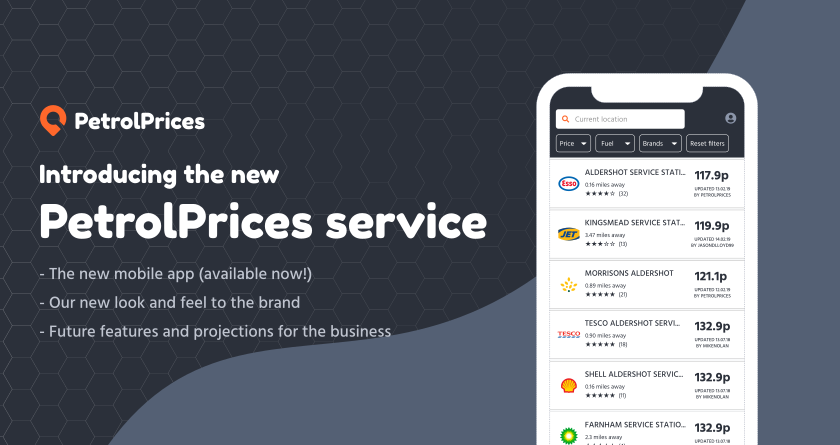
Today we’re thrilled to announce that we’ve been working harder than ever before to bring you the new and revamped PetrolPrices service. You can probably tell some of the changes already, by the design of this page, the colours and the new logo.

Improved the search

If you’ve already got the update for the app on your phone, or if you’ve logged in to the website today, you’ll notice our massively improved fuel finder.

On our mobile app, which you can download here you’ll be able to update prices of stations! Our support team tells us that above everything else, this is something that you, our members want, and so after a long time planning, building and checking, we’re really happy to announce that yes, you can now update prices on our mobile app!

You’ll also be able to confirm a price, which helps to improve our ever-changing algorithm, making our data more and more accurate every single day

Facilities

Everyone can now also update facilities information about stations, and help other members find facilities at stations near you. Does a station have a car wash, ATM or does it offer FuelService?

We’ll be expanding this soon with opening times and detailed station pages, but we think facilities is a pretty good start for all of this.

Rant or rave?

Something else we’ve introduced is reviews. Does a forecourt constantly have dirty pumps, is one pump a bit dodgy or is the coffee at this station much better than all the others locally?

You can now comment on all these things and more in the new reviews section. On the mobile app, simply head to the station your interested in and then answer a few quick star rating questions before inputting a full written review. You’ll also be able to see the overall rating for a forecourt, along with other members reviews.

If you’re in a new area and want to fill up at a station with a great score, then look no further as in the main search you can see the average rating of each forecourt.

Earning points

On top of all of this, you can now gain points for all of the above. For example, updating a price can earn you five points, confirming a price gets you five points and if you confirm/update all the prices for one station you get ten points.

For reviews, you’ll get up to 10 points for a written review and up to five points for a quick-fire review.

There’s a UK leaderboard, so if you constantly review stations, confirm prices and complete tasks within the app you’ll climb our leaderboard and soon you could be at the top of the leaderboard.

You’ll also get extra points for being a consistent high scorer, searching regularly and logging in repeatedly. There’s plenty of ways to earn points, but we’re not going to give it all away just yet! These points are subject to change as we develop and improve the app, so please don’t take these as concrete.

We hope you enjoy using the new app and bear with us as we fix any minor bugs in the system. Our support team is quite busy at the minute but they’ll do their best to get back to you! Let us know your thoughts below, and if you’ve got any support queries please visit www.petrolprices.com/support instead, as we won’t be answering them below

Police catch four speeders a minute, one county reported 416% increase

Police catch four speeders a minute, one county reported 416% increase

Throughout the UK, just over four people are caught speeding every minute – or around 6,000 every day. Avon and Somerset police top the league table, at around 548 a day, the neighbouring force, Wiltshire, are at the very bottom – just 1,191, per year.

Do drivers immediately speed up when they reach Avon and Somerset? Or is there something more to it? Is it the heady thought of a holiday in the south-west that’s causing the problem? How can there be such discrepancy?

Data analysis

Thoughts turn to the oft-used phrase “revenue raising”; lowering the threshold for what constitutes speeding is simple enough, except in this case, Avon and Somerset’s police are adhering to the NPCC (formerly ACPO) guidelines of 10% + 2mph, ie, 30mph would need a minimum of 35mph to trigger an incident of ‘speeding’.
Similarly, Wiltshire hasn’t relaxed the speeding guidelines either.

It’s only by looking into the statistics that we get a clearer picture as to where the disparity may stem from; 100% of the offences in Avon and Somerset were caught by a safety camera, and out of the 1,191 motorists speeding in Wiltshire, 0% were caught by a camera.

While many forces are cutting the use of fixed speed cameras, either through a budgetary deficiency or other means, Avon and Somerset have 96% of their speed cameras active. Only five other forces (that responded to a Freedom of Information request) had the same percentage or higher, and out of those areas, only one force had a greater number of cameras; Nottinghamshire (with just 27,155 offences caught).

RAC Foundation

The study has been carried out by Dr Adam Snow from Liverpool John Moores University for the RAC Foundation, as part of some wider research into speeding offences and how they’re dealt with throughout the nation.

The biggest takeaway from the study is that speeding seems to be on the up, the increased use of speed cameras has had a dramatic effect on numbers caught (Avon and Somerset recorded a 416% increase in detections between the period 2011 – 2018), and that there seems to be no cohesion as to how the offence is dealt with – Derbyshire sent just 1% of speeders on a Speed Awareness Course, Durham topped the list at 60% being offered a SAC.

It’s easy to decry the use of speed cameras, and they do have their flaws, but it could be argued that they’re doing part of a job, of which has all but been made redundant thanks to budget cuts and reprioritisation. Steve Gooding, RAC Foundation director says: “A lot of it will come down to local policing priorities, it’s the job of the police, crime commissioners, and chief constables to target resources appropriately, recognising the issues of local concern”.

It’s worth noting that Avon and Somerset have over 130 active community speed watch schemes running, although being caught through the scheme means a stern warning, rather than penalty points.

The top five

The areas with the most offences detected are:

Avon and Somerset (27 of 28 cameras active)
West Yorkshire (98/396)
Metropolitan Police, inc City of London (figures only for City of London 4/4)
Thames Valley (no figures released)
Greater Manchester (43/177)

It’s no surprise to learn that the areas with the least detection rates have at least two without cameras, although it’s believed to be three.

Wiltshire (no figures released, but press cuttings say cameras deactivated in 2010/11)
Durham (no cameras)
Derbyshire (10/112)
Cleveland (no cameras)
Kent (19/77)

Unfortunately, there is no dataset for road traffic collisions available for Cleveland and Durham, which would give us a good indicator as to just how ‘safe’ safety cameras are, but if road safety campaigners are to be believed, then surely Durham and Cleveland would be an accident hotspot, figuring in national news on a regular basis?

For the record, we aren’t saying that all safety (or speed) cameras are focused in revenue generation, with absolutely no need for them to be there, but it gets back to what is appropriate speed, and until they’re able to distinguish the difference between appropriate speed, and ‘speeding’, then perhaps the discretion of a traffic officer may always be the favoured option.

Crime fighting technology

We’re used to technology playing a bigger part in our lives, be that in an official capacity or for our own personal benefit, and surely it’s only ever going to increase. We often hear of people bemoaning the fact that driving standards seem to be falling, but as sensors get evermore intelligent, they could just be the saviour of driving standards, perhaps even encouraging change on a societal level, but then of course any change would be subject to the cry of ‘Big Brother is watching you’.

Should we rely on technology to aid driving standards? Do you think that technology can be used to improve our journeys? Or are we heading in to the abyss of machine dominance? Let us know in the comments.

Potholes are worse than ever, government pumps more money in

Potholes are worse than ever, government pumps more money in

The hazards potholes create are well-known to motorists and cyclists; damage to your car or bike and an uncomfortable or dangerous ride. More worrying is potholes have resulted in serious injury or death of almost 400 cyclists over the past ten years. Now, the results of two surveys show the sheer scale of the pothole issue we have on our roads.

The Asphalt Industry Alliance (AIA) and Kwik Fit each published findings which, together, highlight both the condition of — and the harm caused by — the state of our road surfaces.

Road to recovery

The AIA’s Annual Local Authority Road Maintenance (ALARM) survey shows that pothole repairs in England and Wales rose by 330,000 in 2018 to a staggering 1.86million. In fact, councils are fixing a pothole every 17 seconds with last year’s freezing weather much to blame for the decline of the roads.

But there’s hope for improvement as the Department for Transport gives councils over £200million for road repairs, to fix over 1,000 miles of highway — with £50million reserved for potholes and flood measures.

Research into advanced surface materials and reconstruction techniques will continue, such as an asphalt three-dimensional printer researchers at University College London designed to repair road cracks and potholes.

Over six million vehicles suffered damage from potholes with an average garage bill of £108.60 but the ALARM survey shows that motorists in England and Wales have only received £13.5million in compensation—just 2.1% of the total loss.

Kwik Fit’s study on potholes showed that the number of us affected in 2018 increased by 2.9 million to over 11 million. The most common damage is to a vehicle’s steering, suspension, and wheels.

In the last twelve months, 31% of motorists who hit a pothole said they thought it was a puddle because water hid it, 46% said they risked colliding with other traffic if they had swerved around the pothole and 4% admitted they hit a pothole because they were speeding.

Patched up

Transport Secretary Chris Grayling, who claims the Government is ‘continuing to step up its funding to local authorities’ for pothole repairs said:

“It is now up to highways authorities to innovate and use new technologies to solve the problem.”

Mr Grayling has launched a consultation on increasing the guarantee on utility firms’ roadworks so that if a pothole forms within five years, the company must bring the road surface back to normal.

“Road surfaces can be made worse by utility companies, so imposing higher standards on repairs will help keep roads pothole-free for longer,” said the Transport Secretary.

Last year the AIA claimed it would cost £1.5billion more in funding each year, for the next 10 years, for repairs on local roads to reach a condition whereby they would be cost-effective to manage.

AIA Chairman Rick Green reacted to the news of more government funding:

“It is encouraging that those in control of the purse strings seem to have recognised the value that additional expenditure on roads can deliver. But it’s clear from the 29% increase in the number of potholes filled in England … that much of this has been used for patch and mend [work].

“This doesn’t provide value for money, nor will it improve the underlying structure and resilience of our roads,” he said.

Pot luck

There are steps you can take to both reduce your chances of hitting a pothole and to reduce the damage to your vehicle if run over one:

Check your tyres are at the recommended air pressure because if they’re under or over-inflated, your car is more likely to sustain pothole damage.

Consider winter tyres if you live in an area affected by lots of potholes. The sides of the tyres are often a little larger, and able to absorb the impact that driving into a pothole can cause.

Rain pools in potholes so try to avoid puddles where you can. Drive with caution if dodging a puddle isn’t possible.

Reduce your speed if you’re on a bumpy stretch of road. The faster you’re driving when you hit a pothole, the more damage you should expect.

Potholes can sometimes cause drivers to lose control of their vehicle, so keep your hands at the ‘ten to two’ position on the wheel to stay in command of your car.

If you hit a pothole, stop in a safe place and assess the damage as soon as possible.

Sometimes pothole damage won’t appear obvious straight away, so keep checking your tyres and wheels in the days afterwards. Get the vehicle checked out at your first opportunity if you think your car has suffered damage.

Do your bit by reporting potholes; don’t assume others have reported them and if you want to make a claim, this website will tell you all you need to know.

What condition are the roads where you drive or ride? Have they damaged your bike or car? Have poor roads caused you an injury? Tell us in the comments.

Drivers to be paid “cash not to drive” in new UK pilot scheme

Drivers to be paid “cash not to drive” in new UK pilot scheme

It seems that we’re getting used to reporting on councils looking to motorists to bridge the gap in their funding, but a new scheme, the first of its kind in the UK, is looking to pay motorists up to £3,000 to stop driving their cars.

A £20 million Department for Transport award for ‘future mobility’ schemes has allowed the West Midlands Combined Authority to be the first to introduce the radical concept; an incentive to give up the car, rather than punitive stealth taxation to force us off the road.

It’s set to launch in Coventry later this year, but if successful, it will be rolled out to other parts of the West Midlands, and then nationwide.

<!-- /283405443/ptp_articles_midpage1 --><!-- [et_pb_line_break_holder] --><div id='div-gpt-ad-1552916378783-0'><!-- [et_pb_line_break_holder] --><script><!-- [et_pb_line_break_holder] -->googletag.cmd.push(function() { googletag.display('div-gpt-ad-1552916378783-0'); });<!-- [et_pb_line_break_holder] --></script><!-- [et_pb_line_break_holder] --></div>

Future mobility scheme

Full details for the scheme haven’t yet been released, but it’s thought that Coventry City Council will pay ‘cash credit’ on to a Swift card, or smartphone app, which the participant can then use to pay for public transport, in the form of buses, electric vehicles or bike-share.

There will be an element of surrendering the car for a period of time (of which hasn’t yet been published), and the idea behind the scheme is to “stimulate a long-term sustainable shift in travel behaviour”, in a bid to reduce pollution and congestion, although some environmental groups doubt that it will have an influence on air quality.

Around 100 people will take part in the scheme initially, and although the pilot stages will be tax-payer funded, it’s thought that if the scheme’s successful, funding will come from private companies, including bus and train operators, and perhaps electric-car clubs.

The pitfalls

Of course, the scheme won’t work for everyone; it’s easy to find problems with it – the foremost being that public transport doesn’t work for the majority of drivers or commuters unless you’re in the heart of a city, but that would be missing the point.

Putting aside issues such as the length of time that you’ll need to surrender your car for, whether the vehicle will be removed from your possession, or how it will be stored if it is, we need to look at the bigger picture. This is the first scheme of its type where the motorist has been considered, where incentivisation has been used rather than underhand ‘green’ taxes.

John Seddon, head of transport & innovation at Coventry City Council views it as an update to the scrappage schemes that have been used in the past, but “rather than trading in an older car for a newer one, it is trading in the car for the ability to use other modes of transport”.

It should also be noted that it won’t cost you money (as it would to purchase a newer car), nor are you selling/scrapping or giving up your car permanently – you’ll still have an asset at the end of the period. Effectively what you’re getting is free public transport at the cost of giving up your car for some time.

Congestion & charging

Last year, congestion cost the British economy £7.9 billion, and there’s no doubting that it’s getting worse. When adjusted for population, London is the sixth most congested city in the world, on average, British motorists spend 178 hours per year in gridlocked traffic (227 hours in London).

There’s no denying that measures need to be put in place to ease the flow of traffic, and up until now, the responsibility (and therefore the costs) have been directed toward the individual motorist. The argument is that we should leave the cars at home, and use expensive & unreliable public transport – all while paying to park our cars at home.

If successful, the ‘paid to stop driving’ scheme is a complete about-turn in respect of giving up the car, it’s almost like we’re being asked nicely to stop, rather than being told that we will stop, and that’s a marked change in strategy from the government and local authorities and a much-needed one.

Of course, some details need to be clarified – does surrendering the car mean 24/7 car-free? Or just commuting into the city? Will the car remain in our care? What would happen in an emergency?

It’s been said that some anti-car campaigners may not like the idea of actually paying motorists not to use their car. Surely, if they’re as committed to being as green as they say, that’s a small price to pay for helping to reduce pollution, re-educate motorists and bring about a step-change in the reliance of individual transportation?

What do you think to the scheme? Can it work? Is it something that you’d consider? Or have we missed an angle of stealth revenue generation? Let us know in the comments.