50% of UK drivers think speeding is acceptable claims new 2018 survey

A new study from insurer Direct Line found that half of UK drivers think that speeding is acceptable and the majority of those spoken to admitted to speeding.  The survey spoke to 2,000 motorists and found that 50% of them saw nothing wrong in speeding.  It begs the question, does the UK have a problem with speeding and are we choosing to ignore it as a nation?

Surprising results

The Direct Line survey also showed that 78% of drivers admitted to speeding at some point, with 5% saying that they break the law every time that they get behind the wheel.  Some of the most common ‘acceptable’ speeding offences include doing 79mph in a 70mph zone, 56mph in a 50mph zone and 26mph in a 20mph zone.

The impressions of what is ‘okay’ regarding speeding is conveyed in the stats for people with speeding fines.  The survey found that nearly two-fifths of the drivers said they had a speeding conviction and the most common of these were for doing 37mph in a 30mph zone and 61mph in a 50mph area.

When asked why they had broken the speed limit, just over half of the survey group (51%) said that it was because they were unaware of how fast they were travelling.  Another third (34%) said that they were purposefully speeding because the roads were empty. And 19% said the reason was that they were running late, 14% said they were caught out in an area they thought didn’t have speed cameras.

A growing problem

Speeding is apparently a growing problem around the UK.  According to the latest stats released towards the end of last year, a total of 1.97 million fixed penalty notices were issued in 2016, a rise of 25,000 on the previous year and a massive 107,000 on the 2014 figure.

It means that one in three UK motorists are being fined every year, mostly due to the rising number of automated speed cameras around the UK. The figures also include the people who opt to do speed awareness courses rather than accept fines and points on their license.  Of the total number, nearly half of those picked the course route rather than paying a fine.

Speeding hotspots

There are also regional differences around speeding fines with hotspots being highlighted around the UK.  Research from UK Carline in January this year looked at speeding offences based on police force areas as well as top speeds that drivers were caught doing.

It found that West Yorkshire had the highest number of speeding tickets issued in 2017 at 142,000 followed by Surrey at 62,000 and West Mercia at a similar figure.  The City of London constabulary distributes the lowest number of speeding tickets at just over 3,100, but this may be more due to the nature of the capital’s roads and traffic than anything else.

West Yorkshire also hold the record for the highest speed with a driver caught doing 160mph on the motorway – the driver was 90mph above the speed limit.  Drivers were recorded at 150mph in Surrey and Kent as well as just below this in Lincolnshire and Dundee.

Perhaps even more frightening was some of the recorded speeds in 30mph zones.  The highest was in Dundee at 106mph followed by West Yorkshire at 102mph and Dorset at 96mph.  It shows that being in residential areas does seem to deter some drivers from exceeding the speed

Why we speed

The disregard for the rules around speeding is an interesting one.  We all know that going too fast increases the chance of an accident and can lead to injury or even death.  But other factors encourage us to put aside these concerns and press down on the accelerator.

Some of the reasons that people give for speeding shows the pressure of life sometimes gets the better of us.  A survey by Aviva last year showed that everything from running late for work to being pressured by aggressive drivers behind us results in us speeding.  Distractions such as music or children can also mean we don’t realise we are breaking the law.

Another strong reason for speeding is that we believe we are safe, competent drivers.  A Safe Driving Survey from 2016 found that 8 out of 10 motorists thought they were safe drivers.  The Thames Valley Police said that 95% of all road crashes are due to human error.  So, do we believe we are safer on the road and better drivers than we are?

Other reasons for speeding

As cars become more and more technology orientated and more is done for us without thinking about it, there is a danger that we naturally become too dependent on tech.  It can result in being reliant on safety features, warning lights and little beeps to tell us when something is wrong.  It is referred to as behavioural adaptation. It means we are adapting to letting the car do more thinking for us and failing to monitor ourselves as much – hence speeding without realising.

The final point from the psychology side is known as the Ripple Effect.  You are at a traffic light, and just before it turns green, someone behind hits the horn.  You feel cross and pull away at high speed to get away from them.  Their behaviour has had a ripple effect on your own and caused you to speed.

Speed limits for a reason

We all know that speed limits can be frustrating and speed cameras a menace.  But it is easy to forget that they are often there to protect us and others around us.  For example, 20-30mph limits are usually in residential areas, around schools and hospitals where a slower speed could result in saving someone’s life if there is an accident.

Motorways may seem to be a ‘safer’ place to speed because there are fewer fatalities and accidents than normal roads, but this relies on our skill as drivers which may not be as universal as we believe.  And the higher the speed, the higher the risk of severe injury or death if there is an incident.  In 2016, there were 229 deaths on the roads involving a speeding vehicle and another 1,549 people seriously injured, motorway accidents formed less than 20% of that figure, but had a much higher fatality rate compared to normal road accidents.

Smart motorways are the latest weapon aimed at catching out drivers who speed, what many drivers don’t realise is that smart motorway cameras are on all the time and not just during times when there are speed limits on the boards above lanes. While it may seem like they have been created to catch drivers out who speed, its actually to prevent accidents from happening by actively encouraging drivers to lower average speed and managing congestion more effectively during busy times.

Do you agree that we have a problem with speeding in the UK or are the speed limits too slow? Do you think further measures such as smart motorways are the right way to go or is average speed cameras a better approach? Let us know in the comments below.
Feature update: Brand filtering in Price Alerts

Last week, we announced our new website. Hopefully, this has improved the overall experience of using our site. However, this is about our latest Plus feature, brand filtering in your price alerts.

For those of you who have an existing price alert, filtering by distance and by fuel type is already possible. With a Plus membership, you can now filter your alerts to only show certain brands.

This is game-changing for those who have a preferred station to fill up at, whether you’re a fan of the super-cheap supermarkets or you’re a traditionalist who stays loyal to the original retailers.

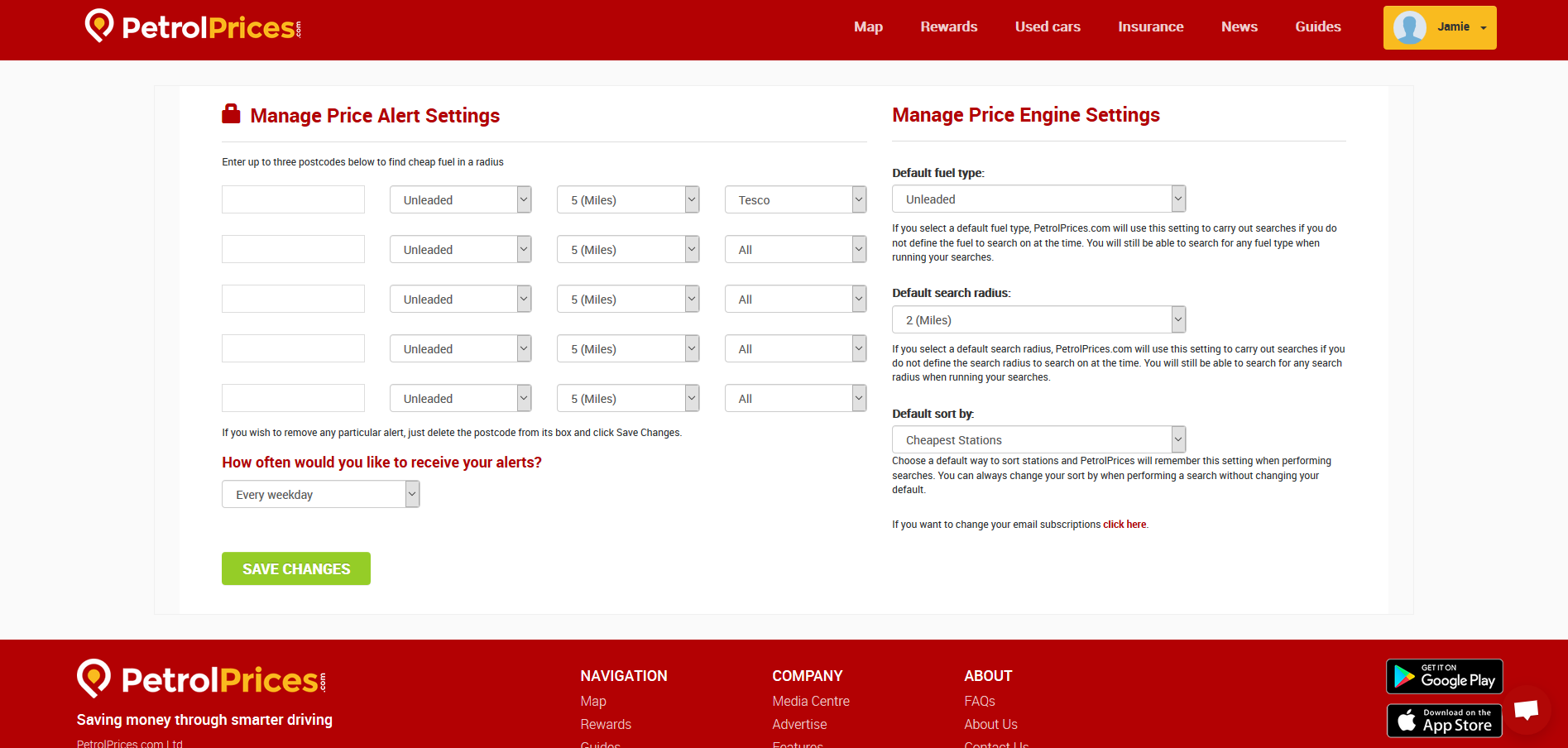
To add a price alert by brand, head to the alerts section of the member’s area and select the option you would like from the drop-down.

If you’d like to start filtering your price alerts by brand, you’ll need to be a Plus member, which is just £2 per month (or less than a cup of coffee!).

If you’re already part of the Plus membership, just head to the alerts section of the member area using this dropdown.

Once you’re in the alerts section, you’ll see all your existing price alerts. However, you’ll notice the additional drop-down box listed under ‘Brand’. Clicking on this will open up a list of all the brands we have price data for.

screenshot of account

For example, if you’d like to show only Tesco stations, merely click the Tesco station listing, remember, you’ll need to click save changes. If you don’t, your price alert won’t update.

If you ever want to suggest a new feature, head to the contact page and click “suggest a feature”.

Number of diesel cars on UK roads at record levels

Despite the Government’s relentless efforts to dissuade people from driving diesel cars, new statistics from the Department for Transport have shown that their attempts have failed miserably as there are now more diesel cars on the road than ever before.

The data shows that a record number of diesel cars were registered at the end of 2017 with a total of 12.4 million of them being driven on UK roads, which is 308,000 more than in 2016. This suggests that people are not scared by the forthcoming vehicle excise and MOT changes, the toxicity charges in London and are just not ready to give their diesel cars up because the benefits of keeping one outweighs the incentives to switch to lower emitting petrol, hybrid or electric cars.

A record number of diesel cars

The statistics show that 2 out of every 5 of the 31.2 million cars that are on the UK’s roads are diesel cars, which is up 0.5% on the previous year despite there being a 16% drop in new registrations.

This is certainly not a stat that the Government were hoping for as they have been desperately trying to reduce the number of diesel vehicles on the roads over the last 12 months by encouraging people to opt for hybrid or electric models instead.

However, just 45,400 new electric cars were on the road in the last quarter of 2017 which means that the UK roads are home to 272 diesels for every one electric vehicle, which is barely an increase on the number recorded the previous year.

Petrol ownership has also been decreasing, with numbers falling since 2004. The end of 2017 saw 0.3% less petrol cars on the roads than there were at the end of 2016, with 59% of the total number of cars being driven running on petrol.

Why the Government’s plan backfired

For months the Government have been implementing plans to encourage people to buy cleaner cars, such as the new Vehicle Excise Duty making low carbon dioxide producing vehicles more expensive to tax, and surcharges being introduced for driving and parking high polluting cars in Central London.

With so much effort being put into eliminating diesel cars by the Government it may be surprising that there are actually more diesels on the roads now than ever before, but there a number of potential reasons for why this has happened.

Jack Cousens, Head of Roads Policy for the AA, stated that changes made to Vehicle Excise Duty by the Government were counter-intuitive as they have just ended up forcing higher tax bills onto those who would have preferred to buy a cleaner car. Instead, people are keeping hold of their older, more polluting cars which is the complete opposite of what the Government was aiming for.

Another possible deterrent for motorists is that they want to avoid the surcharges that they would face if they bought a new model, so they would prefer to stick with the vehicle that they currently drive.

Steve Gooding, director of the RAC Foundation, summed the situation up well by saying that the Government cannot eliminate diesel cars as quickly as they wanted to due to the fact that they are entrenched in our society, and that it will take years to significantly decrease the number of diesel vehicles on the UK’s roads.

What happens next?

It is argued by some motoring experts that the slump in new diesel car buying is only the beginning of the downward trend in diesel car use and that a small increase in diesel car use before the decline is logical, given the fact that more drivers are keeping hold of existing cars rather than trading up to a new one.

The Government are expected to launch a raft of new measures soon with their national Cleaner Air Initiative, which is likely to contain more limits and taxes on the use of older, high polluting vehicles to get them out of major cities. The measures implemented will start to have an effect and it will fall in 2018. Evidence of this is Jaguar Land Rover’s recent decision to lay off 1,000 staff, which they say is because of the fall in demand for new diesel cars.

Do you currently own a diesel car that you are keen to keep hold of and if so why are keeping it? Are you considering trading in your diesel car for a hybrid or electric alternative? Let us know in the comments below.
Installing a dashcam can reduce car insurance costs by up to 20%

The latest must-have gadget for your dashboard is one that could even save you money. The trend towards installing dashcams in your car is one many have adopted for a range of reasons. Moreover, it turns out that some insurers will now reduce the cost of your car insurance by up to 20% if you have one installed too.

It seems that the growth of dashcams has really taken off in the UK and there are now well over 1 million in use on the roads today. Insurance companies are also encouraging more drivers to install one in their car because it means they can save money on accident claims by using video evidence to speed up claim time and resolve costly decisions where there is split liability or claim fraud.

Catching the incident

People have taken to installing dashcams with the aim of avoiding being caught out in scams on the road. Moreover, they also appeal to insurers as they can record footage of an incident. It could prevent costly legal disputes about who was at fault by providing clear evidence of what happened. As a result, this could see a reduction of up to 20% in your premium when you install one.

The main reason people are installing them is to stop those dodgy insurance claims made against them. Recently footage was shown of a cyclist who threw himself in front of a Nottingham motorist and then ran off when he realised he was being filmed. It can also track attempts made by fraudulent drivers who brake very hard causing the car behind to crash into them from behind. This is known as a classic “forced rear-ending” or “crash for cash” scam; dashcams eliminate any chance you can be made to pay for this.

Combating the scams

While these scams are highlighted via YouTube, many others cannot be proven, and dodgy insurance claims are costing the industry £36 million a year. Dishonesty in the car insurance sector is the highest in any area of the industry. A total of 70,000 fraudulent claims were detected last year which was a drop of 2%. Moreover, measures such as the increased use of dashcams could help continue to bring this figure down.

The AA says that around 1 million people already have a dashcam installed in their car that records what happens on the road ahead. They predict that this figure will double in the next couple of years as manufacturers begin to install them as standard. It compares with the number from four years ago where just 300,000 drivers had the tech installed.

Visual deterrent

Not only does a dashcam help to stop fraudulent claims, but it is a general deterrent to bad behaviour on the roads. One driver from Surrey recounted how she paid £130 to have a dashcam installed in her Golf. While she has not seen a reduction in her insurance, she does believe it has stopped other drivers’ bad behaviour.

If someone is tailgating her or cuts her off, she merely points to the camera to make them aware that they are being filmed. It often results in a friendly wave and a more cautious approach due to being on camera.

Improving technology

The dashcam technology itself is also developing to make the devices more useful and cost-effective. They can be picked up for as little as £30 or up to around £200 and come with a pad to stick behind the rear-view mirror. They plug into the car charger socket.

Devices can run on an hour-long loop or even restart for each journey. Moreover, if you are involved in an incident, you can stop the recording to make sure that the event is saved in the memory. If you can make a 20% saving on your car insurance, the dashcam pays for itself in the first year.

If you are involved in a non-fault incident where you cannot prove you were not to blame, you will see a big increase in your insurance the next year – it can double in some cases. However, having a dashcam can prove cases where otherwise it would go against an innocent motorist.

Dashcam insurance policies

So far, only a few insurers have confirmed that they offer a discount for dashcam installation including AXA, Adrian Flux, SureThing, and Swiftcover. They offer discounts of between 10-20% for having the device installed and some now even come with a free dashcam, such as Co-Op Insurance. The added benefits include making the car less attractive to thieves who may not know if it is active. Moreover, the chance to catch out those scammers who cost us all money in higher insurance premiums is a definite positive to having a dashcam.

Great dashcam deals

PetrolPrices recommends two dashcams for members.

Roadhawk have a great range of dashcams for both car and bike, see the full range here

The DriveSmart Ultra HD 4K Dashcam is an amazing piece of kit, and with PetrolPrices you can get it for 47% off here

Have you installed a dashcam and own a dashcam car insurance policy? Would you consider it if it saved you up to 20% on your insurance? Let us know in the comments below.

Buying a car is cheaper than train ticket for some journeys

The point of public transport should be simple. It is cheaper and easier than private transport, more environmentally friendly and allows you to get where you need to be at a sensible cost and on a regular schedule. However, a case study by the co-owner of LatestDeals.co.uk shows that in some cases it’s more cost effective to buy a car and drive than it is to pay for a train ticket.

In theory, the idea of buying a car, making sure it is taxed, insured and with enough fuel should not come anywhere near the cost of travelling by train. The sad truth is that some train companies are profiteering on certain routes at peak times to such an extent that this has now become a reality.

London to Bristol – the story

Tom lived in London and wanted to visit another co-owner of the website who lives in Bristol. The quote for a return ticket at peak time from London to Bristol was £218.10. He decided to see if it was possible to buy a car and drive it for less than this quite substantial amount of money for such a short journey.

First, he did some research and found a car – a 1997 Honda Civic that he bought for just £80 with six months left on the MOT. The road tax for the vehicle was £81.38 and the cost of insuring it for a day was £20.43. The car used £25 worth of petrol for the journey. A total cost of £206.81 – saving £11.29 versus the cost of a train ticket.

The bigger picture

Added to this, Tom pointed out that at the end of the experiment he still had the car which could be resold for a similar amount or possibly more. The car ran well, and he was quite impressed with it.

Alternatively, if he wished to do so, he could continue to pay for the insurance and have use of the vehicle for longer. There are added costs to be considered with this, such as servicing and ongoing petrol costs, but ultimately using and driving a car on intercity routes in peak times beats trains on cost hands down.

Of course, this is not the whole picture. For starters, the experiment was based on peak time trains; if you travel at off-peak times, there can be a significant saving in the cost of the rail ticket. The Independent looked at the price and found an off-peak return was just £140.

Then there’s the time factor. Driving wasn’t an easy job because the M25 was very busy and there were accidents and roadworks on the M4. The journey in the car took 3 hours 30 minutes while the trip on the train was just 1 hour 43 minutes.

Other public transport options

While the case study is an interesting one, it doesn’t cover all the public transport options available. The rail journey in question is a straight route from the capital to Bristol. However, if you take a staggered trip, it can make a saving, as frequent rail users know. A journey that went via Salisbury, for example, cost £73.30 for an Anytime fare.

Then there’s the bus. National Express operates frequent services with flexible fares of £48.80 from Victoria Coach station to Bristol. There is a new on-demand service offered by Sn-Ap that has a maximum ticket price of £25 return

A growing problem

Tom’s experiment highlights an increasing problem across the UK, which is the fact that it can be cheaper to run a car than to use public transport and especially trains at peak times. Train fares at peak times are often price matched to plane fares to compete for the business traveller, and therefore the cost has been steadily increasing in recent years.

This rising price has also meant more people are doing just what Tom did, buying a car instead of using public transport. It is why there is a higher number of vehicles on the road than ever and why congestion and pollution problems are at an all-time high.

Figures show that the number of cars on UK roads reached a new highest figure in 2016 of 31.7 million, an increase from 31.5 million the previous year and from 29.9 million ten years before that. As more people turn to inexpensive and often polluting cars to avoid the higher cost of public transport, this figure could continue to grow.

If the Government are serious about tackling road pollution, they need to look at the cost of public transport during peak times and intercity routes. Train operators have been getting away with this for many years now.

Labour is looking at the drastic step of making all rail companies publicly owned again and reducing prices, so they are more in line with other Western European countries, such as France and German, both nationally owned where fares are 30-40% the price compared to the UK. Doing this one could have more environmental benefit and reduce pollution far more than taxing drivers of polluting cars to the hilt.

Do you know of a train route that costs over £200 return? Have you switched to driving because of the expense of rail? How did you feel about the cost of your journey or season ticket? Let us know in the comments.

AI technology to catch motorists on the phone while driving

Using a mobile device while driving is one of the most dangerous things that a motorist can do when behind the wheel, but it is thought that new AI technology could help police forces to crack down on this activity without the individual knowing.

The idea is that roadside camera detectors could be used to take photos of people using their phones or other devices while driving, as they will be intelligent enough to be able to both detect the exact vehicle which is being driven via ANPR and then identify the offence in action as the offender drives past.

Image recognition AI software

At present, it is not known exactly how this new AI technology will work, but it is understood that image recognition software will be part of it and police forces around the world are looking into how they could be using this technology to help them to detect and deter criminal activity.

Basic versions of AI are already being put to use in automatic number plate recognition technology, and advances in the development of long-range cameras and other high definition imagery can help police to get clear photos of those who are breaking the law while on the roads.

The police force in New South Wales, Australia, is backing a Government decision to find technology-based solutions which will help to address the problem of people using their phones while driving, and they are currently looking into solutions such as long-range cameras, and helmet cameras being worn by police on motorbikes.

They hope that machine learning systems could be taught to recognise mobile phones and other devices being used, and could then capture images of drivers using them while behind the wheel. This would then be linked to an automated number plate recognition system so they could track down the guilty motorist.

Camera trial reveals the extent of mobile use

A high definition camera placed on Sydney Harbour Bridge to capture images of motorists using mobile phones while driving ended up spotting someone committing the offence every 30 seconds, showing just how often this particular law is being broken.

The camera was in action on the 12th of December 2017 between the hours of 8 am and 2 pm, and during this time it snapped 743 motorists using their phone, which equates to 4% of all drivers.

This issue is at the forefront of the New South Wales police force’s agenda as 29 people died on their roads during the festive period last year which was almost twice as many as the year before. Using a mobile phone is becoming one of the most common reasons for people to be involved in a crash as it is a leading cause of driver distraction.

To really enforce how dangerous this activity is, Bernard Carlon who is the Executive Director at the Centre for Road Safety said that those who have a mobile phone offence are twice as likely to be killed or injured in a car crash. This doesn’t always match up with other data as many collisions involving mobile phones are unreported due to a lack of evidence.

Laws around using a mobile phone while driving

In the UK is it against the law to use your mobile phone, or another handheld device, while behind the wheel unless you are pulled over safely with the engine off, or are in an emergency situation when you need to call 999 and pulling over is not an option.

This means that it is illegal to use your mobile phone when stuck in traffic or waiting at traffic lights, and this can sometimes apply to hands-free devices too. In addition to this, devices such as sat navs and mobile phones which are attached to the windscreen should not obscure the area swept by your windscreen wipers. Turning the volume down on your mobile phone if its linked to the car audio system, or adjusting Google Maps on your phone while driving is also regarded as illegal.

Breaking these laws could land you with a £200 fine and 6 points on your driving license, so we suggest always keeping your phone out of reach if you find it difficult to avoid the temptation to check it when you are driving.

At the moment, using a handsfree kit connected to your mobile phone is legal, but if you then use your mobile phone in the process of using your handsfree kit, (such as turning off a call), this is illegal. It is this type of grey area which makes mobile phone use while driving one of the most contentious issues of the moment because many people don’t actually know what is and isn’t allowed.

Do you fully understand what is and isn’t allowed with mobile phone use while driving? Do you think that the introduction of AI technology will deter people from using their phones while driving? Let us know in the comments below.

Breaking: Oil prices soar leading to fears that petrol prices will rise

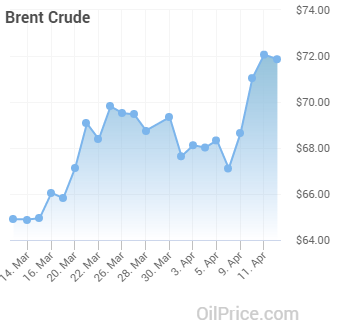
Overnight the price of Brent Crude oil rose dramatically in its biggest spike in months. This spike was due to the crisis in Syria and recent chemical weapons attack, which has stoked fears of a major war. As oil traders fretted over the possibility of a stand-off between the West and Russia in Syria, the oil price began to rise and went over the $70 per barrel mark.

The price of oil has a direct effect on the cost of petrol and diesel in the UK. It seems that the destabilising influence and risk of a much bigger war in Syria will mean that we will see an increase in the cost of fuel at the pumps in the coming weeks.

Some context to the situation

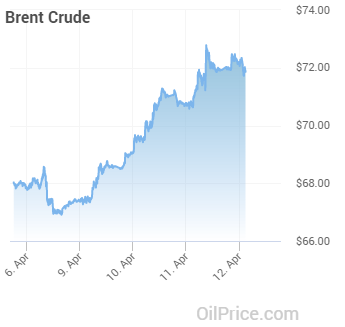
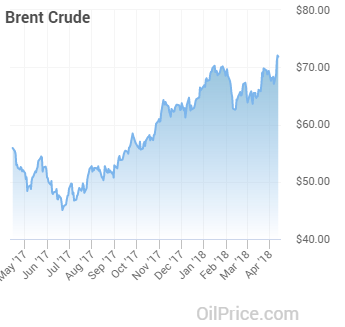
When the price of Brent Crude oil increases, the price of petrol and diesel in the UK increases as well. You can see the price charts from OilPrice.com below showing the price over the last week, month and year and the spike that happened last night.

Weekly price of brent crude oil per barrel increase, captured by OilPrice.com

Monthly price of brent crude oil per barrel increase, captured by OilPrice.com

Yearly price of brent crude oil per barrel increase, captured by OilPrice.com

It is produced in a wide range of areas, and therefore a wide range of factors affect the price. When there was an increase in supply in February with the reopening of the North Sea Forties pipeline, there was a slight drop in the price of petrol and diesel 2 weeks later.

Now, as fears mount over military action against Syria, with threats emerging from Donald Trump’s twitter timeline, and wonder over what the UK will do, the price of oil remains even more volatile than normal. It is believed that some form of action will be taken, but any form of military action in Syria will drive the oil prices up, and therefore affect our petrol and diesel prices.

What does this mean for drivers in the UK?

Over the next few weeks, it will most probably mean a rise of a few pence per litre at the pump, with industry experts predicting that we could see a rise of around 3p a litre. This rise will directly affect UK drivers, as the price of petrol has already been rising since July last year, and has been consistently hitting the 120 pence per litre mark for four months now.

The expected fallout of this oil price rise will affect motorists over the next few weeks, especially as decisions are made over military action towards Syria. The pump price rise could also be joined by a rise in energy prices if the oil continues to rise. This is joined by the British Gas increasing some of their tariffs by 5.5%, and all of this combines to be unwelcome news for drivers as the Easter holidays draw to a close.

Looking forward

The UK meets today (Thursday 12th April) along with the USA and France to discuss any proposed military actions they will take. They’re expected to release statements in the following day or two.
Some industry experts think that a sustained price jump could see prices similar to that of late 2014, around 123 pence per litre for unleaded and 127 pence per litre for diesel, which spells bad news for UK drivers.

Interestingly, OPEC has said that the recent price rises are largely due to stronger demand for oil rather than the threat of a war, or restrictions on production and that prices will continue to edge up slightly. They expect the price of oil to not to exceed the $80 per barrel mark, which roughly equates to a maximum price limit of 130 pence per litre for unleaded and 133 pence per litre for diesel for the rest of the year.

UPDATE: 10:30 am New analysis from the AA suggests that a rise of 2p a litre will hit the forecourts this weekend, and a rise of up to 5p per litre.

A 4p a litre increase in the wholesale price will filter down to forecourts, and as the oil price is not expected to fall below $70 until May.

OPEC has also noticed many blips across the oil-producing regions leading to much higher demand and therefore higher prices.

PetrolPrices will update this article as further developments appear, and we will keep you informed over the next few weeks as to the pump price

Feature update: New website & Plus features

Summary

PetrolPrices now has a new website, helping new members understand what we do and how we do it. We’ve enhanced existing features and created new ones, including:

  • Average price of standard unleaded and diesel by popular fuel retailers, calculated based on the mode average of prices (the frequency that particular price appears from that brand)
  • Average price of standard unleaded and diesel by major cities, calculated based on the mode average of prices (the frequency that particular price appears within the location)
  • Helping smaller independent retailers gain business insight
  • Improved readability of the articles and categorised existing guides
  • This is just one small step towards making the service smarter and more effective at saving you money on the road. It’ll probably be a bumpy ride, so put your seatbelt on and enjoy the trip.

    What Car? think the best time to buy a new car is now

    With new car sales falling for the twelfth consecutive month in March and new registrations being down 16%, dealers are dramatically reducing their prices to encourage people into their showrooms and make some desperately needed sales.

    This drop is bad news for dealers and manufacturers, but great news for anyone who is in the market for a new vehicle as you are very likely able to pick up a great discount now. What Car? agree and they think that it’s a buyers’ market to the extent that anyone thinking about buying a new car should take advantage of this rare opportunity.

    Fantastic new car discounts available

    WhatCar? found that the average discount on a new car is currently 8.6% which equates to £2560, but some dealers will slash prices by up to 5x that amount with staff more willing to offer a greatly reduced price to boost sales.

    Not only are dealers feeling the pressure to sell cars due to falling sales overall, but discounts also need to be offered to those looking to buy due to the influx of new products on the market which is causing competition between dealerships.

    Nearly 25% of car manufacturers are now offering potential customers discounts in the double digits, with the Seat Toleda 1.6 TDI 115 SE being found to have the greatest price reduction as its price was almost halved by 42.3%.

    Other new cars which have been heavily discounted include the Fiat Punto 1.2 Pop+ 5dr (25.3%), the Seat Mii 1.0 Design Mii 5dr (25.3%), the Citroen Berlingo Multispace 1.2 PureTech Feel (22.7%), and the Volvo s60 T4 [190] SE Nav [Leather] (22.3%).

    The best time to buy a new car

    There are many people in the motor industry who agree that now is the best time to buy a new car.
    James Hind, founder of Carwow has pointed out that there are particularly great offers on diesel cars at the moment, as sales of this type of vehicle have taken a real hit recently, the usual price differential between petrol and diesel cars has been cut by around a third. He also added that motorists can get a great price on petrol cars too if they are savvy when choosing and purchasing their new vehicle.

    Director of Strategy at Close Brothers Motor Finance, Chris Bosworth, has taken this opportunity to say that dealers need to adapt to the changing market in order to get potential customers into their showrooms, and the best way to do this is to offer them a range of great finance options and a wide variety of cars, including petrol, diesel, and electric models.

    With so much focus on the falling sales of new cars it may have been missed that data from AA Cars has shown that sales of used cars are also on the rise, which is partly due to the fact that finance deals are now available for used cars when they used to be predominantly for new cars. This means that more people are able to afford the type of car that they want to drive without getting tied up in expensive car finance leasing deals, where they don’t own the vehicle they buy until full payment is made.

    Recommended deals from carwow

    Using carwow makes choosing and buying your perfect car easy and enjoyable. Their top-rated local and national dealers will send you their best offers to compare – meaning you get the car you want, from the dealer you like best, at a price that’s right for you.

    Jaguar E-pace £2140 average saving and additional £1000 off on deposit contribution.
    Audi A3 Sportsback £1738 average saving and additional £1000 off on deposit contribution.
    Land Rover Discovery Sport £2533 average saving and additional £500 off on deposit contribution.
    Skoda Citigo £840 average saving and additional £500 off for test driving.

    How to get a great deal

    If you are looking to buy a new car, take these main points into consideration which will help you to get a great deal:

  • Do your research – Work out exactly what you can afford and stick to this. The more specific you are the less likely it is that the salesperson will try to upsell and offer you vehicles or add-ons that are out of your budget.
  • Know the cars that hold value – new cars can lose 30% of their value the moment you drive off the forecourt. By choosing desirable cars at the start can help when you are the stage when you want to sell it years later.
  • Know how much it will cost to run – knowing the running costs, including insurance, road tax and fuel consumption, can make a vital difference in determining what is a deal worth doing and what it will cost each year.
  • Know when to shop – Prices will be lowest before registration changes and at the end of quarters as this will be when dealers are looking to pick up bonuses based on their sales.
  • Don’t be intimidated – Haggling a great deal can be hard if you are not used to it, but don’t be afraid to ask questions and ensure that you are getting the best price possible.
  • Check the paperwork and the warranty details – just before you are about to sign, make sure you know every detail of the finance agreement and what is inside and covered by the warranty.
  • Finally, don’t be afraid to get impartial advice. PetrolPrices has a partnership with Carkeys, they provide a free and impartial, no obligation telephone based advice service where they can help you find the very best new and used car deals out there at the moment, which can save you up to £3000 on a car. Click on start now and fill in your details and an adviser will call to assist you.


    Are you currently hoping to take advantage of these great new car offers? Would you be tempted to change your car due to the massive reductions that are on offer? Let us know in the comments below.

    Drivers issued with one million penalties for driving in bus lanes last year

    According to data obtained by the RAC, drivers in the 20 largest cities around the UK have received over one million penalty charge notices (PCNs) over the last year for driving in bus lanes. Figures from a Freedom of Information (FOI) enquiry showed that between 2015-17 over 3.4 million people received a fixed penalty notice for this.

    Bus lane penalties can be very different in cost, but the RAC estimates that these charges have amounted to a staggering £200 million across three years – around £68 million each year in extra income for local councils.

    A common mistake

    In their press release on the topic, the RAC looked at city councils in London and around the UK. It showed that there had been a 5% rise in the actual number of penalty charge notices issued for bus lane misuse from 2015 until 2017. This figure was higher outside London with a 9% increase over the time frame while inside the capital, the number had dropped by 5%.

    The greatest concern for the RAC is that many drivers aren’t deliberately misusing bus lanes but rather there is poor or confusing road signs meaning that it has become a common mistake. And it’s also one that local councils are quick to punish. That’s why they are calling for a review of national signage guidelines and other steps including the use of ‘smart bus lanes’ to make it easier and clearer for motorists.

    Varied picture across the country

    The picture when comparing the different cities presents a varied one. The data analysed by the RAC showed that Manchester City Council issued the most notices between 2015-17, totalling over 350,000 and a massive 172,311 in 2017 – an increase of 175% on the 2015 figure. Second place was Glasgow with over 339,000 across the two years. Followed by Cardiff (267,00+), Bradford (208,000+) and Nottingham (194,000+).

    Birmingham City Council topped the list of the councils that saw the highest increases. The city has 19 miles of bus lanes and sent out 2,368% more fines for infringements in 2017 than in 2015. It is despite there being no extra bus lanes or even any more cameras supervising them. Three of the London boroughs – Croydon, Havering, and Southwark – also saw increases of 787%, 439%, and 187% respectively.

    Overall, the picture in London was varied. Of the 33 local authorities, 27 provided information for the study. Of these, half had seen a rise in the number of bus lane fines while half had recorded a decrease in penalties for the period 2015-17.

    Confusing picture

    The complete picture is a confusing one. Bristol has the most enforcement cameras, numbering 51 and issued an average of 944 fines per camera. But Manchester had just 22 and issued the equivalent of 7,832 penalties per camera. Lewisham Council in London had the highest total number of PCNs per camera, with one bus lane camera issuing a shocking 9261 notices in a year.

    RAC spokesman, Simon Williams, admitted that bus lanes have a vital role to play in keeping city centres moving. But, the sheer number of fines that councils are issuing suggests there is a bigger problem. And, they firmly believe this is because people don’t realise they are breaking the rules.

    They are campaigning for better signage and a reduction of ‘clutter’ that can mean it is easy for drivers to miss them. They also advocate the use of modern technology that could make better use of available road space in a similar way to smart motorways.

    Handling a fine

    Fines for bus lane violations vary across councils with London the highest at £160, or £80 if paid quickly. Most cities average around £60. Motorists who receive one can often get a discounted rate if they pay speedily but need to be aware that the cost can increase if they take more than 28 days to pay.

    The only advice we can provide is to make sure you steer well clear of bus lanes if you know that they are in operation, many now have cameras monitoring their use as this research confirms, so don’t risk it. But also, be aware that if you are driving in an unfamiliar location and accidentally drive on a bus lane without realising, stating that you didn’t know it was there may be an acceptable defence if you appeal against the fine, but it is solely at the discretion of the council when you appeal.

    Have you ever had a penalty notice for driving in a bus lane? Did you know what you were doing or were you unaware until the fine came through? Do you think this is a cash cow for the councils and being misused? Let us know in the comments.