Mar 7, 2018
A trial by Highways England to display fuel prices from upcoming motorway services along a stretch of the M5 has come to an end, and the findings have now been published. Highways England hoped that the trial would increase fuel price competition and price transparency, but unfortunately its failed to achieve either of these aims.
Several thousand drivers were surveyed, and they did not think the signs helped at all. Most drivers know the price of fuel at motorway services is a lot higher than on normal roads, and all it did was highlight how expensive motorways service stations were rather than help reduce prices on motorways.
Setting up the trial
Highways England tested four things; Safety, customer, economic and performance. Was there an impact on safety? Did the customer find it useful? By providing fuel price transparency, did it lower prices? And did it work all the time, effectively?
Five Motorway Service Areas (MSAs) were chosen to take part between Junctions 18 and 30 of the M5 southbound; Gordano, Sedgemoor, Bridgwater, Taunton Deane and Exeter. Four signs were installed each with the petrol and diesel prices for the next three MSAs in distance order.
The trial lasted from April 2016 to Sept 2017, and the signs were in constant operation during that period. The signs had a live feed of the price at the stations as well as the distance to the MSA. With a delay of under two minutes, the prices were consistently up to date, meaning that no more than four cars would see a difference in price when they entered the station.
The findings
There were no safety issues reported during the trial, and while some people found them to be distracting there was nothing above the expected level.
When surveyed, participants from Highways England found the signs to be useful, but motorists responding to an online survey disagreed greatly. They felt that the signs were not helpful, should not be introduced on other motorways and 75% said they were not helpful.
A common criticism across all the respondents was that they felt the signs did not provide good value for money, with many adding that they did not fill up at MSAs anyway as they knew, due to inelastic demand, that the price at a motorway station was considerably greater than one just off the motorway.
Regarding economic value, the trial did not prove effective as the fuel prices did not go down and stayed in line with national average trends. While some would have thought that the price signs would have created competition and driven prices down, this did not happen. The price transparency provided by the Government had no effect at all, as everything stayed in line with the national average of MSA’s on other motorways without price signs.
Why didn’t it work?
Highways England were naive if they thought that this would work successfully. As they were merely comparing MSA with MSA, there is no competition created as the inelastic demand around MSAs will always be high enough to require people to stop. Due to this MSA’s know that they can keep prices high, no matter what the competition is doing.
However, if they had compared the fuel price of an MSA to one that was a bit off the motorway, showing the distance and the comparative fuel price, that would have made a huge difference. People would have realised that by travelling slightly off route, they would have found a much cheaper fill-up. By not implementing this key strategy, Highways England has conducted a somewhat useless trial, as there was no competition properly created for the fuel price retailers to then properly respond to and drop prices.
One example is Junction 8A of the M40. The service station there is currently 141.9p per litre for diesel, but just over 1 mile away another station is selling diesel at 118.7p per litre. If the fuel price sign trial had shown the respective prices of these two with the comparative distance, it would have reduced the MSA considerably.
Jason Lloyd, Managing Director of PetrolPrices.com, says “A similar test worked really well in Italy which brought down fuel prices on major roads, so I can totally understand the rationale behind the Highways England trial. However, the UK is a different market and motorway service station operators do take advantage of a captive audience far more than those in Italy do because many operators are the only petrol station option at that specific junction.
The only way to shock motorway service operators into action would have been to highlight the price difference between non-motorway stations at that junction or the next junction. It’s only when a dramatic price difference is shown to be available 1-3 miles down the road will it change behaviour and move pricing the way Highways England wanted it to.
You can now get full colour LED screens as road signs that can display all the information needed for drivers to make an informed choice about the cheapest and nearest places to fill up with basic directions how to get there.”
So what happens next?
The trial will not be rolled out nationally as Highways England predicts it would cost around £50 million pounds, a steep cost for something that has no proven economic value, both to the motorist and to the Government. Negative feedback from survey participants showed that they thought the idea was a ‘waste of money.’ It seems, for now, PetrolPrices is the best way to find out the cheapest fuel near you.
If Highways England would like to take up our suggestion and run the test again by comparing MSAs with stations less than 3 miles from the same or nearest junctions, PetrolPrices would be happy to get involved and assist to make it possible.
What do you think of this test from Highways England? Would you have expected it to work? Do you think comparing motorway services with stations nearby is better and would force them to change? Let us know below.
Mar 1, 2018
Most of us are aware that we need to clear the snow from our car before we set out on a journey. However, one motorist was left furious after receiving a parking fine because snow had fallen on his car while he was at work and obscured where the permit was located.
<script type="text/javascript" src="https://verticalintelligence.tagdeliver.com/srv/infeed/15898/add.js" id="ciif-ads"></script>
Ollie Claxton was confused when he received a £70 parking fine through the post. The penalty had been issued by a Derby City Council parking warden and left Ollie puzzled because had a permit for where he had parked. He had been working away in London for a few months before receiving the letter on December 12th containing the fine.
He visited the council’s website where he could view a picture of his car and instantly realised what had happened – it had been snowing while he was in work and the windscreen of the car had a light covering on it. The parking warden had not bothered to dust the snow off to look for the permit and instead continued to issue the penalty.
Derby Council then admitted that snow and ice can cover a permit and revoked the fine after media outrage. It also came to light that the parking warden had accidentally put in the number plate wrong and was therefore not able to cross reference the number plate with a permit. The last digit had been inputted as a zero rather than the letter ‘O’.
Derby City Council said: “Drivers are responsible for ensuring that permits are clearly displayed, but snow and ice can temporarily obscure the visibility of a permit.
“Officers are advised not to touch vehicles to avoid possible complaints that they have caused any damage.”
<div id='div-gpt-ad-1552916936912-0'><!-- [et_pb_line_break_holder] --> <script><!-- [et_pb_line_break_holder] --> googletag.cmd.push(function() { googletag.display('div-gpt-ad-1552916936912-0'); });<!-- [et_pb_line_break_holder] --> </script><!-- [et_pb_line_break_holder] --></div>
Figures from last year show drivers are paying out some £1.5 billion for parking permits, pay and display meters and fines across the country. Councils in London alone collected some £600 million from fines and fees, while the cost of parking in Leeds saw the highest increase in the country – up 12% from the previous year.
Penalty Charge Notices (PCN’s) are around £24 outside of London and around £77 inside the capital. Moreover, while councils did put half of the money made back into services, the fines and fees amount to £58 a year for every driver.
The top 10 councils parking incomes are:
- Westminster £76.4m
- Kensington & Chelsea £46.1m
- Camden £38.1m
- Hammersmith & Fulham £35.6m
- Wandsworth £30.4m
- Islington £29.7m
- Lambeth £27.5m
- Haringey £25.4m
- Hackney £23.3m
- Ealing £21.4m
<div id='div-gpt-ad-1511452598873-6'><!-- [et_pb_line_break_holder] --> <script><!-- [et_pb_line_break_holder] --> googletag.cmd.push(function() { googletag.display('div-gpt-ad-1511452598873-6'); });<!-- [et_pb_line_break_holder] --> </script><!-- [et_pb_line_break_holder] --></div>
This ludicrous case highlights a growing problem with the number of parking fines being issued around the UK. While there are situations where people are parking somewhere they are not permitted, there are also cases where the situation is much less clear-cut.
You need to have a ‘compelling reason’ when you appeal your penalty charge notice, for the local council to reconsider it. Some examples include:
- Penalty exceeded the amount that applied in the circumstances
- The incident did not happen
- The relevant traffic regulation order or TRO is invalid
- There’s a problem with the procedure the council uses
- You did not own the vehicle
Other compelling reasons could be used in Ollie’s example – he did have the parking permit, but the warden did not attempt to clear the window to look for it. Moreover, he could not be expected to keep leaving work to clear the windscreen in case a warden came around. However, this is a bit of a grey area because, under the same rules, drivers are expected to put a parking permit in a prominent position that can be displayed and seen at all times. A natural act of the weather covering the permit is a contentious issue. Inputting the number plate is an easy mistake, especially in cold weather and that Derby council apologised is appropriate.
The other type of parking fine we face is known as a private parking ticket. They are issued by non-public bodies such as supermarkets, hospitals and service stations. They are more difficult to enforce as the only way a company can do this is to take you to court.
They look similar to parking charge notices issued by local councils, and you have a 28-day period to pay them or face an increased fine. If you are unsure if the penalty is legitimate, you can challenge it with the company, and they should have a transparent appeals process laid out to follow.
The Government are looking at introducing new rules that would control and regulate the private parking permit market to ensure that drivers have more protection against unscrupulous firms who issue tickets as and when they like with impunity.
Sometimes we must hold up our hands and admit we were in the wrong with our choice of parking locations. However, in other cases, like Ollie’s, then appealing the fine is the best path to go down and the common sense shown by the council seemed appropriate.
<div id='div-gpt-ad-1511452598873-4'><!-- [et_pb_line_break_holder] --> <script><!-- [et_pb_line_break_holder] --> googletag.cmd.push(function() { googletag.display('div-gpt-ad-1511452598873-4'); });<!-- [et_pb_line_break_holder] --> </script><!-- [et_pb_line_break_holder] --></div>
Feb 28, 2018
A public information request from 45 police forces across the UK has revealed that since the government announced stricter laws coming into force in March last year, just over 30,000 Fixed Penalty Notices (FPN) for mobile phone use at the wheel were handed out in comparison to the 45,000 from the previous year.
What seems to be the most worrying aspect of this public information request is that while penalty notices have decreased, this would indicate that mobile phone use at the wheel has gone down because drivers are more worried about getting caught.
However anecdotal information suggests that the cause of the decrease is more likely to be because there are fewer police on Britain’s roads and that mobile phone use in cars is still happening as much as ever and that the lack of police on the roads to catch people out is why the figures have decreased.
The new fixed penalty notice
The new Fixed Penalty Notice for being caught using a mobile phone while driving has doubled from £100 to £200 and the number of points added to your license from 3 points to 6 points. On the surface, it appears from the number of fines issued that the increased fine and the number of points on a license has drastically reduced the number of people using a mobile phone at the wheel.
Drivers who receive 12 points on their license in three years, or six points for the first two years of driving, face having their license revoked. As reapplying for a license and passing both tests is costly, the risk of using a mobile phone should deter many who are at risk of an immediate driving ban.
During the year over 500 novice drivers had their license revoked for using a mobile phone behind the wheel. And as part of a national crackdown in the last week of January this year, a further 2000 people were found on their phones while driving, of which 74% were male.

Police resources stretched
In March 2017, when the new regulations were introduced, the government saw more than 8,500 drivers caught as traffic police increased a crackdown on mobile phone use. In December 2017, around 1,400 drivers were caught as the police focused their attention more on drink driving, which is seen as equally as dangerous and a leading cause of accidents. However, the fact that mobile phone detection fell in December indicates that police are already stretched to capacity and cannot focus on tackling drink-driving and mobile phone use at the same time.
Statistics falling but mobile use isn’t
Road Safety Minister Jesse Norman MP said “The penalties for holding and using a mobile phone while driving have proven to be a strong deterrent, and more and more people are aware of just how dangerous this is. But some motorists are still not only putting their own lives at risk, but the lives of others. Everyone has a role to play to encourage drivers to put their phone away and not use it while at the wheel.”
While it is encouraging to see the statistics fall, it is also not good to see that there are still many people using their phone while driving. When driving, safety should always come first and should never be comprised. All it takes is one second for your eyes to flit down to your phone for something horrific to happen. As Jesse Norman says above, everyone needs to play a part in stopping drivers from using their phone behind the wheel.
Even stricter consequences
Some experts are calling for even stricter consequences that would act as a “shock tactic” to get drivers to stop using mobile phones in cars for good, the same as when you are caught drink driving you receive an instant driving ban.
Driver distraction from a mobile phone has shown to be as dangerous as drink driving, the logic is that if it can have the same impact as a drunk driver why don’t the police tackle it in exactly the same way?
Do you think the new laws have helped? Should the government make laws to catch and punish mobile phone use even stricter? Let us know in the comments below?
Feb 28, 2018
One of the best things about buying a brand new car is that you can feel safe in the knowledge that it will be in perfect condition and very unlikely to experience issues. However, data from Which?’s car survey has shown that this may not be the case.
Real consumer feedback for over 50,000 cars in the UK made up the survey and found that new vehicles are experiencing problems that can make them unreliable, expensive to run, and possibly unsafe to drive too. These statistics are worrying as the Government were considering increasing the MOT for a new car from 3 years to 4 years, meaning that some faults could have gone unnoticed for a lot longer.
Here are the five most common faults, and also a few tips on how to spot them and what to do.
Exhaust or emission control system
Affected 5% of new cars
Preventing the discharge of toxic gasses, such as NOx or nitrogen oxides is the main job for the emissions control system. Five percent of all new cars had a problem with their exhaust or emission control system, an issue that has been pushed into the spotlight following the Volkswagen emissions scandal in 2015.
Most modern diesel cars are built with a Diesel Particulate Filter (DPF), specifically designed to capture and store the soot in the exhaust emissions. If this DPF fails or becomes irreparably damaged, it can lead to a costly MOT failure. You can read up more on the importance of maintaining your DFP filter here.
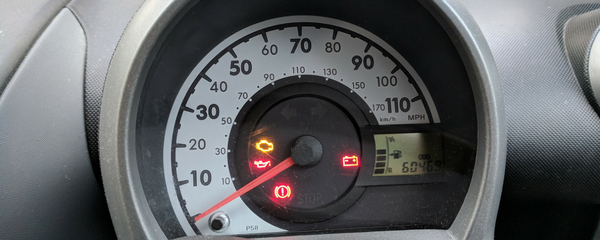
Assuming the Engine Control Unit (ECU) works correctly in your vehicle, you will get a “check engine” warning light appear on the dashboard if your exhaust is not working properly. Alternatively, you may experience a loss of power or thick smoke coming from the exhaust.
Sat Nav failures
Affected 4% of new cars
One of the most popular add-ons for new vehicles is the sat-nav package. Surprisingly, it is one of the most common things to fail within three years. Although it is not detrimental to the vehicle running, it can be very frustrating for those who’ve paid to have it installed for it to not work after a short period of time. Some people find that their in-built SatNavs are not as good as a plug in one but some find it much more convenient to use the built-in one.
Battery
Affected 3% of new cars
Most modern cars come with start-stop technology, helping the car save on fuel when the car has stopped. This requires a more expensive, more advanced battery technology under the bonnet. This, amongst other factors, means that the battery can either falter or die.
It is often down to the driving habits of the motorist causing the fault, taking short journeys, leaving lights on or not unplugging devices when they are not in use. No matter how old the car is, you cannot fix stupid. It is worth noting, battery faults are usually more common in the winter (with Storm Emma battering the UK at the moment) and making sure you are driving responsibly in winter helps.
The “battery” warning light should alert you to a faulty car battery (assuming the ECU is working correctly). Difficulty getting the engine to turnover or the start-stop technology deactivating is usually the first symptoms of a failing battery.
Mechanical brake system
Affected 3% of new cars
Worryingly, 3% of new cars on the road were found to have a mechanical brake system fault. This obviously a major safety concern for everyone else on the road. It is important that you know how to identify faulty brakes, especially if your car is new and therefore does not require an MOT for the first three years.
Indications that your car brakes are on the verge of failing could include a grinding noise, the car veering to one side and vibrations when you apply the brakes. Another sign is acceleration if the car feels slow to accelerate it could be a sign of sticking brakes. If you do notice any of these signs, you should get your vehicle checked immediately. Do not wait until the first MOT is due.
A quick way to test your brakes is to sit stationary with the engine running (in a safe spot!) and push the brake pedal down once. If it is very loose, then there’s an issue. If you continue to push the brake pedal and it does not become stiff, that could also indicate a problem with the brake system.
Suspension components
Affected 2% of new cars
2% of new cars were reported to have faults with their suspension components, which include springs, shock absorbers, and struts. If any of these components are damaged, your car should not be driven, especially at motorway speeds, as it can affect steering and make the vehicle difficult to control.
Given how poor the UK road surfaces are, it is no surprise that 2% of new cars have reported having issues with their suspension components. If the car suspension components are damaged, you will notice the vehicle veering to one side, less responsive steering, clunking or banging noises and naturally, an uncomfortable drive.
No matter how new your car is, if you think there is a fault, it is always best to get it checked by a mechanic to make sure you are not putting yourself or other road users at risk.
Have you ever found a problem with a car when it was new? What do you think drivers can do to help? Let us know in the comments
Feb 28, 2018
In February average fuel prices dipped slightly by 0.4p per litre unleaded and 0.5p per litre diesel versus January. Prices are still higher than they were at the same point last year by over a penny. The last time fuel prices were higher during February was in 2014, which was when the price crude oil was above $100 a barrel. The main point of contention on price has been the how quickly petrol retailers have passed on reductions in the wholesale price and this has been a prevalent theme throughout the month.
Falling wholesale prices
The RAC first issued a request to the supermarkets at the beginning of February to lower their prices in light of the drop in wholesale prices. The cost of a barrel of crude oil fell by $5 at the beginning of February. The RAC hoped that supermarkets would drop their prices by around 3p a litre. The wholesale cost had dropped by 7% from 25th January to 7th February, meaning the cost of buying the fuel had already declined significantly.
The RAC firmly believed that the big four supermarkets had room to drop their prices as the average was sitting at 119.49p for petrol and 122.13p for diesel. Dropping their prices would see motorists paying less at around 8,500 forecourts across the country and would be a welcome boost for drivers.
(Credit – Stephen McKay)
Prices still rising
But as of the 7th February the price of fuel was still going up, reaching 122.17p for petrol and 124.91p for diesel. The RAC were keen to see the supermarkets reduce their prices from that point as the half-term holidays came around and knew they could afford to drop them by around 3p a litre. Some supermarkets were running promotions such as Tesco, who offered a whopping 10p a litre off fuel if you spent £60 or more in a single shop.
Regional differences also showed scope for changes as well. In Somerset, for example, the supermarkets were selling fuel around 10p lower than the average price around the UK and 7p a litre less than the average versus major petrol retail brands.
Double price cuts announced
Following ongoing pressure from the RAC on February 9th, ASDA led the way with a drop of 2p per litre and many supermarkets followed suit, such as Morrisons and Sainsburys with similar price cuts. During the same week, the cost of oil had fallen further to $61.46, the lowest price since the middle of November last year. The increased exchange rate also helped, meaning that the wholesale price of fuel also fell a little further.
A week later something unusual happened in that ASDA cut their prices again by a further 2p per litre taking prices down to an average of 116.8p per litre. The rest of the industry was taken aback by the change but did react a few days later, Morrisons and Sainsburys also dropped their pricing again, so a double price drop in the space of a week.
Kudos to the RAC
We should give thanks to the RAC for prompting the supermarkets to make these changes.
Simon Williams from the RAC commented: “The sharp drop in the price of oil gives them a perfect opportunity to reduce their pump prices by 3p. The fall in the wholesale fuel price gives them a great opportunity to turn up the heat in what has become something of a ‘cold pump price war’ in recent weeks.’
The recent drop in the price of oil has been caused by an unexpected increase in fuel stocks in the US, sparking fears of oversupply into what is traditionally a season of lower demand. In addition, the North Sea Forties pipeline, which was shut down in December due to a crack, has just reopened. This will bring 450,000 barrels of Brent crude oil a day on to the market, making prices less competitive.”
What’s the position now?
As we enter March the fuel price has steadied for the moment at an average 120.1p per litre unleaded and 122.9p per litre diesel. The biggest fear is what impact the extreme cold weather will have on pricing. Gas prices have rocketed in price from 90p per therm to 200p per therm in less than a week and there are potential shortages.
While this is not likely with petrol and diesel supplies, what may be an issue is whether tankers are able to get to petrol forecourts to deliver the fuel if there is too much snow and bad weather conditions. Our advice is fill up if you can now just in case as prices are quite reasonable.
What do you think of the RAC and their intervention in the market and acting as a Watchdog over the petrol retailers? Do you think pricing should be Government regulated? Let us know in the comments below.
<div id='div-gpt-ad-1511452598873-4'><!-- [et_pb_line_break_holder] --> <script><!-- [et_pb_line_break_holder] --> googletag.cmd.push(function() { googletag.display('div-gpt-ad-1511452598873-4'); });<!-- [et_pb_line_break_holder] --> </script><!-- [et_pb_line_break_holder] --></div>
Feb 26, 2018
Whether it is cruising down Route 66 while exploring the zanier side of American pop culture or rambling through Europe exploring castles, vineyards, and exciting nightlife, nothing beats the romance and sheer sense of freedom of a road trip!
Guidebooks and good old-fashioned maps printed on paper still have their uses, but these days it would be insane not take advantage of that internet-connected computer that sits in your pocket (or on your dashboard).
1. A GPS Navigation App
If there is one bit of modern technology that can convert even the hard-bitten technophobe, it is GPS. And why spend money on an expensive dedicated GPS unit when your phone has a much better processor, a higher resolution screen, and can run the much more sophisticated software.
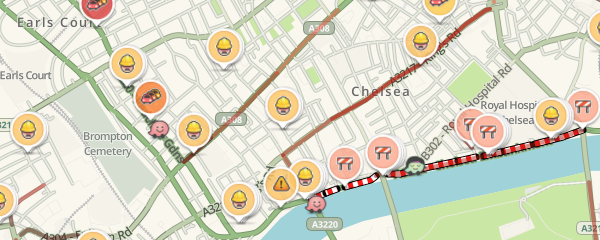
Waze has its fans, thanks mainly to crowdsourced traffic reports, but the indisputable king of GPS apps is Google Maps. I am not a big fan of Google, but Google Maps is a wonder of our times. It can also do a lot more than provide beautifully rendered turn-by-turn navigation to your destination after factoring the latest traffic reports into its calculations.
It’s comprehensive and accurate maps cover 220 countries and territories, and you can easily search for nearby restaurants, banks, petrol stations, and business you will need on your journey. And when you decide to pull over for sightseeing, Google Maps offers great walking guidance and public transport, complete, with 360 degrees street view to help ensure you never get lost.
Maps can also be downloaded for offline use for when out of intent range or travelling in countries where it is prohibitively expensive to use your mobile data allowance. Just download them in advance on your hotel or any café’s WiFi.
Handy hint: The jury is out over whether toll roads end up costing you more money, but for many Brits, they are a bane of travelling abroad. In fact, even if they do save you a little money, travelling by smaller roads is invariably more scenic.
You can tell Google Maps to avoid toll roads by first selecting your destination -> Options (the 3 dots next to “Your Location”) -> Route Options -> Avoid toll roads. You can also avoid motorways and ferries in this way.
If you have an Android device then you probably already have Google Maps on it, but if not then you can get it here. Google Maps is also available for iOS.
As a privacy advocate, I feel duty-bound to point out that Google Maps is not a great choice when it comes to privacy. OsmAnd is great open source alternative that leverages the excellent crowdsourced OpenStreetMap project. It offers offline navigation and voice guidance. OsmAnd is available for iOS and Android.
2. A VPN app
A Virtual Private Network (VPN) is the Swiss army knife of internet privacy and security. If you are not sure what a VPN is or why you should have one in general (and you should!), please see here.
“Yes,” I can hear you say, “VPNs are amazing, but why do I need one on my road trip?”
Well, for a start, all the usual reasons. A VPN will prevent your mobile provider and government from spying on everything you do online. You may not care about this if roaming abroad as you might at home, but there is a principle involved here!
A VPN protects you against WiFi criminal hackers, which is invaluable if roaming data charges force you to rely on hotel and café WiFi for your internet aces. And it is not just hackers you need worry about! After all, the people who run the public WiFi networks cannot always be trusted with your privacy either.
A VPN is also handy for keeping up with TV shows while you are away from home and the ability to plonk the kids in front of CBeebies on BBC iPlayer on long journeys or when enjoying a well-earned glass of wine after a day’s driving a lifesaver.
If your road trip is somewhere exotic, a VPN is great for overcoming local internet censorship. Indeed, in even most countries, hotels and the suchlike restrict what you can access over their WiFi.
Most VPN services offer dedicated apps for both iOS and Android, although it is not hard to manually configure them either. For a list of great VPN options for both platforms, please check out 5 Best VPNs For iPhone and 5 Best Android VPNs on BestVPN.com.
3. A Music app
If you are going on a road trip then you need some funky tunes to listen to as the scenery rolls by! When it comes to music apps, there are two main approaches you can take. You can take your music with you, or you can stream it.
Local music players
Taking your music with you has a great deal to recommend it while travelling. You don’t need to worry about expensive data roaming charges, or the music grinding to a halt when mobile data coverage gets patchy. If you don’t want to grow bored of your music quickly, you’ll need a lot of it. This means taking a phone with plenty of storage.
I won’t even bother trying to dissuade iPhone users from using iTunes, and why should I? It is a great app (on Apple platforms). Android users almost certainly have a music app pre-installed on their phone by its manufacturer, but audiophiles’ go-to app of choice is the all-singing and all–dancing Poweramp (Paid app).
Alternatively, open source fans may prefer Vanilla Music (Android only).
Streaming music players
Steaming music is very useful if your device has limited storage and if you like a great deal of flexibility in what you listen to. Data charges are the main concern, although you can always download tracks locally on your hotel’s WiFi for off-line listening during the day.
Europeans (including Brits for now) should also be aware that by EU law, roaming charges have been abolished. This means you do not need to pay any additional tariffs on your regular data plan when travelling to another European country.
Again, I am not even going to bother trying to dissuade iPhone users from using iTunes with the Apple Music streaming service. Spotify is also another popular choice for both iOS and Android users, but I am going to recommend Google Play Music.
A Google Play Music subscription provides unlimited access to a ridiculously large music library, and you can pin any track for local playback. The reason I recommend it, however, is that you can upload up to 50,000 of your own tracks for free. You can then listen to these to your heart’s content without paying Google a penny!
4. An app that will find you somewhere to stay
One of the best things about a good road trip is that you have the freedom to roam. Find an idyllic beach, why not stay for a couple of extra days? A local tells you about a fantastic well-kept secret, why not go off and explore it?
This probably does mean, though, that you don’t know where you will end up spending each night. Fortunately, apps can take the guesswork out finding good accommodation at short notice. This can also be a lifesaver in high season when just rocking up on the doorstep after a long day’s travelling is likely to see you caught-out for somewhere to stay.
Airbnb has revolutionised the holiday accommodation market. Using the Airbnb app (iOS and Android) you can find and rent out everything from entire villas to cheap rooms in family homes. This is a great way to meet locals, absorb the culture, and get inside information on the best places to visit during your stay!
A wealth of Airbnb accommodation is available just about everywhere in the world. The app will show you plenty of photos, maps, and user reviews, so you can find exactly what you want and will experience no nasty surprises when you get there!
Although a bit niche, I am also going to recommend Park4Night (iOS and Android) to the more adventurous out there whom road trip in camper vans and don’t like being tied to official campsites. Park4Night lets you search specific areas or routes for off-road “wild camping” spots, official free rest areas, vineyards that allow you stay overnight, and the suchlike.
Sites are crowdsourced and usually include photos and users’ comments. Coverage in the UK and Europe is particularly great, but spots in North America are also listed.
5. PetrolPrices
Well, why wouldn’t we recommend our app? If you are travelling in the UK then the PetrolPrices app (iOS and Android), is essential for keeping costs down during your trip. It displays all 8,490 UK petrol forecourts, with prices that are updated daily 365 days a year.
Of course, if you are travelling outside the UK then the PetrolPrices app is less useful (at least for now!).
Although it pains me somewhat to say it, if travelling in a country where you don’t know the language, then Google Translate (iOS and Android) is pretty much essential.
Its’ translations are not always perfect, but they are good enough to see you through most situations. The app can translate voice conversations in realtime, and you can simply point your phone’s camera at a menu to take the hassle out of actually feeding yourself while abroad.
Simply put, Google Translate is a wonder of modern technology, and nothing else comes even close to doing what it does. If you prefer to learn a bit of language before visiting somewhere (or brush up on a rusty one), then Duolingo (Android) is very good and is completely free.
Conclusion
There are few areas of life where the benefits of modern technology are more obvious than while travelling. The apps listed above make going on a road trip much easier than it used to be and remove much of the uncertainty.
I am aware some may think the uncertain factor is what makes doing a road trip fun, but trust me – getting lost, having your bank details stolen by hackers, or finding yourself without a bed for the night is not fun!
So better living and more fun through technology. Yay! Have a great trip!
Author: Douglas Crawford.
Feb 22, 2018
In recent years the development of autonomous vehicles has scared many people, the thought of a car that drives itself around with no human contact instils fear.
According to the government, the autonomous car industry is worth £900bn worldwide, but the legalities and issues surrounding fault are significant steps to overcome. Many car companies are tapping into this vast potential and creating autonomous vehicles, with companies like Jaguar Land Rover announcing they will be sending out autonomous cars by the end of this year.
The hope is that self-driving cars will help to lower congestion, decrease the number of accidents, and improve traffic flow as they will be able to spot risks and barriers and communicate with other vehicles. They will be able to control steering, braking and their speed, and be able to make safe decisions based on their perception of the road conditions, but are drivers confident about sharing the roads with them?
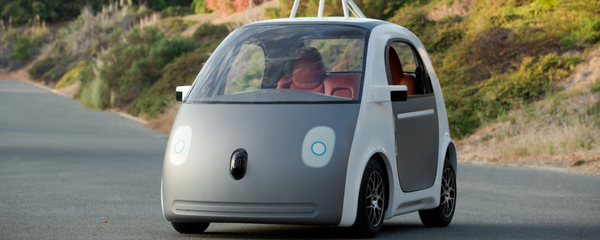
© Copyright smoothgrover22 and licensed for reuse under this Creative Commons Licence.
Worrying the country
In a recent Facebook poll that PetrolPrices ran, where we asked people “Are you worried about self-driving cars being allowed on the roads?”, 70% of respondents said that they were indeed worried, with some referencing the issue around who would get prosecuted in the event of an accident. On the other hand, one person said they would not ride in one but would be happy sharing the road as the non-autonomous driver can see and note their surroundings.
A survey by WhatCar? also revealed that 45% of drivers found the thought of self-driving cars unappealing. On the other hand, a separate study by SMNT found that 49% of 17-24-year-olds would use an autonomous vehicle, with a considerable 71% saying that connected and autonomous vehicles would improve their life. These statistics show that younger drivers who have grown up with technology are more trusting of it, whereas the majority of older drivers have not grown up surrounded by smart devices.
The government is not helping with these fears as they want to allow driverless cars for consumer use on the road by 2020. However, they have said for all autonomous vehicle testing a competent driver must be present to step in if it is needed.
Artificial Intelligence
These autonomous vehicles will start to be tested on public roads after nearly three years of testing on private land as the Artificial Intelligence (AI) needs to be able to learn to mimic human actions as best as they can. This is called machine learning, and by recognising different triggers while driving, they can apply human-like actions to their decision-making process. The hope is that the closer to human driving the autonomous vehicles can get, the general public will feel more comfortable being on the same roads as them.
Most human drivers fear AI as they worry it will prompt more accidents than drivers cause. In fact, 34% of drivers said this would be their biggest concern with autonomous vehicles. In response to this, car manufacturers have stated that human error causes 90% of crashes, and artificial intelligence will not be distracted by a mobile phone or nod off behind the wheel.
The current situation
Renault-Nissan-Mitsubishi have a project called HumanDrive, which uses machine learning to help create a safe autonomous vehicle, have said they will release a vehicle for testing late next year. On its drive across the UK, HumanDrive will take control of the steering, braking, speed, road position and decision-making, as well as the perception of conditions and features required to pilot the car fully. Before this, the car will have been intensely tested on private roads and tracks in a variety of conditions to promote complete safety.
Most traditional car retailers are facing competition from companies like Tesla and Google, who are pioneering the way forward and changing the perception of what autonomous vehicles can do over in America.
What’s next?
In the future of AI, machine learning and autonomy, no one can predict what will happen next. All we can do at the moment is wait and arm ourselves with the knowledge to be able to adapt to the rise of autonomous vehicles.
What do you think about self-driving vehicles? Are you excited to see them on public roads? Let us know in the comments below
Feb 21, 2018
Few of us can buy a car and pay for it in full, especially for a newer vehicle, leaving car finance as the only way to get the car. But worrying statistics show that nearly half of people admit they don’t know how much they’ve borrowed to get their car, and some 90% of them don’t understand the small print of their finance agreement.
Understanding finance
Two new studies showed that 47% of people who take out car finance don’t know how much they have borrowed – that’s around 3 million people. Nine out of ten don’t understand the terms of their finance agreement which can include conditions such as excess mileage fees that can result in much higher costs than expected.
Some 90% of new cars are purchased on finance, yet one-third of people have no idea that multiple applications for credit can hurt their credit rating. Also, another 1.4 million used vehicles were purchased with finance in 2017, meaning nearly 6 million people in the UK have a car that is funded via a finance scheme.

FCA review
Concerns about the amount of debt people are taking on for their cars has led the Financial Conduct Authority (FCA) to order a review of the industry, with issues such as miss-selling and irresponsible lending being top of the list.
For example, people may know they have a restriction on the mileage they can do but don’t know what the limit is. Personal Contract Purchases, or PCPs, account for almost 90% of the finance agreements and allow customers to pay some of the car’s value for up to five years, and then pay a lump sum to keep the car or hand it back.
Many of these contracts have a set mileage of up to 10,000 miles a year or 40,000 miles over the life of the contract. Penalties for going over these limits can be anywhere between 5p – 30p per mile. But, some legal experts are saying that these limits cannot be enforced.
The penalty question
According to the Consumer Credit Act 1974, providing half the payments have been made and the car is handed back in good condition, there should be nothing further to pay. It is known as a Voluntary Termination or VT. There are risks associated with it – including a black mark on your credit record – but means you avoid the mileage levy.
If people choose a lower monthly payment and a larger end payment, by the halfway point, they won’t have paid back half of the value of the car, and the VT section of the Act won’t apply.
Understanding the misunderstanding
Despite these figures, 91% of car owners say they have a good understanding of how car finance works – although 53% of them don’t know what PCP even stands for. One of the companies behind the studies, CarGurus, said that car finance is complicated, and they expected to find some level of misunderstanding among consumers.
But, what they found was a much higher level of misunderstanding than they had expected. The fact that nearly half of the drivers didn’t know how much they had borrowed was very worrying. The company advocate better education and ensuring that people use reputable companies who give them plenty of information and explanations before deciding.
Another car buying website, FairSquare, said their study showed that 89% of motorists don’t fully understand the small print yet 3 in 5 people still signed up, knowing that they don’t understand the consequences.
Strain of the payments
All of this came when RAC research showed that around 10% of motorists are struggling with the repayments on their cars. Half have had to cut back on spending to keep up with the payments, while others have been penalised for handing back keys because they simply cannot make payments. All of this makes the FCA’s review look to be a crucial step forward.
Helping drivers to understand what they are getting themselves into before they take out a PCP is essential and by making sure that they know what is in their car finance agreement.
Do you know what is in your car finance agreement? What do you think needs to change to protect drivers? Let us know in the comments below?
Feb 21, 2018
Ask any regular driver what irritates them the most, and top of most lists will be roadworks. We all know that they are necessary, but their timing is often terrible, seem to last forever and cause colossal congestion. Now, a new lane rental scheme is being discussed that could change the roadworks system forever – but how will it affect road users?
The lane rental scheme
The scheme has already been trialled in parts of London and Kent, with some success, and looks set to be rolled out nationwide. Utility companies were charged up to £2,500 a day for digging up busy roads at peak times. In most cases, the rates were between £800-2,500 in London and between £300-2,000 in Kent. The scheme also saw TfL raise some £4.8 million and Kent County Council raised £1.1 million, after costs, during the trial.
The idea is to incentivise companies to do the work outside the rush hour, to work on quieter roads and to collaborate with other companies to complete a set of roadworks in one go. Rather than each digging up the road, closing it, repairing it and then another company comes along and digs up the same stretch of road a week later; the idea is that they can ‘share’ the roadworks to get more done at once.
© Copyright Highways England and licensed for reuse under this Creative Commons Licence.
Positive reaction
Transport Minister, Jo Johnson, said that drivers often get frustrated at roadworks, especially when they are suffering delays, yet it appears as if no-one is doing anything about it. The idea behind the lane rental system is because companies are paying for the time they have the lane blocked off, they will work quickly and minimalize the disruption to drivers.
Head of Road Policy at the RAC, Nicholas Lyes, said that the announcement is ‘very welcome’ and that trials have shown that some of the worst congestion in London has been halved when the lane rental scheme was in use. Motorists know that congestion and roadworks are necessary, he added, but unnecessary queues and length of roadworks are something everyone finds very frustrating.
The scheme still needs the official sign off from the Transport Secretary, Chris Grayling, then the Department of Transport will start to draft guidelines for local authorities with regards to the bidding process.
Against the scheme
Street Works UK, who represent the utility companies and their contractors, was a little less enthusiastic about the idea, although this might not come as a surprise. They cited their own research that showed that while behaviour change could lead to improved outcomes, and less congestion, there was less evidence that it was directly due to the lane rental scheme.
Their view was that utilities are delivering the infrastructure that the UK needs to drive productivity, economic growth and deliver on government priorities, and the scheme isn’t the best solution to help with this. But they also said they would go along with it, implying that they realise how much hassle roadworks cause all road users.
In the figures
Figures show that utility companies have worked together over 600 times, since the trial started in 2015, versus just 100 times before that. It shows that the scheme can inspire cooperation where none was previously seen. There have been efforts to deal with utility roadworks for many years, going back to the New Roads and Streetworks Act of 1991, but few have had any real progress which is why there is enthusiasm for the idea of the new scheme.
Around 2.5 million roadworks are carried out each year across the country, costing the economy more than £4 billion – mostly in late employees, delayed deliveries and other results from congestion. Local authorities already have powers to manage and coordinate street works, but some say they aren’t using them effectively. The aim is that the new scheme could start to roll out next year and could help drivers around the country have a smoother ride to work.
This lane rental looks to be a blessing for all road users, as it will hopefully ease up congestion in some of the busier roads in the UK. However, it will no doubt come as a curse on utility companies as they have to allocate funds to be able to carry out repairs.
What are the road works like near you? How will the lane rental scheme help you? Let us know in the comments below
Feb 21, 2018
Blue badges are a lifeline for disabled drivers and passengers, allowing them the ease of parking and helping them to feel settled in society. However, because these badges enable people to park for free in pay and display bays in certain areas, plus for up to 3 hours on yellow lines if it safe and not an obstruction, makes them a huge target for thieves.
Recent statistics have shown that blue badge theft in England has quadrupled in 4 years with nearly 3000 stolen in 2016-17 compared to 650 in 2013. The numbers from 2013 were still 14% higher than 2012, showing a steady increase over time. The Department for Transport has attributed 98% of these thefts to people wanting to be able to park for free and in priority spots.
Substantial figures
The biggest number of burglaries happened in London, with 196 stolen in Islington, equating to 26 in every thousand blue badges taken. Theft rate is higher in the congestion zone as blue badge holders can apply for exemption from the congestion charge, as it is harder for them to walk around London.
English councils can take legal action against those who are misusing a blue badge, either via theft or by borrowing it from a friend or family member.Last year 1,131 motorists were taken through this process. In fact, the Department for Transport reports showed that 2016 saw an 84% surge in prosecutions for misuse of a blue badge.
New plans to be introduced
Around 2.4 million people hold a blue badge in England, and they allow people to visit the shops and to see friends without having to worry about their mobility causing issues once they reach their destination. There are plans to offer these to another million drivers with hidden disabilities such as autism and dementia. These plans could help individuals to feel more comfortable in situations that they might otherwise find upsetting.
Hopefully, it will help them to feel less anxious about putting their safety at risk should they not be able to park in a predictable and convenient place. This would be the most significant change to blue badge rules since they were introduced in 1970, and calls have been made for clear and consistent guidelines to be put in place, to stop fraud and theft. At present, many authorities are only happy to give people blue badges if they have issues with their mobility, but this new rule would give them the freedom to base their decision on other factors too.
What do you think?
At PetrolPrices.com we carried out a Facebook poll on whether people think that blue badge holders should be allowed to park for free in hospitals. 33% of people said that they should, with the other 67% of people disagreeing. However, some comments suggested that people thought that no one should have to pay if they were legitimately visiting the hospital. This raised the issue that people will park in free hospital car parks near to town centres to go shopping, meaning that patients find it harder to park.
However, the Scottish government scrapped hospital parking charges in 2008 for patients and NHS staff, and this saved people more than £25 million over seven years which relieved many individuals of the financial burden that extra costs at a difficult time can cause. This is in contrast to the record £174 million that the NHS made from charging patients in England during 2016-17, with more than half of trusts charging disabled people to park.
It is important that people are aware that borrowing blue badges from friends of relatives counts as misuse and that they could be prosecuted. As they are such high value due to the cost of parking and driving today, it may be that we continue to see the number being stolen continue to rise.
What do you think of the new plans for blue badges? Do you think that the number of thefts will continue to rise? Let us know in the comments?
