Feb 7, 2018
As a motorist it is important to be aware of the speed limit at all times to ensure that you are driving safely and that you are not breaking the law, but there have been a couple of speeding-related stories in the news recently which may change how likely it is that you will get caught if you were to drive a bit too fast. Here at PetrolPrices, we want to keep you informed and updated on all the latest speeding-related stories.
Wear your seatbelt
The first update is less to do with speeding itself and more to do with speed cameras, as more than a third of British police forces have admitted to routinely using mobile speed camera vans to catch people breaking other road laws.
This tactic saw 8000 drivers who were not wearing a seatbelt and 1000 drivers who were using their mobile phone while driving getting fined, with 500 more being caught for unnamed offences in 2016.
With 16 out of 54 police forces using these vans to crack down on motorists, they have been able to dish out £100 fines for not wearing a seatbelt and £100 fines plus 3 penalty points for using a mobile phone behind the wheel (although this has doubled to £200 and 6 points since 2017).
Among the forces who say they routinely use mobile speed camera vans to catch unlawful behaviour are Hampshire, Northumbria, Kent and North Wales, and there are also 4 other forces who say that they use this method occasionally.
Could this revelation be enough to encourage people to wear their seatbelts and not use their phones whilst driving due to the fear of being caught? It is thought that this could be the key to changing drivers’ behaviours, but can this really be more effective than campaigns showing the kinds of horrific crashes that can occur when a motorist is distracted by their phone or not wearing their seatbelt?
Tighter regulations
The topic of scaring people into following road laws has been present in another speed-related story this week as Chief Constable Anthony Bangham came under fire from other police leaders for suggesting that officers should be less lenient on those speeding even 1mph over the limit and that the 10% buffer should be scrapped.
In addition to this it was suggested that he was backing the implementation of websites where people can upload dashcam footage of unsafe drivers to alert the police, causing campaigners to argue that the roads are already covered with CCTV, speed cameras and Automatic Number Plate Recognition Systems and motorists really don’t need to be watched any more closely.
It has also been said that this idea would cause mistrust and suspicion amongst drivers, especially as the UK has the most surveillance cameras in Europe and the network responsible for monitoring motorists takes 40 million photos per day, people do not need to feel like they are being spied on by fellow road users too.
In reaction to Bangham’s claims that officers were not doing enough to enforce speed limits, a speed camera was set up outside his office in Hindlip Hall near Worcester by the Sunday Times to see what kinds of speeds were being driven closer to home.
The results showed that 117 motorists were caught speeding in the 30mph zone within an hour, at a rate of 2 per minute, with a quarter driving between 31 and 35mph and the highest recorded speed was 51mph which shows how much more work would need to go into clamping down on minor speeding offences.
Following this, Chief Constable Anthony Bangham has clarified that his aim of penalising even those going 1mph over the speed limit would not be achievable and has said that it would be suitable on occasions where someone was driving over the limit outside a school for example.
Tickets revoked
It was also revealed in the news that almost a quarter of a million speeding tickets issued in the last year were cancelled. Greater Manchester police revoked 28% of their tickets, West Midlands 21% and Bedfordshire 19%. On the other end of the spectrum, both Staffordshire and North Wales police stood by 99% of their tickets. Gloucestershire Police said that 43% of tickets cancelled were because of officers not being able to trace guilty drivers. Previous Home Office showed that 53% of cars broke motorway speed limits, 53% also breached 30mph areas and a huge 81% went over 20 in a 20mph zone.
With these types of stories highlighting speeding issues and other violations too, hopefully, it will put these factors at the forefront of drivers’ minds so they are less likely to commit them themselves.
Do you think speeding regulations need to be stricter? Would you expect a speed camera to check for seatbelts? Let us know
Feb 7, 2018
For people looking to pick up a new car this year, the biggest surprise they may encounter is the cost of the road tax. Even if you go for a new version of the same car, you could see your tax go from zero to as much as £450 a year. German manufactured cars could see a significant increase due to the scrapping of the emissions related system.
Tax bands
This year sees the introduction of the new tax bands system. Currently, the system uses emissions to grade the car based on CO2, with a total of 13 bands across all vehicles. Under the new system, there’s supposedly a simplified three band system.
Under it, cars worth less than £40,000 with zero emissions will pay no tax, which is unchanged from the previous system. Those worth more than £40k will see a surcharge of £310 for the first five years, meaning owners of these vehicles will pay an additional £1,550, dropping to zero tax in the sixth year.
Then it gets complicated. Hybrids and alternative fuel models will be charged £130 while petrol and diesel models will be charged £140 a year. The first year is based on the CO2 emissions. Any vehicle exceeding £40k in value will again see that £310 a year surcharge being added for the first five years.
Cars that have emissions under 50 g/km will pay just £10 tax, while at the other end of the scale, vehicles putting out 255 g/km will be charged £2,000 a year. Alternative fuel models such as hybrids and bioethanol will have £10 cut from the annual cost.
German cars facing increase
The emphasis on real-world emissions, in the wake of the emissions scandal, also means that diesel cars in their first year that fail the new test could see an increase in their road tax band. Any cars failing to meet the new RDE2 emissions tests, from April 2018, will automatically be moved up one band and could mean owners face an extra £500 tax bill.
The new tests are aimed at penalising those high emitting models over rival cars that are less polluting. Any cars built before April 2018 will not face the new charge and tax rates will return to normal after the first year.
More emissions problems
More bad news for the German car manufacturers, especially Volkswagen, came from the new testing system that the industry was employing – on both monkeys and humans. As the testing system came to light, the chief lobbyist for VW has been suspended over his knowledge of the unethical testing.
Tests were conducted in a research institute in Albuquerque, New Mexico in 2014, on behalf of the now-defunct European Research Group on Environment and Health in the Transport Sector (EUGT), which was funded by VW, Daimler and BMW.
The tests involved locking 10 monkeys in an airtight chamber and showing them cartoons while making them breathe the exhaust fumes from a VW Beetle. Another report said that 25 people were given doses of diesel fumes for several hours at a time in a study at Aachen University in Germany in 2012, also sponsored by EUGT.
Unethical and wrong
While these tests were clearly unethical and worrying, they were also creating inaccurate information, according to the reports. VW said that the ‘scientific method chosen was wrong’ while BMW was quick to say they did not ‘influence or design’ the methodology used by EUGT and is against any animal experiments. Daimler said the tests were ‘superfluous and repulsive’.
VW admitted they have already laid aside some 30 billion Euros to pay fines, recalls and other costs associated with their ‘cheat devices’ that came to light during the 2015 Dieselgate scandal. But it seems that costs for people buying their cars could also continue to increase due to the inaccuracy of their emissions results, nearly three years on from the original scandal.
Have you been put off buying a Volkswagen in the future? Does it come as a surprise to you that manufacturers are cheating? Let us know in the comments.
Feb 1, 2018
Over the last two years almost 4000 animals were hit and killed by vehicles on major routes in Britain, and although this may seem like a large number, these are just the reported ones. Te estimated numbers are nearer 165,000 a staggering figure.
In fact, 39% of motorists have acknowledged to hitting an animal at some point throughout their life driving, and only 14% reported it, although there are particular animals which you need to report hitting by law. These are dogs, horses, cattle, pigs, goats, sheep, donkeys and mules, as set out in the Road Traffic Act of 1988. What is interesting is that 59% of those who had hit an animal and not reported it, said this was because they knew that only certain animals need to be reported.

Facts and Figures
The figure of 4000 only includes animals that have been killed on the road in accidents which were reported, which is why there are only four rabbits and four pheasants in the data although these are two types of animal that you would expect to have been hit most often. Interestingly enough the report said that a wallaby had died! The list of killed animals also included a heron, peacock and a goat.
The most commonly hit and reported animal is a deer, with 1117 being killed over the two year period, making up 29% of all reported animal accidents. Badgers were the second most hit at 23%, which equates to 915 reported accidents, and foxes are in third place with 716 being killed and reported.
Avoiding Animals
Despite being warned that they should not change their driving if they spot an animal in the road, 49% of motorists had tried to avoid hitting an animal with 43% of them saying they had tried braking heavily and 40% admitting that they had swerved to avoid one. When learning to drive, learners are told never to swerve or brake suddenly, in avoiding an animal running across the road, to protect the safety of other motorists.
On the other end of this scale, 11% said that the reason they did not try to avoid animals in the road through heavy braking or swerving was to protect other drivers (33%). 22% said to prevent hurting themselves plus any motorist who hit another vehicle due to trying to dodge an animal would be entirely liable for the collision.
However, some drivers would change their driving behaviour for certain animals but not others, with 80% saying that they would swerve to avoid a dog. On the other hand, only 47% said the same about a bird, which could link to the fact that hitting a dog needs to be reported whereas hitting a bird does not.
Most Dangerous Road
A different report released found that the most dangerous road for animals was the A303 from Basingstoke to Devon, via Stonehenge. This road runs through some beautiful countryside, which means more animals are liable to run across. In Canada, they have a system that along bigger roads that have a high proportion of animal deaths, they put large barriers to stop animals from running into the road.
In the same report, 18% of Britons said that they would eat roadkill, and some even said they had eaten roadkill! Looking further at the results at what animals people would eat, 10% would be happy to eat a swan and 14% willing to eat a squirrel!
Staying Safe
It is important to remember that staying safe on the roads and protecting yourself and other motorists may mean that hitting an animal is unavoidable at times. If you, unfortunately, do kill an animal, and you can recognise it as one on the list, then do make a note of the area, road name and time of day and get in touch with your local authority as soon as possible.
For more information on reporting animals, please visit the Government website.
Do you swerve around animals when driving? Would you eat roadkill? Let us know in the comments
Jan 31, 2018
January is one of those months when people pay close attention to the cost of things, with that long spell from the pre-Christmas payday through until the end of January. Spells of cold weather and snow have also meant the inclination to use the car more and protect the family from the worst of it. So how have petrol and diesel prices faired during the month?
Price trends
According to data from the government, the average price for both petrol and diesel have increased during the month of January. At the beginning of the month, the average price around the country for petrol was 120.19 and for diesel 123.51. By the end of the month, the figures for both had risen, with diesel slightly ahead of petrol regarding percentage increase. Petrol was at an average price of 121.69 while diesel was at 125.32.
These increases show that the price had continued to rise steadily, since July last year, when it reached a low point. The cost of filling up the average car in the UK (based on a Ford Focus with a 55-litre tank) is now £67.13 for a petrol car and £68.67 for a diesel car.
Reports show that prices hit a three year high in December 2017, and with the continued increase into this month, it will mean another new high. The growth suggested that the difference between filling up your car in the middle of the year and filling it up at the end was around £5 – and is a little higher now.
Cheapest diesel and petrol
For drivers of petrol cars around the country, the most affordable prices available were in Scotland and Manchester.
- Midlothian – 109.8
- Edinburgh – 112.5
- Greater Manchester – 113.7
- Cornwall – 115.2
- West Yorkshire – 116
- Warwickshire – 116.3
- County Durham – 116.4
- Staffordshire – 116.7
- Isle of Wight – 116.8
- Torfaen – 117
The picture was similar for diesel drivers, with two locations around Scotland offering the lowest prices, followed by a station in County Durham.
- Midlothian – 114.6
- Edinburgh – 117
- County Durham – 118.4
- Greater Manchester – 118.5
- Warwickshire – 118.8
- Staffordshire – 119.3
- Cornwall – 119.7
- Thurrock – 1.2
- West Yorkshire – 120.2
- Conwy – 120.6
Most expensive diesel and petrol
Drivers in other areas of Scotland also had to contend with the highest prices for petrol around the country.
- Dumfries & Galloway – 135.6
- Highland – 134
- Leicestershire – 133.8
- Eilean Siar – 132.9
- Argyll & Bute – 132.9
- Warrington – 131.6
- North Ayrshire – 131.1
- Shetland Islands – 130.4
- Stirling – 129.9
- Orkney Islands – 129.3
For diesel drivers, Leicestershire topped the charts as the most expensive place to fill up followed by a few locations across Scotland.
- Leicestershire – 138.8
- Highland – 138.8
- Argyll & Bute – 137.9
- Eilean Siar – 135.9
- Shetland Islands – 134.4
- Dumfries & Galloway – 134.2
- Isle of Wight – 133.9
- Warrington – 132.7
- Orkney Islands – 132.3
- Derbyshire – 131.9
Looking ahead
Most experts think that the trend will continue to be a bad one for drivers. Oil Producing and Exporting Countries (OPEC) have recently cut the production levels to make oil prices rise. It means that the cost of petrol and diesel at the pump increases as well. These changes will continue to have an affect into February, and probably onwards, showing that the times of lower fuel prices seem to be behind us for the time being.
A little good news
There is at least one silver lining amid the doom and gloom. Tesco has announced that they are offering 10p off a litre of fuel again. There is however a stipulation that you need to spend £60 or more to get the voucher, so if you do a few little shops, it might be worth saving them for a single larger one to qualify.
The discount could save drivers £5 off £50 worth of fuel and may stimulate other supermarkets into offering similar deals soon. The offer is available on shopping until 11th February and motorists have until 25th February to use the voucher that they receive.
Has this affected you in the past Christmas slump? Has using PetrolPrices benefitted you? Let us know
Jan 31, 2018
New MOT rules are due to come into force this spring, but there is already concern that they could put the safety of vehicles at risk. Under the new system, a new set of failure and defect categories will be introduced labelling problems as ‘dangerous’, ‘major’ or ‘minor’. The RAC is concerned that while any dangerous faults will lead to failure, vehicles with minor problems will pass the test.
EU roadworthiness package
The new measures are part of the EU Roadworthiness Package that is being introduced in May 2018. There are concerns that the classification will leave the seriousness of defects open to the interpretation of the tester, and this could lead to confusion.
RAC Spokesman Simon Williams said that while the new changes might seem sensible, they are concerned that many motorists could become confused by the system when indicating how serious a fault is with their car.
Rather than creating a straightforward black and white system of pass or fail, the new system leaves the status of the vehicle open to interpretations and could vary from one test centre to another. There are also other changes coming in that could further confuse matters.
Changing status
For example, under the new guidelines, there will be new criteria for steering mechanisms. A steering box leaking oil would be a minor fault, but there is room for interpretation on the part of the tester. So, while some might see it as trivial, others might see it as dangerous and fail the car.
The RAC went on to say that while they acknowledged that the government had little choice in the new regulations, they believe that the current MOT system works fine and doesn’t need to be amended.
Emissions again
Another area to see a change is emission testing for vehicles, following the scandal in recent years with the diesel cars. Any car that has a diesel particulate filter or DPF will be issued with a ‘major’ fault if there is any visible smoke from the vehicle, regardless of the colour.
There will also be checks to see if the DPF has been ‘tampered’ with or ‘removed’ and if the tester finds it has, then the owner must prove ‘legitimate reasons’ for this action such as cleaning. But any car without one can be failed without any further reason.
This highlights the ongoing anti-diesel movement from the authorities with new measures being harsher on diesel vehicles than on petrol. Garages have been required to check the DPF as part of the MOT since 2014, but the new standards will see an instant fail if the vehicle is producing smoke of any kind and the filter is missing or altered.
Maintaining a DPF
The DPF is designed to capture and store those harmful exhaust particles that cause so many problems when they escape into the air. The issue is they only have a finite lifespan and need to be emptied or burned off to regenerate and continue to function correctly.
In most cases, a good run down the motorway is the solution for removing the excess emissions soot in the DPF. It ensures that the car doesn’t emit smoke of any colour, especially the tell-tale black smoke associated with diesel engines.
Euro 5 regulations introduced in 2009 made them compulsory. If you have one on your vehicle and you haven’t had a good run down the motorway, you might be best to have a garage check the DPF before your MOT comes around.
Get your new MOT
So, under the new test, if your vehicle has any dangerous or significant faults it will be an automatic failure. These new measures with the DPF could condemn diesel cars to a retest. But for minor problems, your car could still pass – but be wary as it could need some more work doing to keep it running in top condition.
How do you feel about the new MOT? Do you think that it is safe? Let us know in the comments below
Jan 31, 2018
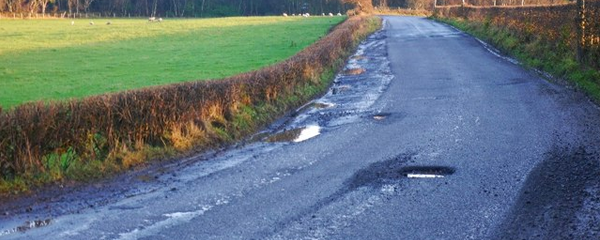
Most motorists have encountered a pesky pothole during their driving experience, but these holes in the road can often be more dangerous and harmful than people may think, and it is about time that they were taken seriously.
Between October and December last year the RAC were called out to 2800 breakdowns caused by poorly maintained roads, which has increased year on year from 2500 during the same period in 2016, showing that they are up by more than 10%.
Potholes cause damage
Hitting a pothole can pose all kinds of problems to a vehicle, including damaging shock absorbers, breaking the suspension, and warping wheels, all of which cost the motorist a considerable amount of money to have repaired.
The RAC’s pothole index shows that road quality has steadily decreased over the past 18 months, and the number of potholes could increase by spring if Britain continues to experience cold or wet weather, which is practically guaranteed.
Although driving over a pothole is often scary and costly for those in cars, it can be life-threatening for cyclists or people riding motorbikes, and these damaged roads do put motorists at a severe risk which is why it is vital that the government and local councils do what they can to fix them. People are walking on roads, especially muddier ones can sprain ankles and worse because a pothole is deeper than appearances.
 © Copyright Richard Webb and licensed for reuse under this Creative Commons Licence.
Passing the blame
The issue here is that councils say that the government does not give them enough funding to repair roads, but the government argue that they are spending a record £23 billion on road repairs and that local councils are not allocating the funds in the right way.
The vast potholes on our roads seem to happen because local councils are prioritising larger, commuter roads when deciding where their funding should be spent. The amount spent on repairing local roads has dropped by 23% between 2011 and 2017 to £1.87 billion whereas spending on A roads has increased by around 20% to £1.43 billion.
However, local councils state that they are unable to carry out long-term repairs on their roads with the funding that is available to them, so they are having to complete short-term fixes instead which does not solve the overall problem, and are fixing a pothole every 9 seconds! The short-term fix does not work as the rain gets into the cracks and splits up the tarmac, covering the road in the rubble, making it even more treacherous than before.
The Local Government Association has made the point that motorways and major roads in England are receiving 52 times more funding per mile than local roads are, although local roads make up around 98% of the country’s network and boast a total distance of roughly a quarter of a million miles. Local roads are also where two-thirds of all journeys are made, so they do need looking after to keep road users safe.
Surrey is the worst for potholes
The LGA also stated that there is a £12 billion repair bill which could be paid over a decade, and suggests that an extra £1 billion per year is given to local councils to fix roads by allocating 2p from every litre of fuel duty to this particular cause.
One pothole horror story, which comes from Cranleigh in Surrey, sees residents on a particular road referring to the tarmac as ‘the moon’s surface’ because of how damaged and full of craters it is. The problem that they are having is that the council say it is a private road and not their responsibility, but the residents do not believe that they should be responsible for its maintenance, as the council provides housing for disabled residents along the road.
Reports released in the last few days show that Surrey has over 6700 unfixed potholes, over double the amount of any other council area. In data from the website Fill That Hole, which gets cyclists to record potholes as they are best placed, compiled by 24/7 Vehicle Rescue, the data showed an insurmountable number of potholes across Surrey, with Kent following at 3100. These figures show how sorry the state of our roads are in and the shocking condition that can harm so many people.
What next?
With roads like this becoming so damaged that they are negatively affecting people’s lives, it is undoubtedly time for the government to take the LGA’s advice and increase funding so that local roads can be fixed properly and not left to disintegrate. Fixing local roads will save motorists a lot of stress and money in the long run too.
What are the potholes like near you? Have you ever had to deal with insurance because of potholes? Let us know
Jan 25, 2018
Growing concerns around the safety of smart motorways have led to Highways England agreeing to install extra emergency lay-bys on this new type of road to give drivers more opportunities to stop if they break down or are involved in an accident.
The purpose of smart motorways
At present, the maximum gap there should be between emergency lay-bys is 1.5 miles but this is going to be reduced to 1 mile where possible to provide reassurance to drivers who may be worried about driving on a motorway which has no hard shoulder available.
Smart motorways have been created to help to ease congestion and improve capacity by opening up the hard shoulder to traffic to give motorists an extra lane to use, but AA president Edmund King has stated that this should not be done at the expense of safety.
In fact, an AA survey carried out in 2016 showed that many drivers think that smart motorways are ‘death zones’ and also described emergency lay-bys as ‘desperate unreachable havens’ which suggests that many of the people who use these roads do not feel safe when doing so.
 © Copyright Highways England and licensed for reuse under this Creative Commons Licence.
Smart motorway safety review
Now that Highways England has completed a smart motorway safety review they have seen that more emergency lay-bys should be created, especially in high-risk areas, to help motorists to avoid being hit from behind at speed should they experience an issue and have to stop in a live lane.
Unfortunately, an accident of this nature did occur over the festive period in Cheshire when a broken down family car was hit by a lorry at around 60mph while they were using a section of road which was being prepared to be a smart motorway so had no hard shoulder. Luckily they escaped with minor injuries but this may not always be the case, and steps should be taken to ensure that this kind of incident does not happen again.
Currently sections of the M25, M1, M4 and M6 have been converted into smart motorways and there are 480 miles of smart motorway lanes planned for the future, so it is vital that safety is looked at seriously to ensure that those sections yet to be built give drivers plenty of opportunities to leave the road should they break down or have an accident.
Knowing the laws
Those using smart motorways also seem to be confused about what it means when a red X is being displayed over a lane, as more than 25,000 motorists have been sent warning letters for driving in these lanes when they shouldn’t be. Individuals have not been charged for this in the past but it is understood that police will start fining for this violation in the next few months.
This suggests that perhaps people need to be given detailed explanations about what smart motorways are and how they work as this will help them to avoid fines and drive safely while they are using them.
It is also important for those driving on smart motorways to keep their cars well maintained which will mean that they are less likely to break down and cause an issue. For example, checking oil and water levels, filling up with petrol and windscreen washer fluid, and topping up tyre pressures, are all ways in which cars can be prepared for the roads, especially when a long journey is planned.
Offering reassurance to drivers
Hopefully, this new move by Highways England will help motorists to use smart motorways with confidence and without the fear that they will be stuck in a dangerous position should they break down during their journey.
With more emergency lay-bys, with shorter distances between them, to take advantage of should the worst happen, drivers should no longer see them as being ‘unreachable havens’ and should see them as being an option that will be available to them when they need one.
Have you ever had to use an emergency lay-by? Do you find expanded motorways increasingly daunting? Let us know your thoughts down below.
Jan 25, 2018
In the year up to November 2017 nearly 1 million vehicles were bought on finance, totalling a debt of more than £18 billion, but millions are struggling to afford to make their payments, which has sparked financial crisis fears.
Deals offered to anyone
Data from the RAC has shown that around 10% of motorists are finding it difficult to pay their car finance bills, and almost half are having to cut back on spending in other areas so that they don’t miss any payments.
The fear around this is that if a high number of people default on their debts it could be enough to start a financial crisis which would have a devastating impact on the economy, so the way that people are offered car loan deals needs to be looked at to prevent this from happening.
Currently, credit agreements are being sold by car salesmen who are not financial experts, and these deals are even being offered to people with bad credit history and the unemployed who are likely to struggle to make repayments and should be given different options if they would like to purchase a new vehicle.
It is being made too easy to go to a car showroom and drive away in a new car without having to leave a down payment, which is a very attractive option to many people but will only mean that they end up in financial difficulty in the long run.

Reading the small-print
Almost 90% of cars bought in the UK on finance are sold through personal contract purchases. This means that the customer pays off a portion of the cost of the car over three to five years and then decides whether they want to pay a final lump sum to keep it or to give the car back.
One downside to this is they there are penalty charges in place if the car is returned early, which means that those who cannot afford the repayments are being hit with a fee when they try to take the car back. This could partly be down to the fact that many people did not understand the deal that they were being offered.
The RAC’s research also showed that 25% of motorists did not understand the different car loan options that were available to them, and 75% didn’t shop around for better deals, showing that those hoping to purchase a car through finance need to be educated and informed before they are able to make a commitment to reduce the possibility of them defaulting on their loan in the future.
Rules around affordability
Chairman of the Commons business, energy and industrial strategy committee, Rachel Reeves, said that much of the rise in consumer debt is down to car finance and feels that the Financial Conduct Authority should take a look at strengthening the rules around affordability in order to prevent this from causing a financial crisis.
With around 70,000 new cars being bought on finance each month, this is an issue that needs to be taken seriously to prevent people from getting into a loan repayment situation that they simply cannot afford. The financial situation of the person looking to take out the loan should be assessed to see if they will be able to keep up the payments over the agreed time period, and it should be made very clear that they will be penalised should they try to return the car early.
Through providing people with all of the information and options that they need before they commit to taking out a finance deal for a new car, this fear of a financial crisis being sparked can be extinguished and motorists can look forward to enjoying their new car rather than worrying about what financial difficulties could be ahead of them.
Did you purchase your current car on finance? Do you think the laws surrounding car finance should be tightened? Let us know your thoughts down in the comments
Jan 24, 2018
Some UK police forces are using ‘intelligence markers’ to track vehicles which are being driven by convicted drink drivers to see if they are repeating their unlawful behaviour.
This data comes from Freedom of Information requests submitted to 44 police forces by Auto Express and show that not all forces are monitoring vehicles in this way, although some are using this electronic tagging tactic to track previously disqualified motorists.
How do they work?
These markers work through being detected by automatic number plate recognition cameras which alert police when a disqualified driver is on the move. One of the reasons behind this measure is that 12% of drink drivers have been found to go on to commit the same offence, and 30% of those caught with more than twice of the legal limit of alcohol in their system go on to drink drive again.
The Cheshire police force has the most marked cars with 1041 carrying active markers in total, whereas 2nd place Derbyshire only have 100 cars which have these trackers in place. Dorset police are tracking 92 cars, and Merseyside police attach markers once the driver has been convicted and/or disqualified.
Some police forces also said that they use these trackers to monitor people who have committed crimes other than drink driving too, with the Cleveland force stating that only 9.5% of the cars they have marked are convicted drink drivers.
Other police forces, such as Metropolitan and City of London, don’t use the markers at all but would do if there was credible intelligence which suggested that a convicted drink driver was using a vehicle despite being disqualified from driving.
Prevent reoffending
AA president Edmund King has said that the objective of police forces using these markers should be to stop people from reoffending. In 2015 there were 1370 people seriously injured or killed in drink driving incidents which were the highest level since 2012 according to the Department for Transport, with alcohol being blamed for 12% of all road deaths, which shows how important deterring people from driving under the influence is.
When an individual is caught drunk in charge of a vehicle they face 3 month’s imprisonment, a fine of up to £2500 and a possible driving ban, driving a vehicle while under the influence of alcohol can result in 6 month’s imprisonment, an unlimited fine, and a driving ban for a minimum of one year, and causing death by dangerous driving due to alcohol could come with a 14 year prison sentence, unlimited fine, and a 2 year driving ban.
Getting caught driving under the influence of alcohol can also cause individuals to lose their jobs, plus their car insurance will certainly increase, and these factors, in addition to fines and solicitors fees, could end up costing up to £50,000.
It is shocking that these possible punishments do not deter people from drink driving, but in addition to this, they are risking their own life as well as the lives of others, which should certainly be enough to stay sober when they will be getting behind the wheel.
What can you do?
You can avoid getting yourself into a drink driving situation by always knowing how you are going to get home after you have been out drinking, and by sticking to soft drinks such as alcohol-free beers or mocktails when it is your turn to drive.
For anyone concerned that they may buy a car which has one of these markers in place, it has been stated that processes are in place to ensure that forces know when a car has been sold to an innocent party due to links to the DVLA’s databases. However, this does not guarantee that they won’t be stopped, although you can be confident that you won’t be stopped repeatedly.
© Copyright Jaggery and licensed for reuse under this Creative Commons Licence.
Is it right Police should be monitoring drivers like this? Should there be restrictions in place? Let us know your thoughts in the comments
Jan 24, 2018
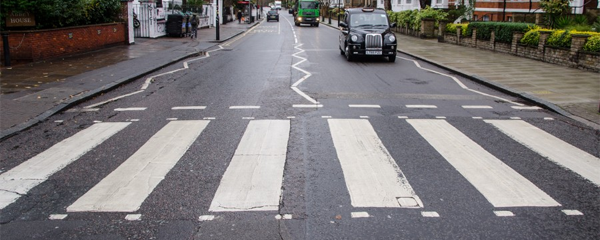
The zebra crossing isn’t a new thing on our streets – in fact, they have been around for over 60 years. A new study has shown that 80% of drivers and pedestrians don’t know how to use them, including who has a legal right of way and what drivers need to do when approaching a crossing.
Who stops when?
The study asked at what point does a vehicle need to stop at a zebra crossing to allow a pedestrian to cross? Of those spoken to, 81% answered incorrectly. The correct answer is that a car needs to come to a stop, to allow a person to cross, only when that pedestrian has already set foot on the zebra crossing.
It comes from Rule 195 of the Highway Code and shows that many people don’t realise how to use these familiar crossings. The survey spoke to 2,000 people across the country, and only 19% of them knew the correct answer. The majority – 46% in total – thought that a driver had to stop when a pedestrian was waiting to cross.
Learner drivers are required to come to a halt when they see someone about to use a pedestrian crossing. But this doesn’t apply to drivers who have passed their test – perhaps leading to the confusion.
Dangerous misunderstandings
Others had more extreme misconceptions of how to use the crossing, some of which have a strong potential to lead to accidents.
For example, 14% thought that a motorist had to wait when a pedestrian was walking towards a zebra crossing, not even waiting to cross. At the other end of the scale, 5% thought that pedestrians could only cross when the road is clear.
Another 4% said that cars only had to stop for a pedestrian when they were already halfway across the road on the crossing. Some 3% thought that pedestrians had no right of way at all and that drivers only had to stop out of courtesy. A further 8% of the people spoken to admitted they just didn’t know what the rules around the crossings were.
Costly mistakes
As well as the potential for accidents, the issues increase the chance of making a mistake that can cost drivers money. For example, 15% of motorists are risking receiving three points on their licence, and a fine of £100, for failing to stop when a pedestrian has already stepped onto the crossing.
It also helps to explain why there are some 20 collisions a day involving pedestrians on crossing around the UK – amounting to some 7,000 incidents a year. Other problems contributing to the issue include pedestrians being distracted by talking on their smartphones, listening to music or even checking social media as they walk.
Changing face of crossings
The rules around zebra crossings changed very little since they were first introduced back in the 1950s – when there were only around 2 million cars on the roads. Today, we have nearer to 32 million vehicles and many people think the crossings and their rules are due for an overhaul.
New technology was showcased last year to evolve the zebra crossing so that they catch the attention of pedestrians that are preoccupied with their smart devices. The crossing uses LED panels to change the road markings, to grab the attention of the pedestrian, and then switch to allow drivers to continue on their way.
Insurer Direct Line is also working on a series of ideas to make the crossings safer. Their survey showed that 37% of people had experienced a car failing to stop for them at a crossing in the last year. Another 19% said they had had a near miss on a crossing and 79% said more was needed in schools and colleges to teach children better road safety.
A combination of new technology and traditional education seems to be the favoured approach to cutting down on these 7,000 incidents a year and make people more aware of just how to use these black and white crossings.
Were you aware of the correct laws surrounding Zebra crossings? Have you had an accident like mentioned above? Let us know in the comments.
