Jan 3, 2018
Despite a crackdown by the government, hospitals made a massive £175m in parking charges in 2017, a new record for a twelve-month period. They also made nearly another £1 million from parking fines, an increase of 30% on the previous figure, though some sources believe this number is nearer £4 million. Worst of all is that over 50% of them still charge disabled patients to park in the car parks.
Making money
According to a Freedom of Information request by This Is Money, the highest charges in the country are in Guildford at the Royal Surrey County Hospital. The hospital charges £4 an hour for people to park. Another 14 hospitals around the country charge at least £3 an hour including Northampton General at £3.20 and Southend University Hospital at £3.10.
Previously, Health Secretary Jeremy Hunt had admitted that the fees were ‘unfair’ and three years ago introduced guidelines that urged NHS trusts to offer free or reduced parking for the disabled, cancer patients, relatives and staff. However, the instructions weren’t legally binding and were ignored by many trusts who wanted the vital source of income from parking fees.
 
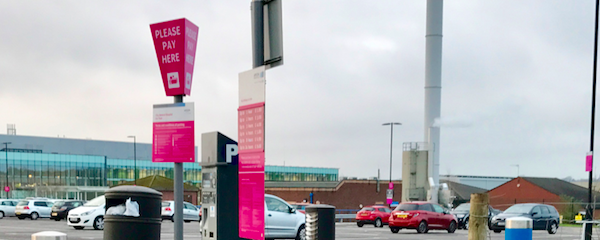
© Copyright Jonathan Hutchins and licensed for reuse under this Creative Commons Licence.
Tax on sickness
According to Lib Dem Health Spokesman Norman Lamb, the hospital parking charges amount to a tax on illness, people who are chronically ill or disabled being the ones who must pay the most. This shows the hidden cost of healthcare for many people around the country, said Mr. Lamb.
Labour Health Spokesman Jonathan Ashworth added that hospital parking was ‘entirely unfair’ and an unnecessary burden that affected the most vulnerable people in society who needed to use hospital services frequently.
Even Jeremy Hunt admitted that the outrageous practice was a ‘stealth tax’ but the under funding of hospitals meant that trusts were left trying to make money from patients to compensate.
Top Earners
The five most expensive hospital car parks in the country made an impressive amount of money from their charges. The Royal Surrey County Hospital, top of the list regarding the hourly cost, secured over £1.5 million last year while Northampton General, charging a little less, made more at £1.67 million.
Southend University Hospital made just over £1.8 million and Royal Free Hospital in North London over £2 million, charging £3 an hour. Another big earner was the Aintree University Hospital in Liverpool charging £3 an hour making a staggering £2.67 million.
Enviable rise in income
Figures from 111 of the 150 hospital trusts around England showed that they made £174.5 million in parking charges in the 2016-17 period, an increase of 6% on the same period the year before. Of these trusts, 56 said disabled patients were charged for some or all their designated spaces.
The Heart of England NHS Foundation Trust made the most money during the period, over £4.8 million. In fact, two-thirds of trusts had made more than £1 million for each of the last three years. Car parking in Scotland and Wales are mostly free.
Paying the price
One example is a woman who donated her kidney to her sister through The Heart of England trust. It costs her family £30 a day to visit her sister who has been on dialysis for two years and sometimes, they cannot afford to visit her due to the parking costs. Another example is patients visiting for 10-minute appointments who end up paying for two hours on a regular basis.
A spokesman from the Heart of England said that the trust does profit from car parking charges but uses the money made to fund utility costs, security and a parking management service as well as for the upkeep of the car park itself. Other hospitals have a similar justification for the charges in place.
The Department of Health continues to insist that trusts alone are responsible for what they charge and what they do with the money.
What do you think of local health authorities literally “cashing in” on the sick and old who have no choice to park there? Are the Government doing enough and if not what action do you think can be taken? Let us know in the comments below.
Jan 3, 2018
In UK petrol retail terms, 2017 will be seen by many as a good year for fuel price changes because increases stayed below the rate of inflation and meant the economy stayed in better shape from a consumer expenditure perspective.
But in geo-political terms there was a great deal of change, perhaps reflected in the price of crude oil over the year, which started at $56 a barrel in January, fell gradually to $44 a barrel in June and rose steadily returning to $56 a barrel in December and is now consistently above $60, the highest level since 2015.
Declines in the value of oil were driven by uncertainty about the global economy due to the incoming US President Donald Trump and what would happen with global oil production agreements laid out by OPEC and informal agreements between states outside of OPEC, such as Russia. UK fuel prices declined at the start of the year due to this, but increased in the second half of the year because oil production agreements were ratified, coupled with a series of small disasters that temporarily impacted oil and gas supplies into the UK market.
Fuel prices move in a narrow range
The cost of petrol and diesel in 2017 fluctuated by no more than 6.1 pence for Unleaded and 7.9 pence for Diesel. To put that into context fuel prices changed by 28.5 pence during the 2008 global financial crash and by 13.6 pence in 2016. What is interesting is that prices have changed in a big v shape over the year following the global price of crude oil per barrel, (see illustration).
The year started with figures at a relatively low level of 115.2 ppl Unleaded and 121.7 ppl Diesel in January and rose by 5 pence in February to 120.2 ppl. A lot of this driven by negative market sentiment and currency changes because of Donald Trump becoming US President. In March prices started to steadily decline until July where they reached their lowest point of 114.7 ppl Unleaded, 115.4 Diesel. From then on prices have been slowly creeping back up, ending at 120.8p Unleaded and 123.3p Diesel.
Manchester leads way in cheapest towns
If we look at the cheapest UK towns for fuel prices in 2017, Dunkinfield in North Manchester and Leigh in Greater Manchester lead the way followed by Tilbury, Spennymoor and Loanhead. There are a few surprises on there too, Penzance in Cornwall being the 4th cheapest for Unleaded in 2017 for example.
Cheapest areas for Unleaded in 2017
- 112.6 – Leigh, Greater Manchester
- 112.7 – Dukinfield, Greater Manchester
- 113.3 – Tilbury, Thurrock
- 113.3 – Penzance, Cornwall
- 113.4 – Loanhead, Midlothian
- 113.5 – Spennymoor, County Durham
- 113.5 – Cwmbran, Torfaen
- 113.6 – Pembroke Dock, Pembrokeshire
- 113.7 – Pudsey, West Yorkshire
- 113.7 – Port Glasgow, Inverclyde
Cheapest areas for Diesel in 2017
- 114.2 – Dukinfield, Greater Manchester
- 114.3 – Tilbury, Thurrock
- 114.5 – Leigh, Greater Manchester
- 114.8 – Spennymoor, County Durham
- 114.8 – Loanhead, Midlothian
- 115.0 – Tamworth, Staffordshire
- 115.2 – Pembroke Dock, Pembrokeshire
- 115.3 – Harworth, Nottinghamshire
- 115.5 – Abertillery, Blaenau Gwent
- 115.6 – Port Glasgow, Inverclyde
Scottish Highland towns remain most expensive
As usual the Scottish Highlands and UK islands dominate the most expensive towns for fuel in 2017. Tighnabruaich and Acharacle in Scotland for Unleaded and Diesel are followed by Freshwater on the Isle of Wight. Markfield in Leicestershire is one of the surprises, as well as Woolacombe in Devon.
Most expensive areas for Unleaded in 2017
- 133.7 – Acharacle, Highland
- 132.9 – Tighnabruaich, Argyll and Bute
- 129.9 – Freshwater, Isle of Wight
- 129.1 – Isle of Benbecula, Eilean Star
- 128.7 – Woolacombe, Devon
- 128.2 – Gretna, Dumfries & Galloway
- 127.8 – Lockerbie, Dumfries & Galloway
- 127.3 – Markfield, Leicestershire
- 127.0 – Isle of Arran, North Ayrshire
- 126.9 – Totland Bay, Isle of Wight
Most expensive areas for Diesel in 2017
- 135.3 – Tighnabruaich, Argyll & Bute
- 134.4 – Acharacle, Highland
- 131.7 – Freshwater, Isle of Wight
- 131.2 – Markfield, Leicestershire
- 131.1 – Isle of Benbecula, Eilean Star
- 129.9 – Woolacombe, Devon
- 129.4 – Totland Bay, Isle of Wight
- 128.1 – Isle of Islay, Argyll & Bute
- 127.9 – Cowes, Isle of Wight
- 127.6 – Gretna, Dumfries & Galloway
ASDA Tamworth and Newport cheapest stations in UK
In terms of cheapest stations overall in 2017 the supermarkets dominate the listings. ASDA Tamworth and Newport, Isle of Wight are the most consistently cheapest. Tamworth has the greatest number of low cost stations in the UK, but isn’t the cheapest town overall because it also has a small group of much higher priced stations in the same vicinity.
ASDA Newport, Isle of Wight is a real surprise when you can see that the island is consistently in the most expensive locations in the UK, but this perfectly illustrates the importance of price spread between cheapest and highest, perhaps felt more on the Isle of Wight than anywhere else in 2017.
Cheapest Unleaded stations on average in 2017
- 109.8 – Asda Tamworth, Tamworth
- 109.8 – Asda Newport, Isle of Wight
- 110.6 – Sainsburys Tamworth, Tamworth
- 110.9 – Morrisons Tamworth, Tamworth
- 111.0 – Asda Harwich, Harwich
- 111.2 – Asda Leigh, Leigh
- 111.6 – Avondale Service Station, Cwmbran
- 111.6 – Sainsburys Leigh, Leigh
- 111.7 – Morrisons Leigh, Leigh
- 111.7 – Asda York, York
- 111.8 – Asda Bridgwater, Bridgwater
- 111.9 – Morrisons Keighley, Keighley
- 112.0 – Asda Keighley, Keighley
- 112.0 – Sainsburys Keighley, Keighley
- 112.1 – Morrisons Bridgwater, Bridgwater
- 112.1 – Asda Bishop Auckland, Bishop Auckland
- 112.1 – Sainsburys Monks Cross, York
- 112.2 – Sainsburys Bridgwater, Bridgwater
- 112.2 – Asda Horwich, Bolton
- 112.3 – Tesco Atherton, Manchester
Cheapest Diesel stations on average in 2017
- 109.4 – Asda Newport, Isle of Wight
- 110.7 – Asda Tamworth, Tamworth
- 112.2 – Sainsburys Tamworth, Tamworth
- 111.5 – Morrisons Tamworth, Tamworth
- 112.9 – Asda York, York
- 112.9 – Asda Leigh, Leigh
- 113.1 – McColls Tamworth, Tamworth
- 113.2 – Sainsburys Leigh, Leigh
- 113.2 – Morrisons Leigh, Leigh
- 113.3 – Sainsburys Monks Cross, York
- 113.3 – Asda Bridgwater, Bridgwater
- 113.6 – Sainsburys Hankridge Farm, Taunton
- 113.6 – Morrisons Taunton, Taunton
- 113.6 – Asda Keighley, Keighley
- 113.6 – Asda Taunton, Taunton
- 113.7 – MPK Drayton Service Station, Tamworth
- 113.7 – Morrisons Keighley, Keighley
- 113.8 – Asda Minworth, Sutton Coldfield
- 113.8 – Asda Kettering, Kettering
- 113.8 – Morrisons, Kettering
London has most expensive stations in UK
Outside of motorway service stations, (which would dominate the top 20 if they were included), there are two petrol stations in London that actively compete against each other to be the most expensive in the UK. Chelsea Cloisters, Sloane Square has held the title of most expensive for many years until 2017. Less than a mile away, Holland Road Service Station have set a new record for fuel prices. Their average price in 2017 is an eye watering £1.75 a litre for Unleaded and Diesel, more than 25 pence a litre higher than Chelsea Cloisters, who were the previous most expensive station in the UK at £1.50 a litre. Not surprisingly apart from motorway services, the A1 (M1) had six of the most expensive stations on the list, followed by a few independent stations in the Scottish Highlands.
Predictions for fuel prices in 2018
Most experts predict that in the first half of 2018, fuel prices will increase slightly but will not rise beyond a certain point. A lot depends on US shale oil producers, how OPEC will respond to them and what happens to the global economy. Brexit can and will play a part if negotiations don’t go well, the value of Sterling will be impacted negatively against the dollar, so the price of fuel at UK pumps will rise as a result, but it could also go the opposite way, good trade talks and there is more confidence about the economy, Sterling’s value rises and fuel prices could fall.
The growth of electric and hybrid vehicles passed 3 million globally in 2017 and is expected to smash 5 million in 2018. What alternative energy does is make the markets question the value of oil for the long term and this could have a knock-on effect with current fuel prices and petrol retailers own plans. So too the impact of pollution, the demonisation of Diesel may continue to escalate leading to increases in duty on fuel for the first time in 8 years at the next Budget.
What do you think about the cost of fuel in 2017? Did you think it was too high or was it about right? Which way do you think fuel prices are going to go in 2018? Let us know in the comments below.
Dec 27, 2017
Figures obtained from the Department of Transport by selling site Buyacar.co.uk show the average new car sold in 2017 emits more toxic CO2 than new cars sold in 2016, which is the first time in 14 years that an average new car emits more CO2 than older cars. As more and more drivers desert diesel cars discouraged by tax rises, toxicity charges, parking surcharges and crashing car values, the unintended consequence is that CO2 greenhouse gas emissions are back on the rise again.
‘Unintended consequences’
The law of unintended consequences, often cited but rarely defined, is where the actions of people and especially Governments, always have effects that are unanticipated or unintended.
In 2008 under the Labour government led by Gordon Brown, they made an announcement in the Budget which they thought was good for the environment, which was to discourage people from driving petrol vehicles due to harmful carbon dioxide (CO2) they emitted and instead create a car tax system based on carbon dioxide emitted to encourage people to buy “lower polluting” diesel cars instead. In response, sales of new diesel cars and the British motoring industry itself boomed off the back of the decision.

(Credit – Zappys Technology Solutions)
Demonisation of diesel begins
By 2016 with a Conservative government in power, it became apparent that levels of toxic nitrogen oxide (NOx) had increased in major towns and cities, contributing to 40,000 deaths a year. The Government was not meeting its own NOx emissions targets set by the European Union, leading to the threat of fines and court action. Diesel cars were pinpointed as the main culprit for these rises and it was then that the process of demonisation of diesel in all forms began in earnest, led by environmental pressure groups and the new Mayor of London.
Fast forward to the end of 2017 and diesel car sales have plummeted by 16% year on year. All the major manufacturers are running diesel scrappage schemes where you can trade in a diesel car bought in the last 8 years and receive up to £8,000 towards buying a new car. In 2017 the average value of a used diesel car fell by 26%, for many the choice of switching away from diesel cars seemed like a no brainer, but it wasn’t.
What the Government wanted people to do was buy new hybrid engine or fully electric cars en masse. The problem here is they’re too expensive to buy or run and there is no used car market for hybrid or electric cars. Battery technology moves so rapidly that the battery in a two-year-old electric car is inferior to a new battery powered car, so they don’t hold their residual value for it to be worth buying an older hybrid or EV car.
The new unintended consequence here is that while people are moving away from diesel cars as the Government wanted, they’re not buying lower emissions vehicles, instead they’re buying high polluting, big engine petrol SUVs, which is leading to an unprecedented rise in CO2 emissions. Further bad news is that the Government also have a CO2 emissions target they need to meet by the European Union as well.
Official CO2 figures show a rise in 2017
Official statistics for the first ten months of 2017 from the Department of Transport show that the average new car sold this year produces 121.1g of CO2 per kilometre. The average CO2 output of new vehicles sold in 2016 was 120.3g/km. With diesel registrations widely expected to stall further in December, it will spell the end of a 14-year reduction in CO2 emissions, which have declined by 4.02g/km annually since records first began.
How on earth did we get in this mess?
The greatest irony in all of this is that the most likely solution in reducing both NOx and CO2 to meet European standards over the next few years is buy a new super low diesel emission car. One would have hoped that the market would have naturally gravitated towards buying a new lower emitting diesel, instead demonisation has made them buy high polluting petrol SUVs.
As is often the case, the Government has intervened and targeted the wrong area and not tackled the real problem, which is diesel cars over 10 years old, public transport vehicles, the van and haulage industry, diesel trains, ships and the illegal removal of diesel particulate filters.
What do you think of this latest development? Are you a diesel driver who feels vindicated by this, or are have you just bought a petrol driven SUV without realising this is as bad as a diesel car? Or are you an electric car driver feeling all smug about driving a car with no emissions that you won’t be able to re-sell? Let us know in the comments below.
Dec 27, 2017
With over a million cars being fitted with telematics boxes, also known as black boxes, by insurance companies, there is now plenty of data which shows exactly how British motorists are driving and can help people to think of ways to make the roads safer for all who use them.
What do they do and who uses them?
Billions of miles have been travelled by cars fitted with a telematics device over the last decade and they can gather data on a variety of factors including speed, cornering, braking and accelerating, plus pinpoint the type of road that the individual is driving on.
These boxes have predominantly been used by new drivers in a bid to prove that they are sensible behind the wheel so that their insurance premiums go down over time, but people of all ages and experience can have one fitted in their vehicle.
Britain’s largest telematics insurance provider, Insurethebox, has gathered 3 billion miles worth of driving data and associated claims since 2010, and along with similar providers Marmalade and Coverbox they have shared this to reveal information about the “real driving habits” of British motorists.
Evidence that has been gathered
The data has shown that 17-year-old drivers who have just started their driving experience are actually safer than 18 and 19-year-olds who have held their licenses for a bit longer. This could be because new drivers are still getting used to driving and are being more cautious, whereas those who are slightly older have had time to gain confidence which is why their driving deteriorates over the age of 18.
Those with 2 – 3 years of driving experience under their belt are the worst speeding offenders, whereas 17-year-olds actually drive at a relatively modest speed.
The difference between how males and females drive has always been a hot topic of conversation, and black boxes have supported the myth that women drive more carefully, at lower speeds, and have fewer accidents than men. Their average claim also costs less at £2345 compared to £2566 but, due to EU rules, insurance companies aren’t allowed to base their quotes on gender like they used to.
Conclusions
The most dangerous road type for young drivers are country roads with a 60mph speed limit as it is often not safe to drive anywhere close to 60mph but a lack of experience means that this is not always understood. With narrow lanes, blind corners and slow-moving vehicles to contend with these roads are actually more dangerous than the motorways that so many new drivers are scared to use.
Gov.uk data has shown that 80% of young driver fatalities occur on rural roads so it is important that those new to driving understand that just because the road signs show 60mph it doesn’t mean that it is safe to drive at that speed.
It has also been found that a driver’s behaviour leading up to an accident is often erratic from the moment that they leave the house. This suggests that if people have had an argument or are feeling frustrated when they get into their vehicle it could have a negative effect on their driving which results in them having an accident.
Getting a quote
Occupation is also taken into consideration when working out insurance quotes, and telematics data has supported this by showing that motor racing drivers and funfair employees are among the most risky drivers whereas NHS workers are among the safest on the roads. It was also found that gamers are relatively safe drivers whereas those who read as a hobby are often more risky.
As well as providing an interesting insight into “real driving habits” black boxes can save young drivers up to 37% on their car insurance if they drive carefully and follow the laws of the roads, and 40% of new motorists are already taking advantage of this in a bid to reduce their insurance premium.
(Image credit – InsureTheBox)
Would you be willing to have a black box fitted to monitor your driving behaviour and iron out any bad habits? Let us know in the comments below.
Dec 27, 2017
If you drive carefully past a speed camera, adhering to the speed limit and think you are safe, then you might be wrong. Most of us don’t realise that those big yellow boxes can do a lot more than just register our speed and send information that gets us a speeding ticket. But just what are their full abilities?
The offence camera
The speed camera should rightly be called the offence camera because it can record many offences other than just speeding. They include not wearing your seatbelt, using a mobile phone while driving and even having illegal number plates.
According to statistics for the north east of England, between August 2015 and November 2015 there were a total of nearly 700 drivers who were caught for not wearing a seatbelt through a speed camera. This is an offence that does seem bizarre – not only is it the law to wear one but they can also save your life if you are involved in an accident.
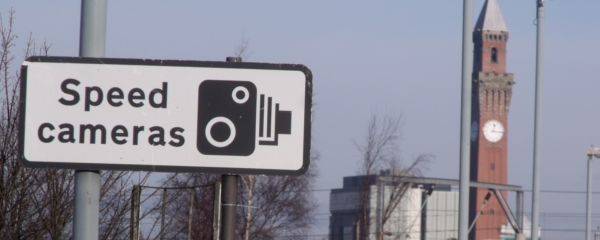
(Credit – Elliott Brown)
Speed camera spotting
Another big problem is the use of mobile phones while driving. To highlight how serious it can be, the fine was increased to £200 in March this year and now comes with six points on the license if you are caught.
Now you can be caught by speed cameras when on your mobile phone and receive a fine just the same as you would if you were spotted by a police officer. This also includes mobile speed cameras which are now recording a range of other offences in the same way as the stationary version.
The most common device used for mobile speed cameras, that can record various information, is the LTI 20.20 UltraLyte 1000. This device uses a laser linked directly to a DVD system that is running the whole time that the enforcement is in operation. It can collect an image from cars up to 1000 metres away and includes information such as the time, date, speed, distance, site coding and whether the vehicle was travelling towards or away from the camera. This is all detailed on the image of the driver.
The mobile phone problem
The reason for the higher penalties and the use of speed cameras to catch drivers using a phone behind the wheel is because it remains a huge problem. In one crackdown last November, police caught around 40 drivers per hour on their mobile phones, handing out 7966 fixed penalty notices during a one-week long campaign.
This was an increase on previous periods of enforcement on ‘distraction driving’ where a crackdown had been in place. In May 2016, they had caught 2323 drivers, in September 2015 the figure was 2276 and in May 2015, the number of drivers caught was 2690.
During the same period, where 36 forces around the county participated, there were also hundreds of verbal warnings issued along with 68 court summonses and 117 other ‘distraction’ offences noted. The figures were part of the reason why the new fines and points system was brought in the following March.
Mobile phone law
The current law on mobile phone states that it is illegal to drive a vehicle and use a hand held mobile phone or a similar device. It is also illegal to supervise a learner driver while using a mobile. The definition of ‘driving’ is also one to watch – you are driving if you have the engine running so merely pulling into a layby without turning the engine off won’t save you from a fine. Stopping at traffic lights also still counts as driving. You can use a hands-free kit but if you are shown to be not in ‘proper control’ of the vehicle while using it, you can be prosecuted.
With speed cameras now doubling as mobile phone use detectors, it is worth really thinking hard about how urgent that call is. Let us know your thoughts in the comments below
Dec 20, 2017
Your profession can tell someone a lot about you – a business expert, a tech whiz, someone who is great with people, a highly motivated person. But can your profession tell someone how likely you are to be involved in a car accident? According to a new study from insurer 1st Central, yes it can.
In the figures
According to the insurer, they have compiled a list of the professions with the worst track record based on a review of some 400,000 policyholders. If you are a financial adviser, you may want to turn away now.
The study involved looking at claims made by people across 2017 and their occupations. It showed that financial advisers were topping the charts for the number of claims made so far, this year, an increase from 4th place in the same survey taken in 2016.
Overall, those working in the health industry are the most likely to have an accident with doctors, pharmacists and dentists all being in the top five professions. Of course, this could be connected to factors such as long working hours, stressful jobs and even things like very full hospital car parks – known to be some of the most dangerous places to drive in the country!

The top ten
The top ten professions to have had accidents in 2017 are:
1. Financial adviser
2. Doctor
3. Pharmacist
4. Dentist
5. Solicitor
6. Accountant
7. Aircraft cabin crew
8. IT manager
9. Letting agent
10. Project manager
This compares to the list created at the same time last year that showed the top ten as:
1. Accountant
2. Solicitor
3. Doctor
4. Financial adviser
5. Letting agent
6. Airplane cabin crew
7. Bank manager
8. IT manager
9. Pharmacist
10. Train driver
Some professions have left the top ten entirely including bank manager and train driver (that’s a reassuring one) while others have retained their position as the most likely to be involved in a shunt of some kind.
The least likely
While there are the most likely to have accidents, the study also showed the professions who are least likely to have an accident, based on the figures for this year so far. The occupation least likely to have an accident are painters, a big improvement from last year when they were the 10th least likely to have a bump.
The ten least likely professions to have an accident were:
1. Painter
2. Farm worker
3. Builder
4. Mechanic
5. Lorry driver
6. Factory worker
7. Cleaner
8. Bus driver
9. Chef
10. Ambulance driver
Several of these occupations would be classed as professional drivers such as bus and lorry drivers as well as ambulance drivers so its no surprise to see them on the list.
Drink driving
It is interesting to contrast these lists with the list issued last month by Money Supermarket that looked at the occupations most associated with drink and or drug driving convictions. It found that mature students living at home have a massive 28.5 in 1000 chance of being caught and convicted for this type of offence.
This was followed by mature students living away from home (16.5 per 1000 drivers) and then scaffolders (4.5), labourers (4.3) and ground workers (4.2).
Why it matters
Of course, you aren’t going to change your profession based on the likelihood that you have a crash, but these kinds of figures are used by insurers to help rate professions and therefore the cost of your insurance. Currently, professional sports people like footballers and racing drivers top the charts as the most expensive profession to insure while funfair employees and scrap dealers also rate highly.
At the other end of the scale, occupations such as nurses, coastguards and bursars are rated at the lower end of the scale for insurers based on various data. Women have seen lower rates than men, but this changed in 2012 when new EU directives meant that insurers couldn’t use gender as a rating factor.
Are you one of the professions that has the most or least accidents? Do you agree or disagree with the findings from 1st Central Insurance? Have you been affected by high insurance premiums because of the job that you do or convictions? Let us know in the comments below.
Dec 20, 2017
A new study by Kwik Fit has shown that if we want to reduce air pollution by two thirds almost overnight, the aim should be to remove all diesel vehicles from the road that are over ten years in age. Their study shows that there are 3.5 million diesel cars on the road registered before 2007, and if they were replaced with the new Euro6 diesel engine, NOx emissions would fall by nearly 70%.
Age-related problems
Kwik Fit looked at the number of older vehicles on the road and the study proves that the replacement of older diesels would cut emissions of nitrous oxide by 68%. It would also save motorists some £1 billion a year. The study followed the government’s crackdown on diesel cars, with an increase in the first-year tax for any new diesel cars bought from April onwards.
This move was criticised by experts because newer diesel cars are much less polluting than older models already on the road. The move could also discourage drivers of older vehicles from replacing them with newer models.
Government crackdown
The government crackdown on diesel shows no sign of slowing and has drawn criticism from many different sources. The budget increase, for example, moving cars up a tax band based on emissions – without any real-world emission tests having been carried out on them. Kwik Fit’s study shows that the move could affect more than health and finances.
The study shows that if the current Euro6 standard diesel engine were to replace older vehicles, harmful emissions would be cut significantly. It would also save motorists a lot of money in fuel. Older cars currently travel around 30 billion miles a year, emitting some 12.1 million kilograms of NOx and using 66 million gallons of fuel.
Fuel savings
If drivers were to switch to newer models, not only would the emissions be cut by two thirds, reducing the risk of pollution-related conditions and deaths, but it would also be kind on the pocket. Newer diesel cars are more fuel efficient and consume 488.8 million gallons to cover the same mileage, saving drivers some £947 million a year.
It would even reduce factors such as the volume of tankers on the road as drivers will need to fill up less often. It would further reduce costs and pollution. The move could see some 20,000 fewer loads of diesel requiring delivery around the UK.
Electric growth
The much-criticised move to penalise new diesel cars may be putting drivers off from replacing their older diesel models, but it has a potential upside – the continued increase in sales of electric vehicles. In fact, according to data from the Energy and Climate Intelligence Unit shows that sales of electric cars will overtake diesel cars in as little as two years’ time.
Diesel car sales dropped by a third in October compared to the previous year, the 7th decline in a row. It was also the most significant drop in diesel sales for nine years. At the same time, the sales of electric and hybrid cars have risen by 37%.
The study went on to say that they believe the tipping point for diesel versus electric sales will be mid-2019 when the electric sales will move above diesel for the first time.
Scrappage schemes
Many car manufacturers have introduced scrappage schemes to help persuade older diesel owners to swap to a newer vehicle and make the cost less prohibitive. These programmes include both diesel and petrol schemes and will see significant discounts up to £8000 on more modern vehicles. But so far, this seems to have had little impact on new diesel car sales.
The cost of replacing all diesel cars over the age of ten is said to cost over £97 billion, based on the average new car price of £28,000. So, the government would need to provide drivers with significant help towards this cost if they are serious about replacing these vehicles.
What do you think about the Kwik Fit study and whether it’s a viable way to tackle road pollution? Do you think the Government would support a scrappage scheme focused on old diesel cars of this scale? Are 10 year old diesel cars the real culprits behind most pollution? Let us know in the comments below.
Dec 20, 2017
If you are going to be visiting friends and family over the Christmas period, or are heading away for a festive break, you may want to keep your eyes open for what the RAC are calling ‘Frantic Friday’.
Studies carried out by the RAC have suggested that Friday 22nd December will see commuters making their way home from the final day at work and combining with an estimated 1.25 million leisure drivers, all to create widespread congestion across the UK.
Peak times
It is thought that the busiest time to travel on Frantic Friday will be between 4pm and 8pm, RAC traffic spokesman Rod Dennis stated people should avoid driving at all if possible.
The highest number of leisure journeys is expected on Christmas Eve with 1.87 million journeys being taken as people head to wherever they will be spending Christmas Day, and there will be an estimated 11.5 million leisure trips taken between the 17th and 24th of December.
However, this will be topped almost immediately by a massive 17.5 million journeys being made between Christmas Day and New Year’s Day as people begin heading home or to the shops to pick up the latest bargains in the post-Christmas sales.
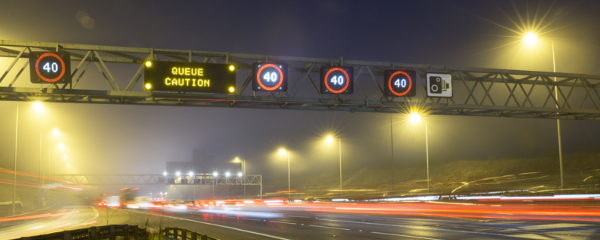
(Credit – Highways England)
Roadworks Embargo
To try to alleviate congestion over the festive period, Highways England will be lifting around 400 miles of roadworks so that motorists are not held up, allowing the natural flow of traffic to improve along motorways and major A roads. However, it may only take a broken down vehicle or an accident to cause severe tailbacks, so keep up to date with local radio stations or check before you travel using The AA Traffic News.
This roadworks embargo will be in place from 6am on Friday 22nd December to Tuesday 2nd January so should hopefully help to keep people moving for the whole festive period, including Frantic Friday.
Seeking an Alternative?
Despite Highways England maintenance embargo, planned strikes and engineering works on railways will still be taking place. London is widely-understood to be the worst affected, however, widespread service reductions following strikes may wreak havoc variety across the UK’s Rail system.
It isn’t all doom and gloom though, helping out those who may not want to drive over Christmas are National Express who have announced their largest ever Christmas schedule, this is to combat an expected increase in demand across a large number of locations, including; Cardiff, Leeds, Bournemouth, Bristol, Glasgow and Manchester. In fact they will be offering 30,000 extra seats from 18th December to 2nd January, so perhaps worth considering!
If possible, look to avoid using the roads during this very busy time of year, skip the frustration of long tailbacks, plan sensibly and start enjoying your Christmas break.
What do you think about “Frantic Friday”? Are you going to be braving the roads that day or do you have other plans during the festive period? How do you intend to avoid getting caught in traffic over the holiday period? Let us know in the comments below.
Dec 13, 2017
Petrol and diesel prices are set to rise by 3p a litre before Christmas due to a “perfect storm” of problems with UK supply caused by pipeline damage, a gas refinery explosion in Austria and OPEC’s decision to reduce the amount of oil produced globally by extending production cuts.
These factors have led to an increase in the wholesale price for gas which is now it at its highest since 2012 (73.7p per Therm) and the crude oil price at its highest level since 2015, ($65.72 per barrel). An expected 3p a litre increase is an extra £2 per fill up on a normal family saloon car, the impact on gas prices is not expected to hit us domestically in our energy bills for about 6 months in the future.
Ineos pipeline damaged
The shock damage of the North Sea Forties Pipeline near Aberdeen came after a routine inspection found a hairline crack, which led to a reduction in the supply of oil from the North Sea. The pipeline normally pumps half a million barrels of oil into the UK a day and is one of the biggest sources of oil, which is refined and turned into petrol and diesel.
Owners of the pipeline Ineos said in a statement.”Ineos has mobilized a repair and oil spill response team following the identification of a very small amount of oil seepage during a routine inspection of the Forties Pipeline System at Red Moss, near Netherley, Aberdeenshire, at approximately 10:00 hours yesterday (6 December 2017). We will work to resolve the issue and monitor the situation. We apologize for any inconvenience caused.”
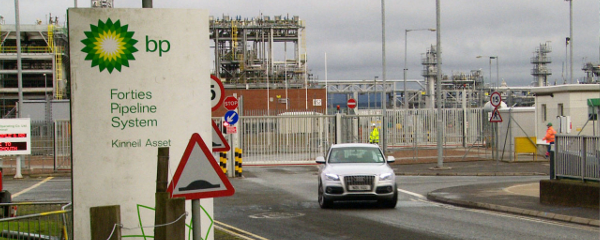
Austrian gas plant explosion
A few hours later, an explosion at a natural gas facility near Austria’s border with Slovakia left one person dead. A further 18 people were injured in the morning blast at the plant in Baumgarten an der March, east of Vienna, regional Red Cross official Sonja Kellner said.
“The explosion set off a fire, which operator Gas Connect said was contained by midmorning. The facility was shut down”, Gas Connect spokesman Armin Teichert said. Police wrote on Twitter that the situation “is under control.”
There was no immediate word on what caused the blast at the plant, where pipelines connect and gas from Russia, Norway and other countries is compressed before travelling into Europe.
OPEC agree to further cuts
The oil and gas markets were reacting to the accidents while also considering the longer term implications of OPEC’s decision to extend production cuts that was made at the start of December. All factors together led to a further increase in the price crude oil that was already rising in the months earlier. Crude oil surged by 7.6 per cent between October and November, reaching its highest level since December 2016, according to the Office for National Statistics (ONS).
Pump prices are now expected to surge from 120.76p a litre to 123.21p a litre for unleaded while diesel leaps from 123.21p a litre to 126.21p.
How to keep fuel costs down
PetrolPrices has said this advice many times, we’re not sure if you’re reading it still but we’re going to say this again because we don’t want any of you to overpay for fuel.
It’s now more important than ever to make sure that you use our cheap fuel locator to always know you are buying the cheapest fuel near you, via website or price alert email. Use our app in unfamiliar locations, especially on motorways or major trunk roads, you can save literally 20p a litre by coming off the motorway and going to the cheapest station nearby by using our app, but do not use the app while you are driving.
Fuel pricing is based largely on fuel duty, the wholesale price of oil and the competition around it. If an ASDA supermarket that sells fuel is near you this will keep the prices of other stations nearby lower because of their “price promise” of being the cheapest supermarket within 3 miles.
If you are willing to drive a few miles, less affluent locations with large clusters of supermarkets tend to have lower prices than more affluent locations. Locations near refineries tend to have lower prices, medium sized towns tend to have lower prices versus rural or highly urban locations. Finally, supermarkets often have deals where they will provide money off if you spend a certain amount at the store. Always check your supermarket and ask them what deals they have.
What do you think of the expected increase in fuel costs just before Christmas? What methods are you using to make sure you keep your fuel expenditure under control? Let us know in the comments below.
Dec 13, 2017
Christmas is just around the corner. If you haven’t already done so, it’s definitely time to start finalising those gift decisions before the big day arrives.
Women reportedly spend nearly 13.5 hours searching for the perfect present for their other half in the run up to Christmas according to a Littlewoods survey. However, men spend just four hours finding a gift in return.
With so much fun to be had in the lead-up to Christmas, PetrolPrices wants to save you some time by sharing these great motorist gift ideas, which are ideal for the driver in your life.
-
The perfect gift for the friend or family member who is always losing things, the Car Key Tracker is a multifunctional smart tool that alerts the owner when valuable things, such as car keys, have been lost.
This handy device can be linked to a smartphone, tablet or laptop. It will send push notifications to help you to locate the missing item. As it is only as thick as two credit cards, this device easily fits into wallets, purses and bags without taking up any space. It boasts steel casing, which makes it very durable.
Buy now
-
-
This fantastic bluetooth device gives the user 20 hours of talk time and 1,000 hours of standby time, meaning that phone conversations can be held more safely while they are driving.
Easy to install in the car thanks to a metal clip, this hands free device has a sleek and stylish design. Conveniently, it will automatically connect to bluetooth devices once the standard pairing process has been initiated. Two mobile phones can be connected at the same time, which is ideal for the friend or relative who has both a personal and a work mobile. The sound quality is excellent, so clear conversations can be had at all times.
Buy now
-
-
A very handy gift for the practical person in your life, this tyre inflator can be set to pump tyres up to the correct pressure. You simply charge it using the 12V outlet or cigarette lighter in your vehicle.
Able to inflate a flat tyre to 30 Psi in under three minutes, this particular device is compact and comes with a storage case so that you can keep it in the car at all times. Having the correct tyre pressure helps with fuel economy, increases the life of your tyres, and ensures that the car is safe to drive, so this great gadget comes with plenty of benefits for the lucky recipient.
Buy now
-
-
Give the gift of peace of mind this Christmas with a Car Jump Starter and Power Bank. This will certainly come in useful if the recipient experiences an issue with starting their car.
With six great functions, including being a compact jump starter, emergency device charger with dual USB outputs, LED flashlight and compass this device is a must-have whilst out and about!
Buy now
-
-
Designed to get the best out of the bass, these Active Car Speakers look just as great as they sound and are ideal for anyone who loves their music loud.
Featuring MDF construction, an integrated monoblock bass amplifier, and a horn-shaped centre section, this subwoofer also has a secret channel to hide wires, plus hardwearing tight weave acoustic carpet trim to keep it both looking and sounding amazing.
Buy now
-
-
Another Christmas gift designed to offer peace of mind to the recipient, this Electronic Tyre Pressure Monitor will display the real-time pressure of each tyre onto a wide-angle LCD screen. You can read this from any angle, no matter if it’s day or night.
The driver will be alerted if tyre pressures fall too low, a leak is detected, or the tyre temperature causes concern. This will help them to ensure that they are driving safely and assist them in avoiding any potential dangers related to incorrect tyre pressures.
Buy now
- Have you sourced the perfect gift for the driver in your family yet? Is it one of the above, or do you have something else in mind? We’d love to know the details, so please feel free to leave a comment below.
