Dec 6, 2017
Around 27% of Brits start their Christmas shopping three months before the big day, while 48% start just one month before. This leaves a lot of shoppers scrabbling to find the perfect present during December.
Christmas is a pricey time of year for everyone. The cost of food, drink, socialising, and other festive fun comes in at an average of £645 per person each year, with gifts being one of the biggest expenses during the lead-up to Christmas Day.
The average individual buys approximately 14 presents and spends around £117 on their partner, £145 on children, around £30 on their nan and best friend, and even £20 on their pet!
Now, we may not have anything suitable for your pet in our 12 Days of Christmas Offers promotion, but we have some great ideas for the humans in your life that you still need to buy for. Part one of our countdown includes some fantastic gifts for those who love to drive.
These gifts have the top-ratings on Amazon.
-
This set contains three pairs of shirt cufflinks in fun motoring designs, including gear stick knobs, a fuel gauge and speedometer, and steering wheels. The cufflinks are made from alloy, have fantastic detail, and come presented in an Onyx Art – London box which makes them perfect for giving as a gift.
Each cufflink has a t-bar fastening and knurled barrel design. These cufflinks will look great whether worn in the office or on a night out.
Buy now
-
Give the gift of warmth this Christmas with a set of two heated car seat covers. These simply plug into a car’s cigarette lighter socket and heat up when sat on. Boasting two temperature settings, these heated car seat covers will switch off when the desired temperature has been reached. Ideal for the colder months of the year.
Created with elasticated straps to hold them in place, comfortable padding and a soft nylon covering, these seat covers will fit any front car seats and are sure to add a touch of luxury to the recipient’s journeys.
Buy now
-
Perfect for that person in your life who adores keeping their car looking pristine, or perhaps a hint to the person who maybe doesn’t care for their car in the way that they should, this Perfect Car Polish Collection has everything required to make a car sparkle inside and out.
This high-quality car cleaning kit includes:
- • Bodywork Shampoo (325ml)
- • Super Resin Polish (325ml)
- • Extra Gloss Protection (325ml)
- • Clean Wheels (500ml)
- • Instant Tyre Dressing (500ml)
- • Alloy Wheel Seal (450ml)
- • Interior Shampoo (500ml)
- • Car Glass Polish (325ml)
- • Vinyl and Rubber Care (500ml)
- • One sponge
- • Hi-Tech Finishing Cloth
- • Aqua Dry Cloth
Everything that is needed to clean a car until it looks like it just left the showroom.
Buy now
-
Not all motoring gifts need to be practical – they can be personal too. This lovely Personalised Contemporary Road Sign is a perfect example. You can choose which locations are included on the road sign and make it completely personal for the person that you are buying for.
Plus, because it is printed on rigid plastic Foamex, the sign can be displayed either indoors or outside.
Buy now
-
Ideal for those who love their car gaming, this racing office and gaming chair not only looks great but has also been built with comfort in mind using high quality materials, including faux leather, mesh trimmings and caster wheels.
Anyone who sits in this chair will automatically feel like they are driving around a race track, which is sure to add some joy to the working day.
Buy now
-
This fantastic piece of tech is perfect for anyone who worries about how secure their car is at night, as it will monitor the vehicle and alert the owner if it is moved or the engine is started. It can also be used to track erratic driving, check on your car’s health, and monitor where your car has been – all for a very affordable price!
Buy now
All product RRPs were accurate at time of writing this article, prices are subject to sale/discounts and also price increases as per retailer discretion.
PetrolPrices will be presenting a further six Christmas motoring gifts next week, so look out for the next batch of festive driving ideas!
What will you be buying for the motorist of the family this year? Leave a comment to share your driving gift ideas.
Nov 29, 2017
The Department of Transport released data last week that revealed speeding offences reached a six year high in 2016. There were a total of 2.2 million speed-related prosecutions during the year, compared to 1.6 million in 2011. This has sparked major road safety concerns, as excess speed contributes to almost 25% of all fatal crashes on British roads. This highlights just how dangerous speeding is.
Drivers speeding three times per journey
Despite these shocking statistics, six in ten British motorists admit that they are willing to exceed speed limits. Indeed, the average motorist will knowingly do so three times per journey.
This is despite the introduction of higher fines for those who are caught driving over the speed limit. The new speeding fines were introduced on 24 April 2017. The changes saw three bands of speeding put into place. The applicable fines increase in severity depending on just how fast a motorist is driving over the limit.
Many drivers questioned believe that there were legitimate reasons for speeding. Examples provided included driving to A&E, taking a passenger in labour to hospital, driving on an empty road, needing the toilet or escaping the police!
Almost as worrying as these findings is the fact that 55% of drivers questioned about speed-specific road signs couldn’t identify the sign that signals the end of a 20mph limit and the beginning of a 30mph limit. Meanwhile, 33% didn’t know what the national speed limit sign was telling them.
This research suggests that neither increasing speeding fines nor putting more signs on the road will encourage drivers to slow down. As such, what else can we do to try to make our roads safer for all who use them?
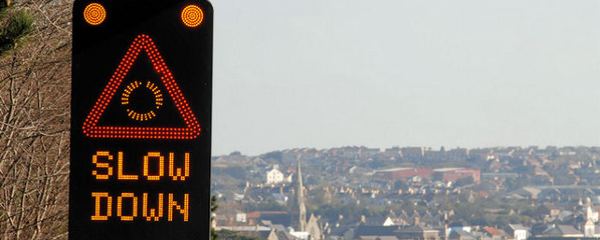
(Credit – Albert Bridge)
Shocking tactics
Insurance company More Th>n has been working on one possible solution. The company proposes showing photos of car crashes alongside speed limit signs to warn drivers of what they could face if they don’t obey the law. It’s a tactic that has been used on cigarette packets to try to deter people from smoking.
Using graphic images on cigarette packets has been proven to work by scientists. Smokers who see the images say that they make them understand how dangerous their habit is and that the images have made them consider quitting smoking. The MoreTh>n theory is that if showing this type of image is enough to encourage someone to give up an addictive habit, it may be that the same type of deterrent will work for speeding motorists.
More Th>n conducted a study to test this theory. It found that 67% of drivers felt heightened awareness of speeding dangers when they saw the signs, while 56% thought that the images were shocking (which made them effective).
Now, the company is sharing its findings with local police forces in the hope that they can carry out further trials, as more than half of the 2,000 drivers surveyed said that they think that the signs depicting car crashes would encourage drivers to slow down.
Unfortunately, little has been revealed so far about how young children will be prevented from exposure to such shocking images. Shops are obliged to hide the images on cigarette packets, but it is unclear how younger viewers will be protected from horrific images on speeding signs.
Other deterrents
The study also found that 25% of motorists don’t think that speed awareness courses act as a deterrent. This statistic adds further weight to the argument that the way in which speeding drivers are dealt with needs to change.
Road safety charity Brake has found this data very concerning. It has come up with several strategies that it would like to see implemented in order to combat speeding. These include increased enforcement by police, a default 20mph limit in all built-up areas, and ‘intelligent speed adaption’ to be fitted to all new cars as standard, in order to help drivers to stick to speed limits. Such systems either alert the driver that he/she is speeding or automatically reduce the speed of the vehicle.
There are a number of different options that could be implemented in order to deter drivers from speeding. Given the rising incidence of speed-related offences, it’s time that some of them are put into action to make our roads safer.
What would be the most effective tactic to deter you from speeding? Why is it that higher fines are failing to cut speeding offences? Share your views in the comment section below.
Nov 29, 2017
Christmas is an expensive time of year, regardless of what is happening at the petrol pumps. The average British family will spend £821.25 on festive items such as gifts, food, drink and decorations this year. With additional expenses looming, it’s always appreciated when companies do something to make the festive period a little more manageable financially. With the supermarkets offering generous discounts on fuel over the Black Friday weekend, could we be in store for more bargain prices at the pumps this Christmas?
Black Friday fuel price wars
Over the Black Friday weekend, both Morrisons and Asda used fuel offers to win trade from those looking to save at the pumps. Morrisons launched a Black Friday offer giving customers 10p off each litre of fuel if they spent £50 or more on groceries in its stores. Meanwhile, Asda knocked 2p off each litre of fuel for all customers in its petrol stations up and down the UK.
Could this be a sign that supermarkets may be willing to cut prices at the pumps to help their customers save money when making journeys over Christmas?
Pleased to hear the news that fuel duty would be frozen in the latest Budget, Asda’s chief executive Sean Clarke said that his company wanted to do even more to help its customers save money in the lead up to Christmas. By reducing the price of a litre of both petrol and diesel by 2p, he hoped that would go some way towards alleviating the financial squeeze that many families are feeling at present.
Highest fuel prices for three years
An AA spokesperson has confirmed that consumers are currently paying the highest prices for fuel in three years. In addition, there are predictions that these could rise by a further 7p or 8p per litre in the near future. This leaves motorists facing even higher costs at a time of the year when weather conditions mean that cars use more fuel to run.
This may be an even bigger shock to diesel drivers, who have recently been told that they may need to pay more road tax if their cars don’t meet certain standards. The additional taxation will contribute to a ‘clean air fund.’ This is yet another cost to add to the ever growing list of expenses for those who own older diesel vehicles.
Supermarket competition
We know that supermarkets like to be competitive when it comes to offering their customers the best deals. They will always try to encourage new customers to use their stores, so lowering fuel prices or offering fuel-based incentives could be a great way to get people to choose their shop when they buy their Christmas groceries.
If families have the option of a few local supermarkets to choose from, there’s plenty of scope for them to be swayed to spend money elsewhere. Saving money on the fuel they need for their Christmas journeys might just be the winning factor, so we could see companies battling over fuel prices for the festive season. This would be excellent news for consumers looking for ways to save money wherever possible.
Nor is it all about attracting new customers. Supermarket owners understand the value of loyal customers and know that many of their regular shoppers are feeling a financially uncertain at the moment. Reducing fuel prices rewards those regular customers just as it aims to attract new ones.
Despite offers like Morrisons’ 10p off a litre when you spend £50 in-store sounding like a great deal, it’s always worth shopping around before you commit by using the PetrolPrices app. This is especially true if you don’t normally do your food shopping in Morrisons and need to travel further than your usual supermarket to get there. Bear in mind, too, that you may end up buying more expensive products than you normally would, in order to be eligible for the deal.
The price that you pay for fuel is affected by where you live and which petrol station you choose to use, so be sure that you do your research to guarantee that you’re getting the most reasonable price in a location convenient for you. It could be that you could save a few pence per litre by simply driving along to the next petrol station, so it’s always worth checking with PetrolPrices before you fill up.
Would you be tempted to change the supermarket you use in order to save money on fuel? How else will you be keeping your fuel costs down over the festive season? Leave a comment below to share your plans.
Nov 29, 2017
The new General Data Protection Regulation (GDPR) will come into force on 25 May 2018. The legislation gives individuals more control over how their data is used. One potential consequence of this could be an end to the way that private firms issue parking fines. Currently, the DVLA makes money from selling people’s data to private companies, which then issue fines. The problem with the current system is that we, the owners of that data, haven’t permitted the DVLA to do this.
The data protection debate
Currently, we provide the DVLA with information in order to receive our driving licences and tax our vehicles. Both of these are legal requirements. The DVLA then takes the information it has gathered, such as our address details, and sells it to private parking firms. This practice makes a staggering £1 million per day.
These firms then use this information to track down where we live and send the fines to our home addresses. They also use the information if they go on to pursue the matter through the courts.
Under the GDPR, one of the main justifications for gathering data is that the data subject has provided ‘informed consent’ regarding how that data will be used. It also says that the data will not be used for other purposes without permission. Furthermore, individuals can request that their information be deleted.

(Credit – Maigheach Gheal)
Parking fine increase
Providing this information to private parking fine companies is a lucrative side income for the DVLA. In the second quarter of this financial year alone, it sold some 1.4 million records. Private parking firms used these to pursue drivers for penalties up to £100.
The RAC has warned that it expects the level of parking fines issued to increase significantly over the Christmas period. In fact, according to the RAC’s research, by April 2018 the total number of records sold by the DVLA will be at least 5.6 million. This could easily run to over six million if there is a boom in parking ticket numbers over Christmas. That’s a 21.5% increase on the 2016-17 period, which saw 4.71 million records sold. It’s also a staggering 12-fold increase in the number of tickets issued from 2007-08, when less than half a million details were sold.
Eagle-eyed companies
Because parking fines are such a profitable business, those involved in it are keen to spot drivers who have overstayed their ticket by even a few minutes. They can then use data they source from the DVLA to track down and fine the vehicle’s owner. Parking companies allow no grace period at the end of your parking period, even at the chaotic Christmas time when checkouts are busier and shopping trips take longer. With the cost of Christmas rising every year, a £100 parking fine is something that few families can afford to weather.
Of those companies cashing in on using DVLA data, Parking Eye was the main culprit during the second quarter of 2017-18. The company requested a total of 466,668 vehicle keeper records, which accounts for one in every three requests made.
Councils cashing in
It’s not just private parking companies that are making money from drivers overstaying their welcome. English councils made a record income from parking fines and charges last financial year, at a staggering £819 million. Figures from the RAC Foundation showed that to be a 10% increase on the previous year’s £744 million.
The 2016-17 financial year total was nearly £37 million more than expected. London boroughs led the way, with Westminster City Council making a profit of over £73 million, a 31% increase on the previous year. Outside London, Brighton and Hove City Council topped the list of earners, with a profit of £21.2 million.
The only positive to this situation is that the extra income does benefit drivers and residents, as it is ploughed back into infrastructure and services for the area – unlike the fines paid to private companies.
Debating the point
According to the DVLA, consent is one of six legal justifications for the valid use of personal data. It remains to be seen how this will be interpreted under the GDPR. Meanwhile, Sir Greg Knight is not letting the issue of parking fines drop. His private member’s bill aimed at dealing with the excesses of parking fines will be debated in the House of Commons in the New Year, as he pushes for a fairer balance between landowners’ and drivers’ rights.
Do you think the GDPR will mean an end to the DVLA selling drivers’ data to private parking firms? Or will the organisation simply find a way to circumvent the new regulations? Leave a comment below to air your views.
Nov 29, 2017
Car vandalism has seen a worrying rise in recent years. According to police data, the number of reported cases has risen by 10% in the past three years, while some parts of the country have seen an increase of as much as 37% over the same period.
Rising problem
Over 210,000 vehicles suffered some kind criminal damage in 2016, including smashed windows, broken windscreens and slashed tyres. That’s a huge increase on the figure from 2013, which stood at 191,000 according to data from RAC Insurance.
The real statistics may even be a lot higher, as many motorists don’t report such incidents for fear that their insurance premiums will increase. They simply pay to rectify the damage themselves rather than face the anticipated expense and the time and inconvenience involved in getting the car repaired via their insurance company. The knowledge that they must report any claim for another three to five years after the incident simply serves to add insult to injury.
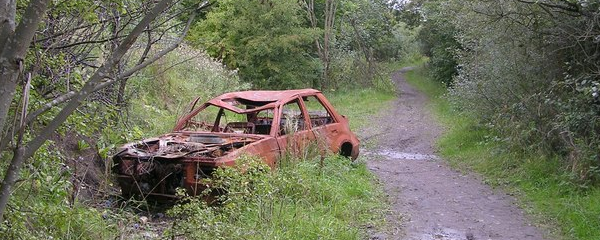
(Credit – Chris Upson)
Which areas are worst affected?
RAC Insurance Director Mark Godfrey has called vandalism one of the most ‘frustrating crimes’ because the disruption and distress it causes is the result of selfish, intentional criminal damage. The picture of such damage around the UK is not an even one.
According to figures collected from 24 of the UK’s 37 police forces, Greater Manchester Police saw the most significant increase in car vandalism cases between 2013 and 2016. The number of cases in their patch increased by 37% over the period. In joint second place were Hertfordshire Constabulary and the West Yorkshire Police, both of which saw a 25% increase in the number of vehicle vandalism cases.
The top ten increases recorded by the forces that provided data were:
- Greater Manchester – 37%
- Hertfordshire – 25%
- West Yorkshire – 25%
- Northumbria – 22%
- Cambridgeshire – 19%
- South Yorkshire – 19%
- Dyfed-Powys – 15%
- Bedfordshire – 13%
- Staffordshire – 12%
- Kent – 11%
- Durham – 11%
Regarding the total number of cases reported, it’s no surprise that London’s Metropolitan Police saw the most significant number of cases – 26,064 in total in 2016.
Another issue with car vandalism is that the number of people caught and prosecuted is relatively small. If someone causes less than £5,000 worth of damage, then they can face a fine of up to £2,500 or up to three months in prison. If the damage costs more than £5,000, then the fine rises to £5,000, and the prison term to up to six months.
Protecting your vehicle
One of the problems with vandalism is that it is much harder to combat than other car-related crimes. A good car alarm can dramatically reduce the risk of a car being stolen, but does little to deter vandals. However, there are steps that you can take to protect your vehicle.
If you have a garage or carport, then it’s always a good idea to use it for your car overnight. Making a car harder to reach is a great deterrent, as many vandals are just looking for a quick, easy target.
Some people think that keeping your vehicle out of the light can be a good idea, but the opposite is true when it comes to fighting vandalism. By parking your car beneath a bright street light or external house light, you can reduce the risk of it being vandalised as the vandal has a higher chance of being seen.
While standard car alarms are designed to stop someone stealing the car, you can get enhanced alarms that are motion activated. This means that if something moves the vehicle more than the wind could do, the alarm will sound. While alarms may seem not much of a deterrent, it is surprising how many vandals will move away quickly when a loud sound calls attention to their actions.
You may even want to add CCTV cameras on the outside of your house to cover where you park your car. Their presence can act as a deterrent to the casual vandal. Additionally, if something does happen to the car, you have footage to take to the police to help catch and prosecute those responsible.
Have you noticed a rise in car crime such as vandalism in your local area in recent years? What measures are you taking to protect your vehicle? Leave a comment below to share your experiences.
Nov 22, 2017
At the start of this year’s first Budget statement in the Autumn, the Chancellor made clear that it was to be a “balanced budget”, which was both fiscally responsible but protected family incomes and jobs.
Reports earlier in the week from the Petrol Retailers Association suggested that the Chancellor was going to announce a 1p a litre rise in fuel duty on diesel for the first time in 7 years, alongside tax increases on the purchase of diesel cars confirmed by the Treasury a month ago.
Many experts regarded this as the nightmare scenario of a triple price hike in fuel duty, rising oil prices and tax hikes all at the same time.
Fuel duty frozen, car tax rises
To huge relief amongst Britain’s motorists the Chancellor opted to keep fuel duty frozen for the 8th year in a row, which is the longest time in 40 years that fuel duty has not changed, costing the Treasury a cool £46 billion in income.
Unfortunately, he did keep his promise of further taxation on diesel cars. Drivers of new diesel cars will now see an increase in road tax. They will be levied an increase in the first year of ownership on one tax band higher than those buying new petrol cars. Moving up a band for each diesel vehicle means motorists could be charged between £15 to £500 extra. The Treasury estimates that this change will raise £220 million that will be used to invest in a “clean air fund”, more on this later.
But there is an interesting sting in the tail of these road tax changes. The Chancellor also announced that new diesel cars are exempt from road tax increases if manufacturers implement new lower emission technology. We believe he is referring to super low emission diesel technology developed by companies such as Continental that delivers a 60% reduction in NO2 emissions and 4% fuel consumption improvement.

(Credit – Gio April)
Clean air fund
The £220 million raised from hiking diesel duty on new car purchases is going into a fund for cleaner air in towns and cities. The clean air fund is currently in consultation stages, but its purpose is to seek additional measures to support individuals and businesses affected by local NO2 reduction plans that will be rolled out at a local government and council level.
The fund is to support the implementation of local air quality plans by local governments and councils, while recognizing the potential impact on local businesses that these changes will make. The first indication of what these changes look like can be seen in London with the “T-charge” (toxicity charge) and Islington Council imposing a £2 additional charge for diesel cars parking in the Borough.
Concerns amongst local business owners in retail and hospitality is understandable if extra charges on diesel cars becomes prevalent across the UK. It’s bad enough that the gradual removal of free car parking and traffic control measures to reduce cars on high streets has moved footfall away to out of town locations, but to add in additional fees targeting diesel cars would be the final nail in the coffin for some businesses that rely on passing trade to survive.
Impact of the Budget on Business
In another change, the existing diesel supplement in company car tax is also going up by 1% and while this is a small change the key theme is to try to gently discourage companies with fleets to move away from providing fleets with diesel cars.
And for those who charge their electric car at work, this will no longer be a “benefit in kind” for tax purposes and they will be relieved of duty. This falls in line with other recent tax changes, where electric cars worth over £40,000 are now no longer exempt from road tax, which had been a tax loophole employed by companies.
And to add further cheer for Businesses, the tax increases will be on cars only, the Chancellor was keen to stress that “white van man” will not be impacted at all by any of the measures announced today, although what this means for those who use cars to drive for a living (such as taxi firms) means there is no exemption at all.
The main feeling that comes from the Budget is that it is still bad news but it could have been worse. Diesel drivers have been impacted, especially on buying new diesel cars and company car tax, but overall it won’t change behaviour. Fuel prices are going to rise anyway by between 4 to 12 pence per litre over the next 2 months, so freezing fuel duty didn’t relieve drivers, it was a token gesture.
PetrolPrices thinks that the Budget was more an adjustment rather than a change in policy on diesel to try to change buying behaviour. Diesel car drivers continue to be the Government’s focus tackling pollution when the reality its only 15% of the total NO2 impact. It feels as if the Government is scared to go after industries with big toxic emissions, road hauliers, public transportation and local councils to crack down on other leading causes of NO2 emissions. Targeting the car driver is the easy option because it doesn’t have the same level of union protection and lobbyist groups behind it as the other areas do and they can tax more easily.
What do you think of the Budget announcement and impact on you as a motorist? Do you think it was a “balanced budget” or do you think it has gone too far and added more tax than necessary? Let us know in the comments below.
Nov 22, 2017
There’s even more bad news for diesel drivers this week. Islington Council has announced that, from January, it will be charging those with diesel cars £2.00 extra per hour for parking in one of the borough’s 6,500 short stay parking bays. It is encouraging other London boroughs to adopt the same approach.
The parking bays in question currently cost between £1.20 and £6.00 per hour. This will increase to £3.20 or £8.00 per hour for anyone driving any type of diesel car. Unlike other penalties for diesel drivers, which target older vehicles, Islington’s charges will apply regardless of the diesel’s age or how clean it is. This means that the cheaper bays will now cost these drivers more than double what they were paying originally. Drivers of brand new diesels who park up next to more polluting older petrol models, yet have to pay more for the privilege, will no doubt be irked by the new penalty.
Toxic air
The reason behind the parking charge increase is that Islington has been suffering from an increase in toxic air pollution. This is widely blamed on fumes produced by diesel cars. The council wants to protect its residents and plans to do so by reducing the number of diesel cars using its roads.
Encouraging people to purchase cars that don’t run on diesel is a sensible approach to tackling part of London’s air pollution problem. However, many drivers simply can’t afford to upgrade their vehicle right now, even if they wanted to.
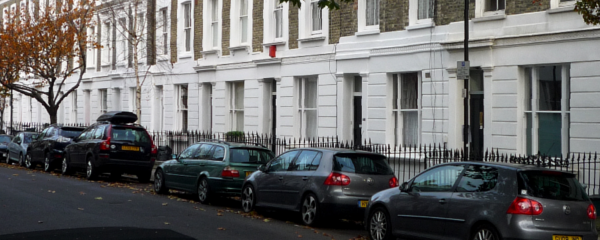
(Credit – Oxfordian Kissuth)
Punishing diesel drivers
Many are seeing Islington’s plan as simply another way to punish diesel drivers. The fact that even hybrid diesels, which are much cleaner than many older petrol models, will need to pay the charge is adding fuel to the fire. Those who have shelled out to purchase a hybrid model for environmental reasons will feel particularly wronged.
This is not the first time that Islington Council has targeted diesel drivers. It previously added a £96 surcharge onto diesel residents’ parking permits. This meant that residents with new diesel cars that produce the same level of emissions as older petrol cars are paying more for their permits.
The threat of higher parking charges is just one more punishment to add onto the ever growing list for diesel drivers, who have been targeted by a variety of charges recently. For example, the T-Charge has now been introduced in London. It is costing drivers of both diesel and petrol cars £10 during peak periods. While it isn’t only targeting diesel cars, it is yet another cost that they have to contend with. There are other cities across Europe that are doing the same.
Bad press
Diesel drivers have also had to face bad press over the vehicles that they drive. This has been exacerbated by activists storming ships delivering new diesel cars. Despite the fact that older diesel cars are having a terrible effect on the environment, it is often the case that these cars were bought under advice from a previous government. Now, many drivers can’t afford to just go out and buy a new model, so are having to live with feeling increasingly guilty about a choice that they were officially encouraged to make.
Trying to reduce air pollution is vital. It is something which councils across the UK should be focusing on. However, with some older petrol cars releasing toxins that are just as bad for the environment – and not being targeted with additional charges – it does seem that councils are keen to raise these funds from diesel drivers in particular rather than fairly targeting only the most polluting vehicles (or even just charging everyone on the roads a tiny bit more).
The wrong approach
Antagonising diesel drivers is not necessarily the best solution. Positively encouraging the use of electric vehicles or hybrid models would be far more helpful. Islington Council’s approach, including the fining of diesel hybrid drivers, seems just as likely to spur diesel drivers on to buy petrol models as it does to promote cleaner vehicles.
Implementing a £2.00 per hour parking surcharge for diesel drivers is only likely to cause anger and frustration. If this is eventually rolled out across London, it could potentially make diesel drivers feel even more victimised that they do currently. It could even encourage drivers to turn away from hybrid vehicles in favour of petrol models.
Will Islington Council’s blanket approach work, in your view? Or does the borough need to rethink its strategy and target only the highest polluting vehicles? Leave a comment to share your thoughts.
Nov 22, 2017
The race towards successful autonomous – or driverless – cars continues at high speed. However, the insurance industry has raised concerns that the UK is woefully under-prepared for their arrival. Insurance professionals are calling for the urgent overhauling of the laws dealing with insurance in order to review the issue of autonomous cars, which are expected to be on UK roads by 2021.
Liability issues
Questions around liability have already been one of the stumbling blocks for the roll-out of driverless cars, especially during the period where they won’t be entirely driverless. The driver will be legally in charge – even when the vehicle is using autopilot. Insurers are concerned that this could lead to confusion over responsibility and could mean drivers face uninsured losses.
Chris Grayling, Secretary of State for Transport, said that the government would rule that future policies must cover injuries to all parties where driverless vehicles are involved. In a speech to insurers, he went on to say that self-driving cars would be in use by 2021 and that a new compulsory insurance framework would be required to cover these vehicles, including the issue of drivers having legal control.
In addition, the Thatcham Research Centre, a motoring body funded by the insurance industry, has urged the government to speed up the reforms currently covered under the Automated and Electric Vehicles bill. The research organisation believes that, while self-driving cars will eventually cut road accidents, the current situation with semi-autonomous vehicles will confuse people.
(Credit – Flickr User)
On the road
The Audi A8 was launched in June. It has an autopilot mode in which the car can navigate through slow-moving traffic, in addition to being able to park itself. However, the legal and insurance implications of this have yet to be confirmed. Drivers in the front seat have their hands on the wheel during these manoeuvres, but the insurance industry has raised concerns about when the driver takes back full control.
The A8 is due to be on the road next year. It has reached a level of autonomy classed by engineers as level 3. This means the car does most of the tasks, though the driver is required to intervene at certain points. According to the Association of British Insurers, many people wrongly think the vehicle can manage the whole journey, which isn’t the case.
Autonomous checklist
Thatcham has drawn up a ten-point checklist of features that it believes manufacturers of autonomous cars should follow. These include transparent signalling of independent capabilities and systems to ensure that handover back to the driver is clear to understand. It would certainly help deal with potential grey areas where a driver would not be insured for their injuries when a car was driving autonomously, although passengers would.
Currently, the levels of automation recognised in the industry include:
Level 0 – no automation
Level 1 – driver assistant
Level 2 – partial automation
Level 3 – conditional automation
Level 4 – high automation
Level 5 – full automation
Level 3 upwards involves the automated driving system monitoring the driving environment to make decisions about driving.
Driverless in the US
Testing of driverless cars in the US is well ahead of what the UK has experienced. Both the national and state governments seem keen to continue advancing the tests. Driverless cars have hit several milestones already, including the first without a backup driver in Arizona. Google’s parent company Alphabet has also announced a fleet of modified Chrysler Pacifica minivans, which will undergo testing on the roads of Phoenix.
The US authorities are already looking at solutions for problems we have yet to consider here in the UK. For example, how do we handle driverless cars on the motorway? And how will they interact with smart motorways? In the US, the authorities are considering having driverless car lanes on some interstates. But how will the vehicles handle traffic jams or roadworks? While the growth of the driverless cars continues, there are still many questions to be answered and the UK needs to push ahead urgently in order to be ready for the arrival of this technology.
Why is the UK lagging behind in its approach to driverless car adoption? How can we do more to ensure we’re fully prepared for the motoring technology of the future? Leave a comment to share your views.
Nov 22, 2017
A study carried out by airport transfer company Hoppa has found that 99% of drivers would fail their theory test if they were to retake it now. With Road Safety Week (20-26 November) in full swing, the statistic is alarming in its implications for the safety of our roads.
Theory test problems
As part of the study, 1,000 license holders sat a condensed version of the current theory test. They were asked to answer 15 multiple choice questions (rather than the 50 that new drivers are required to answer). To reach the 86% pass rate, they needed to answer 13 of the 15 questions correctly. However, the average score was a dismal 46%.
A question about stopping distances defeated 81% of the participants. Encouragingly, 82% answered the question about residential speed limits correctly. However, just eight of the 1,000 drivers passed the test.
Londoners were found to have the worst average score, at just five out of 15. Meanwhile, those in the 55+ age category scored the highest, showing that they have the best understanding of the Highway Code out of any age group that participated in the study.
The theory test pass rate has seen a dramatic drop over recent years. Just 49% of those who sat it in 2017 passed, compared to 65% in 2008. The results could imply that new drivers don’t understand the importance of these laws and rules of the road, or perhaps that the driving instruction process doesn’t focus heavily enough of them.

Road Safety Week
These results highlight how important having Road Safety Week is. The national initiative encourages both drivers and passengers to be aware of the types of things that can cause accidents on our roads. With an average of five people dying every day in car accidents, it’s vital that people understand how they can be safe at all times while they are on the road.
Road Safety Week asks people to pledge to drive in a slow, sober, secure, silent, sharp and sustainable way. The goal is to ensure that they do not put themselves and their passengers at risk, and all of these things can contribute to driving in a safe way.
By sticking to speed limits, not drink driving, making sure everyone in the vehicle is wearing their seatbelt, avoiding loud music, not using mobile phones, being aware at all times and only driving when absolutely necessary, drivers can ensure that there are fewer accidents and deaths occurring on the roads.
Five tips for safer driving
Keep your car in a safe condition – Before a car journey, especially a long one, always ensure that you’ve checked your tyre pressures, your lights are in full working order, and there are no water or oil leaks leaving puddles under your car. This way, you know that your car is safe to take out onto the roads.
Avoid distractions – Although it is nice to have music on when you’re driving, make sure that you keep it at a suitable volume, so that it doesn’t distract you or drown out the noise of sirens or other important road noises. You should also make sure that your phone is out of reach and sight, so that you’re not tempted to use it.
Don’t allow yourself to be put under pressure – When you’re out in the car and another driver comes up behind you and sits too close to your rear bumper, it can sometimes pressure you to go faster. If this happens, simply pull over when it is safe to do so and let them drive past. This will be safer for you both.
Expect the unexpected – Just because the car in front of you is indicating is doesn’t necessarily mean that it will turn, and just because you can’t see anything on the corner you are turning around, it doesn’t necessarily mean that there’s not a slow moving vehicle awaiting you. Always expect the unexpected and be extra cautious and aware at all times.
Always wear your seatbelt – Putting your seatbelt on when you get in your car should come as second nature to every driver and passenger. Always check that everyone has buckled up before you set off. Doing so could save your lives.
Have you thought more about the way that you drive as a result of Road Safety Week? Have you made any changes to your driving as a result? Leave a comment below to let us know.
Nov 15, 2017
Road safety professionals have flagged that a lack of investment into the UK’s roads is causing a failure to tackle road safety. Limited funding is one of the main reasons that the UK is missing out on road safety innovation, which experts believe is linked to an increase in road deaths last year for the first time in 10 years.
Making our roads safer
At the Premier Highway Event, 60.3% of 2,000 road safety professionals said that new innovation and technology are integral in improving both road safety and driver behaviour. However, 42% stated that the lack of budget available is creating a barrier preventing them from implementing new ideas.
32% of the professionals surveyed also felt that unwillingness to change and aversion to risk are getting in the way of the UK trying out new techniques to make our roads safer to drive on.
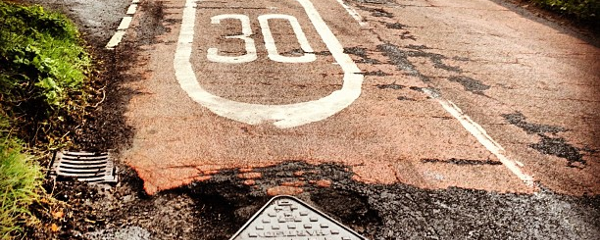
(Credit – Darren Moloney)
Pothole season
One of the biggest safety issues facing road users is potholes. They caused 96 crashes in 2016, an increase of 12% compared to the previous year. In addition to this, 467 cyclists were in accidents caused by poor quality, defective roads. Meanwhile, one in three motorists claim to have suffered vehicle damage due to a pothole. This includes damage to tyres and suspensions, which are both costly to replace.
Over a million potholes were reported to highway authorities and councils last year. They cost £3.1 million to repair. The local authority who made the most pothole-related pay outs was Wiltshire Council, which ended up with a £505,000 bill. Westminster City Council paid out the most per pot hole, at a staggering £2,400 each.
Despite all of the money that has already been spent on repairing potholes and paying out for damage caused to vehicles, 70% of drivers think that more should be done. This shows just how dangerous and worrying these road defects are. The situation is made worse by the fact that some local authorities judge certain potholes to be too shallow to fix – one North Yorkshire cyclist suffered a concussion after hitting a pothole, but the local authority argued that the road had passed a recent inspection.
New technology
Prevent potholes from occurring would mean that the money spent repairing them could be invested into trying out new road safety technology and innovations.
Nottingham University Lecturer Dr Alvaro Garcia may have the answer. He was inspired by a surprising source: a contestant on the Spanish version of MasterChef. The contestant gave Dr Garcia the idea to use spherification to create small, solid balls of sunflower oil. These can be mixed in with road asphalt and help to prevent cracks from becoming worse.
The balls work by sensing when cracks appear in the asphalt and breaking to release the oil to help to stick the road back together. Tests have shown that within just two days, the damaged road has been restored. This is fantastic news for local authorities who are spending so much of their budget on repairing potholes.
It has been said that this innovative solution could extend a road’s lifespan from around 12 to approximately 16 years.
This self-healing road research at Nottingham University is being funded by Highways England. It demonstrates the impact that investment in new technology can have on road safety. The innovation is particularly exciting due to its sustainability and environmentally friendly nature.
The price of innovation
Cuts are being made across the board in the UK. However, it seems that not providing enough funding to keep drivers safe on the road is a dangerous move by the government. Road deaths in the UK increased by 4% last year, reversing a decade of improving safety figures. Investing in improving road safety would be more cost effective than responding reactively to issues and could also help to save lives.
With this in mind, surely the government should find further funding to invest in new technology and innovations to keep our roads safer. Doing so could help to keep motorists safe, as well as reducing the need for future expenditure on repairing our decaying road network.
Have you noticed a decline in the quality of the roads in your local area? Has your council been quick to act or have things simply been left to deteriorate? Share your experiences below.
