Dec 20, 2017
Your profession can tell someone a lot about you – a business expert, a tech whiz, someone who is great with people, a highly motivated person. But can your profession tell someone how likely you are to be involved in a car accident? According to a new study from insurer 1st Central, yes it can.
In the figures
According to the insurer, they have compiled a list of the professions with the worst track record based on a review of some 400,000 policyholders. If you are a financial adviser, you may want to turn away now.
The study involved looking at claims made by people across 2017 and their occupations. It showed that financial advisers were topping the charts for the number of claims made so far, this year, an increase from 4th place in the same survey taken in 2016.
Overall, those working in the health industry are the most likely to have an accident with doctors, pharmacists and dentists all being in the top five professions. Of course, this could be connected to factors such as long working hours, stressful jobs and even things like very full hospital car parks – known to be some of the most dangerous places to drive in the country!

The top ten
The top ten professions to have had accidents in 2017 are:
1. Financial adviser
2. Doctor
3. Pharmacist
4. Dentist
5. Solicitor
6. Accountant
7. Aircraft cabin crew
8. IT manager
9. Letting agent
10. Project manager
This compares to the list created at the same time last year that showed the top ten as:
1. Accountant
2. Solicitor
3. Doctor
4. Financial adviser
5. Letting agent
6. Airplane cabin crew
7. Bank manager
8. IT manager
9. Pharmacist
10. Train driver
Some professions have left the top ten entirely including bank manager and train driver (that’s a reassuring one) while others have retained their position as the most likely to be involved in a shunt of some kind.
The least likely
While there are the most likely to have accidents, the study also showed the professions who are least likely to have an accident, based on the figures for this year so far. The occupation least likely to have an accident are painters, a big improvement from last year when they were the 10th least likely to have a bump.
The ten least likely professions to have an accident were:
1. Painter
2. Farm worker
3. Builder
4. Mechanic
5. Lorry driver
6. Factory worker
7. Cleaner
8. Bus driver
9. Chef
10. Ambulance driver
Several of these occupations would be classed as professional drivers such as bus and lorry drivers as well as ambulance drivers so its no surprise to see them on the list.
Drink driving
It is interesting to contrast these lists with the list issued last month by Money Supermarket that looked at the occupations most associated with drink and or drug driving convictions. It found that mature students living at home have a massive 28.5 in 1000 chance of being caught and convicted for this type of offence.
This was followed by mature students living away from home (16.5 per 1000 drivers) and then scaffolders (4.5), labourers (4.3) and ground workers (4.2).
Why it matters
Of course, you aren’t going to change your profession based on the likelihood that you have a crash, but these kinds of figures are used by insurers to help rate professions and therefore the cost of your insurance. Currently, professional sports people like footballers and racing drivers top the charts as the most expensive profession to insure while funfair employees and scrap dealers also rate highly.
At the other end of the scale, occupations such as nurses, coastguards and bursars are rated at the lower end of the scale for insurers based on various data. Women have seen lower rates than men, but this changed in 2012 when new EU directives meant that insurers couldn’t use gender as a rating factor.
Are you one of the professions that has the most or least accidents? Do you agree or disagree with the findings from 1st Central Insurance? Have you been affected by high insurance premiums because of the job that you do or convictions? Let us know in the comments below.
Dec 20, 2017
A new study by Kwik Fit has shown that if we want to reduce air pollution by two thirds almost overnight, the aim should be to remove all diesel vehicles from the road that are over ten years in age. Their study shows that there are 3.5 million diesel cars on the road registered before 2007, and if they were replaced with the new Euro6 diesel engine, NOx emissions would fall by nearly 70%.
Age-related problems
Kwik Fit looked at the number of older vehicles on the road and the study proves that the replacement of older diesels would cut emissions of nitrous oxide by 68%. It would also save motorists some £1 billion a year. The study followed the government’s crackdown on diesel cars, with an increase in the first-year tax for any new diesel cars bought from April onwards.
This move was criticised by experts because newer diesel cars are much less polluting than older models already on the road. The move could also discourage drivers of older vehicles from replacing them with newer models.
Government crackdown
The government crackdown on diesel shows no sign of slowing and has drawn criticism from many different sources. The budget increase, for example, moving cars up a tax band based on emissions – without any real-world emission tests having been carried out on them. Kwik Fit’s study shows that the move could affect more than health and finances.
The study shows that if the current Euro6 standard diesel engine were to replace older vehicles, harmful emissions would be cut significantly. It would also save motorists a lot of money in fuel. Older cars currently travel around 30 billion miles a year, emitting some 12.1 million kilograms of NOx and using 66 million gallons of fuel.
Fuel savings
If drivers were to switch to newer models, not only would the emissions be cut by two thirds, reducing the risk of pollution-related conditions and deaths, but it would also be kind on the pocket. Newer diesel cars are more fuel efficient and consume 488.8 million gallons to cover the same mileage, saving drivers some £947 million a year.
It would even reduce factors such as the volume of tankers on the road as drivers will need to fill up less often. It would further reduce costs and pollution. The move could see some 20,000 fewer loads of diesel requiring delivery around the UK.
Electric growth
The much-criticised move to penalise new diesel cars may be putting drivers off from replacing their older diesel models, but it has a potential upside – the continued increase in sales of electric vehicles. In fact, according to data from the Energy and Climate Intelligence Unit shows that sales of electric cars will overtake diesel cars in as little as two years’ time.
Diesel car sales dropped by a third in October compared to the previous year, the 7th decline in a row. It was also the most significant drop in diesel sales for nine years. At the same time, the sales of electric and hybrid cars have risen by 37%.
The study went on to say that they believe the tipping point for diesel versus electric sales will be mid-2019 when the electric sales will move above diesel for the first time.
Scrappage schemes
Many car manufacturers have introduced scrappage schemes to help persuade older diesel owners to swap to a newer vehicle and make the cost less prohibitive. These programmes include both diesel and petrol schemes and will see significant discounts up to £8000 on more modern vehicles. But so far, this seems to have had little impact on new diesel car sales.
The cost of replacing all diesel cars over the age of ten is said to cost over £97 billion, based on the average new car price of £28,000. So, the government would need to provide drivers with significant help towards this cost if they are serious about replacing these vehicles.
What do you think about the Kwik Fit study and whether it’s a viable way to tackle road pollution? Do you think the Government would support a scrappage scheme focused on old diesel cars of this scale? Are 10 year old diesel cars the real culprits behind most pollution? Let us know in the comments below.
Dec 20, 2017
If you are going to be visiting friends and family over the Christmas period, or are heading away for a festive break, you may want to keep your eyes open for what the RAC are calling ‘Frantic Friday’.
Studies carried out by the RAC have suggested that Friday 22nd December will see commuters making their way home from the final day at work and combining with an estimated 1.25 million leisure drivers, all to create widespread congestion across the UK.
Peak times
It is thought that the busiest time to travel on Frantic Friday will be between 4pm and 8pm, RAC traffic spokesman Rod Dennis stated people should avoid driving at all if possible.
The highest number of leisure journeys is expected on Christmas Eve with 1.87 million journeys being taken as people head to wherever they will be spending Christmas Day, and there will be an estimated 11.5 million leisure trips taken between the 17th and 24th of December.
However, this will be topped almost immediately by a massive 17.5 million journeys being made between Christmas Day and New Year’s Day as people begin heading home or to the shops to pick up the latest bargains in the post-Christmas sales.
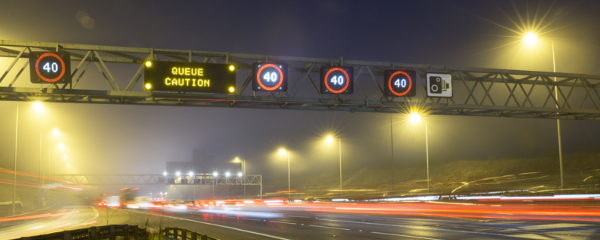
(Credit – Highways England)
Roadworks Embargo
To try to alleviate congestion over the festive period, Highways England will be lifting around 400 miles of roadworks so that motorists are not held up, allowing the natural flow of traffic to improve along motorways and major A roads. However, it may only take a broken down vehicle or an accident to cause severe tailbacks, so keep up to date with local radio stations or check before you travel using The AA Traffic News.
This roadworks embargo will be in place from 6am on Friday 22nd December to Tuesday 2nd January so should hopefully help to keep people moving for the whole festive period, including Frantic Friday.
Seeking an Alternative?
Despite Highways England maintenance embargo, planned strikes and engineering works on railways will still be taking place. London is widely-understood to be the worst affected, however, widespread service reductions following strikes may wreak havoc variety across the UK’s Rail system.
It isn’t all doom and gloom though, helping out those who may not want to drive over Christmas are National Express who have announced their largest ever Christmas schedule, this is to combat an expected increase in demand across a large number of locations, including; Cardiff, Leeds, Bournemouth, Bristol, Glasgow and Manchester. In fact they will be offering 30,000 extra seats from 18th December to 2nd January, so perhaps worth considering!
If possible, look to avoid using the roads during this very busy time of year, skip the frustration of long tailbacks, plan sensibly and start enjoying your Christmas break.
What do you think about “Frantic Friday”? Are you going to be braving the roads that day or do you have other plans during the festive period? How do you intend to avoid getting caught in traffic over the holiday period? Let us know in the comments below.
Dec 13, 2017
Petrol and diesel prices are set to rise by 3p a litre before Christmas due to a “perfect storm” of problems with UK supply caused by pipeline damage, a gas refinery explosion in Austria and OPEC’s decision to reduce the amount of oil produced globally by extending production cuts.
These factors have led to an increase in the wholesale price for gas which is now it at its highest since 2012 (73.7p per Therm) and the crude oil price at its highest level since 2015, ($65.72 per barrel). An expected 3p a litre increase is an extra £2 per fill up on a normal family saloon car, the impact on gas prices is not expected to hit us domestically in our energy bills for about 6 months in the future.
Ineos pipeline damaged
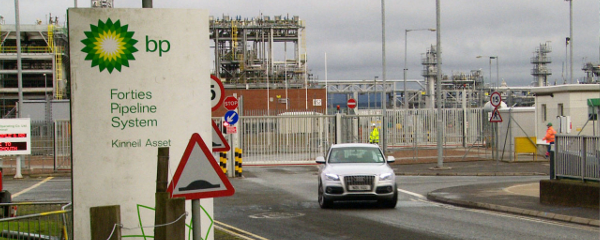
The shock damage of the North Sea Forties Pipeline near Aberdeen came after a routine inspection found a hairline crack, which led to a reduction in the supply of oil from the North Sea. The pipeline normally pumps half a million barrels of oil into the UK a day and is one of the biggest sources of oil, which is refined and turned into petrol and diesel.
Owners of the pipeline Ineos said in a statement.”Ineos has mobilized a repair and oil spill response team following the identification of a very small amount of oil seepage during a routine inspection of the Forties Pipeline System at Red Moss, near Netherley, Aberdeenshire, at approximately 10:00 hours yesterday (6 December 2017). We will work to resolve the issue and monitor the situation. We apologize for any inconvenience caused.”
Austrian gas plant explosion
A few hours later, an explosion at a natural gas facility near Austria’s border with Slovakia left one person dead. A further 18 people were injured in the morning blast at the plant in Baumgarten an der March, east of Vienna, regional Red Cross official Sonja Kellner said.
“The explosion set off a fire, which operator Gas Connect said was contained by midmorning. The facility was shut down”, Gas Connect spokesman Armin Teichert said. Police wrote on Twitter that the situation “is under control.”
There was no immediate word on what caused the blast at the plant, where pipelines connect and gas from Russia, Norway and other countries is compressed before travelling into Europe.
OPEC agree to further cuts
The oil and gas markets were reacting to the accidents while also considering the longer term implications of OPEC’s decision to extend production cuts that was made at the start of December. All factors together led to a further increase in the price crude oil that was already rising in the months earlier. Crude oil surged by 7.6 per cent between October and November, reaching its highest level since December 2016, according to the Office for National Statistics (ONS).
Pump prices are now expected to surge from 120.76p a litre to 123.21p a litre for unleaded while diesel leaps from 123.21p a litre to 126.21p.
How to keep fuel costs down
PetrolPrices has said this advice many times, we’re not sure if you’re reading it still but we’re going to say this again because we don’t want any of you to overpay for fuel.
It’s now more important than ever to make sure that you use our cheap fuel locator to always know you are buying the cheapest fuel near you, via website or price alert email. Use our app in unfamiliar locations, especially on motorways or major trunk roads, you can save literally 20p a litre by coming off the motorway and going to the cheapest station nearby by using our app, but do not use the app while you are driving.
Fuel pricing is based largely on fuel duty, the wholesale price of oil and the competition around it. If an ASDA supermarket that sells fuel is near you this will keep the prices of other stations nearby lower because of their “price promise” of being the cheapest supermarket within 3 miles.
If you are willing to drive a few miles, less affluent locations with large clusters of supermarkets tend to have lower prices than more affluent locations. Locations near refineries tend to have lower prices, medium sized towns tend to have lower prices versus rural or highly urban locations. Finally, supermarkets often have deals where they will provide money off if you spend a certain amount at the store. Always check your supermarket and ask them what deals they have.
What do you think of the expected increase in fuel costs just before Christmas? What methods are you using to make sure you keep your fuel expenditure under control? Let us know in the comments below.
Dec 13, 2017
Christmas is just around the corner. If you haven’t already done so, it’s definitely time to start finalising those gift decisions before the big day arrives.
Women reportedly spend nearly 13.5 hours searching for the perfect present for their other half in the run up to Christmas according to a Littlewoods survey. However, men spend just four hours finding a gift in return.
With so much fun to be had in the lead-up to Christmas, PetrolPrices wants to save you some time by sharing these great motorist gift ideas, which are ideal for the driver in your life.
-
The perfect gift for the friend or family member who is always losing things, the Car Key Tracker is a multifunctional smart tool that alerts the owner when valuable things, such as car keys, have been lost.
This handy device can be linked to a smartphone, tablet or laptop. It will send push notifications to help you to locate the missing item. As it is only as thick as two credit cards, this device easily fits into wallets, purses and bags without taking up any space. It boasts steel casing, which makes it very durable.
Buy now
-
-
This fantastic bluetooth device gives the user 20 hours of talk time and 1,000 hours of standby time, meaning that phone conversations can be held more safely while they are driving.
Easy to install in the car thanks to a metal clip, this hands free device has a sleek and stylish design. Conveniently, it will automatically connect to bluetooth devices once the standard pairing process has been initiated. Two mobile phones can be connected at the same time, which is ideal for the friend or relative who has both a personal and a work mobile. The sound quality is excellent, so clear conversations can be had at all times.
Buy now
-
-
A very handy gift for the practical person in your life, this tyre inflator can be set to pump tyres up to the correct pressure. You simply charge it using the 12V outlet or cigarette lighter in your vehicle.
Able to inflate a flat tyre to 30 Psi in under three minutes, this particular device is compact and comes with a storage case so that you can keep it in the car at all times. Having the correct tyre pressure helps with fuel economy, increases the life of your tyres, and ensures that the car is safe to drive, so this great gadget comes with plenty of benefits for the lucky recipient.
Buy now
-
-
Give the gift of peace of mind this Christmas with a Car Jump Starter and Power Bank. This will certainly come in useful if the recipient experiences an issue with starting their car.
With six great functions, including being a compact jump starter, emergency device charger with dual USB outputs, LED flashlight and compass this device is a must-have whilst out and about!
Buy now
-
-
Designed to get the best out of the bass, these Active Car Speakers look just as great as they sound and are ideal for anyone who loves their music loud.
Featuring MDF construction, an integrated monoblock bass amplifier, and a horn-shaped centre section, this subwoofer also has a secret channel to hide wires, plus hardwearing tight weave acoustic carpet trim to keep it both looking and sounding amazing.
Buy now
-
-
Another Christmas gift designed to offer peace of mind to the recipient, this Electronic Tyre Pressure Monitor will display the real-time pressure of each tyre onto a wide-angle LCD screen. You can read this from any angle, no matter if it’s day or night.
The driver will be alerted if tyre pressures fall too low, a leak is detected, or the tyre temperature causes concern. This will help them to ensure that they are driving safely and assist them in avoiding any potential dangers related to incorrect tyre pressures.
Buy now
- Have you sourced the perfect gift for the driver in your family yet? Is it one of the above, or do you have something else in mind? We’d love to know the details, so please feel free to leave a comment below.
Dec 13, 2017
Christmas is, according to the song, the most wonderful time of the year. However, it can also be a stressful one, particularly if you’re driving a long way to visit family or friends over the holiday period. A combination of Christmas shoppers, people rushing to make their next social gathering and the weather can make for fiery tempers and challenges on the roads. Some of these problems can also lead to points on your licence. As such, PetrolPrices has looked at ways in which we can all enjoy a calmer Christmas behind the wheel.
(Credit – Flickr User johnkell)
Avoid tailgating
One of the main causes of irritation on the roads is tailgating, according to the Accident Advice Helpline. The definition of tailgating is ‘when one motorist drives too close to the vehicle in front.’ This is often seen on motorways, when drivers in a hurry try to force those in front of them to go faster or to move out of that lane altogether.
Not only is tailgating one of the most annoying driving habits, many drivers don’t realise that it is against the law. Tailgating can land you with a fine of £100 and three points on your licence, but research by Confused.com shows that one-third of drivers don’t realise that this activity is illegal. The Confused.com survey also found that over 80% of drivers have been the victim of tailgating at some point, while more than 25% said they have experienced it as often as once a week.
After tailgating, other particularly annoying driving habits include drivers who don’t signal ( which irritates 72% of motorists), people texting while driving (57%) and people who leave their lights on full beam (55%). The findings show that if all motorists simply obeyed the rules of the road this Christmas, the winter driving experience would be a much calmer one!
Dealing with snow
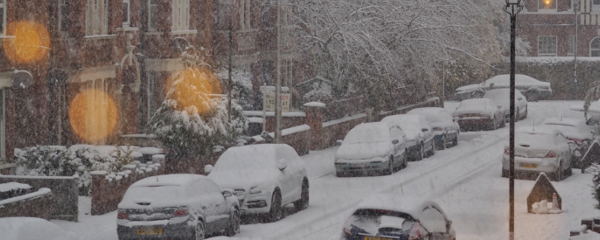
Another common issue at this time of the year is snow. Unfortunately, many motorists don’t realise that you can get into trouble for not cleaning your car properly before you set off on a journey. Most are aware that you can get a fine for not clearing ice from your windscreen before travelling. However, many aren’t aware that driving with snow on your roof can result in a fine of £60.
Doing so can also see you get three points on your licence under Section 229 of the Highway Code. It outlines how a car should be prepared for driving, including:
• Being able to see
• Clearing snow and ice from windows
• Ensuring the lights and number plates are clear
• Ensuring that all snow that could fall off into the path of other drivers is removed
The last point is the one that can get you into trouble. If snow comes off your roof and hits a car behind you, obscuring their vision of the road, you could receive a fine of £100. So be sure you clear all the snow from your car before setting off!
Enjoy the roadwork amnesty
Another big cause of frustration and stress on the roads over Christmas is the many roadworks that slow down our festive journeys. This year, however, Highways England has said that it will be removing some 400 miles of roadworks over the Christmas and New Year period, to help ease the situation and make for less stress on the roads.
The roadworks embargo will be enforced from 06:00 on 22 December 2017 until 00:01 on 2 January 2018 to help people go about their Christmas business with as little disruption as possible. This will mean that 99% of journeys on motorways and trunk roads will be free from roadworks over the busiest days of the holiday period.
There will also be some 5,000 staff on hand, ranging from officers to control room workers, to help deal with incidents on the roads and to manage congestion. The Highways Agency aims to have the network running at peak capacity to reduce stress and make for a calmer time on the roads this Christmas.
Of course, this doesn’t just benefit drivers – road work crews will no doubt enjoy having a few days off to spend with their families and friends. It will also be a move welcomed by hauliers and delivery firms working over the last few days leading up to Christmas, as well as the busy sales period between Christmas and New Year, to help deliver their parcels more easily.
How do you plan to reduce road-related stress over the holiday period? Will the absence of roadworks encourage you to travel further afield? Leave a comment below to share your plans.
Dec 13, 2017
Car security company Disklock has stated that sales of its steering wheel locking devices have doubled in the past year. Drivers are increasingly turning back to low-tech and visible security measures in order to protect their cars from technologically advanced thieves. PetrolPrices considers ways to protect your vehicle, along with a list of the most steal-able cars in the UK.
A shocking 85,688 cars have been reported as stolen this year. That’s 30% more than the 65,783 reported in 2013, according to data collected by the RAC. Many of the more recent thefts are due to gangs using gadgets to gain access to vehicles, often on demand so they can be sold on.
(Credit – Becky Stern)
High-tech thefts
Thieves have been using two types of high-tech car theft devices: locking jammers and relay boxes.
Locking jammers block the signal coming from the key when the driver locks the door. This means that the car remains unlocked, making it easy for the thieves to enter the vehicle. Meanwhile, relay boxes scan houses for key signals. They then transmit these to another box close to the car. The result is that the car responds as though the key is unlocking it.
These relay boxes can transmit signals through walls, windows and doors. As only 4% of drivers keep their keys in a metal box, according to research by Tracker, this leaves 96% of motorists susceptible to vehicle theft. Only by using a metal box can vehicle owners block the signal.
Tracker found that 25% of drivers leave their car key in the hallway, while another 25% have a dedicated area for them elsewhere in the house. However, as signals can be transmitted from 30 metres away, neither of these is a safe option. Keeping your car key in a metal box or using a signal blocking pouch (which can be bought from as little at £4.99) are the best ways to protect your vehicle. Popping them in the microwave (when it’s turned off!) or fridge is also effective.
Low-cost car crime
Shockingly, you can find relay box devices on eBay for just £100. Furthermore, there are videos on YouTube telling you how to use them. As such, it’s not just organised gangs who have access to these options.
With the right tech in place, it takes just one minute to steal a car by relaying the signal from the key. According to Tracker, 66% of car thefts were carried out using these devices last year, which proves just how common they have become.
In order to test modern vehicles’ vulnerability, the German Automotive Club used relay boxes on 24 different cars from 19 manufacturers. The vehicles were all made between 2013 and 2015. The German Automotive Club as able to break into every single vehicle.
It is important to take steps to ensure that you have layers of security protecting your car. For example, a tracking device may not stop your car from being stolen, but it will increase the chances of it being located and returned to you. To prevent theft in the first place, many drivers are returning to using old-school steering wheel locks. They may seem a bit retro, but they are nonetheless a very effective deterrent.
The UK’s most steal-able vehicles
Is your car one of the UK’s most steal-able vehicles? These are the top ten makes and models of cars deemed most at risk of theft, following the study carried out by the German Automotive Club:
Audi: A3, A4, A6
BMW: 730d
Citroen: DS4 CrossBack
Ford: Galaxy, Eco-Sport
Honda: HR-V
Hyundai: Santa Fe CRDi
Kia: Optima
Lexus: RX 450h
Mazda: CX-5
Mini: Clubman
If your car is on this list, don’t panic. You can take steps to protect your treasured vehicle – just follow the advice below to keep your car as safe and secure as possible:
- Keep your car key away from your front door in a metal box, metal safe, metallised signal blocking pouch, microwave, or fridge
- Fit a tracking device to your car
- Invest in a steering wheel lock, which acts as a visible deterrent
The recent boost in sales of steering wheel locks shows that people are realising that these are one of the most effective ways to keep their cars safe from thieves. Perhaps by returning to old-school devices like these, we can help to bring the UK’s high level of car theft crime back down again in the near future.
Have you returned to the use of a steering lock to protect your car? What steps will you be taking to protect your vehicle better in the future? Leave a comment to share your views.
Dec 6, 2017
November has been a difficult month for drivers, as predictions of a fuel price rise became a firm reality. As we move into the busy Christmas period, motorists are paying more at the pump than they have all year, though there are still significant differences in prices between regions. PetrolPrices has reviewed the latest regional differences, as well as looking ahead to see what trends should be like in December.
© Copyright Albert Bridge and licensed for reuse under this Creative Commons Licence.
November price trends
Overall, the average price of both unleaded and diesel rose last month in comparison to October. In fact, both types of fuel reached their highest overall average price this year. The average unleaded price was 120.2 pence per litre, while the average diesel price was 122.6 pence. For unleaded vehicle drivers, this is the highest price they’ve paid since November 2014; for diesel drivers, it’s the highest price since December 2014.
There are significant regional price differences around the UK. For example, drivers in Yorkshire and The Humber suffered the most significant increase during the month, with unleaded prices rising from 118.14 pence per litre to 120.74 pence on average. Scotland saw the lowest change in the average unleaded price, which rose from 118.48 pence per litre to 120.38 pence during November.
For diesel drivers, the South West saw the most significant change over the course of the month, with prices shooting up from 121.04 pence per litre to 123.50 pence. London saw the lowest change in prices, with diesel rising from 121.37 pence per litre to 123.28 pence.
The November fuel price figures mean that the average cost of filling a 55-litre family car with unleaded now stands at £66.43 – a rise of £3.55 on the cost in July, when fuel prices were at their lowest. The same size tank of diesel now costs £67.75 – an increase of £1.22 since October and £4.50 more than in July.
Cheapest areas for diesel
So where in the country can you currently find the most affordable prices for diesel? The lowest price is in Loanhead, Midlothian with a price of 1.139 pence per litre on average. That’s followed by Currie in Edinburgh, at 1.147 pence per litre and Leigh in Greater Manchester at 1.163 pence. Across the UK, the top then cheapest locations to buy diesel in are:
- 1.139 – Loanhead, Midlothian
- 1.147 – Currie, Edinburgh
- 1.163 – Leigh, Greater Manchester
- 1.163 – Tamworth, Staffordshire
- 1.168 – Dukinfield, Greater Manchester
- 1.169 – Willenhall, West Midlands
- 1.171 – Penicuik, Midlothian
- 1.177 – Spennymoor, County Durham
- 1.182 – Penzance, Cornwall
- 1.183 – Tilbury, Thurrock
Cheapest areas for unleaded
The lowest priced areas for unleaded mirror those for diesel. For the lowest unleaded prices in the UK, head to Loanhead again, for a cost of 1.105 pence per litre. The next cheapest location is Currie at 1.117 pence, then Leigh at 1.126 pence. The top ten cheapest unleaded prices by location are:
- 1.105 – Loanhead, Midlothian
- 1.117 – Currie, Edinburgh
- 1.126 – Leigh, Greater Manchester
- 1.128 – Dukinfield, Greater Manchester
- 1.135 – Sandown, Isle of Wight
- 1.136 – Ryde, Isle of Wight
- 1.137 – Penzance, Cornwall
- 1.138 – Cwmbran, Torfaen
- 1.140 – Spennymoor, County Durham
- 1.142 – Leyland, Lancashire
Most expensive areas for diesel
At the other end of the scale, Markfield in Leicester topped the list of the most expensive places to buy diesel in the country last month, with an average price of 1.386 pence per litre. It was followed by Acharacle in Highland and Tighnabruiach in Argyll & Bute. Across the country, the top ten most expensive places to buy diesel are:
- 1.386 – Markfield, Leicestershire
- 1.374 – Acharacle, Highland
- 1.359 – Tighnabruiach, Argyll & Bute
- 1.323 – Freshwater, Isle of Wight
- 1.316 – Isle of Unst, Shetland Islands
- 1.315 – Isle of Benbecula, Eilean Siar
- 1.313 – Quendale, Shetland Islands
- 1.312 – Gretna, Dumfries & Galloway
- 1.310 – Lockerbie, Dumfries & Galloway
- 1.306 – Carrbridge, Highland
Most expensive areas for unleaded
The list of the most expensive places for unleaded is dominated by Scottish locations, with Acharacle topping the list at a whopping 1.350 pence per litre, followed by Markfield in Leicestershire and Tighnabruiach at 1.329 pence. Nationally, the top ten most expensive areas to buy unleaded in are:
- 1.350 – Acharacle, Highland
- 1.338 – Markfield, Leicestershire
- 1.329 – Tighnabruiach, Argyll & Bute
- 1.323 – Gretna, Dumfries & Galloway
- 1.314 – Lockerbie, Dumfries & Galloway
- 1.299 – Freshwater, Isle of Wight
- 1.298 – Lymm, Warrington
- 1.297 – Isle of Benbecula, Eilean Siar
- 1.292 – Isle of Unst, Shetland Islands
- 1.289 – Quendale, Shetland Islands
Why the increase?
One of the factors for the increase in prices in November was the meeting of OPEC, where costs were discussed among the 14 member nations. They agreed to restrict production in a bid to increase prices, following a slump in January 2016. The most recent meeting decided that the group would continue to limit production into 2018.
However, there is some good news for motorists going into December – the pound increasing against the dollar means that experts think there could be a ‘very slight’ decrease in prices over the next week or so. Supermarkets remain the cheapest place to get fuel, so monitor your local station for signs of change using the PetrolPrices app.
Have you noticed the rising cost of fuel in recent weeks? Are you using the PetrolPrices app to ensure that you get the best value out of your vehicle? Share your views in the comments section.
Dec 6, 2017
There are many great things about the Christmas holidays. However, one of the downsides is the rising number of people who drink and drive on the UK’s roads. Statistics show there is always an increase in convictions at this time of the year, with some areas worse than others. Now local police forces are using a range of tactics to try and tackle the problem. PetrolPrices takes a look at the worst affected areas.
The drink driving problem
According to comparison site Money Supermarket, which assessed some seven million insurance quotes running through its system, some locations around the country have a higher rate of offenders with drink and drug driving convictions than others.
Currently sitting at the top of the list is Sunderland, in the Northeast. Almost three in every 1,000 drivers have a drink and/or drug driving conviction on their licence. Worryingly, that’s an increase of 1.3% compared to the previous 12 months. Second on the list is Truro in Cornwall, with 2.6 drivers per 1,000, then Coventry with 2.53 offenders per 1,000 drivers.
Crewe topped the charts last year, but has fallen to sixth place this year – despite the actual number of drink and drug driving convictions rising from 1.69 to 2.29 drivers per 1,000. At the other end of the scale is London. However, this is simply due to do with the high levels of public transport use rather than any kind of innovative drink driving solution. London just has more travel options than other cities, meaning that those who’ve had one too many can get home safely without getting behind the wheel.
Demographic details
Interestingly, the study also looked at demographic information such as age group and occupation. It found the highest rate of convictions was within the 25-29 age group, followed by those in the 30-39 age group. The 25-29 age group saw a big jump in offenders over the course of the year, from 2.32 drivers per 1,000 in 2015-16, to 3.32 per 1,000 in 2016-17.
Both genders have seen an increase in the rate of convictions, although men are still more likely to be caught over the legal limit. Regarding occupation, mature students living at home were considerably more likely to be found drink driving than any other demographic, at a rate of 28.5 per 1,000. Mature students living away from home took second place, at 16.5 per 1,000, while in third place were the UK’s scaffolders, at a much lower rate of 4.5 per 1,000 drivers.
Increasing the limit
The current limit for drink driving was instituted 50 years ago under the Road Safety Act of 1967. Back then, the number of cars on the road was significantly lower, and the limit was set based on the resulting road conditions, along with a range of other factors.
Many have called for a change to this in recent years, with six out of ten drivers saying a shift from 80mg per 100ml of blood is due. Some even want a much stricter level of just 20mg per 100ml. Scotland has already changed its limit, with a new 50mg per 100ml restriction put in place in 2014.
The Christmas factor
Despite efforts to publicise the problem, there is still a rise in cases around the festive period, as more people take a chance after a night out. The Christmas/New Year Drink Drive Campaign started on 1 December will see the National Police Chiefs’ Council and the Traffic Information System Police (TISPOL) working together to try and combat the problem.
Approaches include using intelligence-led tactics, as well as knowledge from local officers about hotspots to find people who are over the limit. There will also be sharing of social media campaigns by different police forces, the government and charities, to remind people of the dangers.
Last year’s Christmas operation saw 103,085 drivers stopped, with nearly 5,700 tests administered that were either positive, failed or refused. Drivers who drink and/or use drugs before they drive are 23 times more likely to be involved in a fatal accident. Alcohol is the single most significant impairment to drivers, according to a study by the Parliamentary Advisory Council for Transport Safety in March 2016.
The message remains simple – don’t drink and drive. It just isn’t worth it.
Do you think the legal drink drive limit should be reduced? Is a limit set half a century ago still relevant to our roads today? Air your views by leaving a comment below.
Dec 6, 2017
You’re not breaking the law if you use a hands free kit to talk on the phone whilst driving. However, an increasing body of research is indicating that using a hands free kit could be just as dangerous as using your mobile phone behind the wheel. The level of distraction that using a hands free kit causes is at the centre of the issue.
This is especially true if you are having a conversation which is particularly distracting. Research has also shown that you visualise the person you are speaking to while you are on the phone. Doing so takes even more of your attention away from the road.
Copyright © Charging phone by Mark Guim / CC BY 2.0 / Horizontally flipped, extended width, blurred from original
Jail time
The potential dangers associated with using a hands free kit when driving have been brought into the spotlight recently due to a woman being found guilty of killing a motorcyclist while she was using a hands free kit to speak to a friend. Although this was not necessarily the sole reason for the collision, it was highlighted as causing a distraction that could have led to her car drifting across the road.
The driver in question said that she had hit a pothole or a verge, which had caused her to lose control of her vehicle. However, accident investigators found no signs of a pothole or any evidence that she had even tried to brake before hitting the motorcyclist, who died at the scene.
Despite having your eyes on the road when using a hands free kit, it is likely that you won-t be as alert as you would be if you were focused entirely on driving. This can slow your response times to any hazards that might present themselves during your journey. As such, it is always safer to pull over and have your conversation, especially if you are finding it distracting.
High-tech distractions
It is not only hands free kits which have been found to distract motorists from the task at hand. The safety of using high-tech dashboards has been called into question too, following research carried out by the AAA Foundation for Traffic Safety.
The research looked at how long it takes drivers to perform certain activities on their high-tech dashboard. It produced plenty of interesting data, including the fact that it takes around 40 seconds to program an in-built sat-nav, which is a long time for a driver’s attention to be taken away from the road ahead.
Other high-tech dashboard features that were tested were sending a text message and searching for something on the internet, both of which caused a high level of distraction. Even tuning the radio or making a phone call caused a moderate distraction.
When a driver takes their eyes off of the road for just two seconds, they double their chance of crashing their vehicle. Distractions are partly to blame for 11% of all fatal crashes.
The AAA is pushing for auto manufacturers to start creating systems that don’t distract drivers any more than tuning a radio or listening to an audiobook does. One solution they have proposed is to lock certain high-tech dashboard features when the car is in motion, to prevent the driver from being tempted to use them.
The value of education
Educating drivers about the dangers of using technology at the wheel would certainly help. Perfectly legal technology can cause sufficient distraction to bring about a fatal crash, yet many drivers assume that because the technology is legal, it isn’t dangerous. It can be easy to feel in control despite your focus being elsewhere, even just for a few seconds. Breaking down the assumption that if tech is built into the car it is perfectly safe to use while driving is essential for improving the safety of our roads, particularly as vehicles continue to include more and more high-tech systems.
As research continues, it could well be that we see the use of hands free kits join the use of mobile phones in terms of what is banned behind the wheel. Doing so would certainly help to prevent accidents and make the UK’s roads safer.
Do you use a hands free kit while driving? Do you feel particularly distracted while doing so? Leave a comment to share your views.
