Petrol and diesel prices fell in January; will they continue to fall?

Petrol and diesel prices fell in January; will they continue to fall?

On 2nd February, the UK government formally launched its Fuel Finder scheme. Under new rules, retailers must submit price changes within 30 minutes, enabling drivers to view near-real-time pricing via platforms such as PetrolPrices. The policy follows the Competition and Markets Authority’s recommendations to increase transparency and competition.

Do you think the new Fuel Finder scheme will reduce fuel prices?
© Kama

January delivered a sharp rebound in global oil prices, but UK motorists saw fuel prices fall at the pump.

Brent crude opened the year close to $61.62 per barrel, reflecting the heavy price declines seen through 2025. However, geopolitical tensions quickly took centre stage. Ukraine stepped up attacks on Russian refining and export infrastructure, while the United States dramatically escalated pressure on both Iran and Venezuela. Washington imposed sweeping penalties on countries trading with Tehran and moved naval forces into the Gulf, raising fears of potential disruption to maritime traffic through the Strait of Hormuz. Iranian exports fell for a fourth consecutive month, and US enforcement action against Venezuelan oil shipments further tightened near-term supply.

These risks pushed Brent steadily higher through January, reaching six-month highs above $70 per barrel by the end of the month, a $10 increase. Earlier in the month, tensions between the US and the EU also flared after President Trump threatened to annex Greenland, further adding to market volatility and risk premiums.

Despite this, UK pump prices fell. Unleaded dropped from 135ppl at the start of January to 131.4ppl by month-end, while diesel fell from 144ppl to 140.3ppl. These reductions reflected wholesale price declines observed late in 2025, which finally fed through to retail prices.

Wholesale prices, however, moved in the opposite direction in January, as global supply fears took precedence over oversupply. This divergence compressed margins across the fuel retail sector. By the end of the month, the retail-to-wholesale spread sat more than 3ppl below its six-month average for diesel and 1ppl below for unleaded, limiting the scope for further price cuts.

At the same time, pricing behaviour became finely balanced. The number of stations cutting prices is now broadly in line with those increasing them, signalling that the period of rapid price falls has ended. With wholesale prices rising, diesel is particularly exposed to price increases in early February.

Oversupply remains a primary price driver in 2026; however, geopolitical tensions currently dominate the pricing landscape.

Do you think this scheme will lead to a reduction in prices? Let us know in the comments or our poll.

If you have any questions on what Fuel Finder is, check out this page, or email us at [email protected] 
What’s your view on the new Fuel Finder scheme?
© Kama
Car Ownership Survey: Over One In Five Uk Drivers Keep Their Cars For Six To Nine Years

Car Ownership Survey: Over One In Five Uk Drivers Keep Their Cars For Six To Nine Years

Many UK motorists are choosing to keep their current vehicles instead of upgrading. To explore the factors influencing this trend, temporary car insurance experts Tempcover surveyed 1,000 drivers across the UK. The research reveals how long vehicles are currently being kept, the reasons drivers are postponing upgrades, and their thoughts on switching to electric vehicles ahead of the 2030 petrol and diesel ban.

More Than One in Ten Drivers Keep Their Car For a Decade or More

11% of UK drivers report holding onto their cars for at least ten years or more, showing a focus on maximising vehicle lifespan and value.

A further 21% keep their cars for six to nine years, while 40% replace them every three to five years, suggesting a balanced approach between getting good value and staying up to date with newer models.

At the other end of the spectrum, some drivers prefer to upgrade frequently. Nearly one in five (19%) replace their car every one to two years, and 3% change vehicles more than once a year, suggesting they prioritise access to the latest models and deals.

Factors That Delay Decisions on Replacing a Car (UK Drivers Survey)
Reason for delaying replacement Respondents (%)
I'm getting the most out of my current car 41%
New cars are too expensive 39%
Running costs (insurance, tax, fuel) are too high already 30%
I'm happy with my current car's performance and features 29%
Interest rates / finance deals are unattractive 22%
I'm attached to my current car 16%
Cars don't hold their value anymore 14%
I'm waiting until EVs become more affordable 11%
Environmental reasons (want to keep using what I already have) 10%
I haven't found a car I like enough to replace it 9%
New Car Prices Delay Upgrades for 39% of UK Drivers 

The decision by many UK motorists to keep their current vehicles is driven primarily by cost and practicality. Four in ten (41%) motorists say they’re getting the most out of their current car, while 39% cite newer vehicles being too expensive as a reason for delaying upgrades.

Running costs are also a factor, with 30% pointing to high insurance, tax, and fuel bills for newer cars, while over one in five (22%) say unattractive finance deals or interest rates have held them back. 

Beyond finances, some drivers are motivated by attachment or satisfaction. 29% are happy with their current car’s performance and features, 16% feel attached to their current vehicle, and 10% keep it for environmental reasons.

Major Repair Costs Drive Most Car Replacements

When it comes to finally replacing their car, practicality outweighs preference for most UK drivers. The top reason for parting ways with a vehicle is the cost of major repairs becoming too high, cited by more than one in five (22%) motorists.

A further 10% said they were prompted to upgrade after a failed MOT or safety concerns, while 11% chose to sell once their car began losing too much resale value.

Not all replacements are problem-driven, though; one in five (20%) upgraded for access to newer technology or features, and 9% did so due to a lifestyle change, such as a growing family or relocation. Meanwhile, a smaller number of drivers made the switch for environmental reasons (4%) or took advantage of a trade-in or finance deal (6%).

Main Reasons UK Drivers Replaced Their Last Car
Reason for replacing last car Respondents (%)
Major repair costs became too high 22%
Desire for newer technology or features 20%
The car lost too much resale value 11%
Failed MOT or safety concerns 10%
Lifestyle change (e.g. family size, moving house) 9%
Running costs becoming too expensive (e.g. fuel, tax, insurance) 8%
I was offered a deal or upgrade through finance or a trade-in 6%
Wanting to switch to a more eco-friendly vehicle (EV or hybrid) 4%
I didn't like it anymore 4%
2030 Petrol and Diesel Ban Sparks Mixed Reactions Among Drivers

The upcoming 2030 ban on new petrol and diesel cars is prompting some UK drivers to rethink their plans, but not everyone is ready to make the switch. Almost one in five (19%) say they’re now considering moving to a hybrid or electric vehicle earlier than planned.

However, many remain uncertain. More than one in ten (13%) plan to delay upgrading until they understand the rules better, while 10% are still unsure how the ban will affect them. Over a quarter (28%) say it hasn’t changed their plans at all, but 11% feel they’ll eventually have no choice but to upgrade.

Among those surveyed, 7% already drive an electric vehicle and say the ban won’t affect them. Meanwhile, 6% are holding off until EVs drop in price, and another 6% admitted they weren’t aware of the upcoming ban at all, highlighting an ongoing knowledge gap among motorists.

Most Drivers Feel Resourceful, Not Resentful, About Holding Onto Their Cars

Despite many delaying upgrades, most UK drivers have a positive outlook on keeping their vehicles for longer than planned. A third (33%) describe themselves as resourceful, saying they’re making the most of what they have, while nearly a quarter (24%) feel proud to be getting the best possible value from their car.

For others, practicality outweighs emotion, with 27% saying that keeping their car is simply a neutral or practical decision. However, a small number admit to less positive feelings – 8% feel frustrated that they can’t afford to replace their car sooner, and 2% even feel embarrassed about driving an older model.

Claire Wills-McKissick, temporary car insurance expert at Tempcover, shares her thoughts on the costs, risks, and benefits of long-term vehicle ownership:

“Many drivers are choosing to keep their cars for longer than planned, often as a way to manage rising costs. Holding onto a car can make financial sense, helping households manage expenses, but it comes with trade-offs. Older vehicles often require more maintenance, can incur higher repair costs, and may carry safety risks – all factors drivers should consider when deciding whether to replace their car.

“Regular maintenance is key if you’re keeping a vehicle longer than planned. Routine checks on brakes, tyres, fluids, and essential components help prevent costly repairs and ensure your car stays safe on the road. Drivers should also weigh the benefits of newer models, including updated safety features, improved fuel efficiency, and modern technology, which can offer added peace of mind, cost savings, and environmental advantages.

Temporary car insurance is a flexible solution for motorists navigating these decisions. It provides short-term cover for situations such as test-driving a potential upgrade, or keeping a replacement vehicle on the road while yours is being repaired.”

58 Popular Cars Predicted to Disappear from UK Roads by 2030, New Research Reveals

58 Popular Cars Predicted to Disappear from UK Roads by 2030, New Research Reveals

From the first car you ever drove to the vehicle that ferried your family on countless adventures, cars hold a nostalgic place in our hearts. Yet, as technology evolves and electric vehicles become more commonplace, it seems some of these familiar, older models are slowly vanishing from British roads.

With 2026 well underway, temporary car insurance experts Tempcover have analysed ten years of official vehicle registration data to predict which once-popular cars may vanish from UK streets before the end of the decade. By tracking quarterly registration numbers for every model over the past decade, the research predicts an estimated ‘extinction date’ for each model based on its current rate of decline.

The Cars Predicted to Vanish by Q2 2027 

Based on the analysis, the first wave of predicted model extinctions is expected in the second quarter of 2027 (April–June). This group includes several iconic models: the WRC-winning Citroën Xsara, discontinued in 2006 when it was replaced by the C4[1]; the Vauxhall Vectra, long seen as a dependable family car[2] despite Jeremy Clarkson’s dislike of it; and the Peugeot 307, which ended production in 2005[3].

These models are becoming increasingly rare, largely due to age, declining numbers on the roads, and the natural lifecycle of vehicles. As cars age, they come with a higher demand for maintenance, and owners can face rising repair costs. They can also face greater challenges when trying to pass MOT inspections, meaning owners are more likely to retire them. This change, combined with the shift towards newer, more energy-efficient vehicles, means these once-familiar models are giving way to a new generation of transport.

Cars predicted to be extinct in Q2, 2027: 

  • Citroën Xsara – 21,298 cars registered in Q1 2025
  • Mitsubishi Space Star – 1,058 cars registered in Q1 2025
  • Nissan Primera (1999 British Touring Car Winner) – 2,573 cars registered in Q1 2025 [6]
  • Peugeot 307 – 23,212 cars registered in Q1 2025
  • Rover 45 – 1,515 cars registered in Q1 2025
  • Vauxhall Vectra – 24,017 cars registered in Q1 2025

Farewell to Familiar Faces: 58 Models Heading for Extinction By 2030

Between now and the beginning of 2030, the research predicts that a total of 58 cars will cease to exist on Britain’s roads. From the iconic Citroën Saxo, one of the most popular first cars thanks to its affordability and accessibility between 1996 and 2005[4], to four Rover models from the British brand that built a loyal following[5], a host of familiar names are quietly heading toward extinction.

Cars Predicted to Vanish 2027–2029

Cars Predicted to Vanish from UK Roads (2027–2029)

2027 2028 2029
Citroën XsaraChrysler PT CruiserSEAT Arosa
Mitsubishi Space StarFord StreetKaChevrolet Matiz
Nissan PrimeraHyundai AccentIsuzu Trooper
Peugeot 307Nissan AlmeraJaguar S-Type
Rover 45Volkswagen BoraMCC Smart
Vauxhall VectraCitroën SaxoMG ZR
Alfa Romeo 147Jaguar X TypeRenault Grand Espace
Chevrolet KalosLexus IS 220Audi Allroad
Chevrolet LacettiMazda CX-7Mazda 5
Chrysler VoyagerPeugeot 1007Peugeot 106
Mazda 323Peugeot 306Rover 200 Series
Peugeot 206Renault LagunaSaab 9-5
Peugeot 406Alfa Romeo 159Toyota Previa
Peugeot 407Chrysler Grand VoyagerHonda FR-V
Rover 25Kia SedonaMG ZT
Alfa Romeo GTLexus RX 300Nissan Pathfinder
Citroën C2Rover 75Peugeot 4007
Fiat BravoVauxhall TigraSuzuki Wagon R+
Jeep PatriotChevrolet Captiva
Hyundai Coupe
Hyundai Matrix

Claire Wills-McKissick, temporary car insurance expert at Tempcover, adds:

“For many drivers, iconic models like the Citroën Saxo, Vauxhall Vectra, or Peugeot 307 are more than just vehicles, they’re part of our memories, from first drives to family holidays and countless everyday journeys. To think these models are gradually disappearing from our roads is a reminder of evolving times, but for anyone hoping to secure one of the last remaining examples, temporary car insurance is a way to easily test drive them first. 

“However, it’s important to be aware that older cars naturally require more dedicated care; parts may be harder to source, and they often need greater attention during MOT inspections, for example. While owning one requires investment in time and resources, it also offers a unique opportunity to preserve a piece of motoring history for years to come.”

About Tempcover

Founded in 2006, Tempcover offers fast, flexible short-term insurance solutions without the commitment of long-term policies. Serving millions of drivers across various vehicle types, Tempcover focuses on quick, reliable coverage for life’s unexpected moments. The company is part of the RVU group, alongside brands such as Confused.com and Uswitch. With over 40,000 positive customer reviews and a 4.8/5 Trustpilot rating, Tempcover is recognised as a trusted, award-winning company. 

Tempcover.com, 2nd floor, Admiral House. Harlington Way, Fleet, Hampshire, GU51 4BB. Authorised and regulated by the Financial Conduct Authority (Firm reference no. 746985).

If you no longer want to receive these emails, please reply with ‘unsubscribe’.

Sources & Methodology

Tempcover used the Prophet statistical model to analyse ten years of official DVLA vehicle licensing data from the table df_VEH0120_UK. The analysis focused on cars only, excluding vehicles marked as SORN, models with fewer than 1,000 registrations in Q1 2025, and any models without at least five years of non-zero registration data. Vehicles were grouped by generic model, and the predicted “disappearance quarter” for each model was defined as the first quarter where the forecasted registration falls below zero. The exact extinction date was then estimated based on this quarter.

These dates are estimates based on current trends, so take them as a guide rather than a certainty, cars may stick around longer than predicted.

[1]https://www.classic.com/m/citroen/xsara/ 

[2]https://www.theaa.com/used-cars/vauxhall/vectra 

[3] https://www.automoli.com/gb/vehicles/peugeot/307/307-1225/ 

[4]https://www.adrianflux.co.uk/influx/blog/citroen-saxo-likely-lads/ 

[5]https://www.blackcircles.com/news/rover-uks-forgotten-car-brand 

[6]https://www.nissan-global.com/EN/HERITAGE_COLLECTION/Primera_GT.html

December 2025 Oil & Fuel Market Review and 2026 Fuel Prices Outlook

December 2025 Oil & Fuel Market Review and 2026 Fuel Prices Outlook

Brent crude ended December under sustained downward pressure, with prices trading in the low $60’s/bbl for much of the month and dropping to $58.85/bbl on the 16th. Increased drone attacks on Russia’s oil infrastructure and the latest sanctions on Russia’s oil sector helped support prices and gave temporary relief but structural oversupply dominated market sentiment. OPEC+ continued unwinding voluntary production cuts, reinforcing its strategic pivot toward defending market share. At the same time, non-OPEC supply growth from the United States remained strong, adding further weight to prices. The US output increased by 800K bpd year-on-year.

Refined product prices also fell over the month, with wholesale diesel (B7) prices dropping by 7ppl and unleaded (E10) by 5ppl. 

The average retail unleaded price closed the month 2.3ppl lower, at 135.1ppl. With most of the price reduction taking place in the second half of the month as price reductions gathered momentum from 11th December onwards. Unleaded reductions outnumbering increases by ten to one post 11th. 

The largest reductions were at the major brands; bp, Shell and Esso. Prices at the top of the market fell more aggressively than supermarket retailers, narrowing the premium charged by branded sites. Supermarkets lowered unleaded prices by an average of 2ppl and diesel by 1.7ppl. By month-end, the spread between the four main supermarket unleaded prices had tightened to 0.5ppl, compared with 1ppl at the start of December. 

Wholesale pricing trends strongly support further retail price adjustment. Wholesale unleaded prices have fallen by 8ppl since 13th November, driven by ample product availability and subdued demand. In contrast, retail prices remained largely unchanged through early December following an increase at the end of November, before the later reductions took hold. As a result, the retail-to-wholesale spread, which spent much of October and November below its six-month average, has reversed and now sits 4ppl above the average, indicating the opportunity for further potential price cuts at the pump. 

Diesel markets followed a similar trajectory. European distillate supply remained comfortable, and mild winter conditions limited seasonal demand.  

Sterling traded in a narrow range throughout December, leaving crude and wholesale fundamentals as the primary drivers of UK fuel pricing. Sterling has been supported recently as analyst forecast different approaches to rates cuts between the Bank of England and Federal Reserve in 2026. 

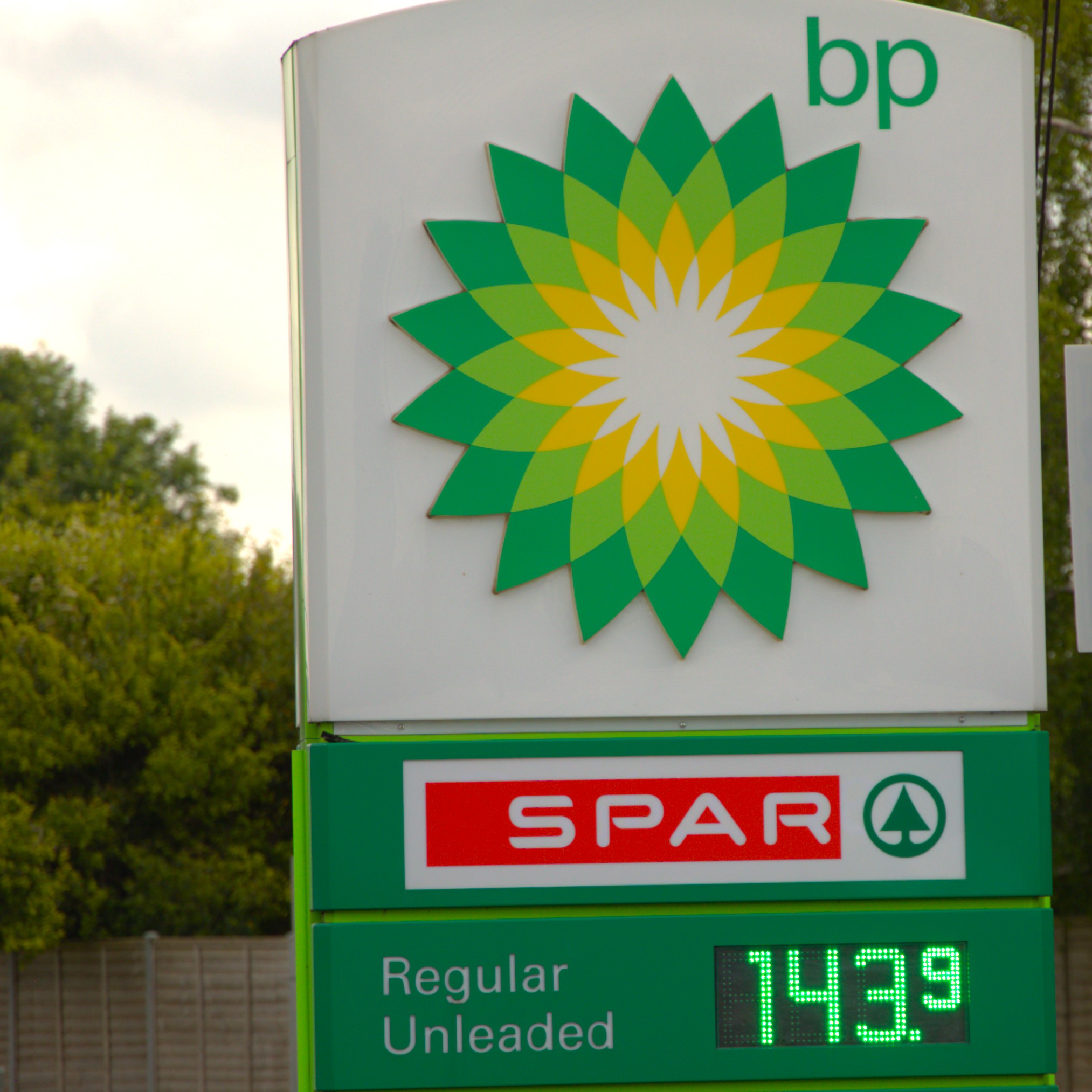
bp petrol station pole sign

Outlook for 2026 

The outlook for 2026 remains firmly bearish. The US Energy Information Administration (EIA) forecasts Brent crude to average $55/bbl through 2026, compared with prices near $60/bbl at the end of 2025 and the $60–$65/bbl range that defined much of the year. They also forecast that global oil inventory builds will exceed 2 million barrels per day (b/d) in 2026. 

Persistent oversupply, cautious demand growth and OPEC+’s market-share strategy point to sustained pressure across crude and refined products. 

With retail margins currently elevated, continued reductions in UK unleaded and diesel prices are expected as wholesale weakness feeds through the supply chain. While extreme regional lows, such as 107.9ppl recorded in Liverpool, are not representative of national pricing, the overall direction of travel for UK motorists in early 2026 is lower average fuel prices, albeit with ongoing regional and retailer-specific variation rather than uniform declines. 

What are fuel prices like where you live right now?  Let us know in the comments. 

UK Road Safety Strategy 2026: New Rules to Cut Road Deaths and Injuries

UK Road Safety Strategy 2026: New Rules to Cut Road Deaths and Injuries

The UK government is proposing a range of new driving rules as part of a road safety strategy. The road safety strategy, released this week, is the first of its kind in more than a decade and aims to reduce deaths and serious injuries on Britain’s roads by 65% by 2035 and by 70% for children under 16.

While the number of people killed on Britain’s roads has declined since 1979, progress has halted since 2010. In 2024, an estimated 1,602 people died on Great Britain’s roads, down just 1% from the year before.

A total of 22 other European countries have made “more progress than the UK” in reducing road crash deaths, the Department for Transport (DfT) said.

The government stated, “Approximately four people die on Britain’s roads every day, with thousands more seriously injured each year, but through targeted action on speeding, drink and drug driving, not wearing seat belts and mobile phone use, thousands of these tragedies can be prevented.”

The new reforms proposed as part of the road safety strategy include:

Changes to Drink Driving Laws

The government will consult on lowering the drink drive limit in England and Wales, which has remained unchanged since 1967 and is currently the highest in Europe.  In addition, with 1 in 6 fatalities involving drink driving in 2023, they will look at preventative technologies such as alcohol interlock devices, which can prevent drivers from using a vehicle if alcohol is detected on their breath.

Introducing additional checks and tests for drivers over 70

Around 24% of all car drivers killed in 2024 were 70 or older. As Britain’s population ages, the number of older drivers continues to rise, and a consultation on mandatory eyesight testing for those over 70 will be launched. At the same time, options for cognitive testing will also be developed to protect all road users.

Read more: Over two-thirds back mandatory retesting of senior drivers

New Road Safety Organisations

A new Road Safety Investigation Branch will be set up to analyse collision patterns and inform future prevention strategies, drawing data to identify root causes of accidents and target improvements.

The strategy also mandates 18 new vehicle safety technologies, including autonomous emergency braking and lane-keeping assistance. This will ensure drivers and road users benefit from access to these cutting-edge technologies and support growth by requiring manufacturers to meet the same requirements across Europe.

A new Road Safety Board, chaired by the Minister for Local Transport, will oversee delivery of the strategy, supported by an expert advisory panel drawing membership from local authorities, emergency services, active travel groups and road safety organisations.

A crackdown on Illegal and uninsured driving

New measures will be considered to target illegal number plates, including ‘ghost’ plates designed to fool number plate recognition camera systems, while also cracking down on uninsured drivers and vehicles without a valid MOT.

In response to the release of the strategy, RAC road safety spokesperson, Rod Dennis, said: “The strategy addresses many areas we know drivers are concerned about, including drink and drug-driving, ‘ghost’ plates and dazzling headlights. The inclusion of a commitment to consult on the use of alcohol interlocks for convicted drink-drivers – which are internationally proven to save lives – is particularly encouraging, especially given the extent to which drivers are supportive of their use. It’s also positive to see proposals on the table for both improving young driver safety and tackling the scourge of uninsured drivers who push up motor insurance costs for everyone.”

What do you think of these proposed measures? Do you believe they will make Britain’s roads safer, or are there other approaches you would like to see considered? Share your thoughts and join the conversation on road safety.

What do you think of the UK’s proposed road safety measures?
© Kama

Halfords named top motoring retailer for AI Christmas gift inspiration

Halfords named top motoring retailer for AI Christmas gift inspiration

Anyone turning to ChatGPT for motoring and car care gift inspiration this Christmas can expect to see a haul of Halfords picks, according to new research. The AI Christmas Nice List, by digital marketing and PR agency, Tank reveals which UK retailers AI favours for Christmas gifting by analysing hundreds of ChatGPT responses across 10 retail sectors, awarding a mention score based on how early products are recommended.

The high-street favourite, Halfords, is ‘sleighing’ Christmas, achieving the highest mention score (29) in the motoring sector out of nearly 110 websites. Following Halfords, shoppers are more likely to see motoring picks from Nextbase and The AA, with mention scores of 18 and 17, respectively. AI’s Christmas Nice List also revealed John Lewis & Partners shows up the most overall in ChatGPT, with 31 mentions across eight out of 10 sectors.

The research comes as ChatGPT launches a shopping research function that offers personalised product recommendations, which could influence Christmas shopper’s behaviour and cause less visible brands to miss out on sales.

Top Motoring Retailers for Christmas

Top motoring retailers recommended by AI for Christmas gifting

Rank Top Retailer Total Mention Score
1Halfords29
2Nextbase18
3AA17
4Autoglym14
5EVAQ811
6RAC10
6Ring10
8NOCO9
9Meguiar’s8
9Streetwize8

In-car technology brand Nextbase is AI’s second favourite website for Christmas gifting with a mention score of 18 – while it received less than half the total mentions of Halfords, it still beat its motoring competitors The AA and Autoglym.

Retailers with the highest visibility per sector 

Other popular Christmas categories include sports, with Decathlon mentioned more than any other sports brand.

When buying new electricals and technology, Christmas shoppers are more likely to be recommended Samsung, which has a high mention score of 25. Whereas John Lewis & Partners reins across food and drink, and homeware categories.

Karl McKeever, founder at Futurview Retail Consultants, has helped to revive fortunes for major retailers like Adidas, John Lewis & Partners and Sainsbury’s, and believes shoppers are now using AI tools to find the best prices online.

Commenting on the research, he said: “Shoppers want to maximise their time and budget to create the perfect Christmas. In the past, this meant spending hours on the high street, visiting multiple stores for inspiration and to check stock. Now they’re getting smarter, using online search and AI tools to remove the guesswork and drudge from festive shopping.

“These tools offer inspiration, help people find what they want at the best price, and pinpoint purchases from specific retailers. Ultimately AI tools are changing how people shop, offering them a less stressful shopping experience and fewer miles travelled. When the tools introduce in-app checkouts in the UK, AI could be a key income channel but it’s important to remember that its use does vary across age groups.”

Retailers with the highest visibility per sector

Martin Harris, head of digital at Tank, commented on the research:  

“ChatGPT is used everyday for personal and commercial queries such as Christmas gift ideas, so if motoring and car care brands aren’t appearing for the relevant results, they could be missing out on sales. AI search is important for retailers and while there is hesitancy around it, it is essential brands are discoverable where shoppers are searching for information. 

“While some small retailers could struggle with being found in AI during peak seasons like Christmas, it presents an opportunity to improve visibility in their niche. Consumers can also use AI to find niche brands and products. That’s why it’s even more important retailers know what their customers want and have a strategy to appear in the relevant results.”

To read the full research, visit: https://tank.co.uk/christmas-nice-list-which-uk-retailers-are-showing-up-in-ai-search 

Methodology 

Tank analysed ChatGPT-4 search results for 200 general Christmas gifting prompts, including 20 sector specific questions for 10 online retail sectors. A mention score was assigned based on how early the brand appeared in each response, with first mention scoring five points and the fifth mentioned scoring one point. Brands were then ranked by: total mention score within each set of sector prompts, overall mention score in all sectors, and the number of sectors they were mentioned in.

Data correct as of November 2025.

Car Sharing in the UK hit by Zipcar’s Decision to Leave

Car Sharing in the UK hit by Zipcar’s Decision to Leave

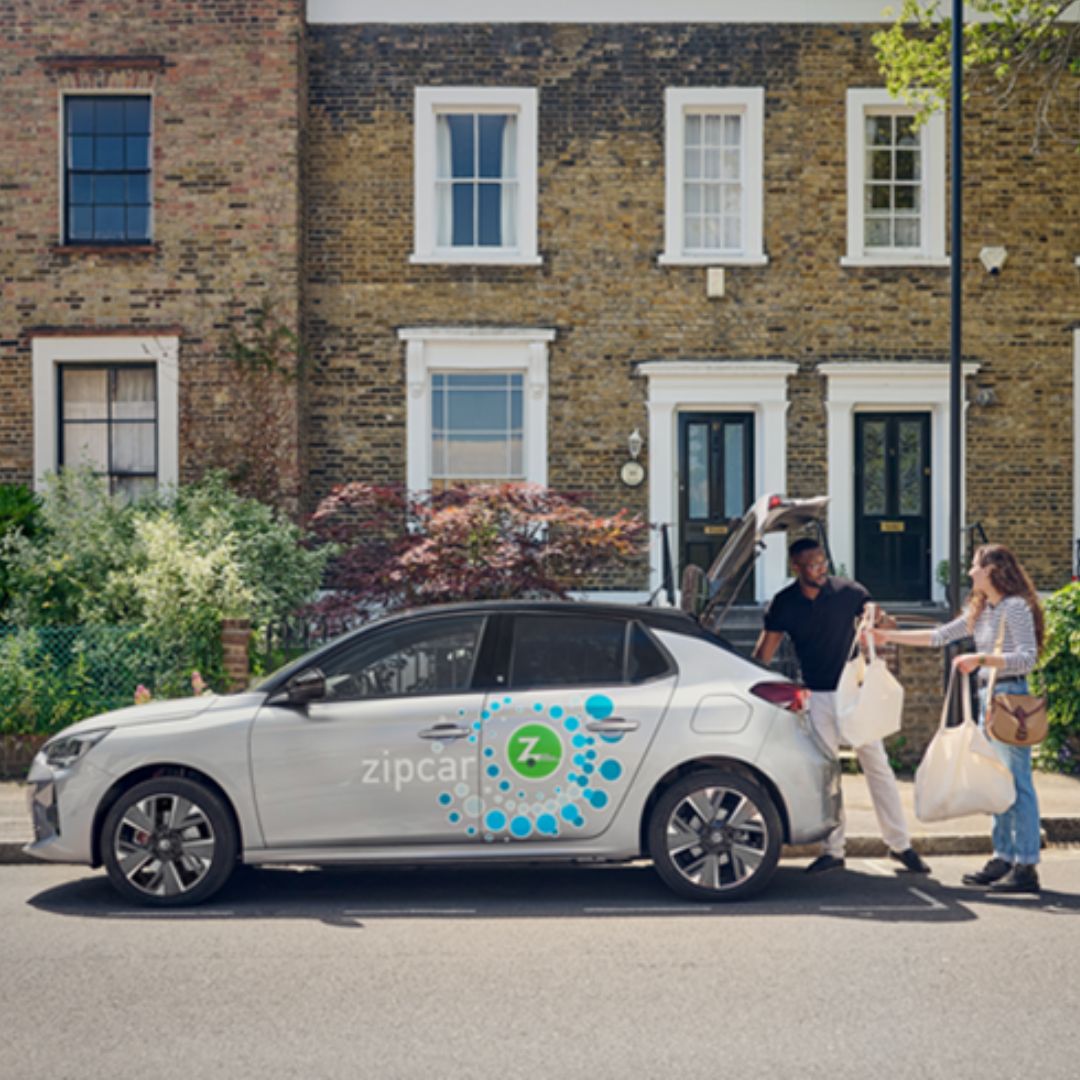
One of the leading mobility trends of the last decade appears to have stalled in the UK. Zipcar, the car-sharing group owned by Avis Budget, has announced that Zipcar UK will suspend new bookings after 31st December 2025, pending the result of a consultation with employees, which began on 1st December. Zipcar’s business outside of the UK will not be affected by this decision.

Zipcar was founded in Boston, Massachusetts, in 2000. It opened its London office in late 2006. Avis Budget acquired Zipcar in 2013 for $491m (£371m).

Zipcar offers cars and vans across London that can be rented on the street for between £6 and £15/hour, including fuel, insurance, and breakdown cover – all managed via an app. Users are billed for the time used and for mileage if they travelled a long distance. Some cars are based in specific locations, with many councils marking out car-sharing parking spaces and requiring them to be returned to those locations. Others can be used for one-way journeys and dropped off across central London, as well as at Gatwick and Heathrow airports.

Last year, Zipcar closed its operations in Oxford, Cambridge and Bristol to focus on London. Zipcar’s 2024 UK revenues of £47m, down by £3.95m on the previous year, accounted for a tiny proportion of Avis Budget’s overall annual revenue of $12bn. A loss of £11.7m in 2024 gave the parent company little incentive to continue.

Zipcar’s most recent accounts for 2024 said revenues had fallen as drivers were taking fewer, shorter trips. “These changes reflect the ongoing impact of the cost-of-living crisis, which continues to suppress demand for discretionary spending,” it said.

Zipcar’s planned closure date coincides with the London mayor’s decision to introduce a new £13.50 daily congestion charge on electric vehicles, a move that would hit any Zipcar that is picked up outside the zone and driven through central London. A third of Zipcar’s 3,000 vehicles were electric. The company had already said it would pass on the cost to drivers, substantially raising the price of a car journey through the heart of the capital — and making it much less financially attractive.

According to the newsletter London Centric, “The arrival of Uber in the mid-2010s ate into Zipcar’s business model of enabling people nipping around London for short car trips. It’s also reasonable to assume that some people who might have been tempted by a one-way Zipcar Flex in the past are now choosing to pop on a much cheaper Lime e-bike.”

Collaborative Mobility UK (CoMoUK), a transport charity, Zipcar accounted for 40 per cent of the UK’s car club fleet. Car sharing is seen as a way of reducing the problems associated with vehicle ownership. Most cars are parked for 95% of the time, using up space. They also require large carbon emissions to produce, and people who do not own cars tend to walk, cycle and take public transport more. That benefits cities – reducing congestion and pollution – and further improves people’s health by building more exercise into their daily routines.

Zip Car leaves the UK

Zipcar’s 650,000 registered users will now have to look for other ways to travel around the city.

Are Fuel Price Rises About to End?

Are Fuel Price Rises About to End?

Unleaded and diesel prices continued to climb throughout November, with the average cost of a tank of diesel now around £2.80 higher than it was at the start of the month.

Across November, diesel rose by 4.7ppl, while unleaded increased by nearly 3ppl. This happened despite crude oil becoming slightly cheaper. Brent closed the month at $63/bbl, down from $64.30/bbl on 1st November.

So why were pump prices rising while crude was falling?

Drone attacks targeting Russia’s refining infrastructure sent global refining margins sharply higher, while attacks near the Black Sea port of Novorossiysk disrupted crude loadings. Reducing refining capacity reduces both the demand for crude oil and the supply of refined products.

According to data from Portland Pricing, wholesale diesel rose by $70/tonne by mid-November, with unleaded up $40/tonne. These higher wholesale costs squeezed retailers’ margins and ultimately forced pump prices higher.

There is some good news for motorists. Pricing pressures have started to ease, at least for now. On 30th November, the number of stations reducing prices on both unleaded and diesel outnumbered those increasing them. This is the first time this has happened in more than three weeks.

If this trend continues, we should see the pace of price rises slow, with the possibility of actual price reductions in the coming weeks. Retail margins are currently above the six-month average, suggesting there is room for pump prices to soften if wholesale costs continue to stabilise.

This will be a welcome relief after a month of steady increases.

Supermarket Price Trends

Asda currently leads on price for both unleaded and diesel, while Tesco shows the widest price variance. Morrisons is the most consistent across its network, with the lowest price variation. So, depending on where you live, the cheapest supermarket may vary.

Check Before You Fill

The PetrolPrices App is continuously updated with the latest local pump prices. Always check the app before you fill up to make sure you’re getting the best possible deal.

If PetrolPrices has helped you save money, please consider leaving us a review on the App Store or Google Play. It helps us support even more UK drivers.

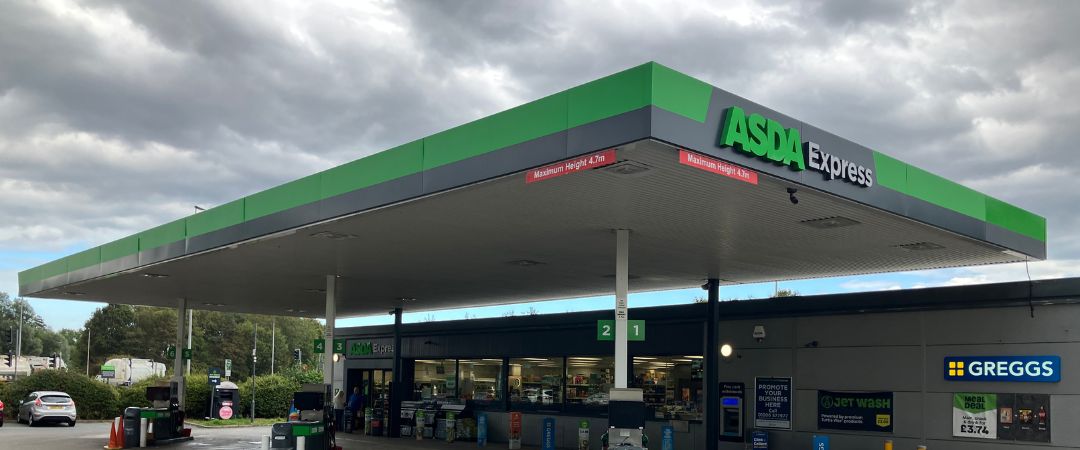
Asda Express Moor Farm (Annitsford)

Survey Shows UK Drivers Sticking to Petrol

Survey Shows UK Drivers Sticking to Petrol

Recently, we asked you to complete a survey to determine their opinions on electric vehicles and gain insight into their re-fuelling habits. Just over 5,000 of you kindly completed the survey and provided us with the following key insights:

  • Petrol is the most popular vehicle type that users said would be their next purchase.
  • Respondents were deterred from buying an electric vehicle due to the upfront cost, range anxiety, and a lack of charging points.
  • Most respondents purchase their fuel on a fortnightly basis and completely fill their tank on refuelling.
  • Just over 60% of those surveyed would travel between one and five miles to save 2p off a litre of fuel.

42% of respondents chose a petrol vehicle as their next purchase

Petrol remains the most popular vehicle type amongst our group. A hybrid vehicle was the next most popular choice, selected by 30% of respondents. It appears that users are not ready for the leap to a fully electric vehicle, as this option only received 8% of the vote, lower than diesel’s 19% share. Even though electric vehicles are the talk of the media, it seems that drivers are not ready to commit to EVs and prefer a tried and tested petrol car.

Respondents are put off the switch to an EV due to high prices

More than half (66%) of survey respondents were deterred from purchasing an electric vehicle due to the cost. According to a price index run by The Independent, the transactional cost of an EV has fallen from 2024 to 2025 but the average price across all EV types is £45,000*. Additionally, many well-known EV models can reach prices of over £65,000, and this may have skewed public perception of the typical cost for this type of vehicle.  Expensive upfront costs have a clear impact on drivers’ decision to switch from petrol or diesel to electric.

Respondents also cited range anxiety as a deterrent, with 57% choosing this as a reason not to buy an electric vehicle. The average range of EVs has improved and most new electric cars can cover between 200 and 350 miles after a full charge**, but drivers still have concerns about how far they can go. This may be due to a deficiency of chargers around them, since 45% stated that a lack of chargers nearby put them off EVs. 43% of respondents said they had no charging options at home or work, making an electric vehicle unfeasible.

Other drivers prefer the familiar, with 30% of survey takers stating that a preference for diesel or petrol cars put them off switching to an EV. Finally, cost came up again in the remaining reason for not purchasing an electric vehicle: 25% were discouraged by the cost of charging itself.

Respondents are put off the switch to an EV due to high prices

The most common purchasing interval for fuel is fortnightly

Our survey respondents typically refuel once a fortnight, with 39% selecting this option. Monthly purchases came a close second, at 31% of the vote. 20% bought fuel every week, indicating a high mileage, while the final 10% bought fuel on another time basis.

Most drivers fill their tanks completely when refuelling

78% of survey takers fill up their tanks when they’re at the fuel pump, whereas just 12% fill their tank to the halfway point. Others purchase by monetary value rather than volume, as 10% selected this option.  

Respondents are willing to travel for cheaper fuel

Lower costs are worth a journey for the majority of drivers who took our survey. 61% said that they would travel between one and five miles to save 2p off a litre of fuel. The next most popular option was selected by 27% of respondents, who would travel less than a mile for the saving. 12% would travel over five miles for the cost reduction.

Experts Share Brake-Failure Tips Ahead of Freezing Snow in Britain

Experts Share Brake-Failure Tips Ahead of Freezing Snow in Britain

New maps from WXCharts warn that the UK is set to see wintry weather extend into December, with up to seven inches of snow expected and temperatures plunging to -2°C. By December 6, snow is forecast to fall as far south as Devon, while also hitting areas including Warwickshire, Norfolk, and Lancashire. While the wintry weather might make for picturesque scenes and cosy nights indoors, it can also be particularly harsh on our vehicles — especially our brakes, which are at greater risk of rust, corrosion, or freezing in sub-zero conditions. 

As temperatures drop and roads become icier, drivers are being urged to check their brakes more frequently to ensure their vehicles have optimum stopping power on wet, frozen, or snowy surfaces.

Last winter, research from Dick Lovett revealed that almost a third of Brits (30%) admit to never checking their car’s brakes, the equivalent of 12.4 million motorists*  potentially at risk of malfunction. And with snow, ice, and steep temperature drops forecast across the country, that number could spell real danger on our roads.

And while most modern cars will be fitted with sensors to warn you when something isn’t quite right or needs to be replaced in your brake system, technology can fail, so it’s vital drivers carry out thorough safety checks on their brakes ahead of the winter weather. Or have a professional check them over. 

Freezing snow car

Don't panic

Remaining calm and quickly – but efficiently – working your way through the below steps is vital if your brakes fail while driving. 

In even the best of driving conditions, keeping a clear and cool head is the key to success. So, it’s in the best interest of yourself and other road users that you engage your ‘fight mode’, rather than your ‘flight mode’. 

Come off the accelerator and check for any obstructions

Remaining calm and quickly – but efficiently – working your way through the below steps is vital if your brakes fail while driving. 

In even the best of driving conditions, keeping a clear and cool head is the key to success. So, it’s in the best interest of yourself and other road users that you engage your ‘fight mode’, rather than your ‘flight mode’. 

Engage your hazard lights

When your car is malfunctioning, it’s vital to turn on your hazard lights and signal to other drivers that something is wrong with your vehicle. You can also signal your horn to notify other drivers. 

While doing this might not allow other drivers to fully understand that your brakes have failed, it will let them know that there’s a problem, so they can make the necessary manoeuvres that you’re not able to make to avoid collisions and road traffic accidents. 

Downshift your gears…slowly

It’s important to remember that if your brakes fail, you should not shift to neutral. Instead, you’ll want to downshift through the gears normally. This is known as ‘engine braking’, and it’s important to do this slowly, as suddenly going from a high gear, like sixth, right down to first will cause a whole host of other mechanical issues. 

In fact, drivers might want to consider using engine braking in non-emergencies too, as it can help to reduce wear on your vehicle’s braking system, as it isn’t using the friction of your brake pads and discs. 

While drivers of manual cars should hopefully be able to stop their vehicles using gear braking, there’s still the question of what to do if the brakes fail in an automatic car. 

Our previous tip about coming off the accelerator is particularly important for drivers with automatic vehicles, as coming off the accelerator should automatically cause your car to shift to lower gears. Similarly, newer automatic vehicles will have paddle shifters (usually located on the wheel) that allow drivers to manually change the gear the car is in. 

Try the handbrake

Once you’ve begun engine braking, you’ll want to try your car’s handbrake. You can think of it as your ‘emergency brake’. 

It can slow your car because it works separately from your car’s regular hydraulic brakes. 

If your normal brakes fail, to help your car slow down while downshifting through the gears, you can slowly pull up on the handbrake to come to a complete stop. 

If you have a newer vehicle, the parking brake might be engaged using a button, in which case you won’t be able to gradually brake using this option. It’s important to read your operating manual to know exactly how to emergency brake for your vehicle. 

Don’t turn off your car

It might seem logical to turn off the car to disengage the engine from pushing the car forward, but you should avoid doing this if your brakes fail. 

Turning off your ignition will typically shut down your power steering, which means your car will be more difficult to turn or even lock the steering wheel into place. Depending on where your brakes have failed, this could potentially be lethal. 

Steer yourself to safety

As your vehicle slows, it’s crucial to steer yourself to safety at the side of the road, or up an incline slip road. 

It’s much safer to stop at the side than in the middle of the road for the sake of yourself and other drivers. 

Use crash barriers (if all other brake options fail)

If your brakes fail while you’re driving on a motorway or bypass, it may be necessary for you to use the crash barriers to avoid colliding with another car. You can scrape the side of your car along these to slow down. 

While it’s unlikely that one of the methods above won’t help to slow your vehicle, it’s useful to have this in your mind as a last resort to bring your vehicle to a halt.