Apr 21, 2017
From the 24th April, new curbs to tackle excessively high speeding motorists will be launched with new fines capable of charging an offender up to 175% of their weekly wages combined with an automatic driving ban and potentially time in jail.
The new range of fines are a stunning indication of how serious the police and government are at tackling and deterring the impact of speeding on the lives of other motorists on the roads.
According to Think!, in 2015 over 160,000 people were found guilty of speeding, and in 2013 3,063 fatalities caused by excessive speeding states the Metro. The Sentencing Council’s felt that the current charges are not proportionate to the “potential harm of speeding”.
| Band |
MPH over stated speed limit |
Fine (Percentage of relevant weekly wage) |
Number of points on a licence, or length of disqualification |
|
Band A
(For going up to 10 mph more than the speed limit)
|
1- 10mph |
25%- 75% |
3 points |
|
Band B
(For going up to 11 – 21 mph more than the speed limit)
|
11 – 20mph |
75% – 125% |
4 – 6 points
OR
7 – 28 days disqualification
|
| Band C
(For going 21 mph more than the speed limit) |
Over 21mph |
125 – 175% |
6 points
OR
7 – 56 days disqualification
|
Table illustrating the new changes to speed limit fines
Caps for speeding fines will be the same – up to £2500 on the motorway, and up to £1000 elsewhere – but the new law will increase the number of speeders being dealt with the top fines.
Whilst the current minimum fine of £100 and 3 points will remain the same, the new law allows courts to fine motorists who are caught driving well above the speed limit 150% of their weekly income, instead of the current cap of 100%.
The court can then adjust the percentage by a further 25% addition or subtraction based on factors such as weather conditions, previous convictions and the number of people in the area.
Average earner fined £1000
According to the Office of National Statistics, the average salary in April 2015 was £27,600, this would mean that the maximum fine an average earner could face would be £928.85, or 175% of a weekly salary.
The current rules regarding disqualification and points on your licence are remaining the same, so you would still also potentially be disqualified for 56 days, or face 6 points on your licence.
Peter Williams, from the RAC said: “Anyone who breaks the limit excessively is a danger to every other road user and is unnecessarily putting lives at risk.
Hopefully, hitting these offenders harder in the pocket will make them think twice before doing it again in the future.”
For those who use SatNavs, we strongly recommend that you keep them regularly updated to know what the speed limit is for that road. If you have a car with a speed limiter or warning indicator, we strongly recommend you set it so a level to ensure you know that going beyond that speed will hit you in the wallet.
What do you think about the new speeding fines to be launched next week? Are they a good thing, do you think they will deter speeders? Let us know in the comment section.
Apr 20, 2017
It is an expensive time to be a motorist in the UK. Not only has car insurance been rising steadily, but the recently announced charges for diesel drivers mean that more and more of the average motorist’s disposable income is spent on driving-related expenses.
Now, shocking new statistics from YourParkingSpace.co.uk have revealed that the situation is even worse than many had imagined. The new data reveals that the average Brit who travels to work by car spends one-fifth of their salary on getting to work. This works out at 19.5% of their salary, equating to around £360 per month, or nearly £4,320 per year. Back in 2013, this figure was closer to £3,500.

The figures are particularly shockingly considering that most of us work in order to earn money, not spend it on getting to and from the office!
The findings suggest that the bulk of this money is spent on car finance, fuel and maintenance. Motorists who have to factor in paying for parking see their monthly outlay rise to around £460.
At a time when the cost of living is rising and fuel expenses are following the trend, this makes for depressing reading for motorists up and down the country.
Ways to cut the costs of motoring
The good news is that there are some simple ways to shave some weight off your annual motoring expenses.
For instance, we estimate that PetrolPrices.com members save on average £240 per year when they check with us for the cheapest fuel prices before they fill up. This figure can rise significantly depending on how often you fill up and the size of your tank.
Car maintenance is another main area of expense. Thankfully, services like Clickmechanic can lead to considerable savings when your car is in need of repair, as they are (on average) 50% cheaper to use than garages and franchise dealers.
For the majority of motorists, insurance is another of their greatest driving-related expenses, particularly given recent price climbs. It’s therefore essential to shop around for the cheapest possible policy by using a comparison service like Quotezone.
There are also ways to offset the cost of driving to work. Renting out an unwanted parking space (or even your vehicle) is a viable way to subsidise motoring expense at times. For many people, services like JustPark or easyCar Club have become a lifeline. Many UK motorists have been able to finance new vehicles from the revenue they’ve earned. If this sounds appealing to you, take a look at our Offers section to find discounts for both of these services.
Finally, when it comes to cutting the cost of motoring, we recommend avoiding the abundance of car finance programmes on the market. The Telegraph recently reported that choosing to finance your car in this way will lead to you being tied into a never ending cycle of add-ons and extra expenses, culminating in you having to finance a new car every three years. As an alternative, we recommend going directly to your bank and taking out a loan to fund an outright payment for a new car. This option means you won’t have to answer to anybody over any knocks and bumps your vehicle may pick up, nor will you be trapped in a cycle of leasing a car every three years. Using a service like carwow to shop around and find the cheapest deal on your chosen vehicle can also save you a small fortune.
Let us know in the comments section below what you think of these new statistics. What do you plan to do to cut your motoring costs?
Image credit – Pixabay
Apr 19, 2017
Much to the delight of motorists everywhere, summer is fast approaching.
For many of us, summer means long road trips across the country in the sunshine. With this in mind, it could be time to ditch that outdated car sound system and treat yourself to a newer model.
While newer cars tend to come with decent sound systems, those of us with older vehicles (myself included) have to look elsewhere for a solution to our audio needs.
Luckily, PetrolPrices.com has filtered down the array of options on the market and put together a list of our top five favourite car sound systems.
1. GHB Bluetooth Car Stereo
This stereo is one of the best on the market. It represents spectacular value for money compared with similar stereos.
It has USB and AUX outputs, which means you can simultaneously charge and play music from your phone (so no more dodgy old CDs skipping while you drive).
In addition, it also features an SD card slot, while its sleek, modern design includes a colour LCD that will look at home in any vehicle.
Positives:
- Great value for money
- Fits in a wide number of cars
- Has both USB and AUX slots
Negatives:
- Small screen
- No CD player
Our rating:
4/5
2. OCDAY Digital Car Stereo
Although this is one of the more expensive stereo systems on the market, there’s good reason for the cost. This particular model comes packed with features, such as its ability to play video through its 4.1-inch display (obviously not while you’re driving).
It supports Bluetooth hands-free calling and music, as well as having rear parking camera functionality, with the display showing you what’s behind you when parking. This feature can come in really handy in packed car parks.
Positives:
- Large display
- Reverse parking capability
- Plays video
Negatives:
- No CD player
- Not many customer testimonials
Our rating:
3/5
3.Lacaca 7″ F6065B
For those of you with a larger stereo spot on the dash, this product from Lacaca could be a winner.
This product features a large touchscreen display and can play DVDs, which is great for in-car entertainment.
Further to this, it has SD card and USB slots, in addition to an AUX cable output.
Positives:
- Touchscreen
- DVD and video playback capability
- Large screen size
Negatives:
- Only fits a minority of cars
- Time-consuming installation and setup
- Extra functionality comes at a cost
Our rating:
4/5
4. Cherryou Car Stereo
If you’re in the market for a simple, good value, quality product, this could be the one for you.
It is easy to use and comes at a great price without sacrificing modern necessities such as AUX and USB slots.
It is also the only product in our top five to feature a CD player.
Positives:
- CD player
- Suitable for the majority of vehicles
- Competitive price
Negatives:
- Very small display
- No Bluetooth
Our rating:
3/5
5. Sony DSX-A400BT
This Sony model is significantly more expensive than the other stereos on this list. Its saving grace, however, is the longevity and the quality for which the brand is known.
It has a clean, minimal design and high quality contrast screen. This is definitely helpful, as some stereo displays can be difficult to see in certain lighting.
This product also comes with a fairly comprehensive backing of customer reviews and testimonials, which some others on the list lack.
Positives:
- NFC and Bluetooth capability
- High quality
- Clear, high contrast display
Negatives:
- No CD player
- Costlier than many similar models
Our rating:
5/5
How to fit a stereo
There are a number of ways to fit a stereo in your car. The cost can vary greatly depending on how you do it.
- Do it yourself – This is by far the best option if you think you’re capable of it. The obvious benefit is that you swerve the fitting costs you will likely incur elsewhere. However, make sure you thoroughly read up on the correct installation process before you jump in and risk harming any costly equipment!
- High street – If you want a quick and easy fitting at a relatively low cost, look towards the high street for a solution. Prices to fit a new stereo at Halfords, for instance, range from £30-£50, depending on whether the system is Bluetooth or just audio. Most of the time going somewhere like Halfords is a safe bet. However, it’s worth noting the occasional horror stories you hear about high street fittings.
- Auto electrician – If you want the job done to the highest possible standard, seek out an auto-electrician. Bear in mind, though, that you will pay a premium for this level of service.
- Scout social media – If none of these options is for you, check out car enthusiast forums on social media sites. Many include members who are just as skilled as specialists and willing to do the job for half the price.
We hope you enjoyed reading this feature. Which stereo will you opt for this summer? If there are other features that you would like to see PetrolPrices.com write in the future, simply let us know in the comments.
Apr 19, 2017
Early on Tuesday morning, Prime Minister Theresa May revealed her surprising decision to hold a snap general election. The Prime Minister has said it will create certainty for Brexit; critics see it as a power grab while opposition parties are weak. Here, we assess what impact this important change might have on fuel prices over the coming months.

Impact on the pound
In response to the announcement, the value of the pound against the dollar dropped by 0.5%. It then rebounded, closing 2% up against the dollar, its highest level in over six months. In the short term, this will benefit fuel prices at the pump and if the pound continues to strengthen we could see prices fall by up to 5p a litre in the next month.
What the experts think
Broadly speaking, market experts believe the snap general election is good news for the UK economy and for Brexit negotiations, as it will strengthen May’s hand at the table with the EU (assuming she wins).
Morgan Stanley thinks it reduces the risk of a “disorderly Brexit.” The Conservatives will make clear in their manifesto that control of borders, courts and laws are the red lines that can’t be crossed, leading to a World Trade Organization hard exit if the EU fails to agree on these terms.
Deutsche Bank’s George Saravelos called the Prime Minister’s announcement “a game-changer for both the UK’s Brexit negotiations and sterling,” according to the FT.
In effect, the snap election will bolster the economy and the pound. Confidence in the market is up, although the FTSE fell following the news of the election, with companies worrying about tariffs imposed on them when operating outside the single market.
Likely impact on fuel prices
In the next few weeks, we expect fuel prices to fall slightly, as the wholesale price of oil per barrel continues to fluctuate in the mid $50 range. Petrol retailers buying with a stronger pound will enjoy lower costs as a direct result of sterling’s strength.
Most experts think that May will win this general election by a significant majority. The likely impact on fuel prices if that happens is positive.
If May is re-elected with a landslide, we’d expect the pound to rise further. Assuming the price of crude oil stays in the same range, that means prices could drop even more in the summer.
If May wins marginally, and there is a high Remain turnout, we could instead see a rise in fuel prices, as confidence drops about the future of the country when tackling Brexit and the economy.
We can see that Prime Minister Theresa May is trying to act decisively to create more of a mandate to push through the Brexit negotiations, with the full exit likely to be in 2022 due to transitional agreements. In the short term (to June) this looks like it will be good news for fuel prices. What happens when negotiations with the EU get underway in late June is less clear.
Tell us what you think about this snap general election decision. Can you foresee cheaper prices in the coming months or do you think that prices will go up because of this?
Apr 13, 2017
Two schools in London are taking the next step in tackling the growing air pollution crisis by fining parents £130 for driving their children to and from school. Experts believe that tackling the pollution issue at the source, by hitting parents in the wallet, will cut down on those who unnecessarily drive their kids to school. The measure should radically improve road pollution around schools where public transport is easily accessible.

As part of an unprecedented initiative called “School Streets,” Hackney Borough Council will ban parents from picking up and dropping off their children between 8.30-9.15 am and 3.15-4.00 pm.
The ban is set to begin in June and, while it only applies to two schools now, could be expanded across the borough (and the capital) if it proves a real success.
Whilst primarily focusing on reducing the amount of pollution that school children breathe in daily, it is hoped that the ban will also increase children’s activity levels, by encouraging them to walk or cycle to school and to use public transport.
This follows last week’s news that London will be introducing a “toxicity charge” from October, to help prevent the highest-polluting vehicles from using capital’s roads.
The dangers of air pollution are becoming increasingly apparent, igniting a war on air pollution across the UK. While these measures attempt to encourage use of public transport, how realistic is that, when London Underground and train routes are already close to breaking point?
If this was rolled out across all major towns and cities in the UK, what impact would it have on pollution? Is the public transportation infrastructure ready to cope with a massive increase in the number of children using it to go to school? What about the public safety of children if this was made law?
Whilst this attempts to tackle a serious problem, do you think that it is a viable solution? Could it be improved? Please let us know your views in the comments below.
Image credit – Pixabay
Apr 12, 2017
Have you ever unthinkingly thrown a piece of gum or an apple carcass out of the window whilst driving? Well, you may now find yourself facing a £75 charge if you do so.
The government is introducing this measure in an attempt to reduce the amount of litter on and around the nation’s roads. The move is part of the new Government Litter Strategy for England – a national initiative to tackle rubbish in public places.
Seeing discarded rubbish by the side of roads, on pavements and in parks is unpleasant to us all. It also harms wildlife and pollutes the environment.
Waste disposal in the UK has clearly become a problem. The Daily Mail claimed that there were over 900,000 reports of fly-tipping in 2015/2016, with councils spending £50 million a year to tackle the issue. The Woodland Trust called 2016 the worst year ever for fly-tipping.
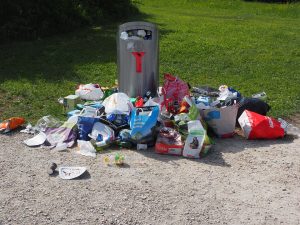
Cleaning up the mess
Earlier this week, the government announced plans to tackle the issue. Environment Secretary Andrea Leadsom indicated that there were plans to serve convicted fly-tippers with community service orders, with cleaning and picking up rubbish used as a deterrent. This is on top of the £400 fine introduced last year.
The government also wants to scrap the charges that some rubbish disposal facilities apply to those disposing of household and DIY waste. Ms Leadsom has labeled the current charges as, “unfair and unacceptable.” Cutting them out would make using tips and recycling facilities a more attractive option.
Successive government cuts since 2010 have caused an increasing number of cash-strapped councils to charge residents for disposing of their waste. However, it is actually illegal for council-run tips to charge, so if you are asked to pay to use your local one, be sure to appeal.
The problem is exacerbated by criminals pretending to be waste carriers. They pick up residents’ rubbish for a small fee, then dump it illegally somewhere.
The government hopes that the planned changes will slash the demand for these kinds of services, and thereby greatly reduce fly-tipping. Ms Leadsom comments:
“Litter affects us all, harming wildlife, polluting seas, spoiling towns, and giving visitors a poor impression. Our strategy will tackle this by building an anti-litter culture, making it easier for people to dispose of rubbish, and hitting litter louts in the pocket.”
Whilst we at PetrolPrices.com welcome the measures to reduce litter, we are skeptical about how effectively these rules will be enforced. What do you think? Are these measures enough?
IMAGE CREDIT: Pixabay (Public Domain).
Apr 5, 2017
The EU has sent a written warning to the UK government, stating that the UK exceeds acceptable pollution levels in its cities. If the UK does not begin to resolve this soon, the EU may see fit to begin issuing fines. Rather than admit culpability for past policy decisions that led to this situation, in a month’s time the government will announce a series of measures to tackle the crisis. Nearly all of them will penalise drivers of high-polluting cars.
The government is set to announce strict new measures on diesel drivers shortly, including a ‘toxin tax’ (or T-charge) on those driving in up to 35 locations around the UK (10 cities and 25 towns). The tax could be as much as £20 per day for the worst polluted areas.

London leads the way
The Mayor of London, Sadiq Khan, has announced this week that the T-charge for drivers of pre-Euro 4 engine cars in central London will be £10 per day, starting from October. The charges will run alongside the existing congestion charge of £11.50, meaning that drivers of cars classified as “polluting” will pay £21.50 a day to drive around central London. The aim is to improve the city’s air quality by discouraging the owners of high emissions vehicles to drive into central London.
Nor is that all. An ultra low emission zone (ULEZ) will replace the T-charge as of April 2019. At that time, the fee for pre-Euro 4 vehicles will increase to £12.50, meaning that drivers’ total daily fee will reach £24.
If the London Mayor has his way, the ULEZ will expand in 2020, with taxis, buses, HGVs and coaches all incurring charges. Some will be charged up to £100 to drive in the zone under the proposed scheme. Khan believes that this will cut nitrous oxide levels by up to 50% by 2020. ULEZ will be the first ultra low emission zone in the world.
Both initiatives intend to ‘price out’ drivers of high emissions vehicles from central London. As many as 10,000 vehicles are likely to be affected by the T-charge.
Government plan
Environment Secretary Andrea Leadsom will announce the government’s plan to tackle the problem in the next month. It is expected to contain a range of measures to combat urban pollution, including taxes for driving into towns and cities and increased parking charges. The aim is to discourage polluting vehicles from entering cities. Areas such as Birmingham, Southampton and Leeds are on the government hit list.
The measures could even include an enforced ban on private diesel cars and commercial vehicles entering cities during the “peak hours of the day.”
Not long ago, the government proclaimed diesel cars to be a greener and more environmentally friendly option than petrol cars. It encouraged consumers to buy them instead of their petrol equivalents. As such, the new plans are likely to create widespread outrage amongst diesel motorists, who feel betrayed by the government.
The new regulations will likely be enforced via a camera network similar to those already operating in London. The investment needed to create these new urban networks of anti-pollution cameras will run into the millions.
PetrolPrices.com members say ‘no’ to taxes
In an online poll conducted by PetrolPrices.com of 150 members, a massive 92% of respondents said they would refuse to pay the new ‘toxin charges.’ This illustrates the huge challenge that the government and local councils will face.
The government’s long-term plan seems to be to make all new cars and vans ‘zero emissions,’ or preferably electric, by the year 2024. This will bring the UK in line with other leaders in diesel emission-reducing initiatives around the world. Many major cities (including Paris, Madrid, Athens and Mexico City) plan to enforce new regulations that prohibit or discourage the use of diesel and ban diesel vehicles by 2025.
The Dutch government plans to go one step further and prohibit the sale of both petrol and diesel cars by 2025 – it is keen to set a precedent in encouraging the sale of electric cars.
Based on the reaction of PetrolPrices.com users to the toxin tax, it seems the government could face a public backlash at the new T-charge and ULEZ schemes.
It certainly seems extraordinary that the government plans to penalise drivers for polluting cities, without running a comprehensive high polluting vehicle scrappage scheme alongside such plans.
We’d love to hear your views about these new government plans. Let us know in the comments section what you think about the new diesel penalties. Would you pay these charges? Would you scrap your high polluting vehicle for cash if it was offered?
Mar 29, 2017
It’s finally happened; In what Prime Minister Theresa May has described as “an historic moment from which there can be no turning back,” Britain has invoked Article 50 and formally started the “Brexit” process of withdrawing from the European Union.
Unsurprisingly, the media is packed with stories about this monumental moment. At PetrolPrices.com, we’ve been looking at the potential impacts on UK drivers – some of which could prove hugely significant over the coming months and years.
Petrol prices
In the short term, it seems unlikely that this initial stage of Brexit will have any particularly noticeable effect on the price of petrol and diesel.
Save for a small bump in the value of Sterling against the Euro in the immediate wake of the Article 50 letter being delivered to the EU, the currency markets have remained calm. After all, everyone knew this moment was coming. Oil prices also remain solidly around the $50 per barrel mark, where they’ve now hovered for some time.
As negotiations progress, however, things could change rapidly. The UK price of fuel is heavily influenced by the value of the Pound against the US Dollar. Any signs that the Brexit negotiations are going badly (perhaps due to disagreements over the UK’s “exit bill”) could hit Sterling hard, perhaps causing it to fall in value by anything up to another 20%.
That said, if things go more smoothly on this score, and oil prices remain reasonably static, it’s unlikely we’ll see shifts in fuel prices of any more than 10 pence per litre either way in the medium term.
Buying and selling vehicles
The price of vehicles already seems set to rise in the future as a direct effect of Brexit. The fact that many car parts are purchased from elsewhere is already pushing up prices due to how much Sterling has weakened since the referendum.
The flipside of this is that cars being theoretically “worth more” in the UK could mean that residual values strengthen, boosting resale prices.
Another interesting point, raised in a report in The Telegraph, is that Brits may not have quite so many new car models to pick from. This is because of the costs involved in adapting cars for right-hand drive. Coupled with the increasing cost of parts, it seems likely some manufacturers will simply decide not to make certain models for the UK market.
It’s also worthy of note that consumable parts – including tyres, brake pads and filters, could go up in price due to similar currency-related reasons.
Travelling and driving abroad
The precise implications of Brexit for Brits driving to and within Europe will take a while to play out. Until the process is complete, nothing will officially change.
However, once the changes begin they could be significant.
First off, the days of the “booze cruise” to France or elsewhere could well be numbered. Britain will break away from EU customs arrangements in time. This may mean “genuine” duty-free goods from just over the channel, but the quantities of alcohol and tobacco individuals will be permitted to purchase will vastly reduce from where they are now. If the limits match those currently set with countries outside the EU, we may well see limits of four litres of wine and a single carton of cigarettes per person – a vast reduction on what’s allowed now.
It’s also reasonable to expect that customs and border checks will be far more involved and time-consuming than they are now. All-in-all, a quick jaunt over to France to stock up with beer and wine will become far less appealing once Brexit is complete – unless Prime Minister May manages to strike up some kind of bespoke deal for the UK.
Insurance and other legalities
A reduction in the amount of booze we can bring back from Europe may seem rather insignificant compared to other changes that could come to pass, depending on the outcome of Britain’s negotiations with the EU.
While Brits will no doubt be able to continue to travel to mainland Europe, there’s a chance their length of stay could be curtailed if true freedom of movement is lost. Some pundits have even discussed the prospect of Brits needing a visa for travel, but realistically the negotiations would have to go really badly for this to come to pass.
A more likely issue for Brits is the loss of the European Health Insurance Card (EHIC), should Britain end up leaving the European Economic Area (EEA) as well as the EU. Should this happen, UK citizens will need private health insurance to receive medical treatment when travelling in the EU.
Car insurance-wise, it’s unlikely much will change, although an EU law change back in 2o12 outlawed the practice of insurance companies offering cheaper premiums to (statistically safer) female drivers. Should the UK decide not to continue to implement this, women could see their insurance costs fall, at least in theory – but this doesn’t seem especially likely.
How do you feel about the announcement of Brexit? What do you think will be the biggest impacts on UK drivers? Let us know your thoughts in the comments section below.
Mar 29, 2017
Spring is here and the days are finally getting longer. Here at PetrolPrices.com we’re finding that our diaries are looking busier too, with far more upcoming reasons to take to the roads for long journeys.
One problem with taking lots of road-trips is that they can result in cars becoming very messy and cluttered. Even short journeys can tend to produce a build-up of food containers, magazines and discarded children’s’ toys. Meanwhile, those longer trips sometimes involve using up every inch of boot space to squeeze everything in.
That’s why we’ve done some digging around for products that help organise or expand the storage space available in your car. These products can all reduce clutter and make journeys that little bit less stressful.
1. One for extra storage
If setting off on a long journey with the family involves playing a game of boot-based Jenga to fit everything in, you always have the option of adding more storage in the form of a roof box.
Thule’s products are not the cheapest on the market, but they are the most consistently well-reviewed. This small roof box fits onto most roof bars and has a capacity of 320 litres. The maximum weight is 50kg, which is the equivalent of two heavy suitcases.
You load and unload this box from the rear, so it’s easy to work with, and it’s also easy to mount and unmount, so you have the option of using it as a permanent or temporary fixture.
Positives:
- Simple to install and load up.
- Durable.
- Will not fade, thanks to UV protection.
Negatives:
- Relatively pricey – but you get what you pay for.
2. One to sort the boot out
Car boots are not easy to keep tidy, being one big undivided space. This is where boot organisers fit in, allowing you to have separate sections for shopping bags, cleaning products, emergency supplies, and anything else you need to keep handy.
This particular organiser has a plethora of different compartments and straps to help you organise the items in the boot. It’s also foldable and removable – so it’s easy to take it in the supermarket and use it to organise the shopping, and equally simple to remove completely if you need the space for big suitcases or parcels.
Positives:
- Great value.
- Several flexible storage compartments.
- Folds flat.
- Great reviews.
Negatives:
3. One for cyclists
If your car is a reasonable size, it’s generally possible to fit a bike inside for transportation, sometimes subject to removing a wheel and finding the right angles! However, it’s usually a fairly painful endeavour and one likely to leave mud and mess all over the car’s interior.
A bike carrier is the answer, and this Thule model strikes just the right balance between build quality and value.
The rear mounted carrier hold up to two bikes and fits on most vehicles. Only a mounted spare wheel is likely to prevent successful installation.
This carrier is well reviewed and has a range of accessories available too.
Positives:
- Five-year guarantee.
- Compatible with most cars.
Negatives:
- 30kg weight limit may be low for some.
4. An innovative idea
We’re really rather taken with these “catcher caddies” than fall firmly into the “why didn’t I think of that?” category.
The idea is that they fit into the wasted space between the front seats and the centre console of the car. This produces an organised storage area from a space that motorists usually either try to wedge items into or drop items down accidentally!
These caddies come in a twin pack and are particularly well-suited to vehicles where storage options around the front seats are lacking.
Positives:
- A great value accessory.
- Seriously practical.
- Sturdy PU leather.
Negatives:
- May not fit every car – check before buying!
5. One for the parents and grandparents
Parents and grandparents all know that journeys with children can produce a huge amount of clutter. Books, bottles, toys, snacks and iPads often end up strewn over the back seat within minutes.
A seat back organiser is the solution to this problem, and this particular one boasts some great reviews. There are plenty of compartments, including mesh and zipped options, and the all-important see-thorough PVC section for a tablet device.
Most crucially of all? It easily wipes clean.
Positives:
- Great pricing.
- Loads of extra storage space.
Negatives:
- Not ideal for curvy sports seats.
Mar 22, 2017
The winter season can put a lot of strain on both the interior and the exterior of your vehicle – think muddy puddles and dirty feet!
After months of enduring the cold, being rained on, and navigating the dark mornings and evenings, we can finally see spring approaching. Therefore, it’s the perfect time to spruce up your car and get it in shape for the warmer months ahead.
With this in mind, at PetrolPrices.com we’ve pulled together a top five essentials list for spring cleaning the inside and outside of your car. These items will help you get it back into factory fresh condition, kickstarting your spring so you can hit the road in style.
1. One for those on the go
A Bluetooth transmitter is a modern day essential and if your car isn’t already equipped with one, it could be time to look at picking one up. It’s powered by your car’s cigarette lighter socket, and cleverly includes a USB port in the connector to provide charging power to your phone.
This particular variation comes with a plethora of features including hands-free calling mode.
In addition to this, one of the device’s main features is its ability to connect to your phone’s Bluetooth in order to play music from apps such as Spotify and Apple Music. This is particularly useful if you have an older car without such functionality built into the stereo system.
Positives:
- Great sound quality
- Good value for money
- Plenty of features
- Expandable storage
Negatives:
- May cause a distraction for some
2. One to get your wheels shining
Driving around in the great British weather will quickly leave your wheels caked in mud from the countryside, and grime from the cities. If you find your alloys are frequently dirty, then a professional grade wheel cleaner could be the way for you to blast away all the dirt and grime on your wheels.
This product from Wonder Wheels boasts great customer reviews. It’s excellent value for money, with many other comparable products costing more for less of cleaning product. The five litres of cleaner will be sure to last you through the whole spring season and beyond.
It is worth noting that this is a strong formula so it’s advisable to wear gloves during the application of the product.
Positives:
- Auto Express award winner
- Well reviewed on Amazon
- Includes cleaning brush
Negatives:
FIND OUT MORE
3. One to keep your car looking fresh
You never know what life will throw at you as a modern day driver. When you’ve invested in a shiny new car you want to keep it looking in top condition at all times – and this waterless cleaning solution is the perfect product.
What really stand out about this is the ease of use. You simply spray the solution on a micro fibre cloth and you’re good to go. You don’t even need water. This means that you have a lot of flexibility in where and when you can clean your car
Using products like this helps maintain the resale value of your car too, as we mention in our Car Care Tips feature.
Positives:
- Easy to use
- Suitable for all types of body paintwork
- Great value for money
Negatives:
4. One to switch out your interior
If you’re unsatisfied with your car’s tired fabric car seats, then here’s a way to enjoy the benefits of leather – such as easy cleaning – for an affordable price. This set includes everything you need for a five-seat car with two front seat covers, one back seat bench cover, and five covers for headrests. Additionally, the seat covers are compatible with side airbags so safety isn’t compromised.
These are available in a conservative black colour, or in more sporty colour combinations to suit your individual tastes.
Positives:
- Great quality
- Range of colours
Negatives:
- Not truly universal – check for compatibility with your car (our link is for Ford vehicles)
- Not suitable for cars equipped with sports seats
5. One to protect your carpets
Getting mud on your shoes is next to unavoidable (especially for those of us with young children), but that doesn’t have to be an issue if you have good car mats to protect your carpets. These will keep your car looking and good and protect it from damage at the same time.
What’s really great about these particular mats is that they are easy to clean so when the inevitable does happen you can simply give them a wipe off and you’ll be good to go again.
This product from JVL also adjusts to fit any car size.
Positives:
- Slip resistant rear
- Long lasting
- Universal size
Negatives:
