May 10, 2017
There was little to excite motorists in Labour’s 2017 election manifesto. The only notable inclusion was the party’s pledge to allow visitors to English hospitals to park their cars for free.
Labour leader Jeremy Corbyn claims the current charges should be abolished, as they are “a tax on serious illness” and an “unnecessary burden on families.”
The pledge goes on to state that the lost revenue would be made up in other areas, with insurance premium tax seeing an 8% rise and a premium tax of 20% on private health insurance products. Labour asserts that this tax rise will suffice to cover the £162 million cost of providing free parking at English NHS hospitals.

A recent investigation found that the most expensive hospital in the country to park at is the Royal Surrey in Guildford. An average two-hour stay there costs £4. The same study found the Royal Surrey made £1,421,172 from parking charges and fines. In 2015-16, NHS trusts in England netted £120,662,650 in car park charges, up from £114,873,867 the year before.
Meanwhile, a nursing union found that it can cost up to £100 per month for nurses to park at their workplace. In some cases, nurses were having to rush out in-between tending to patients to avoid being fined.
Embarrassment for the Conservatives
Labour’s pledge is an embarrassment for the Conservatives, who despite promising on numerous occasions to take away the “stress” of unfair parking charges, have yet to amend any policies
Hospitals’ fees are not the only issue facing UK residents when it comes to car parking. Fees are rising around the country, by up to 17% in some areas. In addition, recent reports show that private companies handed out 25% more parking fines to motorists over the last year. Parking companies spend an estimated £12 million pounds annually on penalising drivers.
While many English residents would welcome the new free parking scheme, we remain sceptical about the damage that the extra tax charges could do to our wallets (although – arguably – the proposed tax does seem like the lesser of two evils). It is great to see a party putting effort into combating some of the everyday difficulties that motorist’s face. With the Conservative election manifesto soon to be released, we would love to see the current government rise to the challenge of doing more in this area.
Would you be happy with this Labour manifesto pledge to scrap hospital parking fees? What else would you like to see in the Conservative manifesto? Let us know in the comments below.
Image credit – PEXELS
May 9, 2017
Last week the Government delivered its draft plan to tackle pollution. One of the key recommendations was cutting emissions by reducing the speed limit on UK motorways from the current 70 mph to 60 mph.
When cars are travelling at faster speeds, they emit more harmful toxins. Thus by reducing speed limits, toxicity levels will fall. The motorway speed limit decrease is one of the few recommendations that will cost nothing to implement but could make a big difference to road emissions. Enforcing it, however, is a different story entirely, although the growth of “smart motorways” (sections of motorway fully monitored by cameras) does seem almost purpose-built for this task.

This week, PetrolPrices.com conducted an in-house survey. We asked over 100 members what they think the motorway speed limit should be. The results show the scale of the task that the Government has in convincing motorists to slow down.
What should the UK motorway speed limit be?
- 60 mph – 5.66 %
- 70 mph – 15.09 %
- 80 mph – 49.06 %
- 90 mph – 15.09%
- 100 mph – 5.66 %
- No limits – 9.43%
[Source: PetrolPrices.com Facebook Poll May 2017]
Just 6% of motorists agree that 60 mph is a good speed limit for the UK’s motorways. Meanwhile, a staggering 79% think that the current motorway speed limit of 70 mph needs to be raised. Of those, 48% feel that the motorway speed limit should be 80 mph. 10% of respondents even go to the extreme and argue the UK’s motorways should have no enforceable speed limits, like the German Autobahn.
Statistics show that 67% of accidents on German roads occur on motorways without speed limits, resulting in twice as many speed-related deaths as the UK. Interestingly, Germany has the same number of speed-related accidents per 100,000 drivers as the UK. Speed is one of the main killers on the roads (alongside distraction), even when accident levels are the same.
These statistics come at an interesting moment. We’re seeing a widespread push from pressure groups and the government to reduce pollution and improve road safety at the same time. There is an argument that, whatever the speed limit, there will always be those who break it. However, there will also be those who comply with it. This suggests that lower speed limits do mean fewer deaths, fewer accidents and lower emissions. The question is whether the police will turn a blind eye to those who break the speed limits (as they do now), or whether there will be a huge crackdown using “smart motorways” or other methods in the near future. Only time will tell.
What’s your view on the proposed reduction in motorway speed limits to 60 mph? Should they be higher or the same as they are now? Let us know in the comments below.
May 5, 2017
Many of us may be left with mixed feelings over the fuel prices we saw in April, which saw a slight decline in prices from March. However, the good news is that with wholesale prices falling it looks like drivers will get a sustained period of cheaper fuels this summer!
Average prices in April stood at 118.3p for Unleaded and 120.1p Diesel, 1p lower than March and therefore continuing on the downwards trend since February. Historically back in April 2016, prices were 11p a litre lower at 107.2p & 106.8p a litre, interestingly this was one of the rare occasions in which Diesel prices were lower than Unleaded. This came about during the build up to the Brexit vote, but it was the cost of oil and indications supply would be controlled by OPEC that raised prices.
Going back further to five years ago, April 2012 saw the highest fuel price in recent history which was 142p for Unleaded and 147.6p Diesel. In April 2007 however, prices were much kinder to the wallets of motorists and stood at 92.8p for Unleaded & 95.1p for Diesel per litre.
Price war on the horizon?
News of an impending “supermarket price war” will come as music to the ears of many motorists around the country. This week Morrison’s made the first move by slashing their prices, taking 2p per litre of both Unleaded and Diesel fuel. In reaction to this, both Sainsbury’s and Tesco cut their prices by the same amount on both fuel types.
Asda has kept true to its fuel price promise staying at 113.7p for Unleaded and 115.7p for Diesel. Justifying their stance a spokesperson for Asda said: “Asda consistently offers drivers the lowest fuel prices nationwide week in week out.” Although it may still seem unusual for Asda not to follow suit with the price cut it is worth noting that although other supermarkets have dropped their prices none are yet matching that of Asda which still offers the cheapest supermarket on the market, (if you exclude Costco of course).
The stats
Figures show that the price of crude oil per barrel dropped from $55 in mid-April to $49.41 by April 27th. In contrast, pump prices throughout April fell slightly with petrol and diesel averaging out at 118.3p and 120.1p a litre respectively, they should have fallen by 3p a litre which they seem to be now doing.
We have also searched through our data to find what the top 10 cheapest and top 10 most expensive towns by average fuel price for April, which you can see in the below tables for Unleaded and Diesel. There are no real surprises in the cheapest towns list, for example, Thurrock has had consistently low prices due to the level of competition there, Costco has a fuel station there so the local market is trying to compete with their presence. Similarly, the most expensive list is dominated by remote towns and some affluent locations, places to try and avoid if you can fill up elsewhere.
Top 10 cheapest towns (average pence per litre):
| Town |
County |
Unleaded |
| OMAGH |
COUNTY TYRONE |
1.132 |
| TILBURY |
THURROCK |
1.137 |
| ALLOA |
CLACKMANNANSHIRE |
1.137 |
| WILLENHALL |
WEST MIDLANDS |
1.137 |
| PEMBROKE DOCK |
PEMBROKESHIRE |
1.138 |
| LIMAVADY |
COUNTY LONDONDERRY |
1.139 |
| PORT GLASGOW |
INVERCLYDE |
1.139 |
| ABERTILLERY |
BLAENAU GWENT |
1.139 |
| EAST DEREHAM |
NORFOLK |
1.139 |
| DUKINFIELD |
GREATER MANCHESTER |
1.139 |
| Town |
County |
Diesel |
| DROMORE |
COUNTY DOWN |
1.147 |
| TILBURY |
THURROCK |
1.157 |
| PEMBROKE DOCK |
PEMBROKESHIRE |
1.158 |
| PORT GLASGOW |
INVERCLYDE |
1.159 |
| ABERTILLERY |
BLAENAU GWENT |
1.159 |
| DUKINFIELD |
GREATER MANCHESTER |
1.159 |
| EAST DEREHAM |
NORFOLK |
1.159 |
| LEIGH |
GREATER MANCHESTER |
1.160 |
| PAR |
CORNWALL |
1.163 |
| PUDSEY |
WEST YORKSHIRE |
1.163 |
Top 10 most expensive towns
| Town |
County |
Unleaded |
| TIGHNABRUAICH |
ARGYLL & BUTE |
1.329 |
| GRETNA |
DUMFRIES & GALLOWAY |
1.305 |
| ISLE OF ARRAN |
NORTH AYRSHIRE |
1.289 |
| MARKFIELD |
LEICESTERSHIRE |
1.279 |
| LOCKERBIE |
DUMFRIES & GALLOWAY |
1.277 |
| ISLE OF UNST |
SHETLAND ISLANDS |
1.274 |
| HENLEY-IN-ARDEN |
WARWICKSHIRE |
1.269 |
| TOTLAND BAY |
ISLE OF WIGHT |
1.269 |
| SHIPSTON-ON-STOUR |
WARWICKSHIRE |
1.269 |
| CARRBRIDGE |
HIGHLAND |
1.269 |
| Town |
County |
Diesel |
| ACHARACLE |
HIGHLAND |
1.360 |
| TIGHNABRUAICH |
ARGYLL & BUTE |
1.359 |
| ISLE OF BENBECULA |
EILEAN SIAR |
1.339 |
| MARKFIELD |
LEICESTERSHIRE |
1.319 |
| FRESHWATER |
ISLE OF WIGHT |
1.319 |
| WOOLACOMBE |
DEVON |
1.299 |
| ISLE OF ISLAY |
ARGYLL & BUTE |
1.298 |
| COWES |
ISLE OF WIGHT |
1.289 |
| DUNBLANE |
STIRLING |
1.289 |
| ISLE OF ARRAN |
NORTH AYRSHIRE |
1.287 |
What can motorists do?
As ever there are a number of things motorists can do to take the money they spend on fuel into their own hands. It goes without saying that we always recommend using our service before you fill up. In addition, a good rule of thumb is to always keep your eye on prices at weekends as they can sometimes increase as demand increase, especially around supermarkets. Airports, motorways, expensive cities as well as rural areas tend to be good area’s to swerve when filling up, you are likely to find the best prices in medium sized towns and areas with multiple stations clustered together.
Let us know in the comments section below what you thought of the fuel costs in your area for April and what you think the cost of fuel will go in the future?
May 4, 2017
The car finance market is one of the fastest growing industries in the UK. Its current value is estimated to be around £40 billion. Some 86% of new vehicles are purchased through personal contract purchase (PCP).
Now, the Financial Conduct Authority (FCA) has announced it will begin investigations into what it classifies as “irresponsible” lenders. This will include assessing who buys car finance, how cars are sold and whether or not sales staff are carrying out enough checks to make sure that borrowers can afford the repayments. Lenders found by the FCA to have mis-sold policies could find themselves in hot water – the FCA could potentially force them to pay out millions of pounds in compensation to consumers.
Impact on car finance
The effect of the FCA crackdown in the short-term could be that drivers will find it more difficult to secure car finance, as dealerships are forced into performing more thorough credit checks before allowing customers to purchase vehicles. Of more concern is the worry that the current boom in car finance could be causing a financial bubble, in much the same way that we saw a few years ago with mortgages. With the mortgage crisis, too many people found themselves on payment plans that they were subsequently unable to repay, causing a financial crash. The fact that so many drivers are now stuck on contracts with repayment arrangements that they may not fully understand (after staff encouraged them to take out plans on the spot) could mean that we will see history repeat itself.
Our advice
We recommend steering clear of the car finance market altogether. One reason for this is that car finance can add thousands of pounds to the value of the vehicle you are purchasing. There are also other factors to consider, such a depreciation – you may find that the vehicle you’ve toiled so hard to pay off is worth a fraction of your initial outlay, once the three-year payment period is over.
If you do intend to dip into the car finance market, we strongly recommend you go to more than one dealership and get quotes from each. In addition, don’t fall into the trap of buying on the spot – make sure you take the time to thoroughly read through all the paperwork associated with the purchase. Using a service like Carwow is also a sensible move. You input the details of the vehicle you want to purchase and it provides quotes from various dealerships, enabling you to find the cheapest offer. PetrolPrices.com has a fuelback offer in place with Carwow here, where you can earn £50 of fuel when you buy a car with them.
Before you do go ahead and make a purchase, we also recommend visiting a bank to find out how much a loan would cost to buy the car outright. Compare that figure against the prices you have been quoted at the dealerships before you commit to taking out a contract. You will often find that a bank’s repayment plan will be far more cost-effective than that of a dealership. In addition, the bank will thoroughly vet you as an applicant, to make sure that you can afford the repayments before it gives you the loan. It is also worth remembering that by financing a new vehicle in this way, you will actually own the car and won’t be penalised for any dents or scratches it may pick up.
Is your vehicle on a PCP plan? If so, we would love to hear about your experience in the comments section below. If you haven’t taken out a PCP plan, would you be more wary of purchasing a vehicle through one now, given the FCA’s concerns? Let us know in the comments.
Image credit – Pixabay
May 3, 2017
Thousands of people die every year due to air pollution. The European Commission is finally forcing the UK government to tackle the issue. As a first step, the UK must publish a strategy outlining how it will deal with the crisis.
The strategy should have been published two years ago, but the government has dodged and delayed, presumably because it knows that the strategies in the policy will not be popular with drivers. The most recent delay saw the government claiming that purdah rules now applied to the strategy, due to the upcoming general election.
However, the High Court has stepped in and ordered the government to publish its draft strategy by 9 May, with the full strategy published by 31 July.
Why is tackling air pollution so controversial?
The government seems afraid of the air pollution strategy’s potential impact on votes. However, the High Court judge, Mr Justice Garnham, was clear that,
“The continued failure of the government to comply with directives and regulations constitutes a significant threat to public health.”
So why is the government so worried? Without having seen the draft strategy, we can of course only speculate, but it seems likely that the policy will contain controversial and unpopular measures to cut air pollution.
What we think will be in the pollution plan
We expect the pollution plan to include policies such as clean air zones, which will see motorists who drive heavy polluting vehicles facing city centre access charges. The idea is that the charges will dissuade them from driving into city centres where pollution levels are high. This is likely to apply to several major cities, including Manchester, Southampton and Leeds (amongst others). This measure is likely to be unpopular with small businesses, construction firms and HGV operators, who will see their transport costs increase. This could then be passed on to consumers as higher prices.
These concerns have led to the Freight Transport Association to call for a longer timescale for these changes to be introduced. That would give small businesses time to adapt, as well as time for a market for compliant second hand vehicles to emerge.
In addition to this, there may be incentives such as price and tax subsidies for using public transport and purchasing electric vehicles . We also think it’s highly likely that the government will introduce a diesel scrappage scheme.
Not so long ago, the government told drivers to buy diesel. Thus it’s hardly surprising that the administration that prioritises removing diesels from the nation’s roads will face backlash from drivers. However, the government has reassured motorists that it will help, with recent reports suggesting that the scheme will include paying owners up to £2,000 to scrap older, heavier-polluting vehicles from the most polluted UK cities. The government is yet to confirm any final details.
Such schemes cost money and revenue of this nature is likely to come from drivers themselves. The 2015 Conservative Manifesto pledge not to increase any taxes looks set to be dropped entirely thanks to the snap election. An increase in vehicle excise duty for diesel vehicles and the expansion of charges for diesels to enter city centres across the UK are both distinct possibilities. Neither will go down well with the UK’s 12 million or so diesel drivers.
An unpopular move
There is no avoiding the fact that these policies will be expensive to run. The Guardian reports that for London alone the measures could cost more than £500m.
What makes the situation so difficult to swallow for many diesel drivers is that just ten years ago the government was actively encouraging people to buy diesels. Government policy encouraged the purchase of diesel cars by offering cheaper road tax due to their lower carbon dioxide emissions, which led to the number of diesels on Britain’s roads more than doubling.
Now, those same drivers look set to pay for a system under which they will have to scrap their vehicles and replace them with more environmentally friendly ones. Such an unpopular move could well cost the government votes at exactly the time that it is trying to increase its power.
EDIT: Since publishing this article on Wednesday, the draft plan has come out on Friday and as we predicted it’s been massively watered down. Client Earth has labelled it “woefully inadequate” and “passing the buck to local authorities” in other words a complete avoidance of the main issues causing pollution because a General Election is about to happen. The Government’s draft plan is so poor, they may face more court action because of its inadequacy.
What are your views on pollution targets? Do you think that the health benefits of increasing air quality are worth higher taxes, and policies that pull the heaviest-polluting vehicles off the roads? Let us know in the comments below.
May 3, 2017
We’re living in uncertain times. The Brexit process is likely to bring with it a range of surprises and impact on many areas of daily life. One of those areas is the cost of fuel. As such, we’ve taken a look at recent historical events to assess their impact on fuel prices, in order to try and predict what Brexit, the forthcoming general elections in the UK and Europe, and Britain’s final exit from the EU could have on fuel prices over the next two years.
Recent historical factors
The first major recent historical factor to affect fuel prices was OPEC’s decision to increase fuel production in November 2014. The decision to oversupply was to try to prevent competition outside of OPEC from getting the funding and traction needed to extract fuels from shale oil and fracking projects. By January 2016, fuel had dropped to 98p a litre. The last time it was at that level was in May 2009, during the financial crisis.
Between January 2016 and the June referendum on whether the UK should remain in the EU or leave, fuel prices rose by 10p a litre. When British voters chose to initiate the process to leave the EU on 23 June 2016, it led to an immediate fall of 20% in the value of the pound against the dollar. Some experts went as far as hailing “the end of cheap fuel in Britain.”
However, fuel prices went up by less than a 0.3p per litre in July, then went down by 1.4p per litre in August. Fuel prices did start to rise in September, but driven by the increase in the cost of crude oil per barrel, not Brexit.
Another major recent historical factor was Donald Trump winning the US Presidency. Trump is known for his support of shale oil extraction and hydraulic fracturing (fracking). Although we saw no change in prices for his inauguration in January 2017, by February OPEC had decided to reduce oil production in anticipation of a likely increase in US oil output. This saw average prices rise by 5p a litre.
Thus, while recent fuel prices haven’t changed as a direct result of political events, those events have impacted on currency value. That has been paired with the decisions taken by the major oil producing countries, impacting supply and the price of crude oil per barrel.
General election
The direct impact of the snap 2017 general election announcement has been increased confidence in the financial markets that Brexit will be delivered. This has led to a stronger pound (up by 2.5%) and a resultant decrease of 2p a litre on fuel.
However, before the election on home soil, there is also the French election. This has the potential to cause a major upset in the financial markets if the far-right leader Marine Le Pen wins. It could mean fuel prices fall by as much as 5p a litre, as the value of the euro could drop and thus benefit the pound.
If, as expected, the Conservatives win the UK general election by a large majority (of 100 seats or more), the value of sterling would likely rise again. This could perhaps reduce fuel prices by a further 2p a litre. In the unlikely event of a small majority or hung parliament, negotiations with the EU could become very tricky, while shaky confidence in Brexit being delivered could lead to a further devaluation of the pound. This has the potential to take fuel prices back above 120p a litre.
Agreeing the exit and ‘divorce settlement’ terms
If the UK fails to agree on the terms of its exit and divorce settlement from the EU, it will face the possibility of a ‘hard’ Brexit. That means going outside of the EU and trading using World Trade Organization tariffs. The likely result would be an immediate slump in the value of the pound, with fuel prices increasing by as much as 20%. Such events have the potential to trigger another recession, as the shock on the heavily indebted UK economy would prompt many businesses to shed workers and move investment away from the UK.
If the UK does reach agreement with the EU on the terms of its exit, then a ‘soft’ Brexit will be the likely possibility. This would potentially involve maintaining existing trade relationships within the European single market, but accepting certain conditions. This possibility could lead to fuel prices remaining the same as they are at present, or even decreasing slightly as confidence about stability of the EU holds fast.
Exiting and negotiating new trade deals
In June 2019, when Britain eventually leaves the EU, it is predicted by many that a period of uncertainty will follow. New trade deals and transition agreements will come into play as the UK is effectively left to fend for itself.
The uncertainty that surrounds the outcome of Brexit after June 2019 will likely manifest itself in fuel price fluctuations. We would expect to see sharp increases in prices coinciding with the temporarily weakened pound. Conversely, any good news about trade deals with new partners outside the EU could have a hugely positive impact on the pound’s value and thus on fuel prices.
One would anticipate that the government will prepare a series of quick trade deal announcements, to boost the economic outlook soon after fully leaving the EU. We expect deals with Commonwealth countries, such as New Zealand and India. A trade deal with an oil-producing country such as Saudi Arabia would also be a smart way to boost both the economic outlook and fuel prices at the same time.
It is almost certain that there will be many notable highs and lows in the cost of fuel during the Brexit process and beyond. We have done our best here to give you an idea of what you can expect fuel prices to do. However, the only certainty is that prices will be volatile during the Brexit process, so make sure you shop around and use our service to make sure you always get the best value.
What do you think the Brexit process will mean for fuel prices? Do you think a hard Brexit would be a good thing? Let us know in the comments below.
May 3, 2017
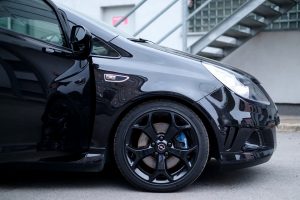
Few things can make your pulse quicken like being handed the bill for your car’s service. Why is it that it is always more than you’d initially accounted for? Now, a new study has revealed the cheapest and most expensive areas in the country to have your car serviced.
According to the survey, the average price for labour in Britain is around £67 per hour. However, that rockets up to £234 per hour at the country’s most expensive garage – and that’s just for the labour! The study also revealed that Surrey is the most expensive place in the UK to have your car serviced, with an average price of £81.07 per hour for labour. Meanwhile, the cheapest place is the Scottish county of Selkirkshire, where an hour’s labour from a mechanic will set you back around £50.
How can you get the best deal?
The statistics reveal that having your car repaired can be a financial minefield. For those looking to cut down on motoring costs, here are some helpful tips and tricks you can use, which may aid you in saving money next time you visit a mechanic. Firstly, a good rule of thumb is to avoid chain and franchised outlets. These generally charge you more and you may even sacrifice the quality of work done on your vehicle. The cost of an independent mechanic versus a franchise can go from £56 to £99 per hour in some areas.
We recommend that you go in search of the cheapest garage and compare prices at the different garages local to you. We’ve found that this can save you a small fortune. We also recommend that you do some research online to find out the average cost of the work you’re having done. Before instructing your mechanic to proceed, compare the average cost to your quote to ensure you aren’t overpaying.
Be cost-conscious
After the work on your vehicle has been completed, double-check the final bill and look for any irregularities that may appear on it. A statistic found that nearly 31% of a test group didn’t even check the final bill before paying it. By falling into this trap, you are putting yourself at risk of sneaky additions appearing on the final bill.
The fact that many motorists are so unaware of labour costs is part of the issue. It aids garages that seek to ramp up the final bill as much as possible. The statistics indicate that 77% of motorists have no idea how much the hourly rate was the last time they took their vehicle to be serviced.
If you would like to dispense with the cost of garages altogether, it’s worth checking out ClickMechanic. They provide fixed price quotes online for the cost of your repairs. The company then sends out a mechanic to whichever location is most convenient for you. You can find out more about the benefits of using the service here. Note that we also have a promotional offer running with them, which allows you to save 10% on all bookings when you use the code UNLEADED10 at checkout.
Let us know in the comments section below what you think of these new statistics. What do you do to save money when you get your car serviced? Do you know how much you paid for labour last time your car was repaired?
Image credit – Pixabay
Apr 27, 2017
Parking operators are spending up to £12m a year on the names and addresses of drivers they want to chase and fine for parking offences, ThisisMoney.co.uk reports.
The driver data comes from the DVLA, which charges £2.50 per information application. Last year, parking companies bought 4.7m records from the DVLA, amounting to nearly £12 million in fees.
Parking firms earn £500m a year from these fines, so the £12m cost is more than worth it.

How are they getting away with it?
The government has faced criticism for selling personal details in this way. However, they insist that the £2.50 charge only covers administrative costs, thus ensuring that the applicant foots the bill rather than the taxpayer.
The DVLA has a legal duty to provide this information to car park owners for legitimate fines. However, the sheer number of applications being made is an abuse of the system. The number of details requested was a million more than last year, and a staggering 15 times more than a decade ago, according to The Times.
The rise in private parking firms buying drivers’ details is largely due to The Protection of Freedoms Act from 2012. The law was introduced as a way to protect motorists from being clamped on private property but has led to a surge in parking companies buying details from the DVLA in order to pursue drivers for unpaid fines.
The information exchanged includes drivers’ names and addresses, in addition to the details of their vehicles.
Abuse of information for profit
The millions of requests to the DVLA in the last few years shows how many fines parking companies are issuing, yet not all of those fines are justified. Some companies have been found guilty of having unclear signs, while technology faults, over-enthusiastic attendants and even altered photographs have also all resulted in the issue of parking charges.
One company, Parking Eye, even tried to fine a driver who circled a car park but never actually used it. Meanwhile, The Standard reports that two council-run carparks near Heathrow Airport gave some users up to five parking tickets at the same time, even though the cars’ owners had actually paid for a meet and greet service with secure parking.
In total, parking companies made a combined £500 million last year through receiving drivers’ information from the DVLA. This has triggered some debate, with several MPs arguing that the practice should be banned, especially as some companies have gone to ruthless and excessive measures to obtain information. Labour Commons Transport Committee member Robert Flello, commented:
“Parking firms which resort to bully boy tactics should be blocked from obtaining drivers details from the DVLA.”
Are you facing a fine?
The government is looking at reforming some of the laws regarding private parking companies. Meanwhile, there are steps you can take to protect yourself. We always recommend appealing if you feel you’ve been unfairly ticketed, and be sure to photograph any evidence that might help you – such as an unclear sign or ticket. Getting a witness to write a statement can also help your case.
You can also follow your local council’s appeal process, which should be fair and impartial – the same might be true with parking companies’ own appeal processes.
You can also use websites such as donotpay.co.uk, which offers free legal advice. Another great resource is the Citizens Advice Bureau.
Should the DVLA be allowed to sell this data so that parking firms can hassle drivers? Are parking firms operating fairly inside the law? Tell us what you think in the comments below.
Apr 26, 2017
New rules set by the Financial Conduct Authority, which came into effect last week, stipulate that car insurance firms must be more transparent. Firms are now obliged to reveal how much a renewed premium costs compared to the previous year’s renewal.
In theory, by increasing pricing transparency, any price hikes should require valid justifications. However, some of the team here at PetrolPrices.com have noticed from their own experiences this week that insurers are sending emails to customers without the old price one to two weeks before the official renewal letter, in the hope this will convert customers before they see the price difference in the letter.
Rising costs
Premiums have risen by 8% since last year, according to the Association of British Insurers, so this new tactic is adding insult to injury. The average premium is now £462 – the highest it’s been since 2012. Meanwhile, the average comprehensive policy has risen by 16%, to £781.
Research compiled by Consumer Intelligence predicts that average insurance premiums could hit £1,000 in a year’s time. Insurers cite an increase in repair bills, compensation calculation changes, insurance premium tax and fake whiplash claims as causes of the price hikes.
Interestingly, the number of claims has decreased by 12% year on year, campaigning law firm Thompsons Solicitors said last week.
This raises several important questions about what is actually going on. Are we seeing profiteering on the part of insurers or a genuine shift towards driving becoming a much more expensive thing to do? Are car insurance firms being truthful about premium rises?
Thompsons Solicitors’ head of policy, Tom Jones, said:
“It’s clear that the number of claims – whether they’re up or down – has no bearing on the cost of car insurance, and that the industry is set on increasing premiums no matter what.”
Taxing insurers, not consumers
The government has increased taxes, with Insurance Premium Tax due to rise from 10% to 12% in June. However, the Treasury has insisted that the “Insurance Premium Tax is a tax on insurers, not consumers” and that it is the insurance firms’ choice whether they pass the costs onto customers.
Given the updates to taxes on fuel, congestion and pollution and fines for speeding, littering and mobile phone use that have been reported recently, we’re beginning to wonder whether the government’s plan is to make it too expensive for people to drive on Britain’s roads. That’s certainly one way to go about hitting their pollution targets!
What are your thoughts on tackling the issue? Are we being misled by insurers and the government? Is this part of a grand plan to get motorists off the road to meet pollution targets? Tell us what you think below.
Apr 26, 2017
The government is proposing that newly purchased vehicles have their first MOT when they are four years old (rather than three, as per the current requirement).
This information is from the SMMT. They report that the proposal has caused widespread concern from UK motorists who fear that it could lead to unsafe cars being allowed on the roads.
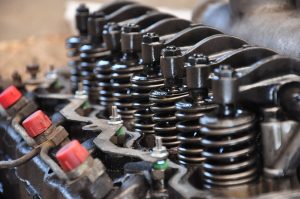
The government argues that extending the wait for MOTs could save an average of £45 over the course of a vehicle’s lifetime. That works out at a saving of £100 million per year for the UK’s motorists. Of course, the counter-argument is that it will cost the car servicing industry to lose the same amount.
In order to put the proposal into action, a public consultation will occur. If successful, it could lead to the new measures being in place as early as 2018.
It seems, however, that the majority of motorists oppose the proposal. YouGov has conducted a survey on the matter, which indicates that 83% of drivers would rather have peace of mind over the safety of their vehicle than an extra £45. 76% of a similar data set back calls from the automotive industry to keep the law as it stands (currently a three-year wait between the purchase of a new vehicle and its first MOT).
What risk does this bring to road safety?
During an MOT, a mechanic rigorously tests the vehicle against legal requirements. This includes examining lights, seatbelts, tyres, brakes and emission levels. Motorists can receive fines of up £1,000 for driving a car without a valid MOT.
Interestingly, many in the car industry actually believe that the current MOT checks are not rigorous enough. They would prefer reform in this area, rather than a new policy that they see as potentially harming the safety of motorists even more.
In reality, most four year old cars should pass an MOT with flying colours. Indeed, the Department for Transport points out that improvements in manufacturing standards mean that new vehicles stay roadworthy for much longer nowadays.
However, as AA President Edmund King said, the new proposal could see an increase in the number of cars on the road with “faulty tyres and lights,” which an MOT would address and which enhanced manufacturing standards have not necessarily impacted. King did also acknowledge, however, that the new measures would bring “cost and time savings for drivers.”
What do you think about the government’s new proposal? Would you take the £45 saving over the full peace of mind regarding vehicle safety? Let us know in the comments section below.