Fuel prices in May 2017 continued to fall. With the per-barrel cost of crude oil down, supermarkets and major petrol retailers have passed cost savings on to drivers.
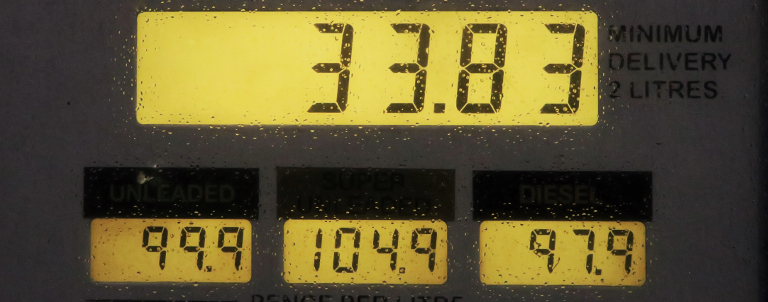
The average price for unleaded in the UK in May 2017 was 116.7 pence per litre. For diesel it was 118.0 pence per litre. the figures represent a month of month decrease of 1.6 pence and 2.1 pence respectively. The larger decrease in diesel prices is interesting and will be a trend that we watch closely over the coming weeks and months. Super unleaded and premium diesel prices also fell, by 1.9 pence on average. Even motorway service station prices fell during May, by 0.8 pence and 0.6 pence a litre.
Despite the decreases, prices are higher than they were in May 2016, when both unleaded and diesel stood at an average of 109.3 pence per litre. However, they are significantly lower than they were five years ago, when unleaded was 137.6 pence per litre and diesel 138.5 pence. In direct contrast, ten years ago unleaded cost 95.9 pence and diesel 96.8 pence per litre. While prices have generally been going down for the past few months, they are still fluctuating in a price range that has been in existence for a decade now – between 90 pence and 145 pence per litre.
OPEC and shale oil producers start dialogue
Unfortunately, it looks like we may not see another price decrease in June (though we remain optimistic). Last week, OPEC and Russia appear to agree to stick to reducing oil production levels for the next nine months. In theory, this should bolster the price of crude oil per barrel for the rest of the year. However, in reality it hasn’t had much impact, because US shale oil production levels have increased since February, thus negating production cuts elsewhere.
Now, for the first time, it seems that OPEC and the bankers who represent the many small-scale US shale oil producers are opening a dialogue about how to control global output and agree a price range for oil. If this happens, there can only be one outcome: higher fuel prices but within a controlled range of pricing. The target appears to be between $55-60 a barrel, so if they do agree a deal, prices will almost certainly increase in the second half of 2017.
The figures
The price of crude oil per barrel started at $49.15 in May, dropping down to $46 on 4 May 2017. From that point, it increased for almost the whole month, reaching $51.50 before falling back to $49.40 at the end of May. The price has changed by $5.50 per barrel, but has ended at almost the same place as it began. As mentioned earlier, oil producers want a price range of between $55-60 a barrel for the next nine months, so there is some way to go to achieve that level through oil production cuts.
What is happening at a regional level?
Based on our data, the biggest decreases in fuel costs in May were seen in Wales, where Cwmbran became the cheapest town in the UK, with average prices of 111.0 pence per litre for unleaded. It was hotly followed by several other towns in Wales at 111.2 pence per litre, as well as Thurrock and some parts of North Manchester. As ever, high concentrations of ASDA and Morrison’s sites drove prices down in many areas, as the brands continue the dominate the top 100 cheapest sites in the UK. The cheapest recorded site in May was in Tamworth at 109.7 pence per litre.
The most expensive town in the UK in May was Acharacle in the Highlands, with an average price of 133.9 pence per litre for unleaded. As ever the Scottish Highlands, Isle of Man and Isle of Wight had the highest average prices, alongside Inner London at 125.8 pence per litre. As expected, independent chains and motorway service stations dominate the top 100 most expensive places to fill up. The most expensive recorded site in May was in Central London, at 150.1 pence per litre for unleaded.
As ever, remember to set up and use our price alert email to make sure you are always aware of where the cheapest fuel is in your local area. If you are on the move and in unfamiliar places, our app will enable you to locate the cheapest and/or nearest fuel, wherever you may be.
Let us know in the comments section below what you thought of the fuel costs in May. Are they going to continue falling? What do you think of dynamic pricing? We would love to hear your opinions.
Do you fill up on the way to work, during the school run or on bank holidays? If you do, then you’re likely to start paying an average of £1 more per fill up very soon.
Artificial intelligence systems equipped with the ability to charge customers depending on location, demand and even the particular driver have arrived in the UK. They will be used by fuel retailers to make more money from customers who choose to fill up at the busiest times.
The tech comes from Denmark-based a2i Systems. The company is in late-stage talks with petrol retailers in the UK. If all proceeds as expected, the technology will be installed into forecourts within months. One of the leading supermarket brands is close to signing an agreement and will likely be the first to launch.
The new technology could lead to prices shifting several times over the course of a day, with a rise or fall of over 2p per litre (amounting to £1 a tank). The technology is already being used in most petrol stations in the US and Europe, where it is normal for prices to change up to ten times a day.
For those interested, the computer algorithm is modelled on the human brain. It scours databases of customer information to predict how they will behave. If it sees the station is having a busy period, then it will hike prices accordingly, in much the same way that Uber increases the cost of its fares to take advantage of high demand.
Similarly, in quiet periods it could drop prices to entice more customers in. In theory, this could mean that savvy customers who can predict the cheaper times of day for prices could fill up for much less than they are paying currently.
The ones caught out will be those left with no option but to fill up at the busiest times, such as during rush hour or on bank holidays.
Industry experts have mixed views about the new technology and the effect it could have on pricing. Luke Bodset from The AA commented,
“This represents a huge change which would be most unfair on commuters and families. It will wind them up no end as they will become wise to the fact that retailers can exploit price movements.”
PetrolPrices.com’s Jason Lloyd believes that,
“The UK has been behind the rest of the world on dynamic fuel pricing for years, so to hear that a supermarket is planning to do this may trigger the rest of the UK petrol retail market to follow.”
Smart pump pricing will both benefit drivers and frustrate in equal measure, but the logic behind it means that if you are smart about when you buy fuel, you can save money, while those who fill up in peak demand periods will pay more.
It will be interesting for PetrolPrices.com to try to make price comparisons once this type of technology has been implemented. However, we will remain committed to providing our members with an impartial source of price information. The new technology won’t affect that. We’ll let you know which providers are using smart pumps, so you know to expect a fluctuation of around 2 pence every day. As ever, our advice remains the same: use our service to compare prices and ensure you always get the best deals at any time.
Do you agree that these changes to pricing will be unfair to UK motorists in peak driving times, or do you see it as an opportunity to save money? Let us know in the comments below.
The automotive industry, along with the public sector and education sector, has been dragging its heels in terms of making the most of advances in digital technology. Why? Well, there are several factors at play, but one of the main reasons is that the automotive industry has been hugely profitable for a long time. This profitability has mean that embracing change has not been a top priority. After all, why change a winning formula?
However, several large companies (Google, Uber, Tesla) have disrupted the automotive sector of late, forcing incumbent automakers to rethink their future plans. We’ve all seen what the emergence of Uber has done to the taxi industry – it is the beginning of a transportation revolution as significant as the Model T Ford replacing the horse and carriage. In 20 years’ time, drivers will look back and wonder why we didn’t realise how backwards we were.
Driverless cars, 5G motorways and the death of diesel are three significant developments that are set to alter the dynamic of Britain’s roads over the next few years. As such, we’ve rounded up these and other changes to look at what the future of motoring in the UK really holds.
The death of diesel
Diesel’s days are numbered. The government is aiming for 80% of vehicles on the road to be zero emissions by 2050.
April 2017 saw a 27.3% drop off in new diesel car registrations, so it seems the push to demonise diesel car ownership is working. With scrappage schemes and city centre toxicity charges both in the pipeline, we can expect the proportion of diesels on the road to decrease steadily.
The Liberal Democrats are pushing for an outright ban of diesel cars by 2025. This is relatively pointless as a measure to tackle pollution unless it applies to heavy goods and public vehicles as well. However, it shows how fashionable the idea of getting rid of diesel has become among politicians.
Impact on UK Motorists: As it becomes more expensive to run a diesel car, and drivers have good incentives to scrap pre-euro 4 models for greener alternatives, it seems inevitable that diesel cars will slowly fade away into history. It’s unlikely to happen by 2025 though.
Worryingly, a large proportion of Britain’s car industry is subsidised by diesel sales. A fall in diesel vehicle sales could well accelerate the recent talk of job losses within the car industry.
Smart fuel pumps
Denmark-based a2i Systems uses artificial intelligence to change the fuel price at the pumps in real time. This technology is coming to the UK later this year, with one supermarket already in advanced talks about implementing it. Prices in the UK already change frequently. It’s common for pump prices to increase over busy times like weekends, for example, but currently most stations do this manually.
With the a2i system, pump prices will change based on who is filling up. Loyal customers looking for deals may see the price go down, while those driving expensive cars may see the price tick up.
At PetrolPrices.com, we anticipate seeing a supermarket combine smart pumps with its loyalty scheme. This could, for example, result in greater discounts at the pumps for customers who buy goods from the supermarket.
Impact on UK Motorists: Real-time dynamic pricing on fuel is inevitable. It will be arriving in the UK sooner rather than later. Smart pump pricing will both benefit drivers and frustrate them in equal measure. However, the logic behind it means that if you are smart about when you buy fuel, you could save more money each time you fill up. Just be sure to avoid filling up in peak demand periods, when prices will be at their highest.
Electric vehicles
Globally, there are almost 1. 5 million electric cars in use, compared with 1 billion combustion engine-powered vehicles. Even though electric car sales are growing ten times faster than cars powered by traditional fuels, it will take years to achieve anywhere near 50% of all cars on the roads being electric. Some experts predict that the UK will not be fully electric until 2075, while others feel that hydrogen cell power and other fuels will emerge to replace electric cars. Many see electric cars as a stepping stone rather than the end state.
Tesla is leading the way with electric cars and now every car manufacturer offers at least one electric model. However, they’re still seen as expensive and not yet as good as a traditionally fuelled car. The limitation on range, combined with rapid advances in battery technology, means the secondary electric car market is non-existent. This is keeping adoption in the marketplace low, as only new electric cars are bought.
Impact on UK Motorists: We believe that electric will stay a niche rather than a mainstream car market in the UK for the next five years. There needs to be a greater level of affordability, where second-hand electric cars with ranges of 400 miles per charge can be bought for less than £10,000. The availability of charging points and the speed of charge points also need to be resolved before mass adoption can take place. Tesla is looking at covering the entire outside of its cars in solar cells, to increase range and power the cars as they drive.
Connected cars
Seen by many as the prelude to “driverless cars” (we’ll get onto that later), a “connected car” relies on a computer system to perform most functions, reducing the actions required from the driver. Connected cars enable a host of digital services and media companies like Google and Facebook are keen to be inside the operating systems, so that they can provide services directly to drivers and passengers.
Take Tantalum, for example. Tantalum is building technology that turns the car itself into a digital service. You can fill up at a fuel pump and the car will make the payment for you as you drive off.
These cars can include internet access and can communicate with other “connected” devices. They have the potential to limit accidents by talking to other cars. In 95% of all road accidents, human error is the leading cause. It’s thought connected cars could reduce worldwide fatalities by 30%.
Many new car models are already connected. Some newer cars come with an app, enabling the driver to communicate with the car. They can even unlock it while hundreds of miles away.
Impact on UK Motorists: Connected cars are going to be a revolution for motorists, not only in terms of the services provided but also the reduction in the rate of accidents. UK motorists will find the range of new products and services overwhelming in the next few years. It won’t take long before people will think they can’t live without them – much like mobile phones.
Driver-less cars
A driverless, or automated, car is exactly as you imagine – it’s a car that can drive itself. They are operated by a powerful computer that follows a map of the roads and reads thousands of different things at once, in the same way the human brain does when we drive. Driverless cars use sensors to detect where road obstacles are in order to avoid collisions and prevent accidents.
Some cars are already semi-autonomous. Tesla’s range of cars can drive on some motorways in a driver-less way. Experts are suggesting they could be on UK motorways as early as 2019, although this may seem ambitious to the more sceptical among us.
The cars are already being trialled in some states across America. Nevada is a key state for driverless trials, largely because the road system is simple and has fewer cars. The first trial in the UK occurred recently, when a group of passengers were driven around London in a driverless bus.
Impact on UK Motorists: Experts suggest that driverless cars will kill the need to own a car. The predict that by 2050 no one will own their own car anymore, as they will simply get into a driverless vehicle and tell it where they want to go. This type of vision of the future may scare many people, but if you consider the amount of free time made available by not needing to drive, if the cost is low then the benefits could be significant.
5G motorways
The Labour Party manifesto pledged to bring 5G (the unreleased super-fast mobile network) to all motorways and major roads around Britain by 2019. This coincides with the country’s goal of being an “early adopter” for autonomous vehicles. The internet access would allow the cars to stay connected to their map system, as well as other cars, whilst moving along.
The current standard of internet connection is insufficient to enable connected vehicles to function fully. 5G would change this. It would also allow those with connected and driver-less cars to spend journeys watching films or working. A Google study found that the average commuter could gain an extra hour every day if he/she didn’t need to drive.
Impact on UK Motorists: 5G would mean vastly improved internet access on motorways for passengers, as well as facilitating driverless cars. However, the cost to invest in and deliver a 5G network on the main road system would be hard to justify without rolling out 5G across the rest of the UK at the same time.
New crimes (car hacking)
Many people are concerned by the security threats that all this new car technology will bring to Britain. Year upon year, cars are becoming more reliant on computer technology. The Society of Motor Manufacturers says that 1.5 million motorists a year now leave showrooms with cars reliant on computers.
The concern is that the security systems aren’t yet matching this advancement. However, it seems car manufacturers are starting to take notice of the threat. Vehicle manufacturers are investing billions of pounds to make cars safer and more intelligent, and are constantly investing in security patches to prevent cars from being hacked.
Sadly not all manufacturers are keeping pace. Jeep was famously caught out recently when hackers demonstrated that its new cars could be taken over remotely, including switching the engine off and opening the doors from many miles away.
Impact on UK Motorists: Motorists could be held to ransom by hackers and scammers unless there are serious advances on current security systems. This is perhaps the single greatest threat to the future of motoring. As cyber-crime is now the fastest growing type of crime globally, the risk is that hacking cars could become a scarily common new trend.
Are you excited about the future of motoring? Do you think the future of motoring will be better or worse than today? Let us know in the comments section below.
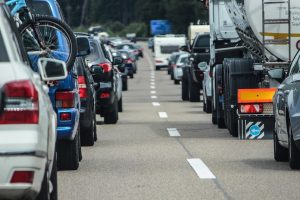
A comprehensive study of Britain’s most congested roads has found that motorists spend an average of ten days a year stuck in traffic.
Researchers from the Admiral insurance company considered travel times for different routes into 13 major cities around the country. Each city was then ranked by the increase in journey time caused by traffic congestion.
They compared the statistics from 9 am on a Monday, when the roads are traditionally at their busiest, to a Sunday at the same time, when they are at their quietest. They used this data to measure the difference in travel time on congested versus empty roads.
The Admiral study follows on from research by traffic information company Inrix, which found that the UK is the third most congested country in Europe. The Inrix data found that direct and indirect costs of congestion in Britain in 2016 totalled £31 billion, equating to an average of £968 per driver.
Traffic congestion by region
The Admiral research showed that traffic congestion in the UK is a major issue, with the average driver spending ten days per year stuck in queues. Driving at peak times in London increases this to 17 days per year. For those unlucky enough to commute from Dartford to Trafalgar Square, it rises to a staggering 28 days. Cyclists now beat cars on almost every journey in the capital during peak periods.
Manchester was second on the list for highest average travel times. Travelling on the busiest routes in the city will cost you an extra 45 minutes every day, amounting to 13 wasted days a year.
Of the 13 major UK cities studied, Glasgow was the least congested. Travelling at peak times in Glasgow costs the average driver an extra 23 minutes per day, amounting to seven days per year.
Travel at the right time
Driving at the wrong time of day is sure to make any journey significantly longer. A spokesperson from Admiral says,
“Drivers are losing an average of ten days a year sitting in their cars during rush hour, with journey times tripling on some routes.
“In the UK’s capital, the difference between Sunday and Monday morning added up to commuters spending three times as much in their vehicle, equating to 398 hours, or 17 days per year of time.
“These figures confirm what motorists have long suspected – that they spend a huge amount of wasted time sitting in their cars.”
Motorists are also “more likely to be involved in an accident” by travelling at rush hour, with “rear end bumps” being the most common type. The advice is to consider starting your journey and working day earlier or later. Doing so could mean your time is spent a lot more productively.
The concept of driverless cars and 5G access on Britain’s roads could not come soon enough, with cars potentially becoming the “new home or workplace” for many drivers stuck in traffic.
What is your experience of congestion times around Britain’s major cities? Do you think the government needs to tackle this or should it be focusing on other issues? Let us know in the comments.
Last week our article about drivers receiving fines for making way for ambulances received the highest response we have ever had from an article (99,000 visits). We are delighted with the comments, which in our view are better than the story, so please keep them coming. Clearly the topic was one that gripped the attention of our members!
To follow on from this, new research from the College of Paramedics indicates that segregated cycle lanes across Britain impede ambulances and put lives at risk. The cycle lanes are also a cause of congestion on Britain’s roads.
A segregated cycle lane has a concrete kerb alongside it to stop drivers from veering into it. This means that when the emergency services need vehicles to move aside, they are unable to do so. Segregated cycle lanes directly hinder ambulances and other emergency vehicles from passing drivers, by boxing vehicles in the road.
A more widespread rollout of segregated cycle lanes across Britain is in the pipeline. However, paramedics are warning that such a move could lead to lives being lost. They argue that the concrete curb makes it much more difficult for motorists to move out of the way when they see the flashing blue lights of the emergency services.
Regional variations
Segregated cycle lanes have been implemented across most of Britain’s major cities, including London, Manchester, Bristol and Edinburgh. Local councils in many other towns and cities have already agreed to take part in similar projects. However, not all have fully considered the potential impact on the emergency services.
A spokesman for the College of Paramedics states,
“For some of the most critical emergency patients, such as those suffering cardiac arrest, every minute added to the time it takes to reach a hospital can significantly reduce the chances of survival. For instance, in Manchester there are many cycle lanes close The Royal Manchester children’s hospital and some lanes in London are close to St Thomas’s Hospital.”
The College of Paramedics is now calling for town planners to reconsider introducing segregated cycle lanes.
Does segregation save lives or cost them?
Fully segregated lanes were introduced in London after the number of cyclists killed on they city’s roads peaked in the years 2001 and 2005. 21 cyclists died in each of those years. Since then, the number of deaths has declined steadily, to a 22-year low in 2015.
This news comes at an interesting time. Last week we reported on GEM’s Blue Light Aware push for motorists to understand how they can help emergency services vehicles. It seems that the issue of impeding ambulances is one that is gaining in momentum and it will be interesting to see how local councils react to this.
Do you agree with the calls by the College of Paramedics to stop the rollout of segregated cycle lanes? Let us know in the comments section below.
The UK general election is on 8 June 2017. All the main political parties have now released their manifesto pledges. We look at what they could mean for motorists in the UK over the next few years.
Liberal Democrat manifesto
The Lib Dems have made the ambitious pledge that, if elected, they would ban diesel car sales by 2025. They would pair this with the much-discussed diesel scrappage scheme, with cash incentives for drivers to trade in pre-Euro 4 diesels.
Ultra low emissions zones also featured in their manifesto, with the Lib Dems wanting to expand the system to ten towns and cities. Currently only in place in central London, ultra low emissions zones require those driving vehicles that don’t meet emissions targets to pay a daily fee. Drivers who don’t pay the fee can face fines of up to £130 under the current system.
Our View: It’s a sensible plan to create more ultra low emission zones. However, the idea of banning diesel cars by 2025 – with no mention of diesel trucks or public transport vehicles – means the plan lacks credibility and smacks of a party that is kicking ideas around rather than having a solid, deliverable plan.
Conservative manifesto
Perhaps predictably, the Tory manifesto included no news for motorists. Perhaps the Conservatives didn’t want to risk upsetting a large proportion of their voters (diesel drivers). Then again, maybe it was the knowledge that they may soon have to deliver on the controversial pollution plan that kept them quiet.
The draft pollution report was certainly met with dissatisfaction when it was released in April. Having seen the uproar that their watered-down pledges to tackle pollution in major towns and cities caused, it seems the Tories decided to stay quiet on the subject, leaving the battle against pollution to local councils.
Our View: We expect to see the Conservatives break their silence on motoring matters after the election, particularly in the Autumn budget. After all, there’s no point in them aggravating motorists until they’ve won the election. Move along, nothing to see here!
Labour manifesto
The Labour pledge was one of the more progressive when it came to motoring.
The party pledged to retrofit thousands of diesel buses in high pollution areas – a contrast to the charges we’ve seen suggested by both other parties.
If Labour were to win the election, they also claim they would put the UK at the forefront of low emission vehicle manufacture.
Other notable pledges included 5G motorways by 2019 and scrapping hospital parking fees, subsidised by tax increases in other areas.
Our View: There are some real vote winners included and their plans do seems to be well thought out. However, as is the case with all the Labour manifesto reading, it feels more like a wish list than a coherent plan that they actually expect to deliver. 5G on motorways sounds amazing but it will cost billions – where is the money coming from?
What do you think about the general election manifesto pledges? Leave a comment below to let us know.
A recent Gocompare.com survey highlighted the topic of “fronting.” This is where the parent of a young driver puts him/herself down as a named driver to reduce the insurance premium. Not only is this illegal, it also invalidates the policy. However, around 16% of respondents admitted having done it, with a further 38% stating that they would do so in the future.
This got the team at PetrolPrices.com thinking about what else people do to keep their insurance premiums down, including actions that are illegal and would thus invalidate the policy. One such action is to lie about your occupation, as nobody ever checks this information (though we’re not sure that doing so is illegal). Another is to avoid reporting minor accidents.
PetrolPrices.com conducted a survey of our own this week to investigate the scale of unreported accidents. The results were extremely revealing.
Survey reveals alarming trend
We asked members if they would inform their insurer about every accident, or knowingly withhold information about an accident if they knew that doing so would keep the cost of their premium from going up.
72% of respondents said they would inform their insurer about every accident that happens.
We then asked whether they knew it was illegal not to inform their insurer of every accident. An astonishing 28% of respondents claimed they were unaware of this.
Interestingly, 41% said that they would avoid telling their insurer about a minor bump or scrape if they knew it would make their premium go up.
Alarmingly, 18% went so far as to state that they would withhold information from their insurer if it meant a lower premium, even if they knew they legally had to report it.
The results suggest that many people are unaware of what they need to report to an insurer. This implies that there are literally thousands of unreported accidents occurring every year.
A risky business
Although it may seem like a good idea to try and keep premiums low, not informing your insurer about a minor accident could damage your wallet more in the long run. If an insurance provider finds out you have withheld information from them, your future premiums (from them and any other insurer) will skyrocket.
Not only that, but failure to report an accident is a criminal offence. It carries a maximum fine of £5,000 and a possible five to ten points on your licence, depending on the circumstances. The courts can also disqualify a driver if the offence was in conjunction with failure to stop, or leaving the scene of an accident.
With such severe potential consequences, it is shocking that so many drivers are unaware of how and when they need to inform their insurer when it comes to minor accidents. It is crucial that you report any form of accident you have been involved in to your insurer. In addition, it’s important to understand the relevant terms and conditions of your insurance policy. Each insurer has different rules concerning timeframes and what constitutes an accident. If in doubt, it’s better to over-report than fail to report.
What do you think about these findings? Is it worth taking the risk to keep your premiums down? What do you think is the difference between a minor or a major accident? Let us know in the comments section below.
Most drivers don’t realise that they can incur fines for not moving out the way of emergency services vehicles. Many are also unaware that overzealous local authorities are ready and willing to fine them if they move out of the way and end up somewhere they shouldn’t.
This week, GEM Motoring has launched its Blue Light Aware campaign to highlight how to make way for emergency services safely and effectively – and without doing something that will result in a fine.
Local authorities can fine you up to £60 if you enter a bus lane to get out of the way of an emergency vehicle (falling to £30 if you pay within 14 days). In addition, some London councils can charge a whopping £130 for driving through a red light or moving into a box junction to let an ambulance or other emergency services vehicle past.
Councils usually issue these fines based on CCTV camera images, although it is not unheard of for the emergency services to take down an offending vehicle’s registration. GEM highlights that appealing a traffic violation using moving aside for emergency services as your defence is unlikely to get you very far.
Are fines a deterrent?
Interestingly, a survey of 18,000 AA members in 2015 suggests that the threat of a fine doesn’t deter most motorists. In fact, only 13% would refuse to enter a yellow box junction to allow rescue services past.
The survey also found that 48% of drivers would happily run a red light and 31% would be willing to exceed the speed limit to aid emergency services, despite laying themselves open to potential police prosecution.
Additionally, 39% of drivers said they weren’t concerned about being penalised if it helped someone in distress. This involves “not worrying” about bus lanes, red lights, box junctions, speed limits, or pulling on to a pavement to let emergency crews past.
In the GEM Blue Light Aware campaign video (see below), GEM states that motorists should strive to avoid bus lanes, red lights, sudden braking, pulling over onto pavements and pulling over in spaces where it isn’t safe or legal to do so:
“It’s much better to let emergency services find their own way around us. Leave the bus lanes and red traffic lights to them.”
Although many of us struggle to stay calm when we hear a siren approaching, the Highway Code states that you should not panic and should consider the best route for the vehicle to take before acting. It goes on to say that you should not “endanger yourself, other road users or pedestrians and avoid mounting the kerb at all costs.”
It seems clear to us that the current system leaves motorists with no perfect option: either don’t pull over and risk delaying the emergency services (which are potentially on the way to save someone’s life) or pull over (potentially endangering the lives of yourself and others around you) and risk incurring a fine.
Would you risk a fine to stay where you are and obstruct emergency services, or move aside and risk a fine for breaking traffic rules? Let us know in the comments below.
What is a speed camera detector and how does it work?
A speed camera detector is a device that alerts you when you’re approaching a speed camera. The idea is that it gives you enough time to ensure you are not travelling over the speed limit, saving you the hassle of incurring fines and points on your licence
Speed camera detectors alert you when you are approaching fixed speed cameras and/or mobile units. They also provide warnings about accident blackspots and congestion zones and display/announce the legal speed limit. They offer LED displays, so as to be easily visible at night, and can be updated online.
How do GPS and radar detectors differ, aren’t they illegal?
There are several differences between radar/laser and GPS detectors. GPS speed camera detectors use a database of fixed camera locations. They also alert you to known accident blackspots and school locations. They work based on comparing your current location to the location of speed cameras on the database, to establish when you are nearing one.
Radar and laser detectors pick up on the frequency of transmissions from police radar and laser speed detection equipment. They then alert you to the presence of this equipment. This means they can pick up the location of mobile detectors, which GPS detectors can’t.
There was a lot of talk a few years ago about speed camera detectors being made illegal. However, a ban never took place. This means it is perfectly legal to use all types of speed camera detector in England.
This isn’t the same in every country. In some countries (Northern Ireland, for instance) it is illegal to use a speed camera detector. If you plan to drive to another country, therefore, be sure to check up on the laws of that country before you travel.
GPS speed camera detectors
This type of detector uses GPS technology to pinpoint the location of speed cameras and lets you know when you approaching one. Newer models use a GPS database in conjunction with this, as some speed cameras are now manufactured to be undetectable to satellite technology.
The Cheetah C550 is a high quality GPS speed camera detector. It’s easy to set up and understand and will give you clear voice alerts when you are approaching a speed camera. It also features a bright LED screen, which is visible even in direct sunlight. It comes with free lifetime database updates, meaning the device will always be up to date with the latest sat nav updates.
An alternative to buying a GPS detector is a buying a radar and laser speed camera detector. However, unlike a GPS detector it won’t pick up some newer models of speed camera. Cameras by Truvelo, for example, are undetectable.
It also won’t give you any kind of alert for average speed zones. These feature two overhead cameras, installed 200 metres apart. The cameras measure your speed from the first camera to the second.
This is not the case for all radar and laser detectors – some have now combined both GPS with radar and laser detection, so it’s important to choose carefully.
As a rule, radar and laser speed camera detectors are better at detecting mobile speed cameras. Some models can warn you up to three miles before the camera.
This device combines GPS, radar and laser detection. This makes it one of the most comprehensive speed camera detectors available.
With the radar and laser detection giving you great coverage for mobile speed cameras, and the GPS giving you alerts for fixed cameras, you’re effectively covered for all situations.
The Aguri Skyway is quick to set up and works straight out of the box. It also comes with free lifetime updates.
Sat nav speed camera detection is just as effective as the bulk of dedicated products available. It can also be more cost effective, as the sat nav you already have may be capable of detecting speed cameras. The flaw, though, is the accuracy of the database. When you buy a dedicated GPS detector, the database will be updated frequently (usually every three weeks). However, a sat nav programme will be lucky to get an update once a year! This could result in it failing to inform you about speed cameras. You will also be left in the dark as to the whereabouts of any mobile speed cameras. To rectify this, consider using an additional radar or laser detector in conjunction with your sat nav.
If you want to upgrade your sat nav to one with speed camera detection, we recommend the TomTom Go 5200. It’s the most advanced on the market from a camera detection point of view. It has features like real-time information updates from other drivers and warns you about fixed, mobile and average speed cameras.
A dashcam is a device that mounts onto the windscreen of your car and records footage of the road. In the event of an accident, it provides first-hand evidence for you to call upon. Using a dashcam can bring down your insurance premium and protect you in the event of traffic scams.
Dashcams also have a secondary use, with many models now featuring inbuilt GPS functionality. This means they can give you speed camera warnings, just like a GPS detector would.
This device is great for anyone who wants a high dashcam that also works as a GPS speed camera detector. As mentioned above, a GPS system means you’re covered for Truvelo speed cameras as well as average speed zones. Aguri provides free lifetime updates when you purchase this device, so you will always have accurate alerts.
Motorist charity RoadPeace suggests that the 28% decrease in traffic police over the last few years means that Britain’s unmonitored lesser roads are becoming increasingly lawless places to drive.
With budget cuts affecting the number of officers that local authorities can assign to the roads, we are seeing physical units less and less often. Instead, local authorities are opting for automated systems and camera surveillance, such as automatic number plate recognition (ANPR) and the new “smart motorways.”
The result of this is that crime is captured (and thus decreasing) on heavily monitored roads. However, crime on unmonitored roads is spiking. Crash for cash scams, hit and run incidents, speeding and mobile phone misuse are all growing.
The statistics show that the number of officers on UK roads fell by 28% from 2010-2015. This is interesting when you consider that the number of people seriously injured and killed dropped by 16% between 2005 and 2009, but only 1% over the 2010-2015 period. It seems to show a direct correlation between there being fewer officers on the roads and more deaths and injuries.
Shift in focus
RoadPeace also believes there has been a recent shift in focus from local authorities. Convictions from driving related offences are falling, while the uptake of driver awareness courses is rising. Stats released in April 2017 show a 23% drop in prosecutions of drivers who caused fatal road crashes in England and Wales from 2010-2015. Does this mean that more people are getting away with motoring offences?
The charity does not believe driving awareness courses act as an effective deterrent. A spokesperson for RoadPeace recently bemoaned the fact the police “don’t impose penalty points,” even though the system of points itself offers “the greatest deterrence effect.”
The National Police Chiefs Council maintains road policing methods have improved. However, it also states that it is working with the Department of Transport to assess how successful speed awareness courses are, including their impact on driver behaviour.
It seems that Britain’s roads are becoming two-tiered. Major arterial roads and traffic hotspots are heavily monitored, with drivers penalised for falling out of line with speed or congestion restrictions. Meanwhile, unmonitored minor road systems are becoming increasingly lawless and more dangerous places to drive. This would perhaps explain the tenfold year on year increase in dashcam sales across the UK, as drivers look to protect themselves with video evidence against the threats of the country’s roads.
What’s your opinion on Britain’s roads? Do you think we are seeing a split between heavily monitored versus increasingly lawless roads? Do you think this could negatively impact how safe drivers are on the roads? Leave a comment to let us know your view.