
Save money on fuel today. Find petrol and diesel prices in your pocket.
Join over 2.75 million UK drivers and save money by comparing fuel prices across the UK with our free mobile app.
You could save £240 a year.
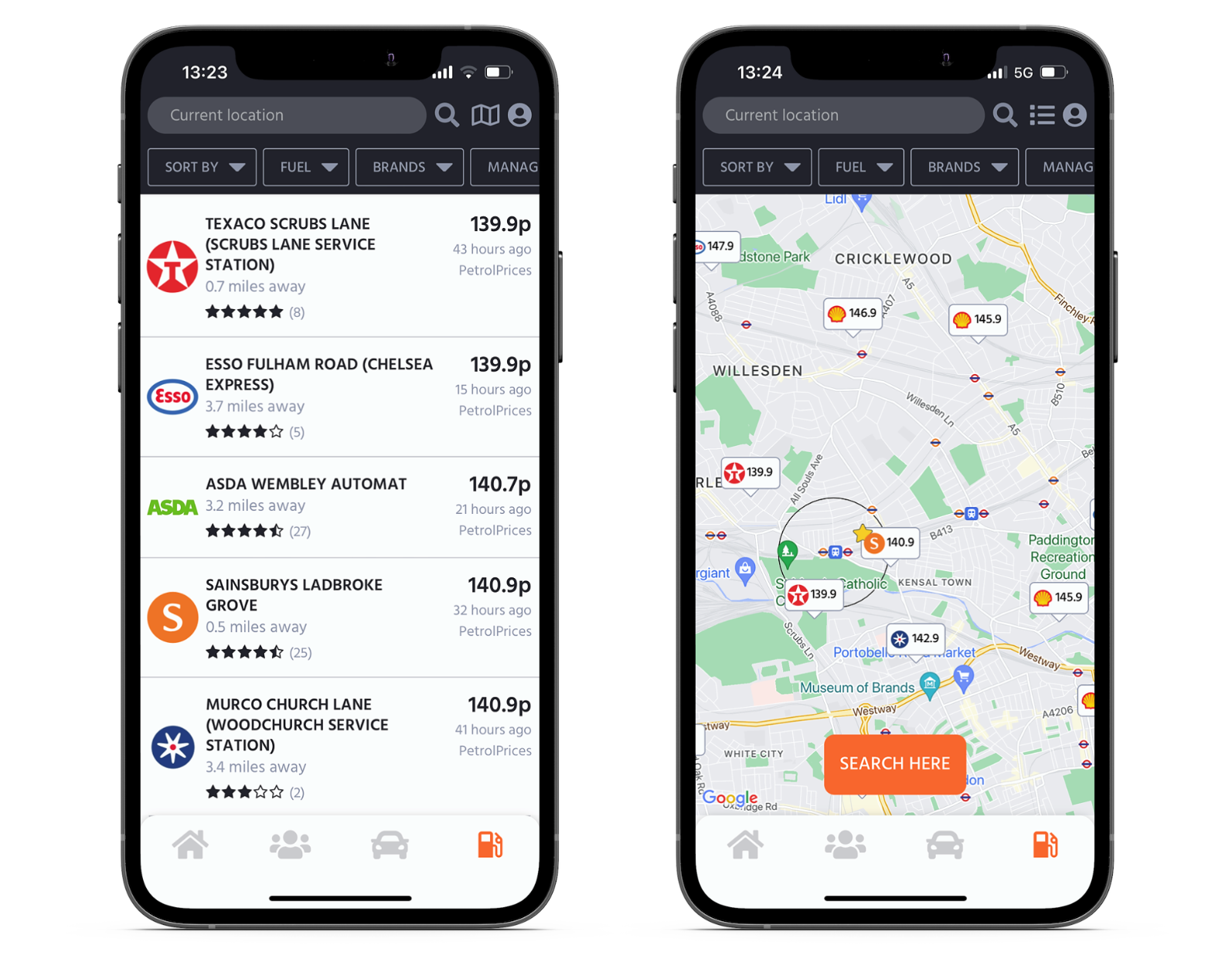
Want to use a certain brand of fuel? No problem, filter by brand or fuel type. Need fuel in a hurry? Sort by distance instead of price. If you always make the same search you can even save your filters.


As seen in

As seen in

How much cash could you save a year?
£205
Unleaded Drivers
£240
Diesel Drivers
Savings are based on a consumer buying 1,000 litres a year. Cost-saving statistics are calculated on common, average price spreads in UK urban areas.
Ready to save money on your diesel and unleaded bills.
Download PetrolPrices from The App Store or Google Play. Simply search PetrolPrices or click here and we’ll take you straight there.
For the best experience create an account by simply providing your email address. Don’t want to sign up? No problem you can use some features as a a guest.
Start searching! Simply type in a location or postcode to get started. Move between the list or map view depending on how you want to see results.
Read the latest from the motoring industry

BBC Panorama Highlights Further Smart Motorway Safety Concerns
BBC Panorama has discovered that the technology behind England's smart motorway network regularly stops working. In a recent TV episode, Panorama detailed information that showed hundreds of incidents when crucial safety equipment was out of action.What is a Smart...

Pump prices rise 4 pence in a month
If you have been to a petrol station recently, you may have noticed prices have been increasing once again. Crude oil, from which unleaded and diesel are refined, had been increasing in price from mid to late March and has continued this trend into April. Brent Crude...
UK Fuel Prices: 6th March 2024
Last week, the average UK price of unleaded petrol reached just over £1.45 for the first time since 6th December 2023. This is a 3.4% increase from a month ago. The year-to-date low point was in the middle of January when prices dipped below the £1.39 mark but have...
The best fuel prices near you.
Easily find the best fuel prices in your area with our Location Finder.
No matter where you are, access local fuel prices and plan your refuelling wisely. Find locations with our Petrol and Diesel Prices Checker.
App Map
Our Fuel Map offers the most comprehensive fuel price tracking available in the UK.
Find the lowest prices quickly and conveniently. Explore our Fuel Prices Map.
Supermarket Fuel Brands
Supermarket petrol stations can offer great value and convenience. Shop around to get the best fuel price.
Tesco
Earn more with every mile at Tesco petrol stations. Stay updated with the latest petrol and diesel prices – and earn Clubcard points. See Tesco Fuel Prices and make the most of your petrol purchases.
Sainsbury’s
Fill up at Sainsbury’s – and we’ll help you find the best prices. Discover the latest offers at Sainsbury’s petrol stations near you. Visit Sainsbury’s Fuel Page for cost-effective fuelling options.
Costco
Costco members enjoy exclusive fuel savings. Get updated petrol and diesel prices, make your membership count. Check Costco Fuel Prices for member-only benefits.
Fuel Brands
The leading petrol retailers are known for their advanced fuel options, but prices vary. We will help you get the most out of every tank.
Esso
Esso’s advanced fuels are engineered for efficiency. Find the nearest Esso station and today’s fuel prices. Check out Esso Fuel Prices.
Shell
Drive further with Shell’s innovative fuel solutions. Locate Shell stations and view up-to-date fuel pricing. Here are your Shell Fuel Prices.
BP
Keep up with today’s most competitive prices – Visit BP Fuel Prices.
Texaco
Find the best price for Texaco fuel with our fuel price checker. Texaco Fuel Prices.
© Copyright 2023 Automate App Limited, 8th Floor South, Reading Bridge House, George Street, Reading, RG1 8LS