Over 60 motorists banned from our roads each day as drug-driving convictions almost quadruple

Over 60 motorists banned from our roads each day as drug-driving convictions almost quadruple

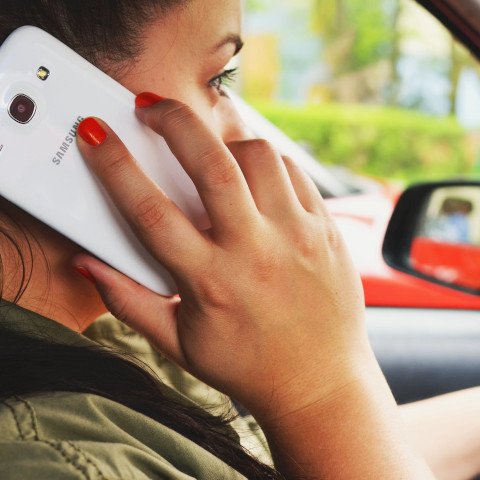
A former road safety minister says drug driving is now a ‘hidden epidemic’, with courts convicting almost 20,000 people for driving under the influence of drugs in 2018 alone—around four times as many as earlier years.

The appalling new information from the Driver and Vehicle Licensing Agency (DVLA), shows that, between January 2018 and March 2019, 19,615 motorists lost their licences—that’s equal to 60 every working day or 302 every working week.

A sorry figure

The latest DVLA figures released under the Freedom of Information Act show police nabbed over 200 17-year-olds who had just passed their driving tests and over 40 children aged 15 and 16—all behind the wheel with drugs in their system.

Six people lost their licences after causing death while driving while intoxicated with substances that included cannabis and cocaine.

Some of those whose offences resulted in the death (of at least one other) received a four-year driving ban as punishment and while DVLA data doesn’t show if courts handed out custodial sentences, few offenders go to prison.

Drivers in their late twenties are the most serious offenders. Age 25 is when most people get disqualified because of driving while intoxicated with drugs.

The middle-aged and elderly didn’t have clean records, either. Courts prosecuted 78 motorists over the age of 60 for failing drugs tests. The eldest to lose their licence was a 74-year-old woman.

Figures show that men offend the most, with 18,175 prosecutions, compared with 1,440 women.

The figures include those prosecuted for driving or being in charge of a vehicle when unfit, driving or attempting to drive with a drug level above the specified limit, and causing death by careless driving.

Driving under the influence of drugs became a recognised criminal offence in 2015. In the 12 months following the law change, a police survey showed that when officers from 26 forces stopped motorists on suspicion of taking drugs and carried out 5,857 roadside drug tests, 3,718 tested positive.

‘Google it’

Campaigners say police miss many other drugged lawbreakers because officers stop and test fewer motorists at the roadside since the number of road policing officers fell by a third in the last 10 years.

David Jamieson, who was once a Transport Minister with responsibility for road safety, now West Midlands Police and Crime Commissioner, said:

‘These figures are staggering. The reality is drug driving is a hidden epidemic. A lot of people think they can get away with it because so few police are on the roads and the likelihood of being stopped is really low. What we need is tougher enforcement.’

In August 2018, after smoking cannabis, an 18-year-old smashed his police officer parents’ £35,000 Audi into pedestrians Jason Imi and John Shackley, causing their instant deaths.

Max Coopey, who passed his driving test only two months before the incident, was over the limit for the class B drug cannabis and, although he denied taking it, tests also found codeine in his system.

Courts spared the teenager prison at his trial in January this year and charged him with drug driving rather than death by dangerous or careless driving, which carries a prison sentence of up to 14 years. They ordered him to pay £105 costs, and he received a meagre 100 hours of community service and a 24-month driving ban. Thames Valley Police didn’t consult the Crown Prosecution Service.

Despite having 3.3 micrograms (µg) in his blood when the legal limit is 2µg, Mr Coopey claimed the cannabis hadn’t affected him.

Speaking at his victims’ inquest in July, Coopey said:

‘Just because something is in your blood doesn’t mean you’re under the influence. Google it.’

A spokesman for road safety charity Brake said:

‘These shocking figures reveal just how prevalent drug driving is on our roads. It is vital that both the law and our enforcement ability is effective in catching, punishing and deterring this dangerous behaviour.

‘The Government must prioritise the type-approval of roadside screening devices that can detect all banned drugs and step up roads policing levels to deter offending.

‘We also need to see the law used to its fullest extent with tougher penalties handed out, making clear that drug driving will not be tolerated.’

The weed of crime bears bitter fruit

In England and Wales, it’s illegal to drive if either you’re unfit to do so because you’re under the influence of drugs (illegal or legal) or your blood has certain levels of illegal drugs, even if they haven’t affected your driving.

If the police suspect you’re under the influence of drugs, they can stop you and make you do a ‘field impairment assessment’ (a series of tests, such as asking you to walk in a straight line) or use a roadside drug test to look for cannabis and cocaine.

If they think you’re unfit to drive, they’ll arrest you, take you to a police station, and ask for a blood or urine sample for testing. The police can charge you if your sample tests positive for drugs.

As with drink-driving, if you’re convicted of driving under the influence of drugs, you could get a driving ban of at least 12 months. You also risk receiving an unlimited fine and even up to six months in prison.

A conviction for drug driving will mean a significant increase in the cost of your car insurance, that you have trouble travelling to countries like the United States, and if you drive for work, your employer will know of the conviction on your licence.

You can usually consider a criminal record for a motoring conviction as ‘spent’ after five years but drug driving information stays on your DVLA driving record and driving licence for up to 11 years.

The law differs in Northern Ireland and Scotland introduced a new drug driving law last week.

If you take legal drugs (whether prescription or over-the-counter) and aren’t sure whether you’re safe to drive, talk to your doctor, a healthcare professional, or a pharmacist.

How do you feel about the current drug driving law? What could further reduce driving while under the influence of drugs? Has a police officer ever pulled you over to test you for drugs? Why do you think drug driving is on the increase? Tell us in the comments.

SUVs responsible for 700 megatonnes of CO2 emissions

SUVs responsible for 700 megatonnes of CO2 emissions

Lies, damned lies, and statistics.

Those five words aren’t to disparage the research relating to global CO2 emissions, but merely to point out that statistics can tell any story you want, providing you ask the right questions, or the right people.

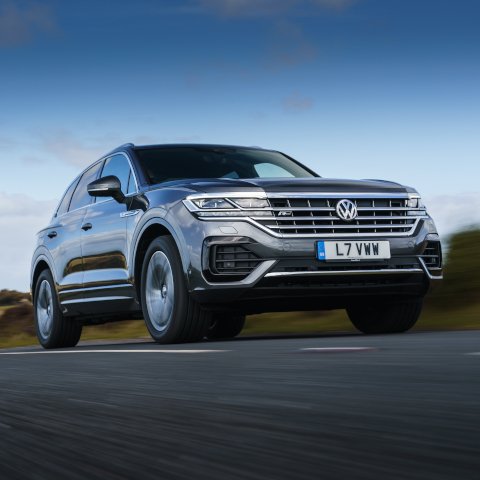
‘If all the world’s SUV drivers were a country, it would be the 7th largest producer of CO2 emissions’ is a reasonable headline, I’m not arguing the veracity of it, but perhaps add in the fact that by their very nature, it must mean that they’re one of the largest contributors to funding alternative transportation through taxing, both direct and indirect.

Or that the study only relates to carbon emissions from fuel combustion at point of use – nothing from the manufacturing processes (that includes aviation, shipping and other forms of transportation).

Second biggest cause of rising carbon

With some commentators using this report as an ideal vehicle to urge a ban on all SUVs and 4x4s, it’s important to clarify that despite the headlines, you can’t just make the decision to outlaw these vehicles based on such a report.

The fact that the global share of the SUV market has almost doubled to 39% of all car sales between 2010 – 2018 shows that manufacturers are making a product that the world wants to buy, even bucking the trend of declining car sales of around 2% in 2018; if the market wasn’t there, the manufacturers would stop making them.

Further, the same study shows that the average mass of a vehicle has risen by around ten percent since 2000, which ‘shows the trend for larger vehicles’, but says nothing of all the technology fitted by the manufacturers to improve emissions or safety, as regulations require.

From 2004, average vehicle CO2 emissions have fallen by around 23%, and fuel economy has risen by 29%, the equivalent of 5.6mpg. In the intervening years, fuel economy and CO2 emissions have improved in 11 out of 13 years (to 2016) and new records are constantly being set. Despite piling on the weight, their footprint has never been lighter.

Also, the report claims that CO2 emissions from SUVs alone is higher than shipping and aviation – 700 megatonnes for SUVs, 233 Mt for aviation, and yet some quick research shows that the UK alone produced around 80 Mt of CO2 in 2018, not including any other country.

New car sales

Of course, the fact that they’re the least efficient models typically on sale doesn’t help, but the real problem isn’t so much how much gas they guzzle, but the popularity of them – nearly 40% of all new car sales worldwide in 2018 were SUVs, or nearly 35 million vehicles all told. In Europe and the UK, one-in-three cars sold is an SUV, in America, that figure is closer to one-in-two.

Perhaps part of the responsibility of the popularity could be placed at the doors of the politicians and environmentalists who insist that modern cars should be super-efficient – small, 3-cylinder engines, lightweight body panels, minimal structural reinforcement (replaced with the crash cell), smaller wheels … all in a bid to raise the Corporate Average Fuel Economy (CAFE) across the range of models offered by the big brands.

In all honesty, until we’re all driving the same electric vehicle, with our other article this week, charging only from sustainable power sources, there will always be one element of the motoring society that’s going to be victimised, penalised or hard done by.

We’ve discussed how the government needs to change the way they tax our usage of our cars, and even when we’re finally all-electric, the motorist won’t escape further taxes – just as we now pay VED, fuel duty, congestion or ULEZ, you can almost guarantee that a new element will be introduced, such as rubber pollution from our tyres, or air pollution from brake dust.

The good news is that once we’ve hit ‘Motoring 2.0’, at least we should (in theory) be treated equally; no more exemptions for the wealthy motorist who can afford the latest in technology, or penalising the poor for having the audacity to run a car that’s a few years old, and in that case, purely paying per mile of usage would be fair, and right.

What do you think to this latest report? Is it just another cheap shot at a specific group of motorists? Perhaps an early warning of impending taxation? Let us know in the comments.  

Going green – the new number plates for electric cars

Going green – the new number plates for electric cars

Depending on what part of the country you live, commute or travel to, you may be aware that purchasing a Battery Electric Vehicle (BEV) comes with a few perks; cheap or reduced rate parking, perhaps the option to use bus lanes, maybe congestion-zone or ULEZ charge free amongst others.

Some of these benefits are common sense – ULEZ for example is a tax designed specifically for vehicles that pollute, or that don’t pollute, depending on your viewpoint. But parking a BEV takes as much space as a ‘dirty’ car, and as for running in bus lanes … isn’t that akin to a class system for motoring?

The wealthy get to whizz through the traffic using lanes that are prohibited, while the paupers that insist on hanging on to their older internal combustion have to wait in line because clearly their business or commute isn’t as important.

£1.5 billion scheme

The Government are now looking at how to make that difference more noticeable, and their solution is to add green coloured number plates into the mix.

The scheme is part of a £1.5 billion drive to raise awareness of electric vehicles, and we’re told that along with the green number plates, it will offer numerous other benefits including free or reduced parking, and perhaps the right to travel in bus lanes.

Except … don’t a number of cities already offer that for electric vehicles? Just without the green plates.

It’s admirable that Grant Shapps wants to incentivise buyers of Battery Electric Vehicles, but reducing the grant to help with the purchase of a new EV is just the opposite, as is changing the criteria for getting help to fit a charging system at home.

So what the Transport Secretary is really saying, is “We want to incentivise you to buy green, but in such a way that the incentives are meaningless, and don’t cost us anything; we’re giving you a gimmick.”

Positives and negatives of electric power

To be clear, I’m not anti-electric vehicles, or pro-fossil fuels. I genuinely think we’re witnessing tremendous breakthroughs, the likes of which haven’t really been seen since Karl Benz first strapped an engine to vehicle, but I’m anti gimmicks, especially those that cost us, as motorists, even more in tax.

£1.5 billion to promote “Green number plates are a really positive and exciting way to help everyone recognise the increasing number of electric vehicles on our roads” (Grant Shapps) or “The number of clean vehicles on our roads is increasing but we don’t notice as it’s difficult to tell clean vehicles apart from more polluting ones.”

“Green number plates make these vehicles, and our decision to drive in a more environmentally friendly way, more visible on our roads.” (Elisabeth Costa, senior director at the Behavioural Insights Team).

This is quite literally the UK government beating their chest, ticking some boxes and shouting that they’re doing all they can to promote green travel, whereas the reality is nothing more than a number plate design change.

Campaigners against

While making glib comments about a motoring class system is all well and good, truthfully, there are real concerns from road campaigners that it could ‘foster resentment’ from owners of traditional ICE (Internal Combustion Engine) powered cars, particularly those than aren’t in the position to afford a switch to electric.

Nicholas Lyes, head of roads policy at the RAC had this to say: “While the sentiment seems right, there are question marks as to whether drivers would see this as a badge of honour or alternatively it could foster resentment among existing drivers of petrol and diesel vehicles.”

“On the face of it, drivers we’ve questioned don’t seem too impressed – only a fifth think it’s a good idea and the majority said the number plates wouldn’t have the effect of making them any more likely to switch to an electric vehicle.”

The future

Without any doubt, electric vehicles are the future of transportation, and the technology involved gets more cost-efficient with each new model rolled off the production line, but more needs to be done to help those that aren’t financially able to swap.

It’s all very well offering a meagre scrappage scheme to help buyers, but targeting the most needy with two or three thousand pounds is absolutely pointless, it’s just another gimmick that can be trotted out to satisfy the box-tickers – “Yes, we’re doing everything within our power to help people convert to green”. (“The fact that they aren’t converting to green is no concern of ours … we offered them money and everything”).

Are green number plates a gimmick? Should the govt. save the money and actually offer some useful help? Or are they doing the right thing? Let us know in the comments.

Shell create ecosystem of reward driven, sustainable energy solutions

Shell create ecosystem of reward driven, sustainable energy solutions

Over the last 12 months the retailer that has undergone the most dramatic change is undoubtedly Shell. In that time-frame it has found a new purpose beyond oil, that is greener and delivers far more value than buying fuel alone. We examine the recent journey that Shell has undertaken which provides a revealing insight into the direction that petrol retailers are likely to take as they see future challenges to their core business model of selling fossil fuels.

Shell Go+

At the heart of the change is their new loyalty programme Shell Go +, which launched with a fanfare in March this year with a 10% saving on hot drinks, the Jamie Oliver food range, car wash and lubricants. The real selling point of this reward programme is the simplicity and clarity of Shell Go +.  It is a primarily digital scheme which  makes it really attractive to many users, testified by the fact that in such a short space of time over 1 million drivers in the UK are now members of Shell Go +.
Each time you visit and spend more than £2 in the shop or £10 on fuel you earn a visit and on the 10th occasion there is a fuel discount. You can also earn a £3 discount off Shell V-Power fuel when you have bought 300 Litres; which for the average vehicle equates to 4-5 fill ups..

Shell Energy

But it is what it’s now offering since then that has really grabbed our attention. It started with the acquisition of household energy supplier First Utility, re-branded as Shell Energy.  Shell Energy’s household customers earn a 3% discount on fuels at Shell stations as a Shell Go + member, but there is more. All the electricity sold is 100% renewable, its also based on fixed tariffs that are clear and simple to understand, plus some tariffs come with the award winning Nest smart thermostat allowing you to adjust your heating via smartphone app anywhere in the world and get better control over energy use.

Shell Energy also provides fast and reliable broadband to British homes and energy customers enjoy extra discounts on full fibre broadband that makes it highly price competitive when compared to BT or Virgin Media.

Carbon Neutral Driving

From October 17, 2019 Shell customers in the United Kingdom with a Shell Go+ account can choose to ‘drive carbon neutral’ through the use of carbon offsetting.

This is possible at no extra cost to customers: any fuel purchase made through the Shell Go+ rewards scheme will automatically be offset by Shell on behalf of the customer using nature-based solutions.  So what does this mean? Well, when you drive an internal combustion engine car, your vehicle produces carbon emissions. For Shell Go+ customers, Shell will buy a carbon credit to offset, or compensate, for these emissions. One credit represents the avoidance or removal of 1 tonne of carbon from the atmosphere and these credits are sold to Shell by carefully chosen nature-based projects – such as forest developments or grassland preservation projects – that capture and store carbon from the atmosphere.

Its only when you see the role Shell Go+ , Shell Energy and NewMotion do at once does it become clear what way Shell is going and its an extremely bold, but admirable undertaking. The approach is powered by rewards for those who participate in moving towards a sustainable energy future, not by imposing penalties for using carbon emitting products. There is something to be said for using the carrot rather than stick approach, it was this that helped Norway to convert almost 50% of all driver into EV vehicles within 10 years.

Shell Energy Collective Deal

Using the power of the Energy Club, PetrolPrices has negotiated an exclusive deal with major supplier Shell Energy. This duel fuel energy tariff is lower in cost per month than what you would pay if you bought it from Shell Energy direct.

Here are details of the winning tariff and how to get it is go via the Energy Club HERE.  At the top of the search results page you will see the Shell Energy deal and APPLY button.

Shell Energy - Dual Fuel (Monthly Direct Debit)

  • £980 per year at medium usage
  • Exclusive not available direct with Shell Energy
  • Paperless billing and Paper billing available
  • Fixed for 12 months
  • 100% renewable electricity – Green
  • Available to new and existing customers
Lock in super cheap gas and electricity for 12 months and save up to £452*. Remember, all major suppliers have increased prices this year, so why not check that you’re not overpaying on your bills? It takes 5 mins to complete the form but could save you hundreds a year in energy costs.

* 10% of customers switching their gas and electricity suppliers with energyhelpline (and their partners) between 1st Jan 2018 and 30th June 2019 saved £452 or more.

Smart motorway accidents on the rise due to ‘reckless driving’

Smart motorway accidents on the rise due to ‘reckless driving’

Britain’s roads are among the safest in the world, and crashes on smart motorways are the fault of the person behind the wheel, according to Jim O’Sullivan, chief exec of Highways England.

Just a few weeks ago, we came to the same conclusion; a common theme from your comments was that ‘Smart Motorway = Dumb Driver’, but is it as simple as that? Transport Secretary, Grant Shapps has requested a full investigation into the ‘true safety record’ of smart motorways, with the cynical viewpoint of no doubt finding in favour of them.

Nearly 500 miles

As of April this year, there were 488 miles of smart roadways, with a plan of extending that figure to around 800 miles by 2025. Highways England are keen to point out that there were 77 deaths on traditional motorways in 2018, with just nine on smart roads. The inference being that smart roads really aren’t that dangerous.

With this in mind, Mr O’Sullivan has rejected the calls to put a hold on the extension plans, and to add more emergency lay-bys as he feels that would do very little to improve safety on the smart roadways. Edmund King, president of the AA has a different point of view: “It’s ludicrous to suggest that having more lay-bys won’t improve safety … if drivers have more places to pull off the motorway, that’s going to make the whole thing a lot safer.”

Good reason to stop

King’s assessment is somewhat backed up by O’Sullivan’s own admission that many of the accidents are  caused as a result of motorists stopping inappropriately, such as to check directions or swap phone numbers after a minor bump; surely if there were more refuge areas, drivers wouldn’t take the risk of stopping in a live lane?

Bringing out the argument of a money grab or stealth tax is quite easy, perhaps expected, but the reality is that these motorways are much more cost-efficient to build, and of course allow for an easier monitoring system, which in turn boils down to revenue, than traditional motorways, and even the most pro supporter needs to acknowledge that argument.

Best estimates put traditional motorway building or widening at the cost of around £30m per mile, while a Parliamentary report states that the M42 smart scheme was implemented at a cost of just £9m per mile, and in the days where budget is at least as important as ‘safety’, you can clearly see why it’s the favoured method of adding capacity.

Added to that is the £41m revenue generated from fining drivers for lane infringements or speeding, and smart motorways seem like manna from heaven for the government.

Less driving

As a nation, we’re driving less miles than we’ve ever done; the average car mileage is 17% less than it was in 2002, and it’s thought that a large part of this is due to the nature of driving on our roads – motoring is no longer an enjoyable pastime, it’s not a leisure activity as it once was, and we rarely choose to just ‘head out for a drive’ on a sunny Sunday.

Perhaps it’s the overcrowding on the roads, the lack of courtesy and respect, poor lane discipline or the constant fear of being targeted through the use of non-discretionary cameras, but driving in the UK is on a downward spiral, and that could be the saving grace of the smart motorway.

If, as a nation, we’re turning to our cars for purely perfunctory reasons, only using them as needed rather than as wanted, volume of traffic will be lessened, and there may not be the need to squeeze every last bit of road space from our network.

Of course it could be argued that while we may be driving less, the volume of traffic could still increase thanks to the population increasing, but as autonomous vehicles become common place, their ability to manage traffic interaction and avoid collisions could be key to removing the dangerous element of smart motorways – the human.

Smart charging

It could also be argued that smart motorways are just another minor step towards charging motorists per mile; much of the infrastructure needed is already in place, and with a few tweaks to the software, instead of capturing registrations for rule breaking, it would be just as easy to issue a bill for using the motorway.

Technology has an ever-increasing presence on our roads – noise cameras, ‘safety’ cameras, traffic monitoring, speed limiting … surely we’re getting closer to the day where all vehicles are the same, never travelling above the speed limit, with whisper quiet running? Homogeneous motoring is upon us.

Should smart roads dictate our lives? Will there come a day (in the not too distant future) where we’ll all be driving the same ‘vehicle’? Let us know in the comments.

Photo © Copyright Robin Webster and licensed for reuse under this Creative Commons Licence.

Box junctions: Making roads safer or a covert money-maker?

Box junctions: Making roads safer or a covert money-maker?

Most people view yellow box junctions as a revenue generator, and with figures such as £16m in revenue being quoted, it would be hard to disagree.

Or how about the near £3m revenue from a single junction in Fulham? Or the £130 fine for 123,071 motorists caught in London just last year?

If you don’t live in London, or Cardiff (the only other authority that currently has the power to fine for these infringements), then it’s doubtful that you’ll have given it much thought, but I can guarantee you, that’s about to change.

All councils

A recent announcement by the Transport Secretary, Grant Shapps, has made it clear that he’s ready to issue all councils the right to implement and charge for moving traffic violations, previously the remit of the police. Essentially, this is all about those yellow box junctions.

After the Commons transport committee stated that the police were ‘too thinly stretched to enforce everyday traffic violations’, Shapps has placed the responsibility of these minor infringements in the hands of local councils, and will be allowing them to keep any monies ‘earned’ from them.

Road improvements

It would be nice to think that all local councils have an understanding of where their traffic hotspots are, and make improvements to aid the flow of traffic, thereby negating any possible need for box junctions, but cynical as I am, I can’t help feeling that there will only be enough budget to place a previously unseen / unneeded box junction in place of other traffic improvement measures. The fact that they can now make money from them of course won’t influence their decision.

Nicholas Lyes of the RAC thinks that there may be a conflict of interest: “Local authorities know where congestion might require some form of enforcement, particularly in the case of box junctions, so it stands to reason they should be able to improve this through the use of enforcement.”

“However, we remain concerned that cash-strapped authorities may see this as an opportunity to extract more revenue from drivers.”

It’s worth noting that a report by the National Audit Office in 2018 stated that local authorities have had a 49.1% real-terms reduction in government funding between 2010/11 to 2017/18. Northampton County Council have been effectively declared bankrupt, and Norfolk, Surrey, and Lancashire County Councils aren’t too far behind them.

Northampton council have been given special dispensation to raise their council tax by 5% this year.

Between 2017/18, Transport for London collected up to £16 million in fines from drivers who fell foul of a yellow box junction, but nearly 80% of respondents to an RAC poll said that it was purely down to poorly structured traffic management; being forced to stop in the box junction due to poor sequencing of traffic lights beyond the box itself.

Discourteous driving

Box junctions were first introduced back in 1967, so impatient drivers aren’t a new phenomenon, but it does seem that as traffic volume builds, driving standards are falling. With the increase of ‘surveillance’ technology, the crime of ‘failing to supply information as to identity of driver when required’ has skyrocketed – from just 12,056 convictions in 2006 to 82,029 in 2016.

This is clearly an indication as to the proliferation of monitoring devices, and with technology advancing at such a rate, this soon will be outdated and unneeded; the car will automatically monitor and send data where needed, and as we’ve seen, adjust your speed accordingly.

But as with all technology, there will be downsides: Just the same as speed or safety cameras, there will be no discretion, no allowance for external influencing factors, and no escaping the penalty notice. To a degree, these box junction cameras are already at that point – blaming poor road design, or in-built blockages that seem almost designed to stop you in your tracks is no excuse, you will get fined for any indiscretion, minor or otherwise.

Scale of charges

A number of campaigners are suggesting that a warning notice would be an appropriate response for the first-time offender, perhaps with a sliding scale of charges – repeat offenders that are blatantly trying to cheat the system should face severe penalties.

However, if councils invest money from their ‘spend to save’ budgets, you can guarantee that they’ll want to see those savings immediately, so it’s unlikely that we’ll see a softly-softly approach when it comes to revenue generation. The full force of the law will be applied, with no doubt a lengthy, tenuous, and drawn-out appeals process.

Will we see a rise in box junctions with this new legislation? Do you think it will be aimed at creating a solution for traffic congestion? Or just a simple, quick and dirty way of making money? Let us know in the comments.

Photo © Copyright David Dixon and licensed for reuse under this Creative Commons Licence.

AA reports supermarket fuel price war offering “pennies off” scam to boost sales

AA reports supermarket fuel price war offering “pennies off” scam to boost sales

On Thursday, caused by Asda’s decision to lower petrol by two pence per litre (ppl) and diesel by 3ppl, competing supermarkets were quick to announce they would match the reductions.

Call me cynical, but I don’t believe these rival grocery store giants when they declared that their reason for reducing the cost of fuel came from them trying to make driving less expensive for their patrons and the AA agrees.

In the AA report

In a recent report, the motoring organisation says supermarkets design these often termed fuel price ‘wars’ to increase sales and called them ‘shams’ for bolstering sales.

The AA adds that not only do these often insignificant markdowns seldom last long (less so when the retailers feel the reduced prices affecting their returns), they don’t always offer much of a saving to motorists.

Using new figures from the government’s Department for Business, Energy & Industrial Strategy (BEIS), the AA states that while retail volumes for petrol dropped by 1.1% between April and June 2019, sales at supermarket forecourts increased by 4.4%. The average sale of diesel decreased by 1.9% but fell just 0.5% at supermarket pumps. The AA’s report suggests that’s because motorists are ‘clinging to the hope that the superstores will be their saviours’ from steep fuel costs.

In the earlier fuel price war of Friday the 13th of last month, supermarkets announced they would reduce petrol by up to 3ppl. This followed the $8 fall in the cost of a barrel of oil, which lowered retailers’ wholesale costs. The following day saw drone strikes on the Kingdom of Saudi Arabia, ending in burning oil fields.

By the Sunday, the proposed 3ppl cut only averaged 0.5ppl off petrol and the inevitable hike in the cost of oil pushed up filling-station prices by the Thursday, resulting in not even a whole week of lower petrol prices for motorists.

In the first week of October last year, profit margins for retailers averaged 7.2ppl, with a 7.8ppl profit 12 months earlier. The AA calculated an average 9.5ppl retailers’ profit margins for last week and their Fuel Price Report recorded average forecourt prices stayed between 127.8-129.2ppl for 17 weeks. This implies that while the attractive price war stories grab our attention, what many of us don’t notice are the days after where pump costs begin a steady increase.

Petrol comparison by brand (14/10/19) This month (pence per litre) Last month (ppl) Price change (ppl)
Asda 123.59 123.09 0.50
BP 130.45 130.42 0.03
Esso 128.39 123.57 -0.18
Jet 127.49 127.90 -0.41
Morrisons 125.08 124.08 1.00
Murco 129.28 130.35 -1.07
Sainsbury’s 124.89 124.13 0.76
Shell 130.1 129.96 0.14
Tesco 124.27 123.85  0.42
Texaco 128.17 128.25  -0.08
UK average 127.58 127.77  -0.19
Diesel comparison by brand (14/10/19) This month (pence per litre) Last month (ppl) Price change (ppl)
Asda 127.39 126.14 1.25
BP 134.47 133.93 0.54
Esso 132.6 132.07 0.53
Jet 131.48 131.13 0.35
Morrisons 129.26 128.22 1.04
Murco 132.8 132.43  0.37
Sainsbury’s 128.73 128.01 0.72
Shell 134.45 132.96 1.49
Tesco 128.44 128.25 0.19
Texaco 131.94 131.43 0.51
UK average 131.55 131.26 0.29

No competition

The variation in the average cost of petrol and diesel between supermarket retailers looks closer than it is on the ground in many communities across the UK, according to the AA. In fact, their data shows that just on Tuesday—along the M4 Berkshire/Hampshire corridor—prices differed by as much as 5ppl.

Likewise, in Scotland; a Tesco forecourt in Stirling was charging 3ppl more for petrol than the Tesco forecourt in a town less than a 20-minute drive away.

The AA report said that ‘when uncompetitive superstores allow neighbouring oil company-branded sites to charge more (and often the same price as towns with no supermarket presence at all), customers and communities lose out significantly.’

Luke Bosdet, the AA’s fuel price spokesman, said:

‘When you drive out into the country, through small market towns without supermarket fuel, and see pump prices little different from those in towns with a supermarket forecourt, you know something is broken with road fuel pricing in the UK.

‘A neighbouring supermarket will then charge the same or a penny less a litre and claim to be value for money—even though it’s getting £2 or so more per tank of fuel than at other locations.

‘The sad thing is that customers seem to be buying it, as official statistics confirm.’

Asda has a nationwide price cap and, in locations with Asda forecourts, the AA found petrol and diesel was cheaper. For example, in Basingstoke and Newbury, who don’t have an Asda, other supermarkets charged a lot more for fuel than in Reading, which has an Asda. Morrisons prices were 3.2ppl more, while Sainsbury’s and Tesco charged over 4ppl more than the price at Asda.

Speaking to This is Money, an Asda spokesperson said:

‘When we cut fuel prices, we always announce what our national price cap is, meaning drivers know exactly the maximum amount they are paying regardless of where they live.

‘No other retailer does this, meaning they are free to charge as much as they like when they have no competition close by such as an Asda. This is what the AA are referring to . . . .’

The spokesperson added:

‘On the rare occasion when a lower price is available within a local area, our aim is to match that price locally so customers can rest assured they’re always getting the best value when filling up their tanks with Asda.’:

Driving down prices

Helping you to save money is the aim of PetrolPrices.com and, while we can’t control the price of petrol and diesel (alas), we can help you find where the cheapest retailers are in your location, so join over 2.1 million UK motorists who already take advantage of our free fuel comparison service.

The common, average price-spreads by town show member savings of £225.94 per year for petrol car owners (£495 saving on super unleaded) and £158.25 each year for our diesel drivers (£289.29 saving on premium diesel).

Sign up to our PetrolPrices.com money-saving community using your email address to search for the cheapest or nearest forecourts by searching by postcode, town, or city—you can also filter by individual brands and fuel types.

Need fuel prices while on the road? No problem! Download our FREE mobile app and take us along with you. Earn points by reporting fuel prices and give feedback on local petrol stations to help others decide which station is best for them. There’s much more to discover when you become part of the community whose aim is to change the industry for the better!

Do you benefit during fuel ‘price wars’? Have you noticed pump prices soon creeping back up to normal? Do these supermarket fuel discounts encourage you to shop in-store? Or do you avoid supermarket branded fuel altogether? Tell us in the comments.

Forget VED, we could soon be paying per mile

Forget VED, we could soon be paying per mile

Between Vehicle Excise Duty (VED) and fuel duty, the Treasury typically pockets around £40bn each year, a not insubstantial amount of money, but as the push for greener vehicles gets into its stride, there will very clearly be a hole in that revenue, and it’s one that will need plugging.

The two important questions are: Where will that shortfall come from? And will there be an overlap between VED and whatever new plan is put in place?

Per mile charging

The Chair of the Transport Committee, Lilian Greenwood, has proposed that a national debate take place to discuss the issue, claiming that a debate would be “An opportunity to discuss the nation’s use of road space, cutting carbon emissions, tackling congestion and how we should prioritise active travel.”

“Tackling the climate emergency is essential, but this is about more than what we must do to meet that challenge, it’s also about our health, and the sort of towns and cities we want to live in.”

A cynic may say that with such focus on health, air pollution and congestion, rather than encouraging or incentivising other forms of transport or motive power, it’s pretty much guaranteed that “this isn’t about pricing drivers off the road” will pretty much exactly equate to that.

Paying more?

Research by the RAC has shown that 75% of motorists are worried that any change in how we pay for the roads will result in them paying more, and with sales of new Battery Electric Vehicles rising by 122% in the first nine months of 2019 (despite there being an overall 2.5% downturn in new car sales), we can clearly see that the government will need to implement a new pricing strategy sooner rather than later.

It’s long been argued that whatever form of taxation (such as the current VED) is added to the price of fuel; motorists who use the roads, will pay for the roads, but it’s quite possible that adding a surcharge to fuel will price hundreds of thousands of families off the road, and that still wouldn’t be a solution to the whole electricity debate.

Further still, it’s not quite as simple as adding tariffs to our domestic energy supply either – what of those motorists that haven’t been able to afford, or want, to make that switch over to ‘green’ motoring? It’s pretty clear that there must be some overlap between the systems.

Previous attempts

Back in 2005, an attempt was made to introduce, or at least, discuss, a new way to charge to motorists for using the roads. The idea being that small cars on small or uncongested roads would pay less than large cars using large or congested roads.

The examples used at the time were £0.02 per mile on uncongested roads, and as much as £1.34 where traffic was a problem. Each car would be fitted with satellite technology, which could track and calculate charges as the car was driven.

Unsurprisingly, 1.8 million motorists (around 6% of all drivers at the time) signed a petition against the scheme in 2007, and it was duly dropped. Fears of extra stealth surveillance and taxation were the main concerns.

Modern day

Worryingly, we’ve become so used to in-car technology, and the interference with our driving, that it will soon be mandatory to allow it to limit our speed, which of course means tracking our movements. As Lilian Greenwood points out – we’re much more aware of issues such as climate change, pollution and congestion now. So could this be part of the next attempt to monitor driving and apply charges?

There has been talk of ‘charge neutral’ and ‘congestion neutral’ pricing, but reading between the lines of the earlier statement by Greenwood, it would seem that congestion and air pollution are two of the hottest topics to be covered, so it’s doubtful that congestion neutral pricing will happen.

Given that any pricing structure would need to cover congestion, air pollution, emissions, road usage & maintenance, fuel duty and electric charging, it would seem doubtful that we’d be looking at the lower end of per mile charging.

National debate

The Transport Committee have proposed a national debate take place in 2020, in which these issues can be discussed, and put forward to the public for their input: “This isn’t about pricing drivers off the road, it’s about making sure that as many people as possible have a say in future plans so that we can manage the changes to come. The Transport Committee want to kickstart that conversation.”

Rarely have charges been introduced that favour the motorist, we often hear about stealth taxes and how it’s the motorist that’s being made to make up any shortfalls of revenue, we’d suspect this won’t be much different.

How should the government tackle this problem? What would be a fair pricing scheme? Do you think it could price some families off the road? Let us know in the comments.

Drivers continue to risk lives with mobile phone use

Drivers continue to risk lives with mobile phone use

We all witness poor driving every time we use the roads, whether we’re also driving, are on foot, or on our bikes. My kitchen window overlooks a bit of a rat-run and I lose track of the number of drivers passing by clutching mobile phones—particularly delivery drivers—and if new data is anything to go by, I’m not alone in what I see.

In 2017, after a spike in deaths caused by motorists driving while using mobile phones, the government introduced strict new laws regarding mobile phone use behind the wheel. Yet despite the harsher penalties, the RAC’s recent Annual Report on Motoring shows mobile phone offences remain the top concern of motorists.

Driven to distraction

Campaigners for road safety and MPs say record levels of road congestion and a lack of traffic police is the reason around 10million drivers continue to reach for their mobiles—to relieve the boredom of sitting in traffic.

According to the motoring organisation’s annual report, 23% of motorists confessed to still making or receiving calls on a hand-held phone while driving. The figure shot up to 51% of drivers between 17 and 24 years of age. Thirty-five per cent of the same under 25-year-olds age group said they checked email, social media, and text messages while driving. That percentage alone is terrifying, but even more so when you learn that this selfish and unnecessary move can up the chances of an accident by up to 24 times. In drivers over 25 years old, the figure was a lower, yet still worrying, 17%.

Government advice is that we should keep our mobile phones in our car’s glove compartment, but the RAC’s survey of 1,753 motorists discovered that only 15% are heeding this warning—25% say they keep their phones on the seat or the dashboard, instead, and 24% admitted to leaving their mobiles on audible, increasing the chance of distraction.

To compound matters, the number of Traffic Officers in England and Wales dropped from 3,766 in 2007 to 2,643 in 2017—that’s almost 30% over just a decade. In contrast, data from the Department for Transport reports that traffic congestion in Britain increased by 6.5% in the past ten years.

Not much cop

Lilian Greenwood MP, Chair of the Transport Committee, said:

‘In 2017, there were 773 casualties—including 43 fatalities and 135 serious injuries—in road traffic collisions where a driver using a mobile phone was a contributory factor.

‘Every one of these casualties could have been avoided if drivers had been paying attention to driving and not their phone.’

Tim Rogers, the lead on roads policing for the Police Federation of England and Wales, said:

‘Often they’re doing it in traffic, but inattention at any speed is lethal. These people will say they rarely see police on the roads, that they’ve never been stopped by police, so they perceive no risk in doing it.’

‘There’s also a problem with chief constables who cut dedicated traffic officers then claim “all our officers are traffic cops”.

‘Why do we accept it is OK for six people a day to die on our roads? It’s certainly not acceptable. We need more traffic police to reduce the number of causalities [sic] on our roads.’

The RAC says that the first thing the police need to do is catch mobile phone offenders in the act, but they also want both the government and the police should look into cars having the technology that can enforce the law against using hand-held devices while operating vehicles.

Look, Ma, no hands!

To stay within the law while driving or riding a motorcycle you must have hands-free access to your mobile (although MPs are proposing a ban on all hands-free devices in cars) or sat-nav and use a Bluetooth headset, voice command, a dashboard holder or mat, a windscreen mount, or a built-in sat-nav and the same applies whether you’re stopped at traffic lights, sitting in traffic, or are supervising a learner driver.

Unless circumstances dictate otherwise (like your job), the best bet is to keep your phone in your glove compartment, on silent. It’ll be near enough to you in an emergency. Research also shows you’re a better driver when driving in silence but if that bores you to the point of phone temptation, maybe consider the radio or an audiobook—or perhaps listen to Led Zeppelin?

Any device you use mustn’t block your view of the road ahead and you must stay in full control of your vehicle at all times. If the police stop you because they think you’re distracted or not in control, you could face prosecution.

While police numbers are down, in 12 months of ‘Operation Tramline’ alone, officers across the country in three so-called ‘supercabs’ caught and recorded motorists committing 1,062 offences of using hand-held devices while driving.

And, yes, modern life is busy but nothing on our phones is worth incurring penalty points, a fine, a prison sentence, or losing your licence. Even less so if it means risking your life.

Do you agree with the RAC’s findings? Have you noticed fewer police cars on the roads? Tell us your thoughts in the comment section.

Electric cars: The most frugal motoring?

Electric cars: The most frugal motoring?

Last week, we told you that the government were looking to bring forward the ban on the sale of new fossil fuelled cars (as the single, motive power source), from 2040 to 2035, in a bid to show their green credentials.

The Transport Secretary stated: “We must go further to protect our environment and improve our competitive edge. If we’re to become the world-leader in green technology, we must always be looking to expand our ambitions. The Government’s advisory committee on climate change has said that 2035 is the date to aim for”.

That’s all well and good, but as many of you pointed out in the comments, there are significant financial implications.

1/3 cheaper to run

There seems to be a lot of misinformation when it comes to costs associated with going green, least of all a clear understanding of what it actually costs to run an all-electric vehicle; when averaged out per charge, how much will a single mile cost you?

To be clear, this isn’t about purchase price, maintenance cost, battery leasing & purchasing, but just mile for mile cost of energy – electricity versus unleaded and diesel if you will.

None of us would be surprised to hear that electricity miles are cheaper than fossil-fuelled miles, but being able to put it in to context does give us a little more insight and understanding.

The most frugal electric vehicles (the KIA e-Niro and Renault Zoe) offer a range of 33.1 miles to one pound (£1), the best diesel (Honda Civic Saloon 1.6i DTEC and the Ford Focus 1.5 EcoBlue) aren’t even close; 10.8 miles for each pound (£1) of ‘energy’.

Make up to an £11,740 difference

It could be argued that the price differential between the KIA e-Niro (£32,995) and the Honda Civic (£21,255) would buy you an awful lot of miles – nearly 128,000, but what of the Renault Zoe? The list price of the Zoe is actually less than the Civic, only by £35, but that’s not important; it isn’t just getting close to traditional ICE vehicles, it’s beating them. (And that’s before we look at any assistance to buy).

However, taking the Zoe as an example, you hire the batteries, and the bigger than annual mileage, the bigger the financial charge; with annual mileage of 10,500, you’d be paying £99 per month for the hire of the battery – nearly £1,200 on top of the purchase price.

Further still, the obvious comparison between the practicality, styling or just plain old ‘want’ of the vehicles isn’t to be underestimated. The Zoe is a small hatchback, ideally suited to town driving and loading up with shopping, whereas the Civic has more space, more range, looks smarter (although of course, that’s subjective) and is made by Honda, which means it should outlast the cockroaches that see off a nuclear holocaust.

Cheap motoring

For a long time, people have complained that electric vehicles don’t have enough range, are too expensive to purchase, not as practical, won’t fit their need because they can’t tow the Moon behind them – there’s always been a reason (usually financial) as to why they just don’t work (for them).

But today, the electric vehicle market has evolved into something that’s closer in price, with some models beating traditional ICE vehicle prices, a viable alternative for many motorists with range anxiety, and they offer all the performance that’s realistically usable on our road network.

Without doubt, there will be some motorists that an electric vehicle won’t suit, or isn’t yet a viable alternative, and even for those it does work for, you can’t help feeling that even now, there’s a compromise to be made if you choose electricity over internal combustion.

But let’s not forget, mainstream battery-electric vehicles have only really been in production for around ten years, and within that timeframe, battery prices have dropped to around a tenth of what they were, ranges have doubled, even tripled, performance has gone up, charging times have come down, and the breadth of the compromise is narrowing with each day that passes.

As a performance car engineer, I really never thought I’d see the day where electricity could take on fossil fuel in a straight fight and win, and while we’re still not quite there yet, you can guarantee that within this next decade, fossil fuel will be outdated and outclassed.

Perhaps the time is coming where the only drawback to owning an electric vehicle will be the tariffs imposed on us for charging them, and using the roads – much the same for fossil fuels now.

What do you think to electric vehicles? If price wasn’t a consideration, would you own one? Are they practical enough right now? Let us know in the comments.