Government to bring banning of fossil fuel new car sales forward to 2035

Government to bring banning of fossil fuel new car sales forward to 2035

When it was announced that the UK would be banning the sale of new cars using only internal combustion from 2040, there was only really one main reaction; outrage from motorists, and outrage from the environmentalists because 2040 was ‘unambitious’.

Scotland are (independently) looking at 2032 for the cut-off, Sweden, the Netherlands, Ireland and Denmark are set to introduce the ban in 2030, and Norway has set the date at 2025, a full 15 years before us. So when Transport Secretary Grant Shapps announced that he’d be looking to “thoroughly explore the case for bringing it forward five years”, no one was all that surprised.

It’s worth mentioning that the announcement was made at the Conservative Party conference, with no doubt an element of rabble-rousing included.

Subsidies are go(ing)

Despite all the rhetoric, just last month, Shapps admitted in an interview that the £3,500 subsidy toward buying an electric vehicle (the Plug-in Car Grant) is in danger of being stopped a little sooner than we’d like, and this means that it’s likely that the help to install a charge system will also go.

With that said, it has been announced that the government are looking to invest £400m in the public charging networks, of which £70m will fund the installation of 3,000 rapid chargers over the next five years. One could only guess at the financial model attached to it.

Shapps: “We must go further to protect our environment and improve our competitive edge. If we’re to become the world-leader in green technology, we must always be looking to expand our ambitions. The Government’s advisory committee on climate change has said that 2035 is the date to aim for”.

“Just as we rejuvenated our automotive sector in the 1980s, we’re going to work with our pioneering car sector to help them sell the next generation of vehicles around the world”.

Mike Hawes, chief executive of the Society of Motor Manufacturers and Traders (SMMT) isn’t quite as convinced as the crowd at the party conference, suggesting that the government needs to do more to incentivise people to make the switch, if they want to encourage drivers to swap over sooner.

“The car industry is committed to zero-emission transport for all, however, low and zero-emission vehicles still only make up a fraction of the market, underscoring the huge challenge of fast-tracking a shift to zero-emission transport; ambition must be matched by measures that support the industry, allowing manufacturers time to invest, innovate and sell competitively”.

“This includes long-term government commitment to incentives and investment in infrastructure to accelerate the uptake of these new technologies”.

Six electric vehicles

Back in July, we reported that the Green Alliance stated that it could only take six electric vehicles charging in the same location to cause a ‘brownout’ on the national grid, unless immediate action is taken to improve the network, a fact that seems to be missing from Shapps’ speech to the conference.

And therein lies the problem with all the chest-beating toward changing the driving habits and motive power source for all transportation; the car industry could possibly swap over much earlier, but could the infrastructure of the United Kingdom cope with the change?

It’s all very well taxing internal combustion cars to within an inch of their life, in a bid to ‘promote green transport’, but the reality is that according to sources and specialised groups such as the Green Alliance, the switch over to ‘green’ may not be dictated by the willingness of manufacturers or even the buying consumers to adopt green transport, but by the limitations set in place by outdated infrastructure.

Electric vehicles are now a viable alternative (albeit expensive) for a great many of motorists, and if you’ve made the switch to an all-electric vehicle, and it works for you, that’s great. But for the hundreds of thousands of drivers that have no viable access to a charging network, or need a range above average, or just can’t stretch to the budget needed to purchase one, then what’s next?

Of course it’s easy to point out that even at 2035, that’s still a decade and a half away, plenty of time to manage the infrastructure, but environmental groups are telling the government that significant changes need to be made by 2020, and that’s simply not happening, certainly not at scale.

We genuinely believe that electricity will revolutionise the transport world, but only when everything is in place for that to happen correctly, until then, the government should at least take some of the responsibility from the motorist and stop penalising them so harshly for driving fossil fuelled vehicles.

Should the government take some responsibility? Do you believe that electrically powered vehicles will be the saviour of motoring? Let us know in the comments.


Keyless thefts on the rise: how to protect your vehicle

Keyless thefts on the rise: how to protect your vehicle

Car crime, car theft, keyless theft; all on the increase according to a number of sources, including the Office for National Statistics, LV=General Insurance, and Tracker, a specialised car security company.

It’s easy to throw simple numbers around – the ONS (Office for National Statistics) tells us that just until March this year, there were 114,656 incidents of ‘theft or unauthorised taking of a motor vehicle’, that 8% more cars have been stolen in the last year, or that there has been over 800,000 instances of criminal damage to cars.

But while that gives a very broad overview, it doesn’t really impact. Tracker have some further insight; in 2018, around 88% of stolen vehicles fitted with one of their devices were stolen without the use of keys, up from 80% in 2017, and again from the 60% in 2016.

LV=General Insurance said that its claims data suggests a direct link between car thefts, and the rise of technology, in particular, smart devices.

Simple theft

A keyless entry or keyless start system seems like a great idea when you’re approaching your car with hands full, or when your key is buried at the bottom of a bag, or even when it’s just tucked in your pocket and your juggling a hundred different things. Certainly it will never revolutionise the world, but it does make it that little bit easier.

Unfortunately, not only does it make your life easier, but also the criminal’s looking to relieve you of your car. And truth be told, it’s simple for them to do so, with some off-the-shelf technology that can be bought for just a few pounds – this doesn’t require a contact book full of criminal masterminds, nor the investment of a large budget.

Technology

The reason why keyless theft is so popular, and so easy, is simple – there’s no need to enter the home of the keyholder, which lessens the charge should they be caught, and there’s minimal risk involved, aside from being close enough to the house to try and pick up the electronic signal from the key. It really is that easy.

Once the signal is located, it’s a matter of relaying the signal to the car and gaining entry or making off. Less than a minute, no aggravation, nothing physical, and no danger to the householder (unless they catch the criminal in the act). In most cases, the owner of the car won’t know anything about it until it’s too late.

Don’t be a statistic

Preventing car theft is always difficult, even more so if you’ve been targeted by a professional gang, but there are some simple steps that you can take, to help you becoming just another crime statistic.

Faraday bags

A Faraday bag is a soft pouch that blocks any signals from the keyfob itself, which means the thieves won’t be able to track the signal and relay it to the car, no matter where the fob is located in the house.


<iframe style="width:120px;height:240px;" marginwidth="0" marginheight="0" scrolling="no" frameborder="0" src="//ws-eu.amazon-adsystem.com/widgets/q?ServiceVersion=20070822&OneJS=1&Operation=GetAdHtml&MarketPlace=GB&source=ac&ref=tf_til&ad_type=product_link&tracking_id=petrolprcom09-21&marketplace=amazon®ion=GB&placement=B076KZF645&asins=B076KZF645&linkId=52413c91c79637327145a2f0e2325c8c&show_border=true&link_opens_in_new_window=false&price_color=333333&title_color=4781ff&bg_color=ffffff"><!-- [et_pb_line_break_holder] --> </iframe>
<iframe style="width:120px;height:240px;" marginwidth="0" marginheight="0" scrolling="no" frameborder="0" src="//ws-eu.amazon-adsystem.com/widgets/q?ServiceVersion=20070822&OneJS=1&Operation=GetAdHtml&MarketPlace=GB&source=ac&ref=tf_til&ad_type=product_link&tracking_id=petrolprcom09-21&marketplace=amazon®ion=GB&placement=B07KXG6JHM&asins=B07KXG6JHM&linkId=4167f39f3e0994315c07360766fe8019&show_border=true&link_opens_in_new_window=false&price_color=333333&title_color=4781ff&bg_color=ffffff"><!-- [et_pb_line_break_holder] --> </iframe>
<iframe style="width:120px;height:240px;" marginwidth="0" marginheight="0" scrolling="no" frameborder="0" src="//ws-eu.amazon-adsystem.com/widgets/q?ServiceVersion=20070822&OneJS=1&Operation=GetAdHtml&MarketPlace=GB&source=ac&ref=tf_til&ad_type=product_link&tracking_id=petrolprcom09-21&marketplace=amazon®ion=GB&placement=B07989XNTT&asins=B07989XNTT&linkId=ec948bf0eb2c863e7d7aded48a667761&show_border=true&link_opens_in_new_window=false&price_color=333333&title_color=4781ff&bg_color=ffffff"><!-- [et_pb_line_break_holder] --> </iframe>
<iframe style="width:120px;height:240px;" marginwidth="0" marginheight="0" scrolling="no" frameborder="0" src="//ws-eu.amazon-adsystem.com/widgets/q?ServiceVersion=20070822&OneJS=1&Operation=GetAdHtml&MarketPlace=GB&source=ac&ref=tf_til&ad_type=product_link&tracking_id=petrolprcom09-21&marketplace=amazon®ion=GB&placement=B07DQKQQBB&asins=B07DQKQQBB&linkId=c895c179fc83bee8c78951433f18b840&show_border=true&link_opens_in_new_window=false&price_color=333333&title_color=4781ff&bg_color=ffffff"><!-- [et_pb_line_break_holder] --> </iframe>

Safe spot

Failing that, or while you wait on delivery of your Faraday bag, you should try and locate a safe spot for your fob, as far away from doors and windows as possible, the idea being to make it as difficult as possible for the thieves to locate the signal.

Car security

In the event that a thief does manage to gain entry to your vehicle, all is not lost; the use of steering wheels locks does tend to deter all but the most determined thieves, and in many cases, the visual deterrent alone is enough to send them elsewhere.

Traditional security

While it’s unlikely that an opportunistic car thief armed with a relay device is looking to break into your home, investing in some traditional security will help to prevent them should they take that route, and of course, give you some peace of mind.

We’ve teamed up with the leading security experts at ERA to offer you an unrivalled discount on a wide range of products, from plug-in alarms through to HD security cameras.

The discount codes are included on the website, remember to put them in at the checkout!

Deterrent

While you wouldn’t necessarily wish ill-fortune on your neighbours, the simplest course of action is to make your car look less desirable than another, or more trouble; the choice between getting through a steering lock and physical immobiliser, all the while being lit up like it’s daytime or finding another car is usually more than enough to make a thief think twice.

You’ll never stop professional thieves if they’re determined to have your car, but you can make life difficult for them, and hopefully your neighbour doesn’t feel the same.

Should more be done by the car industry to stop car thieves? Have you had a car stolen? How did the insurance claim go? Let us know in the comments.
BMW and Audi drivers are most disliked on the road in UK

BMW and Audi drivers are most disliked on the road in UK

“Why are BMW drivers not required to indicate?” or even “Why are BMW drivers jerks?”* are just two shocking Google searches that are (apparently) commonly associated with the marque when it comes to online searches.

New research has revealed that BMW drivers have the worst reputation amongst UK motorists, with 82% of survey respondents stating that they disliked BMW drivers, 80% said that they expected BMW drivers to be aggressive behind the wheel, and rather randomly, 34% of those questioned also stated that they wouldn’t even consider dating a BMW owner.

And as we’ve already seen, the research reveals more than just the statistical answers to their questions, with the extra insight into search engine requests. Fascinating.

Arrogant Audi

We reported last year that upmarket Audis seem to top the list of recognised speeders, and surprisingly, they’re only third on the list of disliked drivers, with just 50% of respondents disliking them, although 71% said they felt that Audi drivers would be fast drivers.

“Why are Audi drivers so arrogant?” and “Why are Audi drivers so bad?” are two of the popular searches related to the marque, and 14% of those questioned would never go on a date with an Audi driver.

Of course, for the main part, this research is purely subjective; it’s about the perceived perception of different brands, although in the case of the speeding Audis, statistical evidence does back that perception, to a degree.

Toyotas are friendly

If you’re on the lookout for another car, and genuinely pay heed to research such as this, then your choice of vehicle should be Toyota – just 10% of the survey group said they disliked Toyotas, although 60% said that there was an issue with them driving too slowly, and if you’re single the news is good; 85% said they would date someone that owned a Toyota.

Popular Google search? “Why are Toyota drivers so slow?”.

Other brands came out favourably also – Volvo in particular did pretty well in the poll, with 80% claiming that Volvo drivers were safe behind the wheel (although if you’d have asked a motorcyclist, that figure would have probably been much less, rightly or wrongly).

Light-hearted fun

On the face of it, there doesn’t seem to be much in the way of useful information, as already stated, for the main part it’s subjective (although the Google searches do hold a level of accuracy), and knowing whether you’re likely to score a date or not due to your car choice is hardly the stuff of Jane Austen or Lord Byron.

We should also consider that for the brands listed (including BMW, Audi, Ford, Nissan, Toyota, Subaru, Volkswagen and Volvo), there is always going to be an element of distaste toward them; they’re all popular car brands, that sell many units every year (Volkswagen sold just under 40,000 vehicles in the single month of March in 2019).

Just by the very nature of the amount sold, you’re going to encompass a vast selection of drivers and driving styles, and it’s highly likely that a percentage of those drivers are going to be … less inclined toward societal benefit.

Autofill

It seems that potentially, the Google search enquiry information was nothing more than using Google autofill, you can try that yourself – head to Google and type in “Why are XXX drivers (use your favoured, or least favoured marque)” and wait for Google to return the most popular searches in the search bar.

This just lends credence to the fact that the research was aimed more as a light-hearted view into the mind of the UK motorist, rather than anything with scientific or relevant merit.

The reality is that we’re lucky to have the different choices of vehicles and marques; it’s possible to choose from a wide range of cars that can offer us everything from the ability to crawl through a rain forest, to transporting the largest of families, or even just heading out for a sunny Sunday drive when we feel like it.

Of course there will always be an element of being tarred with the same brush (I’m as guilty as the next man for doing that), but that doesn’t matter – why limit your vehicle choice because of what others may think of it? It seems to me that many of the respondents are accounting for the ‘flash’ factor when giving their answer, and honestly … if you’re a petrolhead that’s fallen in love with a specific model or brand, a few naysayers won’t put you off.

* ‘Jerk’ is very much an American colloquialism, so perhaps the problem is wider than anticipated.

What do you think of the study? Do you think it’s accurate? Are BMW drivers the scourge of the UK road network, or is this hype? Let us know in the comments.

Image adjusted with BMW logo and thumbs-down icon superimposed onto foreground © Copyright Jaggery and licensed for reuse under this Creative Commons Licence.

Drivers spend 63 hours commuting to work each year

Drivers spend 63 hours commuting to work each year

A new survey, carried out by Privilege Car Insurance, has been looking into driving habits, behaviours and timings, and while the headline of “We spend nearly two years in our car” is a stretch (we’d have to be driving for nearly 61 years), there are some fascinating figures revealed.

Typically, the average time spent in our cars per year is 293 hours, although if you live in Plymouth, that figure rises to around 416 hours, or just over 17 straight days, Brighton drivers spend the least amount of time driving – 232 hours.

Perhaps the most shocking insight is that 33% of drivers said that time alone in their car offers them some much welcomed respite from their children. (Although if you’re a parent, maybe that statistic isn’t such shocking news).

The 63-hour commute

However, look a little deeper at some of the figures and you’d have to question the veracity of them; we typically spend 63 hours commuting each year, which works out to just under an hour and a quarter weekly, or less than fifteen minutes each day (assuming a 5-day working week, there and back). Does that sound right?

With that said, if the figures for the average commute are to be believed, it is possible that it’s a reflection on modern life, and the technology that now allows us to work digitally, or remotely; why spend an hour each day commuting to work when all you need is an internet connection, laptop and a decent cup of something warm? Personally speaking, I haven’t commuted to a single place of work for over ten years.

For many of us, the car can be seen as our own private sanctuary, which is perhaps why 67% of drivers confess to singing as loudly as they can while driving, or spending nearly three and a half weeks swearing or shouting. Perhaps that’s partly down to spending five weeks searching for a parking spot?

And when it comes to driving companions, nearly half of the respondents said their partner was their favourite person to have in the car, but if you’re a dad, there’s sad news – just 5% preferred to have their dad in the car with them while driving.

Naming your car

If you believe that your car has its own personality, there’s a chance that you’ve given him or her, a name – 4.7 million drivers in the UK do. The most popular choices are Poppy, Dolly and … The Beast.

To an extent, a car’s name could be dictated by the registration number, but cherished registrations are seemingly gaining in popularity – in 2017, we spent £111 million on private plates. I recently attended a Ferrari press day at Silverstone circuit, out of the 100+ privately owned cars there, around five of them had a regular registration number.

Top ten activities

According to Privilege, then ten biggest drains on our time when driving are:

  1. Commuting to work – 63 hours every year
  2. Driving to meet friends and family – 35 hours per year
  3. Getting to the supermarket – 33 hours
  4. Driving for household errands – 32 hours per year
  5. Heading to shopping centres – 24 hours each year
  6. Driving friends and family around – 21 hours
  7. Taking kids to ‘activities’ – 14 hours per year
  8. Taking kids to social events – 13 hours
  9. Heading to the gym or keep-fit classes – 12 hours a year
  10. The dreaded school run – 11 hours a year

Of course there are other, more random drains – we spend 8.4 hours a year programming satellite-navigation systems, and nearly nine hours (8.7) each year getting lost.

It’s clear that cars & transportation are playing an increasingly important part of our lives, and while we may complain that driving is becoming more of a chore rather than a pleasurable pastime, there’s still 59% of British drivers that believe driving offers a great opportunity for some thinking time, and just over half of us (52%) are thankful for a break from the pervasive nature of the mobile phone.

Charlotte Fielding, head of Privilege Car Insurance, said: “This research has shown what a significant amount of our lives is being spent in our cars – who knew how much time we spent driving to work, or simply going to and from the supermarket for example?

“Whether getting from ‘A to B’ or enjoying our own space and time, there’s no doubt we spend a considerable amount of time in our cars.

“It is, therefore, important that we take care of ourselves and other road users by driving safely and remembering to consider everyone else on the roads.”

Are these statistics surprising? Do you think that the commuting time is much longer? Are you one of the 67% that confesses to singing as loudly as they can? Let us know in the comments.

Three million vehicles taken off road as 1 in 3 cars fail new MOT rules

Three million vehicles taken off road as 1 in 3 cars fail new MOT rules

On the 20th of May 2018, stricter MOT rules came into force, with over 31 million vehicles undergoing the more thorough test over the following twelve months.

Data from the Driver and Vehicle Standards Agency (DVSA) shows that, in the first year of the new MOT’s existence, over a third of cars, vans, and motorcycles failed. Almost three million of these had ‘dangerous’ defects that resulted in repairs and a retest—or removal from the road. PetrolPrices.com looks at the most common reasons for the MOT failures.

Tried and tested

In the United Kingdom, vehicles registered for use on the road must pass an ‘MOT’ (named after the Department for Transport’s predecessor, the Ministry of Transport) test—an annual mechanical and emissions inspection, with the first test due three years after the vehicle manufacture date.

Under the new DVSA rules, the MOT tester must classify any faults found during MOT tests as either ‘minor’, ‘major’ (which should receive immediate repair), or ‘dangerous’. With a dangerous fault, you shouldn’t drive the vehicle until carrying out the repairs.

The new MOT includes an emissions inspection, which involves looking for smoke (of any colour) coming from the exhaust, for evidence of Diesel Particulate Filter (DPF) tampering, and sometimes a roadside emission check.

The government body’s records show that almost 1.2 million vehicles failed the emissions tests in the first 12 months of the new-style MOT. If a vehicle fails any of these checks, the MOT tester assigns it a major fault. Yet DVSA findings show a significant improvement in our air quality after either removing the failed vehicles from the road or by garages repairing the faults.

Since May 2018, the MOT includes looking for signs of obvious tyre underinflation, brake fluid contamination, fluid leaks posing an environmental risk, missing brake pads or discs, and checking your brake pad warning lights.

The test also now looks at reversing lights on vehicles first used from the 1st of September 2009, headlight washers on vehicles first used from the 1st of September 2009 (if fitted with them), and daytime running lights on vehicles first used from the 1st of March 2018 (most of the latter will have their first MOT in 2021 when they’re three years old).

The DVSA shared the 10 most common reasons class 3&4 cars and vans failed MOTs between the 20th May 2018 and 19th May 2019:

Top 10 reasons for MOT failure (by percentage)

  1. Lamps, reflectors, and electrical equipment:14.9%
  2. Suspension:18.3%
  3. Brakes: 8.8%
  4. Tyres: 6.8%
  5. Visibility: 6.1%
  6. Body, chassis, structure: 4.7%
  7. Noise, emissions, leaks: 3.9%
  8. Steering: 2.2%
  9. Seat belts: 1.5%
  10. Identification of the vehicle: 0.5%

Cars, vans, and passenger vehicles with up to 12 seats (Class 3 and 4) saw a 66.7% pass rate, private passenger vehicles with over 12 seats (Class 5) a 70.3% pass rate, and vehicles between two and 35 tonnes (Class 7) received just a 40% pass rate. Motorcycles had the highest pass rates with an impressive 83%.

On the danger list

Neil Barlow, Head of MOT Policy and MOT Service Manager at DVSA, said:

‘If a car has failed its MOT with a dangerous fault, DVSA’s advice is that it should not be driven until the defect is repaired. This is because it’s dangerous to both the driver and other road users.

‘Garages are unable to prevent owners from driving their cars away. But they will provide advice to the owner on what they should do to keep the car safe.’

Barlow added: ‘DVSA’s priority is helping everyone keep their vehicle safe to drive.

‘Thanks to the MOT, three million dangerous vehicles have been taken off the road.

‘But with a quarter of cars turning up late for MOT every year, that means there are lots of potentially dangerous vehicles badly in need of inspection.

A valid MOT certificate only confirms a vehicle has met the minimum standard of roadworthiness at the moment of completing and passing the test.

A recent Halfords Autocentres study of 2,000 drivers found 47% of respondents considered a vehicle passing an MOT as not needing any more checks for another year and, for 42%, the MOT was their vehicle’s only annual check.

Aaron Edwards, Category Manager at Halfords Autocentre, said:

‘An MOT is only a certificate to say the car is safe to drive the moment it has been tested, so it is concerning that so many motorists treat it as a service.

‘It is not a guarantee that the car is in good running order six months down the line, and it is vital that motorists carry out regular checks as well as an annual service.’

Driving down risk

You’re liable for a £1,000 fine for driving without a valid MOT and the only time you can drive without one is if you’re driving to a pre-booked test, via a direct route, and to your nearest approved test centre.

Although no law states a maximum distance, you could get a fine or a Notice of Intended Prosecution (NIP) for exceeding a ‘reasonable and acceptable’ distance, driving to the garage.

Driving a vehicle in a dangerous condition with defective tyres, brakes, or lights, for example, may mean getting penalty points and a fine of up to £2,500—even if you’ve booked your MOT, so if you think your vehicle is unsafe and not roadworthy, consider transporting to the garage using a trailer.

Thirty per cent of MOT faults relate to lighting and signalling, tyre condition and pressure account for 10%, and 8.5% of fails relate to the ‘driver’s view of the road’, so avoid the common MOT fails by paying attention to your vehicle’s lightbulbs, tyres, mirrors, washers, and wipers.

If you want to avoid forgetting when your vehicle is due for its MOT, add your vehicle to your garage on the PetrolPrices service (in the mobile app or in your account on the website), ‘help to keep Britain’s roads safe’.

Has your car failed the new MOT? What did it fail? Do you welcome the new test? Tell us in the comment section.

Rise in fatal motorway accidents shows that smart motorways need work

Rise in fatal motorway accidents shows that smart motorways need work

Official data from the Department for Transport shows that fatal accidents on motorways increased by 19.4% in 2018, with 107 deaths from 92 fatal collisions. Isn’t it time that the government admitted to putting finances before lives?

Highways England, the company responsible for the countries motorway network (owned by the government) are adamant that smart motorways aren’t the risk that they’re perceived to be, although a recent report stated that breaking down on an all-lane running motorway during off-peak hours is 216% more dangerous than a traditional motorway.

With that said, it’s known that 24 vehicles (on average) per week are involved in some sort of collision on a traditional hard shoulder, so that may not be the answer either.

Smart motorways

We recently reported that many drivers are too scared to use the hard shoulder on a smart motorway, and having read through your comments, it seems as though there’s a common theme: smart motorway, dumb driver.

It could be argued that it isn’t the technology at fault, but that of the organic lump behind the wheel of the vehicle; if drivers were better educated, more courteous or respectful, understood the simple physics of car accidents and how to avoid them, then perhaps a smart motorway may work?

That’s all very well, but what happens in the event of a breakdown? Or any unforeseen circumstance? Making your way to a safety refuge isn’t always possible, and if you happen to find yourself stuck in the middle of a lane, it can take anything up to 20 minutes for the live lane to be closed, and even then, there’s rarely a physical barrier closing the lane, just a big red X on an overhead gantry, which is easily ignored.

While Highways England claim that a smart motorway is just as safe as a conventional motorway, Jack Cousens, head of roads policy for the AA, said: “The fact fatal incidents on British motorways rose by almost a fifth last year is depressingly tragic. We need to design and build the safest roads in the world, not ones ‘just as safe’ as their predecessors.

“Drivers feel uneasy on all lane running schemes, so much so that two thirds (66%) are only prepared to drive up to half a mile in search of an Emergency Refuge Area, before stopping in a live lane should they have a puncture.

“It seems that as more collisions occur where vulnerable vehicles are hit in live lanes, the more the public seems to distrust the concept of smart motorways.”

More than revenue generation

Of course, the simplest argument for smart motorways is financial, both in terms of cost to build and revenue that can be generated automatically for any infringement of the law, but there is a valid argument, albeit quite minor:

A smart motorway can be an excellent way to improve traffic flow and volume on stretches of motorways that would have previously been impossible to improve, either through geographic restrictions, or prohibitive costs. But as for the rest of the arguments? Even Highways England have admitted that the safety records are a worry – “the numbers (of fatalities) are very concerning, more needs to be done to improve the safety”.

Having smart motorways is all well and good when we have smart drivers using them, but that’s not the world we live in, and as such, we should look to tackle the problems that conventional motorways bring about, and really only resort to using the all-lane running motorways where absolutely necessary, rather than as a cheap alternative to traditional road construction.

We’ve seen this before; when councils introduced 20mph blanket speed limits in residential areas in the name of safety, only to be proven that they in fact increased the danger, they wouldn’t (couldn’t?) spend the money to revert them back to 30mph zones. Financial gain before safety, regardless of political alignment.

Public service announcements

Going back a few decades, we’d often see Public Service Announcements in the form of short adverts on the television, perhaps the most memorable being “Only a fool breaks the two second rule”. Maybe we need a return of those PSAs, advising motorists both old and new on the correct procedures of how to drive on modern motorways?

Or should we all just sit back and wait for full-autonomy to arrive, with connected cars ‘talking’ to each other, and avoiding all possible risks and accidents?

What do you think of smart motorways? Do they have any benefit? Or is it simply a way of generating revenue, while saving infrastructure costs? Let us know in the comments.

Toxic areas in London could knock a fifth off house prices

Toxic areas in London could knock a fifth off house prices

Scientists have disclosed their findings on the most and least polluted streets in London and their study shows that people—including some who live in the most sought after areas—are breathing in unsafe amounts of nitrogen dioxide (NO₂), a toxic gas from vehicle exhausts, factories, and power plant emissions that experts say causes more deaths and health problems than smoking.

A new air quality website has made the NO₂, levels public, provoking worry that the information will damage house prices in several of the capital’s most exclusive postcodes.

Winds of change

Last week, scientists from Kings College London (KCL) released the results of their research on the dangerous levels of NO₂, after collecting postcode-level data.

With 37 cities repeatedly recording illegal levels of NO₂, the United Kingdom’s air quality record is bad and, in London, over two million people live in areas where air pollution levels are above the legal limit.

There is no healthy level of NO₂.

As recommended by the World Health Organisation (WHO), European law limits NO₂ in the air to an hourly average of 40 micrograms per cubic metre (μg per m³)—or any regular spikes in extreme levels of NO₂—and any measurement above 40μg per m³ gets a ‘significant pollution’ rating.

The Central Office of Public Interest (COPI) is a non-profit campaign organisation that has created www.addresspollution.org—an air quality rating website using KCL-sourced data. For each address, the website gives an air pollution rating of one to five, with ‘five’ showing the air pollution is at least 50% above the legal limit.

Affluent Chelsea and Westminster are areas with air pollution above 80μg per m³. This level of toxicity leads to a 33% increased risk of disease-related mortality. Southwark was the worst postcode area with a nitrogen dioxide measurement of over 102μg per m³. It’s in these boroughs where the COPI is targeting homebuyers with billboards that read: ‘These houses cost an arm, leg, and lung’ and ‘Location, Location, Lung Disease’.

COPI are advising homebuyers and renters demand discounts of up to 20% to live in the areas with the worst air quality—which could cut property prices across the capital may drop by up to £256,000 in Chelsea, £146,000 in Islington, and £66,000 in Tower Hamlets.

A study showed 76% of the London’s residents say that discounts should apply to properties available to buy or rent in neighbourhoods where the air quality violates the legal limit and where they’re at greater risk of experiencing related health issues.

‘”Air pollution is killing people across the country, and London is worst hit—but people don’t believe it will affect them personally”

Humphrey Milles, Location Manager, Producer, and Founder of the Central Office for Public Interest, said:

“Air pollution is killing people across the country, and London is worst hit—but people don’t believe it will affect them personally.”

“‘The Air Quality Rating is a tool to change these perceptions and shows just how real, and dangerous, air pollution is across the capital, including in some of the wealthiest neighbourhoods.”

Those fashionable addresses include Notting Hill, Regent’s Park, and The Mall where, if you don’t find yourself among their high-rolling residents such as Daniel Craig, David Beckham, and the royal family, you can guarantee you’ll be amid very polluted air.

Milles added:

“I urge every Londoner to check the Air Quality Rating for their address, get informed and take action.”

Frank Kelly, Professor of Environmental Health at KCL, said:

‘Many people don’t learn about air pollution levels and the health consequences until after they have suffered its effects.’

Studies have shown nitrogen dioxide levels above 40μg per m³ to lead to an 11% increased risk of disease-related mortality.

Evidence also shows links between NO₂ exposure and decreased life expectancy, anxiety, asthma; Autism, cancer, dementia; Depression, erectile dysfunction, infertility; Miscarriage, obesity, psychosis, and slow childhood development.

There are 36,000 deaths each year because of air pollution, costing us £20billion each year in healthcare. A further 29,000 people die with air pollution-related illnesses such as cancer, chronic lung disease, and diabetes.

The WHO says humans shouldn’t expose themselves to levels exceeding 200μg per m³ for anything over 18 hours a year but the air quality sensor on the Strand passed this limit 20 times by July of this year.

‘With an Air Quality rating for every house in the country using the latest data provided by King’s, this will enable the public to better understand the air quality at their own front door, and equip them with an understanding of how best to improve their local air quality,’ added Professor Kelly.

Cloudy with a chance of…a discount?

We’re getting mixed messages about fuel duty.

In August we learned that the Autumn Budget may bring fuel duty cuts of 2ppl, which, while great for the motorist, isn’t consistent with improving environmental pollution caused by car emissions.

Only a week before we told you about ‘Emission Impossible?’—a report by a conservative think tank calling on the government to reduce air pollution by not only stopping the freeze on the value of fuel duty but to apply a surcharge on fuel duty for diesel fuel.

By law, estate agents must declare material issues to you, that could affect the price of a property you’re looking to buy. Yet, with air pollution, the matter—pardon the pun—becomes cloudy.

Because the argument exists that air isn’t a material issue, estate agents need not make you aware that it might be a problem and may damage the health of you and your family, etc.

Although estate agents exist who say it’s inevitable that declaring air quality ratings will become an industry standard, in the meantime, if you’re looking to buy a property in London (or anywhere, because the website is rolling out the service to the rest of the UK), remember, the air quality information is now public and can help you negotiate on the price.

Do you live in London or in another busy city? How do you feel about air pollution? Does it worry you? Do you agree that property prices should reduce in areas with poor air quality? Tell us in the comments.
Thousands of licences revoked last year – is yours safe?

Thousands of licences revoked last year – is yours safe?

You often hear the phrase that driving is a privilege, not a right, and for 100s of thousands of UK motorists, that privilege has been revoked.

Latest research shows that just last year alone, nearly 12,000 new drivers lost their licence under the New Driver Act, and in 2019 (up to July), 42,500 drivers lost their licence on medical grounds; over the last six years, 363,280 licences have been revoked through medical conditions.

Surprisingly, the number one cause for medical loss of a driving licence isn’t down to poor eyesight (that comes in at third place on the list – 12.5%), but alcoholism (15%), closely followed seizures & blackouts (14.9%).

Tip of the iceberg

The DVLA website lists almost 200 different conditions that you should self-declare, from ‘Absence seizures’ through to ‘Wolff-Parkinson-White syndrome’, and failure to do so could lead to a £1,000 fine.

With that said, some of the conditions seem impractical to self-declare – low blood sugar, sleepiness and even déjà vu, and some seem … like they were written in the 70s; you need to self-declare a hysterectomy, or caesarean section (and they’re listed separately to ‘Surgery’, the assumption being that they’re not talking recent).

Alex Buttle from Motorway.co.uk (that carried out the research into medical rescindments) thinks that these figures are the ‘tip of the iceberg’, as many motorists don’t self-declare some medical issues.

“You can be fined up to £1,000 if you don’t tell the DVLA about a medical condition that affects your driving, but is that really a strong enough deterrent?”

“With so many of us reliant on our cars for work and pleasure, there will be drivers on the road who think it’s worth the risk to keep quiet because handing in their driving licence could mean losing their mobility, their job and not seeing their family and friends.”

New drivers

With (on average) 33 new drivers per day losing their licence under the New Driver Act, in which racking up six or more penalty points within two-years of passing their test means an automatic licence rescindment, the road charity Brake believe that a Graduated Driving Licence (GDL) must be introduced.

On the face of it, a graduated licence could make sense – any 17-year-old with enough money could (in theory) learn to drive, pass their test and jump straight in to a 700+hp supercar without any further training or education, but that’s not what Brake are calling for.

Brake believe that a prolonged, 12-month mandatory leaner period, followed by a 2-year novice driver period in which hours (time of the day) are restricted, along with numbers of passengers carried is the sensible way forward. The argument being that the 17 – 24 age group account for nearly one-fifth of all seriously injured or killed on the roads, despite them making up just 7% of all licence holders.

If you ride a motorcycle, you’ll be aware that there are graduated licences (that restrict horsepower and engine capacity), and even before you get anywhere near a road, you have to undertake a Compulsory Basic Training (CBT) course, but no such thing exists for cars.

It could be argued that learning to drive has never been easier – certain elements have been removed from the test, to be replaced with tasks such as checking the screenwash fluid, and of course, new technology means that testing dexterity (like a hill-start) is also a thing of the past.

Don’t fall foul of self-declaration

In many cases, drivers believe that they’re fit to drive, even with slight medical issues.

To be on the safe side, you should check whether your illness should or could be declared by you – you could face a £1,000 fine, be prosecuted if you’re involved in an accident as a result of the problem, and in some cases, your insurance could be invalid if caught driving with a known medical problem.

If you do find yourself in the position of having your licence removed, all is not lost; you can reapply for a driving licence once your doctor agrees that you meet the medical standards. Voluntarily surrendering your licence is slightly different: you can still drive while you renew the licence if you have the support of your doctor, a valid licence, that you only drive under the conditions of the previous licence, that you haven’t been disqualified or your licence revoked and the application is less than 12-months old.

Have you ever had your licence revoked on medical grounds? How easy was it to replace? Do you think the New Driver Act is beneficial to road safety? Let us know in the comments.
Listening to Led Zeppelin could make you a safer driver

Listening to Led Zeppelin could make you a safer driver

Ever had that moment while driving that you’ve heard a car zoom by and heard the loud drum and bass thudding through the closed windows?

A new study conducted out by the South China University of Technology and Guangdong University of Technology found that people who listen to music over 120bpm were riskier drivers.

Rock on!

The study, which looked took a sample of drivers and placed them in a sixty-minute highway simulation. The test group was split in three; one listened to rock music, the second to light music (a tempo below 80bpm) and the third had silence.

Researchers found that those listening to light or no music changed lanes up to 70 times in an hour, whereas those who listened to rock music changed lanes up to 140 times an hour. The latter also went about 5mph faster and in some cases 10mph.

Those who listened to light music drove comparably to those who had no music on.

“Rock music is often characterised as having a fast tempo and high sound volume . . . The findings are useful for the development of effective driver education strategies — in particular, a publicity programme that could enhance public awareness of the negative impact of music listening on driving performance.” – Qiang Zen (co-author of the study)

Volume up or volume down?

The study didn’t take account volume as participants were allowed to set a volume; however, a separate study in Canada found that reaction time could slow by as much as 20% with music over 95 decibels.
Regardless of whether you’re listening to the latest pop, rock, electronic or even classical music, it can also be a distraction. For all the classical fans, Winter (allegro non molto) by Vivaldi was a culprit of a fast BPM song and had a similar style to that of a distracting headbanger. Research from both Confused.com and Moneybarn shows different outlooks on music played in cars. The Confused study looked at the most played songs of 2018 and worked out which were good to listen to, and which were considered dangerous based on tempo and energy. Spotify has the tempo of a song, measured in BPM, and the energy which is the measure of intensity – how busy, loud and noisy the song feels – and is measured on a scale from 0 to 1, with one being the most intense.
Moneybarns research was different and looked at songs from all years and found that American Idiot by Green Day with 189 beats per minute was the most dangerous.

Top five most dangerous songs

WARNING! This song is explicit.
  1. “American Idiot” – Green Day
  2. “Party in the USA” – Miley Cyrus
  3. “Mr Brightside” – The Killers
  4. “Don’t Let Me Down” – The Chainsmokers
  5. “Born to Run” – Bruce Springsteen

Top five safest songs

  1. “Stairway to Heaven” – Led Zeppelin
  2. “Under the Bridge” – Red Hot Chili Peppers
  3. “God’s Plan” – Drake
  4. “Africa” – Toto
  5. “Location” – Khalid

Safe drive, stay alive

So, what can you do to drive safely? A lot of us like listening to music, and on a long journey or a late-night drive, music can help to keep you awake and focused.

Making the right choices in what you listen to is important. If you use Spotify, Apple Music or any other music streaming service, why not create a driving playlist? Choose songs that have a similar BPM to a heartbeat, which sits between approximately 60-100BPM, as this is what experts say is best.

Chartered psychologist Dr Simon Moore says, “Fast music can cause excitement and arousal that can lead people to concentrate more on the music than the road. In addition, a fast tempo can cause people to subconsciously speed up to match the beat of the song”.

According to Dr Moore, the optimum tempo of a song for safe driving should mimic the human heartbeat. The safest songs for the road are within 60-100 bpm and not too extreme in energy in either direction (not too much and not too little).

If you’re a radio fan, then Smooth Radio or Classic FM is the best as the general BPM and energy was soothing. Beware Radio X, Heart or Absolute Radio as these had the highest proportion of ‘dangerous’ songs according to Moneybarn. They took a random sample of 15 songs from the most popular UK radio stations to see which had the highest number of dangerous songs.

Do you listen to music while driving? What do you think of this study? Let us know in the comments
Photo by https://www.flickr.com/photos/hotstuff4u/ (CC 2.0 licence: https://creativecommons.org/licenses/by/2.0/)
Car makers to stop building cars with manual handbrakes

Car makers to stop building cars with manual handbrakes

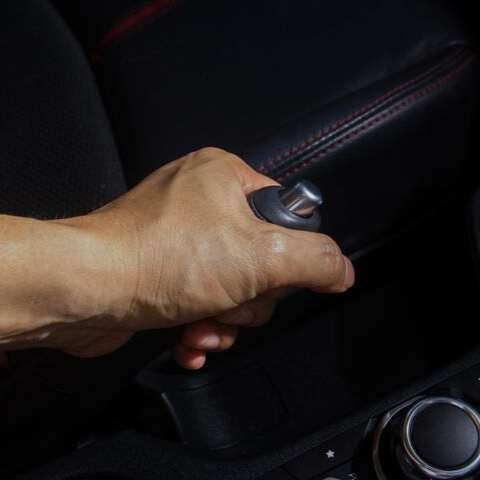
If you’ve ever happened across a fast food restaurant late at night, there’s a good chance that you’ve seen the ‘yoofs’ congregated there were doing their best to test their handbrakes to the limit, and show off their driving skills to all onlookers.

As adults, we find it pointless & annoying, and we do our best to discourage that behaviour; a shake of the head, a silent ‘tut’ and withering stares, usually to no avail. If I’ve described you (as the adult), there’s good news: just 3 in 10 new cars on sale today have manual handbrakes, and only two mainstream manufacturers (Suzuki & Dacia) offer them across their range.

The likes of Porsche, Mercedes-Benz, Jaguar, Land Rover and Lexus have all ditched the traditional, manual handbrake – none of their new models have them fitted.

Electronic handbrakes

In an age of connectivity, smart cars and electrification, manufacturers are looking toward improving systems and processes even further. Certainly, there isn’t much wrong with the traditional handbrake, but as a system, it’s crude and offers little innovation – essentially, the handbrake has remained unchanged since its introduction.

There are a number of reasons why the manufacturers are pushing toward electronic systems, not only does it free up space in the cabin, and remove the unsightly lever, but they also offer built-in safety features – no more slipping (or even forgetting), automatic hill-start assist, automatically disengaging when pulling away, and of course, it can’t be applied while on the move. Sorry kids.

Cost cutting

The first electronic parking brake was fitted to a 7 Series BMW in 2001, but of course as with any technology, as it becomes more widely adopted, the prices plummet, and it becomes more affordable. Given that it uses servo motors and intelligent control (so must have some form of ECU), the price of the electronic brake would outweigh the cost of a traditional brake, but they’re easier to fit, and in theory, shouldn’t need any maintenance above the regular servicing, so the overall price differential isn’t that great.

There may also be an element of allowing the manufacturer to lower the specification of other components – think of the clutch for example; if automatic hill-assist takes care of the dreaded hill start, there should be a drop in the number of drivers that ride the clutch while they wait to move off.

But we shouldn’t forget that the same as prices coming down, new technology usually has some inherent faults that have been unforeseen.

Volkswagen recall

Back in 2017, Volkswagen had to recall 134,000 UK models from the Golf, Touran, Tiguan and Passat range for problems with their handbrakes, Tesla recalled 53,000 cars worldwide to fix problems with their system, and Toyota, Renault and Audi have all had to recall models at some point for handbrake problems.

While electronic handbrakes do have their positives, you’d have to say that if there’s a problem with incorrect tensioning, there’s very little you can do – it’s not like you can just pull on the lever a little harder. Equally, if it fails to engage, or even disengage, no amount of scrabbling around underneath the vehicle will help you – it’s a trip to a main dealer, or a well-appointed independent garage with a diagnostic machine.

The future of driving

It would seem that this is just another small step to the future of autonomous driving – one less thing that new drivers will have to learn, another process that’s moving toward the car taking complete control of the driving process, albeit in small steps.

We’ve already reported on the fact that intelligent cars will monitor, and if necessary, adjust your speed if you’re driving too fast, and that newer cars have the ability to spy on you and report back, and while a great deal of these features have come about for safety or convenience, you can’t help feeling that the art of driving, is slowly dying, and I believe we’re already seeing the repercussions.

All too often, we see drivers that use a car purely as a means of transportation, that give no thought to situational awareness, driving conditions, or other drivers; automatic emergency braking systems mean that drivers don’t need to be as aware, lane-assist stops them wandering between lanes, blind spot systems stop them from pulling out into traffic approaching them from behind, and in-car entertainment systems with full connectivity and Wi-Fi means distractions are plenty.

I’m not advocating a roll-back to steam power and a man with a red flag, but just as many F1 drivers say that it’s now too safe for enjoyment, you may just start to think about hanging on to your current, pre-safety conscious car just that little bit longer.

Do you think driving standards are slipping? Do these safety systems lessen the skill needed to drive properly? Let us know in the comments.