How Saudi drone strikes could impact petrol prices at UK forecourts

How Saudi drone strikes could impact petrol prices at UK forecourts

When I discovered, on Monday, that Iran declared to the United States that ‘it’s ready for war’, it left me both concerned and not a little fearful of what the future may hold.

While PetrolPrices.com isn’t here to discuss potential warfare, we can tell you that, Saturday’s huge drone strike, that resulted in burning oil fields in the Kingdom of Saudi Arabia—the world’s biggest oil exporter—might mean we’ll soon be paying much more for our petrol.

Flame war

The drones hit two state-run Saudi Aramco oil facilities—the Abqiaq oil refinery (the largest petroleum processing facility in the world) and the Khurais oil field, wiping out half of Saudi Arabia’s production of ten million barrels a day—and about 5% of global supply.

Aramco says the attacks on the Abqaiq facility will cut Saudi Arabia’s production by about 5.7m barrels a day.

Traders say oil might now cost as much $100 a barrel (adding 3-4p onto a litre of fuel) if Saudi Arabia doesn’t focus on the impact the strikes will have on oil supplies in the weeks ahead before the facilities are operational again.

Although Houthi rebels continue to claim responsibility for the strikes and threaten still more, the US and the coalition forces spokesman in Yemen suggest there’s evidence that Iran was responsible.

Named a ‘proxy war’, Yemen’s civil war has lasted five years and has left around 24 million people (80% of the population) struggling to eat—with millions close to famine. Now the world’s worst humanitarian crisis, one source reports over 90,000 deaths.

In a series of anti-government uprisings across the Middle East and North Africa in the early 2010s, the Yemini Revolution forced Yemen’s President Ali Abdullah Saleh to cede control to his deputy, Abdrabbuh Mansour Hadi.

The change in leadership hoped to offer stability to Yemen, but the new president battled to keep order.

In 2014, fighting began when the Houthi militia took over extensive areas of territory, driving the new president into exile.

The two main branches of Islam are Sunni and Shia Islam. Iran is the one large Shia power in the Middle East and supports the fellow Shiite Houthi militia.

In 2015, the conflict in Yemen escalated when a coalition of nine—backed by the United Kingdom, US, and France—Arab states with a Sunni majority began overwhelming air strikes against the Houthis.

In reserve

Jeffery Halley, Senior Market Analyst, at the financial services company, Oanda, said:

‘There’s enough capacity in storage to meet the shortfall in the short-term.

Yet Halley pointed out that there’s a likelihood that global fuel prices will rise, adding:

‘Consumers will first notice it quite quickly in higher petrol prices,’ warning us to ‘watch airline fuel surcharges’, which could also increase, depending on the fuel price hedging policies of individual airlines.

Simon Williams, Media Relations Manager for the RAC, said:

‘There are currently savings in the wholesale price that have only just started to be passed on to drivers by retailers.

‘Many retailers cut their prices by three pence on Friday and we believe that average prices were six pence too high before that, so the impact of these fires may not be too great.’

As of the 6th of September, the US Department of Energy reported that the US Strategic Petroleum Reserve held 644.8 million reserve oil barrels (with the capacity for up to 727 million barrels) stored in underground salt caverns.

US oil producers and refineries keep another 416.1 million oil barrels in commercial storage, according to the US Energy Information Administration.

Energy Minister Prince Abdulaziz bin Salman said that by tapping the huge reserve of around 188 million barrels of oil, it would be possible to make up part of the decline in production.

Williams added: ‘We are hopeful the fact the US is releasing emergency oil stocks and that Saudi Arabia operates a global storage network will mean that drivers here in the UK will not be too harshly affected.’

Driving up prices

So, will the cost of petrol and diesel rise?

At first, there was undeniable panic and oil prices rose almost 15% higher on Monday, with the Brent benchmark seeing its biggest jump since the 1991 Gulf War. The previous Friday, a barrel of Brent Crude oil cost $60 but after the Saudi attacks, it leapt up to $71 before falling back to $68.

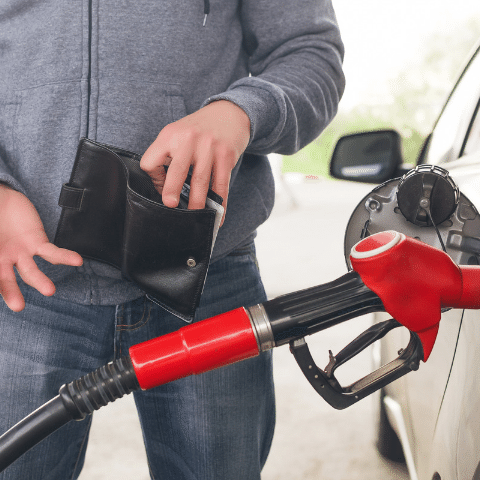
Despite the wholesale prices of diesel and petrol forecast to rise 3p a litre, it’s not inevitable that we’ll face steeper pump prices. On Friday, PetrolPrices.com reported that, after the wholesale price of unleaded dropped, supermarkets announced they were reducing unleaded by three pence per litre (ppl). At the end of last week, the price of petrol was around 128ppl, allowing retailers a buffer to receive the increase in wholesale price.

Experts warn, though, that If the barrel price stays high for a time, we could see the average cost of a litre of petrol and diesel going up several pence. The average, current price of unleaded is 127.72 ppl with diesel at 131.41 ppl.

Without knowing what the future will bring and with mixed messages from analysts and experts in the fuel and motoring industry, none of us can be sure of what will happen to the prices we pay at the pumps.

Here at PetrolPrices.com, though, we’ve got your back. We can tell you where the cheapest forecourts are where you are, so why not become a member today? Join our over 2.1 million-strong community by downloading the app and you’ll always know you’ll be getting the best petrol and diesel prices wherever you are.

Are you concerned that the cost of petrol will rise? What’s your view on the Saudi situation? Share your opinions in the comments.
Diesel prices to rise as temperatures fall

Diesel prices to rise as temperatures fall

Last year we had hundreds of people write to us in Support asking why there was a 13ppl difference between petrol and diesel at the pumps. While we covered it briefly then, we wanted to explore a more in-depth look at why this happens and what causes it.

We’ll cover seasonal transitions, a bit about how the price at the pumps is determined as well as how the system works.

How the price at the pump is determined

You may have seen in the news this week about “7ppl rises expected” after the attacks on Saudi Arabia and wondered how long it takes for a significant event to be felt at the pumps.

First, let’s look at how oil comes from being drilled to the pumps itself.

Once the oil has been drilled it’s sold on the market and in the UK we trade Brent Crude. Oil is traded in dollars so events that affect the value of the pound or dollar can fall in our favour or out of our favour.

Now that a refining company has bought the oil it is taken to a refinery and using fractional distillation is split into all the products we use from bitumen for the roads to bottled gas. Petrol (or gasoline) is a much lighter fuel whereas diesel is denser and is taken from the “same bit of the barrel” as heating oil.

After the refining process has finished, then the fuel is sold on the wholesale market which retailers buy and then this is what is sold at the pumps.

Costs add up all the way through the line, and you can watch the video below to explain it further on how the price of fuel is determined.

<iframe width="560" height="315" src="https://www.youtube.com/embed/p9cJtUKEbyM?controls=0" frameborder="0" allow="accelerometer; autoplay; encrypted-media; gyroscope; picture-in-picture" allowfullscreen></iframe>

Could diesel be rising?

Seasonally diesel rises every year from the end of September to spring the following year. This is to do with the grades of diesel used as in winter are more expensive than summer as they have more restrictive cold properties, such as cloud point, or cold filter plugging point.

Petrol goes the opposite way, as it shifts to a different Reid vapour pressure as cooler European temperatures allow lighter molecules to be used. This helps to widen the gap between diesel and petrol even further, as petrol can be manufactured for cheaper in winter. This change officially begins on October 1st, but the Platts cargo assessments, which reflect values of cargoes loading or discharging 10-25 days ahead from time of publication, make the change ahead of the date.

Another factor in this price spread is the peak driving season in the US is over so petrol demand has lessened meaning that prices can fall and also a greater price spread will happen.

So it’s not just because I have a diesel?

Not at all, it’s just unfortunate that the spread has been increasing recently as more and more taxes are lumped onto diesel drivers.

From ULEZ to drop off taxes at airports, everything is keyed towards the diesel driver paying out more. However, aside from getting rid of the diesel, there is not much one can do. There are some scrappage schemes available for low-income families but not for the general public.

The spread has been noted as the biggest since February this year as experts analyse the crack swap. Crack swap tracks the difference between the value of the refined product such as diesel or gasoline and that of crude oil. It’s a widely used hedging instrument that allows refiners, consumers and producers to lock in prices as well as serving as a measure of the forward market.

How to save money when driving

When driving a diesel car, especially as the pump prices are so high, you can improve your fuel consumption by following the below:

Don’t use unnecessary speed. The Department for Transport figures states you’ll use up to 9% more fuel driving at 70mph than you would at 60mph and up to 25% more fuel travelling at 80mph instead of 70mph. The faster you drive, the greater your fuel consumption. Set off a little before you need to, to avoid feeling rushed.

Don’t think slow driving is always best though. To drive well below the speed limit on motorways, etc, is dangerous. It’s also unlikely to save much fuel. Conserve momentum. This is as important for fuel consumption as not driving too fast.

Drive at the lowest speed you can, in the highest gear possible. Car manufacturers quote the most fuel-efficient driving speed as 55/56mph.

Recieve the price alerts to get the cheapest prices near you in your inbox.

You can also download our new app to check stations near you on the go, see here for more: https://petrolprices.com/download-the-app/

What do you think of the price spread? Do you notice it yearly? What’s the spread near you? Let us know below.

BREAKING: Supermarket price war cuts 3ppl off unleaded

BREAKING: Supermarket price war cuts 3ppl off unleaded

All four supermarkets have today announced that they will be cutting 3ppl off unleaded. This cut comes after the wholesale price of unleaded has dropped steeply recently, and now the supermarkets are leading the way into an Autumn fuel cut.

After a summer of rising prices, this will no doubt come as a benefit for motorists who are feeling the back to school pinch.

Morrisons is cutting the cost of unleaded by up to 3p-per-litre across its petrol stations from tomorrow.

In addition, the supermarket is currently offering a 5p-per-litre saving on fuel to customers who spend £40 in Morrisons stores. (See more here)

Ashley Myers, Morrisons Head of Fuel, said: “We aim to offer customers the best deal on fuel and we hope that this price cut will help many motorists’ wallets this weekend.”

Sainsbury’s is cutting the price of unleaded petrol by up to 3 pence per litre across all of its 314 forecourts, providing great value for millions of motorists across the UK. As usual, customers will also be able to collect Nectar points every time they fill up – one point on every litre purchased.

David Pegg, Fuel Buying Manager for Sainsbury’s, said:
“As we head into Autumn after a busy summer, we are committed to helping our customers live well for less, whether they’re stocking up on groceries or refuelling their cars. That’s why we’re dropping the price of unleaded petrol by up to 3p per litre across every single one of our forecourts by Sunday. Whether in store or at the pumps, customers know they will get fantastic value with Sainsbury’s”.

Britain’s biggest petrol retailer has cut the cost of unleaded fuel by up to 3p per litre at all of its petrol stations, with changes coming into effect today.

Tesco’s buying manager for fuel, Rodger Beer, commented, “We’re cutting the price of fuel in our filling stations to help our customers save money. We hope this makes it a little bit easier for our shoppers to get away for the weekend and enjoy the late summer sunshine.”

Effective from today, Friday 13TH September, Asda customers will benefit from filling up at one of its 322 petrol stations after the supermarket announced they are cutting the price of unleaded fuel by 3 pence per litre following continued decreases in wholesale costs.

As of Friday morning any driver filling up at an Asda petrol station will pay no more than 122.7ppl on unleaded, whilst Diesel remains the same at 126.7ppl.

Asda Senior Fuel Buyer, Dave Tyrer said “With wholesale costs falling, we’re pleased to be able to pass on these savings onto our customers. Drivers filling up at an Asda filling station will pay no more than 122.7ppl on Unleaded and 126.7ppl on diesel.”

“With average UK petrol prices stuck at around 128.5p -129.0p a litre since mid-August, a saving of 6p a litre or more than £3 a tank will cheer up drivers as the summer comes to an end,” says Luke Bosdet, the AA’s fuel price spokesman.

“Other supermarkets have gone down the route of forcing their customers to spend £40 or £60 in store before offering money off their fuel.

“The superstore business model depends on customers driving to shop. Asda seems to understand that relationship, while rivals too often exploit it.”

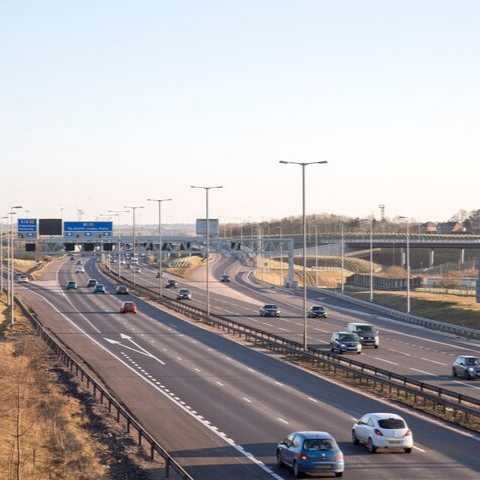
Drivers are scared to use the hard shoulder on smart motorways

Drivers are scared to use the hard shoulder on smart motorways

In a new study, carried out by Kwik Fit, 56% of drivers said that they avoid using the open hard shoulder on smart motorways, and with some stretches of smart motorway earning more than £6m in under three years through fines and convictions, you’d have to say that it’s not surprising.

Thanks to the smart technology needed to operate the motorways, fining drivers for minor mistakes or indiscretions is easy; the stretch of M1 motorway between Junction 30 – 35A in Yorkshire has seen 62,337 tickets issued since 2017.

Lane confusion

29% of the respondents said they don’t use the open hard shoulder over fear of not knowing whether they’re allowed to, which of course would lead to an instant penalty if they’re mistaken. For these motorists, they’re happy to use the smart motorway as a regular motorway, which does negate the effect of ‘smart’ somewhat.

Although there is some outdated evidence that smart motorways can help with congestion, the primary factor behind them is of course, financial. A smart motorway is around 60% cheaper than traditional widening, so despite the very real safety concerns over smart motorways, it seems that they’re the preferred choice of the authorities.

Cashing in

And while government ministers would argue against the logical conclusion, you’d have to consider that the draw of easy motoring revenue must have been included in the budgetary figures when planning to upgrade any motorway; it’s a win-win situation for the government, in that they get a wider road for 60% less outlay, and whatever they do spend can be partially recovered by fining the motorists as often as possible.

It’s thought that around £41m has been raised by the use of smart motorways, purely through fining drivers for speeding and lane-infringement wrongdoings – using a lane when it’s closed.

No one argues that lane discipline is crucial to the safety of all motorists, workers, & breakdowns etc, but there needs to be more done to offer sanctuary to the stranded motorist; breaking down (during off-peak hours) on a smart motorway has been proven to be 216% more dangerous than on a conventional motorway.

The three-lane squeeze

It’s also worth noting that as the traditional hard shoulder was never designed to carry traffic, it isn’t quite the full width of a traffic lane, which means that any smart motorway is now effectively trying to squeeze four lanes, into 3 3/4, making the lanes just that little bit tighter, so for the 15% of respondents that aren’t confident driving to close to the edge, there’s a double-whammy.

Of course in the age of swingeing budget cuts, authorities must do all they can to save money, many local authorities are now implementing ‘spend to save’ programmes, but it does seem as though factoring in revenue from fines has become the norm so it’s unlikely that there will be a let-up in processing misdemeanours, and as we learnt before, this could be anything from a noisy car, through to distracted driving.

The rise of technology on our roads is a double-edged sword; on the one hand, it does help to protect the public from menacing drivers, or those drivers that see a car as purely a means of getting from A to B, with little thought or minimal input along the way, but the downside is that driving a car is becoming increasingly fraught with concerns over minor indiscretions with motoring laws, including speeding.
We’ve known for many a year that motorists are seen as the easy cash cow for bulking up the coffers, and that situation is only going to get worse, under the guise of ‘safety technology’. But at what point does safety end, and pure money-grabbing begin?

Where will these non-discretionary cameras lead us to? And how much impact will they have on the pastime of ‘motoring’? It could be argued that while they’re adding to road safety, they’re also dumbing down common sense, and driving skills, and of course, they’ll have a detrimental impact on the pleasure of driving – people just driving for the love of driving.

The modern way

It’s easy to look back through rose-tinted glasses and long for the days of ‘free’ motoring, but to do that would negate all of the other technological achievements that we’re living through; self-driving cars, OTA (Over the Air) fixes, fuel economy that would put a scooter to shame … technology has given us so much more than fines & penalties, but as with any new tech, there’s always a downside, and unfortunately for the motorist, the government is controlling that downside, and we’re financially paying the price.
Is a smart motorway just another way of earning easy money from the motorist? Or do you genuinely think they make a difference to a commute? Let us know in the comments.
Cars to display GB sticker when driving in the EU

Cars to display GB sticker when driving in the EU

It wouldn’t be a usual week without a Brexit headline in the news. Often the story has relevance on the motoring world, hence why PetrolPrices.com writes about the European Union divorce so often.

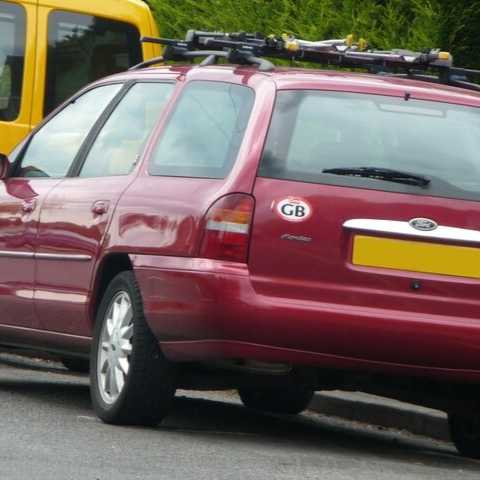
The latest news, though nothing too dramatic, is yet another thing for us drivers from the United Kingdom to think about, which is when taking our cars on any future trips to any of the 27 EU nations, we now must slap on GB stickers—including when we’re visiting Ireland.

Sticking by the rules

Under present rules, it’s acceptable for UK motorists to enter Ireland (sometimes known as The Republic of Ireland) as long as our vehicle number plates have the GB letters on them. Yet the British government has warned this won’t suffice after Brexit.

The statement comes as ministers intensify their preparations before the planned 31st of October departure date.

After Brexit, if you’re a driver from England, Northern Ireland, Scotland, or Wales, and you visit Ireland, you’d better make sure you’ve remembered to buy and affix a GB sticker to your motor if you want to gain entry.

The advice applies to all UK-registered cars, including those from Northern Ireland. No longer will it be adequate for your number plate to show the GB letters against a blue background. When we and the EU go our separate ways, the demand from Ireland that we display our stickers becomes compulsory as a condition under the 1949 Geneva Convention on Road Traffic.

Regarding an International Driving Permit (IDP), which is a permit that allows you to drive in countries where a UK licence isn’t enough, if you own a UK licence, you won’t need one to drive in Ireland. Even if the UK leaves without a deal, unless your visit to Ireland lasts for over 12 months, only then will you need an IDP.

It’s worth noting too, that if you get disqualified from driving while you’re in Ireland, you might also find yourself banned once you’re back home.

Bordering on ridiculous

Simon Williams, Media Relations Manager at RAC, has predicted the new law requiring drivers to display the white GB stickers, could cause problems for those travelling overseas—more so for those who make regular trips across the Irish border.

Williams said:

‘While it might seem ridiculous that this will no longer be enough to let authorities know a vehicle is registered in the UK, the latest advice from the government is clear.

‘Anyone travelling to an EU country, including the Republic of Ireland, must display a separate white oval GB sticker on the rear of their vehicle.’

The RAC recommends that motorists prepare for further changes to the rules on overseas motoring, saying everything depends on what situations arise after Brexit and the deal we make (if any).

The Association of British Insurers (ABI) said that neglecting to display a GB sticker wouldn’t invalidate our motor insurance but still advised that we follow all the insurance conditions.

Prepare the way

Once you have your GB sticker, you must display it at the rear of your car when visiting anywhere within the EU. You’ll be able to buy yours from places like Halfords or at multiple online retailers—I saw them for sale from 99p with free delivery online. Just make sure that your sticker has black letters on a white background, that the sticker is an ellipse in shape with a greater width than height, and that the letters are at least 80mm high with a stroke width of at least 10mm.

You can apply for an IDP at the Post Office by taking along your full, valid, UK driving licence photocard, a passport standard photograph showing your recent, true likeness, and £5.50 for the application fee (payable with cash or by debit or credit card).

If you only hold an older paper licence, you must take with you your valid passport as proof of identification.

You could once apply to motoring organisations such as the RAC for IDPs but this stopped on the 1st of February this year. This means, if we have a no-deal Brexit, it’ll be more difficult to get a permit than it had before February.

If you need an IDP for Ireland, you’ll want the 1949 convention IDP, which is valid for 12 months and also covers you in Cyprus, Malta, and Spain. For anywhere else in the EU, you’ll need a 1968 IDP—valid for either three years or for as long your driving licence is valid (whichever is shortest).

Driving licence requirements vary across the world, so if you plan to rent a vehicle and you book in advance while in the UK, either ask the car rental company to confirm the driving licence requirements of the country you’re visiting or get an IDP as a precaution.

Remember, it’s our responsibility as drivers to check with the specific country’s driving authority about a country’s particular rules on driving.

Are you bothered about having to get a GB sticker for your vehicle? Will this news affect you? Do you foresee any problems or any further changes to motoring brought on by Brexit? Tell us in the comments.
Hidden faults affecting some of the most popular cars revealed

Hidden faults affecting some of the most popular cars revealed

The annual Which? Reliability survey has been released and the consumer watchdog is now calling for automotive makers to act as it found that some of the UK’s most popular cars have dangerous and costly manufacturing faults.

With some of these faults, there’s also a huge environmental impact with the disposal and if not addressed by the manufacturer, could be at a huge cost to the motorist.

Which? Surveyed 44,000 drivers covering 52,000 makes of car, asking them about any incidents they’d had with their car in the past year, including breakdowns and recurring issues.

Qashqai falling short

The Nissan Qashqai, the 4th most popular new car bought last year and the most popular SUV, had a battery issue affecting one in five drivers. 20% of those surveyed had broken down in the past year due to an issue with their battery, which is four to five times higher than the average for a car of that age.

Nissan is aware of this issue and switched its battery supplier back in 2018, but there is still potential for around 60,000 people if not more who could be affected by this. As the batteries are lead-acid, this has huge ramifications for the environment due to the way they are disposed of. Car batteries have to be disposed of in certain ways, and someone who doesn’t hold a certificate can be prosecuted for trying to recycle or dispose of them.

The Qashqai also had an issue on it’s Body Control Module affecting cars built between April 2018 and February 2019, which Nissan say they have created an update and campaign for, but there are most likely cars out there that are still affected.

Nissan said “We’re aware of some incidences of battery failure and have taken steps to address this issue, including replacing our battery supplier, and voluntarily launching a campaign to update the Body Control Module software on Qashqais made between April 2018 and February 2019. We’re working with affected customers.”

It’s a Tesla nightmare!

Tesla, one of the most loved cars on the survey, also had more than one in five people (22.2%) reporting issues with their Model 3’s exterior features. Faults including ones affecting door handles, boot openings and fuel caps, all meant that the car had almost 10 times more faults than an average car of the same age.

One in ten Tesla Model X owners also reported faults, which Which? Attributes to an inherent design flaw. Across all brands surveyed Tesla had the highest percentage of cars in the three to eight-year bracket reporting faults, with 67% of owners affected by some fault.

Tesla said “We review every vehicle before it leaves the factory. Our warranties cover any repairs and replacements necessary for door handles for up to four years. Unlike other manufacturers, Tesla can perform repair work via mobile service, which can be done at a customer’s home or office.”

More issues uncovered

The Seat Alhambra had nearly three in ten owners complaing of faults to do with their exhaust or emission system. More than a fifth (22.9%) of Alhambra owners also said they had an issue with their suspension system in cars in the same age group – nearly five times higher than the average car.

Seat said: Seat UK is concerned but, without details, we can’t identify and explain these results. A comprehensive warranty covering three years/60,000 miles is provided. Our service data will identify the need for workshop campaigns, which are issued as promptly as possible.

Older car models like the Ford B-Max also reported alarmingly high fault rates. 25% of automatic B-Max owners said they had a problem with their “Powershift” automatic transmission system.

Ford said: We’re aware of these issues and have previously updated our dealership network to resolve them for customers. We also extended the warranty for affected cars from three to five years/60,000 to 100,00 miles. Where owners aren’t covered, our Ford customer relationship centre (see ford.co.uk) will assess each individually on a favourable goodwill basis.

Similarly, nearly a quarter of BMW 5 Series Touring drivers said they had experienced a number of issues with their suspension.

BMW said: BMW conducts continuous quality surveillance of our in-market vehicles. Only a tiny fraction of customer contacts in the first half of 2019 were related to suspension issues of any kind; fewer than six in 10,000, across all our models, make any reference to suspension issues. If any customer wishes to discuss concerns, they can call BMW Customer Service.

Hefty motoring bills

When Which? Presented these findings to the manafacturers, most said that these issues would likely be fixed under the warranty. However their data showed that most of these issues were noticed outside of the manafacturer warranty period, leaving motorsists with a hugely expensive bill.

Which? Are calling for manafacturers to go public with these faults and issue a recall for the cars affected. While some issues are not fatal, it is at the best interest of the company to fix these issues and do so for free, according to Which?

Natalie Hitchins, Which? Head of Home Products and Services, said:

“It is concerning that it has taken Which?’s survey of thousands of motorists to uncover what are in some cases inherent flaws with some of the UK’s best-selling cars. Owners should be able to trust that manufacturers will make them aware of these issues and offer a fix when they see a recurring problem.”

“It is vital these manufacturers make the public aware of these serious faults and ensure vehicle owners are not left out of pocket should the issues occur outside their warranty.”

Is your car affected? Would you want to know if your car had a manafacturing fault? Let us know below
Auto Express research reveals shocking battery change scams

Auto Express research reveals shocking battery change scams

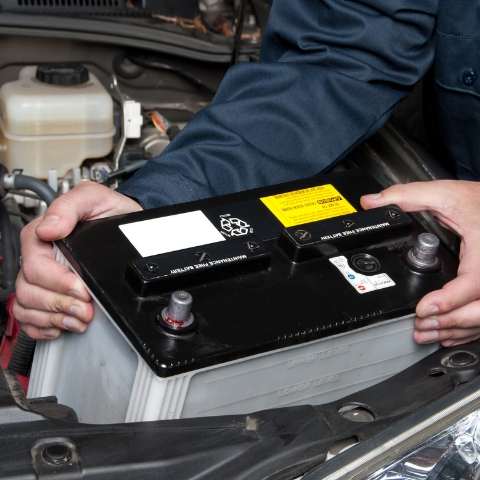
A few years ago, one of the motoring rescue services were found to be upselling car batteries to supposedly vulnerable users that had broken down with a flat battery; except these broken-down vehicles were part of a sting, created by the BBC Watchdog programme.

Recently, Auto Express have revealed that they too have been investigating the trade of ‘car batteries’, but from a slightly different perspective; with no regulation and no comparison sites, having a new battery fitted to your car has become almost lawless, and unfortunately, relying on the franchised main-dealer may not be much help.

The £1,248 car battery

As part of their investigation, Auto Express contacted three franchised service departments for 20 of the most popular models in the UK, including Volkswagen, Toyota, Mercedes-Benz and Vauxhall, if you’re a Toyota driver then you needn’t worry too much, for all the other brands … shopping around is key.

The Mercedes-Benz dealerships quoted between £315 – £1,248 (no, that isn’t a typo) for a replacement battery for a C-Class – same battery, same car, same procedure. Vauxhall dealerships (while not quite as wide open as Mercedes) were similar – the lowest price for a Mokka battery replacement was £98, the most expensive being £263.

For reference, Auto Express contacted a large independent chain for prices, the Merc came in at £165, so even their lowest official price is somewhat inflated, and yet the independent chain aren’t known for being gentle with pricing either.

Open pricing

Of course, these dealers aren’t actually doing anything illegal. Immoral perhaps, but not illegal. Some may argue that if you’re wealthy enough (or lacking in the sense department) to pay over £1,200 for a replacement battery, then that’s your issue.

But what about the elderly person that knows no better and has no one to support them? Living hand-to-mouth on their pension? That’s relying on the honesty and integrity of the franchised dealer where they bought the car some years earlier? If you think that sounds unlikely, it was for exactly that reason why I left the job of Workshop Controller at a main dealer.

The problem is that it’s a free market, you’re free to choose wherever you want, and unless you know the prices of the battery, and the labour charge, £300+ might actually seem reasonable. For what it’s worth, replacing a car battery typically takes less than 15 minutes. Although of course, that doesn’t include the ‘free check’ of the rest of the vehicle, which is the dealer’s chance to upsell their products and services for a little profit(eering).

Jonathan Burn, who led the study for Auto Express states: “The problem for the motorists is that the retail price of car parts is unregulated, and therefore there is little transparency or consistency in parts pricing, even within the same dealer networks”.

The cost of replacement

Nearly every one of us will face a replacement battery at some point in our lives, and this study shows that even between main franchised dealers, it definitely pays to shop around. Remember that the garage is making profit on the sale of the battery, along with labour charges, so there is always room for manoeuvre, and you should also remember that it isn’t just batteries; many manufacturers have something along the lines of a ‘wear parts’ catalogue, which allows the dealer to significantly discount any consumable product such as a clutch or brake pads, and batteries will also be included.

It’s all very well the Mercedes spokesperson saying that “We can only recommend a retail price for these parts, which means there could be a variation across retailers”, but the simple reality is that they could do more to protect their loyal customers from being ripped-off through their official network of dealers.

As I stated last week, very few businesses set out to barely break-even, but having the audacity to charge four times the amount of other official dealers is downright … wrong, and no one from M-B seems to be doing anything about it.

Personally speaking, I’d always ask the garage to give me a breakdown of the quote – parts and labour, ask them their hourly rate, and then work out how long they’re telling you it takes. If you’re at all unsure, speak to other garages, preferably a good independent, and then compare prices – you’ll get no less a service, the battery will have the same warranty, and the worst of it could be that your loafers will need a clean after kicking around a traditional workshop.

Just for the record, all three Toyota dealerships offered the same low price, £105.

What’s your view of official main dealers? Do you trust them? Is it the independents you don’t trust? Let us know in the comments.

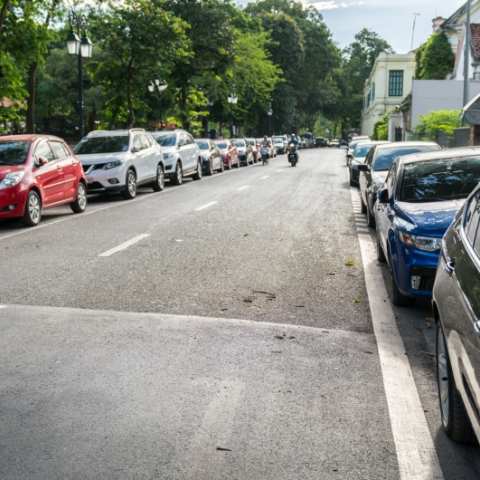
New app allows people to report illegally parked cars and make money

New app allows people to report illegally parked cars and make money

A new app set to be released at the end of this month is promising to help remove illegally parked cars by giving consumers the power to easily send videos of illegally parked cars securely.

eFine, an app that will release on the 30th September, was the brainchild of two siblings after they found their bus route was often delayed by cars parked illegally. The founders say the app is a way for “residents to claim back their streets.”

How does it work?

The new app acts as a CCTV network through proprietary code, which is a closed source code, and patent-pending technology. These systems working together create a network of mobile CCTV devices that don’t need the video to be saved on the device, instead, it is processed and stored securely, and then sent straight to the relevant council.

When you spot a parking infringement, you simply open the app, video for evidence and then eFine takes care of the rest.

“The app lets a user know if they are in a partner council area before they record the infringement,” says Alex Mühlhölzl, Chief Operating Officer. “The data is not accessible by the user and is not stored on the user’s phone, it is sent to us and stored on an Azure system, meaning only the council associated with the infringement notice can see the video and decide if a fine should be issued. We don’t even see it.”

With this, you will also get a 25% share of the infringement notice when paid as an incentive and thank you for doing a parking officers job. eFine themselves also keep a 25% share to cover costs.

Who’s going to use it?

While the app is aimed at everyone, they particularly hope the elderly, disabled people and new parents will be able to get the most benefit out of it, as they can report incidents where they were not able to navigate the pavement or park in the correct bay.

“Those that have a disability and get impacted by people parking on the footpath, those pushing buggies or elderly on scooters who have to go into traffic to get around the illegally parked vehicle,” says Alex.

“There is also the issue that some electric vehicles cannot charge because a combustion vehicle has parked in the charge point parking space. With councils investing millions in electric vehicle infrastructure, these charge points generate revenue that offsets this capital cost so every vehicle using it to charge matters.”

How can our councils benefit from it?

We’ve reported many times before on council parking charges, from record profit numbers to increasing parking charges but this is a new angle altogether.

Other benefits include better traffic management and identifying risky spots sooner. Councils will also be able to ensure that parking wardens are implementing and inspecting reports from the general public as well as optimising the use of technology, something which some councils lack.

“It addresses the need for better management of traffic flow, vehicle and pedestrian, without the huge costs that are incurred by councils having to hire enforcement staff or outsource the service,” says Alex.

“We have a focus on traffic flow management, cars and pedestrians, and also pedestrian safety, and as such we are looking to prepare a template for councils that are looking to introduce pedestrian zones around schools without the financial burden of installing CCTV networks.” says Alex. “We are also looking to support councils who are looking at the initiative of fining households for leaving rubbish or bins out for days or weeks. This rubbish is often scavenged by animals and creates an environmental problem and bins on the footpaths create pedestrian traffic issues for the disabled and those pushing buggies or trolleys and those on scooters.”

Asking other pedestrians to report and send in images is something that has been trialled before with dashcam footage to some success but creating a CCTV network on mobile phones is a new suggestion and one that poses some questions.

GDPR?

One question our team raised is one of GDPR. While I’m sure many of you are tired of those four letters it does pose an important question.

A huge part of GDPR is providing users the tools to control their data, how it is collected and how it is stored.

In all areas where CCTV is filmed or parking wardens operate, a notice is displayed or residents are informed where this is in use through promotional information on websites etc.

However, with this app, no user of a car is going to know that they have been filmed and sent in, which contravenes GDPR. It will be interesting to see how this plays out in the long term.

What do you think of this idea? Would you download the app? Let us know below
Councils under pressure to create more free parking for blue badge holders

Councils under pressure to create more free parking for blue badge holders

August saw the biggest change to the Blue Badge scheme since it began in 1970. As we reported a year ago, and as part of trying to bridge the equality gap between physical and mental conditions, the government has granted people with a ‘hidden disability’ the right to use disability parking spaces.

Yet, new research says there already isn’t enough disabled parking for the existing 2.4 million people with Blue Badges, let alone adding more. Despite this, most councils said they didn’t intend to create more disability parking spaces.

Parking the problem

Hidden or ‘invisible’ illnesses are ones that aren’t obvious straight away and include diseases and disorders such as autism, cystic fibrosis, Crohn’s disease; dementia and mental health conditions.

Authorities say the UK has about 700,000 people on the autism spectrum, around 850,000 with dementia, and estimate about three million with anxiety disorders. With changes to the scheme meaning more eligible people, there may soon be millions of extra badge holders in England and Wales.

The government said they would give councils an extra £1.7million to help them cope with the expected increase in applications but admitted they didn’t know how many more people would become eligible.

A study by the comparison site Confused.com found—before the Blue Badge Scheme extension—only one council-operated bay existed for every 30 badge holders. Despite this, 74% of councils said they would not be building any more disabled parking bays.

Yet councils don’t show the same reluctance in increasing parking charges or introducing other methods that, while often increase road safety, make money from motorists.

Councillors justify things like higher parking fees because of budget cuts or they cite traffic congestion, but when Penalty Charge Notices (PCN) make councils over £326m in just 12 months, can’t the public ask why they can’t invest part of the money into more parking spaces for the disabled?

Besides not being enough disabled bays available to go around, the changes to the Blue Badge Scheme may mean more opportunity for badge fraud. The Local Government Association confirmed that theft of Blue Badges has risen 45% in a year and 600% since 2013.

It’s also estimated that 20% of badge holders misuse them, letting family and friends use their permits when they themselves aren’t in the vehicle. But they should beware; 60% of councils prosecute drivers for misusing disabled parking permits and the fine can be as much as £1,000.

Adding insult to injury

Paul Slowey, Founder and Chief Executive Officer of Blue Badge Fraud Investigation (BBFI), a company dedicated to investigating fraud and theft against the public sector, said earlier this year:

‘It’s clear that people with hidden and non-physical disabilities need badges. But confidence in the Blue Badge scheme is undermined by the fact that only a minority of councils take action against misuse.’
While charities and motoring groups have welcomed the change, they’re concerned the extension might cause a lack of parking spaces for other motorists—including those with physical disabilities.

Amanda Stretton, Motoring Editor at Confused.com, said:

‘Clearly more parking for Blue Badge holders is needed—30 drivers to one space is quite a challenge.

‘It’s no wonder some of these drivers have had to park elsewhere, and the number of people competing for spaces is only going to grow as more people can apply for a Blue Badge now.’

‘Drivers who misuse these spaces are making the problem even worse. They should be more respectful and leave them free for those who need them,’ she added.

Confused.com surveyed 2,000 drivers and found that 7% of the 1,300 drivers without permits admitted to having misused a disabled parking bay. Twenty-four per cent said they couldn’t find another space, 28% said plenty of other disabled spaces were available, and 36% said they used the disabled space because ‘they were only going to be quick’.

How to apply for a Blue Badge

If you think you’re eligible for a Blue Badge, you can either contact your local council for an application form or you can apply via the government website.

If your application is successful, and you’re an English resident, the badge will cost you £10. Blue Badges are free in Wales, while those in Scotland must pay £20. Blue Badges are valid for three years.

In London, Blue Badge holders are exempt from the Congestion Charge.

Blue Badges entitle the holder use of disabled parking bays, free use of pay-and-display spaces, and up to three hours of parking on single or double yellow lines. Different restrictions apply for each local council so make sure you check the rules where you are.

Without a doubt, the updated Blue Badge scheme will make a huge difference in the lives of many people with hidden disabilities, more so for those people with ‘hidden disabilities’ who, until now, wouldn’t consider leaving the house.

As a person with ‘hidden disabilities’ myself, if I should ever feel the need to apply for a Blue Badge, it would reassure me to know that there would be enough suitable parking spaces available.

Do you welcome the changes to the Blue Badge scheme? Will it affect you or somebody you know? What do you think the solution is for the lack of disabled parking? Let us know in the comments.
Fuel duty cuts of 2ppl could be coming in the Autumn Budget

Fuel duty cuts of 2ppl could be coming in the Autumn Budget

Fuel duty has been frozen consistently since 2011 and now new reports suggest we could be seeing a cut of up to 2ppl in the Autumn budget. Boris Johnson, our prime minister, is thought to be bringing this in in a vote sway in case of a general election and as blow softener for Brexit for the people who voted to Remain.

Fuel duty is often a contentious subject for any Prime Minister and Chancellor, as it such a passionate subject being a tax that we pay VAT on. In the current environment with fuel prices as high as they are, this could definitely benefit the motorist, but at what cost to everything else? 

Industry leading the cut

The PRA has welcomed hints carried by national media that the Treasury may be considering fuel duty cuts in the upcoming Autumn Budget,” commented PRA chairman Brian Madderson.

Madderson continued: “We have been exchanging correspondence with the Treasury since the start of the year on a number of taxation issues, with the present high level of fuel duty as the primary concern.

“The former exchequer secretary Robert Jenrick MP, arranged for the PRA to meet the heads of fuel taxation at both the Treasury and HMRC earlier this summer.

“At the in-depth review, PRA stressed the need for government to revisit its report on the dynamic effects of fuel duty modelling (2014), which confirmed the positive outcome on the economy of cutting this deeply regressive tax.

“In a post-Brexit environment, fuel duty cuts would help stimulate the economy and must be introduced as soon as possible by the new Chancellor.”

The climate change argument

However, as we’ve reported before, think tanks from all political angles have suggested that increasing taxes on more polluting vehicles could be one of the best ways to penalise those who continue to drive older and more polluting cars. 

Previous governments and prime ministers have considered removing the freeze on fuel duty, adding it in line with inflation or simply increasing. 

Claire Haigh, chief executive of Greener Journeys, said: “If we are serious about tackling climate change and air pollution, why would we make such drastic reductions to environmental taxes?

“Government must do more to promote public transport. At the very least fuel duty should be linked to inflation in future budgets.

“The money raised from future increases in fuel duty should be ring-fenced to accelerate the switch to electric vehicles and to encourage greater use of public transport.”

Long-term issues

If fuel duty was cut, the Treasury would be losing around £1.5 billion pounds in revenue, which would most likely have to be made up elsewhere.

Since the initial freeze in 2011, there has been a 4% increase in road traffic; an additional 4.5 million tonnes of CO2; an additional 12 thousand tonnes of harmful NOx and 816 tonnes of PM10s (a particulate); up to 200 million fewer bus journeys; and 60 million fewer rail journeys. The freeze in fuel duty since 2011 has also cost the Treasury more than £50 billion.

Do you think there should be a cut in fuel duty? Is climate change important here or should we be helping out the motorist in a potentially risky economy as we loom ever closer to Brexit? Let us know below