Over a Third of Motorists Don’t Know How Much Fuel Is Taxed

Over a Third of Motorists Don’t Know How Much Fuel Is Taxed

A new survey from us reveals that more than a third of UK motorists still don’t understand how much tax they pay on fuel, despite it being one of their most frequent household expenses.

The survey of 575 of our users, asked a simple question: Out of a typical £1.50 litre of fuel, how much goes to tax?

While 63% (365 motorists) correctly identified that tax accounts for 50–60% of the pump price, a significant 37% either underestimated the figure or said they didn’t know.

One in Three Drivers Still Get It Wrong Among those who missed the mark:

  • 23% believed tax made up less than half the price (21–49%)
  • 7% thought it was as low as 1–20%
  • 7% admitted they were unsure

Among those who missed the mark, nearly a quarter believed tax made up less than half the price, while others thought it was significantly lower or admitted they were unsure. Even among regular drivers, the findings point to a persistent gap between paying for fuel and understanding how its price is built.

Should more be done to show motorists what makes up the price they pay? For example:

  • Receipts could include a clear breakdown of tax vs. fuel cost.
  • Pump screens could display how much of the price is duty, VAT, or wholesale.
  • Forecourt pole signs could give drivers a quick, easy-to-read summary before they fill up.
Should more be done to show motorists what makes up the price of fuel they've paid?
© Kama

“The Treasury is a major beneficiary of the oil crisis. This is unacceptable, and the Government will stand or fall at the next GE on how it deals with the situation.” Said one survey respondent.

Why Fuel Tax Cuts Don’t Always Feel Immediate

The findings come at a time when fuel prices remain politically sensitive, with frequent calls for cuts to fuel duty.

A fuel duty cut may not be the best way to ensure motorists see saving and the retail market remains competitive. Fuel duty is applied further up the supply chain meaning that fuel at petrol stations and some storage locations has already had duty applied. A duty cut would benefit stations with higher turnover and therefore disadvantage small, often independent stations.  This could lead to reduced competition in certain areas.

Find out more what makes up the price of fuel here.
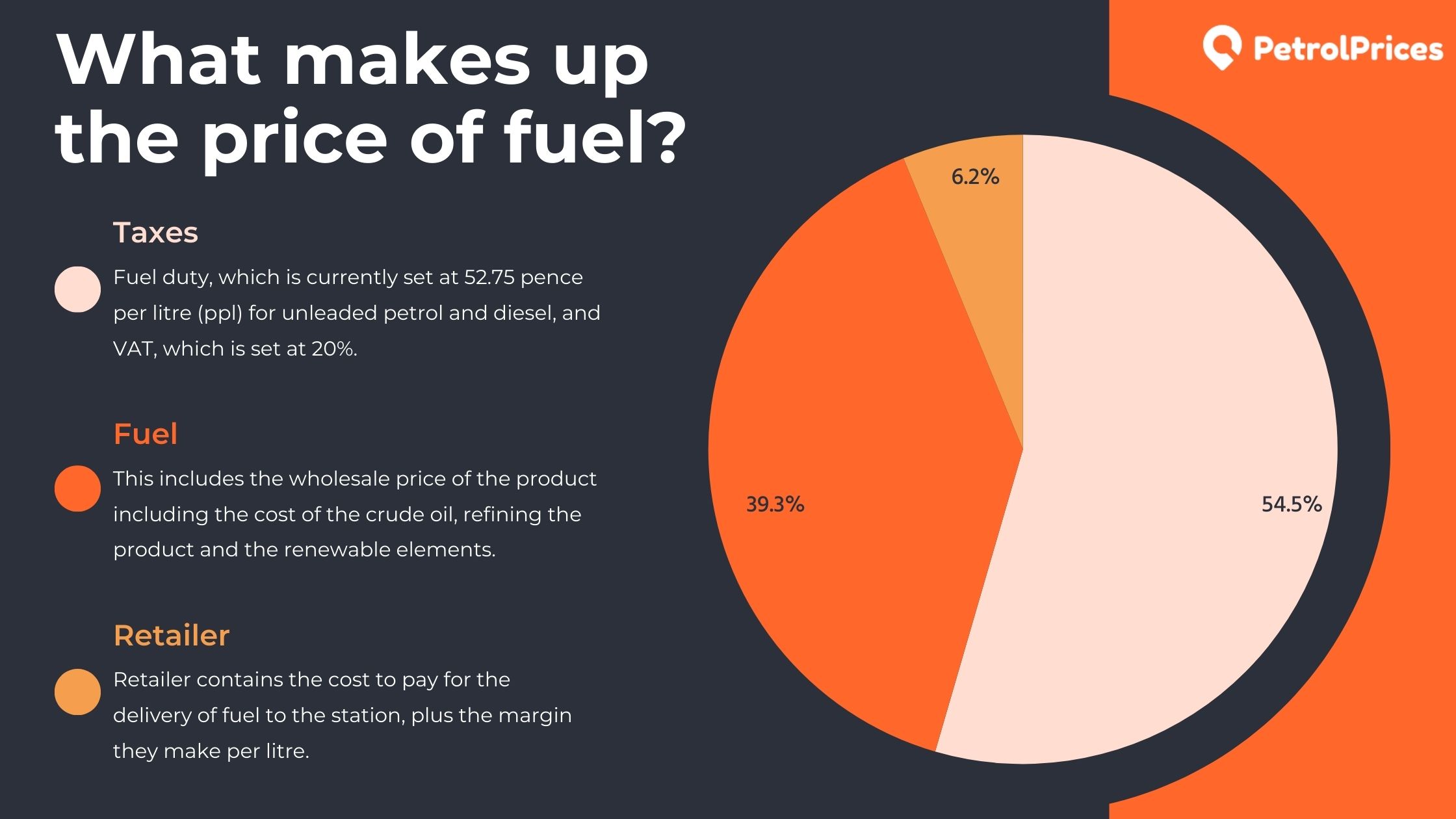
Prices are rising due to increases in the wholesale price of fuel. Over 50% of the price of a litre in the UK is tax. That means more than half of what you pay goes to the government.

Why VAT Could Be a More Effective Lever

By contrast, a temporary cut to VAT would operate far more visibly. Since VAT is applied at the point of sale, any reduction would be reflected immediately in pump prices, giving drivers a clearer and more direct benefit.

It would also create a more level playing field across the UK’s mixed forecourt landscape. Fuel retailing is split between supermarkets, large fuel groups and independent operators, all of whom have different buying structures and stock cycles

A VAT cut being applied uniformly at the pump regardless of who owns the forecourt and ensuring that savings are passed on consistently.

A Persistent Knowledge Gap

Ultimately, the survey highlights more than just a lack of awareness. It points to a deeper disconnect between experience and understanding even those most exposed to fuel prices don’t always grasp how they are structured.

With over a third of motorists misjudging one of the most significant components of what they pay, that gap between perception and reality is unlikely to disappear any time soon – and may continue to shape how drivers respond to both prices and policy.

Methodology: PetrolPrices.com obtained data via a survey of their users between 20th March & 26th March 2026. Survey of 575 UK adults who regularly use PetrolPrices.com price comparison website or app.

The Services King visits SGN Retail’s Texaco Galleys Corner Braintree

The Services King visits SGN Retail’s Texaco Galleys Corner Braintree

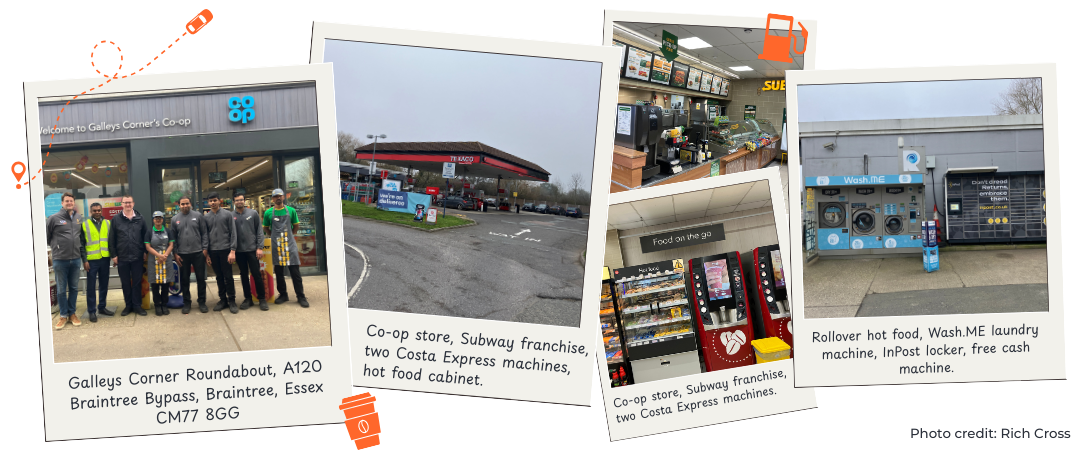
The first week of March saw The Services King head to Essex and a midweek visit to SGN Retail’s Galleys Corner Service Station in Braintree.

Situated on the A120 Braintree Bypass at Galleys Corner, this Texaco filling station opened in 1997 with a Star Market store alongside a Travel Inn hotel and Brewsters pub-restaurant from Whitbread. The forecourt had initially planned to open under Esso branding, but this was switched shortly before opening. This collection of facilities formed a new service area on the bypass, offering an alternative for those no longer venturing into Braintree town centre since the opening of the bypass in 1989.

The first week of March saw The Services King head to Essex and a midweek visit to SGN Retail’s Galleys Corner Service Station in Braintree.

The forecourt was acquired by the now-defunct supermarket chain Somerfield in 2007, who fully redeveloped the shop building a year later to open a new convenience store here. Somerfield were then acquired by The Co-operative Group, with the store rebranding to Co-op Food in 2010. Another site refresh in 2017 saw the removal of a rollover car wash as well as the introduction of a Subway franchise to the store. The car wash made space for additional parking bays.

SGN Retail acquired a lease assignment on the site in June 2021 and as a result retained the existing partnerships with Texaco and Co-op. On the forecourt, additional facilities include a Wash.ME laundry machine and InPost parcel locker as well as a free cash machine. Inside the store, the Subway franchise remains and sits alongside food to go offers from Costa Express, Rollover and a range of hot food from the Co-op brand.

During my visit on 4 March, I met with SGN’s Property Director Tom Peacock as well as Commission Operator Mohan Samy and Store Manager Naveen (pictured).

SGN Retail Galleys Corner Service Station

Location – Galleys Corner Roundabout, A120 Braintree Bypass, Braintree, Essex CM77 8GG

Opening Hours – 24/7

Shop Brand & Facilities – Co-op store, Subway franchise, two Costa Express machines, hot food cabinet, Rollover hot food, Wash.ME laundry machine, InPost locker, free cash machine

Number of pumps & fuel grades – 8 pump islands with unleaded and diesel. Supreme Unleaded and Supreme Diesel available on select pumps

40% of Private Car Sellers Settle for Less, Losing £908 on Average

40% of Private Car Sellers Settle for Less, Losing £908 on Average

Selling your car privately can seem like the best way to get a better price than you would from a dealer or online car-buying platform, but it often comes with hurdles many sellers don’t always anticipate. Drivers can face a time-consuming process, the challenges of haggling prices, and insurance worries when it comes to test drives.

A new survey of 1,700 UK drivers who have previously sold a car privately, carried out by short-term car insurance experts Tempcover, highlights these challenges, as well as the lessons motorists have learned to make the process smoother and get a fair price for their car.

Price, Speed and Control Are Top Reasons Drivers Sell Privately

Many motorists are drawn to selling privately for the personal rewards. The top reason drivers chose to handle the sale themselves was to achieve a higher final sale price (26%), reflecting the belief that private sales can put more money back in their pocket than trading in with a dealer or using an online car-buying service.

Speed was also a key factor. Nearly a quarter of respondents (24%) opted for private selling because they thought it would be quicker. Another 12% valued having more control over the process, while 10% reported positive past experiences was enough to give them the confidence to go down the same route again.

Nearly 40% of Private Car Sellers Accepted Less Than Their Asking Price

While the hope of a better payout motivates many private sellers, the final sale price often tells a mixed story:

  • 59% of sellers received their full asking price.
  • 39% accepted less than their original asking price.
  • 2% managed to secure more than their initial asking price.

The average asking price for a privately sold car was £6,826, while those who accepted a lower offer settled for an average of £908 less. Over half (54%) of sellers who accepted less saw a price drop of under £500, highlighting the importance of having a clearer idea of  a car’s value before negotiating.

Drivers who accepted a lower offer often did so for practical reasons, prioritising speed, convenience, or other concerns:

Reason for Accepting Less Percentage[1]
I wanted to sell quickly / needed money urgently 47%
I wanted to avoid additional viewings / hassle 39%
I was frustrated with too many enquiries or time wasters 17%
I wasn’t sure how much my car was really worth 15%
The buyer discovered issues during inspection or a test drive and used them to negotiate the price down 12%
I was worried about depreciation or the car losing value 12%
The buyer negotiated aggressively 10%
I was concerned about buyer safety or meeting strangers 6%

Private Car Sales Take Two Weeks on Average

According to the survey, which asked drivers how long it took to complete the sale of their last car after advertising it, the average time was 13.5 days. However, one in five sold within three days, over a quarter (28%) within four to seven days, while nearly one in 10 (8%) said the process took more than a month.

From start to finish, drivers spent an average of nearly six hours creating listings, responding to messages, arranging viewings, and handling negotiations. The pace of a sale depends on several factors, including enquiry responses, number of viewings, and how prepared sellers are with paperwork. Even with careful planning, private selling requires patience and persistence.

Key Lessons for Next Time

Selling a car privately can be rewarding, but it’s also a learning process. When asked what they would do differently next time, drivers highlighted practical steps that could make sales smoother, faster, and help them get the best possible price.

Top Lessons for Next Time

Percentage[1]

Allow more time for the sale / be patient

17%

Be firmer on negotiation / stick to asking price

17%

Use multiple platforms simultaneously for more exposure

16%

Get the car professionally cleaned or detailed before sale

14%

Take more care with photos and listing description

13%

Price the car more realistically from the start

13%

Other lessons included highlighting maintenance history, setting clear terms of payment and handover, and screening buyers more carefully

Interestingly, 37% of drivers said they wouldn’t do anything differently, while 5% said they wouldn’t sell privately again. Despite this, more than half (57%) of drivers said they would consider using an online car buying service for their next sale, even if it meant less financial reward than selling privately, showing that many are open to trading extra cash for a much easier experience.

Claire Wills-McKissick, short term insurance expert at Tempcover adds; 

“Selling privately may offer a way to get a better price for your car, but it’s important to remember the legal and safety obligations too. Our survey found  that nearly one in four drivers didn’t check if they were insured for test drives, an oversight that could leave both buyer and seller exposed. Using short-term insurance for test drives is a simple way to give both the seller and the buyer peace of mind

“By planning ahead, feeling confident in your price and presenting the car well you can make sure the perks of selling privately aren’t spoiled by an easily avoidable insurance risk. Taking a few extra steps can protect sellers legally, safeguard the buyer, and ultimately make the sale process smoother and less stressful.”

Sources & Methodology

This online survey of 1,700 UK drivers who’ve previously sold a car privately in the past 5 years was commissioned by RVU on behalf of Tempcover and conducted by market research company OnePoll, in accordance with the Market Research Society’s code of conduct. Data was collected between 20th and 27th February 2026. All participants are double-opted in to take part in research and are paid an amount depending on the length and complexity of the survey. This survey was overseen and edited by the OnePoll research team. OnePoll are MRS Company Partners, corporate membership of ESOMAR and Members of the British Polling Council. Unless otherwise specified, all insights are drawn directly from this survey’s results.

[1]Respondents could select more than one answer option.

How do petrol stations purchase fuel?

How do petrol stations purchase fuel?

Fuel can typically be purchased on a Spot or Contracted basis.

Spot purchases are most affected by sudden price changes and supply disruption. Suppliers publish their prices daily for retailers to either accept or reject or price on the live market. Some retailers may have multiple supply options so can shop around.

Contract purchases can take different forms, but they will be linked to a global benchmarks. The main data provider is S&P Global Platts and so these contracts are often referred to as ‘Platts plus’ contracts.  Platts publish a daily price and fuel distributers will add their agreed premium (delivery, profit etc) to this, to form a contracted price. This is a daily contracted price and most commonly takes affect two days after, where Mondays close if effective for deliveries on Wednesday.

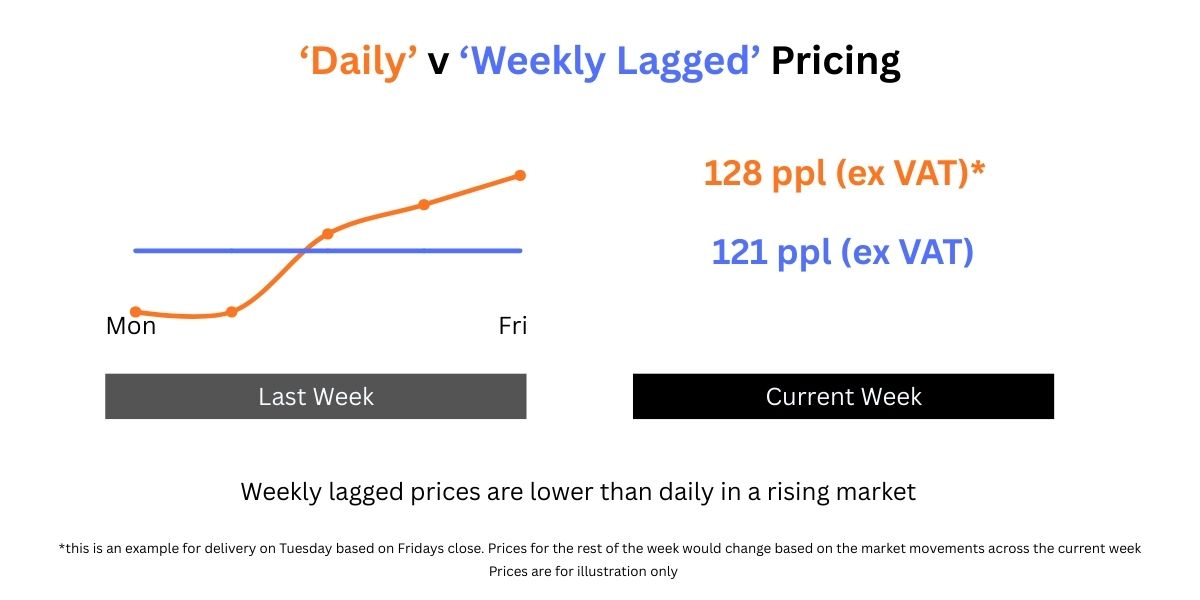
Another common method is a ‘weekly lagged’ price where the closing prices for a week are averaged and then used to price the following weeks deliveries. So, the closing values from Monday to Friday week 1 are used to price deliveries in week 2.

Then there are less common 2-week lags, 3-week lags, monthly lagged, current week, current month, and more.

weekly lagged pricing

It’s up to the fuel supplier and the station operator to agree the pricing mechanism. In short a daily based price is better in a falling market and a weekly lagged (or 2 weekly lagged) is better in a rising market.

Retailers may even split how they purchase with different volumes on different pricing mechanisms in different areas. Having optionality on contracts can sometimes help retailers be more competitive.

Contracts will usually be volume based and so even if a retailer has a contract in place if demand spikes, they may need to purchase outside of their contract on a spot basis.

In a competitive environment having different contracts and purchasing patterns can ultimately help the consumer. However, in a rising market such as what we have seen it can lead to wider pricing spreads and margins creep up. As stations purchase on higher spot prices they have little to no option to increase prices and may even take a hit on margin to remain somewhat competitive. This reduces competition for stations on weekly lagged or longer deals allowing them to either hold prices or increase for additional margin.

Why has diesel increased so much more than unleaded?

Why has diesel increased so much more than unleaded?

In the UK for every 1 litre of unleaded consumed 2 litres of diesel are consumed. Diesel is used globally for heating, shipping and road transport.

The UK produces more unleaded than it uses and is a net exporter of unleaded. However, we are ‘short’ of diesel, meaning the UK’s requirements are greater than its production.  Diesel is imported to make up the shortfall. This structural imbalance can leave the UK more exposed to diesel supply disruptions than unleaded. In 2025 the UK was a net importer of 4 million tonnes of diesel and a net exporter of 3.5 million tonnes of unleaded.

In addition to this, and more importantly is the type of oil that comes via the Strait of Hormuz.

Not all crude oil is the same, and there are two main attributes that can help categorise oil; how ‘sweet or sour’ it is and how ‘light or heavy’ it is.

The sulphur content of the crude defines if the crude is sweet (low sulphur) or sour (high sulphur). Sulphur is an impurity that may need to be removed, and so sweet crudes tend to be more valuable than sour crudes.

The ‘American Petroleum Institute Gravity” or “API Gravity” is a measure of how heavy the crude is. Lighter crudes, which have a higher API Gravity value, will yield a higher percentage of lighter more valuable products such as gasoline.


oil-price-article-header

In the US the West Texas Intermediate (WTI) is the main crude grade, and it would be categorized as a light sweet crude, perfect for refining high quality gasoline. In the UK our main crude is Brent, named after the Brent oil fields in the North Sea, it is also a light sweet crude, although not as light or as sweet as WTI.

WTI has a typical sulphur content of 0.24 to 0.34% and an API gravity 39-40. With a typical refining yield of 24% diesel and 46% gasoline.

Arab Light, one of the major crude benchmarks affected by the effective closure of the Strait of Hormuz, typically has a 1.7% sulphur and 31.7 API gravity and would be classed as a medium sour crude. A typical yield would by 40% diesel and 25% gasoline. Middle East medium sour crude raced to all-time highs over Brent last week.

The properties of the oil heading east to China and India are like that of Russian Urals, which had been sanctioned by the US, however these sanctions have been temporarily lifted due to the supply disruptions. The price of Urals deliveries to India has surged to a premium over Brent for the first time since September. Urals was priced at $22 a barrel over Brent on Monday, the highest level since at least December 2022.

Limiting supply of crudes that yield higher volumes of diesel has been a major factor in driving diesel prices higher. This in turn has pushed the price of heavier crude oils higher. Traditionally Brent and WTI have traded at a premium to heavier crude benchmarks however that has narrowed and even reversed since the US and Israeli strikes on Iran.

Wholesale prices are dropping so will prices at the pump fall?

Wholesale prices are dropping so will prices at the pump fall?

Headline prices of crude oil are dropping back from $115/bbl. We last saw prices that high in July 2022 following the Russian invasion of Ukraine earlier that year. Brent crude prices have started to drop following US President Donald Trump’s statement that the Iran war was largely over. Brent prices dropped to $92/bbl on Monday.

But what does this mean for unleaded and diesel?

Wholesale unleaded prices have risen 12 pence per litres (ppl) since the start of March while diesel price are up over 28ppl!

The average price for unleaded at the pumps has increased 5.3ppl in March while diesel is up by 9.4ppl. So, although pump prices have increased quickly, wholesale prices have moved much faster. There is therefore a high chance that we will see further price increases at the pumps even if headline Brent prices started to fall.

What will be noticeable is a wider range of prices. When volatility increase so does the range of prices across petrol stations. So, shopping around really does help you save money on fuel.

It’s worth noting that the difference between wholesale and retail prices was below the six-month average heading into March and so there was already upward pressure on pump prices.

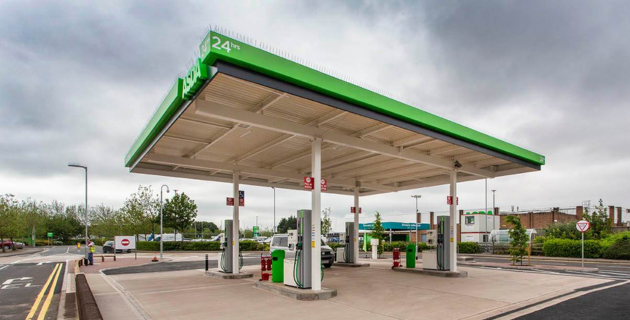
Asda Pricing

Not all petrol stations will have been affected by all of these increases yet. Due to their purchasing contract, delivery dates and stock levels each station will be affected slightly differently by these wholesale price increases.

The average unleaded is currently at 139ppl and diesel 155ppl. Prices aren’t likely to have peaked just yet. Even if wholesale prices continue to fall, which is a big if, unleaded may well reach 141-143ppl and diesel 165-168ppl. This is based on our assessment of the wholesale market and historic 6-month trends. It is possible that the worst price increases are over for unleaded drivers but there is likely more purchasing pain for diesel motorists.

The market continues to be very dynamic with wholesale diesel prices sheading 9 ppl on Monday and unleaded 3pp.

The rising diesel wholesale price have led to inflation fears. The Bank of England (BoE) are due to announce their stance on interest rates on the 19th March. In February markets where pricing in a rate cut however the recent increases have changed sentiment and now the BoE are expected to hold rates.


Thank you all for your continued support of the PetrolPrices mobile app and web site. We have seen a 10x increase in traffic over the last week. Apologies to anyone that has noticed a reduction in app speed, we are working hard to ensure we have the best possible service. If you have found the app helpful, please take the time to leave a review in the App Store or Google Play.

Unleaded and Diesel Prices Set to Rise

Unleaded and Diesel Prices Set to Rise

Fuel prices edged higher through February, with unleaded rising by an average of 1.2 pence per litre (ppl) and diesel by 1.8ppl at the pump.

While these increases appear modest, wholesale markets moved significantly faster. Both unleaded and diesel rose by more than 5ppl across the month, compressing retailer margins as the gap between wholesale and pump prices fell below the six-month average. The sharpest wholesale increases occurred in the final third of February, although the steady nature of pump price changes meant many motorists may not have noticed the gradual rise.

By the end of the month, momentum was clearly upwards. Across February, 5.8 times as many filling stations increased prices as reduced them, indicating sustained upward pressure.

Despite global oil markets remaining technically well supplied, geopolitical tensions were the primary driver of higher prices. Escalating rhetoric between the US and Iran over Iran’s nuclear programme pushed crude markets higher. By the end of February, Brent crude had reached $72.32 per barrel, an eleven-month high. 

asda station

On 28th February, military action by the United States and Israel against Iran marked a significant escalation in the region. In response, Iran launched missile and drone attacks across Gulf states, and the Strait of Hormuz was effectively closed after multiple tankers were targeted.

This escalation drove oil and refined product prices sharply higher. As of 4th March, wholesale diesel prices are approximately 51% higher than at the close of business on 2nd February, while unleaded has risen by around 29% over the same period. Brent Crude is currently trading at around $83 per barrel, up 26% since the start of February.

Around 20% of global oil supply passes through the 33-mile-wide Strait of Hormuz, with approximately 80% of those volumes destined for Asian markets. While the UK does not rely directly on these flows, global supply chains are interconnected. Disruption in one region can lead to cargoes being redirected, tightening supply elsewhere and supporting higher prices internationally.

Periods of rising prices can also trigger short-term demand spikes as motorists seek to fill up before further increases. Although both government and industry have indicated there are no immediate supply shortages in the UK, additional strain on inland distribution networks can increase the risk of localised disruption.

Motorists are advised to maintain their usual purchasing patterns and avoid panic buying.

The PetrolPrices app has experienced a sixfold increase in traffic in recent days, reflecting heightened consumer concern. Some users have reported slower performance during peak times, and we are working to ensure drivers continue to receive accurate and timely pricing information. If you find the service useful, please consider leaving a review on the App Store or Google Play to help us continue providing this free resource to UK motorists.

Drivers Still Concerned About Fuel Prices — Why Transparent Pricing Matters More Than Ever

Drivers Still Concerned About Fuel Prices — Why Transparent Pricing Matters More Than Ever

New research from Close Brothers Motor Finance highlights that fuel prices remain one of the biggest financial worries for UK motorists, even as new price-comparison initiatives are introduced to improve transparency at the pump.

According to the Close Brothers Motor Finance study, more than a third of drivers say they are concerned about fuel costs over the next 12 months. This ongoing anxiety reflects the continued pressure on motoring budgets, where fuel, insurance, maintenance and road conditions are all contributing to higher overall running costs.

While government-backed comparison schemes aim to improve visibility of pump prices, the findings from Close Brothers Motor Finance show that motorists are still looking for practical, everyday ways to cut their fuel spend.

Fuel Costs Still Top Drivers’ Concerns

The Close Brothers Motor Finance research makes clear that fuel remains the single biggest cost concern for many motorists. Even with greater availability of price data, drivers want reassurance that the information they rely on is accurate, up to date and easy to act on.

These insights from Close Brothers Motor Finance reinforce a simple truth: visibility alone isn’t enough. Drivers need tools that help them quickly identify cheaper fuel nearby and adjust their refuelling habits to save money consistently.

Why Real-Time Comparison Matters

Close Brothers Motor Finance emphasises that wider motoring expenses – from insurance increases to vehicle maintenance – are compounding financial pressure. In this environment, being able to compare fuel prices in real time can make an immediate difference to monthly driving costs.

The findings underline that concerns extend beyond fuel alone. However, fuel remains one of the most frequent and controllable expenses for drivers. With the right comparison tools, motorists can take small but consistent steps to manage their overall motoring budget more effectively.

As highlighted by Close Brothers Motor Finance, improving transparency is only the first step. The real benefit comes when drivers actively use comparison tools to choose better-value fuel stations and reduce the cost of every journey.

Petrol and diesel prices fell in January; will they continue to fall?

Petrol and diesel prices fell in January; will they continue to fall?

On 2nd February, the UK government formally launched its Fuel Finder scheme. Under new rules, retailers must submit price changes within 30 minutes, enabling drivers to view near-real-time pricing via platforms such as PetrolPrices. The policy follows the Competition and Markets Authority’s recommendations to increase transparency and competition.

Do you think the new Fuel Finder scheme will reduce fuel prices?
© Kama

January delivered a sharp rebound in global oil prices, but UK motorists saw fuel prices fall at the pump.

Brent crude opened the year close to $61.62 per barrel, reflecting the heavy price declines seen through 2025. However, geopolitical tensions quickly took centre stage. Ukraine stepped up attacks on Russian refining and export infrastructure, while the United States dramatically escalated pressure on both Iran and Venezuela. Washington imposed sweeping penalties on countries trading with Tehran and moved naval forces into the Gulf, raising fears of potential disruption to maritime traffic through the Strait of Hormuz. Iranian exports fell for a fourth consecutive month, and US enforcement action against Venezuelan oil shipments further tightened near-term supply.

These risks pushed Brent steadily higher through January, reaching six-month highs above $70 per barrel by the end of the month, a $10 increase. Earlier in the month, tensions between the US and the EU also flared after President Trump threatened to annex Greenland, further adding to market volatility and risk premiums.

Despite this, UK pump prices fell. Unleaded dropped from 135ppl at the start of January to 131.4ppl by month-end, while diesel fell from 144ppl to 140.3ppl. These reductions reflected wholesale price declines observed late in 2025, which finally fed through to retail prices.

Wholesale prices, however, moved in the opposite direction in January, as global supply fears took precedence over oversupply. This divergence compressed margins across the fuel retail sector. By the end of the month, the retail-to-wholesale spread sat more than 3ppl below its six-month average for diesel and 1ppl below for unleaded, limiting the scope for further price cuts.

At the same time, pricing behaviour became finely balanced. The number of stations cutting prices is now broadly in line with those increasing them, signalling that the period of rapid price falls has ended. With wholesale prices rising, diesel is particularly exposed to price increases in early February.

Oversupply remains a primary price driver in 2026; however, geopolitical tensions currently dominate the pricing landscape.

Do you think this scheme will lead to a reduction in prices? Let us know in the comments or our poll.

If you have any questions on what Fuel Finder is, check out this page, or email us at [email protected] 

What’s your view on the new Fuel Finder scheme?
© Kama

Car Ownership Survey: Over One In Five Uk Drivers Keep Their Cars For Six To Nine Years

Car Ownership Survey: Over One In Five Uk Drivers Keep Their Cars For Six To Nine Years

Many UK motorists are choosing to keep their current vehicles instead of upgrading. To explore the factors influencing this trend, temporary car insurance experts Tempcover surveyed 1,000 drivers across the UK. The research reveals how long vehicles are currently being kept, the reasons drivers are postponing upgrades, and their thoughts on switching to electric vehicles ahead of the 2030 petrol and diesel ban.

More Than One in Ten Drivers Keep Their Car For a Decade or More

11% of UK drivers report holding onto their cars for at least ten years or more, showing a focus on maximising vehicle lifespan and value.

A further 21% keep their cars for six to nine years, while 40% replace them every three to five years, suggesting a balanced approach between getting good value and staying up to date with newer models.

At the other end of the spectrum, some drivers prefer to upgrade frequently. Nearly one in five (19%) replace their car every one to two years, and 3% change vehicles more than once a year, suggesting they prioritise access to the latest models and deals.

Factors That Delay Decisions on Replacing a Car (UK Drivers Survey)
Reason for delaying replacement Respondents (%)
I'm getting the most out of my current car 41%
New cars are too expensive 39%
Running costs (insurance, tax, fuel) are too high already 30%
I'm happy with my current car's performance and features 29%
Interest rates / finance deals are unattractive 22%
I'm attached to my current car 16%
Cars don't hold their value anymore 14%
I'm waiting until EVs become more affordable 11%
Environmental reasons (want to keep using what I already have) 10%
I haven't found a car I like enough to replace it 9%
New Car Prices Delay Upgrades for 39% of UK Drivers 

The decision by many UK motorists to keep their current vehicles is driven primarily by cost and practicality. Four in ten (41%) motorists say they’re getting the most out of their current car, while 39% cite newer vehicles being too expensive as a reason for delaying upgrades.

Running costs are also a factor, with 30% pointing to high insurance, tax, and fuel bills for newer cars, while over one in five (22%) say unattractive finance deals or interest rates have held them back. 

Beyond finances, some drivers are motivated by attachment or satisfaction. 29% are happy with their current car’s performance and features, 16% feel attached to their current vehicle, and 10% keep it for environmental reasons.

Major Repair Costs Drive Most Car Replacements

When it comes to finally replacing their car, practicality outweighs preference for most UK drivers. The top reason for parting ways with a vehicle is the cost of major repairs becoming too high, cited by more than one in five (22%) motorists.

A further 10% said they were prompted to upgrade after a failed MOT or safety concerns, while 11% chose to sell once their car began losing too much resale value.

Not all replacements are problem-driven, though; one in five (20%) upgraded for access to newer technology or features, and 9% did so due to a lifestyle change, such as a growing family or relocation. Meanwhile, a smaller number of drivers made the switch for environmental reasons (4%) or took advantage of a trade-in or finance deal (6%).

Main Reasons UK Drivers Replaced Their Last Car
Reason for replacing last car Respondents (%)
Major repair costs became too high 22%
Desire for newer technology or features 20%
The car lost too much resale value 11%
Failed MOT or safety concerns 10%
Lifestyle change (e.g. family size, moving house) 9%
Running costs becoming too expensive (e.g. fuel, tax, insurance) 8%
I was offered a deal or upgrade through finance or a trade-in 6%
Wanting to switch to a more eco-friendly vehicle (EV or hybrid) 4%
I didn't like it anymore 4%
2030 Petrol and Diesel Ban Sparks Mixed Reactions Among Drivers

The upcoming 2030 ban on new petrol and diesel cars is prompting some UK drivers to rethink their plans, but not everyone is ready to make the switch. Almost one in five (19%) say they’re now considering moving to a hybrid or electric vehicle earlier than planned.

However, many remain uncertain. More than one in ten (13%) plan to delay upgrading until they understand the rules better, while 10% are still unsure how the ban will affect them. Over a quarter (28%) say it hasn’t changed their plans at all, but 11% feel they’ll eventually have no choice but to upgrade.

Among those surveyed, 7% already drive an electric vehicle and say the ban won’t affect them. Meanwhile, 6% are holding off until EVs drop in price, and another 6% admitted they weren’t aware of the upcoming ban at all, highlighting an ongoing knowledge gap among motorists.

Most Drivers Feel Resourceful, Not Resentful, About Holding Onto Their Cars

Despite many delaying upgrades, most UK drivers have a positive outlook on keeping their vehicles for longer than planned. A third (33%) describe themselves as resourceful, saying they’re making the most of what they have, while nearly a quarter (24%) feel proud to be getting the best possible value from their car.

For others, practicality outweighs emotion, with 27% saying that keeping their car is simply a neutral or practical decision. However, a small number admit to less positive feelings – 8% feel frustrated that they can’t afford to replace their car sooner, and 2% even feel embarrassed about driving an older model.

Claire Wills-McKissick, temporary car insurance expert at Tempcover, shares her thoughts on the costs, risks, and benefits of long-term vehicle ownership:

“Many drivers are choosing to keep their cars for longer than planned, often as a way to manage rising costs. Holding onto a car can make financial sense, helping households manage expenses, but it comes with trade-offs. Older vehicles often require more maintenance, can incur higher repair costs, and may carry safety risks – all factors drivers should consider when deciding whether to replace their car.

“Regular maintenance is key if you’re keeping a vehicle longer than planned. Routine checks on brakes, tyres, fluids, and essential components help prevent costly repairs and ensure your car stays safe on the road. Drivers should also weigh the benefits of newer models, including updated safety features, improved fuel efficiency, and modern technology, which can offer added peace of mind, cost savings, and environmental advantages.

Temporary car insurance is a flexible solution for motorists navigating these decisions. It provides short-term cover for situations such as test-driving a potential upgrade, or keeping a replacement vehicle on the road while yours is being repaired.”