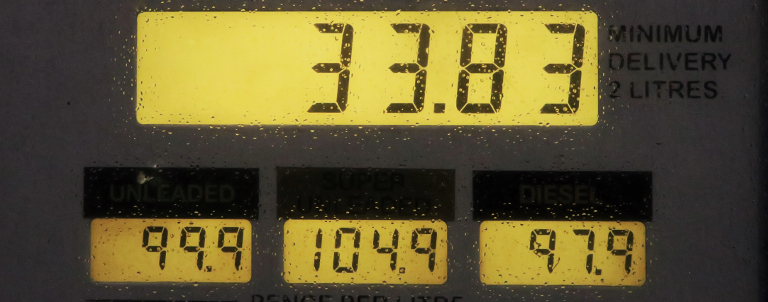
The cost of crude oil per barrel fell back below $50 the moment that Donald Trump announced that the USA would withdraw from the Paris accord on climate change. The move has prompted speculation that the US will ramp up both coal and shale oil production further, leading to higher carbon emissions and lower fuel prices at the pumps.
In the short term, the fall in the cost of oil should translate to a further 2p a litre reduction in the cost of fuel within two weeks, a £1 saving per fill up. While this is a timely boost to those on low incomes, the long-term environmental cost of losing the US from the climate change agreement is very harmful, experts believe we’re witnessing the unravelling of 25 years of environmental work in one US presidential administration over the next 5 years.
In case you missed it, here is Trump’s full withdrawal video:
Trump and Big Oil
As speculated several months ago, this is part of Trump’s ongoing vision to support the American Midwest, decimated by low investment in job creation and the loss of jobs from traditional gas, oil and coal production industries, closed during the Obama administration to meet Paris Agreement targets.
The harsh truth is that this decision isn’t being done to support jobs, it’s to support the coal, oil and gas industry of America. They were major backers of the Trump presidential campaign and are now looking to get their money back by encouraging the US government to lift all the restrictions they’ve been operating under for a decade.
As well as lifting domestic restrictions on coal, oil and gas production, there is a global power play at work here by what Trump is doing. The USA is 3rd in the list of global oil producers behind Saudi Arabia and Russia. Saudi Arabia has effective control of 65% of the world’s oil supply under the OPEC group of 14 member states. Almost 18 months ago, OPEC and Russia deliberately stifled the growth of American shale oil producers by producing high volumes of oil, forcing the global cost of oil down and in turn hitting the incomes of hundreds of low volume US producers.
What we are seeing now is the fightback of US gas and oil interests supported by the US government against OPEC and Russia’s aims to limit supply and keep the oil price higher. This can only mean in the short term global supplies of oil will be greater than demand, so we could see fuel prices fall a little further but not likely to reach the £1 a litre mark of Dec 2015.
What happens now?
However, while these price declines are good news, one cannot avoid feeling a sense of despair about the Paris Agreement and what will happen now that the world’s biggest economy has decided to withdraw from a plan to tackle climate change.
This has similarities to the UK government’s attitude to tackling pollution in our cities. If the leaders of the world are not serious about tackling these issues head on, then what chance do we, or future generations have coping with climate change and pollution in the future?
Is it worth having lower cost fuel if it means the environment is worse off? If the US doesn’t follow climate change rules, then why should the UK government meet pollution targets? Let us know in the comments below.
In an important move designed to tackle driver distraction caused by mobile phone use while driving, Apple announced yesterday that their latest operating system for iOS11 will contain a new “do not disturb while driving” mode. The new measure, announced at the Apple Developer Conference yesterday, has already been hailed as one that will save lives across the world and is likely to prompt Google to roll out a similar mode for Android devices.
Apple already know when a device is in a moving vehicle, connected to Bluetooth or a cable to the car, so the mode can turn itself on automatically without needing to be prompted. This mode also impacts iPhone users who are passengers too, who can disable the mode following a set process.
Do Not Disturb While Driving Mode will block all notifications (including texts, WhatsApp and Facebook Messenger) and incoming calls if not connected to an in-car phone system. It will also lock the screen so a driver is unable to access ANY apps while moving.
A small handful of apps WILL work while driving, Google and Apple Maps will function, but you will be unable to input a new destination or change the search in Maps while still in motion. Some large app companies that deliver transportation services have expressed concerns that this creates a monopoly on driver attention if only a few apps can work on iPhones.
Users also have the option of setting up an auto reply so that if anyone calls or contacts you while driving, it automatically sends a message by text or messaging platform to say that you are driving and unable to respond now, try later.
The announcement follows a legal case 6 months ago where Apple was sued for not providing a do not disturb mode and a fatal accident occurred while someone was on Facetime while driving. Almost 25% of all fatal US road accidents are caused by mobile phone use and it’s on the rise.
Research published by the British Medical Journal link: (http://www.bmj.com/content/331/7514/428) shows that 60% of all accidents last year involved at least one driver using a mobile phone for a call or text, which is a huge reason why the police are getting tough on penalty points and fines for mobile phone use at the wheel.
I guess the first question on our minds is how long has Apple has taken to do this and why do it now? It doesn’t seem likely that they will be introducing this mode just because of one court case 6 months ago. It seems far more plausible that Apple can see that as the rate of accidents caused by mobile phone use rises, perhaps to the 60% rate of the UK, they need to put this feature in now to avoid any legal cases held against them in the years to come.
It will undoubtedly save some lives, but if passengers can easily get past the mode then what is the point, as some drivers will just pretend to be passengers surely? Isn’t this more of a gesture rather than a zero tolerance “iPhones will not operate when a vehicle is moving”
It also opens a wider issue about whether Google will follow Apple’s lead and roll out a similar mode on their operating system. Also will we start to see car manufacturers employ similar restrictions on their new app based dashboard consoles?
What do you think about this announcement? Is it great news and long overdue or do you think it’s just Apple trying to avoid big legal challenges in the future? Will Google follow and will it make car firms restrict in-car systems the same way? Let us know in the comments below.
As part of Operation Snap from October 2016 onwards, North Wales Police has been accepting dash cam, helmet cam and mobile phone footage from the public. Of the 100 clips submitted, 80 have led to driving convictions, in some cases leading to prison time for some drivers caught out by this new approach.
It comes at a time when there are 27% fewer traffic police on Britain’s roads than 2010, according to Home Office data. With the UK’s roads becoming increasingly lawless places to drive and with fewer police on the roads due to government cuts, the installation of a dash cam is a great way to protect a driver from false accident claims, with some insurers also offering 20% discounts on policies if you have a dash cam installed.
Dash cams as a video witness
But it seems that an interesting by product of dash cams is that they can also act as additional eyes and ears on the roads for the police, Operation Snap has proved such a success that other police forces across the country are looking at rolling out something similar in their own regions.
In a recent article from Auto Express, North Wales Police figured out that it took 15 hours of police time per incident to process and prosecute for each driving offence if a traffic police office caught someone in person. As camera footage is now being treated as an eye witness account of a driving offence, the amount of time to deliver a process and prosecute a penalty has tumbled to less than an hour.
The process of uploading the clips takes minutes and is very easy. Public generated video footage for driving offences is now accepted in court as evidence and covers a range of areas such as driving without due care and attention, dangerous driving, using a mobile phone at the wheel, improper control of vehicle and running red lights or contravening other traffic systems, such red line zones and bus lanes.
“The operation will enable our communities to help us assist in a key policing priority, to continue to keep the roads of South Wales safe. Our officers will still be policing the roads in our force area 24 hours a day, 7 days a week but we know that members of the public are keen to help, and I am pleased that with the support of Go Safe, we can provide an easier way to submit footage and images either whilst travelling as a passenger, or using the footage of dash cams that can submitted later when the driver has finished their journey.”
Jeremy Vaughan, Assistant Chief Constable of South Wales Police
Is this the future of traffic policing?
Only 2 penalties from 80 issued have been appealed thus far, as the power of video evidence is almost impossible to deny. Capturing offenders is a good thing and will perhaps make some drivers think twice about offending knowing a dash cam might be recording even if the police are not there.
However, using video footage as evidence of traffic offences is fine to an extent but it fails to hide what seems to be a bigger concern, that is a large decline in traffic police due to Government austerity measures. We told you in an article 2 months ago about how we think that Britain’s roads are becoming more binary. On the major arterial routes, they are becoming heavily monitored with cameras and ANPR every mile using “smart motorways” and then the clear majority is becoming more lawless and dangerous places to drive than ever before.
As the police pull away from the front line, is the concept of “crowd-sourced police intelligence” using dash cams the future of policing? Are dash cams going to be made compulsory for all drivers and would it be a law that all drivers must allow police access to that video evidence or face prosecution themselves? It sounds like something out of a sci fi novel but the way it’s going it could be a reality within 10 years.
Do you think this is a great way to support the Police on Britain’s roads or a sad indictment of the current state of the Police caused by years of Government cuts? Let us know in the comments below.
Plug-in cars make up less than 0.10% of all car sales globally, it’s a tiny fraction of the market that ‘Big Oil’ deems to be insignificant enough to be ignored, in fact, OPEC (Organisation of the Petroleum Exporting Countries) believes that by 2040, the Electric Vehicle market might just make up 1 percent of all new cars being sold. Is this naivety, bravado or stupidity?
Oil crisis
Given that many of the big oil suppliers are already in financial difficulty (yes, really), why aren’t they doing more about the inevitable crisis that they will face? Over half of the global oil demand is driven by transportation needs, agencies such as Bloomberg New Energy Finance predicts that 2028 will be the year of reckoning for the big oil producers, but before that, we should see an impact on the number of barrels produced as soon as 2023.
In all honesty, the figures being stated are a little hazy, much of it depends on what perspective you’re viewing them from, but sources suggest that Electric Vehicles could displace up to 2 million barrels of oil each day by 2023.
This number of barrels is significant; a similar number of ‘overstocking’ is said to have caused the oil crash in 2014, in which a number of oil producers went bankrupt, whilst others looked for bailouts from state or investors. The debts incurred are partly to blame for oil prices today, some reports suggest that the debts run into $trillions.
The rise of the electric vehicle
As with any technology, the wider the adoption, the cheaper it becomes. A significant cost of any electric vehicle is the power source, but prices for batteries fell by 35 percent last year, and with the likes of Elon Musk (Tesla) et al all working hard to develop affordable yet use-able vehicles, the prices will only come down further.
Studies show us that 2040 should see practical, long-range Electric Vehicles on sale for the equivalent of $22,000 USD in today’s money, it’s expected that they will have a 35% market share of all new vehicles being sold. Somewhat different to OPEC’s claim of just one percent.
It’s true that the current generation of fully electric vehicles leaves a little to be desired in some departments, but we’ve gone from ugly, slow and impractical to fast (very fast in fact), stylish and a ‘want’ within just a decade – where will the next ten years take us?
OPEC
It seems that OPEC’s insistence on the failure of the electric vehicle is akin to sticking their fingers in their collective ears whilst shouting “la la la, we’re not listening” and hoping that it all goes away. This almost definitely isn’t going to happen.
However you view EV’s, you can guarantee that they are very much here to stay and will become an integral part of our daily lives, just as society relies on fossil fuels in today’s world, you can bet that we’ll feel the same in another decade or so about EV’s.
What do you think will happen to oil companies in the future? Have OPEC wildly underestimated the appeal for electric vehicles? Let us know in the comments below.
It wasn’t that long ago that the media was full of stories about the mis-selling of PPI, with banks being the prime targets for vitriol and blame (with good reason, some would say).
Now, the PPI scandal has gone quiet and many of the legal firms that were ‘only too happy to help’ (for a 30% fee) are now idly twiddling their thumbs, looking for the next big scandal. Could PCP finance be that scandal?
Financial Conduct Authority
There is of course a little more to the headline. It’s actually the Financial Conduct Authority (FCA) that has started investigating whether there is a case to answer.
The UK car finance industry is worth approximately £40 billion, second only to property mortgages. That makes it big business and, just as in the world of property, close scrutiny has revealed a number of issues that potentially need addressing. One of those is Personal Contract Plan (PCP) finance.
We should point out that there is nothing wrong with PCP financing when done responsibly – it’s a great way of being able to afford a new car without having to pay to own it outright and the monthly payments are usually significantly less than a traditional loan or hire purchase agreement.
This is because the value of the car is taken into account when the payments are calculated. As the car will still have a value at the end of the agreement (unless it is written off), this value can be used as the final payment; you won’t actually own the car.
PCP versus hire purchase
The mis-selling time bomb relates mainly to the fact that many PCP contracts may have been sold without full explanations of interest rates, either through deliberate mis-information or ignorance. Neither of those excuses will stand up in a court of law.
There is also an element of massaging the final valuation of the car, which leads the purchaser to believe there will be ‘profit’ at the end of the agreement, though in all honesty that’s a smaller issue.
According to the National Association of Commercial Finance Brokers, there were approximately one million PCP agreements made last year. There are no statistics (yet) to tell us how many of those may be subject to a mis-selling investigation, but even if that figure is as low as 10%, that’s still a huge number of people affected.
The crux of the matter is really rather simple: were people told that they would end up paying more interest through a PCP agreement than they would through a traditional hire purchase agreement? Or that the ‘value’ of the car would be more than the actual value of the car?
Have you been affected?
At present, there is little to be done if you find yourself in that situation. However, understanding your agreement and figures involved could be an essential part of making a successful claim against your broker.
Our advice is to keep checking back here for updates to the situation. In in the meantime, revisit your paperwork and try to get an understanding of whether you could be affected by this type of mis-selling.
New figures from the Society of Motor Manufacturers show that sales of new diesel cars plummeted by 27.3% in April. The drop is likely to be in response to a proposed crackdown on the use of diesel cars, which is expected to take place after the UK’s general election.
The policy manifestos of all three major political parties contain plans to encourage diesel drivers off the road. The most extreme of these was the Liberal Democrat manifesto, which proposes banning all diesel cars by 2025 should the Lib Dems be elected.
It’s no wonder the government is under pressure to tackle the pollution crisis – London exceeded its target pollution levels for the whole of 2017 in the first five days of the year alone. British courts recently forced the government to publish a watered-down pollution plan, which contains details of new toxicity charges and clean air zones for some of the highest-polluting areas of the UK.
The uncertainty around future policy in relation to diesels, and lack of clarity on whether there will be a diesel car scrappage scheme, is evidently causing many motorists to avoid buying diesel cars.
Conversely, it seems there is another group of Diesel drivers who are entrenched and sticking to driving their diesel cars, come what may in terms of future charges.
Annual diesel sales down
Overall sales for diesels have only dipped slightly this year, going down by 1% compared to last year. This does, however, make for dim viewing when you consider that the industry overall has grown by 6%, with petrol car sales increasing by 11.5%. This seems to suggest that concerned consumers are opting to buy petrol vehicles instead of diesels.
The Society of Motor Manufacturers and Traders (SMMT) states that there were 1,285,160 diesel registrations in the UK in 2016, versus 1,318,707 petrol car registrations. With the production of diesel cars making up an estimated £26.4bn of Britain’s economy, encouraging people away from diesels (or even worse, banning them) would be a major risk to the economy.
Jaguar Land Rover, one of Britain’s most iconic car manufacturers, claims that nine out of ten cars it sells are diesel. It’s not hard to imagine what the impact of banning diesel vehicle sales could be on the business.
In the long term, drivers continuing to steer clear of buying new diesel cars could lead to job losses and potential plant closures. Not only this, but credit rating agency Fitch has warned that a crackdown on diesel cars might lead to a ‘rapid and large shift in demand,’ which could hit the used car market, causing the value of all owned diesel vehicles to plummet.
Does diesel do that much harm?
Contrary to what the recent anti-diesel press may be suggesting, new diesel cars produce very low emissions and emit next to no harmful toxins. The much-publicised statistic showcasing the fact that 9,500 Londoners die every year from diesel-related pollution is caused by older, pre-Euro 4 vehicles, including heavy goods vehicles and public transport such as buses and taxis.
At PetrolPrices.com, we believe that discouraging drivers to purchase diesel cars will harm manufacturing profits and damage – perhaps irreparably – one of Britain’s most flourishing industries.
Are you concerned about the impact moving customers away from diesels could have on the car industry? Do you think diesel is being misrepresented? Is this negatively affecting the value and future sales of a perfectly good fuel? Let us know in the comments.
British roads are some of the busiest in Europe and we are sure that many of our members have seen some strange things happen whilst driving.
Well, this is your chance to share those experiences with the rest of our members and don’t hold back. It is worth highlighting though that we will be moderating the comments just to make sure they’re not too strange!
Here are some of the strange experiences from the PetrolPrices team:
“Whilst driving up the M6 near Coventry saw a coach in the opposite carriageway completely on fire, the smoke was so great that you could not drive past so drivers had to stop in their lanes whilst waiting for the smoke to clear. It was like a scene from a war film and very scary and strange to watch a coach completely on fire”
Story from Jason, Managing Director
“In my local town centre, an elderly driver got confused with the sat-nav and they took a bit of a wrong turn… down a flight of concrete steps. The car was completely ruined and the chap was rather stressed by the whole ordeal. Since then, the council have put bollards in front of the steps to make sure something like this doesn’t happen again.”
Story by Nick in Marketing
“Probably the strangest thing I’ve seen would have to be a car rolling onto a roof in a road tightly packed with cars on either side. Simply had clipped one that was parked and rebounded off of another few before finally tipping up and rolling over. The driver was quite shocked but at the same time quite puzzled about her own effort.”
Story by Josh in Technical
Add yours in the comment section below and let’s celebrate the unique and strange nature of the British road network and what happens upon it.
Fuel prices in May 2017 continued to fall. With the per-barrel cost of crude oil down, supermarkets and major petrol retailers have passed cost savings on to drivers.
The average price for unleaded in the UK in May 2017 was 116.7 pence per litre. For diesel it was 118.0 pence per litre. the figures represent a month of month decrease of 1.6 pence and 2.1 pence respectively. The larger decrease in diesel prices is interesting and will be a trend that we watch closely over the coming weeks and months. Super unleaded and premium diesel prices also fell, by 1.9 pence on average. Even motorway service station prices fell during May, by 0.8 pence and 0.6 pence a litre.
Despite the decreases, prices are higher than they were in May 2016, when both unleaded and diesel stood at an average of 109.3 pence per litre. However, they are significantly lower than they were five years ago, when unleaded was 137.6 pence per litre and diesel 138.5 pence. In direct contrast, ten years ago unleaded cost 95.9 pence and diesel 96.8 pence per litre. While prices have generally been going down for the past few months, they are still fluctuating in a price range that has been in existence for a decade now – between 90 pence and 145 pence per litre.
OPEC and shale oil producers start dialogue
Unfortunately, it looks like we may not see another price decrease in June (though we remain optimistic). Last week, OPEC and Russia appear to agree to stick to reducing oil production levels for the next nine months. In theory, this should bolster the price of crude oil per barrel for the rest of the year. However, in reality it hasn’t had much impact, because US shale oil production levels have increased since February, thus negating production cuts elsewhere.
Now, for the first time, it seems that OPEC and the bankers who represent the many small-scale US shale oil producers are opening a dialogue about how to control global output and agree a price range for oil. If this happens, there can only be one outcome: higher fuel prices but within a controlled range of pricing. The target appears to be between $55-60 a barrel, so if they do agree a deal, prices will almost certainly increase in the second half of 2017.
The figures
The price of crude oil per barrel started at $49.15 in May, dropping down to $46 on 4 May 2017. From that point, it increased for almost the whole month, reaching $51.50 before falling back to $49.40 at the end of May. The price has changed by $5.50 per barrel, but has ended at almost the same place as it began. As mentioned earlier, oil producers want a price range of between $55-60 a barrel for the next nine months, so there is some way to go to achieve that level through oil production cuts.
What is happening at a regional level?
Based on our data, the biggest decreases in fuel costs in May were seen in Wales, where Cwmbran became the cheapest town in the UK, with average prices of 111.0 pence per litre for unleaded. It was hotly followed by several other towns in Wales at 111.2 pence per litre, as well as Thurrock and some parts of North Manchester. As ever, high concentrations of ASDA and Morrison’s sites drove prices down in many areas, as the brands continue the dominate the top 100 cheapest sites in the UK. The cheapest recorded site in May was in Tamworth at 109.7 pence per litre.
The most expensive town in the UK in May was Acharacle in the Highlands, with an average price of 133.9 pence per litre for unleaded. As ever the Scottish Highlands, Isle of Man and Isle of Wight had the highest average prices, alongside Inner London at 125.8 pence per litre. As expected, independent chains and motorway service stations dominate the top 100 most expensive places to fill up. The most expensive recorded site in May was in Central London, at 150.1 pence per litre for unleaded.
As ever, remember to set up and use our price alert email to make sure you are always aware of where the cheapest fuel is in your local area. If you are on the move and in unfamiliar places, our app will enable you to locate the cheapest and/or nearest fuel, wherever you may be.
Let us know in the comments section below what you thought of the fuel costs in May. Are they going to continue falling? What do you think of dynamic pricing? We would love to hear your opinions.
Do you fill up on the way to work, during the school run or on bank holidays? If you do, then you’re likely to start paying an average of £1 more per fill up very soon.
Artificial intelligence systems equipped with the ability to charge customers depending on location, demand and even the particular driver have arrived in the UK. They will be used by fuel retailers to make more money from customers who choose to fill up at the busiest times.
The tech comes from Denmark-based a2i Systems. The company is in late-stage talks with petrol retailers in the UK. If all proceeds as expected, the technology will be installed into forecourts within months. One of the leading supermarket brands is close to signing an agreement and will likely be the first to launch.
The new technology could lead to prices shifting several times over the course of a day, with a rise or fall of over 2p per litre (amounting to £1 a tank). The technology is already being used in most petrol stations in the US and Europe, where it is normal for prices to change up to ten times a day.
For those interested, the computer algorithm is modelled on the human brain. It scours databases of customer information to predict how they will behave. If it sees the station is having a busy period, then it will hike prices accordingly, in much the same way that Uber increases the cost of its fares to take advantage of high demand.
Similarly, in quiet periods it could drop prices to entice more customers in. In theory, this could mean that savvy customers who can predict the cheaper times of day for prices could fill up for much less than they are paying currently.
The ones caught out will be those left with no option but to fill up at the busiest times, such as during rush hour or on bank holidays.
Industry experts have mixed views about the new technology and the effect it could have on pricing. Luke Bodset from The AA commented,
“This represents a huge change which would be most unfair on commuters and families. It will wind them up no end as they will become wise to the fact that retailers can exploit price movements.”
PetrolPrices.com’s Jason Lloyd believes that,
“The UK has been behind the rest of the world on dynamic fuel pricing for years, so to hear that a supermarket is planning to do this may trigger the rest of the UK petrol retail market to follow.”
Smart pump pricing will both benefit drivers and frustrate in equal measure, but the logic behind it means that if you are smart about when you buy fuel, you can save money, while those who fill up in peak demand periods will pay more.
It will be interesting for PetrolPrices.com to try to make price comparisons once this type of technology has been implemented. However, we will remain committed to providing our members with an impartial source of price information. The new technology won’t affect that. We’ll let you know which providers are using smart pumps, so you know to expect a fluctuation of around 2 pence every day. As ever, our advice remains the same: use our service to compare prices and ensure you always get the best deals at any time.
Do you agree that these changes to pricing will be unfair to UK motorists in peak driving times, or do you see it as an opportunity to save money? Let us know in the comments below.
The automotive industry, along with the public sector and education sector, has been dragging its heels in terms of making the most of advances in digital technology. Why? Well, there are several factors at play, but one of the main reasons is that the automotive industry has been hugely profitable for a long time. This profitability has mean that embracing change has not been a top priority. After all, why change a winning formula?
However, several large companies (Google, Uber, Tesla) have disrupted the automotive sector of late, forcing incumbent automakers to rethink their future plans. We’ve all seen what the emergence of Uber has done to the taxi industry – it is the beginning of a transportation revolution as significant as the Model T Ford replacing the horse and carriage. In 20 years’ time, drivers will look back and wonder why we didn’t realise how backwards we were.
Driverless cars, 5G motorways and the death of diesel are three significant developments that are set to alter the dynamic of Britain’s roads over the next few years. As such, we’ve rounded up these and other changes to look at what the future of motoring in the UK really holds.
The death of diesel
Diesel’s days are numbered. The government is aiming for 80% of vehicles on the road to be zero emissions by 2050.
April 2017 saw a 27.3% drop off in new diesel car registrations, so it seems the push to demonise diesel car ownership is working. With scrappage schemes and city centre toxicity charges both in the pipeline, we can expect the proportion of diesels on the road to decrease steadily.
The Liberal Democrats are pushing for an outright ban of diesel cars by 2025. This is relatively pointless as a measure to tackle pollution unless it applies to heavy goods and public vehicles as well. However, it shows how fashionable the idea of getting rid of diesel has become among politicians.
Impact on UK Motorists: As it becomes more expensive to run a diesel car, and drivers have good incentives to scrap pre-euro 4 models for greener alternatives, it seems inevitable that diesel cars will slowly fade away into history. It’s unlikely to happen by 2025 though.
Worryingly, a large proportion of Britain’s car industry is subsidised by diesel sales. A fall in diesel vehicle sales could well accelerate the recent talk of job losses within the car industry.
Smart fuel pumps
Denmark-based a2i Systems uses artificial intelligence to change the fuel price at the pumps in real time. This technology is coming to the UK later this year, with one supermarket already in advanced talks about implementing it. Prices in the UK already change frequently. It’s common for pump prices to increase over busy times like weekends, for example, but currently most stations do this manually.
With the a2i system, pump prices will change based on who is filling up. Loyal customers looking for deals may see the price go down, while those driving expensive cars may see the price tick up.
At PetrolPrices.com, we anticipate seeing a supermarket combine smart pumps with its loyalty scheme. This could, for example, result in greater discounts at the pumps for customers who buy goods from the supermarket.
Impact on UK Motorists: Real-time dynamic pricing on fuel is inevitable. It will be arriving in the UK sooner rather than later. Smart pump pricing will both benefit drivers and frustrate them in equal measure. However, the logic behind it means that if you are smart about when you buy fuel, you could save more money each time you fill up. Just be sure to avoid filling up in peak demand periods, when prices will be at their highest.
Electric vehicles
Globally, there are almost 1. 5 million electric cars in use, compared with 1 billion combustion engine-powered vehicles. Even though electric car sales are growing ten times faster than cars powered by traditional fuels, it will take years to achieve anywhere near 50% of all cars on the roads being electric. Some experts predict that the UK will not be fully electric until 2075, while others feel that hydrogen cell power and other fuels will emerge to replace electric cars. Many see electric cars as a stepping stone rather than the end state.
Tesla is leading the way with electric cars and now every car manufacturer offers at least one electric model. However, they’re still seen as expensive and not yet as good as a traditionally fuelled car. The limitation on range, combined with rapid advances in battery technology, means the secondary electric car market is non-existent. This is keeping adoption in the marketplace low, as only new electric cars are bought.
Impact on UK Motorists: We believe that electric will stay a niche rather than a mainstream car market in the UK for the next five years. There needs to be a greater level of affordability, where second-hand electric cars with ranges of 400 miles per charge can be bought for less than £10,000. The availability of charging points and the speed of charge points also need to be resolved before mass adoption can take place. Tesla is looking at covering the entire outside of its cars in solar cells, to increase range and power the cars as they drive.
Connected cars
Seen by many as the prelude to “driverless cars” (we’ll get onto that later), a “connected car” relies on a computer system to perform most functions, reducing the actions required from the driver. Connected cars enable a host of digital services and media companies like Google and Facebook are keen to be inside the operating systems, so that they can provide services directly to drivers and passengers.
Take Tantalum, for example. Tantalum is building technology that turns the car itself into a digital service. You can fill up at a fuel pump and the car will make the payment for you as you drive off.
These cars can include internet access and can communicate with other “connected” devices. They have the potential to limit accidents by talking to other cars. In 95% of all road accidents, human error is the leading cause. It’s thought connected cars could reduce worldwide fatalities by 30%.
Many new car models are already connected. Some newer cars come with an app, enabling the driver to communicate with the car. They can even unlock it while hundreds of miles away.
Impact on UK Motorists: Connected cars are going to be a revolution for motorists, not only in terms of the services provided but also the reduction in the rate of accidents. UK motorists will find the range of new products and services overwhelming in the next few years. It won’t take long before people will think they can’t live without them – much like mobile phones.
Driver-less cars
A driverless, or automated, car is exactly as you imagine – it’s a car that can drive itself. They are operated by a powerful computer that follows a map of the roads and reads thousands of different things at once, in the same way the human brain does when we drive. Driverless cars use sensors to detect where road obstacles are in order to avoid collisions and prevent accidents.
Some cars are already semi-autonomous. Tesla’s range of cars can drive on some motorways in a driver-less way. Experts are suggesting they could be on UK motorways as early as 2019, although this may seem ambitious to the more sceptical among us.
The cars are already being trialled in some states across America. Nevada is a key state for driverless trials, largely because the road system is simple and has fewer cars. The first trial in the UK occurred recently, when a group of passengers were driven around London in a driverless bus.
Impact on UK Motorists: Experts suggest that driverless cars will kill the need to own a car. The predict that by 2050 no one will own their own car anymore, as they will simply get into a driverless vehicle and tell it where they want to go. This type of vision of the future may scare many people, but if you consider the amount of free time made available by not needing to drive, if the cost is low then the benefits could be significant.
5G motorways
The Labour Party manifesto pledged to bring 5G (the unreleased super-fast mobile network) to all motorways and major roads around Britain by 2019. This coincides with the country’s goal of being an “early adopter” for autonomous vehicles. The internet access would allow the cars to stay connected to their map system, as well as other cars, whilst moving along.
The current standard of internet connection is insufficient to enable connected vehicles to function fully. 5G would change this. It would also allow those with connected and driver-less cars to spend journeys watching films or working. A Google study found that the average commuter could gain an extra hour every day if he/she didn’t need to drive.
Impact on UK Motorists: 5G would mean vastly improved internet access on motorways for passengers, as well as facilitating driverless cars. However, the cost to invest in and deliver a 5G network on the main road system would be hard to justify without rolling out 5G across the rest of the UK at the same time.
New crimes (car hacking)
Many people are concerned by the security threats that all this new car technology will bring to Britain. Year upon year, cars are becoming more reliant on computer technology. The Society of Motor Manufacturers says that 1.5 million motorists a year now leave showrooms with cars reliant on computers.
The concern is that the security systems aren’t yet matching this advancement. However, it seems car manufacturers are starting to take notice of the threat. Vehicle manufacturers are investing billions of pounds to make cars safer and more intelligent, and are constantly investing in security patches to prevent cars from being hacked.
Sadly not all manufacturers are keeping pace. Jeep was famously caught out recently when hackers demonstrated that its new cars could be taken over remotely, including switching the engine off and opening the doors from many miles away.
Impact on UK Motorists: Motorists could be held to ransom by hackers and scammers unless there are serious advances on current security systems. This is perhaps the single greatest threat to the future of motoring. As cyber-crime is now the fastest growing type of crime globally, the risk is that hacking cars could become a scarily common new trend.
Are you excited about the future of motoring? Do you think the future of motoring will be better or worse than today? Let us know in the comments section below.