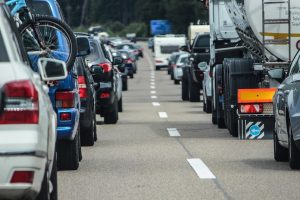
A comprehensive study of Britain’s most congested roads has found that motorists spend an average of ten days a year stuck in traffic.
Researchers from the Admiral insurance company considered travel times for different routes into 13 major cities around the country. Each city was then ranked by the increase in journey time caused by traffic congestion.
They compared the statistics from 9 am on a Monday, when the roads are traditionally at their busiest, to a Sunday at the same time, when they are at their quietest. They used this data to measure the difference in travel time on congested versus empty roads.
The Admiral study follows on from research by traffic information company Inrix, which found that the UK is the third most congested country in Europe. The Inrix data found that direct and indirect costs of congestion in Britain in 2016 totalled £31 billion, equating to an average of £968 per driver.
Traffic congestion by region
The Admiral research showed that traffic congestion in the UK is a major issue, with the average driver spending ten days per year stuck in queues. Driving at peak times in London increases this to 17 days per year. For those unlucky enough to commute from Dartford to Trafalgar Square, it rises to a staggering 28 days. Cyclists now beat cars on almost every journey in the capital during peak periods.
Manchester was second on the list for highest average travel times. Travelling on the busiest routes in the city will cost you an extra 45 minutes every day, amounting to 13 wasted days a year.
Of the 13 major UK cities studied, Glasgow was the least congested. Travelling at peak times in Glasgow costs the average driver an extra 23 minutes per day, amounting to seven days per year.
Travel at the right time
Driving at the wrong time of day is sure to make any journey significantly longer. A spokesperson from Admiral says,
“Drivers are losing an average of ten days a year sitting in their cars during rush hour, with journey times tripling on some routes.
“In the UK’s capital, the difference between Sunday and Monday morning added up to commuters spending three times as much in their vehicle, equating to 398 hours, or 17 days per year of time.
“These figures confirm what motorists have long suspected – that they spend a huge amount of wasted time sitting in their cars.”
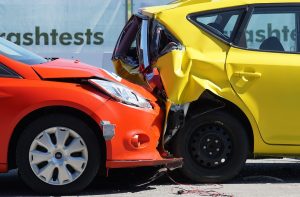
Motorists are also “more likely to be involved in an accident” by travelling at rush hour, with “rear end bumps” being the most common type. The advice is to consider starting your journey and working day earlier or later. Doing so could mean your time is spent a lot more productively.
The concept of driverless cars and 5G access on Britain’s roads could not come soon enough, with cars potentially becoming the “new home or workplace” for many drivers stuck in traffic.
What is your experience of congestion times around Britain’s major cities? Do you think the government needs to tackle this or should it be focusing on other issues? Let us know in the comments.
Last week our article about drivers receiving fines for making way for ambulances received the highest response we have ever had from an article (99,000 visits). We are delighted with the comments, which in our view are better than the story, so please keep them coming. Clearly the topic was one that gripped the attention of our members!
To follow on from this, new research from the College of Paramedics indicates that segregated cycle lanes across Britain impede ambulances and put lives at risk. The cycle lanes are also a cause of congestion on Britain’s roads.
A segregated cycle lane has a concrete kerb alongside it to stop drivers from veering into it. This means that when the emergency services need vehicles to move aside, they are unable to do so. Segregated cycle lanes directly hinder ambulances and other emergency vehicles from passing drivers, by boxing vehicles in the road.
A more widespread rollout of segregated cycle lanes across Britain is in the pipeline. However, paramedics are warning that such a move could lead to lives being lost. They argue that the concrete curb makes it much more difficult for motorists to move out of the way when they see the flashing blue lights of the emergency services.
Regional variations
Segregated cycle lanes have been implemented across most of Britain’s major cities, including London, Manchester, Bristol and Edinburgh. Local councils in many other towns and cities have already agreed to take part in similar projects. However, not all have fully considered the potential impact on the emergency services.
A spokesman for the College of Paramedics states,
“For some of the most critical emergency patients, such as those suffering cardiac arrest, every minute added to the time it takes to reach a hospital can significantly reduce the chances of survival. For instance, in Manchester there are many cycle lanes close The Royal Manchester children’s hospital and some lanes in London are close to St Thomas’s Hospital.”
The College of Paramedics is now calling for town planners to reconsider introducing segregated cycle lanes.
Does segregation save lives or cost them?
Fully segregated lanes were introduced in London after the number of cyclists killed on they city’s roads peaked in the years 2001 and 2005. 21 cyclists died in each of those years. Since then, the number of deaths has declined steadily, to a 22-year low in 2015.
This news comes at an interesting time. Last week we reported on GEM’s Blue Light Aware push for motorists to understand how they can help emergency services vehicles. It seems that the issue of impeding ambulances is one that is gaining in momentum and it will be interesting to see how local councils react to this.
Do you agree with the calls by the College of Paramedics to stop the rollout of segregated cycle lanes? Let us know in the comments section below.
The UK general election is on 8 June 2017. All the main political parties have now released their manifesto pledges. We look at what they could mean for motorists in the UK over the next few years.
Liberal Democrat manifesto
The Lib Dems have made the ambitious pledge that, if elected, they would ban diesel car sales by 2025. They would pair this with the much-discussed diesel scrappage scheme, with cash incentives for drivers to trade in pre-Euro 4 diesels.
Ultra low emissions zones also featured in their manifesto, with the Lib Dems wanting to expand the system to ten towns and cities. Currently only in place in central London, ultra low emissions zones require those driving vehicles that don’t meet emissions targets to pay a daily fee. Drivers who don’t pay the fee can face fines of up to £130 under the current system.
Our View: It’s a sensible plan to create more ultra low emission zones. However, the idea of banning diesel cars by 2025 – with no mention of diesel trucks or public transport vehicles – means the plan lacks credibility and smacks of a party that is kicking ideas around rather than having a solid, deliverable plan.
Conservative manifesto
Perhaps predictably, the Tory manifesto included no news for motorists. Perhaps the Conservatives didn’t want to risk upsetting a large proportion of their voters (diesel drivers). Then again, maybe it was the knowledge that they may soon have to deliver on the controversial pollution plan that kept them quiet.
The draft pollution report was certainly met with dissatisfaction when it was released in April. Having seen the uproar that their watered-down pledges to tackle pollution in major towns and cities caused, it seems the Tories decided to stay quiet on the subject, leaving the battle against pollution to local councils.
Our View: We expect to see the Conservatives break their silence on motoring matters after the election, particularly in the Autumn budget. After all, there’s no point in them aggravating motorists until they’ve won the election. Move along, nothing to see here!
Labour manifesto
The Labour pledge was one of the more progressive when it came to motoring.
The party pledged to retrofit thousands of diesel buses in high pollution areas – a contrast to the charges we’ve seen suggested by both other parties.
If Labour were to win the election, they also claim they would put the UK at the forefront of low emission vehicle manufacture.
Other notable pledges included 5G motorways by 2019 and scrapping hospital parking fees, subsidised by tax increases in other areas.
Our View: There are some real vote winners included and their plans do seems to be well thought out. However, as is the case with all the Labour manifesto reading, it feels more like a wish list than a coherent plan that they actually expect to deliver. 5G on motorways sounds amazing but it will cost billions – where is the money coming from?
What do you think about the general election manifesto pledges? Leave a comment below to let us know.
A recent Gocompare.com survey highlighted the topic of “fronting.” This is where the parent of a young driver puts him/herself down as a named driver to reduce the insurance premium. Not only is this illegal, it also invalidates the policy. However, around 16% of respondents admitted having done it, with a further 38% stating that they would do so in the future.
This got the team at PetrolPrices.com thinking about what else people do to keep their insurance premiums down, including actions that are illegal and would thus invalidate the policy. One such action is to lie about your occupation, as nobody ever checks this information (though we’re not sure that doing so is illegal). Another is to avoid reporting minor accidents.
PetrolPrices.com conducted a survey of our own this week to investigate the scale of unreported accidents. The results were extremely revealing.
Survey reveals alarming trend
We asked members if they would inform their insurer about every accident, or knowingly withhold information about an accident if they knew that doing so would keep the cost of their premium from going up.
72% of respondents said they would inform their insurer about every accident that happens.
We then asked whether they knew it was illegal not to inform their insurer of every accident. An astonishing 28% of respondents claimed they were unaware of this.
Interestingly, 41% said that they would avoid telling their insurer about a minor bump or scrape if they knew it would make their premium go up.
Alarmingly, 18% went so far as to state that they would withhold information from their insurer if it meant a lower premium, even if they knew they legally had to report it.
The results suggest that many people are unaware of what they need to report to an insurer. This implies that there are literally thousands of unreported accidents occurring every year.
A risky business
Although it may seem like a good idea to try and keep premiums low, not informing your insurer about a minor accident could damage your wallet more in the long run. If an insurance provider finds out you have withheld information from them, your future premiums (from them and any other insurer) will skyrocket.
Not only that, but failure to report an accident is a criminal offence. It carries a maximum fine of £5,000 and a possible five to ten points on your licence, depending on the circumstances. The courts can also disqualify a driver if the offence was in conjunction with failure to stop, or leaving the scene of an accident.
With such severe potential consequences, it is shocking that so many drivers are unaware of how and when they need to inform their insurer when it comes to minor accidents. It is crucial that you report any form of accident you have been involved in to your insurer. In addition, it’s important to understand the relevant terms and conditions of your insurance policy. Each insurer has different rules concerning timeframes and what constitutes an accident. If in doubt, it’s better to over-report than fail to report.
What do you think about these findings? Is it worth taking the risk to keep your premiums down? What do you think is the difference between a minor or a major accident? Let us know in the comments section below.
Most drivers don’t realise that they can incur fines for not moving out the way of emergency services vehicles. Many are also unaware that overzealous local authorities are ready and willing to fine them if they move out of the way and end up somewhere they shouldn’t.
This week, GEM Motoring has launched its Blue Light Aware campaign to highlight how to make way for emergency services safely and effectively – and without doing something that will result in a fine.
Local authorities can fine you up to £60 if you enter a bus lane to get out of the way of an emergency vehicle (falling to £30 if you pay within 14 days). In addition, some London councils can charge a whopping £130 for driving through a red light or moving into a box junction to let an ambulance or other emergency services vehicle past.
Councils usually issue these fines based on CCTV camera images, although it is not unheard of for the emergency services to take down an offending vehicle’s registration. GEM highlights that appealing a traffic violation using moving aside for emergency services as your defence is unlikely to get you very far.
Are fines a deterrent?
Interestingly, a survey of 18,000 AA members in 2015 suggests that the threat of a fine doesn’t deter most motorists. In fact, only 13% would refuse to enter a yellow box junction to allow rescue services past.
The survey also found that 48% of drivers would happily run a red light and 31% would be willing to exceed the speed limit to aid emergency services, despite laying themselves open to potential police prosecution.
Additionally, 39% of drivers said they weren’t concerned about being penalised if it helped someone in distress. This involves “not worrying” about bus lanes, red lights, box junctions, speed limits, or pulling on to a pavement to let emergency crews past.
In the GEM Blue Light Aware campaign video (see below), GEM states that motorists should strive to avoid bus lanes, red lights, sudden braking, pulling over onto pavements and pulling over in spaces where it isn’t safe or legal to do so:
“It’s much better to let emergency services find their own way around us. Leave the bus lanes and red traffic lights to them.”
Although many of us struggle to stay calm when we hear a siren approaching, the Highway Code states that you should not panic and should consider the best route for the vehicle to take before acting. It goes on to say that you should not “endanger yourself, other road users or pedestrians and avoid mounting the kerb at all costs.”
It seems clear to us that the current system leaves motorists with no perfect option: either don’t pull over and risk delaying the emergency services (which are potentially on the way to save someone’s life) or pull over (potentially endangering the lives of yourself and others around you) and risk incurring a fine.
Would you risk a fine to stay where you are and obstruct emergency services, or move aside and risk a fine for breaking traffic rules? Let us know in the comments below.
What is a speed camera detector and how does it work?
A speed camera detector is a device that alerts you when you’re approaching a speed camera. The idea is that it gives you enough time to ensure you are not travelling over the speed limit, saving you the hassle of incurring fines and points on your licence
Speed camera detectors alert you when you are approaching fixed speed cameras and/or mobile units. They also provide warnings about accident blackspots and congestion zones and display/announce the legal speed limit. They offer LED displays, so as to be easily visible at night, and can be updated online.
How do GPS and radar detectors differ, aren’t they illegal?
There are several differences between radar/laser and GPS detectors. GPS speed camera detectors use a database of fixed camera locations. They also alert you to known accident blackspots and school locations. They work based on comparing your current location to the location of speed cameras on the database, to establish when you are nearing one.
Radar and laser detectors pick up on the frequency of transmissions from police radar and laser speed detection equipment. They then alert you to the presence of this equipment. This means they can pick up the location of mobile detectors, which GPS detectors can’t.
There was a lot of talk a few years ago about speed camera detectors being made illegal. However, a ban never took place. This means it is perfectly legal to use all types of speed camera detector in England.
This isn’t the same in every country. In some countries (Northern Ireland, for instance) it is illegal to use a speed camera detector. If you plan to drive to another country, therefore, be sure to check up on the laws of that country before you travel.
GPS speed camera detectors
This type of detector uses GPS technology to pinpoint the location of speed cameras and lets you know when you approaching one. Newer models use a GPS database in conjunction with this, as some speed cameras are now manufactured to be undetectable to satellite technology.
The Cheetah C550 is a high quality GPS speed camera detector. It’s easy to set up and understand and will give you clear voice alerts when you are approaching a speed camera. It also features a bright LED screen, which is visible even in direct sunlight. It comes with free lifetime database updates, meaning the device will always be up to date with the latest sat nav updates.
An alternative to buying a GPS detector is a buying a radar and laser speed camera detector. However, unlike a GPS detector it won’t pick up some newer models of speed camera. Cameras by Truvelo, for example, are undetectable.
It also won’t give you any kind of alert for average speed zones. These feature two overhead cameras, installed 200 metres apart. The cameras measure your speed from the first camera to the second.
This is not the case for all radar and laser detectors – some have now combined both GPS with radar and laser detection, so it’s important to choose carefully.
As a rule, radar and laser speed camera detectors are better at detecting mobile speed cameras. Some models can warn you up to three miles before the camera.
This device combines GPS, radar and laser detection. This makes it one of the most comprehensive speed camera detectors available.
With the radar and laser detection giving you great coverage for mobile speed cameras, and the GPS giving you alerts for fixed cameras, you’re effectively covered for all situations.
The Aguri Skyway is quick to set up and works straight out of the box. It also comes with free lifetime updates.
Sat nav speed camera detection is just as effective as the bulk of dedicated products available. It can also be more cost effective, as the sat nav you already have may be capable of detecting speed cameras. The flaw, though, is the accuracy of the database. When you buy a dedicated GPS detector, the database will be updated frequently (usually every three weeks). However, a sat nav programme will be lucky to get an update once a year! This could result in it failing to inform you about speed cameras. You will also be left in the dark as to the whereabouts of any mobile speed cameras. To rectify this, consider using an additional radar or laser detector in conjunction with your sat nav.
If you want to upgrade your sat nav to one with speed camera detection, we recommend the TomTom Go 5200. It’s the most advanced on the market from a camera detection point of view. It has features like real-time information updates from other drivers and warns you about fixed, mobile and average speed cameras.
A dashcam is a device that mounts onto the windscreen of your car and records footage of the road. In the event of an accident, it provides first-hand evidence for you to call upon. Using a dashcam can bring down your insurance premium and protect you in the event of traffic scams.
Dashcams also have a secondary use, with many models now featuring inbuilt GPS functionality. This means they can give you speed camera warnings, just like a GPS detector would.
This device is great for anyone who wants a high dashcam that also works as a GPS speed camera detector. As mentioned above, a GPS system means you’re covered for Truvelo speed cameras as well as average speed zones. Aguri provides free lifetime updates when you purchase this device, so you will always have accurate alerts.
Motorist charity RoadPeace suggests that the 28% decrease in traffic police over the last few years means that Britain’s unmonitored lesser roads are becoming increasingly lawless places to drive.
With budget cuts affecting the number of officers that local authorities can assign to the roads, we are seeing physical units less and less often. Instead, local authorities are opting for automated systems and camera surveillance, such as automatic number plate recognition (ANPR) and the new “smart motorways.”
The result of this is that crime is captured (and thus decreasing) on heavily monitored roads. However, crime on unmonitored roads is spiking. Crash for cash scams, hit and run incidents, speeding and mobile phone misuse are all growing.
The statistics show that the number of officers on UK roads fell by 28% from 2010-2015. This is interesting when you consider that the number of people seriously injured and killed dropped by 16% between 2005 and 2009, but only 1% over the 2010-2015 period. It seems to show a direct correlation between there being fewer officers on the roads and more deaths and injuries.
Shift in focus
RoadPeace also believes there has been a recent shift in focus from local authorities. Convictions from driving related offences are falling, while the uptake of driver awareness courses is rising. Stats released in April 2017 show a 23% drop in prosecutions of drivers who caused fatal road crashes in England and Wales from 2010-2015. Does this mean that more people are getting away with motoring offences?
The charity does not believe driving awareness courses act as an effective deterrent. A spokesperson for RoadPeace recently bemoaned the fact the police “don’t impose penalty points,” even though the system of points itself offers “the greatest deterrence effect.”
The National Police Chiefs Council maintains road policing methods have improved. However, it also states that it is working with the Department of Transport to assess how successful speed awareness courses are, including their impact on driver behaviour.
It seems that Britain’s roads are becoming two-tiered. Major arterial roads and traffic hotspots are heavily monitored, with drivers penalised for falling out of line with speed or congestion restrictions. Meanwhile, unmonitored minor road systems are becoming increasingly lawless and more dangerous places to drive. This would perhaps explain the tenfold year on year increase in dashcam sales across the UK, as drivers look to protect themselves with video evidence against the threats of the country’s roads.
What’s your opinion on Britain’s roads? Do you think we are seeing a split between heavily monitored versus increasingly lawless roads? Do you think this could negatively impact how safe drivers are on the roads? Leave a comment to let us know your view.
There was little to excite motorists in Labour’s 2017 election manifesto. The only notable inclusion was the party’s pledge to allow visitors to English hospitals to park their cars for free.
Labour leader Jeremy Corbyn claims the current charges should be abolished, as they are “a tax on serious illness” and an “unnecessary burden on families.”
The pledge goes on to state that the lost revenue would be made up in other areas, with insurance premium tax seeing an 8% rise and a premium tax of 20% on private health insurance products. Labour asserts that this tax rise will suffice to cover the £162 million cost of providing free parking at English NHS hospitals.
A recent investigation found that the most expensive hospital in the country to park at is the Royal Surrey in Guildford. An average two-hour stay there costs £4. The same study found the Royal Surrey made £1,421,172 from parking charges and fines. In 2015-16, NHS trusts in England netted £120,662,650 in car park charges, up from £114,873,867 the year before.
Meanwhile, a nursing union found that it can cost up to £100 per month for nurses to park at their workplace. In some cases, nurses were having to rush out in-between tending to patients to avoid being fined.
Embarrassment for the Conservatives
Labour’s pledge is an embarrassment for the Conservatives, who despite promising on numerous occasions to take away the “stress” of unfair parking charges, have yet to amend any policies
Hospitals’ fees are not the only issue facing UK residents when it comes to car parking. Fees are rising around the country, by up to 17% in some areas. In addition, recent reports show that private companies handed out 25% more parking fines to motorists over the last year. Parking companies spend an estimated £12 million pounds annually on penalising drivers.
While many English residents would welcome the new free parking scheme, we remain sceptical about the damage that the extra tax charges could do to our wallets (although – arguably – the proposed tax does seem like the lesser of two evils). It is great to see a party putting effort into combating some of the everyday difficulties that motorist’s face. With the Conservative election manifesto soon to be released, we would love to see the current government rise to the challenge of doing more in this area.
Would you be happy with this Labour manifesto pledge to scrap hospital parking fees? What else would you like to see in the Conservative manifesto? Let us know in the comments below.
Last week the Government delivered its draft plan to tackle pollution. One of the key recommendations was cutting emissions by reducing the speed limit on UK motorways from the current 70 mph to 60 mph.
When cars are travelling at faster speeds, they emit more harmful toxins. Thus by reducing speed limits, toxicity levels will fall. The motorway speed limit decrease is one of the few recommendations that will cost nothing to implement but could make a big difference to road emissions. Enforcing it, however, is a different story entirely, although the growth of “smart motorways” (sections of motorway fully monitored by cameras) does seem almost purpose-built for this task.
This week, PetrolPrices.com conducted an in-house survey. We asked over 100 members what they think the motorway speed limit should be. The results show the scale of the task that the Government has in convincing motorists to slow down.
What should the UK motorway speed limit be?
60 mph – 5.66 %
70 mph – 15.09 %
80 mph – 49.06 %
90 mph – 15.09%
100 mph – 5.66 %
No limits – 9.43%
[Source: PetrolPrices.com Facebook Poll May 2017]
Just 6% of motorists agree that 60 mph is a good speed limit for the UK’s motorways. Meanwhile, a staggering 79% think that the current motorway speed limit of 70 mph needs to be raised. Of those, 48% feel that the motorway speed limit should be 80 mph. 10% of respondents even go to the extreme and argue the UK’s motorways should have no enforceable speed limits, like the German Autobahn.
Statistics show that 67% of accidents on German roads occur on motorways without speed limits, resulting in twice as many speed-related deaths as the UK. Interestingly, Germany has the same number of speed-related accidents per 100,000 drivers as the UK. Speed is one of the main killers on the roads (alongside distraction), even when accident levels are the same.
These statistics come at an interesting moment. We’re seeing a widespread push from pressure groups and the government to reduce pollution and improve road safety at the same time. There is an argument that, whatever the speed limit, there will always be those who break it. However, there will also be those who comply with it. This suggests that lower speed limits do mean fewer deaths, fewer accidents and lower emissions. The question is whether the police will turn a blind eye to those who break the speed limits (as they do now), or whether there will be a huge crackdown using “smart motorways” or other methods in the near future. Only time will tell.
What’s your view on the proposed reduction in motorway speed limits to 60 mph? Should they be higher or the same as they are now? Let us know in the comments below.
Many of us may be left with mixed feelings over the fuel prices we saw in April, which saw a slight decline in prices from March. However, the good news is that with wholesale prices falling it looks like drivers will get a sustained period of cheaper fuels this summer!
Average prices in April stood at 118.3p for Unleaded and 120.1p Diesel, 1p lower than March and therefore continuing on the downwards trend since February. Historically back in April 2016, prices were 11p a litre lower at 107.2p & 106.8p a litre, interestingly this was one of the rare occasions in which Diesel prices were lower than Unleaded. This came about during the build up to the Brexit vote, but it was the cost of oil and indications supply would be controlled by OPEC that raised prices.
Going back further to five years ago, April 2012 saw the highest fuel price in recent history which was 142p for Unleaded and 147.6p Diesel. In April 2007 however, prices were much kinder to the wallets of motorists and stood at 92.8p for Unleaded & 95.1p for Diesel per litre.
Price war on the horizon?
News of an impending “supermarket price war” will come as music to the ears of many motorists around the country. This week Morrison’s made the first move by slashing their prices, taking 2p per litre of both Unleaded and Diesel fuel. In reaction to this, both Sainsbury’s and Tesco cut their prices by the same amount on both fuel types.
Asda has kept true to its fuel price promise staying at 113.7p for Unleaded and 115.7p for Diesel. Justifying their stance a spokesperson for Asda said: “Asda consistently offers drivers the lowest fuel prices nationwide week in week out.” Although it may still seem unusual for Asda not to follow suit with the price cut it is worth noting that although other supermarkets have dropped their prices none are yet matching that of Asda which still offers the cheapest supermarket on the market, (if you exclude Costco of course).
The stats
Figures show that the price of crude oil per barrel dropped from $55 in mid-April to $49.41 by April 27th. In contrast, pump prices throughout April fell slightly with petrol and diesel averaging out at 118.3p and 120.1p a litre respectively, they should have fallen by 3p a litre which they seem to be now doing.
We have also searched through our data to find what the top 10 cheapest and top 10 most expensive towns by average fuel price for April, which you can see in the below tables for Unleaded and Diesel. There are no real surprises in the cheapest towns list, for example, Thurrock has had consistently low prices due to the level of competition there, Costco has a fuel station there so the local market is trying to compete with their presence. Similarly, the most expensive list is dominated by remote towns and some affluent locations, places to try and avoid if you can fill up elsewhere.
Top 10 cheapest towns (average pence per litre):
Town
County
Unleaded
OMAGH
COUNTY TYRONE
1.132
TILBURY
THURROCK
1.137
ALLOA
CLACKMANNANSHIRE
1.137
WILLENHALL
WEST MIDLANDS
1.137
PEMBROKE DOCK
PEMBROKESHIRE
1.138
LIMAVADY
COUNTY LONDONDERRY
1.139
PORT GLASGOW
INVERCLYDE
1.139
ABERTILLERY
BLAENAU GWENT
1.139
EAST DEREHAM
NORFOLK
1.139
DUKINFIELD
GREATER MANCHESTER
1.139
Town
County
Diesel
DROMORE
COUNTY DOWN
1.147
TILBURY
THURROCK
1.157
PEMBROKE DOCK
PEMBROKESHIRE
1.158
PORT GLASGOW
INVERCLYDE
1.159
ABERTILLERY
BLAENAU GWENT
1.159
DUKINFIELD
GREATER MANCHESTER
1.159
EAST DEREHAM
NORFOLK
1.159
LEIGH
GREATER MANCHESTER
1.160
PAR
CORNWALL
1.163
PUDSEY
WEST YORKSHIRE
1.163
Top 10 most expensive towns
Town
County
Unleaded
TIGHNABRUAICH
ARGYLL & BUTE
1.329
GRETNA
DUMFRIES & GALLOWAY
1.305
ISLE OF ARRAN
NORTH AYRSHIRE
1.289
MARKFIELD
LEICESTERSHIRE
1.279
LOCKERBIE
DUMFRIES & GALLOWAY
1.277
ISLE OF UNST
SHETLAND ISLANDS
1.274
HENLEY-IN-ARDEN
WARWICKSHIRE
1.269
TOTLAND BAY
ISLE OF WIGHT
1.269
SHIPSTON-ON-STOUR
WARWICKSHIRE
1.269
CARRBRIDGE
HIGHLAND
1.269
Town
County
Diesel
ACHARACLE
HIGHLAND
1.360
TIGHNABRUAICH
ARGYLL & BUTE
1.359
ISLE OF BENBECULA
EILEAN SIAR
1.339
MARKFIELD
LEICESTERSHIRE
1.319
FRESHWATER
ISLE OF WIGHT
1.319
WOOLACOMBE
DEVON
1.299
ISLE OF ISLAY
ARGYLL & BUTE
1.298
COWES
ISLE OF WIGHT
1.289
DUNBLANE
STIRLING
1.289
ISLE OF ARRAN
NORTH AYRSHIRE
1.287
What can motorists do?
As ever there are a number of things motorists can do to take the money they spend on fuel into their own hands. It goes without saying that we always recommend using our service before you fill up. In addition, a good rule of thumb is to always keep your eye on prices at weekends as they can sometimes increase as demand increase, especially around supermarkets. Airports, motorways, expensive cities as well as rural areas tend to be good area’s to swerve when filling up, you are likely to find the best prices in medium sized towns and areas with multiple stations clustered together.
Let us know in the comments section below what you thought of the fuel costs in your area for April and what you think the cost of fuel will go in the future?