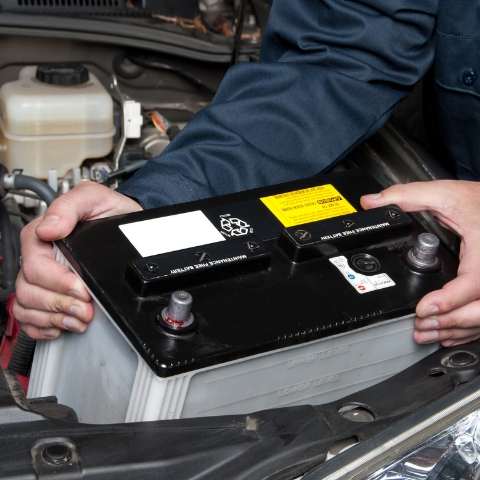
Auto Express research reveals shocking battery change scams

Auto Express research reveals shocking battery change scams

A few years ago, one of the motoring rescue services were found to be upselling car batteries to supposedly vulnerable users that had broken down with a flat battery; except these broken-down vehicles were part of a sting, created by the BBC Watchdog programme.

Recently, Auto Express have revealed that they too have been investigating the trade of ‘car batteries’, but from a slightly different perspective; with no regulation and no comparison sites, having a new battery fitted to your car has become almost lawless, and unfortunately, relying on the franchised main-dealer may not be much help.

The £1,248 car battery

As part of their investigation, Auto Express contacted three franchised service departments for 20 of the most popular models in the UK, including Volkswagen, Toyota, Mercedes-Benz and Vauxhall, if you’re a Toyota driver then you needn’t worry too much, for all the other brands … shopping around is key.

The Mercedes-Benz dealerships quoted between £315 – £1,248 (no, that isn’t a typo) for a replacement battery for a C-Class – same battery, same car, same procedure. Vauxhall dealerships (while not quite as wide open as Mercedes) were similar – the lowest price for a Mokka battery replacement was £98, the most expensive being £263.

For reference, Auto Express contacted a large independent chain for prices, the Merc came in at £165, so even their lowest official price is somewhat inflated, and yet the independent chain aren’t known for being gentle with pricing either.

Open pricing

Of course, these dealers aren’t actually doing anything illegal. Immoral perhaps, but not illegal. Some may argue that if you’re wealthy enough (or lacking in the sense department) to pay over £1,200 for a replacement battery, then that’s your issue.

But what about the elderly person that knows no better and has no one to support them? Living hand-to-mouth on their pension? That’s relying on the honesty and integrity of the franchised dealer where they bought the car some years earlier? If you think that sounds unlikely, it was for exactly that reason why I left the job of Workshop Controller at a main dealer.

The problem is that it’s a free market, you’re free to choose wherever you want, and unless you know the prices of the battery, and the labour charge, £300+ might actually seem reasonable. For what it’s worth, replacing a car battery typically takes less than 15 minutes. Although of course, that doesn’t include the ‘free check’ of the rest of the vehicle, which is the dealer’s chance to upsell their products and services for a little profit(eering).

Jonathan Burn, who led the study for Auto Express states: “The problem for the motorists is that the retail price of car parts is unregulated, and therefore there is little transparency or consistency in parts pricing, even within the same dealer networks”.

The cost of replacement

Nearly every one of us will face a replacement battery at some point in our lives, and this study shows that even between main franchised dealers, it definitely pays to shop around. Remember that the garage is making profit on the sale of the battery, along with labour charges, so there is always room for manoeuvre, and you should also remember that it isn’t just batteries; many manufacturers have something along the lines of a ‘wear parts’ catalogue, which allows the dealer to significantly discount any consumable product such as a clutch or brake pads, and batteries will also be included.

It’s all very well the Mercedes spokesperson saying that “We can only recommend a retail price for these parts, which means there could be a variation across retailers”, but the simple reality is that they could do more to protect their loyal customers from being ripped-off through their official network of dealers.

As I stated last week, very few businesses set out to barely break-even, but having the audacity to charge four times the amount of other official dealers is downright … wrong, and no one from M-B seems to be doing anything about it.

Personally speaking, I’d always ask the garage to give me a breakdown of the quote – parts and labour, ask them their hourly rate, and then work out how long they’re telling you it takes. If you’re at all unsure, speak to other garages, preferably a good independent, and then compare prices – you’ll get no less a service, the battery will have the same warranty, and the worst of it could be that your loafers will need a clean after kicking around a traditional workshop.

Just for the record, all three Toyota dealerships offered the same low price, £105.

What’s your view of official main dealers? Do you trust them? Is it the independents you don’t trust? Let us know in the comments.
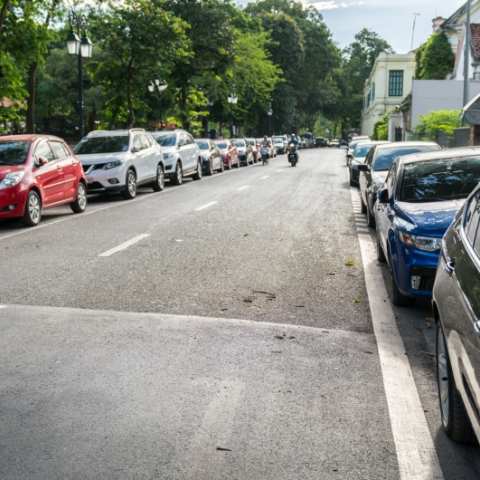
New app allows people to report illegally parked cars and make money

New app allows people to report illegally parked cars and make money

A new app set to be released at the end of this month is promising to help remove illegally parked cars by giving consumers the power to easily send videos of illegally parked cars securely.

eFine, an app that will release on the 30th September, was the brainchild of two siblings after they found their bus route was often delayed by cars parked illegally. The founders say the app is a way for “residents to claim back their streets.”

How does it work?

The new app acts as a CCTV network through proprietary code, which is a closed source code, and patent-pending technology. These systems working together create a network of mobile CCTV devices that don’t need the video to be saved on the device, instead, it is processed and stored securely, and then sent straight to the relevant council.

When you spot a parking infringement, you simply open the app, video for evidence and then eFine takes care of the rest.

“The app lets a user know if they are in a partner council area before they record the infringement,” says Alex Mühlhölzl, Chief Operating Officer. “The data is not accessible by the user and is not stored on the user’s phone, it is sent to us and stored on an Azure system, meaning only the council associated with the infringement notice can see the video and decide if a fine should be issued. We don’t even see it.”

With this, you will also get a 25% share of the infringement notice when paid as an incentive and thank you for doing a parking officers job. eFine themselves also keep a 25% share to cover costs.

Who’s going to use it?

While the app is aimed at everyone, they particularly hope the elderly, disabled people and new parents will be able to get the most benefit out of it, as they can report incidents where they were not able to navigate the pavement or park in the correct bay.

“Those that have a disability and get impacted by people parking on the footpath, those pushing buggies or elderly on scooters who have to go into traffic to get around the illegally parked vehicle,” says Alex.

“There is also the issue that some electric vehicles cannot charge because a combustion vehicle has parked in the charge point parking space. With councils investing millions in electric vehicle infrastructure, these charge points generate revenue that offsets this capital cost so every vehicle using it to charge matters.”

How can our councils benefit from it?

We’ve reported many times before on council parking charges, from record profit numbers to increasing parking charges but this is a new angle altogether.

Other benefits include better traffic management and identifying risky spots sooner. Councils will also be able to ensure that parking wardens are implementing and inspecting reports from the general public as well as optimising the use of technology, something which some councils lack.

“It addresses the need for better management of traffic flow, vehicle and pedestrian, without the huge costs that are incurred by councils having to hire enforcement staff or outsource the service,” says Alex.

“We have a focus on traffic flow management, cars and pedestrians, and also pedestrian safety, and as such we are looking to prepare a template for councils that are looking to introduce pedestrian zones around schools without the financial burden of installing CCTV networks.” says Alex. “We are also looking to support councils who are looking at the initiative of fining households for leaving rubbish or bins out for days or weeks. This rubbish is often scavenged by animals and creates an environmental problem and bins on the footpaths create pedestrian traffic issues for the disabled and those pushing buggies or trolleys and those on scooters.”

Asking other pedestrians to report and send in images is something that has been trialled before with dashcam footage to some success but creating a CCTV network on mobile phones is a new suggestion and one that poses some questions.

GDPR?

One question our team raised is one of GDPR. While I’m sure many of you are tired of those four letters it does pose an important question.

A huge part of GDPR is providing users the tools to control their data, how it is collected and how it is stored.

In all areas where CCTV is filmed or parking wardens operate, a notice is displayed or residents are informed where this is in use through promotional information on websites etc.

However, with this app, no user of a car is going to know that they have been filmed and sent in, which contravenes GDPR. It will be interesting to see how this plays out in the long term.

What do you think of this idea? Would you download the app? Let us know below
Councils under pressure to create more free parking for blue badge holders

Councils under pressure to create more free parking for blue badge holders

August saw the biggest change to the Blue Badge scheme since it began in 1970. As we reported a year ago, and as part of trying to bridge the equality gap between physical and mental conditions, the government has granted people with a ‘hidden disability’ the right to use disability parking spaces.

Yet, new research says there already isn’t enough disabled parking for the existing 2.4 million people with Blue Badges, let alone adding more. Despite this, most councils said they didn’t intend to create more disability parking spaces.

Parking the problem

Hidden or ‘invisible’ illnesses are ones that aren’t obvious straight away and include diseases and disorders such as autism, cystic fibrosis, Crohn’s disease; dementia and mental health conditions.

Authorities say the UK has about 700,000 people on the autism spectrum, around 850,000 with dementia, and estimate about three million with anxiety disorders. With changes to the scheme meaning more eligible people, there may soon be millions of extra badge holders in England and Wales.

The government said they would give councils an extra £1.7million to help them cope with the expected increase in applications but admitted they didn’t know how many more people would become eligible.

A study by the comparison site Confused.com found—before the Blue Badge Scheme extension—only one council-operated bay existed for every 30 badge holders. Despite this, 74% of councils said they would not be building any more disabled parking bays.

Yet councils don’t show the same reluctance in increasing parking charges or introducing other methods that, while often increase road safety, make money from motorists.

Councillors justify things like higher parking fees because of budget cuts or they cite traffic congestion, but when Penalty Charge Notices (PCN) make councils over £326m in just 12 months, can’t the public ask why they can’t invest part of the money into more parking spaces for the disabled?

Besides not being enough disabled bays available to go around, the changes to the Blue Badge Scheme may mean more opportunity for badge fraud. The Local Government Association confirmed that theft of Blue Badges has risen 45% in a year and 600% since 2013.

It’s also estimated that 20% of badge holders misuse them, letting family and friends use their permits when they themselves aren’t in the vehicle. But they should beware; 60% of councils prosecute drivers for misusing disabled parking permits and the fine can be as much as £1,000.

Adding insult to injury

Paul Slowey, Founder and Chief Executive Officer of Blue Badge Fraud Investigation (BBFI), a company dedicated to investigating fraud and theft against the public sector, said earlier this year:

‘It’s clear that people with hidden and non-physical disabilities need badges. But confidence in the Blue Badge scheme is undermined by the fact that only a minority of councils take action against misuse.’
While charities and motoring groups have welcomed the change, they’re concerned the extension might cause a lack of parking spaces for other motorists—including those with physical disabilities.

Amanda Stretton, Motoring Editor at Confused.com, said:

‘Clearly more parking for Blue Badge holders is needed—30 drivers to one space is quite a challenge.

‘It’s no wonder some of these drivers have had to park elsewhere, and the number of people competing for spaces is only going to grow as more people can apply for a Blue Badge now.’

‘Drivers who misuse these spaces are making the problem even worse. They should be more respectful and leave them free for those who need them,’ she added.

Confused.com surveyed 2,000 drivers and found that 7% of the 1,300 drivers without permits admitted to having misused a disabled parking bay. Twenty-four per cent said they couldn’t find another space, 28% said plenty of other disabled spaces were available, and 36% said they used the disabled space because ‘they were only going to be quick’.

How to apply for a Blue Badge

If you think you’re eligible for a Blue Badge, you can either contact your local council for an application form or you can apply via the government website.

If your application is successful, and you’re an English resident, the badge will cost you £10. Blue Badges are free in Wales, while those in Scotland must pay £20. Blue Badges are valid for three years.

In London, Blue Badge holders are exempt from the Congestion Charge.

Blue Badges entitle the holder use of disabled parking bays, free use of pay-and-display spaces, and up to three hours of parking on single or double yellow lines. Different restrictions apply for each local council so make sure you check the rules where you are.

Without a doubt, the updated Blue Badge scheme will make a huge difference in the lives of many people with hidden disabilities, more so for those people with ‘hidden disabilities’ who, until now, wouldn’t consider leaving the house.

As a person with ‘hidden disabilities’ myself, if I should ever feel the need to apply for a Blue Badge, it would reassure me to know that there would be enough suitable parking spaces available.

Do you welcome the changes to the Blue Badge scheme? Will it affect you or somebody you know? What do you think the solution is for the lack of disabled parking? Let us know in the comments.
Fuel duty cuts of 2ppl could be coming in the Autumn Budget

Fuel duty cuts of 2ppl could be coming in the Autumn Budget

Fuel duty has been frozen consistently since 2011 and now new reports suggest we could be seeing a cut of up to 2ppl in the Autumn budget. Boris Johnson, our prime minister, is thought to be bringing this in in a vote sway in case of a general election and as blow softener for Brexit for the people who voted to Remain.

Fuel duty is often a contentious subject for any Prime Minister and Chancellor, as it such a passionate subject being a tax that we pay VAT on. In the current environment with fuel prices as high as they are, this could definitely benefit the motorist, but at what cost to everything else? 

Industry leading the cut

The PRA has welcomed hints carried by national media that the Treasury may be considering fuel duty cuts in the upcoming Autumn Budget,” commented PRA chairman Brian Madderson.

Madderson continued: “We have been exchanging correspondence with the Treasury since the start of the year on a number of taxation issues, with the present high level of fuel duty as the primary concern.

“The former exchequer secretary Robert Jenrick MP, arranged for the PRA to meet the heads of fuel taxation at both the Treasury and HMRC earlier this summer.

“At the in-depth review, PRA stressed the need for government to revisit its report on the dynamic effects of fuel duty modelling (2014), which confirmed the positive outcome on the economy of cutting this deeply regressive tax.

“In a post-Brexit environment, fuel duty cuts would help stimulate the economy and must be introduced as soon as possible by the new Chancellor.”

The climate change argument

However, as we’ve reported before, think tanks from all political angles have suggested that increasing taxes on more polluting vehicles could be one of the best ways to penalise those who continue to drive older and more polluting cars. 

Previous governments and prime ministers have considered removing the freeze on fuel duty, adding it in line with inflation or simply increasing. 

Claire Haigh, chief executive of Greener Journeys, said: “If we are serious about tackling climate change and air pollution, why would we make such drastic reductions to environmental taxes?

“Government must do more to promote public transport. At the very least fuel duty should be linked to inflation in future budgets.

“The money raised from future increases in fuel duty should be ring-fenced to accelerate the switch to electric vehicles and to encourage greater use of public transport.”

Long-term issues

If fuel duty was cut, the Treasury would be losing around £1.5 billion pounds in revenue, which would most likely have to be made up elsewhere.

Since the initial freeze in 2011, there has been a 4% increase in road traffic; an additional 4.5 million tonnes of CO2; an additional 12 thousand tonnes of harmful NOx and 816 tonnes of PM10s (a particulate); up to 200 million fewer bus journeys; and 60 million fewer rail journeys. The freeze in fuel duty since 2011 has also cost the Treasury more than £50 billion.

Do you think there should be a cut in fuel duty? Is climate change important here or should we be helping out the motorist in a potentially risky economy as we loom ever closer to Brexit? Let us know below

Could your next car be spying on you?

Could your next car be spying on you?

When I was younger, the big screen movies were full of sci-fi styled vehicles; of course we had James Bond in his tricked out DB5 or Lotus Esprit, there was Michael Knight with his Knight Industries Two Thousand (KITT), and of course the time-travelling DeLorean from Back to the Future, to name a few.

Of course, as any youngster might, I wished them to be real – to be able to talk to my car, push a few buttons and light up the built-in TV screens, heck, even have a ‘live’ rolling map … just what wonders would await us in the future?

A great many of these sci-fi wonders are now upon us: we’re on the edge of full autonomy, we have full HD screens, TVs, satnav, Wi-Fi connectivity, and interior ‘mood’ lighting for ambience. What a time to be alive.

When good tech goes bad

But keeping with that theme – movies and sci-fi, have none of the manufacturers learned anything from out cinematic history? About how technology can be used against us, to monitor our movements, ensure that we’re behaving correctly, or even God forbid, just stop us having fun?
For that age is also upon us.

We recently told you about plans to have Intelligent Speed Assist fitted to all new cars from 2022, and how those systems will interact with our driving, physically altering our behaviour and driving style, all in the name of safety.

In that article, I made the point how companies, or the authorities, could use such technology to monitor and report our movements and behaviours, how it’s possible that tracking technology may be used against us, and that really, it’s an infringement on our civil liberties.

EU Council

The EU Council have stated that along with Intelligent Speed Assist being mandatory from 2022, they would also like to see tracking devices fitted to all new cars, which will monitor and report back on driving behaviour and speed, making prosecution all the more likely.

Currently, a great many new cars are technically capable of doing such, even without the driver’s knowledge, and just this last week, Mercedes-Benz has come under fire for using just this sort of technology in all their new and used vehicles sold through their official dealer network.

Mercedes say that they don’t use real-time analytics, but that all their cars are fitted with tracking devices which can be switched on remotely, in the event of the owner failing to keep to a finance agreement, and details can be shared with a third party, such as a bailiff or recovery company.

While their customers may not know anything about it and disagree vehemently, it’s all in the small print when signing up for finance; the terms and conditions include a clause on ‘vehicle location sensors’.

Other brands

Mercedes Benz aren’t the only ones that seem to be pushing the boundaries of privacy – the EU’s new data protection laws make tracking a car without the owners knowledge illegal, so it seems to be a grey area as to whether Mercedes et al are within the law when it comes to privacy.

BMW have been a little more coy – they’ve absolutely denied sharing any tracking data with third parties, but haven’t denied collecting it. Honda do have the technology installed in their CR-V, but insist that it can only be activated by the driver, in case of an emergency situation. Suzuki are looking at plans to offer something similar next year.

Brexit isn’t a cure

For those of you that think Brexit will put an end to this type of intrusive legislation, unfortunately you’re mistaken. All cars that are manufactured within the European Union, that are used on Britain’s roads, will need to comply with the EU Council’s directive.

And it continues … the black boxes used with such tech are just part of the suite of features that could be implemented – the intelligent speed assist is definitely happening, but there’s also talk of the boxes being linked to pre-wired in-car breathalysers, reporting tech for irresponsible driving, and of course, speed detection and reporting.

It would seem that the age of technology is here, but rather than improve our lives, it will be used as a larger stick to make us comply with the ever increasing and absurd motoring laws that at best, are draconian and unforgiving. Think of it in terms of a ‘safety’ camera – no judgement, no consideration of circumstance, nothing other than “You’ve broken the law, you will pay”.

It’s easy revenue generation, and if there’s one thing we know about ‘the government’ (whoever that may be), fleecing motorists seems to be their sport, so you can guarantee this will happen.

What do you think to the latest legislation? Will it make the world a better place? Or is it simply about fleecing the motorist for yet more money? Let us know in the comments.
Insurers are raking in millions selling extras to unsuspecting drivers

Insurers are raking in millions selling extras to unsuspecting drivers

When I was a mere slip of a lad, at just 17, I remember listening to a friend of my brother on the phone to his insurance company, and I was amazed at just how little he paid for insurance. His wisdom rang a bell – it’s all about age: “Your insurance will drop when you’re 21, then again when you’re 28, and when you reach my age … you’ll hardly pay a thing for it”.

I’m nearly 48; I’m still waiting for these non-existent premiums. I have a clean licence, 30+ years of experience, the car isn’t anything special, low value, and yet it still costs me £500 per year to insure. I feel like I’ve been scammed somewhere, only without anyone breaking the law.

I had a motor traders policy for years, earned good ‘No Claim Discount’, and yet when I finally switched from trader to private, that NCD bonus was all for nought … it counted for literally nothing; the years spent driving British, Italian or German exotica, and never damaging one meant in the eyes of the insurance company, I was a risk. Seems legitimate.

Insurance scams

Insurance is a legal requirement, there’s no getting away from that, and I have no issue with it. But that seems to mean that the insurers are given carte blanche to do anything they like, and if you dare deviate from their agreed terms, they’ll stop your insurance, or charge you a hefty fee.

It would seem that being an insurance company is as close to having a licence from the Treasury to print money, as you’ll ever find. Just three insurance companies – Admiral, Hastings and Direct Line have raked in nearly £300m in just six months through upselling and loan charges (the ‘loan’ referring to customers that pay monthly). That figure doesn’t include the standard policy.

According to comparison website GoCompare, a typical 30-year-old male driving a Ford Focus could be paying as much as £500 more for the same level of insurance through one of the more expensive companies, and that’s before adding any extras such as breakdown or legal cover. That figure is an average, the cheapest quote was £527.37, the most expensive was £1,207.43.

And let’s not even start down the road of automatic renewals without comparing prices.

Added extras

There’s also an issue over fees – some companies are charging as much as £300 to cancel a policy early, although the average is closer to £60, but even then, surely you’d have that thought that if the insurance company are no longer covering the risk, no more money was due? Carte blanche to charge what they like.

In cases where the consumer pays monthly, it’s understandable that interest charges are due; effectively, they’re borrowing money and using a service, and just like any other service provider or money-lender, you pay for that service. However, the charges are often extortionate, with many consumers feeling that the insurance companies are deliberately misleading them with false APR rates.

Labour MP John Mann states: “Consumers are being misled by confusing information into paying much more than they should for monthly payments”. It’s a practice that needs to stop.

Profiteering

Of course, very few businesses go into business to deliberately just break-even, but at what point does turning a profit become profiteering? It’s a closed market, you have to have insurance to use the vehicle on the road, and therefore, just the same as the ULEZ, fuel duty and VED, there’s no choice but to pay.

The big question is that if XYZ Company can offer comparable cover for nearly £700 cheaper, why can’t the others? Most business is done online, with electronic quotes, purchasing and documents, all automated with technology. Yes, there will be some extra overhead to cover for the bigger companies, but 150% more expensive?

In 2018, Direct Line made an operating profit of just over £600m, Hastings was £152m and Admiral were just under £480m. That’s not meagre by any standards. With the advent of ‘Big Data’, insurance companies are able to better identify risk, both for vehicles and people, but that’s just led to further confusion; gone are the days of ten different insurance groups (one being the cheapest, ten the most expensive), we now have fifty.

And yet despite all of the extra data, the narrower groups and wider choice of insurers, an insurance policy seems more expensive today (in relative terms) than it ever has been. I know from my years in the trade that vehicle repairers tend to make the most of the opportunity to charge an insurance company, but perhaps if the insurance industry clamped down on that practice, they could reduce policy prices somewhat for their faithful customers?

Do you feel that insurance companies are running a legal scam? Have you any good experiences to share? Or perhaps you feel that it’s just another expense that has to be paid, so why worry? Let us know in the comments.

French police request details of 246,000 UK drivers in five months

French police request details of 246,000 UK drivers in five months

January 1st 1973 saw changes within the UK, that nearly 50 years later still have ramifications; we became part of the European Economic Community. Strangely, a year after we voted ‘Leave’, the UK government were still signing up for schemes that tied us to Europe, in the form of the updated Mutual Legal Assistance scheme.

Essentially, the scheme (updated in 2017) allows foreign authorities to access driver records to pursue them for any motoring misdeeds while abroad. In total, 18 countries signed the new agreement, including France, Germany, Spain, Malta, Finland and Poland. While it covers a number of offences, the majority relates to speeding.

Mutual Legal Assistance

Forgetting the complexities, or rights and wrongs of Brexit, the system was designed to apply a more uniform structure to motoring, and the adherence of regulations throughout the European Union; whether you’re driving in Poland, or motoring through France, you still need to be mindful of the speed limits or any motoring laws that you may be breaking.

It just seems that some countries are a little more proactive when it comes to pursuing the offender.

Between February ’19 – June ’19, Finland requested the details of ownership just three times, Luxembourg were a little more proactive at 1,222 requests, Germany applied their usual Germanic efficiency with nearly 23,000 requests, but compared to France, their efforts were amateurish: 246,138 requests were made in the five-month period.

Driving in France

The high number can really only be attributed to two things – the French cameras are often unseen, or only seen at the very last minute, and the fact that their tolerances are much tighter. In the UK, we’re generally advised that the speed cameras are set at 10+2 – that’s 10% plus 2mph (which isn’t always the case), whereas in France, the trigger is set at just five percent over the limit.

In the UK, the cameras must be visible, for a distance enough to allow the driver to react, whereas in France (and a number of European countries), the camera can be set away from the road, hidden on a bridge or parked in such a manner that once you’ve noticed it, you’re too late.

Similarly, the Dutch are renowned for their ingenuity, one of their favourite hiding spots for example, is a wheelie bin by the side of the road, on bin day. You simply have no option but to comply with the limit if you don’t want to get a ticket. (And yet the Netherlands requested information just 96 times).

What will leaving Europe mean?

Currently, no one really knows whether or not the reciprocal arrangement will be active once we leave Europe, although it’s thought that as with many other motoring laws and legislation, it’s likely that it will remain in place, potentially as part of a strategy to minimise the ‘hardness’ of a hard Brexit.

But as we reported back in September 2017, despite it being called a reciprocal agreement, it isn’t very reciprocal; foreign drivers caught speeding in the UK can use a legal loophole to escape punishment, in the form of the agreement itself.

The (Euro-centric) agreement states that registered owner is responsible for all fines levied, but in the UK, it must be found that the driver is responsible, which means that a vast swathe of drivers are going unpunished, as no proof of the driver is available. Allied to that, is the fact that the UK police need to issue their NIP (Notice of Intended Prosecution) within 14-days, whereas in parts of Europe, the police can take up to a year for the same.

Personally, aside from the seemingly one-way interaction, I feel that this type of legislation can be a good thing – it gives drivers the chance to make the decision about their behaviour, their driving habits and what the possible outcomes could be. It actually encompasses the whole spirit of fairness, of doing the right thing, and allowing motorists a level playing field throughout Europe.

Despite being EU legislation, the sense of it is entirely British; you can’t get any more British than our inherent sense of fair play, and this legislation provides just that.

Have you ever been caught for a motoring offence abroad? What was the outcome? Do you feel that Brexit will mean less red tape? Let us know in the comments.

Right-wing thinktank wants to stop the freeze on fuel duty to cut air pollution

Right-wing thinktank wants to stop the freeze on fuel duty to cut air pollution

Bright Blue; “A deep intellectual gene pool for the Conservative Party’s future”.

Emission Impossible, a ‘jaunty’ take on the classic TV programme, or later film series, in which the good guys wrestle the bad guys, before self-destructing. Clearly, in this case, the ‘bad guys’ are car owners, and the good = Conservative politicians. The plot encompasses all topics that register ten on the ‘devious politician’ scale; Brexit, stealth tax, cash cows, anti-pollution, emissions and car ownership.

Sadly, this isn’t the latest plot for a new blockbuster, but yet another ridiculous political report, dressed up with environmental concerns and expense for the motorist, only this time, it’s the turn of the right-wingers.

Meeting all legal requirements

Buried within the 130-pages is the statement that “The UK currently meets all its legal requirements on air pollutants, except for hourly and annual limits on NO2”, you also find that their graphs show a very real decline in kilotonnes of emissions, since 1970 to present-day – NOx, for example, has gone from around 8,900 kilotonnes since 1970, to approximately 1,800 kilotonnes today.

This isn’t a marginal decline, or a ‘trend’, this is a steady decline, consistent and proven, with a blip in the early 90s that lasted for a few years.

And yet despite their evidence to the contrary, Bright Blue is recommending a number of proposals, all aimed at the private and commercial motorist, that will make vehicle ownership even more expensive than it is already, and encourage a number of potentially nefarious activities to boot.

The car is the answer

In 2016, cars attributed 16.5% of the UK’s total NOx emissions, LGVs and HGVs accounted for 15.5%, buses and coaches made up 1.7% and motorcycles and scooters accounted for just 0.1% – a total of 33.8% of the total NOx.

That leaves a whopping 66.2% to account for; aviation weighed in at 21.5%, railways were 3.9% and shipping … 40.8% – more than the total road transport combined. And yet, once again, it’s the motorist that’s paying the price.

And what a price that will be.

Some “Bright” ideas

In amongst the proposals set-out by Bright Blue, there are a number of them that should be of concern to us all, although if you’re a diesel motorist (on the back of the recommendations of the government of the time), you may want to stop reading now.

Diesel Duty

Along with abolishing the fuel duty freeze (in place since 2010), Bright Blue say that diesel motorists should have an extra tax added to their fuel – a ‘Diesel Duty’.

Diesel Excise Duty

Not content with adding extra tax to diesel fuel, it’s also recommended that diesel motorists have their own ‘Diesel Excise Duty’ instead of the regular VED that we currently pay.

Profiteering councils

All councils should be allowed to profit from their charges for the pollution charging schemes they introduce, and we’ve all seen how their profiteering works when it comes to parking charges.

Public reporting

Under the new proposals, members of the public will be tasked with reporting vehicles that spend time idling unnecessarily. This isn’t a terrible idea, aside from the fact that they’ll be rewarded with a share of the spoils – a percentage of any fines levied for the offence.

Speed limit reduction

Lastly (although there are more proposals in the document), a recommendation for all urban areas to have the speed limits changed from 30mph to 20mph. Again, we’ve reported on this numerous times, and quite frankly, it’s a ridiculous notion that doesn’t work, unless working in conjunction with a number of other measures, and even then, it only works under very strict criteria.

Air pollution

Once again, no one denies that air pollution needs work, but we’re cleaner than we ever have been, and it’s a continuous downward slope. Further, evidence suggests that vehicles are cleaner than ever, with most modern diesels polluting less particulate matter than the equivalent petrol-engined counterpart. None of these proposals look to incentivise giving up the car, and it’s solely reliant on penalising the motorist for revenue.

They even state that councils should be able to profit from it. This isn’t stealth tax; this is purely about revenue generation for greed.

Why can’t the commercial entities such as aviation or shipping be held accountable? The simple fact is that as a nation, we’re reliant on our car; public transportation is often ineffectual or expensive (usually both), we’ve built a society of out of town retail parks, entertainment and leisure facilities. Thanks to punitive taxes leaving businesses struggling or going to the wall, full-time employment can often mean an hour’s commute each way to get to work.

Yes, if you manage to live your life without a vehicle, if you cycle or walk everywhere, and have no need for a car, that’s great news, but you’re in the minority. So while that lifestyle may work for you, that doesn’t necessarily mean that works for everyone.

What do you think to the proposals? Is this just another money-making scheme? Or do you see a real benefit from it? Let us know in the comments.
No deal Brexit unlikely to lead to fuel shortages

No deal Brexit unlikely to lead to fuel shortages

Here at PetrolPrices, we can often be controversial, we have been known to “stir the pot” but today in this article we want to debunk some of the myths that are floating around about fuel shortages. You may have heard on the radio, in the news or even our very own Kitty Bates speaking on BBC Wales about it, and we just wanted to share that message with you.

It is worth noting that this is just us using facts and common sense to piece together the puzzle and come to a conclusion that we hope can help to dispel some of Project Fear!

Operation Yellowhammer

Over the weekend, it is thought that a former minister leaked a document entitled “Operation Yellowhammer” to the press, which covered a lot of scenarios, some more worrying than others in the event of a no-deal Brexit.

Some media outlets are disputing this and saying it is a realistic expectation of what could happen with a no-deal Brexit, however Michael Gove, whether you agree with him or not, claimed the paper to be out of date, something that was later dispelled by the government and shown that it was written on the 1st August.

Mr Gove, speaking to the BBC, said “It’s certainly the case that there will be bumps in the road, some element of disruption in the event of no-deal.

“But the document that has appeared in the Sunday Times was an attempt, in the past, to work out what the very, very worst situation would be so that we could take steps to mitigate that. And we have taken steps.”

What does Operation Yellowhammer say about fuel?

In this we want to specifically focus on fuel, being PetrolPrices.com. The document leaked to the Sunday Times states two issues that could be a potential problem for the UK. The first is traffic disruption due to checks at the border which could limit supply to London and the South East.

The second issue is due to the zero per cent petrol import tariffs reducing competitiveness in the market, something that is shown by the industry. “The concern is that this is a unilateral decision by the government and overnight we go from being on a level playing field with European competitors to being totally uncompetitive,” one source said. “It will have a major impact on domestic petroleum manufacturers.”

Back in March, the government announced that on 87% of imports the import tariff would be set to 0% to ensure that everyone could still afford fuel which is now something multiple government sources are investigating as a risk to GDP. This is down to the uncompetitive prices UK imports would have in comparison with the rest of the EU market.

However, all of this still doesn’t mean fuel shortages, at least not long term. With the whole situation regarding Brexit, there will a time of uncertainty and this has been known for a long time and should be expected.

Piecing it all together

If we break down where the UK gets our oil from the vast majority comes from non-EU namely Russia and OPEC. Only 8% of all UK fuel is from EU countries, so if we can’t get it from the EU, it would not be long before another area upped the supply. Similarly, if fuel is less competitive to sell into Europe, then there could be potential for it to be sold in the UK.

Alongside that UK oil consumption has been decreasing year on year since 2013, as electric vehicles and hybrids come into play and as cars become more and more fuel-efficient. In reality, it’s probably not going to be long before that extra 8% we currently get from the EU is no longer needed as people convert to Alternatively Fueled Vehicles (AFVs).

While yes, there may be some inflated prices for a month or so, or perhaps some delays, we really think that a lot of the fear surrounding this is just the last chance to hype up Project Fear before the 31st of October.

Jason Lloyd, Managing Director of PetrolPrices.com says “The impact of a no deal Brexit on fuel supply across the UK is likely to be temporary as retailers adjust and source supplies from different sources. According to the Office for National Statistics, the UK imports about 9% of its petroleum from Sweden and the Netherlands, all other imports into the UK come from Russia or OPEC countries. ”

“Should petroleum from any country get stuck at the UK border, I would expect the 7 UK refineries and North Sea pipelines to increase the supply of petroleum from non-EU sources to offset the loss, but that would cause a few weeks temporary disruption.”

Do you think there will be fuel shortages nationwide? What do you think will happen on the 31st? Let us know below

Supermarket Sweep! Morrisons, Tesco, Sainsbury’s offer fuel promotions up to 10 ppl this weekend

Supermarket Sweep! Morrisons, Tesco, Sainsbury’s offer fuel promotions up to 10 ppl this weekend

Morrisons is today announcing a 5p-a-litre off the cost of fuel to help make diesel and unleaded more affordable.

Morrisons is making the cuts to help summer motorists in the run-up to the August Bank Holiday and the return of the school run.

Ashley Myers, Head of Fuel for Morrisons, said: “With the bank holiday and kids returning to school soon, this deal will help motorists save when they fill up.”

The deal will be available to customers who spend £40 in Morrisons stores (not Morrisons.com) until 25th August. Customers will receive a voucher that will allow them to pay the lower price until 1st September. (Terms and conditions apply)

Sainsbury’s customers can save 10p per litre on fuel when they spend £60 or more on groceries at a Sainsbury’s supermarket or online between Thursday 22nd and Tuesday 27th August 2019 (exclusions and terms and conditions apply).

Qualifying customers will receive a coupon at the checkout or when they receive their online groceries order and will have 14 days to redeem the offer at one of 306 Sainsbury’s forecourts (not valid at Pay@Pump). The discount can be used to fill up on unleaded petrol, super unleaded petrol, diesel or LPG up to a maximum of 100 litres.

As usual, customers will also be able to collect Nectar points every time they fill-up, with one point awarded for every litre purchased.

David Pegg, Fuel Buying Manager at Sainsbury’s, said: “To celebrate the August Bank Holiday weekend we’re offering customers 10p per litre off fuel when they spend £60 or more on groceries at a Sainsbury’s supermarket or online. Whatever customers have planned for the long weekend, we hope this offer will put money back in their pockets and help them enjoy the summer.”

T+C’s here: https://help.sainsburys.co.uk/help/terms-and-conditions/fuel-tcs

Tesco is a similar 10ppl offer, and more terms can be found here: https://www.tesco.com/groceries/en-GB/zone/Fuel-Promo

As always, motorists can use the new PetrolPrices.com app to find the best forecourts near them, download here