Find out which towns and cities plan to remove cars to tackle congestion and pollution

Find out which towns and cities plan to remove cars to tackle congestion and pollution

Last week, we told you how Bristol is looking to ban cars from the city centre, seemingly in a desperate move to avoid paying back £1million of government money; it’s becoming no surprise that ‘radical’ measures are being touted by most authorities as a way to tackle air pollution and congestion.

That’s all well and good, until we replace ‘radical’ with ‘desperate’, which seems nearer the truth. Thursday 20th June 2019 was national ‘Clean Air Day’, and London Mayor Sadiq Khan wasn’t going to miss out on the action, surely this could be another great demonstration of his commitment to cleaning up the city?

Reimagine

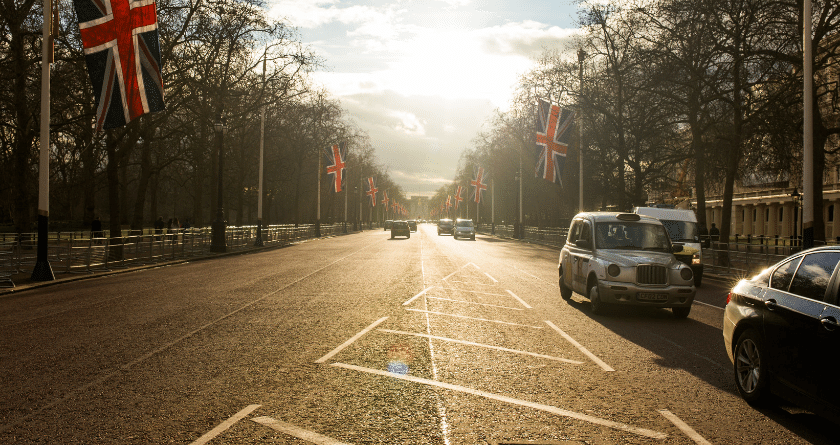
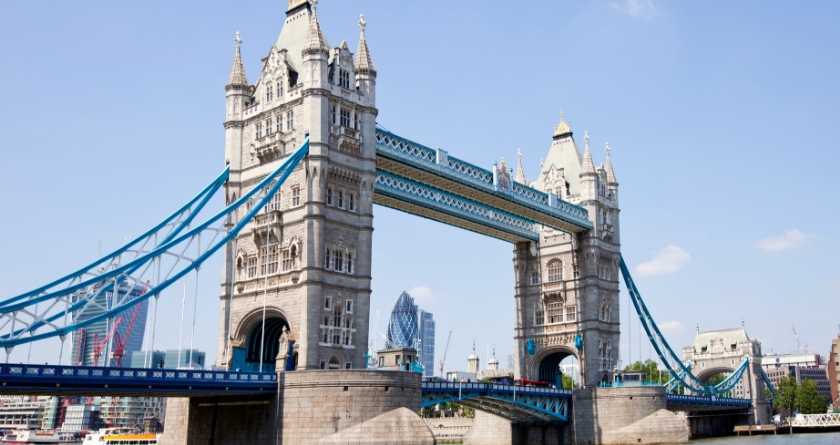
Mayor Khan took the opportunity to announce that on Sunday 22nd September, there would be no cars allowed in the City of London, a complete ban including taxis. “We’ve called our range of events ‘Reimagine’ so that Londoners get an idea of what some of the busiest parts of our city would be like without cars or traffic, and let them reclaim the streets and allow for children to play freely and communities to enjoy parties in their areas”.

While that sounds all very admirable, and actually a nice thing to do as a one-off; families being able to enjoy the City of London with entertainment such as live music, guided walks, pop-up playgrounds and street performers, the question that has to be asked, is whether Khan has a vision for the future with this?

Worryingly, Silviya Barett, the transport research manager at the Centre for London warned that “one day of action will only go so far – we need to lock-in car-free lifestyles for good. The Mayor should introduce city-wide charging schemes which charges drivers per-mile on the most congested and polluted roads”. That sounds pretty ominous for the motorist.

Over 12 miles

In total, there will be around 12.5 miles that will be closed to all transport, including Tower Bridge, but there will be a bus service crossing London Bridge on the day, and so far, 18 different boroughs have signed up to the car-free day, all pledging to do something to mark the day.

Again, that’s all fluffy kittens, but what of the businesses affected by the closure? Taxi drivers, in particular, are going to be hit hard, the elderly and disabled won’t benefit from having free access to the road surface, traffic is likely to be in more chaos than usual, and if you need to get from one side of the city to the other, how will that work?

Could this be classed as another ‘radical’ approach to congestion and pollution? Is this yet another attack on the innocent motorist going about their business? Will it actually make a difference to the pollution?

Keith Prince, Greater London Authority Conservative Transport spokesman is quite vocal – “Londoners want cleaner air, but car-free days risk travel chaos if managed poorly, all while doing little to tackle the air pollution problem”. It’s the last few words of that sentence that are important – it won’t really tackle the air pollution problem.

Future shut-downs

If this had been addressed as a ‘family day’ or suchlike, there would less of an outcry and perhaps a little more support for the idea, but the fact that it’s being touted as a possible way to help with the pollution problem, it’s easy to see that this is just the first step to something bigger.

We’re being warned that we should get used to living a car-free existence, or at least pay the (not insubstantial) price for the privilege of owning and using a vehicle, and although we’ve been watching it coming over the last few years, with the introduction of congestion zones, ULEZs and ridiculous parking charges (more so if you happen to drive a diesel), the reality is that it’s perhaps closer than we thought.

Of course no one is denying that air pollution is a problem that has to be tackled, but crucifying the private motorist with taxes and inconvenience can only go so far, and the bigger picture is that cities will become places of no-go areas for the motorist – just as we’ve seen with out-of-town retail parks increasing their footfall, as large cities lose the equivalent amount. And that’s before we get to any financial impact on the businesses affected by the loss of traffic.

Schemes like car-free days could work in conjunction with other measures, but they can’t be the only, single solution; Keith Prince: “Instead of virtue signalling, the Mayor should focus on cleaning up TfL’s bus fleet to improve air quality”.

What do you think to a car-free day? Is this something that’s just another inconvenience to the motorist? Or will it be part of something bigger? Let us know in the comments.

Bristol could ban cars for eight hours a day

Bristol could ban cars for eight hours a day

We often see that XYZ Council want to introduce ‘radical’ plans to shake up some process or other, usually some form of taxation, but when does ‘radical’ become ‘desperate’?

Bristol City Council is in “desperate need of a strategy to improve its air pollution” after already missing two government set deadlines regarding cleaning up the air pollution in the city and spending almost £1million of government funding on proposals.

And if the idiom of ‘Desperate times call for desperate measures’ is correct, it could be that Bristol City Council is on the verge of introducing some very desperate measures.

£1.65million

It’s thought that Bristol City Council have received in the region of £1.65million of government money to tackle air pollution within the city, and aside from missing two deadlines to finalise measures, it would seem that the city council have done very little, although at the estimated cost of £1million, it’s an expensive very little.

The problem with this, is that they’re now forced to take a ‘radical’ approach without too much thought or consultation as to the bigger picture, and one of the radical plans being considered is to ban all diesel vehicles entering the city between the hours 7AM to 3PM; buses, taxis, privately owned cars and of course HGVs would all come under the ban.

We already know that high parking charges have had a direct impact on city centres, with out of town shopping centres mopping up the customers that refuse to pay extortionate parking charges, but with an actual ban in place, just how much of an impact would that have on the businesses already established within the city centre?

And of course, a blanket ban on diesel would mean that all transport links (buses, taxis etc) would either have to be electric or unleaded, and that brings further costs. Bristol City Council have suggested that there may be a scrappage scheme introduced to help motorists, but again, will a scrappage scheme solve the problem, or just create further issues?

Two options

The second option being considered is for something like a ULEZ charge, but aimed purely at the commercial traffic – HGVs, taxis, delivery vans, transportation … all vehicles aside from privately owned, domestic transport. Finally, a local authority that doesn’t want the private motorist to make up the shortfall of any budget.

And yet, the question has to be asked – what would this mean for the local economy? Who would pay these extra charges in the long run? With figures of ‘up to £100’ being mentioned, where would that money come from? A shop having daily deliveries, for instance, could find themselves looking down the barrel at an extra £500 per week in charges (assuming a 5-day working week), or £26,000 a year.

Prices of goods would inevitably rise, which would mean that whether you’re catching the bus into town (which of course would also have to charge more) or driving your ULEZ charge-free car, you’d ultimately be paying for the clean air.

Targeted bans

The proposals will also include specific ‘at risk’ areas such as the Bristol Royal Infirmary and the Bristol Royal Hospital for Children, which could mean that anyone using the A&E department could be hit with a bill just for the privilege, and of course, visitors, outpatients and workers would all be equally affected.

Having already spent £1million on proposals, with no results, the council have picked two plans, both seriously flawed and are opening them up to a six week public consultation, which seems like a panicked reaction rather than well-thought out plan, and that’s exactly what it is.

Surely, there should be governance in place to stop this sort of thing happening? The council will go ahead and push through a plan, any plan, in record time just to meet with a third deadline, so as they don’t need to pay back a significant amount of money, of which it seems that they’ve already spent the majority of.

Labelling the proposal as ‘radical’ is too easy; plans that hit everyone, be they motorists or not, that will see an increase in prices of basic necessities, that affect established businesses with the loss of customers, or that helps to drive consumers to out of town retail parks aren’t radical, they’re ill thought out and desperate.

The six week consultation starts on July 1st, after which, the favoured plan will be submitted to the Cabinet in September, presumably for rubber stamping, and you can be sure that regardless of how ‘radical’ they are, they’ll get the green light.

What do you think to the plans? Are BCC doing the right thing? Should a local authority be regulated so that they can’t just rush through the process in desperation? Let us know in the comments.

Supermarkets collective price drops: will we see any more?

Supermarkets collective price drops: will we see any more?

In the last few weeks, petrol prices have dropped considerably, led by the supermarkets and slowly carrying on over to other brands. These are becoming less of price wars, and more collective drops.

Can we expect prices to drop even further or will they slowly go up once more? We had one of the steepest price rises seen since 2000 back in April and it seems it won’t be heading that way soon unless the current tensions in Iran increase or create a more unstable environment.

Current price outlook

Asda, Morrisons and Sainsburys have all recently announced two price drops, the first started on the 6th June and it brought down prices at Asda to 126.7ppl for unleaded and 128.7ppl for diesel. The second drop was even more drastic, bringing it down further to 123.7ppl on unleaded and 124.7ppl on diesel.

Asda Senior Fuel Buyer, Dave Tyrer said “We’re pleased to once again lead another fuel price cut and to help our customers’ hard-earned cash go a little further. When filling up at an Asda petrol station you will pay no more than 124.7ppl on diesel and 123.7ppl on unleaded which will be a welcome boost for the millions of drivers across the country.

“Compared with a week ago, we’ve saved drivers 7ppl on diesel or £3.85 when filling a 55-litre tank”

Both Morrisons and Sainsbury’s matched the drops pretty quickly, but as their pricing strategies are different the drops appear differently.

In a press release, Morrisons announced that it was cutting the cost of diesel by up to four pence-a-litre and unleaded by up to three pence a litre from the 15th June at all of its UK petrol stations.

David Pegg, Fuel Buying Manager for Sainsbury’s, said: “As we head into the busy summer months we are committed to helping our customers live well for less, whether they’re stocking up on groceries or refuelling their cars. That’s why we’re dropping the price of diesel by up to 4p per litre and unleaded petrol by up to 3p per litre across our forecourts from 15th June . This is the second time we’ve dropped prices on fuel in as many weeks”.

The story before

Before these price drops at the beginning of the month, prices were at highs nearing 130ppl on unleaded and almost 137ppl on diesel, according to UK averages. There was also a greater disparity between petrol and diesel, which has now been brought to around 2ppl difference.

Oil prices had been higher a month ago, and from the end of April to Mid-May was sitting at around $72 a barrel, it fell $10 a barrel in mid-June, hence the price drop we’ve seen now. It normally takes around two-three weeks for oil price drops to be felt at the pumps, which is why any drops called for as soon as the oil price goes down never happens. It is only when the wholesale fuel price goes down do we see an immediate drop at the pumps.

Instability in the markets from Iran and tensions in the Middle East escalated fuel prices but it has since dropped. It is expected that by the end of the year we could be seeing oil at much higher prices at up to $90.

What can we expect soon?

While the oil price stabilised for a week or so at the low $60 a barrel mark, they’ve started to rise in the past few days, so this current price spread may not be around for long so take advantage of it while you can.

The price at the pump may drop a few pence more but it seems unlikely to be any more drastic drops for the next few weeks as the oil prices haven’t fallen below the $60 barrel mark. Hopefully, there will be a period of stability and we won’t see any major rises or falls but as with anything geopolitical that is highly unlikely.

A new prime minister may cause Brent Crude to increase slightly as the world waits to see what happens with Brexit, trade agreements and response to America’s trade sanctions. The increasing pressure from America on China and the Middle East may also drive up prices and we may even see a higher oil price soon as the attacks in Iran continue. 

How will the current price drops help you? What do you think of the price situation currently? Let us know below
London loses postcode lottery as most expensive place to own a car

London loses postcode lottery as most expensive place to own a car

Research from By Miles, a ‘pay-by-mile’ motor insurance provider, shows that your postcode can have a big impact on how much you pay for every mile you drive. In a world where we’re encouraged to ditch the car, part of the reason some drivers aren’t getting as much value from their vehicles may surprise you—they aren’t driving enough!

Of all the motorists in Britain, annual car ownership costs the most for Londoners. Figures show that car owners in Greater London pay around 32% more per mile for the pleasure of driving compared to people in Galashiels, Scotland. Where in this range does your postcode feature?

Postcode lottery

So, what’s the reason for such a cost disparity? The price of petrol, diesel, and car insurance seems to be the answer, as their cost is rising fast in London. Drivers in London pay 0.8 pence more per litre of petrol than those in Scotland. When paying for car insurance—per mile—the motorists paying the least spend £351 per annum while the most expensive motor insurance was in East London (E) postcode; with an annual cost of £979—a whopping £628 difference.

When calculating the overall cost of car ownership by postcode, By Miles factored in the cars’ depreciation value over a five-year period. They took into account the average cost of motor insurance—using the data from the comparison site MoneySuperMarket’s 2.7million car insurance quotes. Their findings didn’t even include the cost of parking and the congestion charge in London, nor time wasted in traffic jams.

Most expensive places to run a car per mile

Location Average cost of annual insurance Annual fuel costs Average annual mileage Cost per mile
Greater London £732 £902 6,350 58p
Manchester £791 £941 6,666 57p
Dudley £566 £884 6,243 56p
Stockport £518 £866 6,132 56p
Oldham £772 £972 6,884 56p

By Miles examined petrol and diesel prices across Britain, including necessary vehicle expenses like vehicle tax, MOT, and servicing. They then divided the total cost by the average of miles driven each year, per postcode; which gave them the average price per mile.

Statistics from the Department for Transport (DfT) states that, in 2017, British motorists drove, on average, 7,134 miles each year. Yet a massive 19million motorists are low mileage drivers, driving fewer than 7,134 miles per year. In 2016, motorists drove an average of 7,250 miles per annum, and 7,334 miles in 2015.

Cheapest places to drive a car per mile

Location Average cost of annual insurance Annual fuel costs Average annual mileage Cost per mile
Galashiels £351 £1,069 8,202 44p
Inverness £353 £1,145 8,126 45p
Perth £356 £1,135 8,051 45p
Dumfries and Galloway £336 £1,100 7,804 45p
Falkirk £383 £1,100 7,943 46p

By Miles found the locations with the cheapest cost-per-mile car ownership were in Scotland, with motorists in Galashiels, Inverness, and Perth driving over 8,000 miles per year. Although these areas cost more to fill up, they have lower insurance costs, balancing out the total expense.

Going the extra mile

Greater London, Manchester, and Dudley residents drive, on average, fewer than 7,000 miles every year.

James Blackham, Co-Founder and Chief Executive Officer at By Miles said:

‘Those who don’t drive as much are being treated unfairly.

‘They’re being charged more to subsidise the insurance of higher mileage drivers.

‘This needs to change. If you don’t use your car much, it doesn’t make sense to charge you the same as a longer distance driver as the odds of you having an accident are significantly lower.’

Blackham says if your mileage is under 7,000 miles a year, a pay-per-mile car insurance policy might be a more flexible way to insure your vehicle.

‘Pay-by-mile insurance means that people who drive less are rewarded and rightfully pay less, he added.’

The current set-up of motor insurance may tempt you to lie on your application about how little you drive, to reduce costs. But, doing this risks invalidating your policy if you need to make a claim.

Tom Flack, Content Lead at MoneySuperMarket, feels, ‘if you drive less, you should pay less.’

He says:

‘It’s always been important to shop around to make sure you’re getting the best deal. That now includes looking at new technologies that offer drivers increasingly flexible ways of insuring their cars—particularly for those who live in disproportionately expensive areas like London and Manchester.’

Take control of your driving costs

Note how many miles you drive each year. If you discover you’re a low mileage driver, report the correct mileage on motor insurance applications and consider pay-per-mile insurance.

Don’t be one of the 8million drivers who get overcharged just by auto-renewing each year. Use comparison websites to get the cheapest and best policy for your circumstances. Don’t forget cashback sites.

Remember, you’re not locked into your insurance policy. You can cancel mid-policy and while you may have to pay a cancellation fee, the savings from switching often far outweigh the penalty. You’ll receive a pro-rata refund of any full, unused months of the policy.

Don’t forget PetrolPrices can save you money, too! If you haven’t yet, jump on board and join the over 2.1 million drivers who already compare petrol and diesel prices. You could save yourself up to £220 a year. Become a PetrolPrices member for free and compare prices for unleaded, super unleaded, diesel, and premium diesel. Want somewhere to tell others about fuel prices? Need somewhere to flatter—or maybe fume about—a particular petrol station? You can do that too!

To join the PetrolPrices money-saving community, just pop in your email address and add your postcode to find the cheapest and nearest petrol stations. And for an easy way to use our service while out and about, download our FREE mobile app and earn points along the way!

Do these figures surprise you or are they what you’d expect? How much do you think it costs you per mile, to own and run your car? Let us know in the comments.
Nigerian crude oil expectations for 2019

Nigerian crude oil expectations for 2019

In 2018, we saw high expectations from investors and a willingness from key stakeholders to drive growth in the Nigerian mining sector, which led to a belief that the solid minerals sector can contribute 3% of GDP by 2025.

In a recent podcast, Chief Economist at Tressis SV Daniel Lacalle spoke about crude oil expectations for 2019, including how the USA’s status as a net exporter of oil may impact the market. In this post, we’ll discuss what this may mean for Nigerian crude oil exports and mining industry.

The USA as an exporter of oil

The fact that the US has gone from being a net importer to a net exporter of oil in a very short period of time gives rise to the theory that the energy world does not have a resources problem. Instead, the issue appears to be accessing and developing crude oil. However, because crude oil’s price is impacted by supply and demand economics, estimating global production is important for predicting global oil prices.

Mr Lacalle notes that because the economic environment is disinflationary, we’re seeing a more abundant supply of oil and a more competitive energy market. This is because the disinflationary environment is creating growth, which is in turn driving technology and diversification.

The impact on Nigeria in 2019

Nigeria remains Africa’s largest oil exporter, and hopes are that the market will balance this year because of US sanctions on Iran and Venezuela.

To secure a higher price per barrel, Nigeria is willing to reduce its oil output for the first six months of 2019. This was confirmed by a spokesman for President Muhammadu Buhari, even though Nigeria pumped well above the quota it previously agreed to in January.

Although a slowing of production may lead to a higher price per barrel (Nigeria is currently aiming for a budget benchmark of $60 per barrel), the status of the US as a net exporter of crude oil may remain problematic for Nigeria. This is because the production growth in the US, driven by shale, will lead the US to export oil in greater volumes to international markets at a time where the global economy will witness a slowdown in growth.

Shale production alone in the US will hit a record 8.4 million barrels per day in March, but Nigeria’s crude oil production fell to 1.999 million barrels per day in February, in spite of an estimated production of 2.3 million barrels per day according to the Federal Government.

Overall, oil prices have improved since December 2018, when they fell to a 15-month low. However, if Nigerian exports are to stabilise at the budget benchmark level, intensified efforts must be made to eliminate excess supply from the market and drive up the price.

If production levels can fall to around 30 million barrels per day across the Organisation of Petroleum Exporting Countries (OPEC), then prices may leap further, which would help avoid a loss of revenue for the Nigerian Federal Government and will mean that the Central Bank of Nigeria will not have to intervene in the market.

Although oil remains a key driver of economic growth in Nigeria, it appears unlikely that the changing fortunes of the sector will have a large-scale impact on the mining industry according to government officials.

At the recent Mines and Money Conference in London, Hon. Abubakar Bawa Bwari (Minister of State for Mines and Steel Development) told business leaders that the production of oil allowed Nigeria to stamp its foot on the world mining map and showcase the country’s mineral resource potential.

The Nigerian government remains hopeful that that the solid minerals sector will contribute up to 7% of GDP growth by the end of 2025, which will be a sharp increase from the 0.3% it contributed in 2015. Mr Bawa Bwari confirmed this, outlining his belief that Nigeria should not only be viewed as an ‘oil nation’, as strategic minerals of the future such as nickel, cobalt and copper remain hidden under Nigeria’s lands.

As a result, it appears that recent developments in the oil industry present an opportunity for the mining industry rather than a challenge, with the task for the solid minerals sector being to further diversify the Nigerian economy as part of the Economic Recovery Goal Project (ERGP).

What does the net zero carbon emissions by 2050 mean practically?

What does the net zero carbon emissions by 2050 mean practically?

In the news this past week has been a lot of talk of net-zero emissions and new targets in place for the UK. Here, we’re going to go over what these mean, mainly for forecourts and motoring, and look at what life in 2050 could look like.

There looks to be a lot of change that could potentially happen, but a lot of this is still speculation and no official word has been given on where the cuts, money and change will stem from.

What has been announced?

Theresa May, in the days before she is no longer prime minister, announced that the UK will now aim for net-zero carbon emissions for 2050. Previously the target was to reduce by 80% by 2050 in 2008 but this will now be updated to reflect the new target.

For the first time young people, although it is unknown what age they will be, will be on a panel to contribute to the new climate change goals. A vast proportion of the Extinction Rebellion protests have been led by young people, and some school children even left school to go and protest in London for one day.

The Committee on Climate Change put forward a proposal to encourage the UK to increase it’s carbon emissions targets to make them net-zero by 2050. It recommended that Wales, due to the importance of farming on its rural communities, reduce it by 95% by 2050, but the Welsh Government have decided to join England and Scotland and aim for net-zero by 2050.

What does net-zero mean?

Net-zero means that while some CO₂ will still be produced it will be cancelled out in other ways, whether that be through planting trees, storing it underground or using carbon credits.

Things like farming and some production currently cannot be zero carbon emissions, and we can’t stop animals from producing carbon dioxide.

Life in 2050; what could it look like?

First of all, there will be a lot more trees. It is predicted that at the current rate of carbon emissions we’ll need to plant football fields worth of trees every day in order to hit the net-zero target.

Clean power generation needs to quadruple by 2050 in order to power the increased demand on the grid from the number of electric cars. Hopefully, by then, most people are using alternatively fuelled vehicles such as EVs, hydrogen or perhaps there will be a new fuel. Petrol stations will most likely become charging hubs with restaurants and a wider choice of food at the forecourts.

There’ll be less meat on our plates, especially red meats and much less processed food and supermarkets will be plastic free and much more economical.

At home, all lights will be LED and we’ll all be using clean energy, there will be no natural gas-powered homes left. The government wants to insulate all homes by 2050 to make them as energy efficient as possible, although some are unsure as to how this will be met.

Who’s paying for all this?

The new change to 2050 is expected to be not much more than the initial cost expected which was 1-2% of the UK’s GDP. Philip Hammond estimated a cost of £1 trillion by 2050, but is there a cost attached to keeping the planet alive? Sir David Attenborough has warned of irreversible damage caused if we keep going at the rate we are.

It may seem like you can’t do much but there are small things you can do: re-using old plastic bags and not using bin bags if you can help it. Switching to bars of soap rather than using liquid soap from a plastic tub. Correctly recycling everything and find a plastic recycling centre nearby. Walk shorter journeys, or consider using a bicycle if you are able. Journey share where possible and consider making your next car a hybrid or electric.

What do you think of the changes? What do you think of the stricter targets? Let us know below

Acoustic cameras to catch noise polluters

Acoustic cameras to catch noise polluters

For those of you that follow the F1, you’ll know that we had a bit of controversy at the last race, when it was deemed that Vettel deliberately went a little wide in a bid to stop Hamilton from passing him after a minor trackside excursion. The stewards were following the regulations to the letter.

Depending on who you want to see win, this could be great news, or a woeful display of bias against Vettel, and it’s that immediate feeling of schadenfreude, followed by horror, that I’m feeling right now.

It’s been announced that the Department for Transport (DfT) are to crack down on noise polluting vehicles, through the use of prototype ‘noise cameras’ that have been specifically developed for the task. This is because, according to Transport Secretary Chris Grayling, noise pollution has been linked to a number of “significant health implications” such as stress, high blood pressure and heart attacks.

74dB is your limit

To be clear, the limit for noise regulation isn’t changing, but until this point, enforcing that rule has been more about reactive policing rather than proactive enforcement, and for the main part, it’s been subjective rather than black & white, the new noise cameras will change that.

To me, it seems very much like the loss of traffic police in favour of speed cameras; a minor infringement would more than likely result in a ticking off from a traffic officer, but with a camera, there’s no grey area, no thought as to the driver’s skill, the circumstances or timing – if you’re breaking the set limit, that’s as dangerous at 3AM as it is at 3PM.

And that’s before we even get to the whole ‘Big Brother’ issue, and where that will lead us.

Petrolhead heaven

I can fully appreciate that the majority of the public (and motorists) will rejoice at the thought of putting an end to the overly noisy, angry sounding four-cylindered, body-kitted cars that the ‘youths’ drive, but what of a classic V8 on song, or the melodious exhaust note of a V12 under power? The pop and the crackle on overrun … the sounds that celebrate fossil-fuel engineering at its finest?

The stewards (in this case, the police), will have to enforce the regulations to the letter, there’s no choosing the favoured sides, no ‘just this once’ options, and no free passes. Is this great news, or a woeful display of bias against the motorist?

Whilst I’m all very much for teaching younger motorists that noise doesn’t necessarily equate to speed, I do feel that targeting noisy cars through the use of a machine, set to an arbitrary limit is a mistake, and the next question would be “what comes next?”. How homogenised will motoring become? Will there come a time where we’re all driving around in a government issued ‘Transport (STD) – Car’?

No convictions

The noise cameras will be installed ‘at several’ locations over the following seven months, the DfT are at pains to state that there will be no convictions issued under the trial, but that “they could be used to help enforce the law” in the future (so that’s a given then), which would also mean a national rollout.

The cameras will use a combination of noise measurement, speed & class detection and automatic number plate recognition (ANPR) to determine whether the vehicle is breaking the law; there are minor changes for vehicle age that can have an effect, and of course larger vehicles by their very nature could potentially be noisier, the system needs to be able to identify each vehicle accurately.

Given that the DfT have specifically mentioned rural communities, and that identifying a single vehicle at speed on a naturally noisy motorway would be difficult, it’s assumed that the placement of the cameras would be at reasonably low-volume traffic sites initially, as to how well they would work in high-volume sites remains to be seen.

It’s thought that standard exhaust systems, even on performance cars, should manage just fine, unless of course you’re deliberately revving your engine as you drive past, which does open up another point; speed awareness courses tell us that speeding (full stop) is bad, that to counter the natural progression of a car speeding up on a neutral throttle, we should use a lower gear to hold it back slightly, which would mean that engine revs are higher, leading to more noise for the speed – just how accurate are these cameras?

As an automotive performance engineer, I’m not averse to the sound of cars and motorcycles ‘making progress’, providing that the act of driving fast in itself isn’t a danger, but I do understand why some people don’t like that noise, and I’m happy that measures are being taken to counter that, I just believe that they’re the wrong measures.

What are your thoughts on noise pollution? Should the government take this step? Perhaps you feel that there’s other issues that the government should be spending money on? Let us know.

You’ll now get fined for ignoring the Red X on a motorway

You’ll now get fined for ignoring the Red X on a motorway

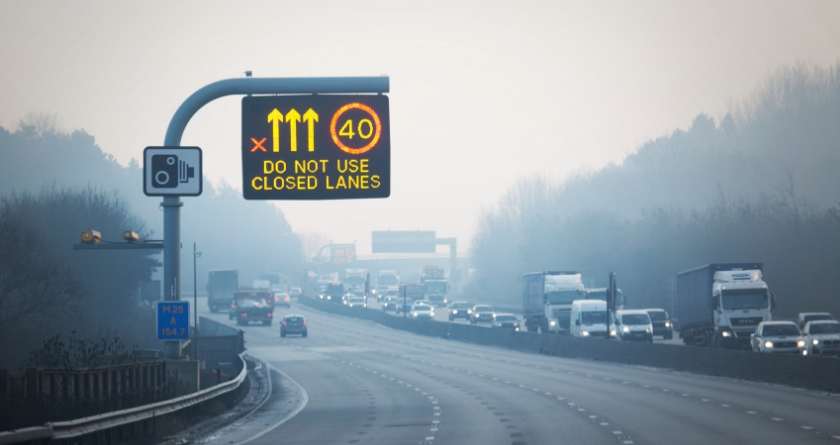
Love them or loathe them, smart motorways seem to be here to stay. Their electronic overhead gantries give you important information such as an upcoming variable speed limit or a lane closure—marked with a red ‘X’. But instead of moving to another lane, as you should when you see a red X sign, Highways England says thousands of motorists ignore them.

Now, thanks to new legislation allowing penalty enforcement by gantry-mounted automatic number plate recognition (ANPR) cameras, as of the 10th of June, if you’re snapped driving in a closed lane, you’ll get an automatic £100 fine and three penalty points on your licence.

Red alert

Since 2006, Highways England has turned hundreds of miles of England’s motorways into ‘smart’ motorways—using the hard shoulder either as a permanent or part-time traffic lane, depending on the smart motorway format. With the potential of no available hard shoulder, if you break down or are in a collision, operators can close lanes to help protect you.

Punishment for using a closed lane isn’t new. Failure to obey a lawful traffic sign is an offence under section 36(1) of the Road Traffic Act 1988 and you risk a fine of up to £1,000 plus three penalty points, or even disqualification. Until now, prosecution for ignoring a red X sign relied on a police officer witnessing the offence.

A survey by the RAC of 2,093 motorists showed that 99% of respondents understood a red X meant a lane closure and 84% of those who used a smart motorway in the last year noticed the red Xs on overhead gantries. Yet 23% ignored these signs and used closed lanes at least occasionally and on purpose, or accidentally.

Forty-eight per cent of those questioned stated they observed motorists disobeying red X signs ‘frequently’ with 36% witnessing it ‘occasionally’.

Only 7% of respondents reported not having seen motorists ignore red X signs but speak to a regular motorway user and they might tell you they’re frustrated seeing too many warnings for non-existent hazards, which could explain the level of complacency—a dangerous thing when driving, especially on a motorway.

When asked their opinions of those motorists who snub red X signals, 61% of those surveyed considered these drivers ‘irresponsible’. Fifty-four per cent said they’re at risk of getting into a serious accident, 45% said they’d made an innocent but potentially dangerous mistake, and 37% said they were unobservant and perhaps shouldn’t be driving.

Sixty-six per cent of motorists surveyed by the RAC were in favour of using ANPR cameras to catch those who drive on closed lanes with only 34% against.

One in 20 flout the rules

Mike Wilson, Chief Highways Engineer for Highways England, said:

“Our motorways are already among the safest in the world but this move will make them even safer.

“Red X signs over closed lanes help protect drivers from dangers ahead. Most drivers comply with lane closures, but the minority of people who don’t are putting themselves and other road users at real risk.

“We welcome this auto-enforcement and the increase to driver safety it will bring.”

Also welcoming automatic penalties for drivers ignoring red X signs is Edmund King, President of the AA. He said:

“Although it has taken far too long, this is a welcome measure to improve safety on motorways.”

King reported that their research showed that one in 20 drivers continue to drive in red X lanes even when they’ve seen the warning sign.

“Red X’s are put up to warn of an obstruction, so drivers must get out of the lane when they see them. We have had several incidents recently where AA members’ cars have been hit in a live lane on ‘smart’ motorways’,” he added.

Hit the road

There are three types of smart motorways; all of which use variable speed limits to suit conditions:

Controlled Motorways (CM), which keep a permanent hard shoulder only for emergencies.

Dynamic Hard Shoulder Motorways (also known as Managed Motorways Dynamic Hard Shoulder (MM-DHS)). DHS motorway hard shoulders can become a fourth lane during peak congestion.

All-Lanes Running Motorways (ALR). These motorways are the most common. In place of a hard shoulder are permanent fourth lanes and emergency refuge areas (ERAs) every 2.5km (1.55 miles).

Concerned for driver safety, organisations like the AA called for more refuge lay-bys on ALR routes to which Highways England said it would reduce the gap between ERAs to every mile, ‘where practical’, to offer ‘greater reassurance to road users’.

Safety aside, more ERAs would mean fewer instances of broken down vehicles causing lane closures, cutting the number of motorists getting fines and points on their licence because of not spotting a red X warning in time.

Many drivers say they sometimes can’t safely change lanes straight away, particularly during peak hours.

People have witnessed motorway drivers dangerously slam on their brakes when they see a sign for a speed change—presumably fearing the speed cameras. With this in mind, take extra care to avoid motorists who may now panic when they spot a red X, and suddenly swerve into another lane when it’s not safe and without warning.

Do you welcome the new legislation? Is this another revenue generator or a genuine safety issue? Tell us in the comments.

Charging your car from a mains could cause electric shock

Charging your car from a mains could cause electric shock

Research shows the average UK motorist drives 25 miles a day, so most drivers of electric vehicles (EVs)—whether that be ‘pure’, hybrid, or another electric variant—charge their cars at home, but almost three-quarters use hazardous methods, says a leading UK charity on electrical safety.

Results of a study for consumer protection charity Electrical Safety First (ESF) show that the lack of local public EV charging points is causing motorists to put themselves at risk of electric shock and of causing electrical fires.

Taking shocking risks

The survey of 1,500 UK drivers, who own a plug-in hybrid or all-electric vehicle, found that 74% charge their vehicles at home using multi-socket extension leads meant for indoor.

Despite almost 90% of those surveyed admitting they knew it was a dangerous practice, three-quarters of the EV drivers using domestic extension leads charge their vehicles by ‘daisy-chaining’—plugging multiple extension leads together—further increasing the chance of electric shock and fire.

Over half of EV users who charge their cars using indoor extension leads have ‘at least once’ left cables running to their vehicle when it’s been raining.

Over 70% of survey respondents making long journeys from home or work, on at least one occasion, needed to use extension leads from a domestic mains socket to recharge their car at their destination—with 44.5% doing so more than once.

When asked why they take these risks, EV drivers say there’s a lack of public charging points close to their home, with a third saying the existing number of charging points in their area was ‘not adequate at all’.

Data from the Department for Transport (DfT) and Zap-Map — a platform designed to help EV drivers to locate available charge points — shows that the increase in EVs is growing six times faster than the number of charging units available to the public. In six years, the volume of EVs has increased by 1480%.

Charging point locations vary across the UK. London has 147 within almost 39 square miles, which works out to be 2.6 charging points for every 10,000 residents. Wales, meanwhile, has only 1.55 charging locations within the same sized area and just 1.03 charging points per 10,000 people.

The powers that be

Martyn Allen, Technical Director at ESF, said:

“Our research shows a direct link between a lack of electric vehicle infrastructure and vehicle owners charging dangerously.

“A modern Britain also needs to be a safe one and Electrical Safety First is urging the government and local authorities to ensure that the infrastructure is in place to support the rapid increase in numbers of electric vehicles on our roads.

“With regards to consumers, we warn EV users against giving in to [the] temptation to use standard domestic extension leads to charge their vehicles outside, and never to ‘daisy-chain’ them together.”

Lack of suitable infrastructure is a serious concern for drivers who the government hope persuade to switch to EVs. And while private sector businesses such as petrol stations and supermarkets also offer charging points, councils are fundamental in providing the infrastructure required.

In March the Guardian discovered that budget cuts forced at least a quarter of councils in England and Wales to stop installing further charging points.

Judith Blake, the transport spokesperson for the Local Government Association, told the Guardian:

“In some areas, electric vehicle charging expansion will be driven by the market, and some areas will have different needs for charging infrastructure. Councils will play an important role but all areas will respond in a way that suits local circumstances.”

She added that although councils were trying to tackle air pollution in other ways, such as encouraging cycling, creating low-emission zones, and improving air quality monitoring; a lack of long-term funding was “a clear barrier to such investment” and called on the central government to address the issue.

Take charge

In line with their decision to ban new petrol and diesel vehicles by 2040, the government is trying to get more and more drivers to convert to EVs.

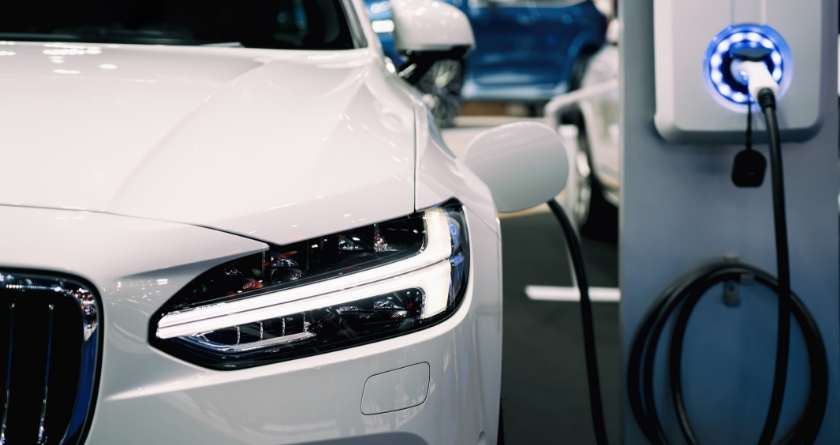
The Office for Low Emission Vehicles (OLEV) operates the Electric Vehicle Homecharge Scheme, which makes charge points more accessible and affordable by contributing towards the outlay of installing an EV charging point at your home—safer than charging from the mains, using a standard extension lead!

If you have off-street parking and are the registered keeper (or lessee or are the primary user) of an eligible EV, you could get up to 75% (capped at £500, including VAT) off the price of the charging unit and its installation.

Most home chargers are a 3 kW or 7 kW rating. The higher powered 7 kW wall-mounted units are often more expensive but take half the time to charge an EV completely. EV dealerships often have arrangements with suppliers of charging units and may even offer you one for free when you buy a new car from them.

The reason off-road parking is preferable for installing charging points is to the cables causing hazards on public pavements, but in some local authorities, the number of residential on-street charging points are growing.

As per ESF’s guidance: Never use a domestic multi-socket extension lead when charging your EV and if you must use an extension lead, only ever use one suitable for outdoor use, like a reel cable (fully unwound to prevent overheating).

For detailed information on how to charge and use your EV safely, check out ESF’s Glovebox Guide.

Are you surprised by the survey results? How many charging locations are in your area? If you’re an EV driver, do you ever use extension cables to charge your vehicle? Tell us in the comments.

BP’s new rewards scheme launches; Shell Go+ gets going and Gulf reveal plans

BP’s new rewards scheme launches; Shell Go+ gets going and Gulf reveal plans

In the rewards scheme world, there’s been a huge number of changes recently. BP have just launched their own brand rewards scheme, BPme rewards after being with Nectar for nearly 20 years.

Shell has also released an update to their Drivers Club called Go+, Gulf is releasing an own brand called Oomph! At the end of the month and Esso will start to use Nectar soon. So much change, but here’s our roundup of the three new own brand schemes and what we think of them, what makes them different, and what the three companies themselves said about it.

BPme Rewards

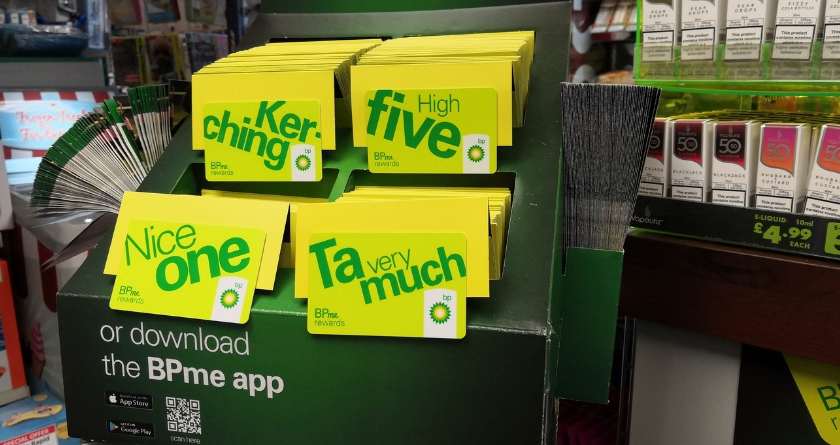
BP has got a physical card with four designs, one saying “High five”, “Nice one”, “Ker-ching!” and “Ta very much” which definitely feels like a move to a more modern brand, and like they’re really trying to shed the old feel of the brand.

The card itself is a lime green colour so it definitely stands out from the more muted colours of peoples wallets.

BP has also released an online web portal as well as updating the app, and from my quick scan through, the web is so much better than the app, it loads fast and looks really clean. The app has retained much of the old app with a small section for the rewards card, which is unnoticeable on the home screen. The online portal contains the rewards catalogue (we’ll come to that later) as well as all the account settings.

You can have up to 5 cards linked to your account, although I haven’t found the benefit of this yet, please let me know in the comments below what you think the benefit could be. While you can have up to five linked to one account, each card itself can only be registered to one account, so my theory of partner sharing didn’t work out. BP do say they want to introduce partner linked accounts and points sharing but this isn’t released yet.

The strangest thing I saw was the gifts catalogue. It contained everything from a grill pan to a Frozen (Disney film not actually an ice block) backpack. The gift catalogue seems quite random for a fuel company to be offering. On top of that, points are displayed showing a count towards a certain percentage of the cost of the item, rather than the total number of points needed. For example, the grill pan (with a unique coating imitating stone) costs you 2100 points or 840 points plus £6.99 (which is what is displayed). The rewards on offer seem a bit strange, as you can put them towards money off in store, or a gift voucher.

Points wise, you earn 1 point for every litre of regular fuel, 2 points for every litre of Ultimate fuel and 1 point for each pound spent in shop. Exclusions apply: BPme Reward points cannot be earned on tobacco and related products, phone cards, baby milk, postage stamps, utility cards, e top-up and lottery, which is fairly standard for most promotions.

You can also currently earn 250 points for registering your card on the website and 100 for linking your Nectar card if you’ve shopped at a BP before. This offer isn’t publicised so it may not appear or work for everyone. Without even shopping at BP I’ve already got 350 points which are worth £1.75. Not too bad so far!

Nicola Grady-Smith, BP Retail Operations Director UK said: “BPme Rewards is our exciting new personalized loyalty programme that allows customers to earn points on fuel and in-store purchases at BP’s UK forecourts, with double the points on BP Ultimate fuels. Customers can choose between spending their points for fuels, in store, or on a range of offers available online.”

Shell Go+

Shell Go+ has been around since March but as they have an overlap with their previous Shell Drivers Club, they haven’t done a full push for it yet. You stop collecting points on your physical card from the 30th June but can currently collect points on the digital-only Go+ card.

If you’re not a smartphone user or have a very old smartphone, you’ll no longer be able to get Shell rewards, which is something to consider, especially if you’ve got lots of points on your current card. Perhaps speaking to a relative or friend if you struggle with tech to get them to set it up online so you don’t lose all your points.

In terms of the customer experience on the app and web, the harmony is exactly the same, it’s very simple to use and the digital card is fairly easy to find. There isn’t much in the app and the main things you need are on a slider on the main screen, making it easy to navigate.

The perks of being a Shell Go+ member includes an automatic 10% off things including Costa Express, Jamie Oliver Deli, car washes and more, without needing to “unlock” anything. You also get random little rewards every now and then, such as by three set items and get a 5ppl voucher for fuel. If you have Shell Energy, you also get Go+ rewards and points for that.

Another interesting thing about Go+ is that you don’t get points, you get visits (a £10 or more fuel spend or £2 spend in the shop.) After 10 visits you get a money off fuel voucher which they don’t specify how much it will be, but it will hopefully be a good number.

All in all, a very simple service that seems to have a lot more to come.

A spokeswoman for Shell said “Shell Go+ provides our loyal customers with a much more personalised offer than was previously available through Shell Drivers Club. Our members can now earn rewards across all the Shell products and services they use – not just when purchasing fuel. Each week, we attract around five million customers to our sites: with one in every three transactions at our service stations being a non-fuels purchase. The biggest change is that members are now rewarded for visits to Shell, not just on the amount of fuel they buy. And we’ve made it even easier to redeem rewards by making them instantly available via the app – members no longer have to wait for their vouchers to arrive in the post and then remember to bring them when they visit us.“

Oomph! From Gulf/Certas

Oomph! Is not fully released yet, only to fleet at the minute, but at the end of the month they’ll be releasing it to everyone. Gulf has more of a presence in the Midlands/North, so I’ve never visited one myself and therefore haven’t got as much knowledge of how it will work compared to the current Gulf experience.

Gulf seems to have launched the app, but I don’t want to comment on it until I’ve had the chance to try it out. It also seems to be quite basic, so I don’t know if a newer build is coming at some point.

Gerry Welsh, Retail Marketing Manager for Gulf said “We will shortly roll out our new Oomph loyalty platform to Gulf dealers at the end of the month.

Drivers can sign up to Oomph via an App, website or in store. Drivers collect points when they purchase fuel, lubricants and car washes and can enter high-value prize draws in our Monthly Prize Hauls and they can also vote for their local charity to win £1000. In addition to this, dealers can provide additional offers to their customers and this will include deals such as free coffees, money off in-store and money off fuels.”

Esso and Nectar

Nectar, having been part of BP for nearly 20 years, is now moving to Esso with a roll-out happening since 1st June. It seems to be running the same as it has previously but Esso is apparently introducing more features in 2020.

At the minute, at participating stores only, you earn one point for every £1 spent on fuel, and two points on every £1 spent in store. If your local Esso has a Tesco Express attached, you won’t be able to use Nectar, but you can see more here, including qualifying stores: https://www.nectar.com/esso

Overall thoughts

Bringing it all together, the next few months look to see some exciting developments for loyalty programs. It’s a great thing to sign up to and having an extra loyalty program never hurt anyone as the perks often do pay off.

If you’re an avid loyalty card user at the forecourts whether it’s Esso and Nectar or one of the ones listed above, let us know at [email protected] and some of you might be contacted for a three-month study we’re interested in doing!

What do you think of the new loyalty schemes? Are you excited to try any out? What are your thoughts on the offerings? Let us know below