Acoustic cameras to catch noise polluters

Acoustic cameras to catch noise polluters

For those of you that follow the F1, you’ll know that we had a bit of controversy at the last race, when it was deemed that Vettel deliberately went a little wide in a bid to stop Hamilton from passing him after a minor trackside excursion. The stewards were following the regulations to the letter.

Depending on who you want to see win, this could be great news, or a woeful display of bias against Vettel, and it’s that immediate feeling of schadenfreude, followed by horror, that I’m feeling right now.

It’s been announced that the Department for Transport (DfT) are to crack down on noise polluting vehicles, through the use of prototype ‘noise cameras’ that have been specifically developed for the task. This is because, according to Transport Secretary Chris Grayling, noise pollution has been linked to a number of “significant health implications” such as stress, high blood pressure and heart attacks.

74dB is your limit

To be clear, the limit for noise regulation isn’t changing, but until this point, enforcing that rule has been more about reactive policing rather than proactive enforcement, and for the main part, it’s been subjective rather than black & white, the new noise cameras will change that.

To me, it seems very much like the loss of traffic police in favour of speed cameras; a minor infringement would more than likely result in a ticking off from a traffic officer, but with a camera, there’s no grey area, no thought as to the driver’s skill, the circumstances or timing – if you’re breaking the set limit, that’s as dangerous at 3AM as it is at 3PM.

And that’s before we even get to the whole ‘Big Brother’ issue, and where that will lead us.

Petrolhead heaven

I can fully appreciate that the majority of the public (and motorists) will rejoice at the thought of putting an end to the overly noisy, angry sounding four-cylindered, body-kitted cars that the ‘youths’ drive, but what of a classic V8 on song, or the melodious exhaust note of a V12 under power? The pop and the crackle on overrun … the sounds that celebrate fossil-fuel engineering at its finest?

The stewards (in this case, the police), will have to enforce the regulations to the letter, there’s no choosing the favoured sides, no ‘just this once’ options, and no free passes. Is this great news, or a woeful display of bias against the motorist?

Whilst I’m all very much for teaching younger motorists that noise doesn’t necessarily equate to speed, I do feel that targeting noisy cars through the use of a machine, set to an arbitrary limit is a mistake, and the next question would be “what comes next?”. How homogenised will motoring become? Will there come a time where we’re all driving around in a government issued ‘Transport (STD) – Car’?

No convictions

The noise cameras will be installed ‘at several’ locations over the following seven months, the DfT are at pains to state that there will be no convictions issued under the trial, but that “they could be used to help enforce the law” in the future (so that’s a given then), which would also mean a national rollout.

The cameras will use a combination of noise measurement, speed & class detection and automatic number plate recognition (ANPR) to determine whether the vehicle is breaking the law; there are minor changes for vehicle age that can have an effect, and of course larger vehicles by their very nature could potentially be noisier, the system needs to be able to identify each vehicle accurately.

Given that the DfT have specifically mentioned rural communities, and that identifying a single vehicle at speed on a naturally noisy motorway would be difficult, it’s assumed that the placement of the cameras would be at reasonably low-volume traffic sites initially, as to how well they would work in high-volume sites remains to be seen.

It’s thought that standard exhaust systems, even on performance cars, should manage just fine, unless of course you’re deliberately revving your engine as you drive past, which does open up another point; speed awareness courses tell us that speeding (full stop) is bad, that to counter the natural progression of a car speeding up on a neutral throttle, we should use a lower gear to hold it back slightly, which would mean that engine revs are higher, leading to more noise for the speed – just how accurate are these cameras?

As an automotive performance engineer, I’m not averse to the sound of cars and motorcycles ‘making progress’, providing that the act of driving fast in itself isn’t a danger, but I do understand why some people don’t like that noise, and I’m happy that measures are being taken to counter that, I just believe that they’re the wrong measures.

What are your thoughts on noise pollution? Should the government take this step? Perhaps you feel that there’s other issues that the government should be spending money on? Let us know.
You’ll now get fined for ignoring the Red X on a motorway

You’ll now get fined for ignoring the Red X on a motorway

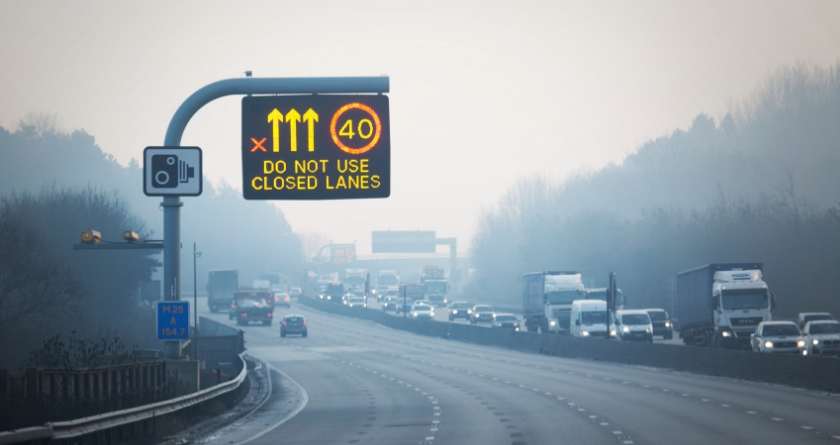
Love them or loathe them, smart motorways seem to be here to stay. Their electronic overhead gantries give you important information such as an upcoming variable speed limit or a lane closure—marked with a red ‘X’. But instead of moving to another lane, as you should when you see a red X sign, Highways England says thousands of motorists ignore them.

Now, thanks to new legislation allowing penalty enforcement by gantry-mounted automatic number plate recognition (ANPR) cameras, as of the 10th of June, if you’re snapped driving in a closed lane, you’ll get an automatic £100 fine and three penalty points on your licence.

Red alert

Since 2006, Highways England has turned hundreds of miles of England’s motorways into ‘smart’ motorways—using the hard shoulder either as a permanent or part-time traffic lane, depending on the smart motorway format. With the potential of no available hard shoulder, if you break down or are in a collision, operators can close lanes to help protect you.

Punishment for using a closed lane isn’t new. Failure to obey a lawful traffic sign is an offence under section 36(1) of the Road Traffic Act 1988 and you risk a fine of up to £1,000 plus three penalty points, or even disqualification. Until now, prosecution for ignoring a red X sign relied on a police officer witnessing the offence.

A survey by the RAC of 2,093 motorists showed that 99% of respondents understood a red X meant a lane closure and 84% of those who used a smart motorway in the last year noticed the red Xs on overhead gantries. Yet 23% ignored these signs and used closed lanes at least occasionally and on purpose, or accidentally.

Forty-eight per cent of those questioned stated they observed motorists disobeying red X signs ‘frequently’ with 36% witnessing it ‘occasionally’.

Only 7% of respondents reported not having seen motorists ignore red X signs but speak to a regular motorway user and they might tell you they’re frustrated seeing too many warnings for non-existent hazards, which could explain the level of complacency—a dangerous thing when driving, especially on a motorway.

When asked their opinions of those motorists who snub red X signals, 61% of those surveyed considered these drivers ‘irresponsible’. Fifty-four per cent said they’re at risk of getting into a serious accident, 45% said they’d made an innocent but potentially dangerous mistake, and 37% said they were unobservant and perhaps shouldn’t be driving.

Sixty-six per cent of motorists surveyed by the RAC were in favour of using ANPR cameras to catch those who drive on closed lanes with only 34% against.

One in 20 flout the rules

Mike Wilson, Chief Highways Engineer for Highways England, said:

“Our motorways are already among the safest in the world but this move will make them even safer.

“Red X signs over closed lanes help protect drivers from dangers ahead. Most drivers comply with lane closures, but the minority of people who don’t are putting themselves and other road users at real risk.

“We welcome this auto-enforcement and the increase to driver safety it will bring.”

Also welcoming automatic penalties for drivers ignoring red X signs is Edmund King, President of the AA. He said:

“Although it has taken far too long, this is a welcome measure to improve safety on motorways.”

King reported that their research showed that one in 20 drivers continue to drive in red X lanes even when they’ve seen the warning sign.

“Red X’s are put up to warn of an obstruction, so drivers must get out of the lane when they see them. We have had several incidents recently where AA members’ cars have been hit in a live lane on ‘smart’ motorways’,” he added.

Hit the road

There are three types of smart motorways; all of which use variable speed limits to suit conditions:

Controlled Motorways (CM), which keep a permanent hard shoulder only for emergencies.

Dynamic Hard Shoulder Motorways (also known as Managed Motorways Dynamic Hard Shoulder (MM-DHS)). DHS motorway hard shoulders can become a fourth lane during peak congestion.

All-Lanes Running Motorways (ALR). These motorways are the most common. In place of a hard shoulder are permanent fourth lanes and emergency refuge areas (ERAs) every 2.5km (1.55 miles).

Concerned for driver safety, organisations like the AA called for more refuge lay-bys on ALR routes to which Highways England said it would reduce the gap between ERAs to every mile, ‘where practical’, to offer ‘greater reassurance to road users’.

Safety aside, more ERAs would mean fewer instances of broken down vehicles causing lane closures, cutting the number of motorists getting fines and points on their licence because of not spotting a red X warning in time.

Many drivers say they sometimes can’t safely change lanes straight away, particularly during peak hours.

People have witnessed motorway drivers dangerously slam on their brakes when they see a sign for a speed change—presumably fearing the speed cameras. With this in mind, take extra care to avoid motorists who may now panic when they spot a red X, and suddenly swerve into another lane when it’s not safe and without warning.

Do you welcome the new legislation? Is this another revenue generator or a genuine safety issue? Tell us in the comments.

Charging your car from a mains could cause electric shock

Charging your car from a mains could cause electric shock

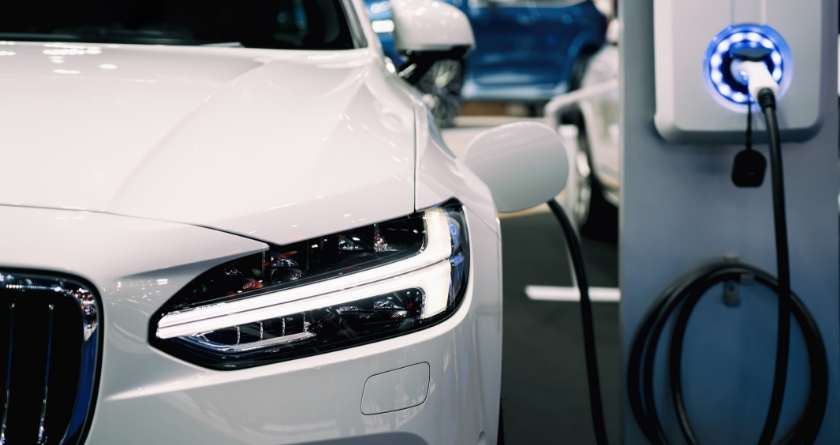
Research shows the average UK motorist drives 25 miles a day, so most drivers of electric vehicles (EVs)—whether that be ‘pure’, hybrid, or another electric variant—charge their cars at home, but almost three-quarters use hazardous methods, says a leading UK charity on electrical safety.

Results of a study for consumer protection charity Electrical Safety First (ESF) show that the lack of local public EV charging points is causing motorists to put themselves at risk of electric shock and of causing electrical fires.

Taking shocking risks

The survey of 1,500 UK drivers, who own a plug-in hybrid or all-electric vehicle, found that 74% charge their vehicles at home using multi-socket extension leads meant for indoor.

Despite almost 90% of those surveyed admitting they knew it was a dangerous practice, three-quarters of the EV drivers using domestic extension leads charge their vehicles by ‘daisy-chaining’—plugging multiple extension leads together—further increasing the chance of electric shock and fire.

Over half of EV users who charge their cars using indoor extension leads have ‘at least once’ left cables running to their vehicle when it’s been raining.

Over 70% of survey respondents making long journeys from home or work, on at least one occasion, needed to use extension leads from a domestic mains socket to recharge their car at their destination—with 44.5% doing so more than once.

When asked why they take these risks, EV drivers say there’s a lack of public charging points close to their home, with a third saying the existing number of charging points in their area was ‘not adequate at all’.

Data from the Department for Transport (DfT) and Zap-Map — a platform designed to help EV drivers to locate available charge points — shows that the increase in EVs is growing six times faster than the number of charging units available to the public. In six years, the volume of EVs has increased by 1480%.

Charging point locations vary across the UK. London has 147 within almost 39 square miles, which works out to be 2.6 charging points for every 10,000 residents. Wales, meanwhile, has only 1.55 charging locations within the same sized area and just 1.03 charging points per 10,000 people.

The powers that be

Martyn Allen, Technical Director at ESF, said:

“Our research shows a direct link between a lack of electric vehicle infrastructure and vehicle owners charging dangerously.

“A modern Britain also needs to be a safe one and Electrical Safety First is urging the government and local authorities to ensure that the infrastructure is in place to support the rapid increase in numbers of electric vehicles on our roads.

“With regards to consumers, we warn EV users against giving in to [the] temptation to use standard domestic extension leads to charge their vehicles outside, and never to ‘daisy-chain’ them together.”

Lack of suitable infrastructure is a serious concern for drivers who the government hope persuade to switch to EVs. And while private sector businesses such as petrol stations and supermarkets also offer charging points, councils are fundamental in providing the infrastructure required.

In March the Guardian discovered that budget cuts forced at least a quarter of councils in England and Wales to stop installing further charging points.

Judith Blake, the transport spokesperson for the Local Government Association, told the Guardian:

“In some areas, electric vehicle charging expansion will be driven by the market, and some areas will have different needs for charging infrastructure. Councils will play an important role but all areas will respond in a way that suits local circumstances.”

She added that although councils were trying to tackle air pollution in other ways, such as encouraging cycling, creating low-emission zones, and improving air quality monitoring; a lack of long-term funding was “a clear barrier to such investment” and called on the central government to address the issue.

Take charge

In line with their decision to ban new petrol and diesel vehicles by 2040, the government is trying to get more and more drivers to convert to EVs.

The Office for Low Emission Vehicles (OLEV) operates the Electric Vehicle Homecharge Scheme, which makes charge points more accessible and affordable by contributing towards the outlay of installing an EV charging point at your home—safer than charging from the mains, using a standard extension lead!

If you have off-street parking and are the registered keeper (or lessee or are the primary user) of an eligible EV, you could get up to 75% (capped at £500, including VAT) off the price of the charging unit and its installation.

Most home chargers are a 3 kW or 7 kW rating. The higher powered 7 kW wall-mounted units are often more expensive but take half the time to charge an EV completely. EV dealerships often have arrangements with suppliers of charging units and may even offer you one for free when you buy a new car from them.

The reason off-road parking is preferable for installing charging points is to the cables causing hazards on public pavements, but in some local authorities, the number of residential on-street charging points are growing.

As per ESF’s guidance: Never use a domestic multi-socket extension lead when charging your EV and if you must use an extension lead, only ever use one suitable for outdoor use, like a reel cable (fully unwound to prevent overheating).

For detailed information on how to charge and use your EV safely, check out ESF’s Glovebox Guide.

Are you surprised by the survey results? How many charging locations are in your area? If you’re an EV driver, do you ever use extension cables to charge your vehicle? Tell us in the comments.

BP’s new rewards scheme launches; Shell Go+ gets going and Gulf reveal plans

BP’s new rewards scheme launches; Shell Go+ gets going and Gulf reveal plans

In the rewards scheme world, there’s been a huge number of changes recently. BP have just launched their own brand rewards scheme, BPme rewards after being with Nectar for nearly 20 years.

Shell has also released an update to their Drivers Club called Go+, Gulf is releasing an own brand called Oomph! At the end of the month and Esso will start to use Nectar soon. So much change, but here’s our roundup of the three new own brand schemes and what we think of them, what makes them different, and what the three companies themselves said about it.

BPme Rewards

BP has got a physical card with four designs, one saying “High five”, “Nice one”, “Ker-ching!” and “Ta very much” which definitely feels like a move to a more modern brand, and like they’re really trying to shed the old feel of the brand.

The card itself is a lime green colour so it definitely stands out from the more muted colours of peoples wallets.

BP has also released an online web portal as well as updating the app, and from my quick scan through, the web is so much better than the app, it loads fast and looks really clean. The app has retained much of the old app with a small section for the rewards card, which is unnoticeable on the home screen. The online portal contains the rewards catalogue (we’ll come to that later) as well as all the account settings.

You can have up to 5 cards linked to your account, although I haven’t found the benefit of this yet, please let me know in the comments below what you think the benefit could be. While you can have up to five linked to one account, each card itself can only be registered to one account, so my theory of partner sharing didn’t work out. BP do say they want to introduce partner linked accounts and points sharing but this isn’t released yet.

The strangest thing I saw was the gifts catalogue. It contained everything from a grill pan to a Frozen (Disney film not actually an ice block) backpack. The gift catalogue seems quite random for a fuel company to be offering. On top of that, points are displayed showing a count towards a certain percentage of the cost of the item, rather than the total number of points needed. For example, the grill pan (with a unique coating imitating stone) costs you 2100 points or 840 points plus £6.99 (which is what is displayed). The rewards on offer seem a bit strange, as you can put them towards money off in store, or a gift voucher.

Points wise, you earn 1 point for every litre of regular fuel, 2 points for every litre of Ultimate fuel and 1 point for each pound spent in shop. Exclusions apply: BPme Reward points cannot be earned on tobacco and related products, phone cards, baby milk, postage stamps, utility cards, e top-up and lottery, which is fairly standard for most promotions.

You can also currently earn 250 points for registering your card on the website and 100 for linking your Nectar card if you’ve shopped at a BP before. This offer isn’t publicised so it may not appear or work for everyone. Without even shopping at BP I’ve already got 350 points which are worth £1.75. Not too bad so far!

Nicola Grady-Smith, BP Retail Operations Director UK said: “BPme Rewards is our exciting new personalized loyalty programme that allows customers to earn points on fuel and in-store purchases at BP’s UK forecourts, with double the points on BP Ultimate fuels. Customers can choose between spending their points for fuels, in store, or on a range of offers available online.”

Shell Go+

Shell Go+ has been around since March but as they have an overlap with their previous Shell Drivers Club, they haven’t done a full push for it yet. You stop collecting points on your physical card from the 30th June but can currently collect points on the digital-only Go+ card.

If you’re not a smartphone user or have a very old smartphone, you’ll no longer be able to get Shell rewards, which is something to consider, especially if you’ve got lots of points on your current card. Perhaps speaking to a relative or friend if you struggle with tech to get them to set it up online so you don’t lose all your points.

In terms of the customer experience on the app and web, the harmony is exactly the same, it’s very simple to use and the digital card is fairly easy to find. There isn’t much in the app and the main things you need are on a slider on the main screen, making it easy to navigate.

The perks of being a Shell Go+ member includes an automatic 10% off things including Costa Express, Jamie Oliver Deli, car washes and more, without needing to “unlock” anything. You also get random little rewards every now and then, such as by three set items and get a 5ppl voucher for fuel. If you have Shell Energy, you also get Go+ rewards and points for that.

Another interesting thing about Go+ is that you don’t get points, you get visits (a £10 or more fuel spend or £2 spend in the shop.) After 10 visits you get a money off fuel voucher which they don’t specify how much it will be, but it will hopefully be a good number.

All in all, a very simple service that seems to have a lot more to come.

A spokeswoman for Shell said “Shell Go+ provides our loyal customers with a much more personalised offer than was previously available through Shell Drivers Club. Our members can now earn rewards across all the Shell products and services they use – not just when purchasing fuel. Each week, we attract around five million customers to our sites: with one in every three transactions at our service stations being a non-fuels purchase. The biggest change is that members are now rewarded for visits to Shell, not just on the amount of fuel they buy. And we’ve made it even easier to redeem rewards by making them instantly available via the app – members no longer have to wait for their vouchers to arrive in the post and then remember to bring them when they visit us.“

Oomph! From Gulf/Certas

Oomph! Is not fully released yet, only to fleet at the minute, but at the end of the month they’ll be releasing it to everyone. Gulf has more of a presence in the Midlands/North, so I’ve never visited one myself and therefore haven’t got as much knowledge of how it will work compared to the current Gulf experience.

Gulf seems to have launched the app, but I don’t want to comment on it until I’ve had the chance to try it out. It also seems to be quite basic, so I don’t know if a newer build is coming at some point.

Gerry Welsh, Retail Marketing Manager for Gulf said “We will shortly roll out our new Oomph loyalty platform to Gulf dealers at the end of the month.

Drivers can sign up to Oomph via an App, website or in store. Drivers collect points when they purchase fuel, lubricants and car washes and can enter high-value prize draws in our Monthly Prize Hauls and they can also vote for their local charity to win £1000. In addition to this, dealers can provide additional offers to their customers and this will include deals such as free coffees, money off in-store and money off fuels.”

Esso and Nectar

Nectar, having been part of BP for nearly 20 years, is now moving to Esso with a roll-out happening since 1st June. It seems to be running the same as it has previously but Esso is apparently introducing more features in 2020.

At the minute, at participating stores only, you earn one point for every £1 spent on fuel, and two points on every £1 spent in store. If your local Esso has a Tesco Express attached, you won’t be able to use Nectar, but you can see more here, including qualifying stores: https://www.nectar.com/esso

Overall thoughts

Bringing it all together, the next few months look to see some exciting developments for loyalty programs. It’s a great thing to sign up to and having an extra loyalty program never hurt anyone as the perks often do pay off.

If you’re an avid loyalty card user at the forecourts whether it’s Esso and Nectar or one of the ones listed above, let us know at [email protected] and some of you might be contacted for a three-month study we’re interested in doing!

What do you think of the new loyalty schemes? Are you excited to try any out? What are your thoughts on the offerings? Let us know below

The most jammed roads in England for the next three years

The most jammed roads in England for the next three years

Depending on your viewpoint, being told that there’s nearly 900 separate road works planned between now and December 2021, which could lead to thousands of days’ worth of delays, could be a good or terrible thing.

Of course, no one likes sitting in traffic jams, road works have become the bane of modern motoring, (well, that and being treated like a portable cash machine), but is there an argument in favour of these works?

Damned if you do…

It’s easy to sit here, staring out of my window looking at the rolling Warwickshire countryside and complain about being delayed while driving virtually anywhere thanks to roadworks, but I also have a foot firmly in the other camp: “We pay all these taxes, duty on fuel, VED, anti-pollution, congestion charges and look at the state of our roads … potholes big enough to crack a wheel and punch your suspension strut through the bonnet”.

No happy medium, unfortunately.

There’s an argument for carrying out the roadworks overnight (where possible), but that would lead to extending the overall length of time, a further increase in costs and overhead as the roadworks need setting up and breaking down each night, and lest we forget that ultimately, it’s the motorists that are paying for them.

… damned if you don’t

The planned road works are estimated to affect around 1 billion (913,609,699) journeys between now and December 2021, and although some major roads will be affected more, there doesn’t seem to be a geographical area that will be safe and free-flowing from these works.

The M6, in particular, will face at least 34 planned works, which the study creators say will cause disruption for 1,586 days (despite there only being just over 900 days until 1st December 2021), it’s thought that these 1,500+ days come from the extended timings for every journey affected.

The crux of the problem, at least according to Edmund King, President of the AA, is the desire to change traditional motorways into smart motorways, or as they’re now being called, ‘digital roads’.

Digital roads

Smart motorways, digital roads, whatever you call them, there’s still major concerns over road safety; over 400 miles of motorways are set to lose the hard shoulder, which has traditionally been the safety refuge for stranded motorists, despite there being inherent problems with it – Highways England announced last year that over 100 people were killed or injured every year while on the hard shoulder.

Of course, there are financial implications to the argument for digital roads vs traditional motorways; in a document on parliament.uk, it breaks down the costs of traditional widening, and for turning a motorway into an ‘All Lane Running’ motorway, but one particular section makes for important reading.

“Cost savings are at the heart of the Department’s justification for the permanent conversion of the hard shoulder into a running lane. The Government’s preference for All Lane Running is based on the fact that extra capacity can be obtained at a 60% lower cost than traditional road widening. The fact that All Lane Running is the least costly of the scheme designs cannot be challenged. That this involves the loss of the hard shoulder, resulting in a risk to safety, is another matter and is not justifiable.”

The reality

Despite bemoaning the fact that road works are seemingly everywhere, and that we once planned our journeys based on time & distance rather than guesstimating delays due to road works, the reality is that they’re now part of daily life as a motorist, and possibly with good reason.

How we travel is changing, or perhaps the vehicles we use to travel in, are changing. Vehicles are becoming smarter, able to interact with their surroundings, to know when to switch lanes, which direction they need to go, how much traffic is around them … smart cars are getting smarter but they need better infrastructure to work to their maximum efficiency, and better infrastructure means more roadworks.

For the majority of us that drive vehicles that have no connectivity, that still use a CD player for In-Car Entertainment or rely on outdated fossil-fuels to get from A to B, roadworks are painful. But we are literally a few steps away from full autonomy, science-fiction is fast becoming science fact, and the days of the ‘Johnny Cab’ are here already, providing the environment can cope with them.

So despite the fact that sitting in traffic jams due to road works is something akin to having teeth pulled, they’re a good thing, and if we don’t benefit from them, you know that our children will.

Is there a better way to build & repair roads? Are roadworks simply a fact of modern life? Is the Govt. wrong to put money before safety? Let us know in the comments.

£15 ULEZ fees are coming to Heathrow Airport

£15 ULEZ fees are coming to Heathrow Airport

Heathrow airport had 480,339 aircraft movements in 2018, moving over 80 million passengers to international destinations, and 1,715,440 tonnes of cargo.

A typical Boeing 747 aircraft uses approximately one gallon of fuel for every second of flight time, around five gallons per mile, or roughly 36,000 gallons of fuel for a ten-hour flight; not exactly planet-friendly. With an average fuel consumption (per annum) of 2,401,695 gallons to a mile, you’d think that Heathrow airport as an entity may be a little more self-aware when it comes to emissions.

Improve air quality

It seems that whenever we have to face a whole new financial charge for motoring, the well-worn “improve air quality and cut congestion” phrase is trotted out, as a ‘one size, fits all’ solution; whoever originally coined that phrase must be thanking their chosen deity on a daily basis for the gift that it was.

A fuel tax rise? To cut congestion and improve air quality. Ultra-low emission zone charges? We need to improve air quality and cut congestion. You want to drop a passenger at Heathrow to catch a flight? That’s a £15 charge to help improve the air quality and cut congestion.

Despite not being owned by the local authority or government, the plan to charge cars arriving at Heathrow on the ULEZ basis that’s been introduced in London will of course find favour with them – “the world’s first ultra-low emissions zone at an airport” has a certain environmentally friendly ring to it, and the fact that the M4, M25 and A30 major road networks are quite literally on the doorstep doesn’t make a difference; it’s the pollution and congestion in the drop-off zone that’s responsible for the southern air pollution.

Profiteering

To be clear, and fair, not every vehicle will be targeted, at least not until the third runway opens (when there will be a flat access charge to all passenger vehicles, taxis and mini-cabs) – just those vehicles that wouldn’t comply with the current limits for the London ultra-low emission zone. As to why Heathrow Airport Holdings feels that it’s truly necessary, the clue may lay in the fact that they haven’t yet submitted the final bid for the planning permission for expansion, with public consultation beginning on 18th June.

John Holland-Kaye, chief executive for Heathrow Airport states: “Heathrow expansion is not a choice between the economy and the environment, we must deliver on both. Today’s announcement shows that we will take the tough decisions to ensure that the airport grows responsibly”.

And with ‘improving air quality and reducing congestion’ being such a popular topic, a cynic (me, for instance) would wonder whether a few keywords and environmental catchphrases bandied about with the bid would help or hinder that bid?

Ground support and infrastructure

Of course, the next thought turns to ground support vehicles and aircraft ground handling; surely Heathrow airport will be upgrading every single vehicle in their fleet to comply with the latest emission standards?
With approximately 7,500 airside vehicles in use at Heathrow, which accounts for around 10% of the total NOx emissions from the airport, just ten percent of those vehicles are electric or emission-free at point of use. The largest NOx producer at ground level for Heathrow is the aircraft themselves – accounting for around 70% of the NOx produced at the site.

Creating a clean air zone is all very admirable, and while Heathrow is working hard to reduce their emissions overall, the fact is that charging older vehicles to enter their site, even just to drop passengers off, seems to relate more to profiteering than doing good – just the same as ULEZ and congestion charging, those motorists that don’t have a pick of vehicles, or can’t afford to upgrade to the cleanest, emission-free standards still need to use the service, and will be forced to pay no matter what.

It gets back to the old argument of why not incentivise rather than penalise? If you turn up in a non-ULEZ compliant vehicle, you must pay the standard fees, however, if you arrive in a cleaner vehicle that would comply with the ULEZ, you get reduced parking, or if just stopping for short time, perhaps even free parking.

The alternative, of course, is to use another airport (assuming they fly to the same destination), but that leads to further emissions due to miles driven, and it would only be transferring the problem to another site, a classic case of NIMBYism from Heathrow Airport Holdings, and it’s worth pointing out that the parent company also owns Glasgow Airport Limited and Southampton International Airport Limited – could this radical new plan be rolled out to other airports?

Do you think that Heathrow are doing this for the right reasons? Or is it a simple case of profiteering? Let us know in the comments.

Thatcham announce cars that are the easiest to steal

Thatcham announce cars that are the easiest to steal

To steal a car a generation ago meant a bit of muscle and a tool or two. In fact, in 1992 alone, UK vehicle crime spiked and thieves stole 620,000 vehicles from our roads. Over time, car security has increased but the fight against car thieves is far from done.

Home Office figures show car theft has doubled since 2014 and motor theft insurance payouts were at their highest in seven years at the start of 2019, according to the Association of British Insurers (ABI).

Covering the cost

The ABI says insurers settled around £108 million—or £1.2 million a day—in claims in the first three months of the year; an increase of 22% on the same period last year. This works out as a payout every eight minutes. Insurers paid out on a huge 16,000 claims from January to March 2019, compared to 14,000 in 2018.

The cost of vehicle repairs, meanwhile, was £1.2 billion—the highest quarterly figure since the ABI started to collect this data in 2013—which the ABI puts down to higher costs for parts and technology.

The Office of National Statistics (ONS) reported a nine per cent increase in motor vehicle theft offences in 2018 compared to 2017, with police recording 113,037 ‘theft or unauthorised taking of a motor vehicle’ crimes. That’s one vehicle reported stolen every five minutes. The total number of vehicle-related crimes also increased during 2018 by two per cent with 463,497 logged incidents.

Despite a rise in insurance payouts, the ABI reports the average price for motor insurance is £466—the lowest it’s been since 2017. The ABI thinks impending reforms to the Civil Liability Act legislation—aimed at reducing fraudulent whiplash claims—is part of the reason.

The legislation doesn’t come into force until April 2020 but insurers say they’re already reducing premiums because they’re expecting lower payouts.

Dangerously convenient

The ABI said part of the blame for the increase in car insurance payouts is the rise in keyless vehicle crime—also known as ‘relay theft/attack’, where, the Master Locksmiths Association say; thieves can get into a car via a relay attack in just 20 seconds.

Campaigners and politicians are now appealing to car companies to improve security, particularly in keyless cars, which have the convenient feature of letting you open and start your car without the need to take your key out of your pocket or bag.

Thatcham Research, which carries out research and testing for vehicle safety and security systems, developed the New Vehicle Security Assessment (NVSA) to assess brand-new vehicles and influence insurance group ratings.

This year is the first time that Thatcham Research has made public their results.

Laurenz Gerger, Policy Adviser for Motor Insurance at the ABI, said:

“Making these assessments public should spur motor manufacturers to take swift action to tackle this high-tech vulnerability.

“Meantime, consumers deserve to know how secure their cars are so they can take the necessary steps to reduce the likelihood that they become victims of crime.”

Thatcham Research gave five of the 11 models released in 2019 a ‘Poor’ security rating because their keyless entry/ignition, made them susceptible to relay theft.

Models that scored low on security:

Ford Mondeo
Hyundai Nexo
Kia ProCeed
Lexus UX
Toyota Corolla Hybrid

Without the keyless feature, Thatcham Research rated the overall security features as ‘Good’.

Richard Billyeald, Chief Technical Officer at Thatcham Research, said:

“Our calculations suggest that one per cent of all cars on the road today have keyless entry systems, but this technology is trickling down from the premium sector to more affordable cars.

“Until recently, all keyless systems used the exact same technology, so they were all vulnerable.

“Manufacturers are already working on new systems. A few new models already have set-ups that aren’t vulnerable to relay attacks. The functionality is the same, but they cannot be fooled by relay devices.”

Don’t get fobbed off

Thieves of keyless vehicles often work in pairs who buy a relay amplifier and a relay transmitter online.

Next, the pair targets a vehicle parked outside a house and, using the devices, can detect whether the car features keyless entry/ignition.

One criminal holds the transmitter near the car to capture the signal meant for the keyless fob. The other crook stands by the house with the amplifier to relay that signal to your fob. If the fob is close enough to the amplifier, the amplifier can detect, boost, and send the signal to the transmitter which acts as a key to your car. Police say the vehicles often get stripped to their parts, which the thieves then sell.

Apart from making sure you have locked your car, you can reduce the risk of it getting stolen by parking in a well-lit area and, once indoors, keeping your keyless fob away from windows or external doors. You can also keep your fob in a signal-blocking container—but test it by putting the key inside the container, then stand by your vehicle to make sure it doesn’t unlock. If your fob allows—switch off the signal. Check your manual or ask your dealer if it’s possible to disable the system.

If you want to go further with your security measures, you could buy a steering wheel lock, or even a wheel clamp to prevent thieves from driving away. Often the ‘hassle factor’ of these items are enough to cause criminals to sidestep your car. Fitting a tracker to your vehicle is another thing to consider.

Has anybody ever stolen your car? What do you think about keyless vehicles? Let us know in the comments.

Oil prices plummet leading to hopes of lower pump prices

Oil prices plummet leading to hopes of lower pump prices

Oil prices have dropped 5% in the past week thanks to an increase in reserves in the USA leading to hopes for lower pump prices in the coming weeks. At the highest point in the last month, oil sat at $72 a barrel, so the drop to $67 is considerable and very drastic, the steepest drop in six months.

Pump price watchers FairFuelUK say that the pump price could drop by up to 2p a litre for most areas across the UK. Wholesale prices are still on the rise, so it may be a few weeks before we see these savings filter down to the pumps.

Price changes

When the price of a barrel of oil goes up or down it can take up to a month for the changes to be felt at the pumps. If the wholesale price suddenly drops then the price of the pump will drop quicker. It depends on the volume of fuel sold, as the quicker retailers sell fuel the quicker they can respond to price changes. If demand at the forecourt is low then prices will also drop slower.

Many things affect the oil price, from the obvious supply and demand, as in winter demand increases across Europe for heating fuel, to the geopolitical influences such as tensions in the Middle East, trade wars between America and China, America’s sanctions on Middle Eastern countries such as Iran, Brexit (no, we’re not scaremongering but it is an actual thing that affects the buying behaviours on the oil market, especially when new legislation or changes to dates are announced.)

Once the barrel of oil is bought, it is then fractionally distilled and then sold on the wholesale market for companies to buy. Quieter forecourts, or ones with less thoroughfare, will be slower to respond to pump price changes as they cannot buy wholesale fuel as quickly. You may notice a local supermarket forecourt changes it prices much quicker than your small independent garage down the road, as the supermarket’s prices are controlled centrally rather than locally.

Our view

Kitty Bates, consumer spokesperson for PetrolPrices.com says “Oil prices have risen drastically in the past few months but thanks to some external geopolitical factors, as of the beginning of June a barrel of oil is sitting at the $62 dollar mark, almost 10 dollars less than last month. This will carry on to the motorist in the next coming weeks, and as we come into hotter weather, families across Britain will be able to explore the countryside without hurting their income.

Wholesale prices are still on the up, but as it can take up to two weeks for the oil price to transfer through the system we should see a fall at the end of the month, into the beginning of July.

Geopolitical instances such as the trade war between China and America have actually helped to lower oil prices, but the sanctions placed on Iran by America could see much higher pump prices at the end of the year.”

What can you do?

Shop around for prices. You can download the PetrolPrices app and check prices near you on the go. There can be up to a 10p price spread within your area, and the closest isn’t always the cheapest.

Make sure you’re getting the most out of your tank by using some hypermiling techniques. Rolling resistance of a tyre is really important, and by keeping your tyres properly inflated you can maintain a good MPG.

Keeping the engine unclogged by using a tank of premium fuel every 1000-5000 miles, or every 6 months. While premium fuels are unnecessary for most drivers on a regular basis, all cars will benefit from a tank of premium every now and then. The investment now can keep your car running smoothly in the long run, and increase the longevity of the engine and potentially reduce the risk of small errors in the engine.

What do you think of the prices at the minute? Will a pump price drop help you out this summer? Let us know below

How far do you think you can go once the warning light comes on?

How far do you think you can go once the warning light comes on?

Over a third of drivers believe cars run out of fuel 20 miles after the warning light comes on, yet new research says most can do twice the distance.

The comparison website, Compare the Market, who surveyed 1,000 Britons, compared 96 best-selling cars from 29 manufacturers to discover how far drivers could travel once the warning light came on and those that run out fastest—the difference in range is surprising.

Light roulette

Not only did Compare the Market’s study show that most popular models would keep going twice as long as the average driver expected, they found a few vehicles continue to run almost four times as far, such as the Volkswagen Passat—with a reserve range of a little over 75 miles.

Of all the 96 cars tested, the one with the shortest reserve range was the BMW M3, travelling only 32 miles after displaying the warning light.

Best-selling cars with the shortest reserve ranges

  1. BMW M3: 31.99 miles
  2. Kia Picanto: 32.14 miles
  3. Fiat 500: 37.14 miles
  4. Mini Cooper: 37.52 miles
  5. Mitsubishi Shogun: 38.23 miles
  6. Jaguar XK: 38.38 miles
  7. Citroen C1: 38.76 miles
  8. Peugeot 108: 39.14 miles
  9. Nissan Juke: 40.84 miles
  10. Ford Fiesta: 41.07 miles

Best-selling cars with longest reserve ranges

  1. Volkswagen Passat: 75.02 miles
  2. Volvo V40: 70.6 miles
  3. Ford Mondeo: 70.02 miles
  4. BMW 5 Series: 68.33 miles
  5. Toyota Prius: 66.62 miles
  6. Mercedes E-Class: 64.02 miles
  7. Audi Q5: 63.82 miles
  8. Range Rover Sport: 63.35 miles
  9. Mazda 6: 62.97 miles
  10. Audi A6: 62.06 miles

Your car’s warning light will illuminate when there’s around less than 10% of fuel left in the tank. Yet, according to research done in 2015 by the insurer, Liverpool Victoria (LV), the reason for over 800,000 drivers breaking down each year is because of empty fuel tanks caused by ignoring the fuel light. Two-thirds of the drivers running out of fuel were under 35.

LV’s study also found that two-thirds of drivers surveyed never fill their tank to the top. A little under a third put in just £5 worth of fuel to keep them going and high petrol and diesel prices may well be the reason. Over 50% of LV’s respondents confessed to having passed a filling-station despite running on empty—holding out for the possibility of a cheaper place to buy fuel.

Empty threat

Although you may be one of those motorists driving with your car’s fuel warning light lit up, most mechanics recommend you stop to get £10 worth of fuel. This prevents the risk of spending, say, hundreds—or more—on repairs from potential damage caused by running out of fuel.

You can cause problems for your vehicle if you drive with very low fuel reserves. The fuel pump of an empty tank can suck in tiny particles from the bottom of the tank. This can clog the pump, the fuel filter, and may get into the engine. In addition, damage can occur to the catalytic converter.

In cars where the fuel pump is in the fuel tank, the fuel works like insulation and lubricant. Constantly running the tank empty can overheat the pump, resulting in premature failure. With certain diesel engines, you can face further complications if you drain your car’s tank dry, requiring manual restarting of the pump.

Each car has a different range and fuel gauges aren’t exact because they’re still measured using a float. This alters its reading depending on whether you’re on an incline, for example.

Newer vehicles that display the miles you can drive on your current tank of fuel are only an estimation. Your tank’s reserve range depends on your car’s performance, how much weight your vehicle is carrying, your driving style and whether you’re sitting in traffic, on the motorway, etc.

Stop at nothing

In 2015, data from the AA showed that 4% of drivers stopped on the hard shoulder because of an empty tank. The Highway Code (Rule 270) states:

‘You MUST NOT stop on the carriageway, hard shoulder, slip road, central reservation or verge except in an emergency, or when told to do so by the police, traffic officers in uniform, an emergency sign or by flashing red light signals. Do not stop on the hard shoulder to either make or receive mobile phone calls.’

So, if you run out of fuel, it’s a legitimate reason to use the hard shoulder.

That said, you can receive a fine and points on your licence for ‘leaving a vehicle in a dangerous position,’ (MS10). The police could also charge you with ‘driving without due care and attention,’ (CD10 and CD30) if you knew or should have known you were low on fuel.

If you break down because of lack of fuel and need to call your breakdown provider, remember; your provider takes any call-outs into account, which can mean higher premiums when it’s renewal time. If you don’t have breakdown cover and need to pay to get your car recovered, you’ll face another hefty bill.

Keep your fuel tank at least a quarter full—half full is ideal. Fill up before long journeys in case of traffic and to avoid paying motorway service station fuel prices. Don’t waste time and fuel searching for a cheaper filling-station—become a PetrolPrices member or download our free app to find the cheapest petrol or diesel wherever you are.

Do you always fill up your tank when the warning light comes on or do you make sure you’ve always got plenty of fuel? How far can your car go after your warning light illuminates? Tell us in the comments.

NCP loses court case over ticket machine overpayments

NCP loses court case over ticket machine overpayments

“The action of taking property unlawfully from a person or place by force or threat of force”; the legal definition of robbery.

‘Robbery’ perhaps may be a little harsh, although if you consider the threat of having your car clamped, towed away or just punitive financial charges to be forceful, then it could work. If you’ve ever been caught at a car park without the correct change, only for the machine to tell you that ‘No Change Given’, you’ll have an understanding of the point.

If you’re paying for £1.60 worth of parking with two £1 coins, you’re not getting any extra, you don’t a credit for the next time, you can’t stay any longer (unless that rolls you into the next time slot), you’re just giving the parking operator free money, and they really do view it as free money.

NCPs free money

NCP typically make just under £700,000 per year from overpayments – all of those odd bits of payments that they hang on to when their machines won’t give change; between 2009 – 2012, NCP made an extra £2.44m just from these overpayments alone.

You could argue that the onus is on the driver to ensure that they have the correct money, which is a fair point, but sometimes life doesn’t work out that way, and with technology being as it is, why can’t there be card payments? Or smart parking using your smartphone?

It’s a lucrative little hustle for car park operators, it just happens that NCP are the biggest operator in the UK with over 600 sites managed or owned by them. It has been described as ‘fleecing the motorist’ by an RAC spokesman, and yet that still isn’t the ‘free money’.

Tax avoidance (gone wrong)

Her Majesty’s Revenue & Customs (HMRC) have recently been in court with NCP, with the car park operator as the claimant, after HMRC deemed that the £2.4 million pounds should be subject to payment of the 20% VAT tariff.

It seems as though NCP wanted to recoup the near £490,000 VAT payment to HMRC, and used the legal process of the High Court to try and do just that, after an earlier appeal went against them. The basis of their defence, and their subsequent appeal relied on the argument that this money wasn’t a direct payment for a service, that the parking had already been paid for, so the overpayment was just that. (A bonus?)
Lord Justices Newey, Patten, and Males dismissed NCPs claim, deeming that it was the total sum paid that covered the parking charge, and therefore, entirely valid for the HMRC to claim VAT on the figure.

Pete Williams from the RAC stated: “Everyone who has been unlucky enough to be fleeced in such a way by a car park operator will view this appeal with utter contempt” and Edmund King, AA president had similar views: “Drivers who have wanted to give left-over parking time to another motorist but been prevented by measures to stop tickets being transferred will have a wry smile on their face when they hear this court ruling”.

Have your cake and eat it too

Of course there is a simple solution to the problem; give change, take card payments or implement a system that can be accessed from an App – all three solutions would negate the issue, but at nearly £700,000 a year, the car park operators are unwilling to do that.

Perhaps the most galling part of this, is the ‘wanting your cake and eating it too’ greed of the operators; surely, if they’re making free money (remember, according to them, they’re not offering a service for this money), the least they could do is pay tax on it graciously.

The increase in technology means that we’re moving further toward a cashless society with each month that passes – paying for smaller items is as simple as a swipe of a card, or wave of a smartphone, and payments by card overtook cash payments (by volume) over a year ago, so carrying a pocketful of change isn’t as commonplace as it once was.

On top of that, councils are already making huge profit in parking charges, and it seems that we now have to contend with the operators themselves joining the fray and removing even more money unnecessarily unless you classify greed as a necessity.

It would be great to see the authority owned car parks tackling this problem on our behalf, but unfortunately, that’s just probably wishful thinking.

Should parking operators still be able to get away with such shoddy practice? Perhaps you’d like to see the regulations tightened up? Can you think of one aspect of motoring that isn’t taxed in some way? Let us know in the comments.