Jan 17, 2018
For many years, white has been the most popular colour choice for cars but a new study of sales, over the last year, shows a change – favouring black, over white. For the first time in four years, white has been knocked off the top of the list and replaced with its opposite, but is there a reason behind the switch?
In the figures
According to the statistics, there were 515,970 new black cars registered last year followed by 500,714 grey cars and 482,099 white cars. The figures come from the Society of Motor Manufacturers and Traders who released a table of the ten most popular car colours this week.
- 1. Black
- 2. Grey
- 3. White
- 4. Blue
- 5. Silver
- 6. Red
- 7. Green
- 8. Orange
- 9. Bronze
- 10. Yellow
According to colour psychologists, one of the most captivating trends is the rise of the colour grey. With all the uncertainty and insecurity, we are facing; such as Brexit and last year’s US Elections, grey is an unconscious move towards something safe.
 © Copyright tOrange and licensed for reuse under this Creative Commons Licence.
Changing trends
In fact, some areas of the country see grey being the most popular colour. In the East Midlands, grey is the most popular and a primary colour has not made the top three in seven years. Monochrome cars (black, grey and white) now account for 60% of all vehicles sold and silver covers a further 10%.
White remains top of the list for many areas of the country including northern England, Scotland, Wales and Northern Ireland. However, densely populated areas such as the south of England are showing a preference to black, this being shown in the overall figures.
But for colour fans, there are plenty to choose from. Green, yellow and orange now have a market share of 2.3%, and bronze has re-entered the roster replacing dull brown. The fastest increasing colour is gold which has increased by 19.1% in the last twelve months – although there are still only 1 in 500 cars requested in this shade.
There are other more practical reasons as to why black is a favoured colour for new cars. For example, company fleets tend to lean towards black, with cab companies topping the list. With sales to private customers dipping by nearly 7% in 2017, there’s a significant influence from the commercial buyer in these figures.
Most popular car
While the number of new vehicles is dropping compared to previous years, the models that are most popular remain consistent. The Ford Fiesta still tops the list for the 9th successive year with over 94,500 new registrations. New models launched in the year also offer an excellent choice for drivers.
Second place went to the VW Golf with over 74,600 registrations, a rise from 4th place in 2016. This choice shows that concerns over the diesel emissions scandal haven’t impacted people’s decision to buy a VW car.
The Ford Focus is in third place, retaining its position from the previous year with nearly 70,000 new models sold in 2017. Despite a higher than average price for the vehicle, compared to similar models from other manufacturers, it remains in a strong position.
The fourth was the Nissan Qashqai, a rise of one place from the previous year. The UK built car had just over 64,000 new vehicles registered last year. It moved ahead of the Vauxhall Corsa which fell from 2nd to 5th place in 2017, a drop of some 25,000 sales on the previous year.
Cost of colour
Interestingly, of the three most popular models, the Ford Fiesta and Focus were sold mostly in blue over any other colour. While the VW Golf was most popular in grey. Costs for different types of paint also vary, with Indium Grey Metallic on the Golf costing an extra £575 while Blue Wave on the Fiesta cost an extra £745. So, there may be an additional charge for the colour you want, and this might factor into why people are opting for free primary shades.
Would you pay extra to have a certain colour of car? Is colour an important criteria when choosing a car? Let us know your thoughts in the comments below.
Jan 17, 2018
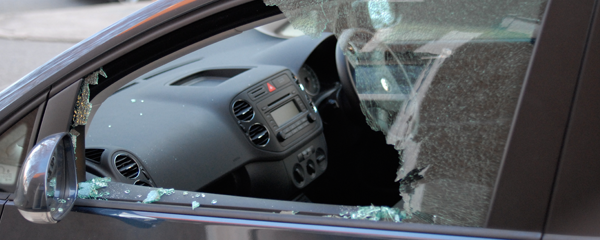
Figures show that nearly one-quarter of a million cars were broken into in the UK in 2016 which is an increase of 4% on the previous year. The 42 police forces around the country received a total of 239,920 reports of break-ins which is an increase of 8,698 on 2015. According to the RAC, forgetting devices such as smartphones and satnavs could be playing a big part in the rise.
A varied picture
While there was an increase in the number of cases reported on 2015, the overall figure is still 9% lower than it was five years ago when there were 263,574 break-ins during the year. Of the police forces that provided updates to the RAC, Northamptonshire saw the second most significant increase in the percentage of thefts from vehicles – up 41% from 2015, with the number of reported crimes rising from 2,864 to 4,043.
The City of London saw a substantial rise, a vast 76% in the number of cases rising from 46 to 81. Other forces that saw a considerable increase were Wiltshire and Dyfed-Powys where there was 23% rise in the cases reported to 2,074 and 549 respectively.
Some areas saw a decrease in the number of cases. Cheshire saw a decline in their figures with a drop of 19% from 2015. Cumbria saw an 11% decrease from 780 to 697 cases, while North Wales saw a reduction of 10% in cases from 1,326 to 1,187.
 © Copyright Mike Knell and licensed for reuse under this Creative Commons Licence.
Opportunistic thieves
Overall, the RAC believe there is a worrying trend that saw more than half of police forces report a rise in this type of crime in 2016 compared to the previous year. They firmly believe that opportunistic thieves, who spot gadgets left in vehicles, are the reason for the rise.
Most break-ins occur due to thieves finding something of value that has been left the vehicle, that can be quickly and easily sold on, said Mark Godfrey, director of RAC Insurance. Drivers have become more complacent about leaving devices in vehicles on display.
People often leave their smartphones in the car which are also very attractive to a passing thief. Using the smartphone as a satnav means people often forget to remove them from the cradle they use for this purpose – and this leaves them easy to spot.
Ignoring alarms
Another problem is that we are becoming somewhat immune to the sound of a car alarm. At one time, an alarm sounding would bring people to the window to see what was going on and would increase the risk for thieves. But now, we often ignore the sound of a car alarm, and this makes the prospect less of a deterrent for thieves.
Many people think that a car alarm is a great measure to stop thieves, and that their devices will be safe inside their cars because of them. But our habit of ignoring the sound of an alarm, assuming it is just malfunctioning, or a window is open, means that these alerts are no longer effective.
Car theft
As well as stealing from inside vehicles, theft of the entire vehicle is also on the increase. According to figures, there has been a rise of 30% in the last three years across the UK, and criminal gangs are starting to use more sophisticated techniques than ever.
As technology advances, thieves are using techniques such as car hacking to access keyless entry systems. By using pairs of radio transmitters, to intercept the signal from key to the car, they can locate the vehicle in less than a minute.
So not only do we need to be aware of what we leave in our vehicle, but we also need to take a moment to think about where we park our cars. Use well-lit spots, near the house and consider adding old-school security on top of the modern options to protect the whole vehicle.
Are you guilty of leaving tech behind in your car when you pop into the shops? Have you ever had anything stolen from your car? Let us know in the comments below
Jan 11, 2018
Data from the Society of Motor Manufacturers and Traders has shown that, for the first time since 2011, new car sales are down with a 5.7% drop compared to 2016 and the Government’s negativity about diesel cars is being blamed for this.
The stats to prove it
This blame is backed up by statistics which show that diesel sales were down by 17% in 2017 and it is thought that this is due to consumers being put off by new taxes which have been brought in for this particular type of vehicle.
Sales of unleaded vehicles were up by 2.8% and electric and hybrid cars gained a market share of around 4.7% which shows that people are moving away from purchasing those which run on diesel.
2.54 million new cars were bought in 2017 compared to 2.69 million which were purchased in 2016 with April seeing the worst monthly year on year drop at 19.8% and December completing the year with the second highest decline at 13.9%.
December also saw the biggest fall in new diesel registrations as these were down by 31.1%, which equates to around 220,000 vehicles, and these sales were also down by approximately 30% in October and November.

What effect is it having?
This drop in diesel sales isn’t only bad for car manufacturers, but it is also having a negative effect on the environment. In fact, we have seen the first rise in emission levels since records began around 20 years ago which is devastating news for those who have been working so hard to reduce these over the years.
It is no secret that consumer confidence has fallen when it comes to diesel vehicles, especially when the Government keep introducing new money making taxes which penalise those who drive them, including changes to vehicle excise duty, London’s toxicity tax, and a threat to ban diesels from ‘clean air zones’ across the UK.
Philip Hammond’s November Budget also dealt a blow to those considering a diesel car as he announced that anyone who bought one after April 2018 would face a higher tax band which could result in a £500 increase, suggesting that sales of diesel cars will surely continue to fall.
Despite manufacturers best efforts
Despite car manufacturer’s attempts to tempt people to purchase new cars through scrappage schemes, most of which are available until the end of March 2018, this did not do enough to boost sales with many people preferring to hang onto their old car than to risk paying increased taxes on a newer, more eco-friendly model.
SMMT chief executive Mike Hawes has said that this will not only increase running costs for motorists but will also prevent the country from meeting its environmental goals due to the emissions being produced. He also said that he believes that people should be able to choose the car which suits their lifestyle, whether this be a petrol, diesel, hybrid or electric model.
Who suffered the worst?
There are some car manufacturers which have been hit harder than others due to these reduced vehicle sales. Vauxhall saw a 22.2% decline with 55,818 fewer cars being sold in 2017 compared to 2016, however they are the second most bought car brand with total sales of 250,955. Fiat suffered 16,000 fewer sales which equates to 27%, but Volkswagen saw their sales increase from 207,028 to 208,462 despite being at the centre of 2015’s emissions cheat scandal, and is the 3rd most popular car brand in the UK.
As in previous years, Ford have come out on top as being the number one car brand in the UK and selling the first and third most bought cars in 2017: the Fiesta which was sold to 94,533 buyers and the Focus which saw sales of 69,903. The 2nd bestselling car was the Volkswagen Gold with sales of 74,605 for the year.
With so much negativity surrounding diesel cars it is unsurprising that consumer are both cautious and confused, so it may be time for the Government to start making their messaging a little clearer so people can be confident when choosing the car that best suits them.
Did you buy a new car in 2017? Are you being put off buying a diesel car with recent events? Let us know your thoughts in the comments below.
Jan 10, 2018
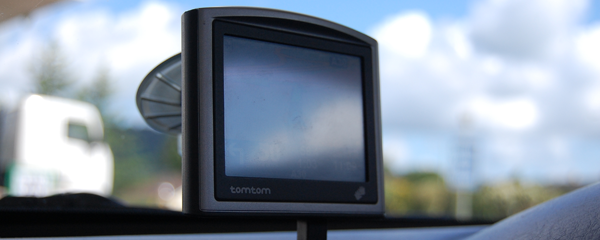
For many people, a satnav unit is a crucial part of getting around, offering those well-timed tips and directions. However, does the position of it on your car windscreen make a difference? It might make it easier to reach but what many drivers don’t know is that there is only one ‘correct’ location according to police forces.
Police advice
The issue was highlighted following a post by Greater Manchester Police’s traffic unit. The Twitter post contained an image of where drivers should be putting satellite navigation units.
In the image, the unit was positioned at the bottom right-hand side of the windscreen. According to the accompanying tweet, this is the ‘only legal place’ to put it. If you put a satnav unit anywhere else, you are breaking the law.
Twitter users were quick to raise issues with this statement, with many saying they place theirs near the rear-view mirror. GMP later confirmed that this is legal as well – providing it doesn’t obstruct the driver’s view ahead.
 © Copyright Andrew and licensed for reuse under this Creative Commons Licence.
Clear view
This stipulation comes from the Highway Code which states that windscreens and windows ‘must be kept clean and free from obstruction to vision.’ However, there is no actual legislation available that states where the devices should be located, merely that their placement should follow this code.
Further, it is unlikely that drivers will be pulled over for ‘incorrect’ positioning of a satnav unit unless they are placing it somewhere ridiculous – like straight in front of them as they drive.
Many drivers make use of specialist holders for the units, that attach to the air vents, to prevent obstruction. While others may place it on the windscreen, in the bottom right or left corner, meaning it is out of the driver’s general view. Also, make sure that the wires are not trailing across either the steering wheel or the handbrake.
Set and forget
Drivers can also get into trouble for messing around and tampering with a satnav while they are driving. Instead, you should either set it before you leave, and not touch it while driving, or pull over, turn off the ignition and then make the necessary changes to the settings.
Other tips in the code regarding how to use technology safely include not ‘relying on’ cruise control or lane departure warnings. You should use them to assist you but not to reduce your concentration levels while driving.
Satnav tips
The AA has created a list of tips to help you make the most of your satnav unit without running into any trouble with the local police force. The tips include:
• Don’t blame the satnav if you have an accident because you are still the one in complete control of the vehicle – it just gives you instructions.
• Use your eyes first – just because the satnav says there is a road ahead, and all you can see a river, use your initiative and don’t keep driving because the satnav tells you to.
• Remember to account for the size of the vehicle you are driving – satnav units only advise you on the route. For example, if you are towing a caravan, the satnav won’t register this information and therefore you may encounter tight corners, low bridges etc.
• Never watch the satnav – listen to what it says but always keep your eyes on the road.
• Check the route before you leave – satnav units are smart but sometimes they may suggest directions that aren’t practical for one reason or another. So, always check before you set off rather than trying to amend the route while driving.
• Make sure you regularly update the unit – as roads change; the satnav will only register these changes when it is updated.
Satnav units are a useful tool and have stopped many a driver from getting lost, but can also cause problems. So, use common sense when utilising them and you should steer clear of the local police.
How often do you rely on your satnav to get around? Have you been guilty of mounting the satnav in the ‘wrong place’? Let us know in the comments below.
Jan 10, 2018
If you have bought a second-hand car it may be worth checking if you could be one of potentially hundreds of thousands of British motorists who have been mis-sold their car as having “one owner” when it has actually been used as a rental or company car.
This recently discovered mis-selling scandal has brought to light that some car manufacturers and dealers have been selling cars under false pretences by stating that they have only been owned by one person when they have in fact been driven by many individuals. This is an issue as it can mean that the vehicle has sustained more wear and tear that it would have otherwise.
Whats the issue?
Those who have been sold a second-hand car with this information being withheld from them could be eligible for compensation of between 25 and 100% of the price that they paid for the car as this practice may violate Consumer Protection for Unfair Trading Regulations 2008.
It is estimated that 1 million former rental or company cars are sold in the UK each year, which is not a problem if the buyer is told that this is the case and the car has been well looked after and maintained during its time as a fleet vehicle, but this is not always the case.
 © Copyright Helgi Halldórsson and licensed for reuse under this Creative Commons Licence.
Dealer transparency
Since this mis-selling tactic has been discovered, the Advertising Standards Authority have said that they will warn car manufacturers and dealers that they must be transparent about a car’s history during the sales process as they should not be withholding information which is deemed as being vital for buyers.
They have also published an online advice guide for those who sell ex-fleet vehicles which states that they must tell interested buyers what the car has been used for in the past. This is important as what the car has been used for could influence the individual’s decision to purchase it as they would probably feel differently about a car which had only been driven by one careful owner than they would about one which had been used as a rental or company car.
“Interim measures in place”
Fiat Chrysler were caught out for this by the ASA in October when they advertised two Alfa Romeos online but failed to mention that one has been a company car and one had been used for training purposes. Since then they have stated that they have put interim measures in place to prevent anything like this from happening again.
Mr Damon Parker, the Head of Litigation at law firm Harcus Sinclair has said that around 200 people have reported that a car has been mis-sold using this tactic in the past week, and although they could be entitled to between 25 and 100% of the price they paid for the car it is likely to be at the lower end of this estimation. He also stated that these incidences will be looked at on a case-by-case basis rather than through an industry wide lawsuit.
What can you do?
If you are buying a second-hand car there are a number of things that you can do to ensure that you have all of the details you need about it before you commit to making a purchase. For example, always check the log book, use the DVLA’s vehicle information checker, and verify the car’s MOT history so that you are confident that everything is in order before you part with your money.
Should the car that you are looking at have been used as a rental or company car before this doesn’t mean that it should be avoided, in fact they can be a great choice depending on what you are looking for. It is just important that you are aware of how much it may have been used and by how many people just in case this has had a negative impact on the vehicle.
Have you ever had doubts about your cars history? Do you see any issue in not knowing where and how your new car has been used before? Let us know in the comments below.
Jan 10, 2018
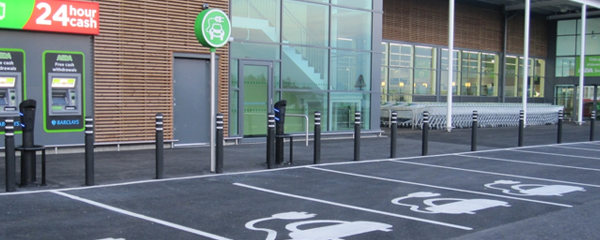
According to insurance giant AXA, the UK doesn’t have the infrastructure in place to cope with the growing numbers of electric cars on the road. A shortage of charging points, as well as the strain on energy supplies the new demand creates, may be acting as a barrier to the rise of driverless electric cars, say the insurer.
Practical problems
In fact, concerns about the lack of places to charge these cars and how the National Grid will cope with the extra demand have overtaken worries around liability and technical questions holding up the advance of driverless cars.
Amanda Blanc, the UK boss of the company, is herself the owner of an electric Tesla car and recounted some of the problems she has seen. There is around 125,000 plug-in electric cars on the UK roads – and just 14,000 charging point. Only 2,620 of these are rapid charges that supply 80% of power in just half an hour. Shell has just opened their first charging points for electric cars in 10 filling stations, mostly in the south-east and London.
During a recent long-distance trip, Blanc demonstrated the issues. On a trip to Edinburgh, she stopped twice to use a supercharger but went for coffee while the car charged. She pointed out that in 3-4 years, people will not want to queue for a supercharger and infrastructure is needed to solve this problem.
 © Copyright Glen Wallace and licensed for reuse under this Creative Commons Licence.
Electricity supply concerns
Another big worry is that the strain on the electricity grid. According to National Grid, the growing number of electric vehicles could see electricity peak demand jump by more than the capacity of the Hinkley Point C nuclear power station by 2030.
Blanc made an example – if everyone pops out during the break in Coronation Street to put the kettle on, there’s a surge. But what will it be like when everyone comes home from work around 6 pm and puts their electric car on to charge?
AXA is one of the biggest backers of self-driving and electric cars, and Blanc believes children born today won’t need to learn how to drive. She foresees everyone driving around in ‘robo-cars’ that will reduce pollution, be cheap to run and give mobility to everyone, not just those who can drive.
Norway example
A leading example of the switch to electric is Norway. The Scandinavian country sees more than 50% of all new cars sold, being either electric or hybrid, as the country positions itself as a pioneer in the carbon-free transport world.
Zero emission vehicles, mostly electric, accounted for 20.9% of all sales in 2017. Hybrid cars were 31.3% of all sales, including 18.4% for the plug-in hybrids, they announced. It is an increase from 15.7% and 24.5% for the previous year, and positions the company at the forefront of electric road transport.
It comes despite the country being the most significant producer of oil in western Europe. It has set a goal of selling only zero-emission cars from 2025. Electric vehicles also benefit from a generous tax system to make their purchase price very competitive, and owners benefit from free city tolls, ferries, parking and recharging in public car parks. They can even drive in bus lanes, although some measures are intended to be reduced soon.
The liability question
Another big hurdle to overcome regarding driverless cars is to come up with a solution around liability, when a car is in driverless mode. Previously, insurers were uncertain who would be liable when a driverless car was involved in an accident, but a draft bill from the government will clarify the issue, removing another potential block.
It will mean that insurers will automatically pay out if a motorist crashes a car in self-drive mode with the question of whether man or machine was to blame being sorted out between underwriter and car maker. It frees up the further development of this type of vehicle.
Do you agree that the UK may not be ready for an electric overhaul? How long will it postpone the surge in demand? Let us know in the comments below.
Jan 3, 2018
The news that the Government is considering implementing a pay-per-mile road tax for heavy goods vehicles has led critics to believe that this is just a trial with the intention to roll it out to all motorists in the future, but this isn’t the case.
How would it work?
This new system would see tolls set up across Britain which charge drivers depending on how many miles they have driven and how high the emission level of their vehicle is in a bid to encourage people to use the roads efficiently.
In the document which has been released it states that this is not being considered with the aim of charging HGV drivers more money, but to encourage companies to think about how they are using the roads and to drive more economically with the hope that this will help to ease congestion.
In addition to this, it is also being seen as a fair way to charge both British and foreign HGVs as currently British drivers have been complaining about how foreign lorries are filled up for cheaper prices abroad and don’t contribute any money towards the maintenance of our roads despite driving many miles on them. This new system would mean that all HGVs are being charged the same depending on how economical their vehicle is and how many miles they are travelling.
This is because at the moment money is made from fuel duty which sees people paying 57.95p per litre of petrol or diesel, but if vehicles are being filled up elsewhere the Treasury is not getting this money from them which is why they are considering revising the current levy and trying something new instead.
The impact on vehicles
With the recent rise in the purchase of electric and hybrid cars, and a 31% decline in sales of diesel cars, it is unsurprising that the Government are looking for new ways to make money out of drivers which can be used to maintain the roads, as it will only be a matter of time before most people aren’t purchasing fuel at all so the £27.5 billion made from this per year is going to be significantly reduced.
Mayor of London Sadiq Khan also backs a tax which hits those who are travelling in cars which emit high emissions, use the roads during the busiest times, and taking longer journeys as he would like to see less congestion on the roads as this will lead to cleaner air, especially in our larger cities. This is due to him wanting people to see driving as their last resort behind using public transport, walking, or cycling.
It is suggested that this system would be put in place using GPS style tracking satellites and automatic number plate recognition which would track mileage, and the emissions level of the vehicle being driven would also be taken into consideration with those that are less economical being charged more.
Implementing the system
So could HGVs be subjected to this new system simply to test it out for all road users? The Government insist that this is not the case and that this is being done because HGVs cause more wear and tear to the roads and release more emissions. However, with fuel duty predicted to decrease it does seem likely that a new way of raising money for road repairs, which cost approximately £120 million per year, would need to be found.
HGVs are already charged more to use the toll roads that are currently in place, paying £11 to use the M6 toll rather than the £5.90 that is costs a car for example, so this is not a new concept, but it could be that if a new levy which is brought in for them is successful that the Government wouldn’t look to roll it out to all road users.
What do you think about this new system being brought into place? Do you think it could be the future of paying road tax? Let us know in the comments below.
Jan 3, 2018
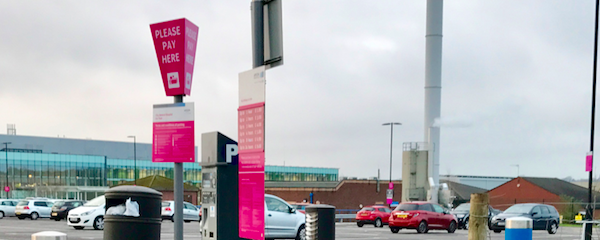
Despite a crackdown by the government, hospitals made a massive £175m in parking charges in 2017, a new record for a twelve-month period. They also made nearly another £1 million from parking fines, an increase of 30% on the previous figure, though some sources believe this number is nearer £4 million. Worst of all is that over 50% of them still charge disabled patients to park in the car parks.
Making money
According to a Freedom of Information request by This Is Money, the highest charges in the country are in Guildford at the Royal Surrey County Hospital. The hospital charges £4 an hour for people to park. Another 14 hospitals around the country charge at least £3 an hour including Northampton General at £3.20 and Southend University Hospital at £3.10.
Previously, Health Secretary Jeremy Hunt had admitted that the fees were ‘unfair’ and three years ago introduced guidelines that urged NHS trusts to offer free or reduced parking for the disabled, cancer patients, relatives and staff. However, the instructions weren’t legally binding and were ignored by many trusts who wanted the vital source of income from parking fees.
 
© Copyright Jonathan Hutchins and licensed for reuse under this Creative Commons Licence.
Tax on sickness
According to Lib Dem Health Spokesman Norman Lamb, the hospital parking charges amount to a tax on illness, people who are chronically ill or disabled being the ones who must pay the most. This shows the hidden cost of healthcare for many people around the country, said Mr. Lamb.
Labour Health Spokesman Jonathan Ashworth added that hospital parking was ‘entirely unfair’ and an unnecessary burden that affected the most vulnerable people in society who needed to use hospital services frequently.
Even Jeremy Hunt admitted that the outrageous practice was a ‘stealth tax’ but the under funding of hospitals meant that trusts were left trying to make money from patients to compensate.
Top Earners
The five most expensive hospital car parks in the country made an impressive amount of money from their charges. The Royal Surrey County Hospital, top of the list regarding the hourly cost, secured over £1.5 million last year while Northampton General, charging a little less, made more at £1.67 million.
Southend University Hospital made just over £1.8 million and Royal Free Hospital in North London over £2 million, charging £3 an hour. Another big earner was the Aintree University Hospital in Liverpool charging £3 an hour making a staggering £2.67 million.
Enviable rise in income
Figures from 111 of the 150 hospital trusts around England showed that they made £174.5 million in parking charges in the 2016-17 period, an increase of 6% on the same period the year before. Of these trusts, 56 said disabled patients were charged for some or all their designated spaces.
The Heart of England NHS Foundation Trust made the most money during the period, over £4.8 million. In fact, two-thirds of trusts had made more than £1 million for each of the last three years. Car parking in Scotland and Wales are mostly free.
Paying the price
One example is a woman who donated her kidney to her sister through The Heart of England trust. It costs her family £30 a day to visit her sister who has been on dialysis for two years and sometimes, they cannot afford to visit her due to the parking costs. Another example is patients visiting for 10-minute appointments who end up paying for two hours on a regular basis.
A spokesman from the Heart of England said that the trust does profit from car parking charges but uses the money made to fund utility costs, security and a parking management service as well as for the upkeep of the car park itself. Other hospitals have a similar justification for the charges in place.
The Department of Health continues to insist that trusts alone are responsible for what they charge and what they do with the money.
What do you think of local health authorities literally “cashing in” on the sick and old who have no choice to park there? Are the Government doing enough and if not what action do you think can be taken? Let us know in the comments below.
Jan 3, 2018
In UK petrol retail terms, 2017 will be seen by many as a good year for fuel price changes because increases stayed below the rate of inflation and meant the economy stayed in better shape from a consumer expenditure perspective.
But in geo-political terms there was a great deal of change, perhaps reflected in the price of crude oil over the year, which started at $56 a barrel in January, fell gradually to $44 a barrel in June and rose steadily returning to $56 a barrel in December and is now consistently above $60, the highest level since 2015.
Declines in the value of oil were driven by uncertainty about the global economy due to the incoming US President Donald Trump and what would happen with global oil production agreements laid out by OPEC and informal agreements between states outside of OPEC, such as Russia. UK fuel prices declined at the start of the year due to this, but increased in the second half of the year because oil production agreements were ratified, coupled with a series of small disasters that temporarily impacted oil and gas supplies into the UK market.
Fuel prices move in a narrow range
The cost of petrol and diesel in 2017 fluctuated by no more than 6.1 pence for Unleaded and 7.9 pence for Diesel. To put that into context fuel prices changed by 28.5 pence during the 2008 global financial crash and by 13.6 pence in 2016. What is interesting is that prices have changed in a big v shape over the year following the global price of crude oil per barrel, (see illustration).
The year started with figures at a relatively low level of 115.2 ppl Unleaded and 121.7 ppl Diesel in January and rose by 5 pence in February to 120.2 ppl. A lot of this driven by negative market sentiment and currency changes because of Donald Trump becoming US President. In March prices started to steadily decline until July where they reached their lowest point of 114.7 ppl Unleaded, 115.4 Diesel. From then on prices have been slowly creeping back up, ending at 120.8p Unleaded and 123.3p Diesel.
Manchester leads way in cheapest towns
If we look at the cheapest UK towns for fuel prices in 2017, Dunkinfield in North Manchester and Leigh in Greater Manchester lead the way followed by Tilbury, Spennymoor and Loanhead. There are a few surprises on there too, Penzance in Cornwall being the 4th cheapest for Unleaded in 2017 for example.
Cheapest areas for Unleaded in 2017
- 112.6 – Leigh, Greater Manchester
- 112.7 – Dukinfield, Greater Manchester
- 113.3 – Tilbury, Thurrock
- 113.3 – Penzance, Cornwall
- 113.4 – Loanhead, Midlothian
- 113.5 – Spennymoor, County Durham
- 113.5 – Cwmbran, Torfaen
- 113.6 – Pembroke Dock, Pembrokeshire
- 113.7 – Pudsey, West Yorkshire
- 113.7 – Port Glasgow, Inverclyde
Cheapest areas for Diesel in 2017
- 114.2 – Dukinfield, Greater Manchester
- 114.3 – Tilbury, Thurrock
- 114.5 – Leigh, Greater Manchester
- 114.8 – Spennymoor, County Durham
- 114.8 – Loanhead, Midlothian
- 115.0 – Tamworth, Staffordshire
- 115.2 – Pembroke Dock, Pembrokeshire
- 115.3 – Harworth, Nottinghamshire
- 115.5 – Abertillery, Blaenau Gwent
- 115.6 – Port Glasgow, Inverclyde
Scottish Highland towns remain most expensive
As usual the Scottish Highlands and UK islands dominate the most expensive towns for fuel in 2017. Tighnabruaich and Acharacle in Scotland for Unleaded and Diesel are followed by Freshwater on the Isle of Wight. Markfield in Leicestershire is one of the surprises, as well as Woolacombe in Devon.
Most expensive areas for Unleaded in 2017
- 133.7 – Acharacle, Highland
- 132.9 – Tighnabruaich, Argyll and Bute
- 129.9 – Freshwater, Isle of Wight
- 129.1 – Isle of Benbecula, Eilean Star
- 128.7 – Woolacombe, Devon
- 128.2 – Gretna, Dumfries & Galloway
- 127.8 – Lockerbie, Dumfries & Galloway
- 127.3 – Markfield, Leicestershire
- 127.0 – Isle of Arran, North Ayrshire
- 126.9 – Totland Bay, Isle of Wight
Most expensive areas for Diesel in 2017
- 135.3 – Tighnabruaich, Argyll & Bute
- 134.4 – Acharacle, Highland
- 131.7 – Freshwater, Isle of Wight
- 131.2 – Markfield, Leicestershire
- 131.1 – Isle of Benbecula, Eilean Star
- 129.9 – Woolacombe, Devon
- 129.4 – Totland Bay, Isle of Wight
- 128.1 – Isle of Islay, Argyll & Bute
- 127.9 – Cowes, Isle of Wight
- 127.6 – Gretna, Dumfries & Galloway
ASDA Tamworth and Newport cheapest stations in UK
In terms of cheapest stations overall in 2017 the supermarkets dominate the listings. ASDA Tamworth and Newport, Isle of Wight are the most consistently cheapest. Tamworth has the greatest number of low cost stations in the UK, but isn’t the cheapest town overall because it also has a small group of much higher priced stations in the same vicinity.
ASDA Newport, Isle of Wight is a real surprise when you can see that the island is consistently in the most expensive locations in the UK, but this perfectly illustrates the importance of price spread between cheapest and highest, perhaps felt more on the Isle of Wight than anywhere else in 2017.
Cheapest Unleaded stations on average in 2017
- 109.8 – Asda Tamworth, Tamworth
- 109.8 – Asda Newport, Isle of Wight
- 110.6 – Sainsburys Tamworth, Tamworth
- 110.9 – Morrisons Tamworth, Tamworth
- 111.0 – Asda Harwich, Harwich
- 111.2 – Asda Leigh, Leigh
- 111.6 – Avondale Service Station, Cwmbran
- 111.6 – Sainsburys Leigh, Leigh
- 111.7 – Morrisons Leigh, Leigh
- 111.7 – Asda York, York
- 111.8 – Asda Bridgwater, Bridgwater
- 111.9 – Morrisons Keighley, Keighley
- 112.0 – Asda Keighley, Keighley
- 112.0 – Sainsburys Keighley, Keighley
- 112.1 – Morrisons Bridgwater, Bridgwater
- 112.1 – Asda Bishop Auckland, Bishop Auckland
- 112.1 – Sainsburys Monks Cross, York
- 112.2 – Sainsburys Bridgwater, Bridgwater
- 112.2 – Asda Horwich, Bolton
- 112.3 – Tesco Atherton, Manchester
Cheapest Diesel stations on average in 2017
- 109.4 – Asda Newport, Isle of Wight
- 110.7 – Asda Tamworth, Tamworth
- 112.2 – Sainsburys Tamworth, Tamworth
- 111.5 – Morrisons Tamworth, Tamworth
- 112.9 – Asda York, York
- 112.9 – Asda Leigh, Leigh
- 113.1 – McColls Tamworth, Tamworth
- 113.2 – Sainsburys Leigh, Leigh
- 113.2 – Morrisons Leigh, Leigh
- 113.3 – Sainsburys Monks Cross, York
- 113.3 – Asda Bridgwater, Bridgwater
- 113.6 – Sainsburys Hankridge Farm, Taunton
- 113.6 – Morrisons Taunton, Taunton
- 113.6 – Asda Keighley, Keighley
- 113.6 – Asda Taunton, Taunton
- 113.7 – MPK Drayton Service Station, Tamworth
- 113.7 – Morrisons Keighley, Keighley
- 113.8 – Asda Minworth, Sutton Coldfield
- 113.8 – Asda Kettering, Kettering
- 113.8 – Morrisons, Kettering
London has most expensive stations in UK
Outside of motorway service stations, (which would dominate the top 20 if they were included), there are two petrol stations in London that actively compete against each other to be the most expensive in the UK. Chelsea Cloisters, Sloane Square has held the title of most expensive for many years until 2017. Less than a mile away, Holland Road Service Station have set a new record for fuel prices. Their average price in 2017 is an eye watering £1.75 a litre for Unleaded and Diesel, more than 25 pence a litre higher than Chelsea Cloisters, who were the previous most expensive station in the UK at £1.50 a litre. Not surprisingly apart from motorway services, the A1 (M1) had six of the most expensive stations on the list, followed by a few independent stations in the Scottish Highlands.
Predictions for fuel prices in 2018
Most experts predict that in the first half of 2018, fuel prices will increase slightly but will not rise beyond a certain point. A lot depends on US shale oil producers, how OPEC will respond to them and what happens to the global economy. Brexit can and will play a part if negotiations don’t go well, the value of Sterling will be impacted negatively against the dollar, so the price of fuel at UK pumps will rise as a result, but it could also go the opposite way, good trade talks and there is more confidence about the economy, Sterling’s value rises and fuel prices could fall.
The growth of electric and hybrid vehicles passed 3 million globally in 2017 and is expected to smash 5 million in 2018. What alternative energy does is make the markets question the value of oil for the long term and this could have a knock-on effect with current fuel prices and petrol retailers own plans. So too the impact of pollution, the demonisation of Diesel may continue to escalate leading to increases in duty on fuel for the first time in 8 years at the next Budget.
What do you think about the cost of fuel in 2017? Did you think it was too high or was it about right? Which way do you think fuel prices are going to go in 2018? Let us know in the comments below.
Dec 27, 2017
Figures obtained from the Department of Transport by selling site Buyacar.co.uk show the average new car sold in 2017 emits more toxic CO2 than new cars sold in 2016, which is the first time in 14 years that an average new car emits more CO2 than older cars. As more and more drivers desert diesel cars discouraged by tax rises, toxicity charges, parking surcharges and crashing car values, the unintended consequence is that CO2 greenhouse gas emissions are back on the rise again.
‘Unintended consequences’
The law of unintended consequences, often cited but rarely defined, is where the actions of people and especially Governments, always have effects that are unanticipated or unintended.
In 2008 under the Labour government led by Gordon Brown, they made an announcement in the Budget which they thought was good for the environment, which was to discourage people from driving petrol vehicles due to harmful carbon dioxide (CO2) they emitted and instead create a car tax system based on carbon dioxide emitted to encourage people to buy “lower polluting” diesel cars instead. In response, sales of new diesel cars and the British motoring industry itself boomed off the back of the decision.

(Credit – Zappys Technology Solutions)
Demonisation of diesel begins
By 2016 with a Conservative government in power, it became apparent that levels of toxic nitrogen oxide (NOx) had increased in major towns and cities, contributing to 40,000 deaths a year. The Government was not meeting its own NOx emissions targets set by the European Union, leading to the threat of fines and court action. Diesel cars were pinpointed as the main culprit for these rises and it was then that the process of demonisation of diesel in all forms began in earnest, led by environmental pressure groups and the new Mayor of London.
Fast forward to the end of 2017 and diesel car sales have plummeted by 16% year on year. All the major manufacturers are running diesel scrappage schemes where you can trade in a diesel car bought in the last 8 years and receive up to £8,000 towards buying a new car. In 2017 the average value of a used diesel car fell by 26%, for many the choice of switching away from diesel cars seemed like a no brainer, but it wasn’t.
What the Government wanted people to do was buy new hybrid engine or fully electric cars en masse. The problem here is they’re too expensive to buy or run and there is no used car market for hybrid or electric cars. Battery technology moves so rapidly that the battery in a two-year-old electric car is inferior to a new battery powered car, so they don’t hold their residual value for it to be worth buying an older hybrid or EV car.
The new unintended consequence here is that while people are moving away from diesel cars as the Government wanted, they’re not buying lower emissions vehicles, instead they’re buying high polluting, big engine petrol SUVs, which is leading to an unprecedented rise in CO2 emissions. Further bad news is that the Government also have a CO2 emissions target they need to meet by the European Union as well.
Official CO2 figures show a rise in 2017
Official statistics for the first ten months of 2017 from the Department of Transport show that the average new car sold this year produces 121.1g of CO2 per kilometre. The average CO2 output of new vehicles sold in 2016 was 120.3g/km. With diesel registrations widely expected to stall further in December, it will spell the end of a 14-year reduction in CO2 emissions, which have declined by 4.02g/km annually since records first began.
How on earth did we get in this mess?
The greatest irony in all of this is that the most likely solution in reducing both NOx and CO2 to meet European standards over the next few years is buy a new super low diesel emission car. One would have hoped that the market would have naturally gravitated towards buying a new lower emitting diesel, instead demonisation has made them buy high polluting petrol SUVs.
As is often the case, the Government has intervened and targeted the wrong area and not tackled the real problem, which is diesel cars over 10 years old, public transport vehicles, the van and haulage industry, diesel trains, ships and the illegal removal of diesel particulate filters.
What do you think of this latest development? Are you a diesel driver who feels vindicated by this, or are have you just bought a petrol driven SUV without realising this is as bad as a diesel car? Or are you an electric car driver feeling all smug about driving a car with no emissions that you won’t be able to re-sell? Let us know in the comments below.
