AA reports supermarket fuel price war offering “pennies off” scam to boost sales

AA reports supermarket fuel price war offering “pennies off” scam to boost sales

On Thursday, caused by Asda’s decision to lower petrol by two pence per litre (ppl) and diesel by 3ppl, competing supermarkets were quick to announce they would match the reductions.

Call me cynical, but I don’t believe these rival grocery store giants when they declared that their reason for reducing the cost of fuel came from them trying to make driving less expensive for their patrons and the AA agrees.

In the AA report

In a recent report, the motoring organisation says supermarkets design these often termed fuel price ‘wars’ to increase sales and called them ‘shams’ for bolstering sales.

The AA adds that not only do these often insignificant markdowns seldom last long (less so when the retailers feel the reduced prices affecting their returns), they don’t always offer much of a saving to motorists.

Using new figures from the government’s Department for Business, Energy & Industrial Strategy (BEIS), the AA states that while retail volumes for petrol dropped by 1.1% between April and June 2019, sales at supermarket forecourts increased by 4.4%. The average sale of diesel decreased by 1.9% but fell just 0.5% at supermarket pumps. The AA’s report suggests that’s because motorists are ‘clinging to the hope that the superstores will be their saviours’ from steep fuel costs.

In the earlier fuel price war of Friday the 13th of last month, supermarkets announced they would reduce petrol by up to 3ppl. This followed the $8 fall in the cost of a barrel of oil, which lowered retailers’ wholesale costs. The following day saw drone strikes on the Kingdom of Saudi Arabia, ending in burning oil fields.

By the Sunday, the proposed 3ppl cut only averaged 0.5ppl off petrol and the inevitable hike in the cost of oil pushed up filling-station prices by the Thursday, resulting in not even a whole week of lower petrol prices for motorists.

In the first week of October last year, profit margins for retailers averaged 7.2ppl, with a 7.8ppl profit 12 months earlier. The AA calculated an average 9.5ppl retailers’ profit margins for last week and their Fuel Price Report recorded average forecourt prices stayed between 127.8-129.2ppl for 17 weeks. This implies that while the attractive price war stories grab our attention, what many of us don’t notice are the days after where pump costs begin a steady increase.

Petrol comparison by brand (14/10/19) This month (pence per litre) Last month (ppl) Price change (ppl)
Asda 123.59 123.09 0.50
BP 130.45 130.42 0.03
Esso 128.39 123.57 -0.18
Jet 127.49 127.90 -0.41
Morrisons 125.08 124.08 1.00
Murco 129.28 130.35 -1.07
Sainsbury’s 124.89 124.13 0.76
Shell 130.1 129.96 0.14
Tesco 124.27 123.85  0.42
Texaco 128.17 128.25  -0.08
UK average 127.58 127.77  -0.19
Diesel comparison by brand (14/10/19) This month (pence per litre) Last month (ppl) Price change (ppl)
Asda 127.39 126.14 1.25
BP 134.47 133.93 0.54
Esso 132.6 132.07 0.53
Jet 131.48 131.13 0.35
Morrisons 129.26 128.22 1.04
Murco 132.8 132.43  0.37
Sainsbury’s 128.73 128.01 0.72
Shell 134.45 132.96 1.49
Tesco 128.44 128.25 0.19
Texaco 131.94 131.43 0.51
UK average 131.55 131.26 0.29

No competition

The variation in the average cost of petrol and diesel between supermarket retailers looks closer than it is on the ground in many communities across the UK, according to the AA. In fact, their data shows that just on Tuesday—along the M4 Berkshire/Hampshire corridor—prices differed by as much as 5ppl.

Likewise, in Scotland; a Tesco forecourt in Stirling was charging 3ppl more for petrol than the Tesco forecourt in a town less than a 20-minute drive away.

The AA report said that ‘when uncompetitive superstores allow neighbouring oil company-branded sites to charge more (and often the same price as towns with no supermarket presence at all), customers and communities lose out significantly.’

Luke Bosdet, the AA’s fuel price spokesman, said:

‘When you drive out into the country, through small market towns without supermarket fuel, and see pump prices little different from those in towns with a supermarket forecourt, you know something is broken with road fuel pricing in the UK.

‘A neighbouring supermarket will then charge the same or a penny less a litre and claim to be value for money—even though it’s getting £2 or so more per tank of fuel than at other locations.

‘The sad thing is that customers seem to be buying it, as official statistics confirm.’

Asda has a nationwide price cap and, in locations with Asda forecourts, the AA found petrol and diesel was cheaper. For example, in Basingstoke and Newbury, who don’t have an Asda, other supermarkets charged a lot more for fuel than in Reading, which has an Asda. Morrisons prices were 3.2ppl more, while Sainsbury’s and Tesco charged over 4ppl more than the price at Asda.

Speaking to This is Money, an Asda spokesperson said:

‘When we cut fuel prices, we always announce what our national price cap is, meaning drivers know exactly the maximum amount they are paying regardless of where they live.

‘No other retailer does this, meaning they are free to charge as much as they like when they have no competition close by such as an Asda. This is what the AA are referring to . . . .’

The spokesperson added:

‘On the rare occasion when a lower price is available within a local area, our aim is to match that price locally so customers can rest assured they’re always getting the best value when filling up their tanks with Asda.’:

Driving down prices

Helping you to save money is the aim of PetrolPrices.com and, while we can’t control the price of petrol and diesel (alas), we can help you find where the cheapest retailers are in your location, so join over 2.1 million UK motorists who already take advantage of our free fuel comparison service.

The common, average price-spreads by town show member savings of £225.94 per year for petrol car owners (£495 saving on super unleaded) and £158.25 each year for our diesel drivers (£289.29 saving on premium diesel).

Sign up to our PetrolPrices.com money-saving community using your email address to search for the cheapest or nearest forecourts by searching by postcode, town, or city—you can also filter by individual brands and fuel types.

Need fuel prices while on the road? No problem! Download our FREE mobile app and take us along with you. Earn points by reporting fuel prices and give feedback on local petrol stations to help others decide which station is best for them. There’s much more to discover when you become part of the community whose aim is to change the industry for the better!

Do you benefit during fuel ‘price wars’? Have you noticed pump prices soon creeping back up to normal? Do these supermarket fuel discounts encourage you to shop in-store? Or do you avoid supermarket branded fuel altogether? Tell us in the comments.
Forget VED, we could soon be paying per mile

Forget VED, we could soon be paying per mile

Between Vehicle Excise Duty (VED) and fuel duty, the Treasury typically pockets around £40bn each year, a not insubstantial amount of money, but as the push for greener vehicles gets into its stride, there will very clearly be a hole in that revenue, and it’s one that will need plugging.

The two important questions are: Where will that shortfall come from? And will there be an overlap between VED and whatever new plan is put in place?

Per mile charging

The Chair of the Transport Committee, Lilian Greenwood, has proposed that a national debate take place to discuss the issue, claiming that a debate would be “An opportunity to discuss the nation’s use of road space, cutting carbon emissions, tackling congestion and how we should prioritise active travel.”

“Tackling the climate emergency is essential, but this is about more than what we must do to meet that challenge, it’s also about our health, and the sort of towns and cities we want to live in.”

A cynic may say that with such focus on health, air pollution and congestion, rather than encouraging or incentivising other forms of transport or motive power, it’s pretty much guaranteed that “this isn’t about pricing drivers off the road” will pretty much exactly equate to that.

Paying more?

Research by the RAC has shown that 75% of motorists are worried that any change in how we pay for the roads will result in them paying more, and with sales of new Battery Electric Vehicles rising by 122% in the first nine months of 2019 (despite there being an overall 2.5% downturn in new car sales), we can clearly see that the government will need to implement a new pricing strategy sooner rather than later.

It’s long been argued that whatever form of taxation (such as the current VED) is added to the price of fuel; motorists who use the roads, will pay for the roads, but it’s quite possible that adding a surcharge to fuel will price hundreds of thousands of families off the road, and that still wouldn’t be a solution to the whole electricity debate.

Further still, it’s not quite as simple as adding tariffs to our domestic energy supply either – what of those motorists that haven’t been able to afford, or want, to make that switch over to ‘green’ motoring? It’s pretty clear that there must be some overlap between the systems.

Previous attempts

Back in 2005, an attempt was made to introduce, or at least, discuss, a new way to charge to motorists for using the roads. The idea being that small cars on small or uncongested roads would pay less than large cars using large or congested roads.

The examples used at the time were £0.02 per mile on uncongested roads, and as much as £1.34 where traffic was a problem. Each car would be fitted with satellite technology, which could track and calculate charges as the car was driven.

Unsurprisingly, 1.8 million motorists (around 6% of all drivers at the time) signed a petition against the scheme in 2007, and it was duly dropped. Fears of extra stealth surveillance and taxation were the main concerns.

Modern day

Worryingly, we’ve become so used to in-car technology, and the interference with our driving, that it will soon be mandatory to allow it to limit our speed, which of course means tracking our movements. As Lilian Greenwood points out – we’re much more aware of issues such as climate change, pollution and congestion now. So could this be part of the next attempt to monitor driving and apply charges?

There has been talk of ‘charge neutral’ and ‘congestion neutral’ pricing, but reading between the lines of the earlier statement by Greenwood, it would seem that congestion and air pollution are two of the hottest topics to be covered, so it’s doubtful that congestion neutral pricing will happen.

Given that any pricing structure would need to cover congestion, air pollution, emissions, road usage & maintenance, fuel duty and electric charging, it would seem doubtful that we’d be looking at the lower end of per mile charging.

National debate

The Transport Committee have proposed a national debate take place in 2020, in which these issues can be discussed, and put forward to the public for their input: “This isn’t about pricing drivers off the road, it’s about making sure that as many people as possible have a say in future plans so that we can manage the changes to come. The Transport Committee want to kickstart that conversation.”

Rarely have charges been introduced that favour the motorist, we often hear about stealth taxes and how it’s the motorist that’s being made to make up any shortfalls of revenue, we’d suspect this won’t be much different.

How should the government tackle this problem? What would be a fair pricing scheme? Do you think it could price some families off the road? Let us know in the comments.

Drivers continue to risk lives with mobile phone use

Drivers continue to risk lives with mobile phone use

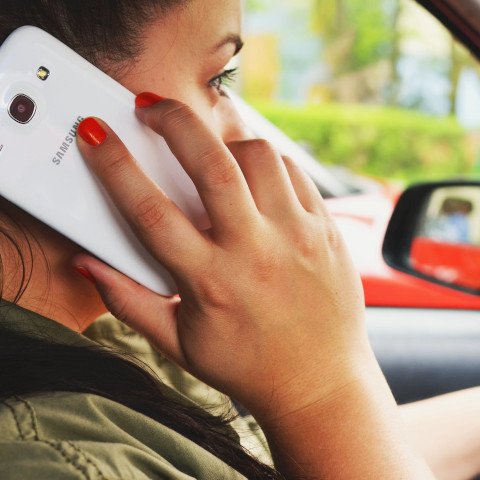
We all witness poor driving every time we use the roads, whether we’re also driving, are on foot, or on our bikes. My kitchen window overlooks a bit of a rat-run and I lose track of the number of drivers passing by clutching mobile phones—particularly delivery drivers—and if new data is anything to go by, I’m not alone in what I see.

In 2017, after a spike in deaths caused by motorists driving while using mobile phones, the government introduced strict new laws regarding mobile phone use behind the wheel. Yet despite the harsher penalties, the RAC’s recent Annual Report on Motoring shows mobile phone offences remain the top concern of motorists.

Driven to distraction

Campaigners for road safety and MPs say record levels of road congestion and a lack of traffic police is the reason around 10million drivers continue to reach for their mobiles—to relieve the boredom of sitting in traffic.

According to the motoring organisation’s annual report, 23% of motorists confessed to still making or receiving calls on a hand-held phone while driving. The figure shot up to 51% of drivers between 17 and 24 years of age. Thirty-five per cent of the same under 25-year-olds age group said they checked email, social media, and text messages while driving. That percentage alone is terrifying, but even more so when you learn that this selfish and unnecessary move can up the chances of an accident by up to 24 times. In drivers over 25 years old, the figure was a lower, yet still worrying, 17%.

Government advice is that we should keep our mobile phones in our car’s glove compartment, but the RAC’s survey of 1,753 motorists discovered that only 15% are heeding this warning—25% say they keep their phones on the seat or the dashboard, instead, and 24% admitted to leaving their mobiles on audible, increasing the chance of distraction.

To compound matters, the number of Traffic Officers in England and Wales dropped from 3,766 in 2007 to 2,643 in 2017—that’s almost 30% over just a decade. In contrast, data from the Department for Transport reports that traffic congestion in Britain increased by 6.5% in the past ten years.

Not much cop

Lilian Greenwood MP, Chair of the Transport Committee, said:

‘In 2017, there were 773 casualties—including 43 fatalities and 135 serious injuries—in road traffic collisions where a driver using a mobile phone was a contributory factor.

‘Every one of these casualties could have been avoided if drivers had been paying attention to driving and not their phone.’

Tim Rogers, the lead on roads policing for the Police Federation of England and Wales, said:

‘Often they’re doing it in traffic, but inattention at any speed is lethal. These people will say they rarely see police on the roads, that they’ve never been stopped by police, so they perceive no risk in doing it.’

‘There’s also a problem with chief constables who cut dedicated traffic officers then claim “all our officers are traffic cops”.

‘Why do we accept it is OK for six people a day to die on our roads? It’s certainly not acceptable. We need more traffic police to reduce the number of causalities [sic] on our roads.’

The RAC says that the first thing the police need to do is catch mobile phone offenders in the act, but they also want both the government and the police should look into cars having the technology that can enforce the law against using hand-held devices while operating vehicles.

Look, Ma, no hands!

To stay within the law while driving or riding a motorcycle you must have hands-free access to your mobile (although MPs are proposing a ban on all hands-free devices in cars) or sat-nav and use a Bluetooth headset, voice command, a dashboard holder or mat, a windscreen mount, or a built-in sat-nav and the same applies whether you’re stopped at traffic lights, sitting in traffic, or are supervising a learner driver.

Unless circumstances dictate otherwise (like your job), the best bet is to keep your phone in your glove compartment, on silent. It’ll be near enough to you in an emergency. Research also shows you’re a better driver when driving in silence but if that bores you to the point of phone temptation, maybe consider the radio or an audiobook—or perhaps listen to Led Zeppelin?

Any device you use mustn’t block your view of the road ahead and you must stay in full control of your vehicle at all times. If the police stop you because they think you’re distracted or not in control, you could face prosecution.

While police numbers are down, in 12 months of ‘Operation Tramline’ alone, officers across the country in three so-called ‘supercabs’ caught and recorded motorists committing 1,062 offences of using hand-held devices while driving.

And, yes, modern life is busy but nothing on our phones is worth incurring penalty points, a fine, a prison sentence, or losing your licence. Even less so if it means risking your life.

Do you agree with the RAC’s findings? Have you noticed fewer police cars on the roads? Tell us your thoughts in the comment section.

Electric cars: The most frugal motoring?

Electric cars: The most frugal motoring?

Last week, we told you that the government were looking to bring forward the ban on the sale of new fossil fuelled cars (as the single, motive power source), from 2040 to 2035, in a bid to show their green credentials.

The Transport Secretary stated: “We must go further to protect our environment and improve our competitive edge. If we’re to become the world-leader in green technology, we must always be looking to expand our ambitions. The Government’s advisory committee on climate change has said that 2035 is the date to aim for”.

That’s all well and good, but as many of you pointed out in the comments, there are significant financial implications.

1/3 cheaper to run

There seems to be a lot of misinformation when it comes to costs associated with going green, least of all a clear understanding of what it actually costs to run an all-electric vehicle; when averaged out per charge, how much will a single mile cost you?

To be clear, this isn’t about purchase price, maintenance cost, battery leasing & purchasing, but just mile for mile cost of energy – electricity versus unleaded and diesel if you will.

None of us would be surprised to hear that electricity miles are cheaper than fossil-fuelled miles, but being able to put it in to context does give us a little more insight and understanding.

The most frugal electric vehicles (the KIA e-Niro and Renault Zoe) offer a range of 33.1 miles to one pound (£1), the best diesel (Honda Civic Saloon 1.6i DTEC and the Ford Focus 1.5 EcoBlue) aren’t even close; 10.8 miles for each pound (£1) of ‘energy’.

Make up to an £11,740 difference

It could be argued that the price differential between the KIA e-Niro (£32,995) and the Honda Civic (£21,255) would buy you an awful lot of miles – nearly 128,000, but what of the Renault Zoe? The list price of the Zoe is actually less than the Civic, only by £35, but that’s not important; it isn’t just getting close to traditional ICE vehicles, it’s beating them. (And that’s before we look at any assistance to buy).

However, taking the Zoe as an example, you hire the batteries, and the bigger than annual mileage, the bigger the financial charge; with annual mileage of 10,500, you’d be paying £99 per month for the hire of the battery – nearly £1,200 on top of the purchase price.

Further still, the obvious comparison between the practicality, styling or just plain old ‘want’ of the vehicles isn’t to be underestimated. The Zoe is a small hatchback, ideally suited to town driving and loading up with shopping, whereas the Civic has more space, more range, looks smarter (although of course, that’s subjective) and is made by Honda, which means it should outlast the cockroaches that see off a nuclear holocaust.

Cheap motoring

For a long time, people have complained that electric vehicles don’t have enough range, are too expensive to purchase, not as practical, won’t fit their need because they can’t tow the Moon behind them – there’s always been a reason (usually financial) as to why they just don’t work (for them).

But today, the electric vehicle market has evolved into something that’s closer in price, with some models beating traditional ICE vehicle prices, a viable alternative for many motorists with range anxiety, and they offer all the performance that’s realistically usable on our road network.

Without doubt, there will be some motorists that an electric vehicle won’t suit, or isn’t yet a viable alternative, and even for those it does work for, you can’t help feeling that even now, there’s a compromise to be made if you choose electricity over internal combustion.

But let’s not forget, mainstream battery-electric vehicles have only really been in production for around ten years, and within that timeframe, battery prices have dropped to around a tenth of what they were, ranges have doubled, even tripled, performance has gone up, charging times have come down, and the breadth of the compromise is narrowing with each day that passes.

As a performance car engineer, I really never thought I’d see the day where electricity could take on fossil fuel in a straight fight and win, and while we’re still not quite there yet, you can guarantee that within this next decade, fossil fuel will be outdated and outclassed.

Perhaps the time is coming where the only drawback to owning an electric vehicle will be the tariffs imposed on us for charging them, and using the roads – much the same for fossil fuels now.

What do you think to electric vehicles? If price wasn’t a consideration, would you own one? Are they practical enough right now? Let us know in the comments.

Government to bring banning of fossil fuel new car sales forward to 2035

Government to bring banning of fossil fuel new car sales forward to 2035

When it was announced that the UK would be banning the sale of new cars using only internal combustion from 2040, there was only really one main reaction; outrage from motorists, and outrage from the environmentalists because 2040 was ‘unambitious’.

Scotland are (independently) looking at 2032 for the cut-off, Sweden, the Netherlands, Ireland and Denmark are set to introduce the ban in 2030, and Norway has set the date at 2025, a full 15 years before us. So when Transport Secretary Grant Shapps announced that he’d be looking to “thoroughly explore the case for bringing it forward five years”, no one was all that surprised.

It’s worth mentioning that the announcement was made at the Conservative Party conference, with no doubt an element of rabble-rousing included.

Subsidies are go(ing)

Despite all the rhetoric, just last month, Shapps admitted in an interview that the £3,500 subsidy toward buying an electric vehicle (the Plug-in Car Grant) is in danger of being stopped a little sooner than we’d like, and this means that it’s likely that the help to install a charge system will also go.

With that said, it has been announced that the government are looking to invest £400m in the public charging networks, of which £70m will fund the installation of 3,000 rapid chargers over the next five years. One could only guess at the financial model attached to it.

Shapps: “We must go further to protect our environment and improve our competitive edge. If we’re to become the world-leader in green technology, we must always be looking to expand our ambitions. The Government’s advisory committee on climate change has said that 2035 is the date to aim for”.

“Just as we rejuvenated our automotive sector in the 1980s, we’re going to work with our pioneering car sector to help them sell the next generation of vehicles around the world”.

Mike Hawes, chief executive of the Society of Motor Manufacturers and Traders (SMMT) isn’t quite as convinced as the crowd at the party conference, suggesting that the government needs to do more to incentivise people to make the switch, if they want to encourage drivers to swap over sooner.

“The car industry is committed to zero-emission transport for all, however, low and zero-emission vehicles still only make up a fraction of the market, underscoring the huge challenge of fast-tracking a shift to zero-emission transport; ambition must be matched by measures that support the industry, allowing manufacturers time to invest, innovate and sell competitively”.

“This includes long-term government commitment to incentives and investment in infrastructure to accelerate the uptake of these new technologies”.

Six electric vehicles

Back in July, we reported that the Green Alliance stated that it could only take six electric vehicles charging in the same location to cause a ‘brownout’ on the national grid, unless immediate action is taken to improve the network, a fact that seems to be missing from Shapps’ speech to the conference.

And therein lies the problem with all the chest-beating toward changing the driving habits and motive power source for all transportation; the car industry could possibly swap over much earlier, but could the infrastructure of the United Kingdom cope with the change?

It’s all very well taxing internal combustion cars to within an inch of their life, in a bid to ‘promote green transport’, but the reality is that according to sources and specialised groups such as the Green Alliance, the switch over to ‘green’ may not be dictated by the willingness of manufacturers or even the buying consumers to adopt green transport, but by the limitations set in place by outdated infrastructure.

Electric vehicles are now a viable alternative (albeit expensive) for a great many of motorists, and if you’ve made the switch to an all-electric vehicle, and it works for you, that’s great. But for the hundreds of thousands of drivers that have no viable access to a charging network, or need a range above average, or just can’t stretch to the budget needed to purchase one, then what’s next?

Of course it’s easy to point out that even at 2035, that’s still a decade and a half away, plenty of time to manage the infrastructure, but environmental groups are telling the government that significant changes need to be made by 2020, and that’s simply not happening, certainly not at scale.

We genuinely believe that electricity will revolutionise the transport world, but only when everything is in place for that to happen correctly, until then, the government should at least take some of the responsibility from the motorist and stop penalising them so harshly for driving fossil fuelled vehicles.

Should the government take some responsibility? Do you believe that electrically powered vehicles will be the saviour of motoring? Let us know in the comments.

Keyless thefts on the rise: how to protect your vehicle

Keyless thefts on the rise: how to protect your vehicle

Car crime, car theft, keyless theft; all on the increase according to a number of sources, including the Office for National Statistics, LV=General Insurance, and Tracker, a specialised car security company.

It’s easy to throw simple numbers around – the ONS (Office for National Statistics) tells us that just until March this year, there were 114,656 incidents of ‘theft or unauthorised taking of a motor vehicle’, that 8% more cars have been stolen in the last year, or that there has been over 800,000 instances of criminal damage to cars.

But while that gives a very broad overview, it doesn’t really impact. Tracker have some further insight; in 2018, around 88% of stolen vehicles fitted with one of their devices were stolen without the use of keys, up from 80% in 2017, and again from the 60% in 2016.

LV=General Insurance said that its claims data suggests a direct link between car thefts, and the rise of technology, in particular, smart devices.

Simple theft

A keyless entry or keyless start system seems like a great idea when you’re approaching your car with hands full, or when your key is buried at the bottom of a bag, or even when it’s just tucked in your pocket and your juggling a hundred different things. Certainly it will never revolutionise the world, but it does make it that little bit easier.

Unfortunately, not only does it make your life easier, but also the criminal’s looking to relieve you of your car. And truth be told, it’s simple for them to do so, with some off-the-shelf technology that can be bought for just a few pounds – this doesn’t require a contact book full of criminal masterminds, nor the investment of a large budget.

Technology

The reason why keyless theft is so popular, and so easy, is simple – there’s no need to enter the home of the keyholder, which lessens the charge should they be caught, and there’s minimal risk involved, aside from being close enough to the house to try and pick up the electronic signal from the key. It really is that easy.

Once the signal is located, it’s a matter of relaying the signal to the car and gaining entry or making off. Less than a minute, no aggravation, nothing physical, and no danger to the householder (unless they catch the criminal in the act). In most cases, the owner of the car won’t know anything about it until it’s too late.

Don’t be a statistic

Preventing car theft is always difficult, even more so if you’ve been targeted by a professional gang, but there are some simple steps that you can take, to help you becoming just another crime statistic.

Faraday bags

A Faraday bag is a soft pouch that blocks any signals from the keyfob itself, which means the thieves won’t be able to track the signal and relay it to the car, no matter where the fob is located in the house.


<iframe style="width:120px;height:240px;" marginwidth="0" marginheight="0" scrolling="no" frameborder="0" src="//ws-eu.amazon-adsystem.com/widgets/q?ServiceVersion=20070822&OneJS=1&Operation=GetAdHtml&MarketPlace=GB&source=ac&ref=tf_til&ad_type=product_link&tracking_id=petrolprcom09-21&marketplace=amazon®ion=GB&placement=B076KZF645&asins=B076KZF645&linkId=52413c91c79637327145a2f0e2325c8c&show_border=true&link_opens_in_new_window=false&price_color=333333&title_color=4781ff&bg_color=ffffff"><!-- [et_pb_line_break_holder] --> </iframe>
<iframe style="width:120px;height:240px;" marginwidth="0" marginheight="0" scrolling="no" frameborder="0" src="//ws-eu.amazon-adsystem.com/widgets/q?ServiceVersion=20070822&OneJS=1&Operation=GetAdHtml&MarketPlace=GB&source=ac&ref=tf_til&ad_type=product_link&tracking_id=petrolprcom09-21&marketplace=amazon®ion=GB&placement=B07KXG6JHM&asins=B07KXG6JHM&linkId=4167f39f3e0994315c07360766fe8019&show_border=true&link_opens_in_new_window=false&price_color=333333&title_color=4781ff&bg_color=ffffff"><!-- [et_pb_line_break_holder] --> </iframe>
<iframe style="width:120px;height:240px;" marginwidth="0" marginheight="0" scrolling="no" frameborder="0" src="//ws-eu.amazon-adsystem.com/widgets/q?ServiceVersion=20070822&OneJS=1&Operation=GetAdHtml&MarketPlace=GB&source=ac&ref=tf_til&ad_type=product_link&tracking_id=petrolprcom09-21&marketplace=amazon®ion=GB&placement=B07989XNTT&asins=B07989XNTT&linkId=ec948bf0eb2c863e7d7aded48a667761&show_border=true&link_opens_in_new_window=false&price_color=333333&title_color=4781ff&bg_color=ffffff"><!-- [et_pb_line_break_holder] --> </iframe>
<iframe style="width:120px;height:240px;" marginwidth="0" marginheight="0" scrolling="no" frameborder="0" src="//ws-eu.amazon-adsystem.com/widgets/q?ServiceVersion=20070822&OneJS=1&Operation=GetAdHtml&MarketPlace=GB&source=ac&ref=tf_til&ad_type=product_link&tracking_id=petrolprcom09-21&marketplace=amazon®ion=GB&placement=B07DQKQQBB&asins=B07DQKQQBB&linkId=c895c179fc83bee8c78951433f18b840&show_border=true&link_opens_in_new_window=false&price_color=333333&title_color=4781ff&bg_color=ffffff"><!-- [et_pb_line_break_holder] --> </iframe>

Safe spot

Failing that, or while you wait on delivery of your Faraday bag, you should try and locate a safe spot for your fob, as far away from doors and windows as possible, the idea being to make it as difficult as possible for the thieves to locate the signal.

Car security

In the event that a thief does manage to gain entry to your vehicle, all is not lost; the use of steering wheels locks does tend to deter all but the most determined thieves, and in many cases, the visual deterrent alone is enough to send them elsewhere.

Traditional security

While it’s unlikely that an opportunistic car thief armed with a relay device is looking to break into your home, investing in some traditional security will help to prevent them should they take that route, and of course, give you some peace of mind.

We’ve teamed up with the leading security experts at ERA to offer you an unrivalled discount on a wide range of products, from plug-in alarms through to HD security cameras.

The discount codes are included on the website, remember to put them in at the checkout!

Deterrent

While you wouldn’t necessarily wish ill-fortune on your neighbours, the simplest course of action is to make your car look less desirable than another, or more trouble; the choice between getting through a steering lock and physical immobiliser, all the while being lit up like it’s daytime or finding another car is usually more than enough to make a thief think twice.

You’ll never stop professional thieves if they’re determined to have your car, but you can make life difficult for them, and hopefully your neighbour doesn’t feel the same.

Should more be done by the car industry to stop car thieves? Have you had a car stolen? How did the insurance claim go? Let us know in the comments.

BMW and Audi drivers are most disliked on the road in UK

BMW and Audi drivers are most disliked on the road in UK

“Why are BMW drivers not required to indicate?” or even “Why are BMW drivers jerks?”* are just two shocking Google searches that are (apparently) commonly associated with the marque when it comes to online searches.

New research has revealed that BMW drivers have the worst reputation amongst UK motorists, with 82% of survey respondents stating that they disliked BMW drivers, 80% said that they expected BMW drivers to be aggressive behind the wheel, and rather randomly, 34% of those questioned also stated that they wouldn’t even consider dating a BMW owner.

And as we’ve already seen, the research reveals more than just the statistical answers to their questions, with the extra insight into search engine requests. Fascinating.

Arrogant Audi

We reported last year that upmarket Audis seem to top the list of recognised speeders, and surprisingly, they’re only third on the list of disliked drivers, with just 50% of respondents disliking them, although 71% said they felt that Audi drivers would be fast drivers.

“Why are Audi drivers so arrogant?” and “Why are Audi drivers so bad?” are two of the popular searches related to the marque, and 14% of those questioned would never go on a date with an Audi driver.

Of course, for the main part, this research is purely subjective; it’s about the perceived perception of different brands, although in the case of the speeding Audis, statistical evidence does back that perception, to a degree.

Toyotas are friendly

If you’re on the lookout for another car, and genuinely pay heed to research such as this, then your choice of vehicle should be Toyota – just 10% of the survey group said they disliked Toyotas, although 60% said that there was an issue with them driving too slowly, and if you’re single the news is good; 85% said they would date someone that owned a Toyota.

Popular Google search? “Why are Toyota drivers so slow?”.

Other brands came out favourably also – Volvo in particular did pretty well in the poll, with 80% claiming that Volvo drivers were safe behind the wheel (although if you’d have asked a motorcyclist, that figure would have probably been much less, rightly or wrongly).

Light-hearted fun

On the face of it, there doesn’t seem to be much in the way of useful information, as already stated, for the main part it’s subjective (although the Google searches do hold a level of accuracy), and knowing whether you’re likely to score a date or not due to your car choice is hardly the stuff of Jane Austen or Lord Byron.

We should also consider that for the brands listed (including BMW, Audi, Ford, Nissan, Toyota, Subaru, Volkswagen and Volvo), there is always going to be an element of distaste toward them; they’re all popular car brands, that sell many units every year (Volkswagen sold just under 40,000 vehicles in the single month of March in 2019).

Just by the very nature of the amount sold, you’re going to encompass a vast selection of drivers and driving styles, and it’s highly likely that a percentage of those drivers are going to be … less inclined toward societal benefit.

Autofill

It seems that potentially, the Google search enquiry information was nothing more than using Google autofill, you can try that yourself – head to Google and type in “Why are XXX drivers (use your favoured, or least favoured marque)” and wait for Google to return the most popular searches in the search bar.

This just lends credence to the fact that the research was aimed more as a light-hearted view into the mind of the UK motorist, rather than anything with scientific or relevant merit.

The reality is that we’re lucky to have the different choices of vehicles and marques; it’s possible to choose from a wide range of cars that can offer us everything from the ability to crawl through a rain forest, to transporting the largest of families, or even just heading out for a sunny Sunday drive when we feel like it.

Of course there will always be an element of being tarred with the same brush (I’m as guilty as the next man for doing that), but that doesn’t matter – why limit your vehicle choice because of what others may think of it? It seems to me that many of the respondents are accounting for the ‘flash’ factor when giving their answer, and honestly … if you’re a petrolhead that’s fallen in love with a specific model or brand, a few naysayers won’t put you off.

* ‘Jerk’ is very much an American colloquialism, so perhaps the problem is wider than anticipated.

What do you think of the study? Do you think it’s accurate? Are BMW drivers the scourge of the UK road network, or is this hype? Let us know in the comments.

Image adjusted with BMW logo and thumbs-down icon superimposed onto foreground © Copyright Jaggery and licensed for reuse under this Creative Commons Licence.

Drivers spend 63 hours commuting to work each year

Drivers spend 63 hours commuting to work each year

A new survey, carried out by Privilege Car Insurance, has been looking into driving habits, behaviours and timings, and while the headline of “We spend nearly two years in our car” is a stretch (we’d have to be driving for nearly 61 years), there are some fascinating figures revealed.

Typically, the average time spent in our cars per year is 293 hours, although if you live in Plymouth, that figure rises to around 416 hours, or just over 17 straight days, Brighton drivers spend the least amount of time driving – 232 hours.

Perhaps the most shocking insight is that 33% of drivers said that time alone in their car offers them some much welcomed respite from their children. (Although if you’re a parent, maybe that statistic isn’t such shocking news).

The 63-hour commute

However, look a little deeper at some of the figures and you’d have to question the veracity of them; we typically spend 63 hours commuting each year, which works out to just under an hour and a quarter weekly, or less than fifteen minutes each day (assuming a 5-day working week, there and back). Does that sound right?

With that said, if the figures for the average commute are to be believed, it is possible that it’s a reflection on modern life, and the technology that now allows us to work digitally, or remotely; why spend an hour each day commuting to work when all you need is an internet connection, laptop and a decent cup of something warm? Personally speaking, I haven’t commuted to a single place of work for over ten years.

For many of us, the car can be seen as our own private sanctuary, which is perhaps why 67% of drivers confess to singing as loudly as they can while driving, or spending nearly three and a half weeks swearing or shouting. Perhaps that’s partly down to spending five weeks searching for a parking spot?

And when it comes to driving companions, nearly half of the respondents said their partner was their favourite person to have in the car, but if you’re a dad, there’s sad news – just 5% preferred to have their dad in the car with them while driving.

Naming your car

If you believe that your car has its own personality, there’s a chance that you’ve given him or her, a name – 4.7 million drivers in the UK do. The most popular choices are Poppy, Dolly and … The Beast.

To an extent, a car’s name could be dictated by the registration number, but cherished registrations are seemingly gaining in popularity – in 2017, we spent £111 million on private plates. I recently attended a Ferrari press day at Silverstone circuit, out of the 100+ privately owned cars there, around five of them had a regular registration number.

Top ten activities

According to Privilege, then ten biggest drains on our time when driving are:

  1. Commuting to work – 63 hours every year
  2. Driving to meet friends and family – 35 hours per year
  3. Getting to the supermarket – 33 hours
  4. Driving for household errands – 32 hours per year
  5. Heading to shopping centres – 24 hours each year
  6. Driving friends and family around – 21 hours
  7. Taking kids to ‘activities’ – 14 hours per year
  8. Taking kids to social events – 13 hours
  9. Heading to the gym or keep-fit classes – 12 hours a year
  10. The dreaded school run – 11 hours a year

Of course there are other, more random drains – we spend 8.4 hours a year programming satellite-navigation systems, and nearly nine hours (8.7) each year getting lost.

It’s clear that cars & transportation are playing an increasingly important part of our lives, and while we may complain that driving is becoming more of a chore rather than a pleasurable pastime, there’s still 59% of British drivers that believe driving offers a great opportunity for some thinking time, and just over half of us (52%) are thankful for a break from the pervasive nature of the mobile phone.

Charlotte Fielding, head of Privilege Car Insurance, said: “This research has shown what a significant amount of our lives is being spent in our cars – who knew how much time we spent driving to work, or simply going to and from the supermarket for example?

“Whether getting from ‘A to B’ or enjoying our own space and time, there’s no doubt we spend a considerable amount of time in our cars.

“It is, therefore, important that we take care of ourselves and other road users by driving safely and remembering to consider everyone else on the roads.”

Are these statistics surprising? Do you think that the commuting time is much longer? Are you one of the 67% that confesses to singing as loudly as they can? Let us know in the comments.

Three million vehicles taken off road as 1 in 3 cars fail new MOT rules

Three million vehicles taken off road as 1 in 3 cars fail new MOT rules

On the 20th of May 2018, stricter MOT rules came into force, with over 31 million vehicles undergoing the more thorough test over the following twelve months.

Data from the Driver and Vehicle Standards Agency (DVSA) shows that, in the first year of the new MOT’s existence, over a third of cars, vans, and motorcycles failed. Almost three million of these had ‘dangerous’ defects that resulted in repairs and a retest—or removal from the road. PetrolPrices.com looks at the most common reasons for the MOT failures.

Tried and tested

In the United Kingdom, vehicles registered for use on the road must pass an ‘MOT’ (named after the Department for Transport’s predecessor, the Ministry of Transport) test—an annual mechanical and emissions inspection, with the first test due three years after the vehicle manufacture date.

Under the new DVSA rules, the MOT tester must classify any faults found during MOT tests as either ‘minor’, ‘major’ (which should receive immediate repair), or ‘dangerous’. With a dangerous fault, you shouldn’t drive the vehicle until carrying out the repairs.

The new MOT includes an emissions inspection, which involves looking for smoke (of any colour) coming from the exhaust, for evidence of Diesel Particulate Filter (DPF) tampering, and sometimes a roadside emission check.

The government body’s records show that almost 1.2 million vehicles failed the emissions tests in the first 12 months of the new-style MOT. If a vehicle fails any of these checks, the MOT tester assigns it a major fault. Yet DVSA findings show a significant improvement in our air quality after either removing the failed vehicles from the road or by garages repairing the faults.

Since May 2018, the MOT includes looking for signs of obvious tyre underinflation, brake fluid contamination, fluid leaks posing an environmental risk, missing brake pads or discs, and checking your brake pad warning lights.

The test also now looks at reversing lights on vehicles first used from the 1st of September 2009, headlight washers on vehicles first used from the 1st of September 2009 (if fitted with them), and daytime running lights on vehicles first used from the 1st of March 2018 (most of the latter will have their first MOT in 2021 when they’re three years old).

The DVSA shared the 10 most common reasons class 3&4 cars and vans failed MOTs between the 20th May 2018 and 19th May 2019:

Top 10 reasons for MOT failure (by percentage)

  1. Lamps, reflectors, and electrical equipment:14.9%
  2. Suspension:18.3%
  3. Brakes: 8.8%
  4. Tyres: 6.8%
  5. Visibility: 6.1%
  6. Body, chassis, structure: 4.7%
  7. Noise, emissions, leaks: 3.9%
  8. Steering: 2.2%
  9. Seat belts: 1.5%
  10. Identification of the vehicle: 0.5%

Cars, vans, and passenger vehicles with up to 12 seats (Class 3 and 4) saw a 66.7% pass rate, private passenger vehicles with over 12 seats (Class 5) a 70.3% pass rate, and vehicles between two and 35 tonnes (Class 7) received just a 40% pass rate. Motorcycles had the highest pass rates with an impressive 83%.

On the danger list

Neil Barlow, Head of MOT Policy and MOT Service Manager at DVSA, said:

‘If a car has failed its MOT with a dangerous fault, DVSA’s advice is that it should not be driven until the defect is repaired. This is because it’s dangerous to both the driver and other road users.

‘Garages are unable to prevent owners from driving their cars away. But they will provide advice to the owner on what they should do to keep the car safe.’

Barlow added: ‘DVSA’s priority is helping everyone keep their vehicle safe to drive.

‘Thanks to the MOT, three million dangerous vehicles have been taken off the road.

‘But with a quarter of cars turning up late for MOT every year, that means there are lots of potentially dangerous vehicles badly in need of inspection.

A valid MOT certificate only confirms a vehicle has met the minimum standard of roadworthiness at the moment of completing and passing the test.

A recent Halfords Autocentres study of 2,000 drivers found 47% of respondents considered a vehicle passing an MOT as not needing any more checks for another year and, for 42%, the MOT was their vehicle’s only annual check.

Aaron Edwards, Category Manager at Halfords Autocentre, said:

‘An MOT is only a certificate to say the car is safe to drive the moment it has been tested, so it is concerning that so many motorists treat it as a service.

‘It is not a guarantee that the car is in good running order six months down the line, and it is vital that motorists carry out regular checks as well as an annual service.’

Driving down risk

You’re liable for a £1,000 fine for driving without a valid MOT and the only time you can drive without one is if you’re driving to a pre-booked test, via a direct route, and to your nearest approved test centre.

Although no law states a maximum distance, you could get a fine or a Notice of Intended Prosecution (NIP) for exceeding a ‘reasonable and acceptable’ distance, driving to the garage.

Driving a vehicle in a dangerous condition with defective tyres, brakes, or lights, for example, may mean getting penalty points and a fine of up to £2,500—even if you’ve booked your MOT, so if you think your vehicle is unsafe and not roadworthy, consider transporting to the garage using a trailer.

Thirty per cent of MOT faults relate to lighting and signalling, tyre condition and pressure account for 10%, and 8.5% of fails relate to the ‘driver’s view of the road’, so avoid the common MOT fails by paying attention to your vehicle’s lightbulbs, tyres, mirrors, washers, and wipers.

If you want to avoid forgetting when your vehicle is due for its MOT, add your vehicle to your garage on the PetrolPrices service (in the mobile app or in your account on the website), ‘help to keep Britain’s roads safe’.

Has your car failed the new MOT? What did it fail? Do you welcome the new test? Tell us in the comment section.

Rise in fatal motorway accidents shows that smart motorways need work

Rise in fatal motorway accidents shows that smart motorways need work

Official data from the Department for Transport shows that fatal accidents on motorways increased by 19.4% in 2018, with 107 deaths from 92 fatal collisions. Isn’t it time that the government admitted to putting finances before lives?

Highways England, the company responsible for the countries motorway network (owned by the government) are adamant that smart motorways aren’t the risk that they’re perceived to be, although a recent report stated that breaking down on an all-lane running motorway during off-peak hours is 216% more dangerous than a traditional motorway.

With that said, it’s known that 24 vehicles (on average) per week are involved in some sort of collision on a traditional hard shoulder, so that may not be the answer either.

Smart motorways

We recently reported that many drivers are too scared to use the hard shoulder on a smart motorway, and having read through your comments, it seems as though there’s a common theme: smart motorway, dumb driver.

It could be argued that it isn’t the technology at fault, but that of the organic lump behind the wheel of the vehicle; if drivers were better educated, more courteous or respectful, understood the simple physics of car accidents and how to avoid them, then perhaps a smart motorway may work?

That’s all very well, but what happens in the event of a breakdown? Or any unforeseen circumstance? Making your way to a safety refuge isn’t always possible, and if you happen to find yourself stuck in the middle of a lane, it can take anything up to 20 minutes for the live lane to be closed, and even then, there’s rarely a physical barrier closing the lane, just a big red X on an overhead gantry, which is easily ignored.

While Highways England claim that a smart motorway is just as safe as a conventional motorway, Jack Cousens, head of roads policy for the AA, said: “The fact fatal incidents on British motorways rose by almost a fifth last year is depressingly tragic. We need to design and build the safest roads in the world, not ones ‘just as safe’ as their predecessors.

“Drivers feel uneasy on all lane running schemes, so much so that two thirds (66%) are only prepared to drive up to half a mile in search of an Emergency Refuge Area, before stopping in a live lane should they have a puncture.

“It seems that as more collisions occur where vulnerable vehicles are hit in live lanes, the more the public seems to distrust the concept of smart motorways.”

More than revenue generation

Of course, the simplest argument for smart motorways is financial, both in terms of cost to build and revenue that can be generated automatically for any infringement of the law, but there is a valid argument, albeit quite minor:

A smart motorway can be an excellent way to improve traffic flow and volume on stretches of motorways that would have previously been impossible to improve, either through geographic restrictions, or prohibitive costs. But as for the rest of the arguments? Even Highways England have admitted that the safety records are a worry – “the numbers (of fatalities) are very concerning, more needs to be done to improve the safety”.

Having smart motorways is all well and good when we have smart drivers using them, but that’s not the world we live in, and as such, we should look to tackle the problems that conventional motorways bring about, and really only resort to using the all-lane running motorways where absolutely necessary, rather than as a cheap alternative to traditional road construction.

We’ve seen this before; when councils introduced 20mph blanket speed limits in residential areas in the name of safety, only to be proven that they in fact increased the danger, they wouldn’t (couldn’t?) spend the money to revert them back to 30mph zones. Financial gain before safety, regardless of political alignment.

Public service announcements

Going back a few decades, we’d often see Public Service Announcements in the form of short adverts on the television, perhaps the most memorable being “Only a fool breaks the two second rule”. Maybe we need a return of those PSAs, advising motorists both old and new on the correct procedures of how to drive on modern motorways?

Or should we all just sit back and wait for full-autonomy to arrive, with connected cars ‘talking’ to each other, and avoiding all possible risks and accidents?

What do you think of smart motorways? Do they have any benefit? Or is it simply a way of generating revenue, while saving infrastructure costs? Let us know in the comments.