One in ten people think that electric cars can’t be driven in the rain

One in ten people think that electric cars can’t be driven in the rain

Electric cars are just a fad – they’re never going to replace the internal combustion engine; history has proven that already – the first electric production vehicle actually pre-dates the accepted 1886 Karl Benz creation ‘Benz Patent-Motorwagen’ by two years, and people soon realised that range was limited, as was power and the ability to recharge on the go.

There’s been over a century of development with ICE (Internal Combustion Engine), this has led to more power, greater reliability, less emissions and lifecycles that never seem to end – what can electric cars claim? A ‘good’ one (read: expensive) can just about make it from London to Manchester before you’re in for a long wait while it recharges.

The electrical myth

That sort of thinking was commonplace a decade or so ago; electric vehicles were an expensive toy that seemed to be the vehicle of choice for those that could afford to be principled, that didn’t really need a car for daily transport, or for those that wanted to make a statement.

Today, that has changed somewhat; electric vehicle sales are on the increase, the technology powering them has taken giant strides forward, and prices are almost comparable to their fossil-fuelled counterparts, in fact I’d hazard a guess that across the complete lifetime of vehicle ownership, they’d work out cheaper.

Whether you’re for or against, the electric vehicle movement is happening, and most industry experts say that they’ll be dominant in the next decade – the internal combustion engine development cycle is already slowing, most manufacturers shifting their focus to the cleaner, and let’s be honest, corporate image enhancing BEVs (Battery Electric Vehicles).

BEVs in numbers

With that said, there’s still a surprising amount of misinformation doing the rounds when it comes to electric cars and hybrids; LV= surveyed 2,004 UK adults to try and paint a picture of electric car usage, and the results were surprising.

One in ten people believe that a full electric vehicle can’t be used in the rain due to risk of electric shock, nearly double that figure believe that you can’t use a car wash (presumably for the same reason) and somewhere between the two are the people that think electric cars aren’t allowed to be driven on a motorway.

Amongst the ‘uninformed’ opinions, there were some very real concerns relating to battery range, pricing and manufacturing methods (51% of respondents said they’d worry about running out of charge), but the largest number of interviewees (55%) thought that electric vehicles just couldn’t compare with the outright power of diesel and unleaded.

Car utopia

While it seems that the ‘motor vehicle’ has been made scapegoat for a number of environmental issues, and the motorist being made to quite literally pay for the damage caused by them is a common theme, we shouldn’t believe that electric vehicles will be the saviour of the planet – consider it more as a sticking plaster fix, even more so in the short term.

Many environmentalists forget that the national grid will struggle if every motorist adopted an electric vehicle overnight, that the charging infrastructure simply isn’t in place, or that it’s necessary to use (and therefore mine) precious elements like cobalt for batteries, which is in short supply.

There’s also a question over what’s going to happen to the thousands of batteries when they’ve reached their end of life, and that while the vehicle itself may be emission-free, the process to make it or charge it isn’t – you’re simply shifting the emissions to a different part of the supply line.

There’s no doubting that a number of points raised by motorists are very real; range can be lacking under certain circumstance, charging still takes longer than refuelling, extreme temperatures can have an affect on range, but a great many of these ‘problems’ are fast becoming non-issues, and we shouldn’t forget that serious development of electric vehicles has only been happening for around 15 years.

Electric development today

Within those 15 years, we’ve seen ranges extended from less than 50 miles to hundreds of miles, battery prices falling from around £750 per kWh to approximately £150 per kWh, charging times lessened with many manufacturers offering an 80% charge within 30 minutes, and of course, huge infrastructure developments and investments so that the actual act of recharging is more available.

Realistically, buying an electric vehicle is a real alternative for many people if they’re already in the market for a new(er) car, and with government incentives available to help with the purchase price and the installation of a charger at home, not only is it a realistic alternative, but a viable one.

What do you think of electric vehicles? Is it something that you’re interested in? Or are you in the 18% that have said they’ll never own one? Let us know in the comments.
Undercover police vehicles catch more than 3000 motorists in a year

Undercover police vehicles catch more than 3000 motorists in a year

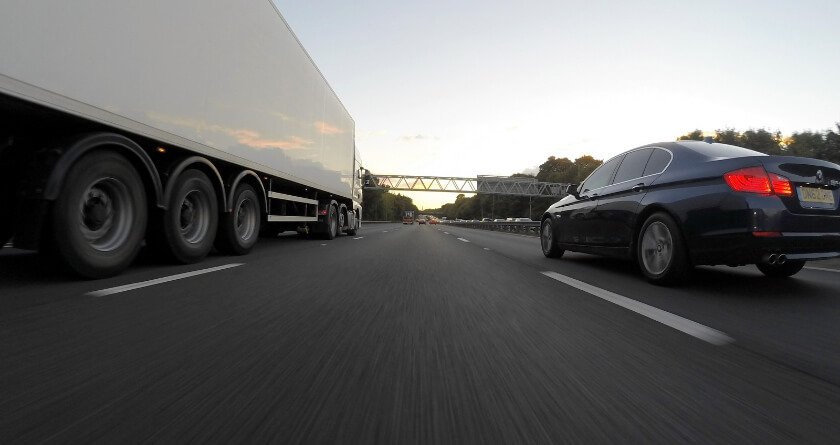
When you’re next driving, what you might think is another lorry passing by could be an undercover police officer in an unmarked heavy goods vehicle (HGV). As part of Operation Tramline, in the last 12 months, police across the country in three so-called ‘supercabs’, caught over 3,000 motorists committing driving offences.

Twenty-nine police forces have used the unmarked HGVs to patrol England’s motorways and major A-roads, using wide angled cameras to film evidence of unsafe driving and have already recorded over 3,500 offences in one year.

Causing offence

To improve safety on England’s high-speed roads, the police HGVs use de-restricted speed limiters so they can travel at speeds up to the national speed limit. The HGVs pull up alongside vehicles and marked police cars following behind pull over the motorists committing the driving offences.

In 2017, 27% (1,195) of people killed on the road weren’t wearing their seat belts. Despite this, not wearing a seat belt was the top offence recorded by officers of Operation Tramline. Figures from Highways England show a third of the vehicles filmed contained someone in the vehicle without their seat belt fastened.

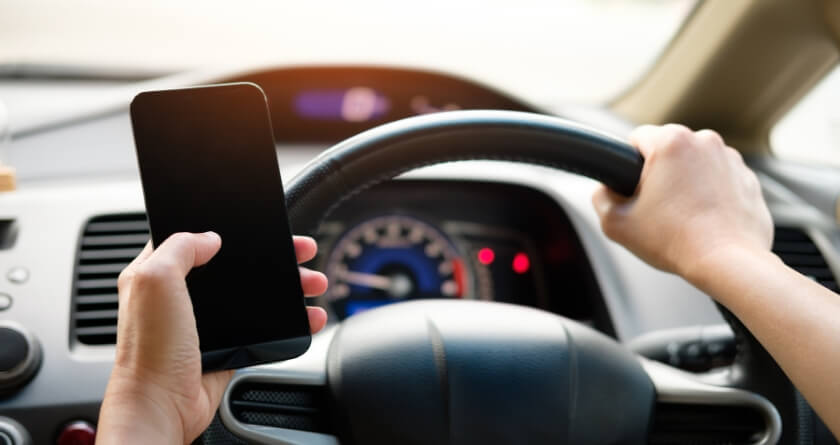
New studies show one death on the roads every 12 days involves mobile phone use. Yet the second most prevalent offence caught by the supercabs involved motorists using hand-held devices while driving (1,062 offences). The next most common offences included not being in proper control of a vehicle (262 offences) and speeding (118 offences).

One of the most shocking bits of footage released by Highways England includes a lorry driver making an online payment while driving. Snapped on the M40 near Leamington Spa in Warwickshire, the footage shows the man holding his credit card with one hand and his mobile phone with the other.

Other footage shows a van driver on the A38 holding his phone in one hand, changing gear with the other, pulling into a service station a few seconds later. Officers recorded another motorist driving his pickup truck on the M60 near Eccles, Greater Manchester, texting with both hands.

Figures show there’s twice the chance of crashing from text-driving as from drink-driving. As drivers, we’re advised to turn off our phones before setting off in our vehicles, but a fifth of drivers (21%) can’t bear to switch off their phones. With young drivers, the figure increased to more than half (51%) unable to power down their electronic companions.

In 12 months, police filed 2,533 traffic offence reports—which often results in the guilty motorist attending a driver education course—and issued 462 penalty charge notices. Police made 73 further prosecutions for more serious offences. Despite these startling figures, the number of offences has fallen since 2018.

Highway robbery

Whenever news breaks of yet more driver monitoring, the public question why our government can use money and police resources for such endeavours when other crimes appear to go uninvestigated and it’s a valid question.

While it’s true that government cuts are destroying our police forces’ ability to police well and that ministers need to address the issue, we can’t ignore the fact that many road incidents and resulting deaths are avoidable, so perhaps those drivers who appear to have a surgical attachment to their mobiles will feel less tempted to break the law knowing police officers can peer into their car without them knowing.

Chief Constable Anthony Bangham, National Police Chiefs’ Council Lead for Roads Policing said:

“Operation Tramline is a successful collaboration between the police and Highways England.

“We remain committed to tackling those who take unnecessary risks with their own safety and the safety of others on our roads by allowing themselves to be distracted while driving. The consequences of these actions are often devastating.

“We will continue to work alongside Highways England on Operation Tramline and will prosecute drivers who ignore the risks.”

Support also came from Tom Cotton, Head of Licencing and Infrastructure Policy for the Road Haulage Association, who said:

“We need to improve road safety—there’s a small minority of drivers whose actions endanger other road users often with tragic consequences.”

Stay on the straight and narrow

Using a hand-held mobile phone whilst driving became illegal in December 2003 and in March 2017, the Department for Transport increased the punishment for motorists using their phones while driving, from three to six penalty points. Fines also went from £100 to £200.

If these punishments aren’t enough, they bring with them higher insurance costs. Also, if you get six points in the first two years of passing your driving test, you’ll lose your licence. If your driving’s bad, or if a crash occurs while you’re using the phone, police could also prosecute you for careless or dangerous driving.

Drivers using a mobile while driving must have hands-free access, such as a Bluetooth headset or a windscreen mount—as long as the device doesn’t block your view. With that said, police can prosecute you If you’re seen not to be in control of a vehicle while using a hands-free phone.

You can hold a mobile phone to make an emergency call to 999 or 112 only if stopping is unsafe or impractical.

It’s also illegal to hold a phone, or a satnav while riding a motorcycle.

Footballer David Beckham was last week banned from driving for six months after a member of the public photographed him using his phone while driving. Dashcams now feature in many cars, plenty of cyclists use helmet cams, and CCTV is everywhere, so remember; it’s not only the police watching you.

What’s your opinion on the undercover HGVs? Are you for or against Operation Tramline? Tell us your views in the comments.

The UK’s most dependable car brand revealed

The UK’s most dependable car brand revealed

If you’ve ever watched Top Gear, you’ll most probably have heard them bemoaning Peugeot drivers and Peugeot themselves. One particular skit comes to mind entitled the “Modern Peugeot Drivers Adventure” in which James May and Jeremy Clarkson drive rather irresponsibly, poking fun at the stereotype that Peugeot’s are badly built and badly driven.

However, in a new study by JD Power, they reveal that the most reliable car brand in the UK in 2018 was indeed Peugout themselves. Long gone are the days of unreliable smaller cars, now mass production car brands are appearing higher and higher in surveys on reliability.

The results

The JD Power dependability survey, now in its fifth year, measures the number of problems experienced per 100 vehicles (PP100), with a lower score indicating better performance. The study measures 177 problem symptoms in eight categories: vehicle exterior; driving experience; features/controls/displays (FCD); audio/communication/entertainment/navigation (ACEN); seats; heating, ventilation and air conditioning (HVAC); vehicle interior; and engine and transmission.

One of the main takeaways was that since last year all problems, aside from seats, have improved in their PP100, with ACEN issues actually decreasing year on year. Unsurprisingly premium vehicles reported more issues with ACEN, due to the higher number of vehicles that have more sophisticated systems.

Customers who bought vehicles that suffered engine faults were less likely to buy that brand again, more than any other issue. Engine failures had the greatest negative effect on repurchasing habits and on brand reputation.

Another major point was that even though electric and hybrid vehicles had more issues than any other car type, owners of those vehicles were more likely to repurchase the same car or brand again than any other engine type owner.

How did different brands compare?

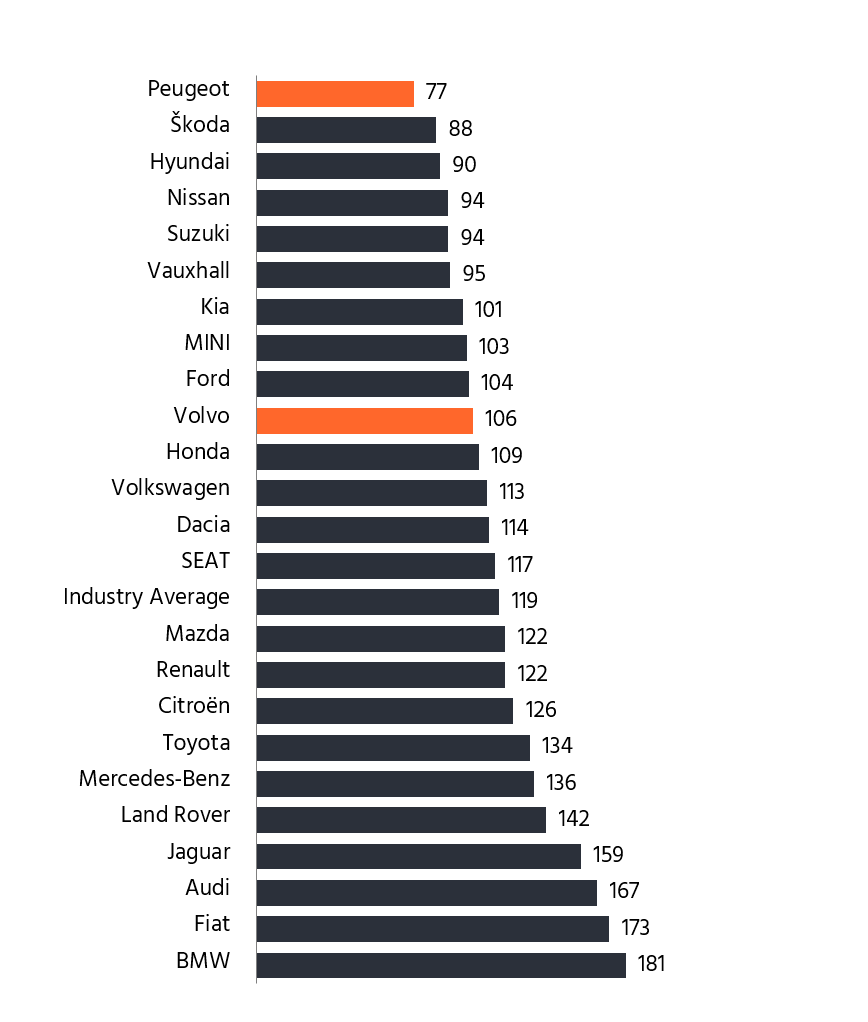
Peugeot ranked top, with 77PP100, joining nine other ‘volume brands’ with Skoda in second and Hyundai in third.

In the more premium brands, Volvo came out top, but still only 10th overall with a PP100 of 106. Mercedes followed in second with 136 PP100.

Brands that used advanced technology as a major selling point for their vehicles also had higher noted dissatisfaction or issues from customers.

“When we look at the PP100 scores of relatively new safety technologies, it’s clear that manufacturers still have work to do to perfect those systems—particularly premium brands that use them as a major selling point,” said Josh Halliburton, Head of European Operations at J.D. Power. “It’s also going to be vital for vehicle makers to win customer trust in this technology if they are to convince potential buyers that fully automated vehicles in the future will be reliable. For example, such buyers are quite likely to question the safety of self-driving cars if brands still struggle with the accuracy of their navigation systems.”

The graph below shows the 20 most popular brands, ranked by PP100 score. It is worth noting that Jeep, Mitsubishi and smart were included in the survey but were omitted from the overall results due to small sample size. Source: J.D. Power 2019 UK Vehicle Dependability StudySM (VDS)

Best individual cars

The survey not only ranked brands but individual cars. They looked at the top three models in each segment; City Car, Midsize Car, Compact Car, MPV, Compact SUV, Small Car, Large and Luxury Car, Small SUV.

The VW Up! Came out top in the City Car and their Tiguan also won the best Compact SUV. Vauxhall also took away two top vehicles with both the Insignia and the Mokka/Mokka X hitting top in the Midsize Car and the Small SUV respectively.

The Skoda Octavia was the best Compact Car and the Ford C-Max/Grand C-Max was the best MPV. The best-rated brand Peugeot had the best Small Car with the Peugeot 208 and finally, Mercedes had the best large and luxury car with the E-Class.

Was this the result you expected? Would you consider purchasing one of the above? How dependable is your vehicle? Let us know below.

One in 13 cars have had a safety recall in their lifetime

One in 13 cars have had a safety recall in their lifetime

When Jaguar Land Rover introduced their new I-PACE electric SUV, it was a culmination of fours years’ worth of work, over 1.5 million miles of testing, and hundreds of hours spent in the wind tunnel maximising efficiency, and yet some owners are having problems with batteries, charging and efficiency in the real world.

And it isn’t just JLR, as recently as January this year, Toyota have issued recall notices for the Yaris, Hilux and Auris models, Honda have announced a recall for nearly 94,000 models due to a timing belt issue, and just last year, one of the most technically advanced manufacturers (both in terms of product and manufacturing facility), Tesla, recalled 123,000 vehicles for a faulty steering component.

The clickbait headline of “More than three million death trap vehicles are on the road” is purely that – a headline that’s designed to get the curious and the outraged to click on the story, although of course, there is some merit to the story.

3 million vehicles

Data from the Driver and Vehicle Standards Agency (DVSA) has revealed that in the last five years, there has been 1,351 separate safety recall notices issued (amongst numerous manufacturers), which affects around 9.2 million vehicles, 2,988,543 vehicles have still not had the work carried out.

One in 13 licensed vehicles has had safety recall notice which hasn’t been acted on, and it’s becoming such a problem that new plans are under consideration that could see any vehicle with an outstanding safety recall notice fail an MOT, although there would be a time allowance, effectively meaning that the vehicle could get an advisory on the first MOT after a SRN.

According to Neil Barlow, Head of Vehicle Engineering at DVSA, the highest level of safety notice is a ‘Stop Drive Recall’, which as you’d expect, would mean the owner should stop using the car or vehicle. A Safety Recall is the most common action, and it’s used when the DVSA’s engineers (usually in conjunction with the manufacturers engineers) agree that there is some safety risk, but drivers can continue using the cars while they wait for the manufacturer to repair it, unless they’re told otherwise.

Grey area

With that said, there is a potential grey area regarding a safety recall, and that’s the vehicle insurance; a vehicle with a potential safety problem could be deemed to be unroadworthy, which may invalidate the insurance, leaving you liable to prosecution and facing the wrong end of legal action should anything untoward happen.

In most cases, the vehicle insurance shouldn’t be affected, but it is worth informing your insurance company, just in case there may be a problem; in many cases, there is often a waiting time, this could be down to fitting the work in, or even a parts supply problem – in some cases, owners have had to wait months for their car to be repaired under a safety recall, which is unavoidable, yet unacceptable.

The recall process

It’s unclear as to why so many vehicles haven’t been repaired – the process for the safety recall is to contact all owners of the vehicle, including the former keepers, so it’s unlikely that the owner hasn’t received a notification.

All repairs related to the safety recall should be carried out for free, but any other remedial work needed that’s not specifically related to the recall is chargeable, which may be a problem for some owners. In my own experience when my vehicle was subject to a safety recall notice, the work was carried out efficiently and promptly, but there was an element of trying to recoup some of the lost profit (manufacturers pay low rates for warranty work) with other work they’d found ‘needed doing’.

The SMMT (Society of Motor Manufacturers and Traders) say that the UK’s vehicle recall process is one of the ‘most robust’ in the world, generally more effective than other recall services (such as electrical items), but that new plans to incorporate an element of recall notices in to the MOT is a welcome move – it should to ensure that cars comply with any outstanding safety issues.

While a manufacturer will typically contact you within a reasonable timeframe of their understanding the problem, you can always check (for free) whether your vehicle(s) are under any type of manufacturer safety recall notice through the ‘Check MOT History’ of the GOV.UK website – simply type in your registration number and it will give details of the MOT and recall notices.

What do you think to the plans of incorporating the SRN in the MOT? Is it really such a problem to drive without getting fixed? Have you any safety recall notice stories? Let us know in the comments.
Top 10 cheapest places to fill up in the UK revealed

Top 10 cheapest places to fill up in the UK revealed

If you’re heading off on a road trip any time soon and want to grab a bargain when it comes to filling up your tank, then look no further as the team here at PetrolPrices has compiled a list of the cheapest places to buy fuel in the UK.

Fuel prices can vary massively across the country; varying by up to 30ppl between the cheapest station and the most expensive motorway station, so checking for the cheapest or best value station near you, en route or at your destination can save you money.

Ryde and Shildon

Looking at prices over the last month, we have been able to determine the local average for town and cities right across the country, identifying the cheapest places in the UK to fill up. Shildon in County Durham came out on top for diesel and Ryde in the Isle of Wight topped the list of the cheapest places to buy unleaded. Locations in Greater Manchester, Lancashire, country Antrim and Yorkshire also feature frequently in the lists which feature below:

Diesel prices

Price (Pounds) Town County
1.279 Shildon County Durham
1.28 Hawes North Yorkshire
1.281 Annan Dumfries & Galloway
1.284 Broadstairs Kent
1.285 Epping Essex
1.285 Catterick Garrison North Yorkshire
1.286 Cardigan Ceredigion
1.286 Ramsgate Kent
1.287 Atherstone Warwickshire
1.289 Crymych Pembrokeshire

Unleaded prices

Price (Pounds) Town County
1.193 Ryde Isle Of Wight
1.206 Leyland Lancashire
1.206 Halesworth Suffolk
1.207 Leigh Greater Manchester
1.211 Loanhead Midlothian
1.211 Haslingden Lancashire
1.212 Penicuik Midlothian
1.212 Cwmbran Torfaen
1.216 Renfrew Renfrewshire
1.216 Broadford Highland

Why do fuel prices vary?

Across the country, there are many things that affect fuel prices. Aside from the base wholesale price, regional variations all affect fuel prices. From overhead costs of a station to demand and how quickly the station gets through a tank.

For example, a station that has high thoroughfare will be able to react to price drops and raises quicker as they bought it more recently. This can play against them sometimes as the prices will rise more steeply at stations like this, unlike a smaller forecourt.

A more remote station will also be more likely to have higher prices, especially when it is far away from a refinery or pipeline outlet, simply due to transportation costs.

Crude oil prices have a huge effect on the price we pay at the pump, and so any global disruption, such as Trump’s sanctions on Iran play a huge part in the price we pay at the pump.

What are fuel prices near you like? Do you find the prices vary much in your area? Let us know below

All data ©PetrolPrices.com. If editors require a full press release or further comment, please email [email protected]

Ice creams vans are the next point of attack in the Road to Zero

Ice creams vans are the next point of attack in the Road to Zero

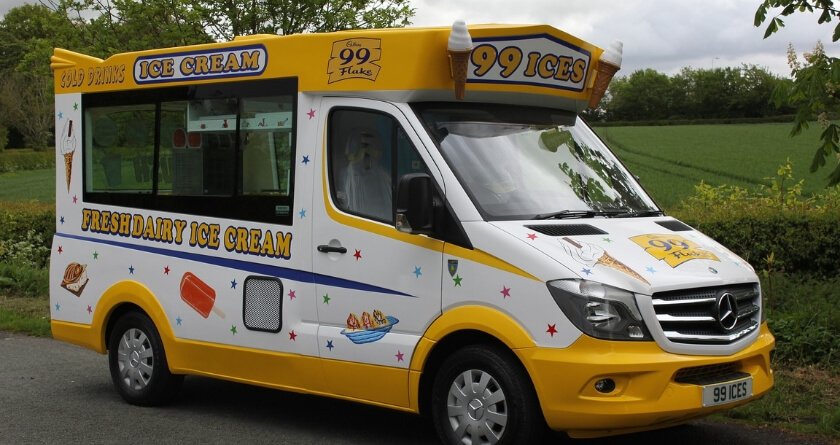
In the latest barrage against diesel engines, councils across the country are preparing to restrict ice cream vans unless they go electric. The announcement comes as the climate change committee in government has announced that they expect by 2024/25 for electric vehicles to be the same price and have the same range.

Some internal combustion engines will still be on the road in 2050, especially for those who cannot afford to upgrade or for those who are too far out from charging points. Some other MPs are still questioning about charge points, as it seems there are no plans for the government to encourage development for business to build charge areas.

“A side order of asthma”

Ice cream vans have long been a staple of the British summer, hearing the jingle as it drives down the road, running out of the house for a Flake 99 or perhaps an ice lolly. Now, it seems this is in jeopardy as Camden council, in London, announced a ban on ice cream vans by installing a “no ice cream trading” sign in 40 streets.

Ice cream vans produce NOx and pump black soot out while they sell ice cream, and due to the young population that often visits them in summer, the risk is even higher. According to UNICEF “Across 86% of the UK, children are breathing in harmful levels of toxic air.” This high proportion of children breathing in high polluting air is devastating, as none of the pollution is their fault.

Green Party London Assembly member Caroline Russell, speaking to the Evening Standard, said: “No one wants to be the fun police or see people lose their businesses. But people don’t want a side order of asthma with their ice cream. This is a serious health issue. The ULEZ charge has helped but we can’t have a situation where you can pay to pollute. The roaming vans that trade in different streets every day, those will disappear over the next few years.”

Westminster Borough Council is trying to find alternative solutions such as plug-in points for roaming vendors, but haven’t confirmed anything yet.

Bring forward the ban

As this news was announced, the government also released a report into bringing forward the ban of combustion engines to 2030. This doesn’t come without complications though, as charging points and the zero-emissions target of 2050 have raised concerns.

By 2030, the government expects for electric vehicles to have the same range and price point as their combustion counterparts. This isn’t matched by the natural resources needed for the batteries, namely cobalt, as there are restrictions around obtaining the element.

There is also the charging issue, and as one MP put it: Mary Creagh, chair of the environmental audit committee, told the BBC: “Ministers are useless. They seem to think the market will miraculously provide charging point and the government has no job to regulate charging points.”

Charging points

Charging points have often been the sticking point for many potential EV drivers with some of our users raising the issue of public charging in remote locations. Areas such as Yorkshire and Wales have the least charging points in the UK, whereas Greater London (surprise, surprise) has the most.

On the other hand, surprisingly Scotland has a high proportion of electric vehicle charging points, the third highest in Great Britain. This is most likely due to the Scottish target to ban combustion engines by 2032, eight years before the UK target.

One must ask the question if petrol pumps and prices are not regulated, should there be government regulation on electric charge points? Obviously, there is a base layer of regulation to do with safety standards and that side of things but in terms of charging, companies are free to charge as little or as much as they want. Some use subscriptions on a monthly basis, others have a card that charges you for what you use, some do both. But if there is no pump price regulation, why should there be electric charge point regulation?

What do you think of the ban on ice cream vans? Do you think the target should be brought forward? Let us know below

3D zebra crossings slowing motorists down

3D zebra crossings slowing motorists down

Remaining untouched for around 70 years, the zebra crossing we know so well might soon appear very different after a road safety experiment in the London borough of Westminster to get drivers to reduce their speed.

Although the location wasn’t an accident blackspot the council were receiving reports of children, elderly people, and pushchairs users having trouble crossing the street. The result? What appears to be lumps of concrete sprawled on the road ahead.

Trompe l’oeil

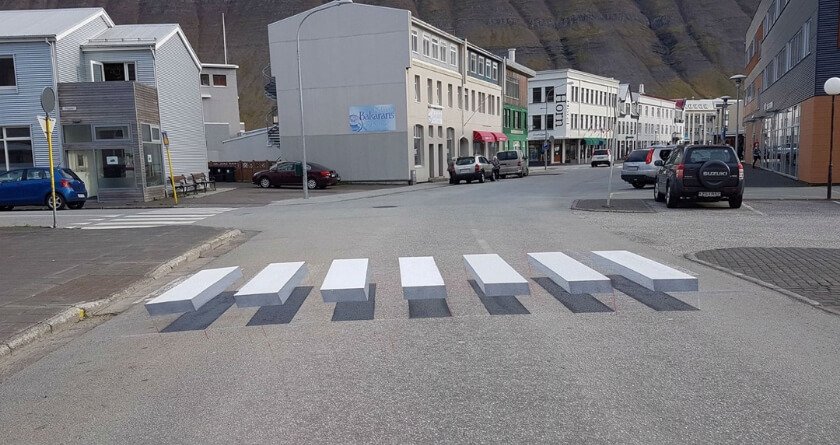
Eight weeks ago, after complaints about the speed of vehicles in affluent St John’s Wood High Street, Westminster Council installed a state-of-the-art £3,000 three dimensional-effect zebra crossing as a traffic-calming measure, at the junction with Wellington Place.

The council chose the site near the crossing pictured on the acclaimed Beatles’ Abbey Road album cover after local parent group NW8 Mums, along with Barrow Hill Junior School, and The St John’s Wood Society campaigned for introducing new safety measures in the street.

Traffic speed also concerned residents, with many arguing the 20mph limit is too fast—if drivers are sticking to the speed limit.

The clever floating effect that attempts to convince motorists they’re about to drive into an obstruction is ‘dual directional’. The design comprises the typical zig-zag lines on the approach and five white stripes across the width of the road. Around the stripes are some added blocks of grey paint that, as the driver approaches, appear to be white blocks on the road.

It’s interesting the experiment proved so effective when, before reaching the new crossing, a red sign reading ‘3D crossing trial marking ahead’ warned motorists.

And because most of the motorists using the street are local, soon after installation, one would expect the illusion would no longer cause anybody to slow down any more than for a standard zebra crossing.

Yet, at the start of the trial, Westminster Council fitted pneumatic tubes across the road to measure the effect the new crossing had on traffic speeds, so the results seem to show that a pedestrian crossing like this does appear to have something blocking the road.

‘Worth a try’

Councillor Tim Mitchell, Cabinet Member for Environment and City Management, said:

“We are delighted it appears to be working so well. Drivers are more cautious and feedback from locals has been positive. It’s really encouraging.”

Councillor Mitchell added, “Our 3D zebra crossing could be the future of road safety across the country and once again Westminster City Council is at the forefront in innovation in bringing this type of crossings to the UK.

“Far from being simply a brilliant innovation that makes the ordinary look eye-grabbing and modern—the 3D effect helps drivers to see the crossing easier.

“It’s been proven to make roads [safer] and is another example of why Westminster has a national reputation for providing excellent local services, driving improvements, and making sure the city is safe and well run.”

A spokesperson for Britain’s Automobile Association (AA) told the BBC the measures were “worth a try” but cautioned “its safety record needed monitoring”.

Edmund King, President of the AA may need convincing that 3D crossings are the answer, but he seemed open to the idea when he said:

“Once the novelty has worn off, will drivers continue to slow down? It should have a full evaluation. But if it’s successful, it could become as popular as Abbey Road.”

The AA suggested that just because the 3D crossing designs proved successful in other locations, the design may not work so well in London because of the city’s road layout. They said London authorities needed to “try new ways” to improve safety as roads grow busier.

Coming to a road near you?

The council—who said the prototype slowed motorists to a crawl—branded the experiment a success so the scheme may now extend across the rest of the borough. Local authorities throughout the United Kingdom are also proposing similar 3D crossings. This won’t alter the fact that, according to a 2018 study, 80% of drivers and pedestrians don’t know how to use zebra crossings.

This is the first time the UK has tried a 3D effect pedestrian crossing, but Transport for London (TfL) first tested illusory speed bumps in Newham, London in 2014, where they lowered traffic speeds by 3mph.

3D crossings used in a similar pilot scheme in New Delhi, India, resulted in average speeds of 31mph plummeting to 19mph. China, France, Germany, and Iceland are among the countries who have also tried out such optical trickery in the name of safer roads.

If the 20mph zones are too fast for the locals of St. John’s Wood, what about the increased pollution levels lower speeds bring, especially outside schools? Fewer vehicles using internal combustion engines seems to be the answer and is the government’s ultimate plan.

Whether the sightseers who visit St John’s Wood to pay tribute to The Beatles at the Abbey Road studios and walk across the legendary zebra crossing will now also visit the 3D crossing for their Instagram snaps, who can tell? In the meantime, here’s a video of the 3D crossing.

What’s your opinion on the new zebra crossing design? Do you think it will be a success across the UK? Tell us your views in the comments.

Two years on; have the mobile phone laws helped?

Two years on; have the mobile phone laws helped?

Using your mobile phone while driving has been illegal since 2003, the laws have been upgraded a few times since then, most notably the doubling of penalties in March 2017; getting caught using your hand-held mobile while driving could see you landed with a £200 fine and six penalty points. This, of course, means that any new driver (that’s held their licence for less than two years) will have their driving privilege revoked.

It isn’t just called either – using your phone for texting, social media, or even programming a destination through the sat nav feature will see you prosecuted – the easiest way to think of it is if there’s any physical link between you and your phone, you could be prosecuted. Unsure as to what exactly constitutes a link, I asked West Midlands Police whether a wired headset would be legal to use for calls.

It isn’t.

Phone numbers

There are around 85 million mobile phones in use within the UK, that’s 1.27 phones for every man, woman, child and baby, it’s no surprise that 54% of Brits self-admit to suffering from ‘nomophobia’ (yes, sadly it is a thing), and clearly it’s invading all manner of daily life.

In a RAC report, 25% of motorists admitted to making or receiving hand-held calls while driving, and in the year after the introduction of the stricter laws, that figure remained the same; the tougher laws don’t seem to be having the intended effect.

Looking back to 2012, there were 22,135 prosecutions for mobile phone use behind the wheel, that figure significantly decreased over the next four years, just 11,961 prosecutions for the same offence in 2016, but perhaps the 30% decrease in Traffic Police numbers could account for a portion of that?

Calling while driving

When the new driving laws were announced, the big headlines of the day were that you could be prosecuted for paying for your food in a drive-thru with your mobile phone, as the act of handling your phone meant that you were using it. As far as we can ascertain, no one has yet been prosecuted for the offence, but it does call in to question as to what constitutes ‘while driving’.

The law is clear, if a little overzealous; to legally use your phone behind the wheel, you need to be parked up, with your handbrake on and the engine switched off. The exception is if you need to call the emergency services and it’s unsafe or impractical to stop, essentially, all other contact with your phone could be deemed as a prosecutable offence.

While laws designed to make the roads safer will always find favour, it must be said that this (just like safety cameras) is a sledgehammer to crack a nut, and it’s the persistent offenders that we have to thank for it – sensible judgements have to be put aside in favour of obeying the law to the letter to avoid legal bother.

It’s a risk

Of course, this isn’t just a UK-wide problem, after analysing data from all over the world, the World Health Organization (WHO) have concluded that using a mobile phone while driving will mean that you’re four times more likely to be involved in an accident. That statistic doesn’t change whether it’s hands-free or hand-held – it’s the very act of the conversation that’s at fault, and contrary to a logical opinion, the risks are far higher than having a conversation with a passenger in the car.

The UK government deems it such a distraction, that if you’re supervising a learner driver from the passenger seat, you can also be prosecuted for using your phone; sledgehammer & nut.

To avoid prosecution, the advice is simple – when you’re driving, put your phone away, put it in ‘Aircraft’ mode, or switch to ‘Do Not Disturb’. If you must use it for navigation, it’s recommended that you pre-program your route before leaving – any ‘on the fly’ adjustments could lead to prosecution, and calls can only be made using a hands-free kit or Bluetooth headset – wired headsets aren’t acceptable.
Some motoring organisations say that driving while using your phone is more dangerous than drink-driving.

Typically, it’s taken around four decades for drink-driving to become widely thought of as socially unacceptable, and while we have a future of autonomous vehicles and self-driving cars to look forward to, they’re still far enough away that we need to treat ‘phone-driving’ with the same contempt and eradicate it from our roads.

How do you feel about phone-driving? Is it worse than drinking & driving? Should the laws be stiffer still? Let us know in the comments.

Could you be getting your fuel for 10ppl cheaper this week?

Could you be getting your fuel for 10ppl cheaper this week?

At present, fuel prices are rising at their fastest rate in over three years. The culprit is rising global crude oil prices determined by rising demand and concerns about further supply, such as the situations in Venezuela and Iran. Moreover, while these problems seem like a long way away, they have a direct impact on the price we pay at the pumps
The good news is that three brands are running spend and get promotions this May Bank Holiday weekend and next week. Sainsbury’s, BP and Morrisons have got some great money off vouchers to help reduce costs on fuel. With the bank holiday weekend coming up, it all helps towards that perfect staycation or a getaway.

Here are further details to make sure you don’t miss the chance to earn these three great money off spend and get fuel promotions:

Sainsbury’s spend £60 in store and get 10 pence a litre off fuel

Sainsbury’s are offering customers 10 pence a litre off fuel when they spend £60 or more in one transaction either in-store or through their online shopping. The offer runs between the 1st May, and 7th May and vouchers have to be redeemed 14 days after receiving it. If you know you’ve got a big shop coming up and your fuel tank is running low, saving 10 pence per litre could save you £5.50 filing up and average tank of 55 litres.
With the voucher, you get one fuelling of up to 100 litres of petrol, diesel or LPG but you can’t use it at Pay at Pump, so only pay in the kiosk with the voucher. The promotion itself also has a long list of exclusions, so make sure you check beforehand.

Offer ends: 7th May 2019, vouchers must be redeemed within 14 days afterwards

Please be aware there are some exclusions to this offer, so make sure you check them here: https://help.sainsburys.co.uk/help/website/fuel-tcs

BP spend £20 in store and get 10 pence a litre off fuel

While the spend threshold for this offer is lower than the supermarkets, the offer is only valid in BP M&S stores. However, the good news is that M&S has one of the best food ranges in the UK and this is the perfect way to take advantage of getting a great fuel discount at the same time. The promotion can only be done by purchasing in the stores themselves and is not available on BPme, their new payment app.
The offer itself also has some exclusions around fuel cards, tobacco, mobile phone tops ups, baby food, national lottery tickets and stamps; please check beforehand.

Offer ends: 7th May 2019

See here for terms and conditions: https://www.bp.com/en_gb/united-kingdom/home/products-and-services/latest-offers/10p-off-per-litre.html

Morrisons spend £40 in store and 5 pence a litre off fuel

Morrisons has been running the same spend and get promotion in selected stores during April, and now it’s been rolled out across more stores for May Bank Holiday, but there are still some stores not running it, so please check in advance.

When you spend £40 or more in one transaction at Morrisons, you can now get 5 pence per litre off one fuel purchase to the value of £100. There are exclusions to what is accepted in the £40 spend in store, such as tobacco, fireworks and lottery tickets, so please ensure you check before you buy.

Offer ends: 6th May 2019

For the full terms and conditions see here: https://my.morrisons.com/5pfueloffer/

While these promotions may not fit into your plans for the Bank Holiday Weekend, it’s always important to make sure that you always know where the cheapest and best fuel deals are out there, we will try to monitor them for you, but if you find a great deal, please tell us via www.petrolprices.com/support

With any of these, using these savings might not work out for you. If your closest filling station isn’t one of these but their price is better, then work out the savings you’ll make but also the time-saving. It might take longer to visit the station to save not much. You can use our app to compare prices near you and work out what could be the best value for you.

Are you planning to save money on your fuel this weekend? Do these offers help you out and more importantly do you want more when they come up next? Let us know in the comments below

Blanket parking ban considered by government

Blanket parking ban considered by government

At a time when parking your car is subject to extreme focus, mainly thanks to the ever-increasing parking charges, the House of Commons Transport Committee is to look into different options to potentially stop people from parking on pavements.

At first glance, this could be a great thing – the age of social media and sharing means that we constantly get to see the cases of inconsiderate parking splashed across the many digital channels open to us, whether that’s a young parent with a child in a buggy being forced in to the road, or someone less able-bodied in a wheelchair risking life & limb to get past a poorly parked car. We’d all agree that the person responsible should suffer consequences.

However, as the saying goes, let those without sin cast the first stone (or a variant thereof).

New guidelines

You may be thinking that you have never, and will never, be responsible for such inconsiderate behaviour, but the guidelines being considered would treat you the same; whether you’ve parked all four wheels on the pavement, or accidentally raised one wheel on the kerb in an effort to park. Using that definition, who can honestly say they’ve never parked on the pavement?

Personally speaking, if a poorly placed wheel constitutes parking on the pavement, my local council could make up any budget deficit simply by spending a week or two outside my mother’s house, and that’s the problem; the term ‘blanket ban’ and the definition of which that it constitutes.

A blanket ban on pavement parking, by its very definition, encompasses all roads (London introduced similar in 1974), and this would mean an increase in overhead for all local authorities, not only to implement the changes, but to police it, and of course there are roads where parking on the pavement is essential for the flow of traffic, which could also lead to a strain in available parking spaces.

Then there’s the definition – one wheel or four, you’re guilty of parking on the pavement and liable to a fine of £70 for each offence. (That’s each time it happens, not per wheel). Given the fact that implementing and running such schemes would likely involve significant cost, you’d have to assume that any ‘Parking Officer’ would be razor sharp on delivering tickets.

Inconsiderate parking

Surely a better solution would be to clamp down on inconsiderate parking? This would find almost universal favour with both pedestrians and motorists alike, costs would be lessened, and they could even look to the public to help with self-reporting – providing there is photographic evidence. Of course, the cynic would say that revenue generation wouldn’t be as high.

Local authorities say that parking on pavements (even with just one wheel) has cost implications, mainly due to the extra wear & tear on the pavement, which hasn’t been designed to carry the extra load of a car. However, that extra cost should be balanced against the cost for employing a 24-hour service of parking officers, unless of course, they sub-contract the work to the highest bidder, which then take a percentage of any fines levied. Conflict of interest anyone?

This is a similar issue to that of speed cameras – catching motorists with a blatant disregard for safety and speed limits is good, treating all motorists in all conditions for a minor infringement of an arbitrary limit, not quite so good.

Simple answer

Unfortunately, there is no simple answer. How should we stop repeat offenders without causing inconvenience (or expense) to those that are more innocent? In days gone by, perhaps there would be more faith in the relevant authorities to act fairly, to understand that sometimes, circumstances beyond our control gave rise to a situation, but we live in a target driven society, and what may have been a judgement call once, is now usually called in favour of the authority.

Edmund King, AA president said: “It is right that anti-social pavement parking, which prevents and restricts wheelchair users, blind and partially sighted people and pushchairs travelling around our communities must be tackled, however, a blanket ban would be a step too far. A street-by-street assessment is needed to decide where it may be suitable to allow pavement parking. Pavement parking poses problems on both inner city streets and rural lanes, so the outcome needs to be tailored to the circumstances.”

The House of Commons Transport Committee are actively looking for feedback on how this issue can be resolved, and the difficulties that it presents, if you feel that your voice should be heard, closing date for submitting written evidence is 14th May 2019.

How do you think this issue could be resolved? Is it as simple as introducing a blanket ban? Or perhaps the authorities should look to clamp down on purely inconsiderate parking? Let us know in the comments.